I adore scrolling through fungi foraging photos, always, but especially at this time of year. However, something bothers me about some of the fungi fever photos and I think we can do something about it.
All foragers worth their salt are delicate in their work; they respect and take care with the plants, just harvesting a bit, leaving the patch looking untouched afterward etc etc. They want the plants to survive, thrive and multiply. If for no other reason, this helps ensure that there is plenty to forage next time. That’s great, that’s part of how I teach on my urban herbology walks and courses but I’m seeing a very different impression in many fungi trophy photos.
Are the fungi foragers (who are often experiened and wonderfully ecologically minded plant foragers too) doing the same and being subtle in their work?
I guess so and hope that many fungi trophies that I see posted, simply show happy hunters taking home whole huge polyphores and the like, which have been gathered with great respect for the environment and awareness of how those fungi fit into the delicate ecosystem.

Some polyphores can weight several kilos, taste mouthwateringly awesome, can cover a lot of meals, or be prepped and store well over-winter. With such virtues, I completely understand why we want to take the whole thing home. But we also know that fungi spread through hyphae and spores. These fruiting bodies in which we so delight, and may harvest, help ensure that the fungus can proliferate and reach new uncharted territory. They help ensure their survival. And we are wrapped up in their survival. Put simply, fungi make the world go round. Yes they can spread to new territories by stretching their hyphael networks in soil but they fruit for a reason. They fruit to spread far and wide. Just as foragers are guardians of the wild plants, we are also guardians of the fungi

When I’m lucky enough to find a Giant Polyphore or Chicken Of The Woods developing in a clean enough and accessible spot in Amsterdam, I like to harvest a little when I need it before leaving the polyphore looking untouched so casual foragers don’t copy. When I harvest this way I get fresh mushroom for my family meals for weeks on end. Maybe being able to revisit the spot is a rare privilege and that’s how I can do it this way.

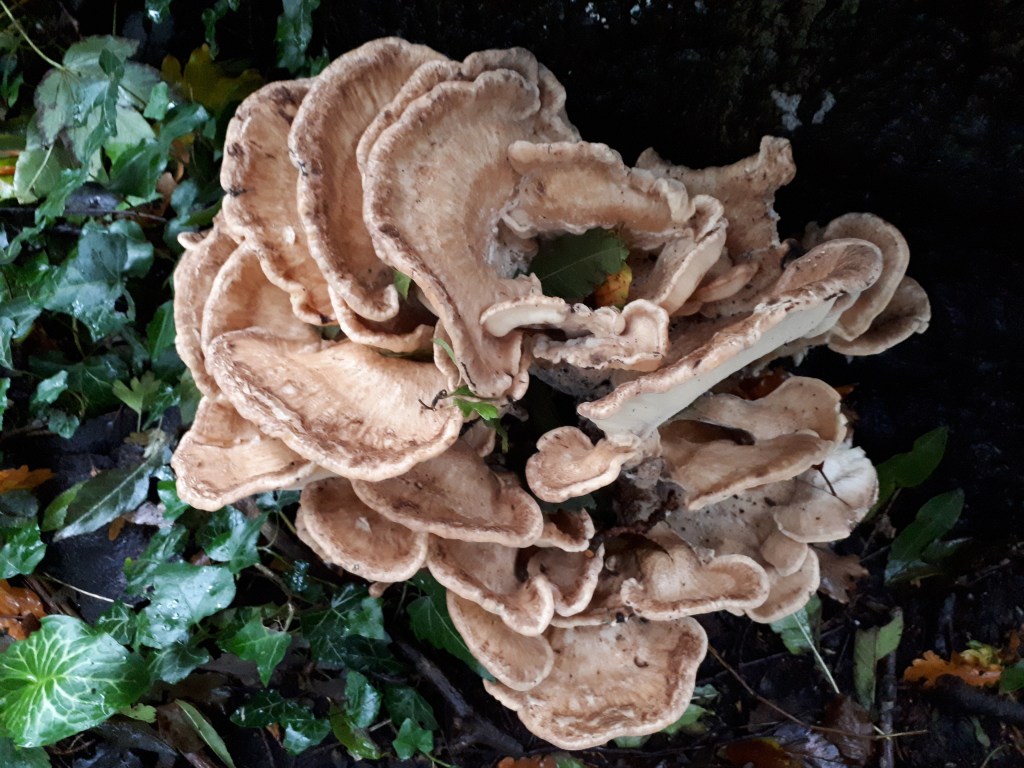
The beauty in three of today’s photos is one such Giant Polyphore, at different stages of development. I’ve been carefully snapping off a frond from this one, for two or three weeks now, returning every few days when I feel the urge. And with fungi fever in the air, the urge is pretty much a constant! Can you see where I’ve harvested? Hopefully not too easily.

During these weeks, no one has sliced at or whipped the whole thing off the tree, which happens.. So I’m pleased that this fungal fruiting body can ripen and will spread heaps of spores quite soon.

Maybe we can encourage other fungi foragers to at least comment in their social posts on how they took just a tiny proportion of what was on offer. How about some before and after shots of what and where we harvest? I’m not one to show the precise location of my best finds, I live in Amsterdam so there wouldn’t be much left if I did, but I think it’s possible to make it clear to social media foraging fans that the foraged area (and fungus) looks great after harvesting and that only a little was taken.
I’d love to know what you think about this. Am I being a bit penickety and over-sensitive or do other people feel something similar? Maybe new knowledge that I’m unaware of shows that fungi fruit purely for the pleasure of our human tastebuds and immune systems, and are no longer necessary for their own survival?
Let me know your thoughts and especially tips you may have for reducing the impact of foraging on fungal populations.
#giantpolypore #urbanherbology #ethicalforaging #beforeandafterforaging #fungifever #fungifever #wildpluk #amsterdam #foragingtrophies
 Urban Herbology
These photos of fungi are beautiful Lynn, so much detail. I fully agree that foraging should be ethical and not complete strip or take any plant in its entirety. The fungi fruit can be enjoyed in many dishes in small amounts so there is no need to take huge amounts. Happy foraging 🙂
LikeLike
Thank you Louise 🙂 Indeed, we can do so much with small amounts of these fungi. Better that, to allow them to grow and fruit for years to come. I saw recently that there are moves to protect scarce fungi, as with threatened species of plants animals.
LikeLike