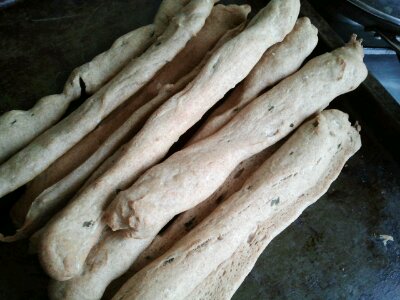
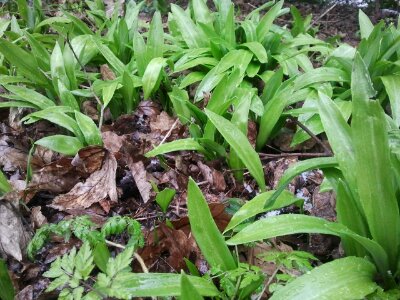
These bread sticks are chunky and have more than a hint of wild garlic about them. We love making them and eating them and hope you will too. If you came to the River of Herbs or February Apprenticeship meetings then you tested the recipe with my first Wild Garlic harvest of the year. The plants are getting bigger, bolder and more tasty by the day. Only a few leaves are needed for this recipe. Please remember to pick carefully and to leave the plants in excellent shape, with their bulbs intact in the soil.
Wild Garlic Oil
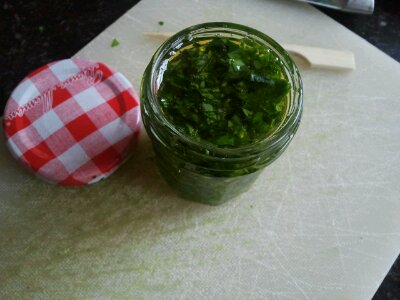
Firstly, gather three Wild Garlic (Allium ursinum, Ramsons, NL: Daslook) leaves. Give them a quick rinse and pat them dry with a clean tea towel or similar. Finely chop the leaves and place them in a very small glass jam jar. Cover with extra virgin olive oil and poke around a little with a chopstick or cocktail stick, to release trapped air bubbles. Top up if necessary, to keep the leaves covered in oil.
Leave your wild garlic oil to infuse, with the lid on, whilst you make the bread as follows.
NB: The infused oil will be ready to use in as little as an hour but will keep at room temperature for several weeks, provided there was no water on the outside of the leaves when you chopped them. Mine never lasts that long as we eat it in everything at this time of year.
My basic bread recipe
4 cups of bread flour (I generally use 3 cups spelt flour and 1 cup strong wheat flour)
1 and 2/3 cups luke warm water
2 tablespoons olive oil
2 teaspoons fast action dried yeast
1 teaspoon fine sea salt
Gently and gradually mix together all of the above ingredients. When doing this by hand, I place the flour in a big heap on my worktop and make a volcanic crater in the centre. I sprinkle the yeast and salt around that crater but pour the water and oil into the crater. I’m then able to work everything in, bit by bit, avoiding it all spilling onto the kitchen floor…
When everything is well combined you need to knead it! Aim for a good ten minutes of therapeutic kneading, by which time your dough should be silky and springy to the touch. Then place your ball of dough in a glass or ceramic bowl, covered with a damp clean cloth or cling film, in a warm place, “until the dough has doubled in size”. I must say that I find that standard bread making statement of limited use. Dough “proving” is sometimes hard to gauge as the dough will change shape and texture as it rises. Mine generally mutates in a glass bowl, filling it gradually with long bubbles, rather than simply doubling up neatly. Use your judgement and common sense with this, the time needed for the first proving, will depend on your room temperature and specific ingredients. 40 to 90 minutes should do the trick but don’t worry if it doesn’t exactly seem to double in size.
Now give your dough a second kneading. This will make the dough decrease a lot in size and that’s fine. This step is called “knocking back”. After the quick knocking back knead, cover your dough ball again and leave in a warm place to double in size, again.
(Unless I am on holiday I generally use a bread machine for the kneading and proving stages of bread making (machine set to the dough setting). This recipe works equally well for bread machines and for hand working).

Creating the herby bread sticks:
Turn out your twice risen dough, onto a floured worktop and sprinkle a little flour over the top. Then pour about a tablespoon or two of your wild garlic infused oil (including the leafy bits) and a teaspoon or two of Malden Sea Salt Flakes onto the dough.

Work this in just a little, so that you feel that the oil and salt are throughout the dough.

Divide the mixture into about twelve small balls and make each into a long stick shape. Or whatever shape you like.
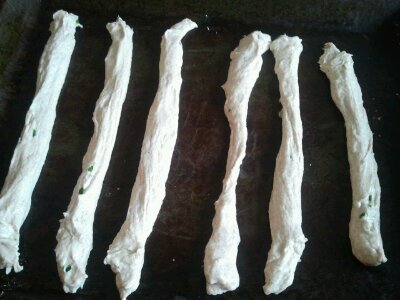
Place on an oven tray and bake at 200°C until they turn hard on the outside and light golden brown.














 Urban Herbology