Tag Archives: Comfrey

365 Fraendael day 27

Today, a lovely walk through the park with Lucile and the little ones. We each went home with a few leaves of Ground Elder and a little Ground Ivy. Plenty of other herbs in season though…

Here’s the foliage from a Wild Carrot! Not one to be dug up, though it would probably taste great. I hope to revisit it later in the year to double check it’s identity when it is in full bloom. Wild carrot has been used in folk medicine for centuries and has recently been researched by Robin Rose Bennett. It is often found to be quite a useful contraceptive. For more information on the research take a look at Robin’s website.

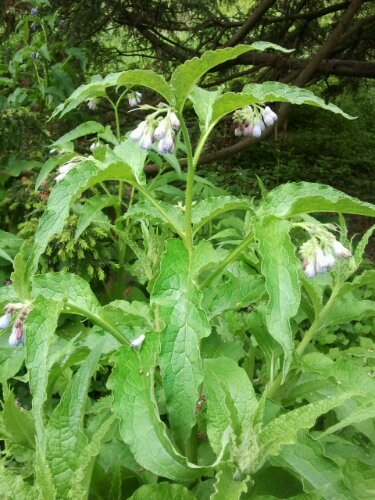
Here is Comfrey, still in full bloom and looking stately throughout the park and city.
Garlic Mustard leaves continue to grace many of my meals. The plants here are nearing the end of their flowering season but the foliage still tastes wonderful and only a leaf or two is needed to add a garlicky kick to regular meals.

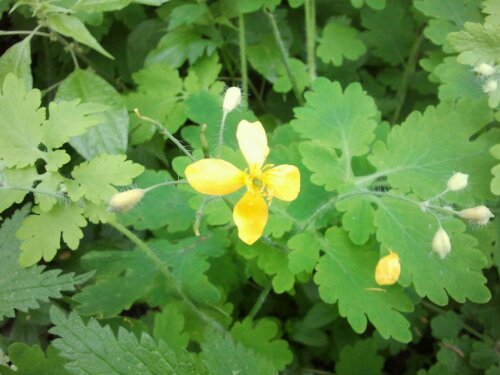
Greater Celandine continues to flower. It’s stems remain loaded with bright orange sap which is freely released when a stem is broken. This sap, containing a substance which is acrid and highly irritant but has been used medicinally since at least the middle ages. Historically it was used, in preparations such as lard and milk, to cure piles, cataracts, severe scurvy and some forms of cancer. These days it is still a popular remedy, amongst those who know it, for warts, corns and ringworm. To use for these three ailments, simply break a stem and apply the fresh sap to only affected skin. It will irritate healthy skin. The Latin name of this plant means swallow (the bird) and this is said to be because the plant’s flowering season coincides with the arrival and departure of swallows. So hopefully there should be some time to go before the flowers of Greater Celandine disappear from Amsterdam again.
Cleavers are looking particularly lush and juicy at the moment, about 50 cm long on average. Perfect for harvesting a clean handful and juicing for a cleansing tonic.

Wild Geranium is also looking striking, producing a mass of small purple flowers in the woodland, at present.

365 Frankendael day 23


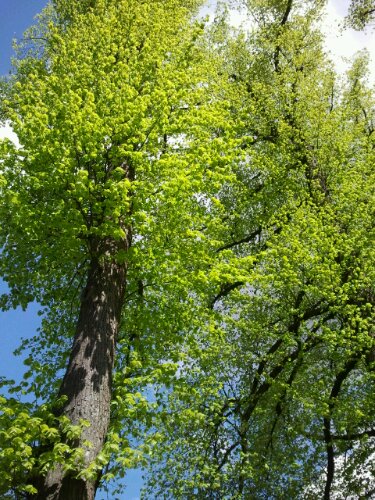
Today, Sameena from the Meetup group joined Livvy and I, on day 23 of our herb seeking mission. We saw several beautiful herbs, not least Garlic mustard, Geranium, Horsetail, the beautiful Lime trees with their glutinous leaves and Comfrey which the local bees were going crazy for.

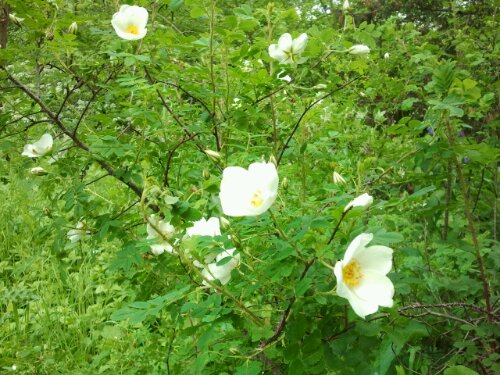
Afterwards I found borage and wild rose in flower, both for the first time this year – a real treat! If you fancy harvesting either please remember that borage is an annual so if you take the flowers there won’t be a plant there next year and vitamin C rich Rosehips only form when Roses are fertilised by insects and allowed to develop unhindered all the way into autumn.

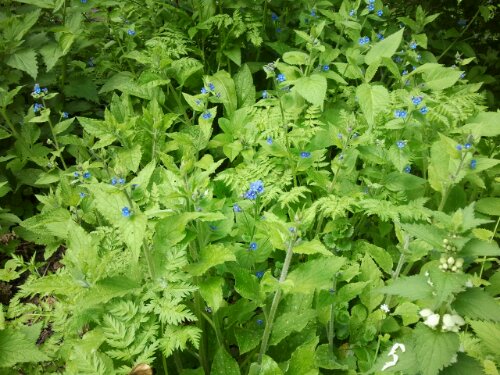
Above, Borage (Borago officinalis), mixed in with some Sweet cicely and Dead nettle. The small blue flowers are the easiest feature to help you distinguish this plant, it also has very hairy foliage. An alternative name for it is the Cucumber herb or plant, that’s because it tastes like cucumber! It makes a welcome addition to salads and it has uses in skin care.

365 Frankendael day 12

Comfrey (Symphytum officinale, Symphytum uplandicum) is just coming into flower here in Amsterdam. It’s easy to identify now due to it’s broad, furry, fast growing leaves, it’s dropping purple or white flowers and it’s standout appearance as it towers over many neighbouring wild plants.

If you keep any plants, outside or in, I urge you to learn how to make the easiest liquid feed from nourishing Comfrey. If you don’t know about it’s deep and rapid healing effects on the body, I urge you to learn about them too and to keep some form of this plant in your herbal first aid kit.

Most of the Comfrey found wild and is gardens, descends from garden escapes of purple flowering, Russian Comfrey (S. uplandicum). It works just as well externally and as plant feed and its leaves don’t contain the toxins found in the roots and all parts of cream flowering, Wild Comfrey (S. officinale). The toxins are harmful when ingested. Because it’s hard to tell the two plants apart when they are not in flower, I suggest you always air on the side of caution and don’t use it internally. Today I photographed a white flowered Comfrey, the colour suggests it is Wild Comfrey but most plants in the park are purple flowering and the two are very interbred, so this may be a white flowering mutation of S. uplandicum. Either way, it is beautiful, useful and I will only use it externally or for my plants.

Comfrey can be applied directly as a poultice (for sprains for instance) made into a heat infused or a cold infused herbal oil which can be used for massage or blended with beeswax to make a healing salve. Worth mentioning, is that sometimes Comfrey may speed healing faster than you’d like, such as when infection is present in a wound. Ensure wounds are clean and healthy looking, not infected, when you begin using this herb. This will help to ensure the wound heals cleanly, a well as quickly. Comfrey also has a reputation as the herb to prevent or remove scars, both internally and externally by please remember my warning about internal use.

To make a superb and cheap liquid plant feed, simply immerse a couple of Comfrey leaves in water, in a bucket or similar. Leave it to ferment for a few weeks. You should see that the water becomes a dark and rich brew. Store this “Comfrey tea”in a suitable container and dilute well before feeding to your plants. A plastic bottle cap full, in a home watering can of water, should suffice. Use regularly, throughout the growing period, for pleasing results.

Here’s a link to an online Permaculture Magazine video article, about why we should all have a Comfrey plant on our patch. Be prepared, the video is ten minutes long and contain lots of info for people with vegetable gardens – If only! I don’t have space for one at home but I know where plenty grow! I hope you’ll have a look around and find some near your home also.

Comfrey is an essential herb to become well acquainted with, your plants will thank you and so will your body, when it needs to heal quickly.

365 Frankendael day 1

<img class="alignleft My new project to identify and document herbs in Amsterdam’s park Frankendael, every day for a year, began today. It’s quite damp and cold at present but many herbs are looking resplendent in Amsterdam. The parks give a good indication of biodiversity in the city as a whole. Here are a few photos of useful plants which are in full foliage or flower today, in Park Frankendael. They show Tansy (Tanacetum vulgare, a powerful emmenagogue) Purple Dead Nettle (Lamium purpureum, a salad and pot herb) and Comfrey (Symphytum uplandica). Hover over the photos for the names, if you are not sure which is which.
Some days I’ll be adding less photos and more information about the plants, other days will be more focused on photos. I’m really looking forward to watching the plants throughout the year, to sharing more ways to use them and find them on the streets and verges of Amsterdam and to improving my photography skills!
Several people have kindly offered to get involved with taking photos from time to time. There will be a little meeting on Sunday May 13th to share ideas.