Tag Archives: plantain

365 Frankendael day 4

A quick posting today… The plants are growing so quickly that it’s hard to keep up! Photos today of Stinging Nettle (Urticaria dioica, NL: Brandnetel) with Cleavers (Galium aparine, NL: Kleefkruid), Ribwort (Plantago lanceolata) and a lovely painting of White dead nettle (Lamium album) by fellow Urban Herbie, Elodie den Otter.

In the first photo you may be able to see Cleavers using our prickly friend as a support, to enable its own upward growth. For further information and links about Stinging Nettle, including a video on how to make nettle infusion, see my previous posting. These days it’s quite fashionable to eat nettles – the Italians have been doing it for millennia and nettles really do taste great – so there are hundreds of recipes around. I usually just throw a handful of chopped nettles into regular dishes such as ratatouille, it really beefs them up and to me this spring green tastes like an improved version of spinach. Here’s a link to a few recipes featured by the BBC.


Also today, Ribwort (Plantago lanceolata), which is so handy to remove the burning pain of nettle stings. As a child I was taught about Dock being used in the same way but these days I find Ribwort far more effective.


White Dead Nettle looks similar to the Stinging nettle but is in fact completely unrelated. This plant is just beginning to flower in Amsterdam and is often found growing alongside Stinging Nettle. Unlike Stinging nettle, this plant is best harvested whilst in flower. It has a multitude of traditional uses, ranging from easing sore throats to helping heal burns and eczema. Many thanks for the painting, Elodie!
365 Frankendael day 2


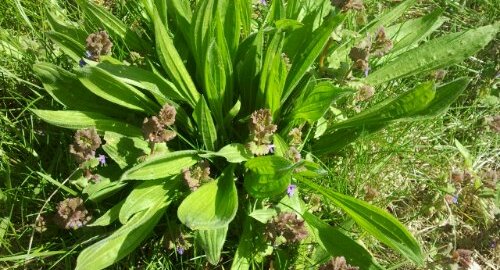
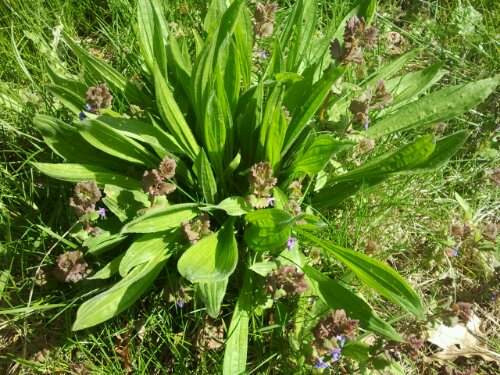
This photo shows the narrow form of Plantain, known as Ribwort, with Ground ivy flower stems growing up through it.

Ribwort (Plantago lanceolata), is a very useful first aid herb. It is part of the plant family to which Psyllium belongs and shares it’s usefulness as a soother of mucous membranes. Amongst other things, it can be used as a simple insert in shoes, to ease tired aching feet and can be rubbed on grazes and insect stings as it releives pain. It was previously recommended as a plant to be added to the seedmix for pastureland, it is a favorite of sheep. Ribwort contains lots of mucilage, easily released by chewing. For more simple uses see Susun Weed link.

Ground ivy (Glechoma hederacea) also known as groundsel or cat’s paw, was an age old remedy for stomach ailments, was used to clarify beer in the absence of hops, is useful for soothing chapped hands, tastes pungent and minty and is great raw or cooked. It is a favorite of birds and can apparently entice a rabbit to eat when is unwell and refuses all other food. Mrs Grieve’s Modern Herbal (from 1931) advises harvesting Groundsel along with Chickweed in the spring and summer, to dry and then feed to rabbits along with their straw in the winter.

The plant is a very successful annual, now renowned as a garden weed. Ground ivy, with its scalloped kidney shaped leaves, creeps across the ground, setting root at regular intervals and throwing up relatively tall flower stems (10 -20cm high) at this time of year. Today, purple ground ivy flowers looked stunning throughout the park. There are striking patches at the entrance closest to the garden centre and dotted throughout the less trampled grassland, notably next to the woodland area beside Frankendael Huis. This plant is definitely a must-try for foragers, provided you can find clean plants.

Lastly today, a photo of Marjoram (Origanum vulgare) which thrives in just a couple of spots in the park. I am always delighted when I see it in flower but at this time of year the plants are growing rapidly and the leaves are loaded with the aromatic oils, so prized by cooks.