Category Archives: Evergreen herbs

Butternut Squash & Sage Pies

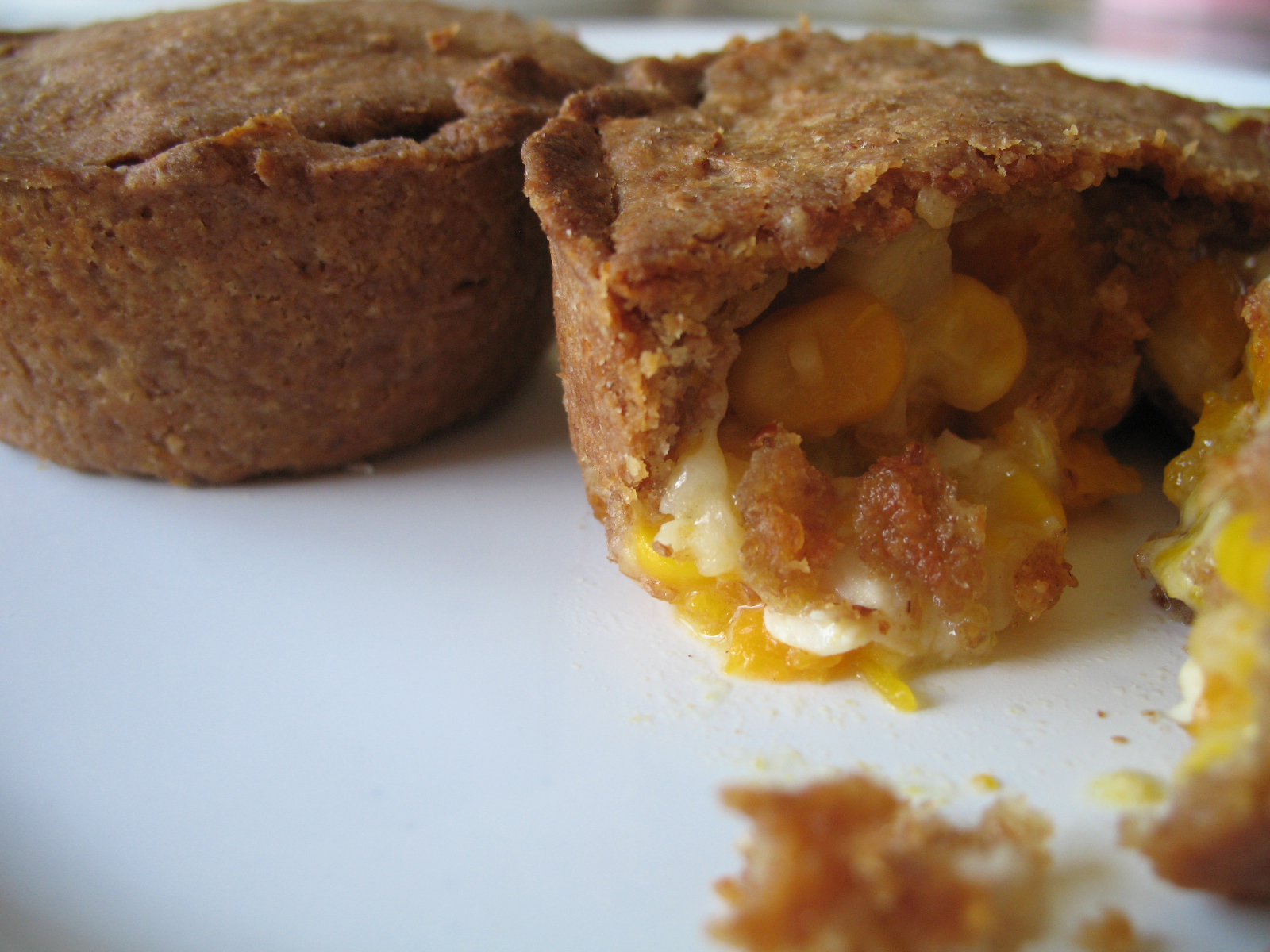
Pies remind me of home.  Here is a recipe for very tasty muffin sized pies which uses purple sage to enhance the flavours of butternut squash, sweetcorn and chicken.  They taste great hot or cold and make a handy packed lunch food.

I use homemade yoghurt pastry dough for my pies and quiches, I will post the recipe for that later.  Alternatively you could use an all butter short crust pastry or puff pastry for the crust.  The recipe includes a very small amount of fresh chicken,  I just added some leftovers to my pie filling, but this can easily be omitted for vegetarians.  You may also like to add a little chopped fennel to the filling.  Pies are a good way to use up fresh left overs as from a little filling you can create a lot of tasty little pies!

Butternut Squash & Sage Pies – makes 12 (muffin size)

Ingredients
Pastry (see above) –  enough for a quiche base
Knob of butter, ghee or olive oil
5cm slice Butter nut squash, peeled, deseeded and finely cubed
1/2 small can of sweetcorn or a handful of frozen kernels
1 medium-large onion, finely chopped
1 chicken or vegetable stock cube, or 1 dessert spoon of bouillon powder or 1/2 cup fresh stock
1 garlic clove, peeled and finely chopped
6 large fresh  purple sage leaves, finely chopped (or 1/2 tsp chopped dried sage)
1 dessert spoon creme fraiche
1 dessert spoon finely chopped lean fresh chicken
Handful grated goats’ cheese or cheddar type cheese
Salt and pepper to taste
12 hole non stick muffin tray, greased with butter or ghee

  1. Preheat oven to 190° C (375° F) and prepare muffin tray.
  2. In a pan with well fitting lid, heat the ghee/butter or oil and gently cook onion, with lid on pan, until sweet and clear.
  3. Add the garlic and sage to the onions and cook for a further minute, stirring all the while to prevent the garlic from burning.
  4. Add the cubed butternut squash, chicken and sweetcorn and quickly mix into the oily onion/herb mixture.
  5. Add about 1/2 cup of water and the stock cube or fresh stock and bring to the boil.
  6. Cover with a tightly fitting lid and simmer for about 7 minutes, until the pumpkin is tender.  Check now and then that the water has not evaporated or been soaked up completely.  You should end up with a well cooked mixture which is moist but not sloppy.  If the mixture is too wet, cook a little longer with the lid off.
  7. Remove from heat, add the cheese and creme fraiche.
  8. Stir into the mixture, adjust seasoning to taste and set aside to cool whilst you line the muffin holes with pastry
  9. Roll out pastry quite thinly (probably about 1/5cm thickness).
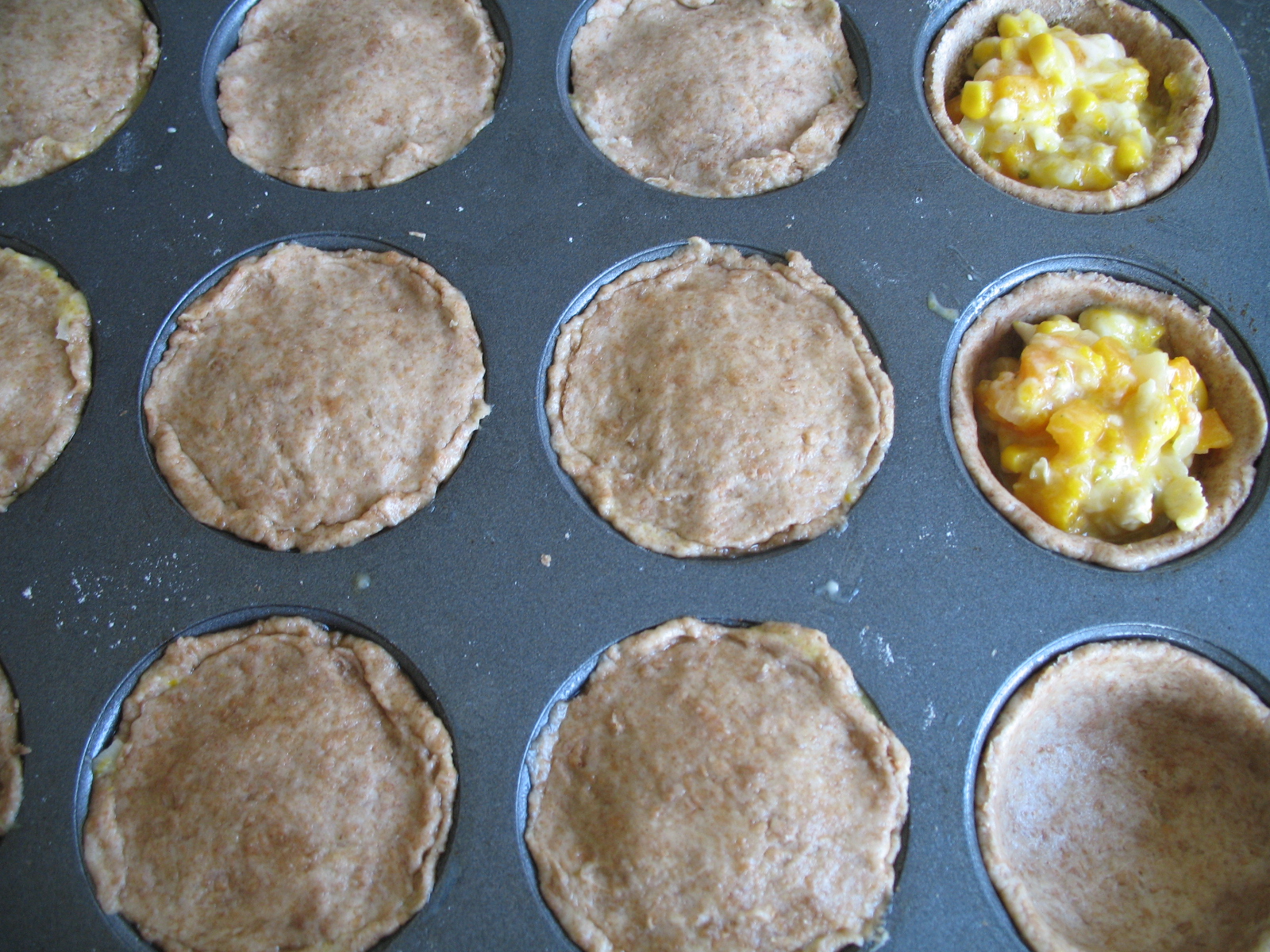
  10. Use a round pastry cutter or similar to cut out 12 circles, large enough to just line each muffin hole.  Push the pastry into the holes carefully so that the filling will not break through it when added.
  11. Add a desert spoonful of filling to each hole.  It should come close to the top of the pastry lining but not above it.
  12. Cut 12 smaller circles of pastry, just large enough to top each pie.
  13. Gently press the edge of each pastry top into the pastry which lines each hole.  You don’t need to be too exact with this but if you are too rough your pie contents may bubble out.
  14. Cook at 190° C (375° F) for about 25 – 30 minutes.  Keep an eye on your pies to ensure they don’t burn.
  15. Remove muffin tray from oven and allow to cool for about 10 minutes, until the pies can be easily extracted.  You may need to loosen them carefully with a knife.  Check they can spin in the muffin hole before removing.
  16. Eet smakelijk!These pies can be frozen BEFORE they are cooked in the oven.  I much prefer to cook the whole batch, eat half hot on the day I make them, store the rest in the refridgerator and eat those cold the next day.
Aftenoon tea (Camellia sinensis)

Tomorrow I shall be joining a few fellow Urban Herbologists in de Hortus Botanicus for a spot of afternoon herb tea tasting.  Each week, two of my friends try a different tea using herbs they have freshly harvested from the Hortus – generally clippings.  As a guide, they use recipes from an old tea book.  Being a one-herb-at-a- time kind of person, I am intrigued to try some of their multi herb brews and wonder what other people prefer to taste in their herb teas.  It also makes me wonder about how far packaged tea has moved away from it’s simple origins.

It seems that the tea plant Camellia sinensis prefers to grow at high altitude in tropical conditions although it can  thrive at low altitudes and temperate conditions.  Many Camellia species are grown in such non-native conditions, for their showy flowers and glossy evergreen leaves. Several Camellias grew in my previous Somerset garden, which was quite sheltered and had acidic soil.  They looked amazing in winter. Camellia sinensis will apparently also do well as a balcony pot plant, provided it can be moved indoors during cold periods.  There is an informative  Wiki page outlining the different cultivars available.

I am now hunting for a small Camellia sinensis plant, or a packet of viable seeds, so that I can try to grow and drink my own Green Tea.  I remember seeing a tea plant in the schools section of de Hortus so hope to find one for sale tomorrow. This photo is of one for sale online, in the Netherlands on Speurders.nl, for €3.  I’m not too sure if it is the real thing however and wouldn’t like to find out that it’s just a decorative Camellia when I taste the tea…

How to prepare homegrown tea leaves for Green Tea
(This is taken from About.com as I haven’t tried this yet. The link contains some very useful information including how to make black tea from your own leaves)

  • Pluck the very youngest leaves and leaf buds (from a healthy plant which is at least three years old).
  • Blot the leaves dry, and let dry in the shade for a few hours.
  • Steam the leaves (like you would vegetables) on your stove for about a minute.
  • For a different flavour, try roasting them in a skillet for 2 minutes instead of steaming.
  • Spread the leaves on a baking sheet and dry in the oven at 250F for 20 minutes.
  • Store the dried tea leaves in an air-tight container

Uses for olive leaves?

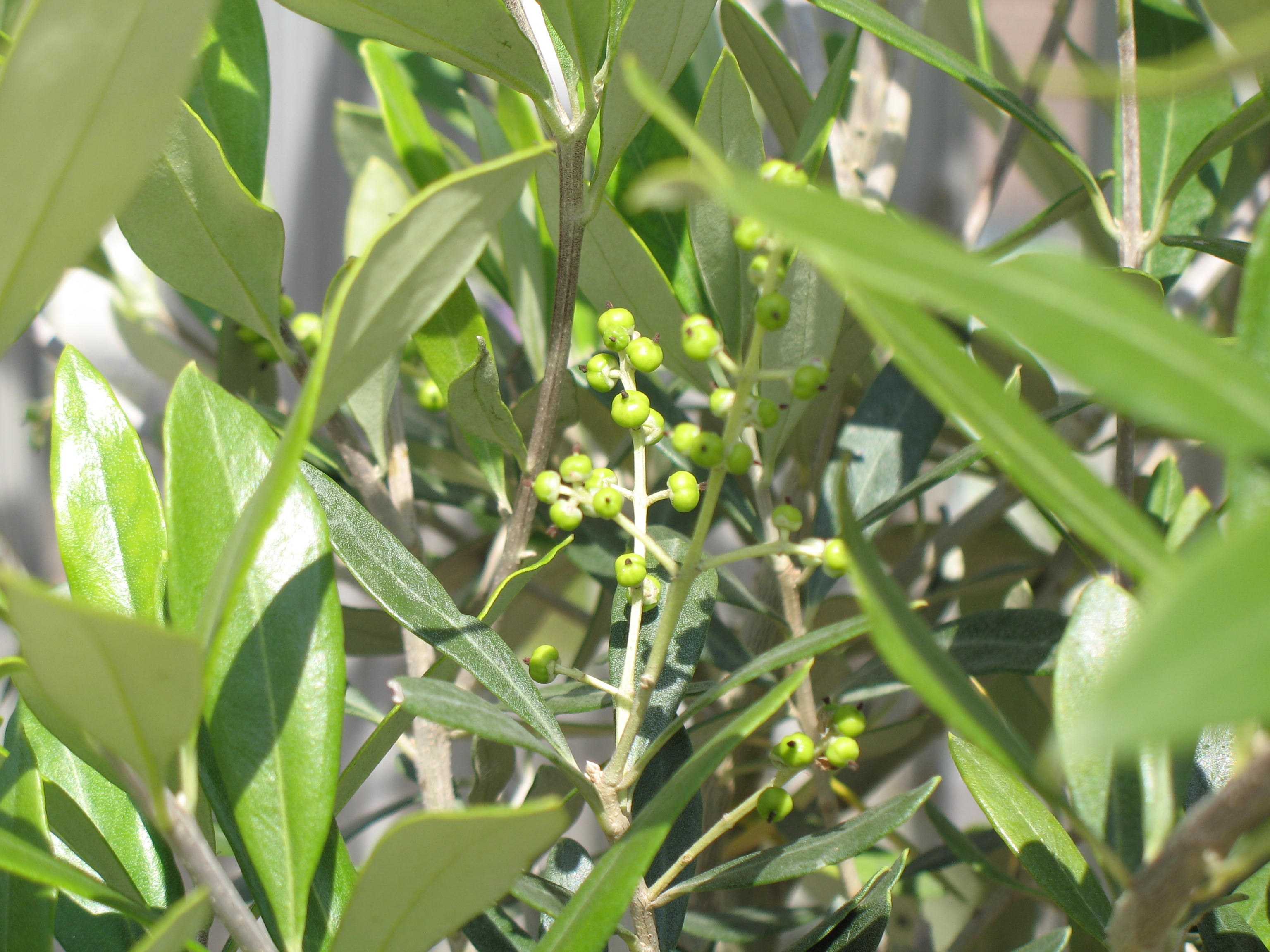
A little Olive tree is growing in a pot on our roof terrace and I would like to make some use of it.  It is about 5 years old, a couple of feet tall and very healthy.  My sister sent it as a living birthday present and it seems to enjoy life on the roof.  I have re-potted it a couple of times and pruned it lightly last year.  It last flowered in 2007 and the birds ate all but one of the resultant fruits before they grew to a decent size.  It has not flowered since but the little tree is now able to withstand being outside all winter so I feel confident that a little leaf harvesting, come late spring or summer, would not harm it.

It would be nice to get a little yield from the plant and as I’m unlikely to get many olives the leaves seem to be the best resource to use – but how?  Olive leaf extract sounds interesting but I wonder if anyone has tried making something useful on a very small scale?  Perhaps a tea?  I haven’t found anything in my herbal books and am very keen to hear from anyone with Olive leaf ideas.

Holly and Ivy (NL:Hulst en Klimop)

Not being a great one for tinsel and baubals, I generally opt for some sprigs of holly and ivy when decorating my home for the Yuletide festivities.  So I thought it was time to have a quick look at the herbal lore and uses attributed to these beautiful evergreen plants.

Holly (Ilex aquifolium)
Boughs made from the glossy leaves and scarlet berries of Holly have been used to decorate homes at the winter festivals of Yuletide and Saturnalia, since ancient times.  Early Christians are thought to have adopted the practice, to deck churches with evergreen boughs, from their contemporary Pagan cousins.  Ancient Romans believed that Holly could protect their homes from poison, lightening and witchcraft.  It’s not difficult to understand why, given the spiky, defensive structure of many holly leaves.  Planting holly bushes close to homes was thought to infer this protection.

The leaves, berries and bark of Holly have been employed in herbal remedies over the years.  The berries quickly cause vomiting (they were used a purgative) but the leaves (of several Ilex varieties) have long been used as a tea substitute in Germany and Brazil. The leaves have been thought to help with catarrh, smallpox and pleurisy.  They contain a bitter alkaloid called Ilicin which promotes perspiration. Traditionally Holly leaves have  been used to treat intermittent fevers and rheumatism.  The berries, when dried and powdered are astringent and have been used traditionally to stop bleeding.

Gathering holly for medicinal purposes is best done in May and June, at about noon time when they are dry of dew.  Gathering holly for decorative purposes should be done with respect for the plant, taking just a little, without harm.  I like to return the holly to the foot of the plant I have cut it from, when I take my decorations down.  It feels much more respectful to do this and hopefully the plant will benefit a little as the dried branches slowly rot down.  Holly can be found growing in hedgerows, as specimens in gardens and within woodlands.  There is plenty growing in central Amsterdam.

Ivy (Hedera helix)
Glossy, beautiful, angular Ivy grows easily in pots and makes a great addition to balconies.  It sticks so well to walls, with its amazing vertical fibre support system, that it will easily pull the mortar out from between brickwork if the plant is pulled off.  However Ivy is said to be one of the only plants that keeps walls dry, it’s leaves acting as a protective and beautiful curtain. The fibres become true roots when they meet water, until then they help ivy to attach firmly to the most unlikely surfaces.

Ivy is favoured by many birds for nesting and its berries provide a rich source of nectar for bees.  Ivy has the amazing ability to transform itself in many ways when it reaches unrestricted light, such as at the tops of trees or walls.  It then produces softer looking, ovate leaves and bunches of pretty flowers on a strong bush like structure.

There is some much lore associated with ivy.  Like Holly, Ivy has been used to decorate homes since ancient Pagan times.  Poets’ wreaths are made from ivy leaves, as is the wreath of Bacchus.  It was thought that gently boiling bruised ivy leaves in wine would remove the wines powers of intoxication.  Perhaps the alcohol simply boiled away? Perhaps not.  Ivy has long been a sign of fidelity and was given to newly weds in ancient Greece.

One of the few traditional medicinal uses for Ivy was as relief for sunburn.  Soft ivy twigs, when boiled in butter were thought to produce a useful remedy.  I think I will stick with Aloe vera for now but the ivy remedy could be worth experimenting with.