Category Archives: Blog

River of Herbs

River of Flowers is a UK based initiative which helps to plant Urban Flower Meadows, of all shapes and sizes, providing corridors of insect pollinated plants throughout cities. I read about it today, in the latest copy of Permaculture Magazine and got very excited about the project! Rather than wild flower meadows (which are of course wonderful and useful in many ways) I would like to create Urban Herb Meadows, here in Amsterdam and beyond.

River of Flowers began in London and seems to encompass many of the ideas that have come up in this website and the Amsterdam Urban Herbologists meetup group. We love nature, we want to learn from the plants, we continue to try our hands at guerrilla gardening and we like to put something back into the environment from which many of us harvest food and medicinals. We also appreciate that a world without pollinators would be very dark.

Amsterdam is rich in plant species and many Amsterdammers enjoy taking care of plants in tree pits, tiny pavement gardens and other strips of reclaimed land. I often look at and photograph these places and wish that more of the plants used could be edible or medicinal. And of course I wish that more of these urban gardeners knew how to harvest and use some of those amazing plants.

So with River of Herbs (the name will stay, if the folks at River of Flowers don’t mind – I have asked them) I’d like to do the following, with your help:

1. Identify and prepare unused spaces, however small, for growing useful perennial, biennial and annual herbs. I’m talking about spaces from plant pots to wasteland.
2. Sew suitable herb seeds and plant cuttings, roots etc. in these places. Suitable for the location, insects and food or medicine.
3. Tend the developing Urban Herb Meadows.
4. Map the locations of these Herb Meadows and photograph them.
4. When ready, harvest some of the material without compromising their usefulness to pollinators such as bees, hoverflies and butterflies.
5. Learn and teach how to use these herbs.
6. Build on successes and learn from the group process, to make more and more Urban Herb Meadows, creating an urban pollinator and food security friendly corridor.

So what do you think of this?
Am I just getting overexcited?
I wonder if our friends at Boskoi and City Plot may like to help out with this in some way?
Design& Collaboration, how about those seeded cards and papers we talked about ages ago?
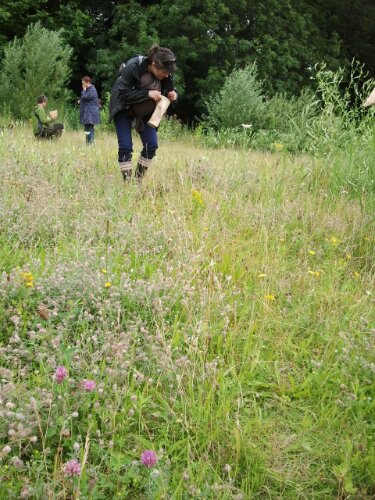
Would YOU like to come and collect wild herb seed with me, or your friends and family, over the coming summer weeks and through autumn? We can then make little packets of Urban Herb Seedmix, to sew in those new meadows when the time is ripe.

Please let me know what you think. I’m all ears and green fingers.
365 Frankendael Day 92

Not much time to write today, I really need to get my UH essentials book finished!

I did find some lovely herbs though..
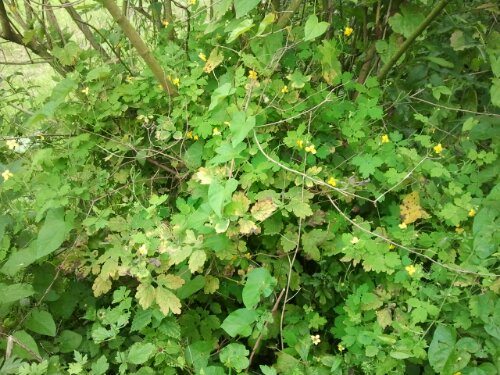
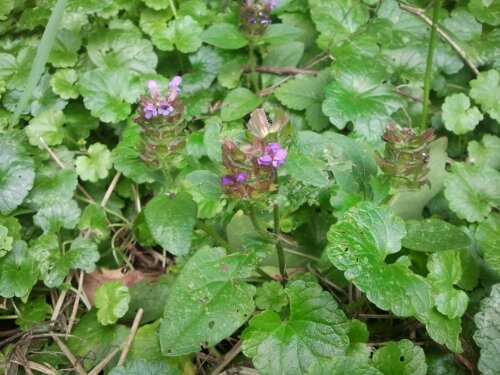
Firstly, a carpet of dark green evergreen Ground ivy (Glechoma hederacea) with a few purple flowering spikes of Self Heal (Prunella vulgaris) poking through.

Greater celandine (Chelidonium majus), fading but still flowering and still oozing that amazing (poisonous orange) wart zapping sap, when a stem is broken.

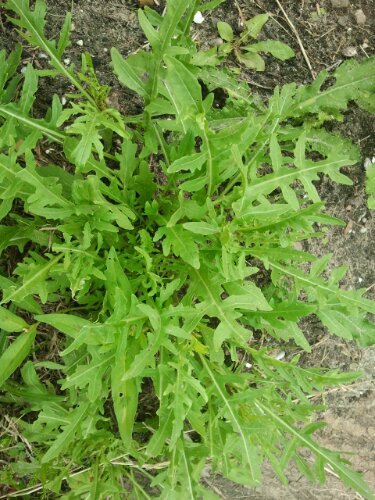
Wild Rocket (Eruca sativa), Arugula.

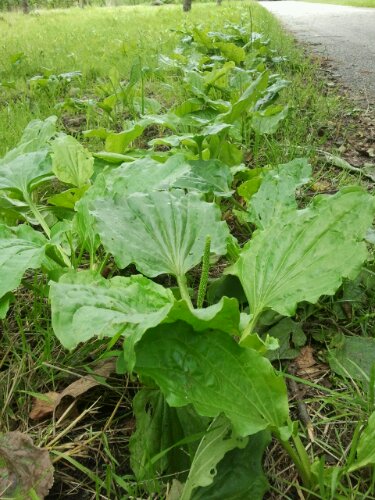
Plantain (Plantago major).

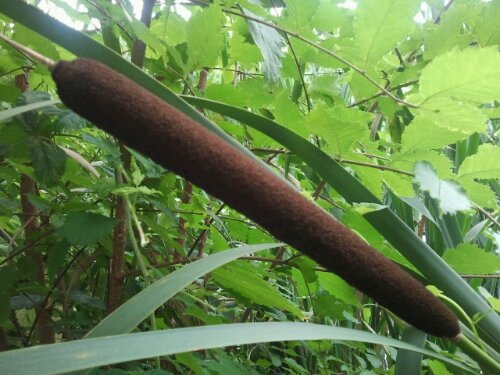
The flower head of a Reed Mace / Cat’s Tail (Typha sp.)

My little girl and I were so pleased to meet this flower head as it is developing on a bent over stem. All other flower heads in this part of the park are growing too far out in the water for us to reach safely. I don’t know if that’s the reason for the US common name, but it feels very like our cat’s tail when you stroke it! Maybe I’ll ask the Park gardeners, if I can help out when the autumn clearing comes?

Herb by Herb – Part 3 – Comfrey

Once a month a chance to learn in detail about a different common urban herb from either Jennie (who I run the meetup group with) or me, Lynn.

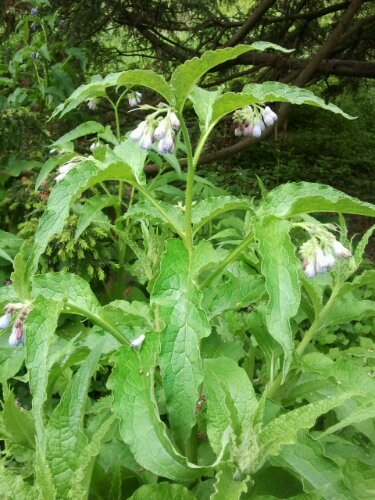
Part three is about Comfrey (Symphytum x uplandicum, S. officinalis). A deep healing plant growing all over town, with many uses and a confusing recent reputation. It’s an easy herb to find, identify, process and use. I will take this session in Park Frankendael on Tuesday 7th August 2012. 10.00 – 11.30.

In this short and sweet field workshop, you will learn how to make an infusion, poultice, infused oil and herb gel and about the properties, habitat, folk and medicinal history and current uses of the plant. You will take home a bag full of little herbal preparations and knowledge of how to do it time and time again with everyday materials.

We will try to run each monthly Herb by Herb workshop near the New Moon and the days of the week will vary. The August workshop is earlier than usual, due to the summer holiday. You are welcome to attend all, some or none of the series! Most materials will be provided. You’ll need to bring along a small pair of scissors, perhaps a flask of hot water and 2 small and clean glass jars (such as 90ml pesto jars).
Cost of the workshop is €10. Maximum 5 participants. Cost includes materials and a handout with plant details and preparation instructions.

As we will also make a gel during this workshop, you may like to bring a small used plastic tub.

Please contact me by email (lynn.shore@gmail.com) or through the meetup group if you are interested in joining this workshop.

365 Frankendael day 91

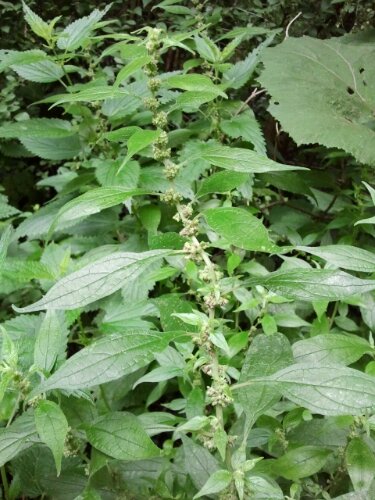
I harvested some of this beautiful Pennsylvania pelitory this morning and set up a vodka tincture for Tobias my canine neighbour.

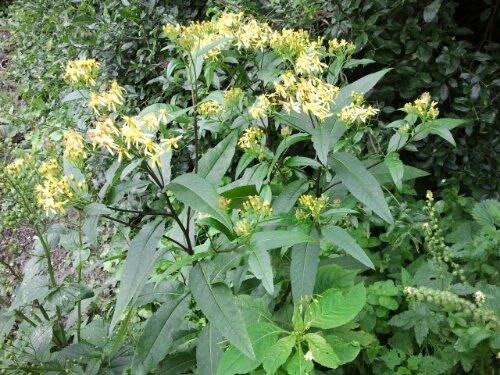
I’m looking out for Arnica at the moment, I’ve no idea if it grows in Amsterdam or this park, but I want to make a fresh batch of Arnica gel so need to make a tincture first. I found this pretty plant on my quest…

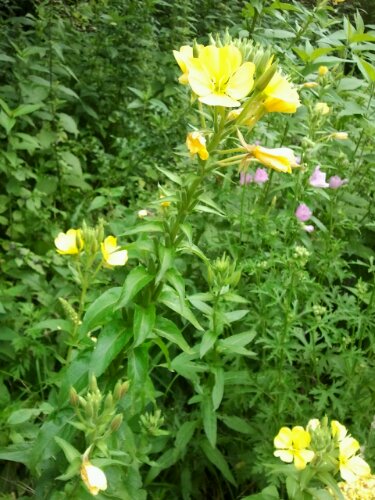
Also today, I’m often asked about Evening primrose. Yes its edible and medicinal and you can see it has big blousy flowers. I’m not a big fan of taking the seed oil but its nice to make a tincture from or to cook the leaves or roots.

Ground Elder (Aegopodium podograrium) is making a comeback in parts of the woodland. I suspect that the recent plentiful rain has helped it to freshen up. There is a little Enchanter’s nightshade also in this photo.

Here is a beautiful Marsh Mallow plant (Althaea officinalis) downy and gentle amongst Tansy and Geraniums and more, not so far from a waters edge.

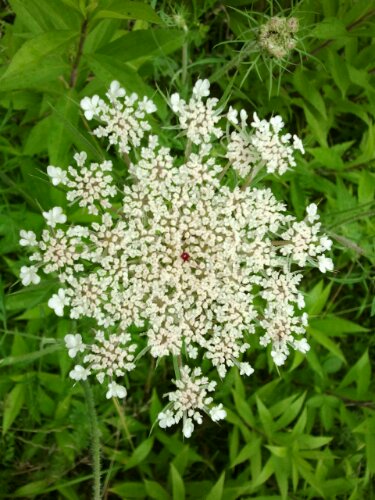
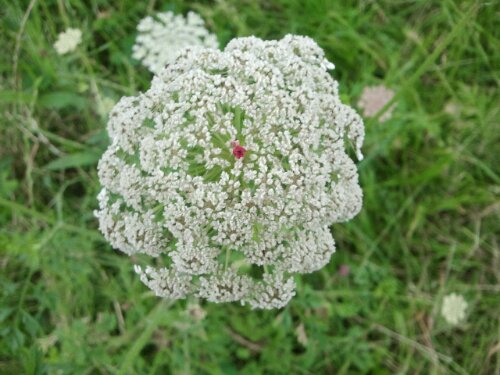
And lastly, another beautiful Queen Anne’s Lace flower (Daucus carota) with the tell tale red spot.

365 Frankendael day 90

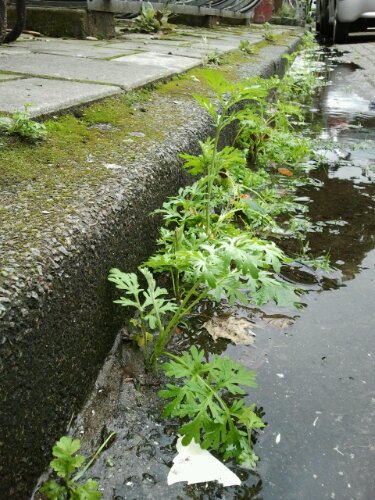
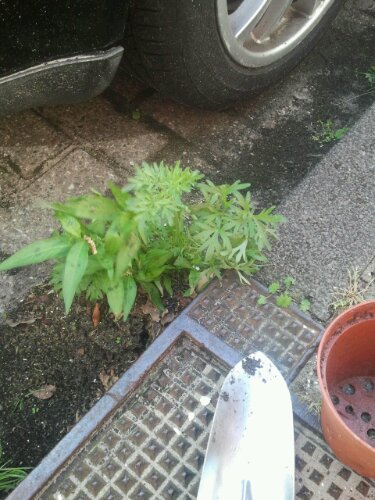
Today a photo of some young plants which are destined to grow in Park Frankendael but which currently reside in a gutter along my street, a block away from the park. I recently wrote about how my geveltuin Wormwood shrub has spread by seed to neighboring tree pits and pavement cracks. I transported a few to a pot in my kitchen and left others that had sprung up in safer spots. A couple of people are going to take on a plant or two at their homes.

Today I noticed that there are are at least a dozen more Wormwood (Artemisia absinthium) plantlets, doing rather nicely in the street gutter. I am about to gently move them to another pot. I’m all for leaving pop-up herbs where they choose but these are definitely destined to meet a swift end, via a council strimmer. Wormwood is a species listed as currently struggling to hang on to life in the Netherlands.

So, Would anyone else like one of these easy to grow and useful plants?

And, would anyone else like to help me replant them, in to sandy parts of the park?

365 Frankendael day 89

I was asked about a nice and safe herb to use for baby teething pain, so today I went hunting for a bag full of Meadowsweet from which to make a more of a pain relieving tincture. Here is some of that beautiful Lady of the Meadow, this morning in the park:

The plant is packed with Salicylate salts, what Asprin was isolated from many years ago. Compounded in this natural way, it reduces inflammation, relieves pain, reduces stomach acid (unlike Aspirin) and can remedy rheumatic pain, uric acid crystal build up, stomach ulcers and more. It is renowned as a good remedy for diarrhoea in young children. Bees also love it and I had to avoid disturbing plenty of honey bees, as I harvested the plant today. The plant is most used as a tea, and I’m using that today to ease inflammation and general pains from a classic “start of teachers school holiday”cold. It works a treat. Filipendula ulmaria is quite a wonder plant.

Here is a wonderful herb that is now going over. As it sets seed Feverfew always tends to break down its leaves and look like its been selectively sprayed by some nasty chemical. But it hasn’t, its just dying back after a busy season making flowers and now seed.


Above is a type of Sweet Clover (Melilotus alba), I mentioned it recently and how I chose not to eat it, even though the flowers taste sweet. It contains some unpleasant chemicals and if you enjoy it, try not to make a habit of eating much of it.

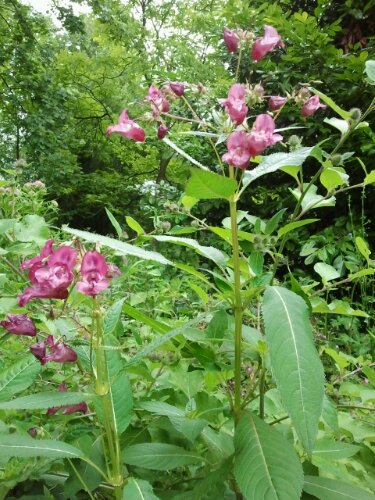
Lastly is a type of Balsam. I’ve not tried it but apparently its edible and also an invasive plant in some parts of Europe. I recently heard of Balsam bashing walks around National trust properties in the UK, maybe they do more harm than good as when a swathe of this plant is quickly removed other opportunistic plants, equally disliked such a Japanese knotweed, may move in.

Tuesday 31st July 2012 Urbanherbology Walk in Sarphatipark

Every time I walk or cycle past Sarphatipark, edible and medicinal plants seem to leap out at me, through the iron fence! So, as I continue to build material for my project and book, I think its time I ran an Urban Herb Walk there. I’d like to see just how many urban edibles and medicinals, can be found in 90 minutes.

Sarphatipark Urban Herb Walk
Tuesday 31st July
1230 –  1400
€8 per person
Max 12 Walkers.

Please contact me directly (lynn.shore@gmail.com) if you’d like to join this walk. The price includes a handout, to help you learn more about some of the herbs we are likely to find.

You may like to forage a snack or herb tea, on the way around.
– Bring a small flask of hot water, if you fancy making an urban herbal brew whilst we walk.
– Bring a small bottle of cold water, to wash any herbs that you may want to eat directly

We will meet at the main entrance of the park, the one near the children’s play area and the small building beside the plant swap centre.

The walk will go ahead, come rain or shine!

365 Frankendael day 88

Three lovely people joined me to learn about Ribwort (Plantago lanceolata, NL: weegbree) this afternoon. We made Ribwort succuss honey, Ribwort ointment from Ribwort infused oil and learned of the many ways in which Ribwort, and it’s sister Greater Plantain (Plantago major), have made themselves indispensable to communities around the globe.

We harvested a small paper bag full of Ribwort leaves from the meadow section of Park Frankendael and whilst doing that noticed some other very lovely plants…


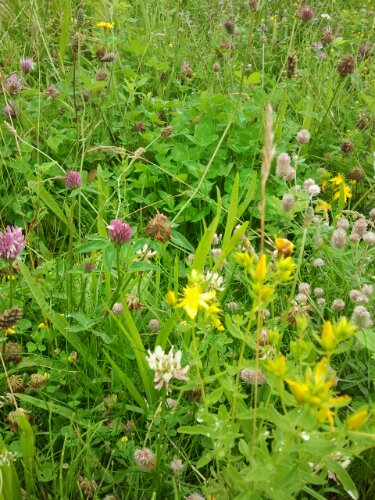
Here is a tiny section of the meadow with St. Joan’s / St John’s wort (Hypericum perforatum, NL: Sint Janskruid), Red and White clover, Ribwort and more.


Above is Teasel (Dipsacus fullonum, NL: Grote kardebol) in flower. That beautiful ring of tiny blooms will move as the flower head progresses into an equally stunning seed head.


Chicory (Chicorium intybus, NL: Wilde cichorei) in flower, I think this is the most beautiful blue in the plant kingdom. It always calms and cheers me when I am fortunate enough to see it.

Here is a a very furry looking and feeling clover, Hare’s-foot clover (Trifolium arvense, NL: Hazenpootje). A very pretty spreading plant which really livens up this already beautiful meadow. Its silky flower heads bob about in the breeze and I must say that apart from the hairs, it looks almost good enough to eat. I can only find confusing information about the eatability of this plant online and no reference to it in my wild food books. I did fine one definitive “don’t eat it” reference on a useful website, which is good enough for me to say – probably poisonous, not one to eat.

365 Frankendael day 87

I’ve been preparing for tomorrows Ribwort workshop but found time for a few photos of other herbs in the park..


This one shows the signature red spot in the centre of a Queen Anne’s Lace flower. Apparently, if you eat enough of those spots alone you may experience a hallucinogenic effect. Not sure about that but I think they are really pretty flowers and they signify the Wild Carrot growing beneath. As I mentioned on the herb walk yesterday, I’m not a big fan of hunting for wild roots, due to the harm it causes, and less still of the carrot family, due to the numerous toxic family members, but it’s good to know that Wild Carrots are around.


The photo above is of Motherwort (Leonurus cardiaca) in full bloom.


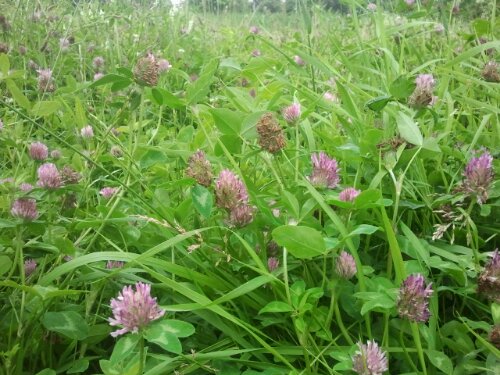
And here is a field of Red Clover looking very fertile in the park.


Lastly today, is a Garlic Mustard plant with ripe and dry seeds – well until it rained again today. I took two seed pods home and will save them for sewing in my street or nearby next spring. I love that plant!

Wormwood Rescue

When the council next comes to strim weeds in my street, these lovely Wormwood babies would be lost, so this afternoon I whipped lots of them out of the ground, to save them in plant pots.

I grow a vigorous and useful Wormwood plant in our super-dry geveltuin. I wrote about it recently, when I had to harvest lots of its growth to prevent damage by builders.

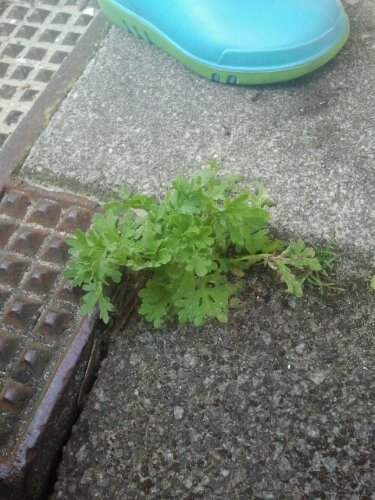
Since then I’ve been noticing its seedlings all down the street! The recent weather seems to have helped them to thrive in the road gutter, treepits and pavement cracks.

Wormwood (Artemisia absinthium) is a herb which gives Absinthe its flavour, works internally and externally as a natural pesticide (think intestinal parasites, plant pests, malaria etc) and can help with several digestive disorders including indigestion, gut spasms and lost appetite. Wormwood contains a mind altering, dangerous chemical which shouldn’t be consumed in quantity. It increases the likelyhood of a person having brain seizures, gives Absinthe it’s flavour, increases creativity and is the reason for Absinthe’s prohibition in some non-European countries. Wormwood is a rare plant in The Netherlands. It can be eaten very sparingly, in salads or cooked food. It is easily vinegared, tinctured, dried, infused in oil and more. Wormwood is the most potent member of the Artemisia family and needs to be treated with great respect. If you’d rather not consume the herb, be aware that it is associated with magical properties related to love and protection and I think it smells very pleasant when dried or fresh. I also find it very beautiful and love seeing it’s shimmering silver-grey foliage outside of my home.

If you would like one of these easy to grow Wormwood babies, please contact me. Bring me a clean small plant container with a little soil and you are welcome to have one or, for a Euro, you can buy one from me that is already potted-up.

I find that the plant grows best in well drained, sandy soil and a good sunny location. I grew it on a north facing balcony for a few years and it did fine but it revealed itself as a real goddess, when I planted it in the south facing pavement garden. I have uprooted only the seedlings that would have been strimmed, about ten more continue to grace the plant pots and tree pits of my neighbours.