Category Archives: Foraged only

Living wild in the city

It’s just six days into the WildBiome Project month, and already my relationship with food feels transformed. I find myself eating far less than usual, not because of restriction, but because wild food satisfies in a different way – deeply, viscerally.
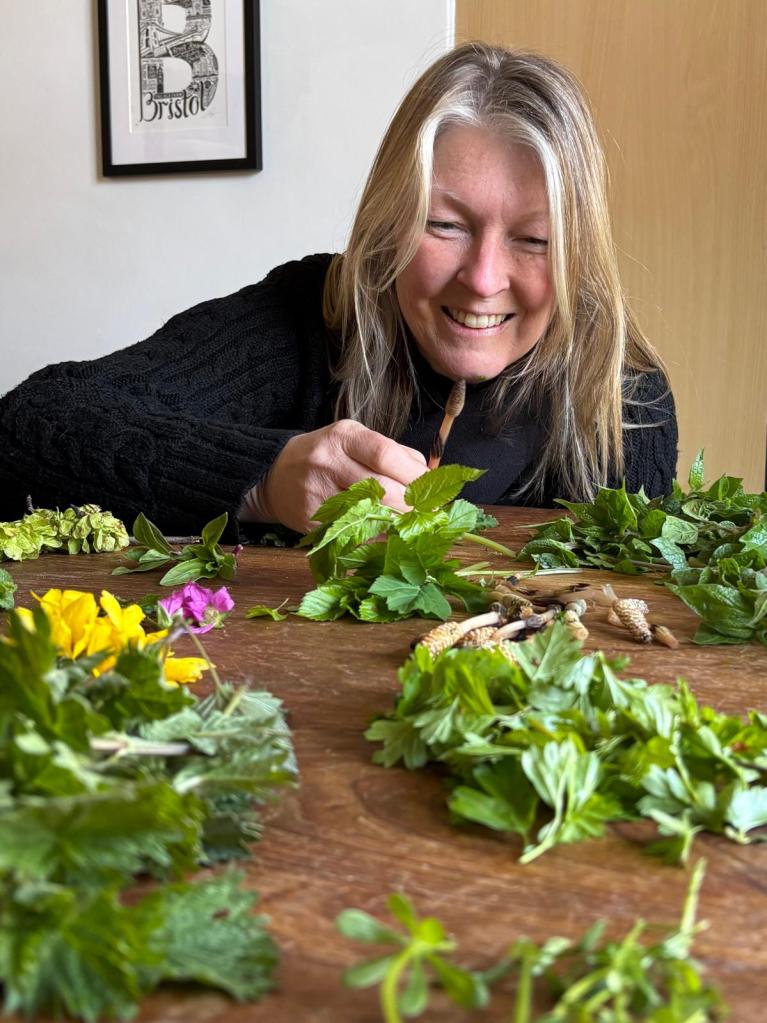
The WildBiome Project is a citizen science research initiative, organised by Mo Wilde and her daughter Caitlin, it brings together over 100 forager participants who are shifting their diets to primarily foraged and wild foods. The University of Bradford (UK) is working with the project, and explores how a need to live on ancient wild, local, famine foods might impact the health of modern humans. We’re tracking our health throughout, with start and end testing of gut microbiome, blood markers, and biometrics. We all keep a daily log of everything that we eat and drink. I am also tracking daily shifts in my mental and physical health.

There’s a stark difference between the wild greens and meats I’m eating now, and the shop-bought versions I’ve relied on in the past. Vegetables grown for mass production are often bred for size and uniformity, but in the process they’ve lost something essential: flavour, and likely nutrition too. In contrast, wild foods are packed with intensity – smaller, perhaps, but potent, rich, and alive.

The act of collecting all of my green food myself has also changed my experience entirely. There’s an intimacy that forms when you forage – a kind of sacred attention. I know this week but this week I’ve found myself spending more time with each ingredient, observing where it comes from, how it grows, how it feels to pluck it from the earth or the tree. This relationship is further deepened when it comes to wild meat.

This week I prepared and ate wild meat – deer shoulder, and duck breast. Both being lean, nuanced in taste, with far less fat than farmed meat. I could sense the creatures in the process, which brought a kind of ceremonial reverence to the act. From the moment of deciding to cook them to the careful seasoning with wild herbs, I gave full attention. I wanted nothing to be wasted. Even as a previous vegetarian, who’s long considered herself a very thoughtful consumer, this experience felt markedly different. The sterility of supermarket meat – even the organic kind – is incomparable to the energy that remains in wild flesh.

I visited my father-in-law during the week, a drive that winds through mile upon mile of Dutch farmland. The landscape is functional, but stark: wide-open fields of monoculture grasses, scattered blue feed containers, massive sheds filled with chickens. You hardly see a tree sometimes, let alone biodiversity. It’s efficient – but eerily empty. In contrast, the wilder parts of the landscape – the wetlands, reedbeds, patches of woodland – teem with life: deer, wild boar, rabbits, geese.

I deeply respect farmers and all they endure. This isn’t about blame or judgement. But it’s hard not to notice how skewed our system is – how difficult it is for most city folk like me to access ethically sourced wild meat. And, how disconnected most of us are from the life that sustains us. Imagine a landscape where more people ate far less meat, but what little they did eat came from the land itself – wild, respected, shared.

I’m also learning to appreciate the value of modern food preservation. My little freezer is now filled two-thirds with wild food – a security blanket of sorts. But I’m also aware of how vulnerable it is. A power cut, due to cable laying or drain repairs in my area, could erase all that effort. So I’m thinking ahead. I have plenty of dried foraged herbs, and locally harvested nuts (those thanks to a more forward planning friend) but I’m lacking wild pickles, dried mushroom and more – I’ll definitely remedy this for next year.

This autumn, I plan to forage more rosehips, blackberries, and nuts. I’ll dry mushrooms and grind them into powder, press roots and greens into pastes and condiments, collect grass seeds to winnow and cook, and build a pantry that doesn’t depend so heavily on electricity. These preserved foods will support not just me, but my family – Frank and Livvy already enjoy wild foods integrated into our regular meals. But I want to go further: I want wild food to be abundant and delicious enough that they can choose whole meals from it, not just flavour boosts.

I’ve also been shifting away from wheat. I already use organic spelt, which feels gentler on my gut, but I’m now using chestnut and acorn flours – rich, earthy, and gluten-free. They won’t replace everything, but they open up new textures and tastes. And they are available from Amsterdam street trees. A more feral kind of baking.

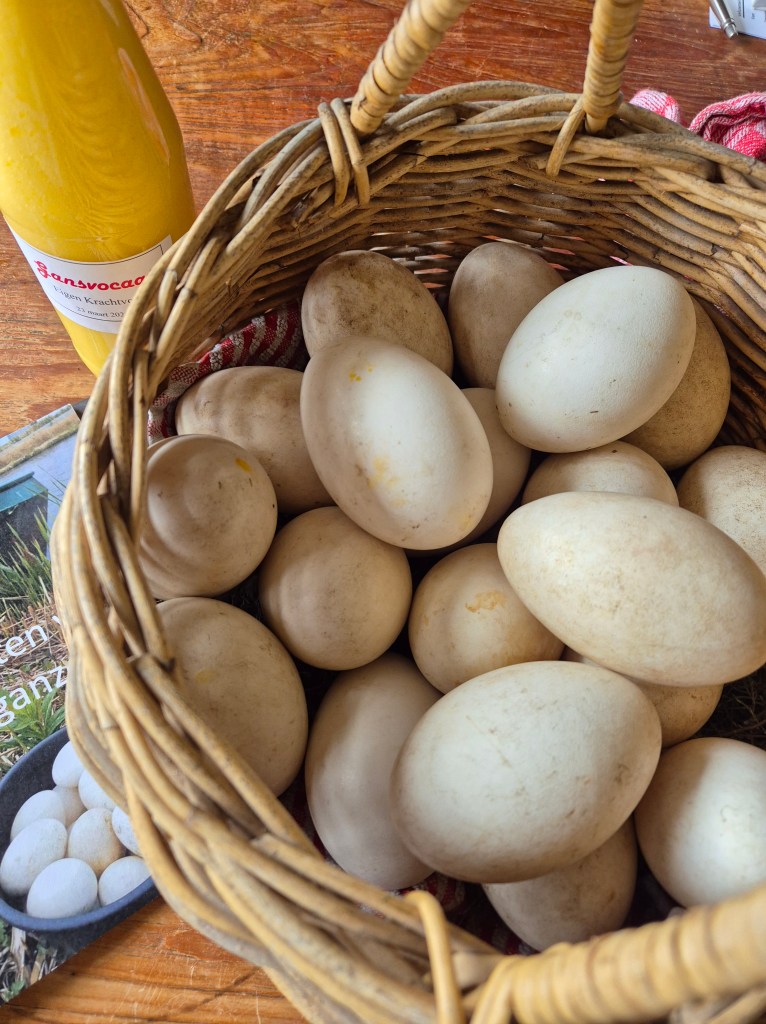
One final joy this week: goose eggs. I’ve been fortunate to connect with a group licensed to collect them (Eigenkracht voer) – part of an effort to manage populations in a wetland area close to Schiphol airport. Rather than shooting or gassing, they use a more humane method: nest-emptying. They carefully remove eggs from accessible nests by boat, leaving one or two in each nest. The process is regulated, seasonal, and animal-conscious. Goose egg collecting was in season until the end of March, and I was able to get a basketful – they’re the equivalent of two chicken eggs each, and utterly delicious.

There are still three weeks to go on this WildBiome journey, but I’m already planning beyond. I won’t continue eating 100% wild – not while I live in the heart of Amsterdam, surrounded by incredible global cuisine that I still want to enjoy occasionally. But I will rebuild my pantry. I want the backbone of my diet to be wild, local, environmentally sound, and deeply nourishing. A way of participating in the land I live on, not just consuming from it.

This isn’t about perfection. It’s about connection. It’s about weaving food, place, and life together – one meal at a time.

Foraging in January

Would you like to know which edible and medicinal plants are possible to find in Amsterdam in the middle of winter? Want to know how to supplement your diet for free from local plants? How to make simple remedies and first aid treatments from them? And would you like to know about the local poisonous plants? Great! Then, join me for a walk in Park Frankendael and let me show you what’s around, even in the colder part of the year; Learn how to identify delicious and nutritious plants, how to ethically harvest them, and how to use them.

January Walks – Choose from:
Sunday 12th January
11.00 – 12.30 – Park Frankendael

(Full – Contact to join the Waiting List)
€15 per person
and
Wednesday 22nd January
10.00 – 11.30 – Park Frankendael
€15 per person

The walks will start and end at the same location, near the bike racks closest to Huize Frankendael/Restaurant Merkelbach. We will walk in the woods, alongside water, on grass and other areas of the park – including the foraging gardens. The walk will go ahead in all weather except storms, so dress for it 🙂 You will receive a handout to help you remember the plants and uses afterward and we will drink herbal tea from herbal finds. If you want to forage, please bring along a small paper or cotton bag to take home some herbs and seeds. The walk is gentle and fairly slow, the paths are mostly natural, of woodchip or soil. There is a public toilet in the park. Come prepared to connect simply with urban nature.

Who am I?
My name is Lynn Shore, I have been teaching urban foraging and self-sufficiency skills, in Amsterdam for over 14 years and have been running a city foraging garden for the past 10 years. I am a fully qualified herbalist and a proud member of the Association of Foragers. Over the years, I have led walks for large and small groups (including Greenpeace), work with top bartenders, restaurants, eco-friendly businesses, and community groups. This coming April I will take part in a research project where I will live only on foraged food for the month to study the effects on the body. My Master of Public Health degree specialised in Urban Food Security and all of my work aims to connect city people with nature – to improve health, wellbeing and the environment. I am passionate about this and love teaching others how to do it. This walk is in English – I also speak Dutch.

Booking Information
Payment is by bank transfer to account NL41 SNSB 0705 8981 99 (LM Shore). Payment is required to secure your booking.
Please Email urban.herbology.lynn@gmail.com to book or in case of questions.

Cancellation Policy
Payments are fully refundable up to 24 hours before the event. If you need to cancel after that time (so less than 24 hours before the event start time) a refund can only be made if we can fill your place with someone else.

Foraged-only days

Could you add more foraged food to your diet?
Years ago, I set myself a challenge to find wild growing edible plants in Amsterdam, every day for a year. It was fun and it was possible, the posts are in this blog listed under 365 Frankendael. I have set myself a new challenge, to have one complete day a week, for a year, where I eat only foraged foods and drinks made from foraged finds. For the other six days a week I will eat as I usually do, some foraged food, mostly shop-bought food, but with some adjustments.

On the foraged-only days, I will drink herb teas made with plants that I have foraged, and eat only foods made from plants that I have foraged myself, or other foragers have given me. Or, the meals could include meat or fish which has lived wild and is caught or culled locally to Amsterdam or places where I travel. My foraged-only meals will not include purchased grains, seeds, powders, tubers, spices, herbs, eggs etc. If food is not foraged, I will not eat it that day and if I do not have enough foraged foods to make a hearty meal on that day, then so be it; I will have a light eating day. This is not a great problem for me as I generally overeat and I see this challenge as a way to embrace intermittent fasting more than I usually do. I love food and derive great enjoyment from creating meals from foraged finds, so If I do have enough for a hearty foraged-only day, I will be delighted!

Today’s finds in Amsterdam

Meals on the partly-foraged days will involve some foraged foods mixed with my regular foods, purchased from local shops. These purchased foods include rice, oats, meat, fish, vegetables and fruit. The dietary adjustments that I plan are firstly, adding more foraged foods daily than I usually do and secondly, to make far more effort to buy and eat seasonally appropriate foods.

The photo shows what I foraged in Amsterdam east today. This is a little more than I would usually forage weekly because an annoying edible weed (Pennsylvania pellitory) is in great shape at the moment so I took more than I ususally would. These finds will add foraged goodness to my family’s diet. This will be my main forage for this week because I have a busy schedule the coming days. Some of this plant material will be eaten this week (it keeps well in my fridge), some will be preserved (in salt, alcohol, dried in paper bags etc) which will make it available to me throughout the year. That will become especially useful during the winter/early spring “hungry gap”, where the nuts and berries have gone and wild spring greens are yet to show themselves above soil. I will keep to the ethical foraging rules which I created many years. So, no root harvesting, unless I have permission from the landowner, and of course being highly attentive to light, safe, clean and environmentally sustainable harvesting.

This feels a great time of year to start a foraging challenge, for several reasons;
1. Nuts, berries and other fruit are foragable late summer into autumn, so it is a perfect time for stocking up on those.
2. There are still plenty of leafy green vegetable type plants, growing locally as weeds. So time to make the most of them directly and presevere as much as possible before the days shorten and those plants fade underground.
3. This will give me something green, wholesome and enriching to focus on as the days become shorter. Foraging is great for mental health!
4. I am a year round forager, but tend to forage tiny amounts of wild herbs alone during the winter and I stick to my favourite others throughout the year. This challenge will encourage me to use a wider range of foraged food, especially through the winter.
5. I love mushrooms. I don’t teach others how to forage them as my expertise is in plant foraging but I safetly forage about 8 common local species myself. The main mushroom season is fast approaching.. nuff said.
6. I want to find out more about local sources of wild caught fish and locally culled meat (such as venison). I shop organically (especially for dairy, meat and fish) but I do not like the physical and psycological distance between consumer and food source (especially animals).

Inspiration for this challenge
The Wilderness Cure by Mo Wilde, is an excellent book which I now highly recommend to anyone interested in foraging and food sovereignty. Mo is also a professional forager and herbalist. She lives in the Scottish countryside. Her book documents how she lived completely off wild food (foraged, caught or hunted) for a year. From the first page, it is inspiring! The book also includes lots of ideas for how to eat the diverse foraged foods which Mo found. The information is beautifully woven into diary entries. It also contains useful tables at the back, to help readers build their plant knowledge. I have been teaching people to forage in Amsterdam for well over a decade, and almost never recommend foraging books. Many regurgitate the same information, others contain quite dubious recipes and advice, but, I am thoroughly excited by Mo Wilde’s book and won’t be lending this one out to any freinds for a long time!

As much as I would love to live off the land year-round, and probably could in the right setting, I live in Amsterdam, surrounded by built up streets and well-used public spaces. Added to this, I work most of the week and foraging is not legal in the Netherlands. So, I decided to challenge myself to a lighter version of the Wilderness Cure. Hence one foraged-only day per week and a boost to my other part-foraged days. I can manage that, and I am sure it will be fun and enriching. I hope that my doing this will encourage at least a few other people, especially those towns and citys, to get out and ethically forage in their neighbourhoods. Foraging is such a wonderful way to connect with your local envirnment and get you out in more fresh air. Maybe you don’t live in much fresh air, but I see that all the more reason to get outside and realise that change is needed. In my experience, people who live in urban environments tend to be the ones who think that foraging is impossible for them, but it is not, I really see it as a birthright. We need to forage very carefully and ethically in urban spaces, but shouldn’t everyone, wherever they go? I think that every one could include at least a touch of foraged food to their lives. And in doing so, green magic can start to evolve in their lives.

As Mo Wilde did, I will chart a few personal health markers, at the start of the challenge and periodically as I move through the year. It will be interesting to see if this diluted version of the Wilderness Cure will have much impact on my body and mind. I will share updates on this blog periodically, less on the health markers, more about the food and finds.

Something for you?
If you are interesting in taking up the foraged-only challenge, and getting some moral support by sharing your successes and difficulties with me and others, please follow my blog or insta posts, reply to this post, or send me an email. I think that a foraged-only day a week, or simply challenging yourself to eat some foraged finds, can bring great rewards on many levels.