Category Archives: Projects

365 Frankendael day 91

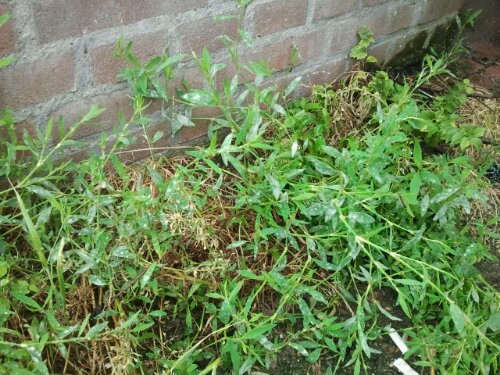
I harvested some of this beautiful Pennsylvania pelitory this morning and set up a vodka tincture for Tobias my canine neighbour.
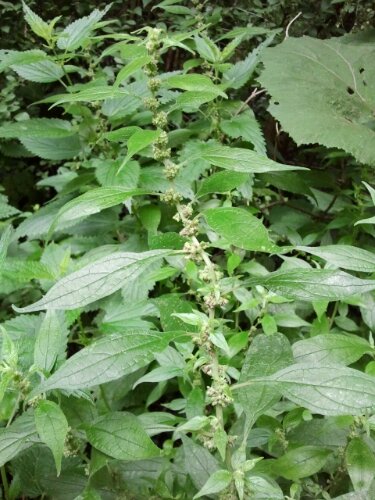
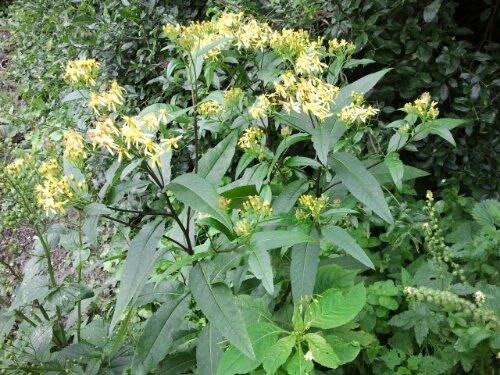
I’m looking out for Arnica at the moment, I’ve no idea if it grows in Amsterdam or this park, but I want to make a fresh batch of Arnica gel so need to make a tincture first. I found this pretty plant on my quest…
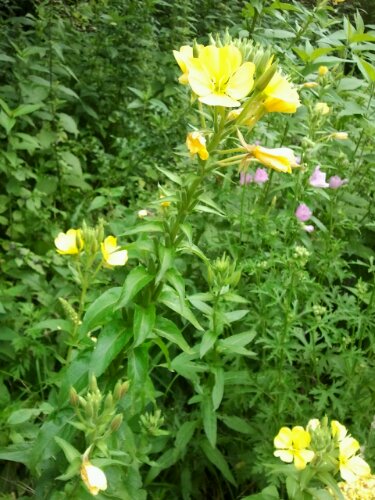
Also today, I’m often asked about Evening primrose. Yes its edible and medicinal and you can see it has big blousy flowers. I’m not a big fan of taking the seed oil but its nice to make a tincture from or to cook the leaves or roots.
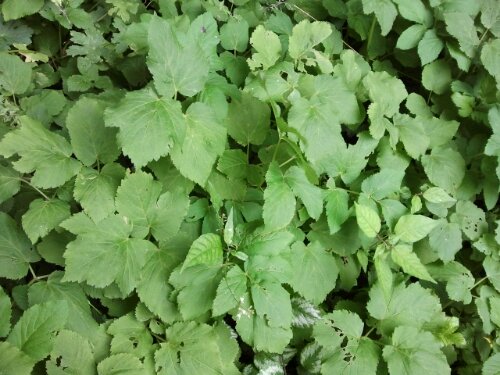
Ground Elder (Aegopodium podograrium) is making a comeback in parts of the woodland. I suspect that the recent plentiful rain has helped it to freshen up. There is a little Enchanter’s nightshade also in this photo.
Here is a beautiful Marsh Mallow plant (Althaea officinalis) downy and gentle amongst Tansy and Geraniums and more, not so far from a waters edge.

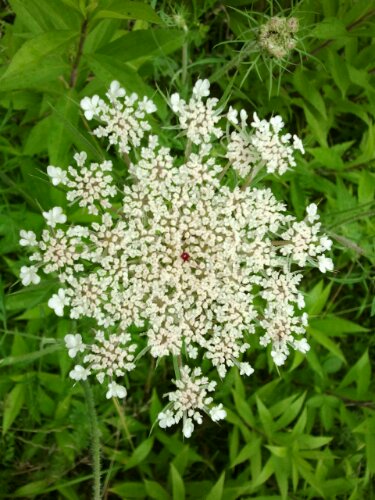
And lastly, another beautiful Queen Anne’s Lace flower (Daucus carota) with the tell tale red spot.
365 Frankendael day 90

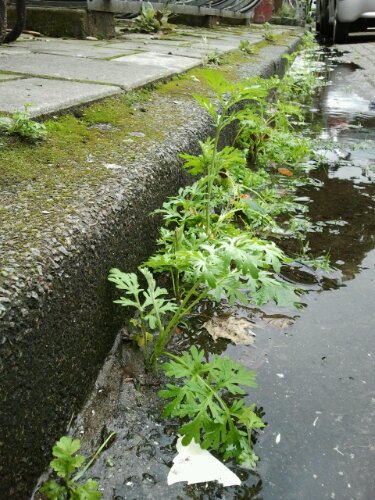
Today a photo of some young plants which are destined to grow in Park Frankendael but which currently reside in a gutter along my street, a block away from the park. I recently wrote about how my geveltuin Wormwood shrub has spread by seed to neighboring tree pits and pavement cracks. I transported a few to a pot in my kitchen and left others that had sprung up in safer spots. A couple of people are going to take on a plant or two at their homes.

Today I noticed that there are are at least a dozen more Wormwood (Artemisia absinthium) plantlets, doing rather nicely in the street gutter. I am about to gently move them to another pot. I’m all for leaving pop-up herbs where they choose but these are definitely destined to meet a swift end, via a council strimmer. Wormwood is a species listed as currently struggling to hang on to life in the Netherlands.

So, Would anyone else like one of these easy to grow and useful plants?

And, would anyone else like to help me replant them, in to sandy parts of the park?

365 Frankendael day 89

I was asked about a nice and safe herb to use for baby teething pain, so today I went hunting for a bag full of Meadowsweet from which to make a more of a pain relieving tincture. Here is some of that beautiful Lady of the Meadow, this morning in the park:

The plant is packed with Salicylate salts, what Asprin was isolated from many years ago. Compounded in this natural way, it reduces inflammation, relieves pain, reduces stomach acid (unlike Aspirin) and can remedy rheumatic pain, uric acid crystal build up, stomach ulcers and more. It is renowned as a good remedy for diarrhoea in young children. Bees also love it and I had to avoid disturbing plenty of honey bees, as I harvested the plant today. The plant is most used as a tea, and I’m using that today to ease inflammation and general pains from a classic “start of teachers school holiday”cold. It works a treat. Filipendula ulmaria is quite a wonder plant.

Here is a wonderful herb that is now going over. As it sets seed Feverfew always tends to break down its leaves and look like its been selectively sprayed by some nasty chemical. But it hasn’t, its just dying back after a busy season making flowers and now seed.


Above is a type of Sweet Clover (Melilotus alba), I mentioned it recently and how I chose not to eat it, even though the flowers taste sweet. It contains some unpleasant chemicals and if you enjoy it, try not to make a habit of eating much of it.

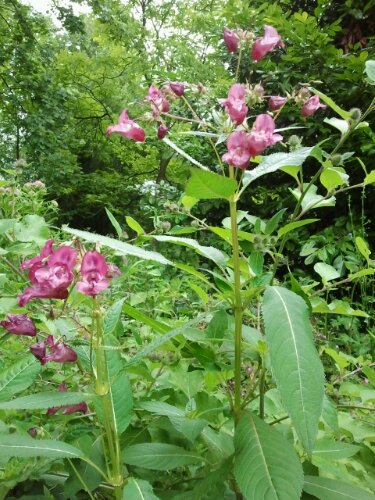
Lastly is a type of Balsam. I’ve not tried it but apparently its edible and also an invasive plant in some parts of Europe. I recently heard of Balsam bashing walks around National trust properties in the UK, maybe they do more harm than good as when a swathe of this plant is quickly removed other opportunistic plants, equally disliked such a Japanese knotweed, may move in.

Tuesday 31st July 2012 Urbanherbology Walk in Sarphatipark

Every time I walk or cycle past Sarphatipark, edible and medicinal plants seem to leap out at me, through the iron fence! So, as I continue to build material for my project and book, I think its time I ran an Urban Herb Walk there. I’d like to see just how many urban edibles and medicinals, can be found in 90 minutes.

Sarphatipark Urban Herb Walk
Tuesday 31st July
1230 –  1400
€8 per person
Max 12 Walkers.

Please contact me directly (lynn.shore@gmail.com) if you’d like to join this walk. The price includes a handout, to help you learn more about some of the herbs we are likely to find.

You may like to forage a snack or herb tea, on the way around.
– Bring a small flask of hot water, if you fancy making an urban herbal brew whilst we walk.
– Bring a small bottle of cold water, to wash any herbs that you may want to eat directly

We will meet at the main entrance of the park, the one near the children’s play area and the small building beside the plant swap centre.

The walk will go ahead, come rain or shine!

365 Frankendael day 88

Three lovely people joined me to learn about Ribwort (Plantago lanceolata, NL: weegbree) this afternoon. We made Ribwort succuss honey, Ribwort ointment from Ribwort infused oil and learned of the many ways in which Ribwort, and it’s sister Greater Plantain (Plantago major), have made themselves indispensable to communities around the globe.

We harvested a small paper bag full of Ribwort leaves from the meadow section of Park Frankendael and whilst doing that noticed some other very lovely plants…


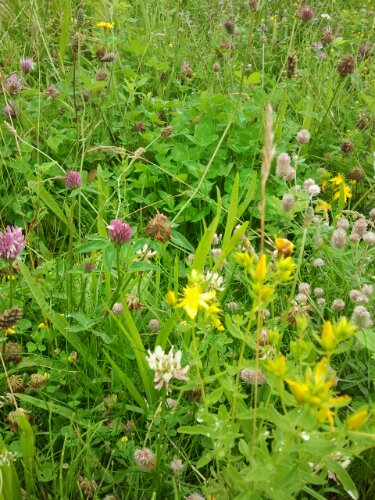
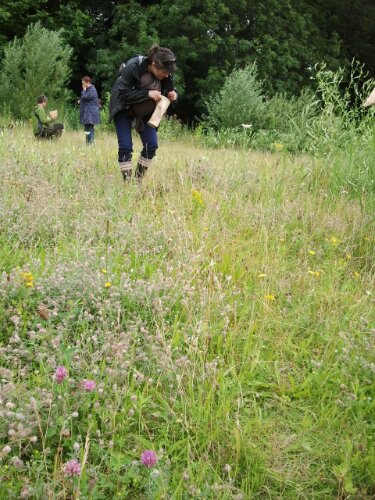
Here is a tiny section of the meadow with St. Joan’s / St John’s wort (Hypericum perforatum, NL: Sint Janskruid), Red and White clover, Ribwort and more.


Above is Teasel (Dipsacus fullonum, NL: Grote kardebol) in flower. That beautiful ring of tiny blooms will move as the flower head progresses into an equally stunning seed head.


Chicory (Chicorium intybus, NL: Wilde cichorei) in flower, I think this is the most beautiful blue in the plant kingdom. It always calms and cheers me when I am fortunate enough to see it.

Here is a a very furry looking and feeling clover, Hare’s-foot clover (Trifolium arvense, NL: Hazenpootje). A very pretty spreading plant which really livens up this already beautiful meadow. Its silky flower heads bob about in the breeze and I must say that apart from the hairs, it looks almost good enough to eat. I can only find confusing information about the eatability of this plant online and no reference to it in my wild food books. I did fine one definitive “don’t eat it” reference on a useful website, which is good enough for me to say – probably poisonous, not one to eat.

365 Frankendael day 87

I’ve been preparing for tomorrows Ribwort workshop but found time for a few photos of other herbs in the park..


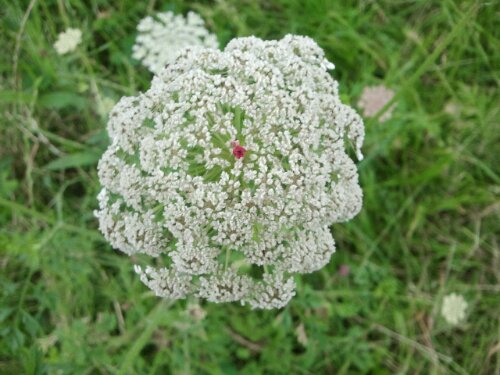
This one shows the signature red spot in the centre of a Queen Anne’s Lace flower. Apparently, if you eat enough of those spots alone you may experience a hallucinogenic effect. Not sure about that but I think they are really pretty flowers and they signify the Wild Carrot growing beneath. As I mentioned on the herb walk yesterday, I’m not a big fan of hunting for wild roots, due to the harm it causes, and less still of the carrot family, due to the numerous toxic family members, but it’s good to know that Wild Carrots are around.


The photo above is of Motherwort (Leonurus cardiaca) in full bloom.


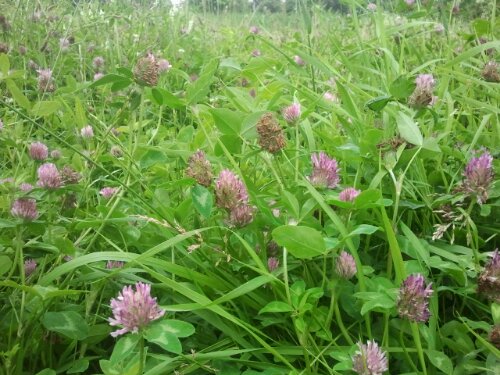
And here is a field of Red Clover looking very fertile in the park.


Lastly today, is a Garlic Mustard plant with ripe and dry seeds – well until it rained again today. I took two seed pods home and will save them for sewing in my street or nearby next spring. I love that plant!

365 Frankendael day 86 – Thank you!

Here are some of today’s urban herb walkers, taking time for a freshly brewed herbal cuppa as we ended our walk, in Frankendael’s hidden herb garden.

All times of year offer special delights when herb walking but I think most would agree that mid July is a particularly interesting time. There are still plenty of flowers around, plenty of rich foliage and also plenty of seeds forming on plants. This is not the time for smart spring freshness, it’s the time for herbs that are so big they spill over paths and mix right in amongst each other. This is a time of hedonistic herbal plenty.

We looked at too many herbs to mention here (most are on the walk handout) but a few, which I want to give links to, are as follows:

Birthwort (very poisonous) (Aristolochia clematis). See day 83 for a few details.

Motherwort (Leonurus cardiaca), my thrice daily tincture tipple, for combatting stress and far more.

Hedge Woundwort (Stachys sylvatica) which we found smelling interesting amongst a patch of another edible wound herb called Enchanter’s nightshade (Circaea lutiana)

Meadowsweet (Filpendula ulmaria), Please see day 14 for details.

Thank you again, to everyone who joined me for today’s walk. I thoroughly enjoyed meeting you and I hope that your herbal adventures are filled with fun, health and good flavours!

For forthcoming herb walks and gatherings, please see my Events page.

365 Frankendael day 85


Another monsoon day today, so here’s an edible that loves to have its feet very wet – Cat’s Tail (Typha sp.)
A plant with a multitude of uses. Here’s a useful Wild man Steve Brill link about the plant.


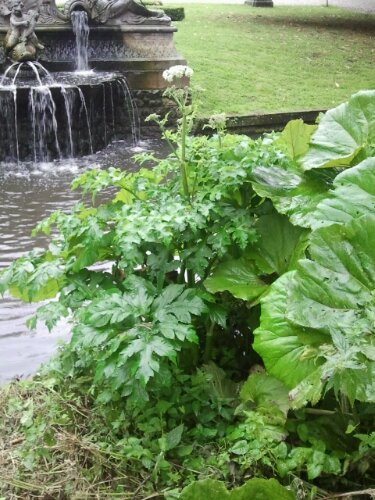
The plant to the left in this next photo is likely to be Common Hogweed (Hereacleaum sphondylium). Common Hogweed is edible and much loved by many foragers so there are many traditional and modern recipes for those who like it but it is easily confused with poisonous plants (especially Giant Hogweed) so if you are interested in it be sure to identify it using several reliable sources before picking and again before cooking.

Thank You Canalside Walkers!

A lovely group of Urban Herbies braved the weather today and joined me for a herb walk in the centre of Amsterdam. Writing my book has begun so the walk was able to help me to identify which of the Urban herbs I already know are also growing happily in the most pressured city centre habitats. We found lots of useful and tasty herbs. Here’s a brief summary of the plants we found and a few others which I found en route to the walk.

Fat hen (Chenopodium album) NL: Melganzenvoet

Geranium species.

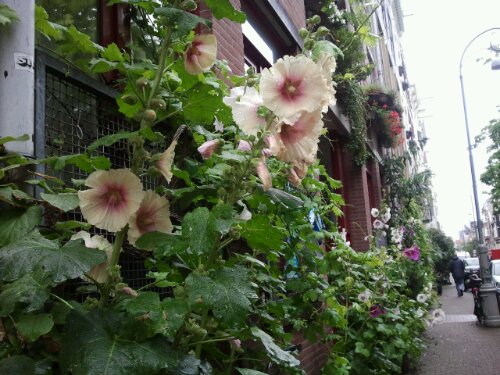
Hollyhocks NL: Stockroos

A tiny Rosebay Willow herb (Epilobium angustifolium) NL: Wilgenroosje.

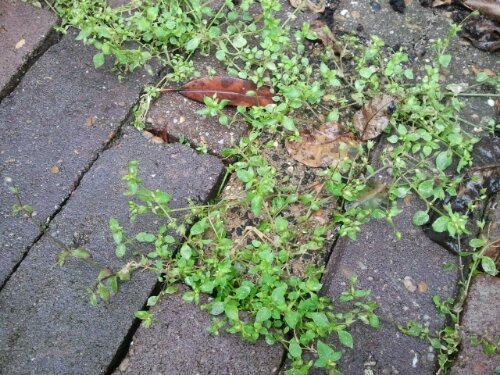
Chickweed (Stellaria media) NL: Vogelmuur

Probably Russian Comfrey (Symphytum uplandicum) Smeerwortel

German Chamomile (Matricaria chamomilla) Echte kamille This is the type used in commercial Chamomille tea.

Pellitory of the wall (Parietaria officinalis) NL: Groot Glaskruid. I found this on Kerkstraat before the walk. I am delighted to find this as it is hard to find elsewhere. Pennsylvania Pellitory grows abundantly in Amsterdam parks but this species is medicinally superior.

St. John’s / St Joan’s wort (Hypericum perforatum) Sint Janskruid

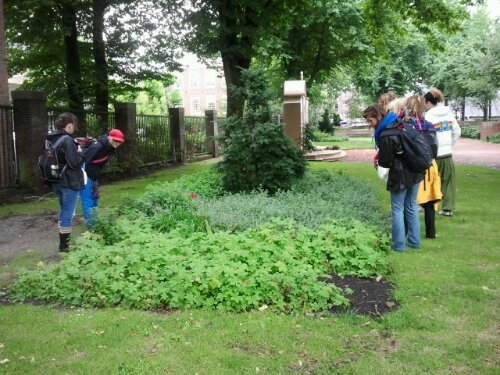
Some of today’s group looking at Catnip (Nepta sp.) Kattenkruid, Yew (Taxus baccata) and Geranium.

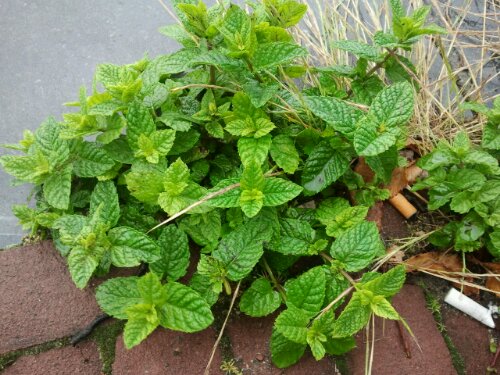
Mint (Mentha sp.) NL: Munt

Plantain (Plantago major) Wegbreed

Knot grass (Polygonum sp.) Varkensgras (edible but not to my liking)

We found many other herbs including Valerian, Lime…

365 Frankendael day 84

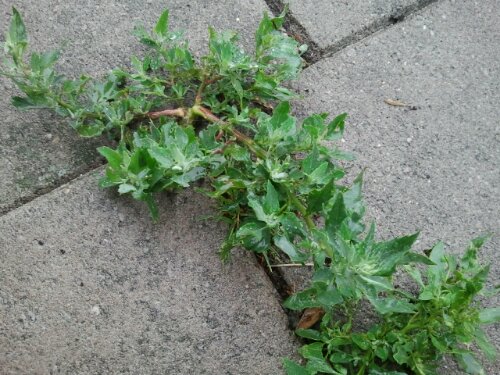
Waiting at the bus stop today, I was delighted to see that there is a survivor from the council mowed Fat Hen (Lambs quarters) population in the nearby scrubland! Here it is, looking defiant and determined to spread seed, in a pavement crack close by. Not one for picking though as its likely been walked over many times and is so close to the road.  Its seeds won’t know the difference however and this little urban warrior may help to populate the scrubland next year. I do hope so, Fat hen is one of the tastiest wild* vegetables that I know.

*Fat hen was once a popular cultivated vegetable which fell out of favour for some reason. Perhaps it was knowledge of its high Oxalic acid content or simply that blander palates fancied growing and eating something more spinach-like. Whatever the reason, Fat hen (Chenopodium album) is now a scrubland and hedgerow delicacy which I and many others, love to find!

Later today I’m hoping for a little sun and drier weather as its my first Canal side urban herb walk. What will we find, I wonder…