365 Frankendael day 320

image

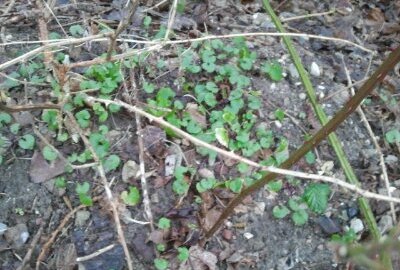
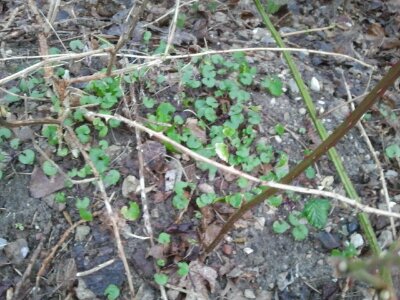
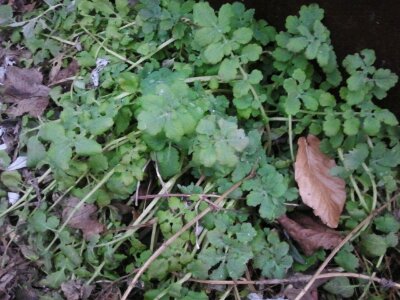
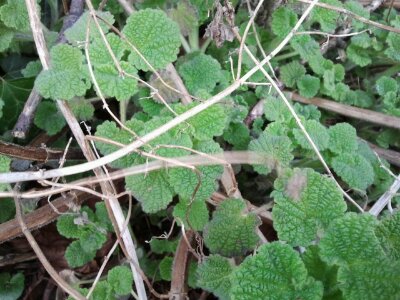
I think that these are early leaves of Scrophularia nodosa (Common Figwort), the foliage smells like it but I haven’t noticed it this early in the year before. Time and flowers will tell.

image

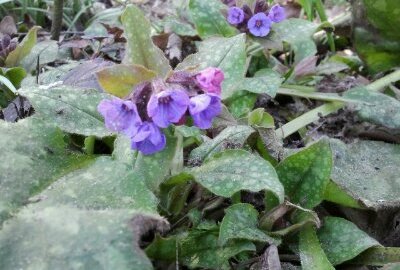
Above, Lungwort (Pulmonaria officinalis) again. This time with a mixture of pink and purple flowers. It really stands out at this time of year.
image

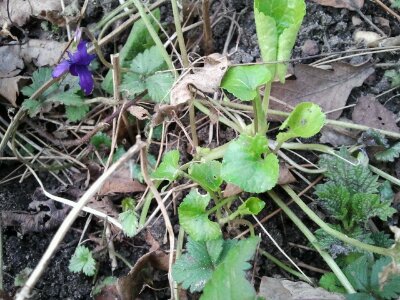
Here is pretty wild Dog Violet (Viola riviniana).

image

Stinging nettle (Urtica dioica). Rich in protein (10%!), vitamins and nourishing minerals. This one could be harvested now but I’ll wait for slightly larger plants, to allow leaves to be left on the plant, after I harvest tender tops.
image

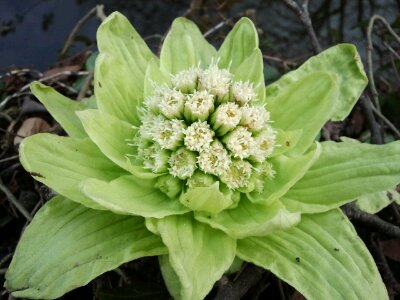
And this spring beauty is Petasites japonica (Japanese butterbur). I think it’s an absolutely beautiful plant and feel very fortunate to have found this one in full bloom in good light today, and in a place I could actually reach! It grows in park Frankendael in just a few places along side three water, on the steepest banks where I guess most people don’t dare to tred, consequently it survives year on year. In Japan this spring growth causes excitement in markets where it is sold as delicacy. It is used as an astma and migraine medicine but contains alkaloids which are toxic to the liver and are strongly linked with some cancers. So consumption should be limited! I have been waiting for this day for a couple of years, since wondering if those massive kidney shaped leaves of late spring/summer, in pockets along the waterways of Amsterdam which so looked like Fuki (Japanese butterbur) really were the real deal. I’m quite happy this evening. Of course not all of the big summer Fuki-like leaves belong to this plant, some are completely unrelated and inedible to say the least. That’s one reason why identification with flowers and watching a plant for it’s whole lifecycle is so important.

River of Herbs meeting – 17th March

image

I had planned for Spuistraat to be the base for the second RoH session but I want to wait for advice on how to make our efforts stick before starting anything there. It would be such a pity to start on Spuistraat, knowing that out efforts were almost bound to flounder. Let’s get going with easier sites first.

So the Session Two start point, on Sunday 17th March (10.30 start) will be the children’s playground in Fraunhofferstraat, in Oost Watergraafsmeer. That whole street has  treepits which could easily benefit from some herbs, it’s very close to my home (and geveltuin) so I’ll be able to keep an eye on things and it’s a neighborhood where the treepits get relatively low traffic and abuse. There is also an interesting stretch of bare, soil-rich treepits close by, on the Middenweg, which we can check out and Frankendael park is a block away for some inspiration.

image

We’ll look at:
Your herb meadow plans,
Ways to multiply your herb plants,
Seed sowing tips,
How to help young seedlings and
Some interesting ways to use street herbs.

Feel free to bring along:
A small gardening tool if you have one (trowel, hand fork etc),
Your session one booklet/ herb meadow plans,
Spare herb seeds and baby plants to use or share with the group.

How to find Fraunhofferstraat:
It is a side street off the Middenweg.
Tram 9 (halte Hugo de Vrieslaan) , bus 65 (halte Middenweg).
If you’re not sure of the best route, try checking the journey planner, 9292ov.nl

The River of Herbs website is being revised and rehosted this week so apologies for broken links etc whilst the glitches are sorted out. It’s probably best to look here for up to date information about meetings, at present.

365 Frankendael day 318

The plants in park Frankendael seem to have appreciated the sunshine and warmth today…

image

Elder leaves surging through.

image

Pretty purple flowers of Lungwort (Pulmonaria officinalis). It doesn’t really do much for the lungs but is said to be of mild medicinal action. It’s a borage family plant so is likely to contain some harmful alkaloids.

image

Hazel catkins.

image

Woodland geranium (Geranium species) above.

image

Not edible but very pretty, crocuses.

image

Primrose (Primula vulgaris), edible, medicinal but too slow at proliferating to pick at all.

image

Snow drops, too pretty to pick and poisonous.

image

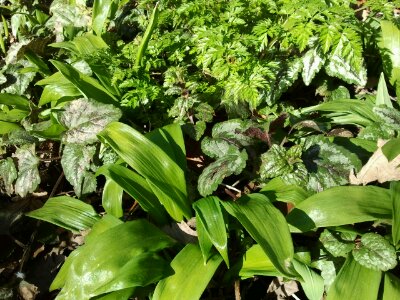
Lastly today, Wild garlic (Allium ursinum) with equally edible Yellow archangel (Lamiastrum galeobdolon) with it’s evergreen silvery leaves and toxic Hedge parsley (Torilis arvensis).

365 Frankendael day 317

image

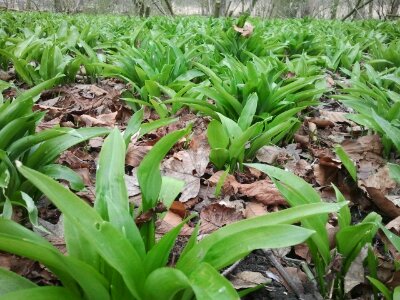
The three of us went foraging Wild Garlic (Ramsons, NL: Daslook) today, in Flevopark. There is a large concentration of healthy plants there and out was possible to pluck a handful of leaves without leaving a mark that anyone else would notice. Unfortunately we noticed signs that again, people have been ripping handfuls of leaves from individual plants. If you like to gather this plant, please do so in an ethical and environmentally sound way.

image

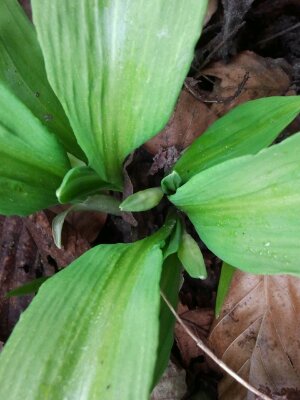
Already, the plants in Flevopark have flower stalks appearing. Once they become really obvious and are about to bloom, the plants taste differently and are best left alone to flower and set seed.

image

Stinging nettles are now springing up and are ready for picking the tips, to make infusions, pasta, soups, whatever takes your fancy – except for a salad 🙂

image

Could this be Garlic mustards early leaves? It looks like them but my hands stank of garlic by this point so out was difficult to tell.

Wild Garlic Mojo / Pesto

image

People tend to call herbs blended with pine nuts and cheese, Pesto. I know of another herb blend called Mojo, from holidays in Tenerife. Green mojo is similar to pesto but has more kick to it due to it containing garlic and coriander and they don’t add pinenuts, basil or cheese generally. I began turning today’s Wild Garlic harvest into a sort of pesto and it turned out far more like spicy Mojo. So I’m calling this Wild Garlic Mojo, because if you know both you’ll find this far more akin to Mojo than Pesto. I also like the name as the garlic properties certainly get your mojo up and running!

Wild Garlic Mojo
Take one handful of ethically harvested wild garlic leaves. Place in blender.
Add 250 ml best quality Olive oil, juice of half a lemon,
pinch of quality sea salt,
handful of freshly grated parmesan cheese.
Sprinkling of pine nuts.
Now blend to a fine consistency which should be very easy to pour. Mojo is runny.

Store in sterile glass containers and use as a spicy, aromatic, digestive dressing for grilled cheese, meat, tofu etc or as a useful cooking seasoning.

image

Mojo originates from the Canary islands and should have heaps of colour, flavour and punch. This has them all.

365 Frankendael day 316

image

Lemonbalm (Melissa officinalis) is springing up from its perennial roots. This little patch, which will become half a meter tall in a couple of months time, has a treepit as its home.

Many people know how refreshing and uplifting a pot of Lemonbalm tea can be. Not so many use it as an antiviral. It’s very easy to make an infused oil from this herb and then to turn a little of that into  cold sore healing lip balm, just with the addition of a little beeswax.

365 Frankendael day 313

image

It’s great to see the sun on my way to work this week – it had been dark at that time of day for many weeks. As we feel more energetic due to the increased light so too
do our plant neighbours.

This is the herb garden of park Frankendael, seen from Hugo de Vrieslaan, this morning. It doesn’t look much at present but give it a few weeks and it will be green, lush, medicinal and tasty. I don’t pick from that garden – it’s for everyone but I do look out for escapes which have naturalised close by. Skullcap is one such favourite from that patch.

image

And here’s a herb which also grows in that planted herb garden but which loves Amsterdam! Greater celandine, toxic but very useful for some skin conditions  (if used appropriately) such as Herpes. I wouldn’t put it anywhere near lips or delicate skin. Benign moles are also sometimes treated with the sap.