Tag Archives: Garlic mustard

365 Frankendael day 52


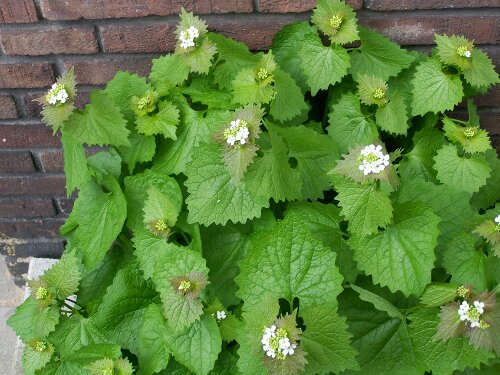
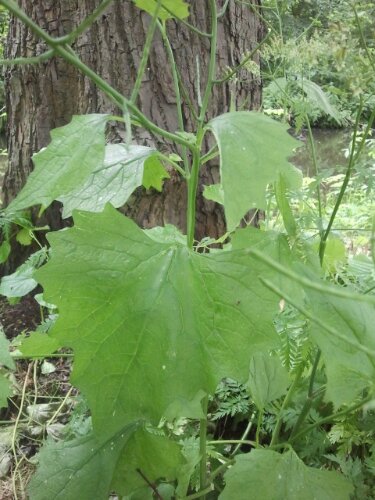
A lovely walk today, began by spotting this particular Garlic Mustard (Alliaria petiolata) plant along the Lime tree avenue. There are many many Garlic Mustards still around But this one has a few really big leaves. The one on focus here was 14cm long! It’s handy to have your field guide with you for recording such herb spotter type things!
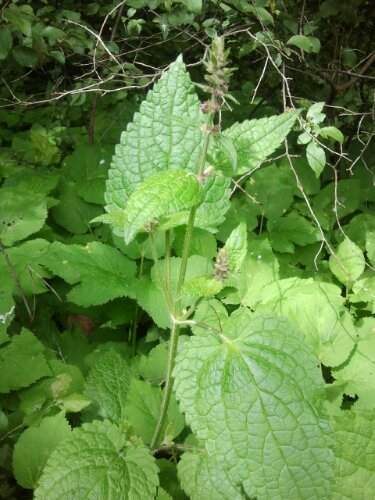

I saw this plant from a distance yesterday and mistook it for a Calamint. I have a very stinky sample of it in my field guide, beside me as I type and it is definitely not a pleasant Calamint. It is Field Woundwort (Stachys arvensis) with beetroot coloured flowers atop hairy, strongly “scented” leaves. It is a Labiate of great herbal repute. This particular Stachys has been long used for a huge range of ailments. Have a look at the Wiki link for an overview of them if it interests. I have used it now and then as a tea. I find the taste quite strong but not unpleasant. I think the most interesting uses are to treat pink eye (conjunctivitis) and styes. For these problems, a weak, cooled and very well strained tea is sometimes used as an eye wash.


I think that the above photo is of Hedge Mustard (Sisymbrium officinale). I will need to keep checking as it comes into flower. I did manage to forage our Brassica fix of the day though, plenty of Wild Turnip in full flower alongside the Middenweg today.


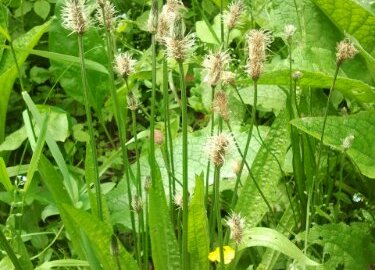
Here’s an eye catching member of the Plantain, Plantago genus. It looks like Ribwort but the flowers are super shaggy and I’m not used to seeing that in Ribwort. I have a feeling it is a hybrid between two types of Plantago. Claud Biemans told me about them when she walked with me here in Frankendael. Whatever it is I love those flowers, they remind me of a well worn Afghan coat.
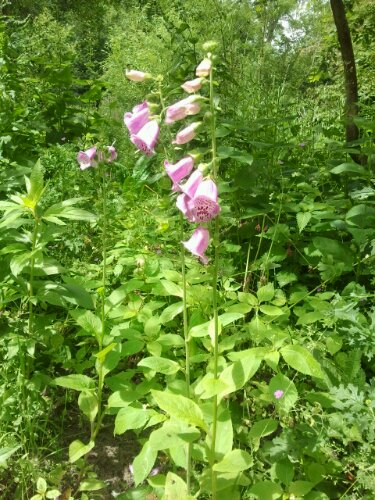

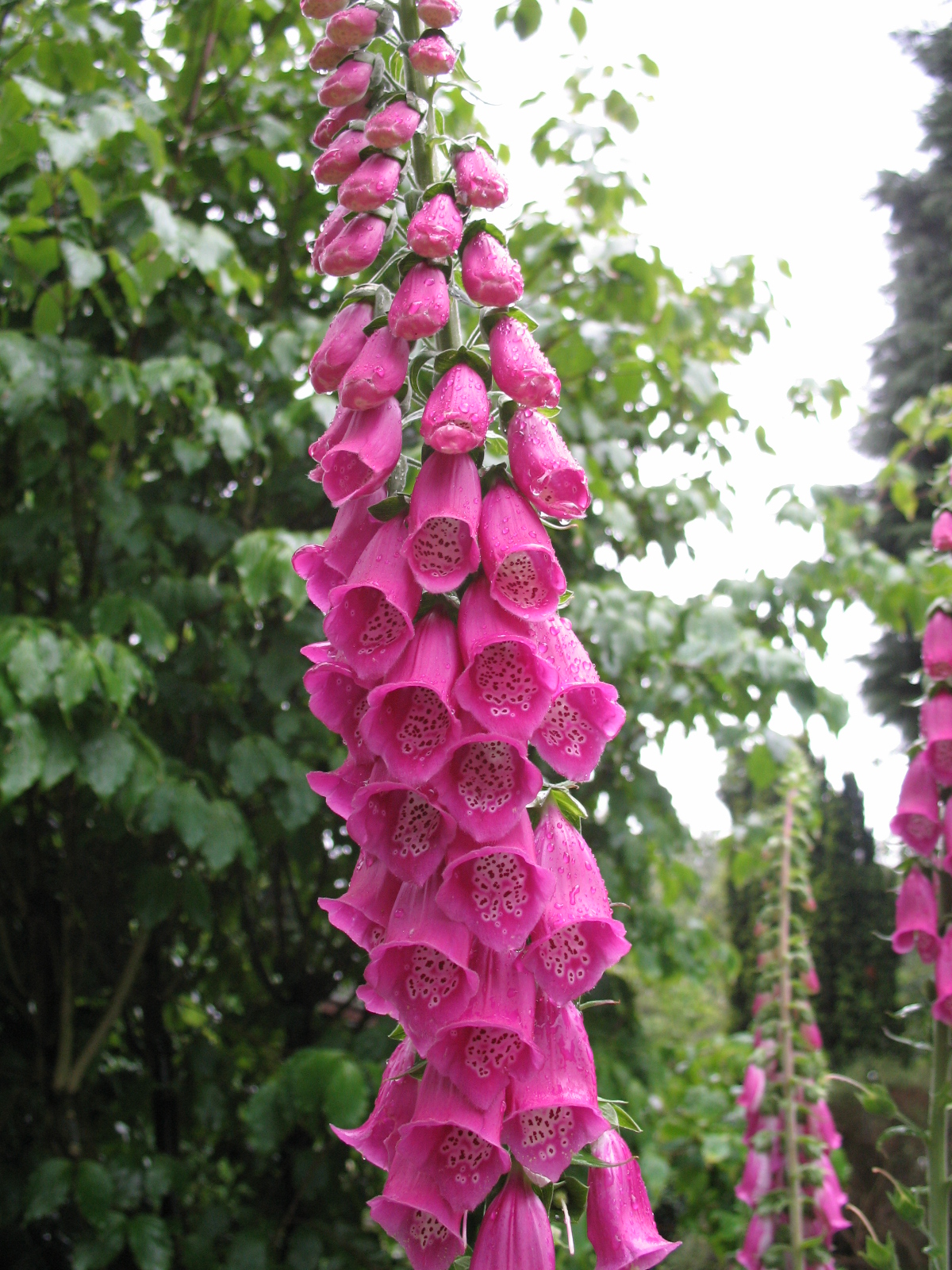
Here is Digitalis in flower. Foxgloves have strikingly beautiful flowers but all parts of the plant are highly poisonous. It provides a well known herbal medicine which acts specifically on heart muscles. Not something to be picked or used.


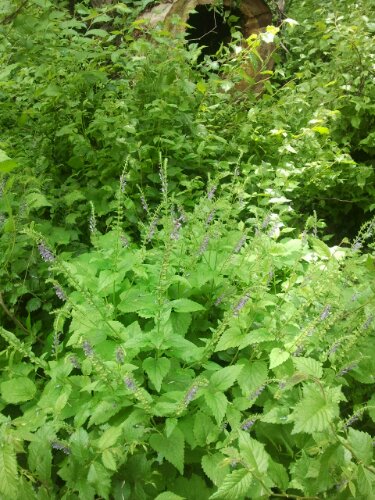
Here’s another poisonous plant, White Bryony (Bryonia dioica) entwined around Motherwort (Leonurus cardiaca). I was looking at Motherwort today because it’s flowers are just beginning to become obvious and soon the leaves of the plant will become more familiar to those who know its flower heads. Can you see the flowers developing in whirls close to the leaf bases and the square Labiate stems? This is a good time to harvest and tincture the plant but you should watch it for a full cycle to ensure its the real thing.
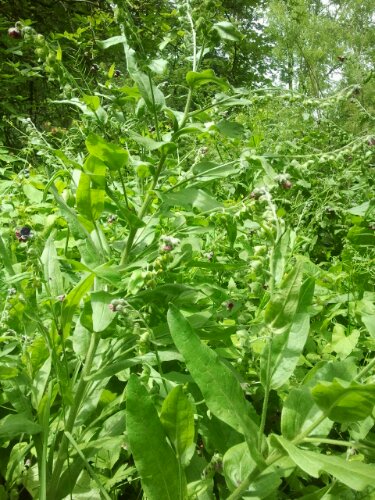

Lastly today, Hound’s Tongue (Cynoglossum officinale).
365 Frankendael day 46

I’ve been preparing for the next Urban Herbology walk today so here are several photos and not much chat…


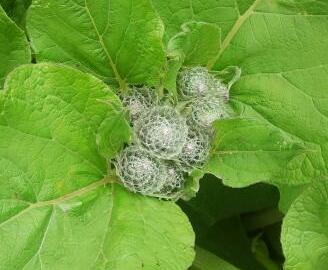
Developing cobweb-spirally Burdock flowers.


The Middenweg Poison Hemlock (Conium maculatum) continues to grow despite being reported to the council. Apparently it’s not a risk to the public because it is growing in the green strip… It is now wider than my bike, well over 2m tall and (although less than before I pruned it) still overhangs the pavement. I shall snip off the flower heads before the seeds set. A deadly beauty.


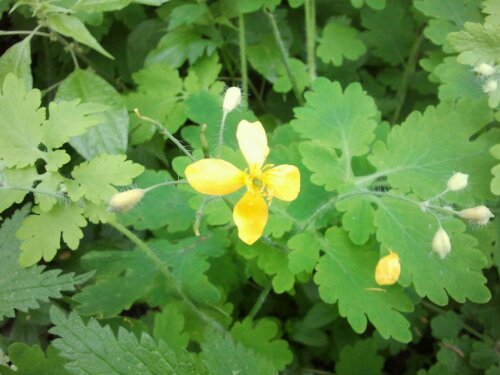
Greater Celendine, with seed pods developing well.


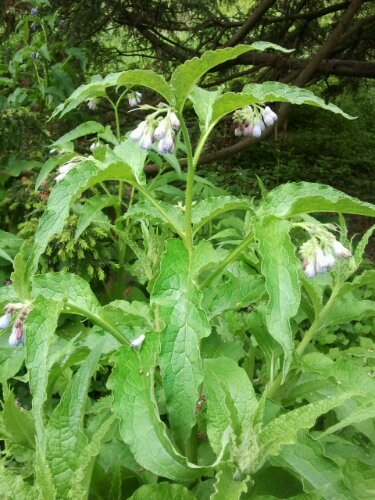
Comfrey (Symphytum uplandicum), still growing, still flowering – everywhere in the park!


Skullcap (Sculletaria altissima) in the woods. Flowers development very quickly moving up the stalk, sowing be visible for much longer.


The flowers of wild Sage (Salvia officinalis).


On the edge of the rhododendron planted section, I found this shady patch of tasty Pelargonium, Garlic Mustard and also Stinging Nettle and Cleavers, just out of shot.


Lastly, frothy flowers of Hedge Bedstraw.

365 Frankendael day 45

It has rained all day and it although I got soaked through, it was a real pleasure to be out photographing and foraging this Full Moon morning when hardly anyone else was about in Park Frankendael.  I managed to harvest some gorgeous Elderflowers, Ribwort, Red Clover and Mugwort, without anyone casting me a glance of suspicion or sympathy!

Here are today’s photos:
Firstly, Mugwort (Artemisia vulgaris), it is abundant on in some parts of the park.  Here is a lovely patch with a dozen or so plants.

Next is Foxglove (Digitalis). What a beauty and so useful in times gone by particularly.  This is a poisonous plant and I think too rare in Amsterdam to harvest even if you knew what to do with it.

Now for my favourite of the day, Willow.  In fact two copiced Willows, one containing a lovely Garlic Mustard plant and the other just looking stunning, with light shining through a gnarled old trunk.  Perhaps it’s because Willow is such a water lover, or perhaps it’s the full moon energy, or perhaps neither but all the Willows in the park looked quite strikingly beautiful today.

Here’s the gnarly one:

Next is Elderflower.  Most flowers are in full bloom right now but some of the earlier bloomers are already going over and setting seeds within tiny berries.  Remember that Elderberries always need to be cooked to be safe and palatable. The flowers are different and can be eaten raw, although most prefer them cooked or infused, for various purposes.
Here is an Elderflower well on the way to making berries.

Lastly, beautiful rain filled Teasel (Dipsacus sp.). This plant is well known to Chinese herbalists but less so to those in the West. It has traditional applications in the treatment of muscle, tendon and join injuries and disease.

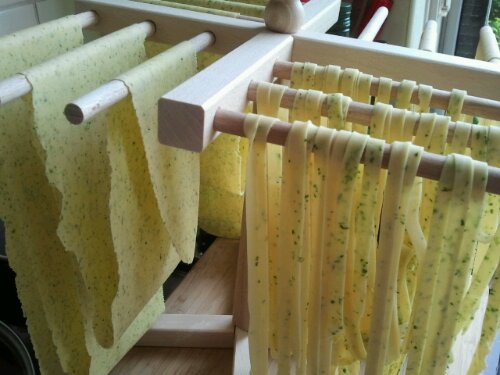
Wild Herb Pasta


If you enjoy making fresh pasta and would like to inject some herbal magic into your creations, this recipe may interest you. Fresh herb leaves are blended through the pasta as it is repeatedly rolled in a pasta machine.

I heard about incorporating basil in this way from a colleague, who’d been to an Italian cooking workshop. I’ve made pasta with nettle juice before but find that quite a slow process so I thought I’d try it this way but incorporating some unusual foraged and pot grown herbs.

This method is very easy, it just takes a little more time than regular pasta making. I’ve no idea if this is how the Italian workshop prescribed it but this way certainly works and produces very herby pasta!

If you don’t know how to make pasta I recommend Jamie Oliver’s method. It’s very simple and works for me everytime:

A. Basically fork 4 eggs into 400g of tipo00 flour.
B. Do what you can with the fork then knead it thoroughly with your hands.
C. Wrap in clingfilm, or similar and refrigerate for 2 hours or so.

Whilst it settles in the fridge, get foraging! I used garlic mustard, basil, ground elder and parsley when I took these photos. Use what you have available. Curley Parsley was a challenge to incorporate but it eventually broke down well and tasted great. The other herbs broke down very quickly. Obviously, use herbs which are safe for you and your guests. Basil for instance is often avoided by pregnant women. A small quantity is unlikely to harm but be aware that even seemingly innocuous culinary herbs, can be very potent.

Now, how to incorporate the herbs…

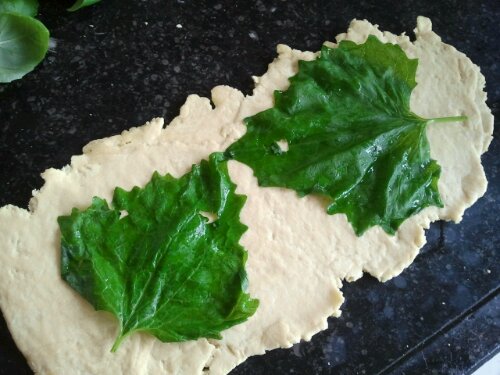
1. As you progressively roll your pasta dough in the usual way, through a pasta machine, or by hand with a rolling pin, simply lay a few herb leaves down the middle of the pasta sheet.

2. Fold over the two sides to cover the herbs.

3. Continue running the dough through the increasingly narrow pasta machine. Each run through, will break down the herbs. Eventually tiny fragments will be distributed throughout the entire pasta sheet – it’s quite extraordinary to watch it happen!

4. Keep going until the pasta dough is as thin a you like and cut or process it as you wish.

I always make heaps of pasta (6 eggs, 600g flour), we then eat a hearty pasta meal and freeze the rest in portion sized containers, when still fresh and just dry enough to handle.

365 Fraendael day 27

Today, a lovely walk through the park with Lucile and the little ones. We each went home with a few leaves of Ground Elder and a little Ground Ivy. Plenty of other herbs in season though…

Here’s the foliage from a Wild Carrot! Not one to be dug up, though it would probably taste great. I hope to revisit it later in the year to double check it’s identity when it is in full bloom. Wild carrot has been used in folk medicine for centuries and has recently been researched by Robin Rose Bennett. It is often found to be quite a useful contraceptive. For more information on the research take a look at Robin’s website.

Here is Comfrey, still in full bloom and looking stately throughout the park and city.

Garlic Mustard leaves continue to grace many of my meals. The plants here are nearing the end of their flowering season but the foliage still tastes wonderful and only a leaf or two is needed to add a garlicky kick to regular meals.

Greater Celandine continues to flower. It’s stems remain loaded with bright orange sap which is freely released when a stem is broken. This sap, containing a substance which is acrid and highly irritant but has been used medicinally since at least the middle ages. Historically it was used, in preparations such as lard and milk, to cure piles, cataracts, severe scurvy and some forms of cancer. These days it is still a popular remedy, amongst those who know it, for warts, corns and ringworm. To use for these three ailments, simply break a stem and apply the fresh sap to only affected skin. It will irritate healthy skin. The Latin name of this plant means swallow (the bird) and this is said to be because the plant’s flowering season coincides with the arrival and departure of swallows. So hopefully there should be some time to go before the flowers of Greater Celandine disappear from Amsterdam again.

Cleavers are looking particularly lush and juicy at the moment, about 50 cm long on average. Perfect for harvesting a clean handful and juicing for a cleansing tonic.

Wild Geranium is also looking striking, producing a mass of small purple flowers in the woodland, at present.

365 Frankendael day 23


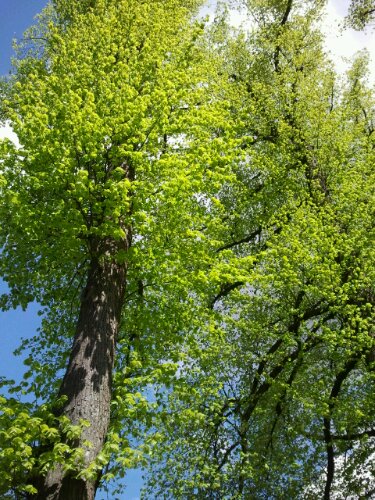
Today, Sameena from the Meetup group joined Livvy and I, on day 23 of our herb seeking mission. We saw several beautiful herbs, not least Garlic mustard, Geranium, Horsetail, the beautiful Lime trees with their glutinous leaves and Comfrey which the local bees were going crazy for.

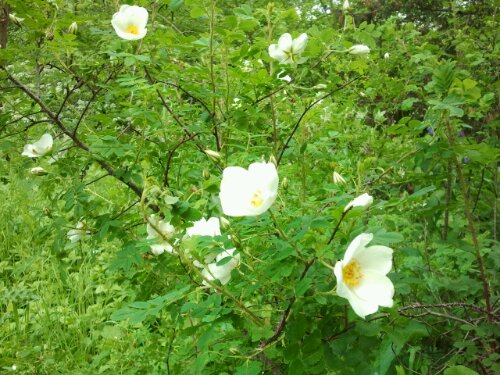
Afterwards I found borage and wild rose in flower, both for the first time this year – a real treat! If you fancy harvesting either please remember that borage is an annual so if you take the flowers there won’t be a plant there next year and vitamin C rich Rosehips only form when Roses are fertilised by insects and allowed to develop unhindered all the way into autumn.

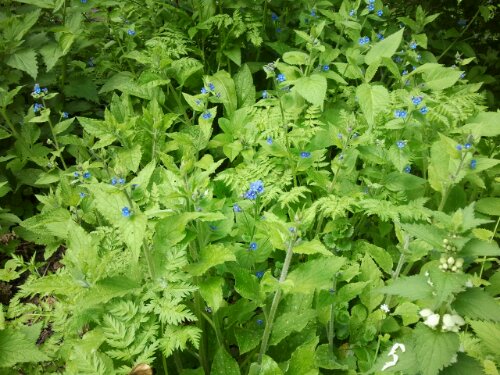
Above, Borage (Borago officinalis), mixed in with some Sweet cicely and Dead nettle. The small blue flowers are the easiest feature to help you distinguish this plant, it also has very hairy foliage. An alternative name for it is the Cucumber herb or plant, that’s because it tastes like cucumber! It makes a welcome addition to salads and it has uses in skin care.

Frankendael 365 day 22

A beautiful afternoon walk showed me the following herbs in particular…

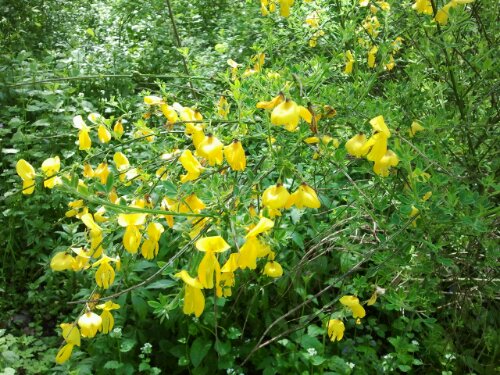
Firstly A beautiful Broom shrub in full bloom. The flowers are edible.

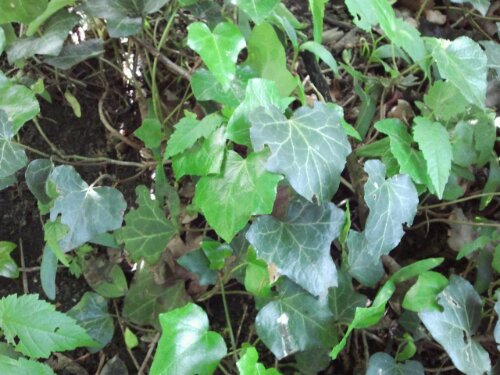
Ivy, really looking more verdant and fresh that any other time of year.

The tall plant with orange yellow flowers against the bridge is a type of Euphorbia. All members of the family should be avoided as the white latex like sap is poisonous and contact with it readily causes quite severe photosensitive irritation. It is a plant well known to many gardeners for this reason and should be avoided by foragers.

The photo above shows a typical scene at the edge of Frankendael’s woodland. Edges are renowned for their productivity because both shelter, support and light are available to plants. Here we can see Yellow dead nettle, ferns, garlic mustard, Purple/red dead nettle, Greater celandine and other plants all nestled against one another.

Here is Wild Sorrel, a very tasty plant of which only a leaf or two are required to really add great flavour to many dishes and is well done for Sorrel Soup.

Lastly today, Ground ivy and stinging nettle, both on top form for foraging at present.

Garlic mustard, Jack in the hedge (Alliaria petiolata)


Photo courtesy of Elodie and Herman, in De Baarsjes, Amsterdam. 25th April 2012.

Garlic mustard (Alliaria petiolata) is easy to find in many cities and is also very easy to eat!

It is often easy to spot them at the base of large tree trunks and along the edges of woodland and hedges. They also thrive within woodland. It flowers at the end of April into May. Whilst flowering, it is very easy to identify, not only by the distinctive smell of garlic when the leaves are bruised but also by the tiny white flowers at the top of the plant. Garlic mustard is a favorite amongst foragers and can grow up to 120 cm in the right location.

This plant is a biennial and can provide year round nutritious greens, for salads or the cooking pot. All parts are edible. Even the roots can be eaten, they should be harvested just before flowering, but of course removing the whole plant will limit the foraging potential the following year as the plant will be unable to spread by seed. Far better is to pick a leaf or two at intervals, throughout the growing season and leaving the plant to flower and set seed unhindered.

Garlic mustard isn’t known as a medicinal herb, more a culinary one. It is a member of the mustard family, Brassicaceae, so I like to think of it as a tasty replacement for sprouts.

I see lots of Garlic mustard growing around Amsterdam. You are very likely to find it along the edges of canals, hedges and overgrown areas, such as railway embankments. Mid to late spring is probably the best time to identify it.

Eating Garlic mustard is straightforward. It can be eaten raw, if very clean or cooked. It has a garlicky spinachy taste so works well with many ingredients. In like to chop up a leaf or two and mix them in with other spring greens, which I steam.