Tag Archives: Ramsons

Last Chance Ramson Pesto (Wild Garlic, NL:Daslook)

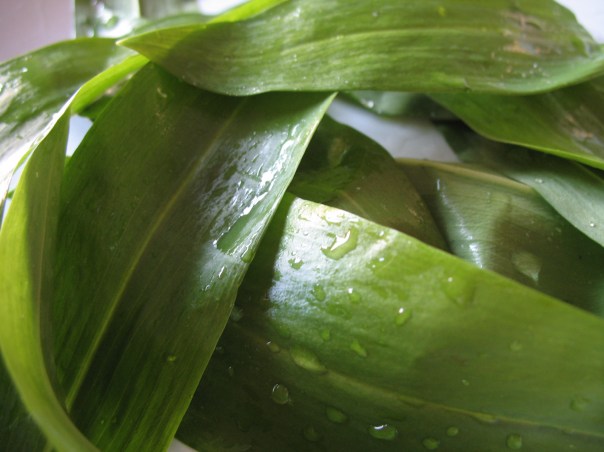
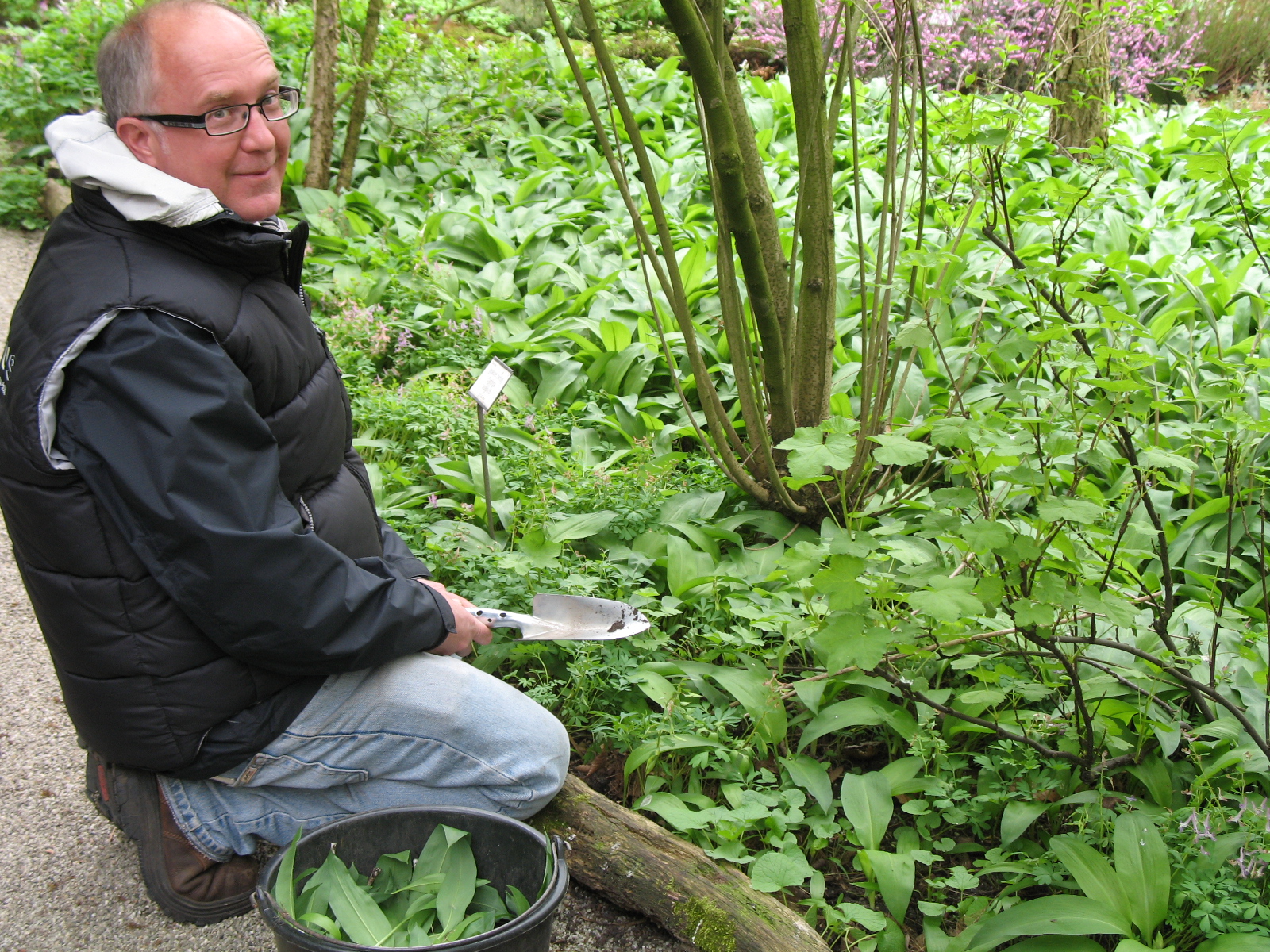
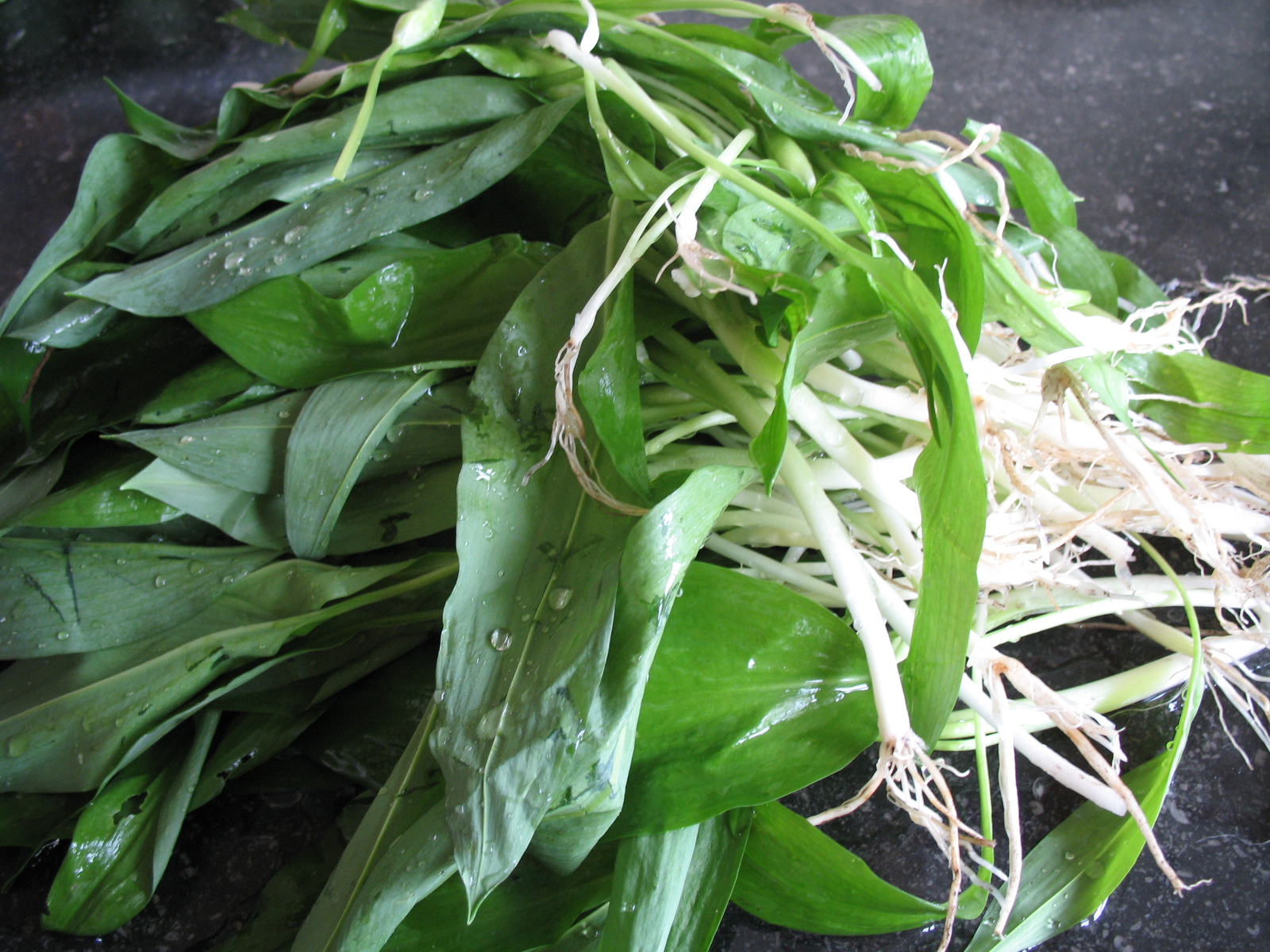
On Thursday I visited my freinds in De Hortus Botanicus and helped them to harvest some Wild Garlic/Ramsons (Allium ursinum, NL:Daslook). It grows vigorously in several parts of the beautiful garden and periodically is removed from paths and areas where it out-competes other plants in the Hortus collection.  I took home a large tub of whole Ramson plants; roots, bulbs, leaves and all.  I made a delicious batch of Last Chance Ramson Pesto.

So why Last Chance, you may ask?  In my local Frankendael Park, the Ramsons are currently in flower so it’s too late to harvest them. Ramsons are still edible when in flower but they taste rather unpleasant. The Ramsons in de Hortus are not yet in flower and they taste great!  In another week or so they too will be in flower and it will be almost another year until they are fit for the plate.  Another reason for my excitement is that I can only harvest Ramson leaves from the local parks.  Harvesting the roots and bulbs would destroy the plants so of course is completely out of the question for wild plants in their natural habitat.

Last Chance Ramson Pesto – vary the proportions as you wish.  Those stated made a good thick paste.

  1. Carefully wash the Ramsons (as you would spring onions), discard any odd squidgy bits from around the bulbs and trim off any really dirty roots.
  2. Roughly chop the clean Ramsons and place in blender.  I had about 150g Ramsons.
  3. Add Extra Virgin Olive Oil to blender. I added about 200ml.
  4. Add finest quality pine nuts (beware cheap ones, many people have a bad reaction to them). I added 50g.
  5. Add a good grating of rock salt and pepper.
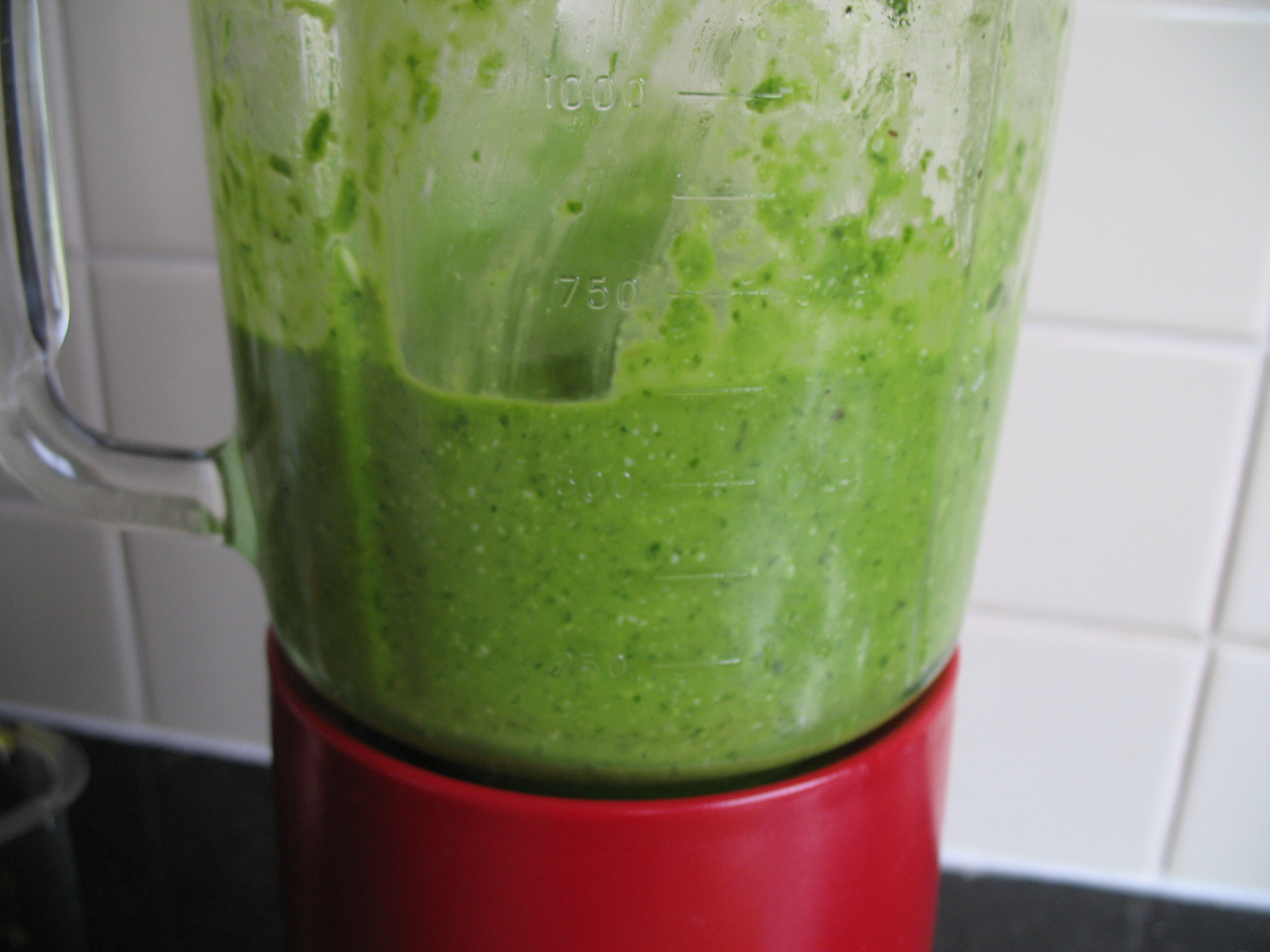
  6. Blend gradually until a thick paste is made.  I needed to interrupt blending several times to scrape down the paste.
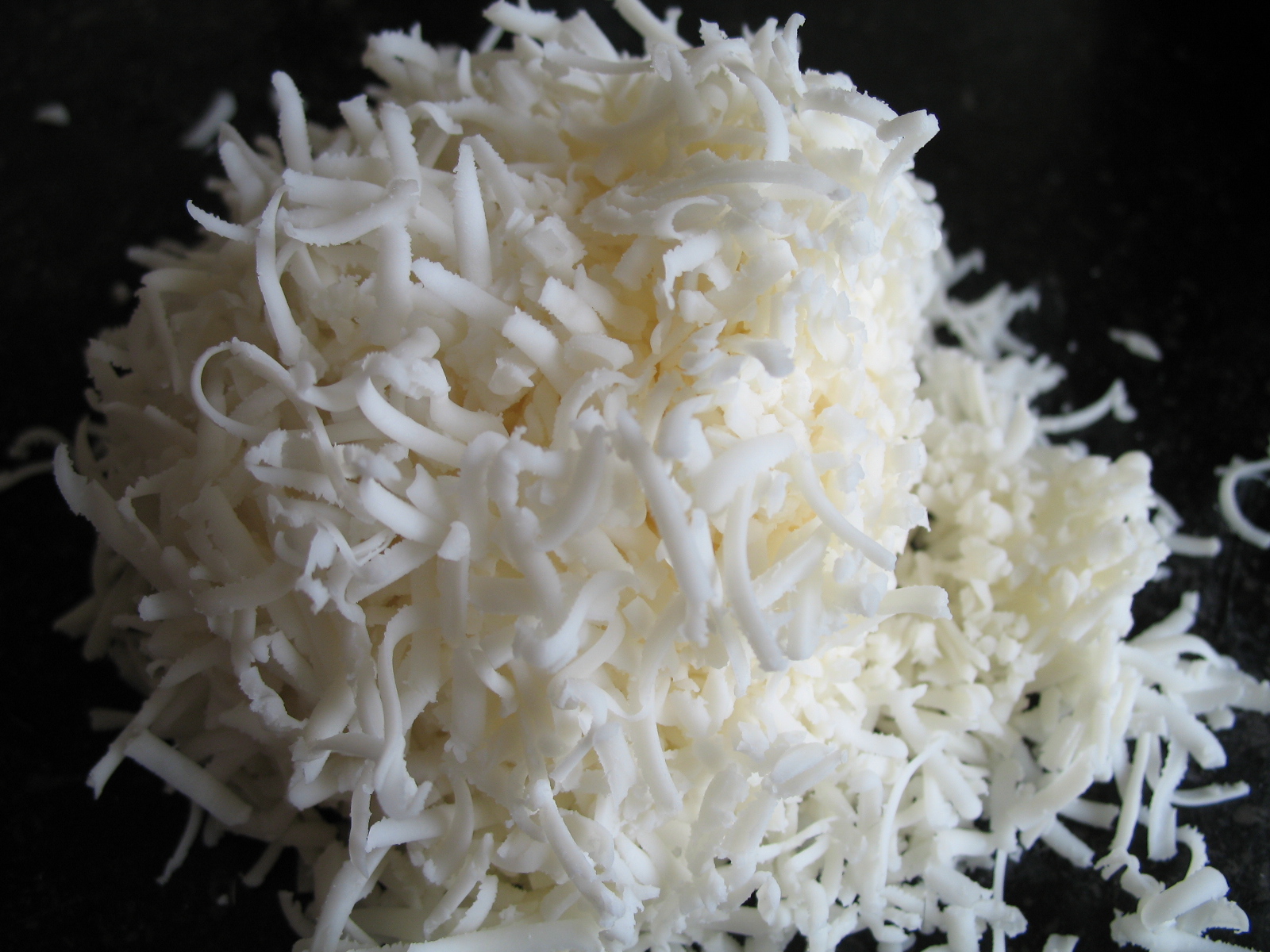
  7. When a homogeneous consistency has been made, add grated cheese and blend a little more to combine and break up the cheese (hard goats cheese for me, you may like Pecorino, Parmesan or similar).
  8. The result should be a paste which is thick enough to dollop into cooking mixes and thin enough to be stirred straight into hot pasta.  Add more Olive Oil or more cheese to obtain a better consistency if required.  I made about 650ml of pesto.  It will keep me going for quite some time.
  9. Store in sterile jars and refrigerate or freeze in ice cube trays.
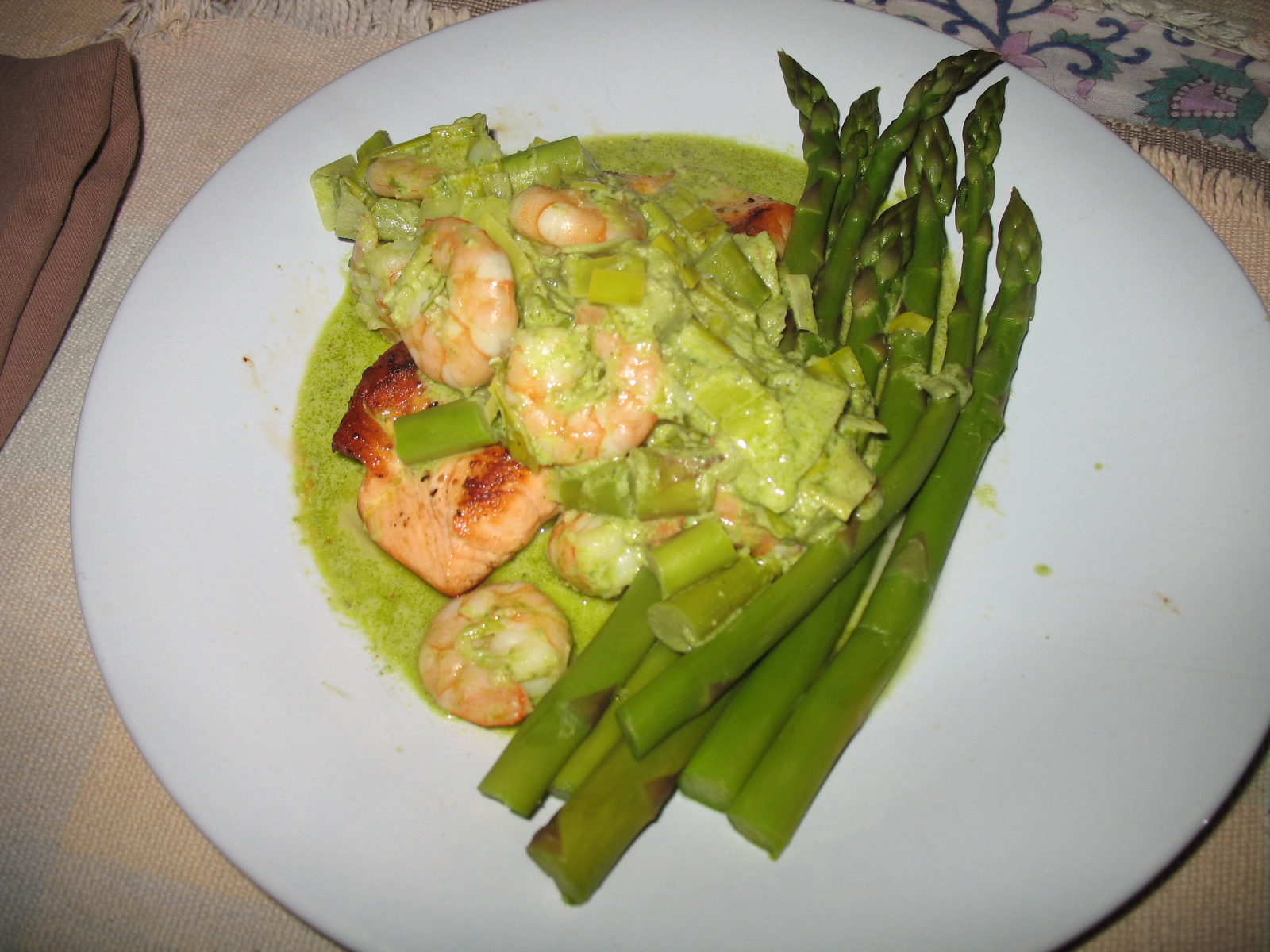
  10. Use as a straight pesto on pasta or as a super garlicy seasoning in other dishes. I added two teaspoons of my pesto to this sauce for salmon and prawns.  It was delicious!  I understand that Michael used it on fresh cheese ravioli and I used it the next day in a risotto.  The list of uses is endless…
Ramsons (Allium ursinum, NL:Daslook)

The woodland floor in Frankendael Park is carpeted with flowering snowdrops and the emerging leaves of Ramsons (wild garlic, Allium ursinum). I’m sure snowdrops have their uses but when you find them, Ramsons are an urban herb forager’s dream.  All parts of the plant are edible and very useful, though the leaves and flowers are all you should use.  The bulbs should be left alone and only pick a leaf or two from any plant.  They taste truly delicious – if you like the taste of garlic!  They taste best, by far, before the pretty white flowers open and can be eaten from early spring, when the first leaves emerge from the soil.

Ramsons have similar properties to Garlic but are milder in all respects.  They are also more tolerable to those you have difficulty digesting other members of the onions family.

  • Ramsons can be eaten raw or cooked and act as a gentle spring tonic.
  • They act as a gentle blood cleanser, stimulating the circulatory system and so benefiting the heart, memory, eye sight and skin.
  • They can be very helpful to those suffering from bowel problems, such as Crohn’s disease, IBS, colic, ulcerative colitis, flatulence, gas and bloating.  They have a mild cleansing and calming effect and are said to balance gut flora.
  • They have mild antibacterial and antifungal properties, making them useful as a poultice for boils and minor cuts.

Featured Image -- 15472

Until yesterday I had only eaten Ramsons as a spicy addition to salads and cheese sandwiches.  Michael & Elodie at de Hortus told me about Ramson pesto last week so, after a quick afternoon forage, Ramson pesto and home made pasta was on the menu at my home last night.

The recipes I found for Ramson pesto called for a heap of leaves; fine if you live in the country and have access to huge swathes of Ramsons but I don’t.  The Ramsons in city parks need to be shared by many and have more pressures to endure throughout the year.  So today I picked twelve leaves and made enough pesto for two people – it was delicious and as you an see, the intense colour is striking.

ramson-pesto-003

Urban Ramson Pesto
6 Ramson leaves per person
Olive oil
10 Pine nuts per person (optional)
Pecorino or firm goats cheese (optional)

  1. Gently but thoroughly wash the Ramson leaves. Pat them dry.
  2. Chop as finely as possible, using a sharp knife.
  3. Place chopped leaves in a small bowl and add enough olive oil to loosen them up and create a useful pesto type consistency.
  4. Add finely chopped pine nuts and grated cheese if you like.
  5. Use in salad dressings, as a pasta sauce and generally in cooking in place of garlic.

Vinegar and Brown Paper

wpid-2012-12-22-12.38.07.jpg
Chickweed (Stellaria media)

I recently bought a wonderful second hand copy of Herbal Remedies: A practical beginner’s guide to making effective remedies in the kitchen. It contains instructions on several traditional herbal remedies that many modern herbals omit.  One, which I read with interest, is Vinegar & Brown Paper, as featured in the nursery rhyme Jack and Jill.  Apparently it is quite an effective remedy for sprains, bruises and sore joints.  It made me think more about the virtues of vinegar.  So here are few preparations which you may like to try.

If you like investigating this sort of thing, you may be interested in the Urban Herbology Apprenticeship Course. The course covers foraging, crafting herbs, fermentation and nature celebrations, among other topics!

Vinegar and Brown Paper
This traditional remedy (taken from Hedley & Shaw’s book) is said to relieve swollen aching joints and limbs.  I have not yet tried it and am very interested to hear from anyone who does! Why not let me know in the comments or contact boxes below.

To prepare:
1. Cut 5 or 6 pieces of brown (packaging) paper, just big enough to fit over the affected area.
2. Place in a saucepan and cover with Sage vinegar (read on for how to make this).
3. Simmer very gently for about 5 minutes, until the brown paper becomes soft and has absorbed some vinegar, yet is not broken down.
4. When cool enough to safely handle, place the brown paper on the affected area and hold it in place with cling film (not too tight).
5. Cover with a roller bandage and leave in place for 4 hours.
Hedley & Shaw recommend reapplying fresh vinegar and brown paper twice daily.

wpid-2013-05-29-11.52.45.jpg
Ramsons – Wild garlic (Allium ursinum)

Herb vinegars
These are prepared in a similar way to tinctures but vinegar is used as a carrier for the herb properties, rather than alcoholic spirits.  Many herbs can be easily preserved in vinegars, a few favourites are Rosemary, Sage, Tarragon, Chamomile and Parsley but why not try wild herbs such as Chickweed, Catnip, Lemonbalm, Motherwort, Ramsons or Hyssop?  Dried or fresh herbs can be used but vinegars are a great way to preserve a glut of fresh herbs so that they can be used throughout the darker months.

Vinegar, particularly apple cider vinegar, is beneficial in its own right. It helps to build bones and has the ability to extract more minerals (such as calcium) from herbs than water. So preserving herbs in vinegar can provide a mineral rich preparation which is also very tasty and can be used in a variety of ways. They can be used in salad dressings, taken a tablespoon daily in a glass of water as a tonic, added to green vegetables and beans whilst they cook, used a flavouring in food or used in specific remedies.  Adding a splash of vinegar to the cooking water of green vegetables dramatically increases available calcium.

To prepare, completely fill a glass container of any size with chopped fresh herb and then fill it completely again with vinegar.  Seal (not with a metal lid), label and allow to sit (macerate) out of direct sunlight for between 2 and 6 weeks. After this time strain and bottle the herb vinegar in sterile dry containers.  Use plastic lids or waxed paper held in place with strong rubber bands. For advice on sterilising see the post on Cough Syrup.

If you prefer to measure your herbs and vinegar there is a traditional recipe which recommends adding approximately 25g dried chopped herb or 50g chopped fresh herb to every 600ml of vinegar. Pure malt vinegar, apple cider vinegar or white wine vinegar can be used.

wpid-2012-11-21-14.40.03.jpg
Sage (Salvia officinale)

Herb Vinegar Hair Rinse
When my sister and I were children, my mother would add a little lemon juice to our final hair rinse.  It makes hair shine beautifully and is a natural conditioner (shampoos are slightly alkaline, conditioners slightly acidic). Vinegar hair rinses work in the same way and can be very beneficial to the scalp.  I like to use apple cider vinegar when my scalp feels overloaded with hair products; it feels cleansing, cooling and calming.  Surprisingly it doesn’t make hair smell of vinegar.

To prepare simply add 1 tablespoon herbal vinegar, apple cider vinegar or fresh lemon juice to about 250ml water. Pour the rinse over washed hair and massage into the scalp.  Leave on for about 5 minutes and then rinse with plain water.

Sage vinegar is thought to darken hair,
Chamomile vinegar to lighten hair,
Parsley vinegar to relieve dandruff,
Rosemary vinegar to condition dry or falling hair

There are dozens of other uses for vinegar, I’d love to know of any which you or members of your family have used. Get in touch through the comments or contact boxes!

28/12/24 A recent comment from Val who says: My mother taught me the old fashioned remedy for a bad temperature.:- Soak a strip of brown paper in vinegar and apply to the forehead. As the paper dries the temperature decreases. Tried and tested.

This is great to hear! Thank you Val 🙂

Go back

Your message has been sent

Warning
Warning
Warning
Warning

Warning.