All posts by Lynn

Unknown's avatar

About Lynn

Learning

365 Frankendael day 277

image

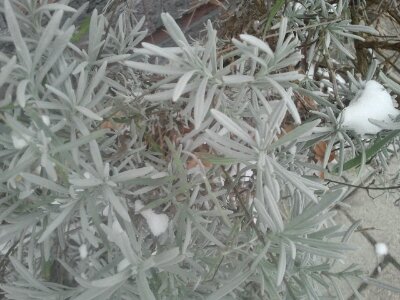
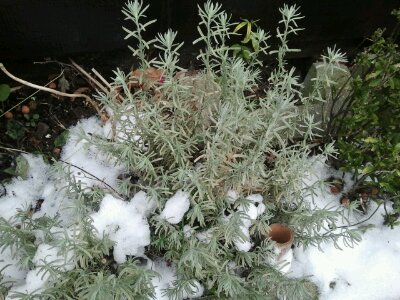
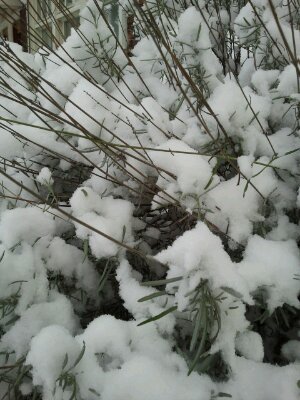
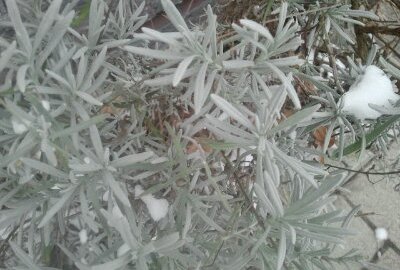
Today, Lavender looking as spritely as ever, regardless of sub zero weather. This is a great urban herb! The leaves, flowers and seeds can be used for various culinary and medicinal purposes. I keep a bottle of Lavender essential oil in my kitchen in case of burns. I don’t like essential oils very much as they are so concentrated and far from the natural herb state but I find this one very useful. It’s about the only essential oil I keep in the house and it has helped heal minor burns swiftly, with less or no pain than without its use and no scars.

image

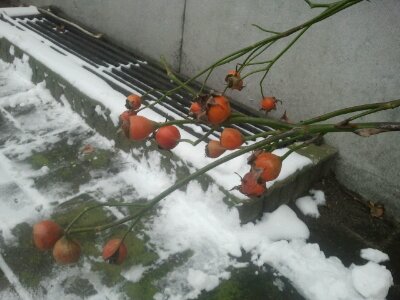
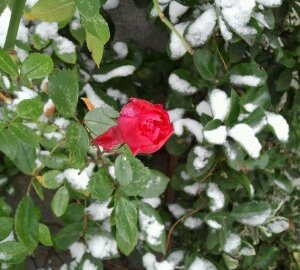
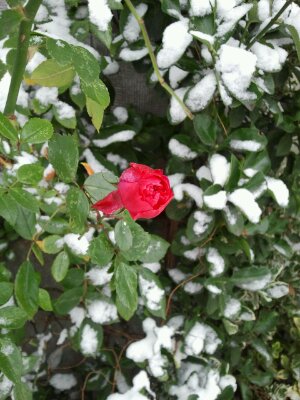
And just because they look so gorgeous in the snow – Rosehips! Another of my favourite urban herbs.

365 Frankendael day 276

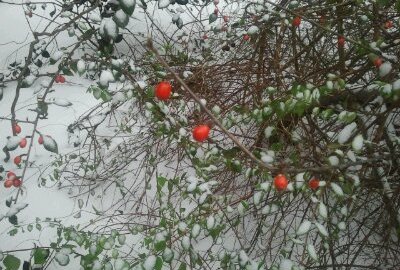
It’s beautifully snowy here still. I’d hoped for a leisurely walk in the park today but it didn’t happen. Instead a short trek to the playground, making snow angels, zen style snowball stacks and this pretty berry laden shrub.

image

I don’t know this plant so won’t be trying these pretty (and probably poisonous) fruit. They’re not rose hips, they’re not goji berries. Perhaps you know what they are?

Contaminated Marshmallow Root

Update: Government tests show the Jacob Hooy batch of Marshmallow Root (sold from September 2012 to now) contains ATROPINE. They ask that this message be spread to people who are likely to use the root, either loose, in bags, or in mixed blends from Jacob Hooy. Many people will have it on their shelves unopened and should be warned. It will be announced online and in newspapers today. Jacob Hooy have the batch numbers. Contact them if unsure of safety of batches you have. Contact below number about poisons, contact me or the link below to report any problems you may have had with the root over the past 4 months.

One of my apprentices purchased Marshmallow root (Althea officinalis, Heemstwortel) from a local herb outlet in Amsterdam this weekend and spent Saturday night in hospital, along with her boyfriend after they made a straightforward milk decoction of the root and suffered the following symptoms:

Delirium
Irregular heart beat
Blurred vision
Dilated pupils
General malaise
Confusion
Loss of memory
Some nausea
Lack of bodily coordination

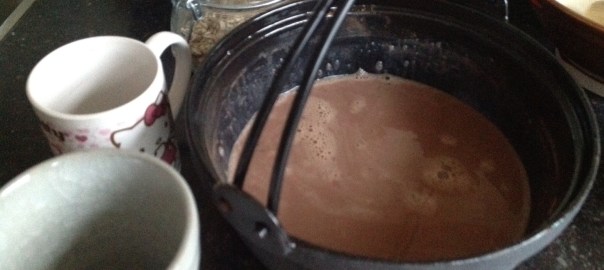
They are now at home recovering further from a marshmallow hot chocolate that gave more than they anticipated.

After investigation it appears that they are not alone. Someone else, completely unrelated, purchased the same herb from a different shop and had the same symptoms this weekend. Marshmallow root is seen as a safe herb, apart from potentially interfering with blood sugar levels in those with diabetes, it has no history of toxicity. The batch of herb appears to be contaminated and the Dutch food safety agency is now on the case and looking for the original source, what the contaminant actually is and how it came to be in the shops.

Please, if you have any at home which you have purchased recently in the Netherlands and have not yet tested, wait with using it until the above questions have been answered. I love this herb and eat it and decoct it regularly as part of my diet. My toddler also enjoys it now and again. I know many of you also like to use it in your families in similar ways.

Here is a link to the form that can be used to contact the Dutch food safety agency directly if needed:

http://formdesk.minlnv.nl/kcdv/Warenklachten_vragen_formulier_v5

If you are worried about poisoning at any time, here is the number for the Dutch Poisons Helpline:

030 274 8888

They would like to know urgently if anyone else has experienced similar problems after using the root. I’ll put my marshmallow root recipes back on line when the issue is resolved.

365 Frankendael day 275

Today I noticed these male catkins on the big Hazel trees near my home.

image

I’ve read some comments about them being poisonous. I’m not interested in eating them even if they are edible because without then on the trees we wouldn’t have a chance if collecting Hazelnuts in the autumn. This tree I’m particular is on the sunny park edge of Oosterpark and produces heaps of nuts in a good year.

Earth Pathways

image

I gave an Earth Pathways 2013 Diary to each of my apprentices at the end of last year. It’s a rich, inspiring and beautiful publication, created by a wise group of environmentalists, artists, writers and activists. The diary contains key information and creative ideas for urban and rural herbologists alike. I highly recommend it.

image

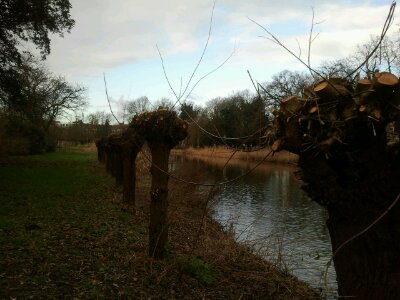
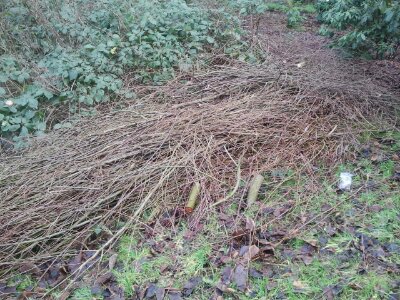
Last week, I noticed that the willows of my local Amsterdam park had been coppiced. So, I took my secateurs back to the park and “harvested” a small bundle of fresh withies from the pile I found on the ground. This made little impact on the pile, which had clearly been left to fill the gap in a bramble thicket, beside a small lake.

image

Page 60 of the Earth pathways diary contains a description by my mentor Glennie Kindred, of how to turn willow or dogwood stems into a useful herb drying rack. It took about 40 minutes of peaceful bending and weaving, with my two year old playing broomsticks around me, to create my version of the willow rack. I’m pleased with it and imagine it threaded with flowers and least stems in a grew months time. Because my withies were quite short, I made a double outer “circle”. This strengthened it considerably and it resulted in a pleasing teardrop shape. For now it hangs on my living room wall and reminds me of my years living in Somerset. Willow weaving seems just as satisfying in the middle of a city.

image

I love handling willow and using it as a herbal ally. I find far less taste of salicylic salts, in the tendrils at this time of year but it’s gentle, flexible spirit shines through and I’m sure it will impart something special to my drying herbs come spring and summer. Thank you Glennie and Earth Pathways, for your continuing inspiration!

image

365 Frankendael day 274

image

Today a frosty Amsterdam yields far less edibles and medicinals but there are still plenty around, including evergreens and beautiful Lavender shrubs. They grow so well in most Amsterdam locations and the leaves and flowers are very useful, whether in flavouring cakes, confectionery our treating minor burns, some forms of eczema our helping people to sleep.

Here’s one on my neighbour’s geveltuin (pavement garden).

Here is another plant which become popular in the winter due to it’s pretty tiny flowers. I’m used to it on moorland but here it is gracing another geveltuin, close to my home. It is Heather (Calluna vulgaris). I’ve never eaten it but the flowers are apparently edible. If the leaves and stems are edible, I can’t imagine they can be very palatable. Here is a useful entry on Celtnet, about the plant and some ideas on how it may be used. The plants certainly stand up well to the snow and they produce valuable nectar for insects. Heather honey is delicious!
image

365 Frankendael day 271

image

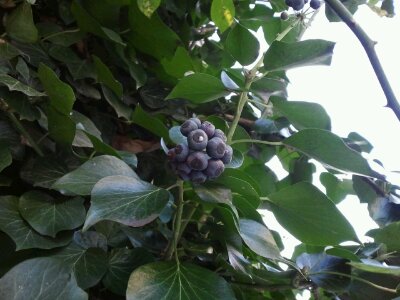
Today some Ivy berries (Hedera helix). I don’t think they are edible – I don’t fancy trying them even if they are but the plant in general is sometimes useful externally an agent to help rid the body of cellulite. The pom-pom flowers come late in the year and are a useful source of pollen for insects and now come the striking purple-black berries.