Category Archives: Herbs

Herb by Herb – Part one – Mugwort


Once a month a chance to learn in detail about a different common urban herb from either Jennie (who I run the meetup group with) or me, Lynn. 

Part one is about Mugwort (Artemisia vulgaris). An amazingly mystical, powerful and yet underused plant, usually found in neglected places.  Cronewort, the Dreamherb, is a great herb to learn crafting techniques on, such as how to make an infusion, oil, tincture, dream pillow and more. I will take this session in Park Frankendael on Monday 18th June 2012. 10.30 – 12.00.

In this short and sweet field workshop, you will make (or prepare for) all of those things and learn about the properties, habitat, folk and medicinal history and up to date uses of the plant. You will take home a bag full of little herbal preparations and knowledge of how to do it time and time again with everyday materials.

We will try to run each monthly Herb by Herb workshop near the New Moon and the days of the week will vary. You are welcome to attend all, some or none of the series! Most materials will be provided. You’ll receive a simple pack list when you subscribe. Cost of the workshop is €10.

Please contact me by email or through the meetup group if you are interested in joining this workshop.
365 Frankendael day 33

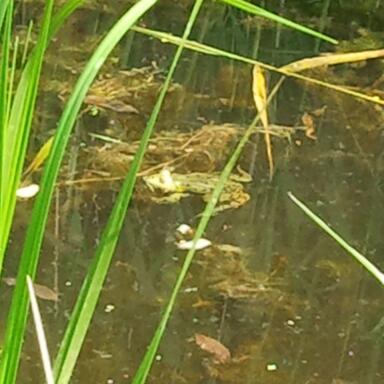
I don’t think a real Herbology session would be complete without at least a mention of frogs or toads and today I had great fun listening to mating frogs in a pond within Park Frankendael. No uses for these as they look and sound so great where they are, alive, kicking and trying so hard to make tadpoles, in the water.

Endangered Hoary plantain (Plantago media) in flower. I am so pleased to see this plant in the same location, a year on from first noticing it in the park. This year there are two plants instead of just one. I really hope it will reproduce unhindered this summer. Seeing it up close and in the proximity of Plantago major and Plantago lanceolata makes it easy to see why it was named P. media. The leaves are really about midway between the widths of the other two species.

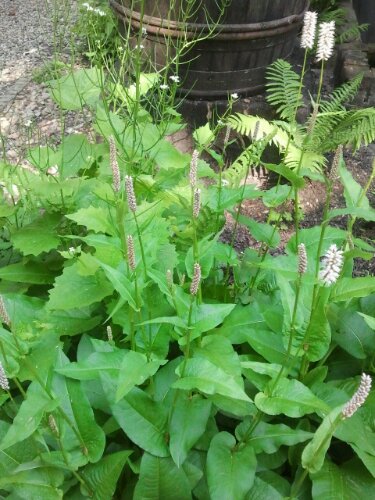
Bistort is a herb I dont use much but I found this plant which looks very similar in the park. There are several patches growing well, near Frankendael Huis and it is in the labelled herb garden. Will have to do some more investigation to check the identiy.

I also found a huge patch of well hidden nettles in a shady place which doesn’t get as many visitors as other quarters of the park. Probably a good spot for harvesting the tops.

Chickweed (Stellaria media) worth a mention today for its array of self help medicinal uses and high vitamin and mineral content. It is neglected by many (including myself) through the summer months as there is so much edible plant life to choose from. But come midwinter most foragers will be pleased to add this to a plate. At midsummer chickweed won’t be visible anymore. It will then return after the hight of summer, when this season’s seeds start to germinate. Chickweed is big and delicious at this time of year. I’ll try to take a better photo of it tomorrow.

Lovely Pelargonium foliage.

Walnut foliage. Perhaps there is a tree near you. Have a look at Boskoi or similar apps and maps perhaps.

Cats Tail (Typha spp.) Not Bull rushes but yes, edible. I mentioned these a while ago when I spotted them on another edge of the park on day 17. All parts can help make a feast but why bother when you don’t know the water quality and they do look so stunning for everyone in town to enjoy.

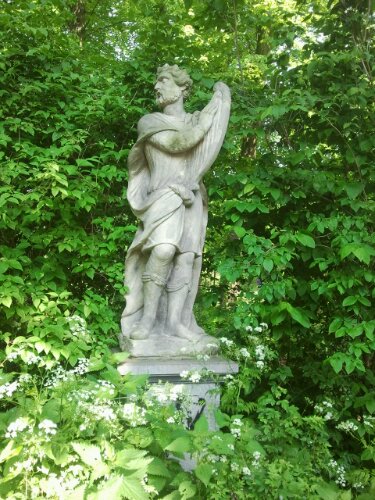
Lastly, a statue close to the old Frankendael house. Beautiful flowering carrot family flowers and stinging nettles at its feet.

I’m looking forward to Claud Biemans joining me in the park tomorrow. She’s going to help me identify a couple of herbs which I have no clue about, but which smell amazing and are surely worthy of some attention.

Wild Herb Pasta


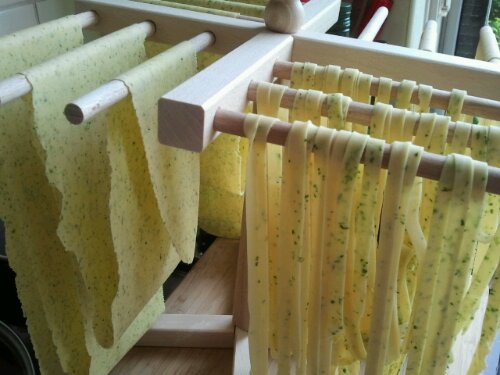
If you enjoy making fresh pasta and would like to inject some herbal magic into your creations, this recipe may interest you. Fresh herb leaves are blended through the pasta as it is repeatedly rolled in a pasta machine.

I heard about incorporating basil in this way from a colleague, who’d been to an Italian cooking workshop. I’ve made pasta with nettle juice before but find that quite a slow process so I thought I’d try it this way but incorporating some unusual foraged and pot grown herbs.

This method is very easy, it just takes a little more time than regular pasta making. I’ve no idea if this is how the Italian workshop prescribed it but this way certainly works and produces very herby pasta!

If you don’t know how to make pasta I recommend Jamie Oliver’s method. It’s very simple and works for me everytime:

A. Basically fork 4 eggs into 400g of tipo00 flour.
B. Do what you can with the fork then knead it thoroughly with your hands.
C. Wrap in clingfilm, or similar and refrigerate for 2 hours or so.

Whilst it settles in the fridge, get foraging! I used garlic mustard, basil, ground elder and parsley when I took these photos. Use what you have available. Curley Parsley was a challenge to incorporate but it eventually broke down well and tasted great. The other herbs broke down very quickly. Obviously, use herbs which are safe for you and your guests. Basil for instance is often avoided by pregnant women. A small quantity is unlikely to harm but be aware that even seemingly innocuous culinary herbs, can be very potent.

Now, how to incorporate the herbs…

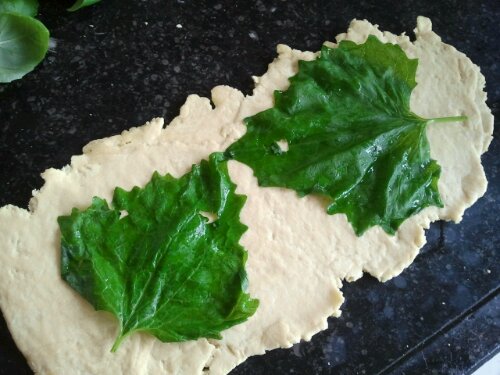
1. As you progressively roll your pasta dough in the usual way, through a pasta machine, or by hand with a rolling pin, simply lay a few herb leaves down the middle of the pasta sheet.

2. Fold over the two sides to cover the herbs.

3. Continue running the dough through the increasingly narrow pasta machine. Each run through, will break down the herbs. Eventually tiny fragments will be distributed throughout the entire pasta sheet – it’s quite extraordinary to watch it happen!

4. Keep going until the pasta dough is as thin a you like and cut or process it as you wish.

I always make heaps of pasta (6 eggs, 600g flour), we then eat a hearty pasta meal and freeze the rest in portion sized containers, when still fresh and just dry enough to handle.

Herb by Herb – Part 2 – Ribwort

Once a month a chance to learn in detail about a different common urban herb from either Jennie (who I run the meetup group with) or me, Lynn.

Part two is about Ribwort (Plantago lanceolata). An amazingly simple looking plant, found right under your feet, with a multitude of uses. It’s a great herb to cut your teeth on, regarding how to make an infusion, poultice, infused oil and ointment. I will take this session in Park Frankendael near the New Moon in July 2012. 12.00 – 13.30.

In this short and sweet field workshop, you will make all of those things and learn about the properties, habitat, folk and medicinal history and up to date uses of the plant. You will take home a bag full of little herbal preparations and knowledge of how to do it time and time again with everyday materials.

We will try to run each monthly Herb by Herb workshop near the New Moon and the days of the week will vary. You are welcome to attend all, some or none of the series! Most materials will be provided. You’ll need to bring along a small pair of scissors, perhaps a flask of hot water and 2 small and clean glass jars (such as 90ml pesto jars).
Cost of the workshop is €10.

Please contact me by email (lynn.shore@gmail.com) or through the meetup group if you are interested in joining this workshop.
365 Frankendael day 32


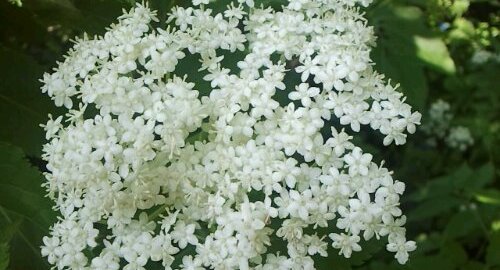
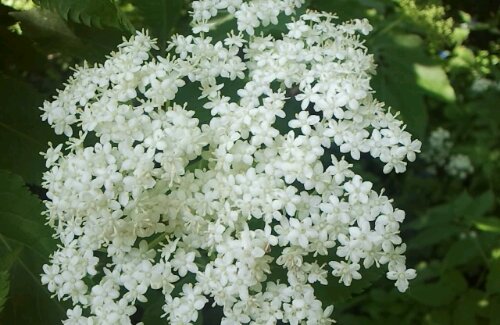
Today a lovely elderflower on the Hugo de Vrieslaan edge of the park. There are Elder shrubs all over the city and now is the time to covet those in the cleanest spots. Each day for the next couple of weeks elder blossoms will burst open, inviting local insects to do their thing and foragers and herbalists to get harvesting! You only need a flower head or two to make a great addition to a meal. As I have mentioned recently, only seven flower heads are required for a hearty quantity of Elderflower Champagne. So if you want to pick elder flower, be nice, thi about how many you really need and spread your harvest between healthy well flowered shrubs. In years gone by, Elderflower lovers would know which local Elders yielded the sweetest flowers. These days I think it’s more a matter of where there are healthy shrubs in the least polluted areas. I’ll certainly be out and about in clean spots, with my paper bag and scissors, over the next few weeks.

It is possible to confuse Elderblossom with other flowers (such as distastful and smelly Ash blossom). Look closely at the photo here (which is deliberately large) and others in good guide books. Notice the way the inner male parts (stamens loaded with pollen) of the tiny flowers protrude between the petals. Notice the colors of the parts of the flowers. Elder blossom is a creamy white, not a stark white. The flower heads are flat, aligning themselves to attract insects the best they can. Learn the shape of the shrub. It is often a messy shape, with areas where quite brittle branches have stapped off. Elder can be enormous, like those against buildings and at other times can hug the ground where they constantly fight their way back from repeated attempts to prune them to death. Be nice to Your local Elders this foraging season. Get to know This herbal medicine chest and in time, it may become a good friend. See the comment about Elder on 365 day 20 for several useful Elder links.

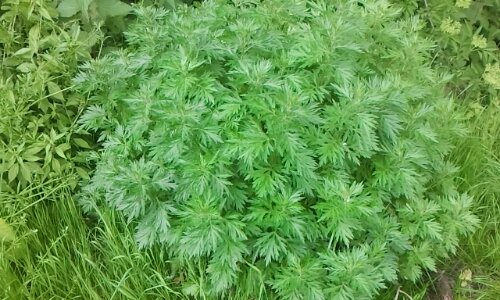
Here’s my favourite Frankendael bus stop clump of mugwort again; still growing, still no flowers, still dreaming.

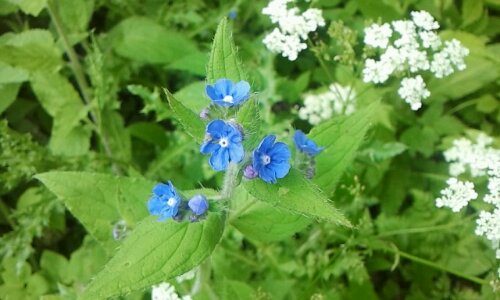
And finally today, a pretty Green Alkanet (Pentaglottis sempervirens) plant. Also from the edge of the park. Green Alkanet is a lovely plant with many uses. It is edible and medicinal.

365 Frankendael day 31

What lovely people I met today, on my first guided herb walk of this year. We looked at lots of lovely and useful herbs. I’ll post a few photos taken by the others when they reach me.

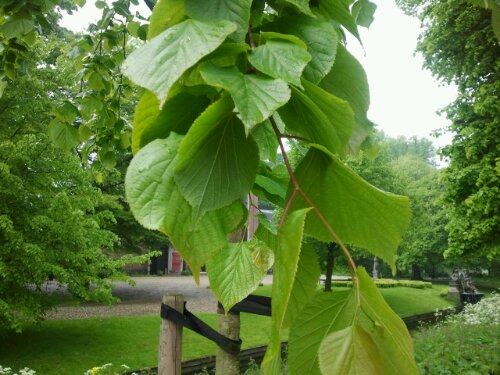
In the meantime here’s a Frankendael Lime leaf photo which I took yesterday, for those who didn’t get to pick one to keep with their handouts. This is a perfect time to harvest a few healthy, non sticky leaves and enjoy them between slices of bread.

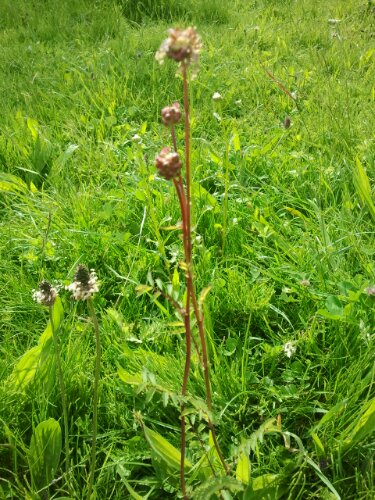
After the walk today, I also spotted Salad Burnet (Sanguisorba minor NL: Kleine pimpernel), poking it’s flower stalk up in a grassland area of the park. In my photograph there is also a ribwort to the left, with a completely different flower stalk. Salad burnet is a useful but endangered plant in the Netherlands so completely out of bounds to foragers and herbalists alike. I feel very priveledged to have seen it today. I hope to be able to take a better photograph of this plant soon. I mentioned to some people to day, the useful website called Bioimages.Org.uk where you can search for images of plants and animals to help with identification. Here’s a link to their photos of Salad Burnet. It seems like a good resource but of course never forget your field guide!

Also plenty of healing Ribwort, in the same area, with it’s long slender leaves and unusual dull coloured flower at the end of a long stalk.

Here’s a pretty tree pit from the same patch, full of a tiny flowered Cranesbill, Ribwort, Horsetail and a non edible Chrysanthemum, all mixed together by fortunate chance.

Urban Herbal Planting Scheme in Amsterdam Oost

I was so pleased when I realised that the local council had commissioned simple herbs for the planting scheme at Christian Huygensplein in Oost Watergraafsmeer, Amsterdam.

About a year on, the herbs are looking great so I thought I’d share a photo. I hope you can see a Pine Tree trunk surrounded by thick Lavender and an Ivy plant climbing up the trunk.

Three practical herbs in an area which needed a little smartening up at the time. Mostly the planting, which had a lot of hot dry weather soon after it was completed, has faired well. It looks good, smells good and could be used for a multitude of remedies, should the need arise.

Thank you Amsterdam Oost! Now how about a few more nut trees?

365 Frankendael day 30

In just a 1 meter square patch of land, on the outer edge of park Frankendael, I found all these useful herbs today…

Medicinal Comfrey (Symphytum uplandica):

Stinging nettle (Urtica dioica) and Ground Elder (Aegopodium podograria) growing amongst each other:

Also, Burdock (Arctium lappa)

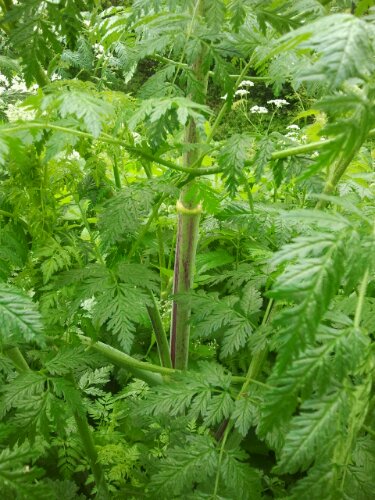
Poisonous member of the Carrot family, Hemlock (Conium maculatum):

Notice how similar it looks to Chervil. It has a smooth stem and leaves. It smells a little unpleasant and has notable purple staining on the stem. This is not a plant to be handled or foraged at all! This plant was used in ancient Geek executions, including that of Socrates. The Latin name means to whirl, pertaining to one of the symptoms of hemlock poisoning, vertigo. This plant is deadly poisonous and I show it here as so many foragers are keen to find plants such as wild carrot. It is very easy to confuse members of the family, especially those with finely divided leaves such a hemlock, carrot and sweet cicely
.
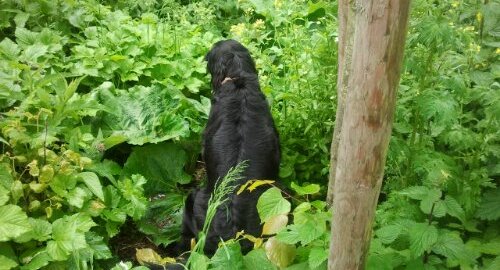
Lastly another beauty which is not helpful to foragers. A Labrador delivering a little fertilizer to that interesting 1m square patch of park edge!

Easy Dandelions


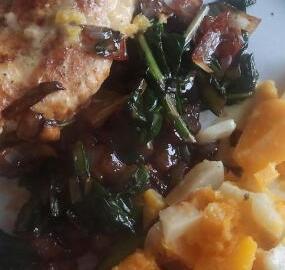
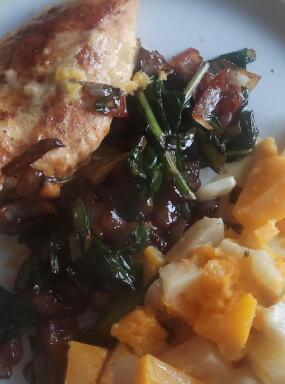
Here’s our dinner this evening.
Between us, as a side dish, we enjoyed the leaves of two large dandelions (Taraxacum officinale) picked from Ben & Riny’s garden a couple of hours ago.

After a good rinse, I roughly chopped the leaves and simply added them to the pan juices after frying chicken and eventually an onion. I added a slosh of the vegetable cooking water, from the celeriac and pumpkin you can also see in the photo. that just loosened things up a little and helped to stop the dandelion from frying. The result was very tasty indeed and rather healthy!

The root came up easily, from one of the plants so I’ll add that to a soup tomorrow.

365 Frankendael day 29

Hop (Humulus lupulus – what a latin name!) is entwined about a meter up last year’s dead stems today and looks far healthier and more vigorous than any cultivated Hop plant I have seen. I am really looking forward to seeing whether or not its flowers are as impressive.

Mugwort is growing beautifully on wasteland near a Frankendael bus stop. It is helpfully showing the silver underside of a few leaves in the breeze.

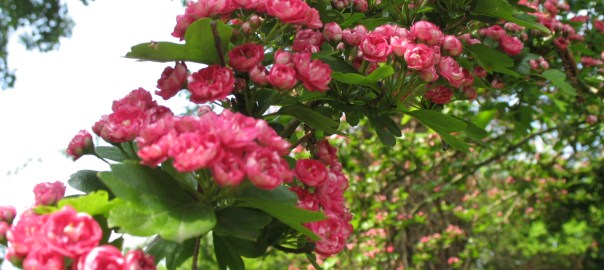
This member of the Hawthorn species reminds us clearly that Hawthorns are members of the Rose family.

Valerian officinale is almost ready to flower in wetter areas of the park.


And Agrimony plants are making themselves more obvious is some drier sunny areas.

Also today, towering Pink Purslane (Montia sibirica) is in flower. It looks similar in structure to Winter purslane (Montia perfoliata, which is low growing and currently growing like crazy along the Centuurbaan fence of Sarphatipark. Often called Miner’s Lettuce it tastes great!) However, Pink Purslane is said to have a nasty acrid aftertaste and should be avoided by foragers. It’s such a beautiful flower at this time of year that it’s good to know it tastes bad!