Category Archives: Herbs

365 Frankendael day 28

Today, two new arrivals for 365 Frankendael…

Red clover is starting to bloom in the park. At least today is the first day I have noticed it. Unfortunately the huge clover area next to Restaurant de Kas was cleared for some purpose, this spring so that won’t be available for harvesting but it is present in many other places and is very easy to identify. The blossoms are harvested for most remedies and a red clover infusion is easy to make. The blossoms also dry well.

Koninginnenkruid in Dutch, Hemp Agrimony, in English, (Euphatorium cannabium) is an interesting herb which I have only really noticed here in the Amsterdam canals but it is also prolific elsewhere. It’s a very tall plant, up to about 1.5m at it’s peak in mid summer, bearing quite attractive fluffy looking pale pink flowers and leaves which are a little like those of hemp (hence the English name). It has numerous historic uses, ranging from preventing bread from going moldy, as an infusion to spring cleanse the body and prevent scurvy, to fight off colds and flu and my favourite… to help Dutch people who had jaundice accompanied by swollen feet.

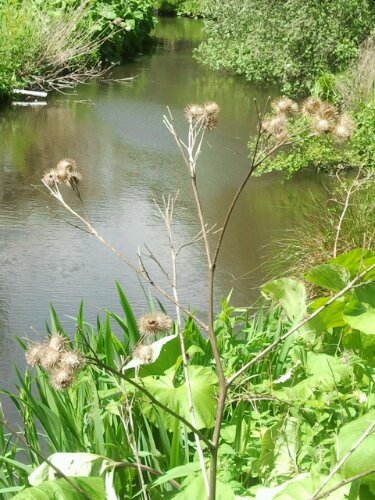
However if you are suffering from such a complaint, think twice before racing off to a local patch of this herb. Hemp agrimony contains a highly volatile oil which has been found to stress the liver and even cause cancer so much caution is advised. Hemp Agrimony is considered toxic these days. The plant does smell quite pleasant when cut so this year I intend to try it in some home decorations. Here’s a patch growing beside still water in Park Frankendael. You can see the dried stems from last summer, towering above the new foliage and suggesting how tall this perennial will grow over the next few weeks.

Lastly, here’s Another pretty Wild Scented Geranium (Pelargonium sp.). This one is growing in a full sun position and looks quite different to the ones we looked at yesterday.

365 Fraendael day 27

Today, a lovely walk through the park with Lucile and the little ones. We each went home with a few leaves of Ground Elder and a little Ground Ivy. Plenty of other herbs in season though…

Here’s the foliage from a Wild Carrot! Not one to be dug up, though it would probably taste great. I hope to revisit it later in the year to double check it’s identity when it is in full bloom. Wild carrot has been used in folk medicine for centuries and has recently been researched by Robin Rose Bennett. It is often found to be quite a useful contraceptive. For more information on the research take a look at Robin’s website.

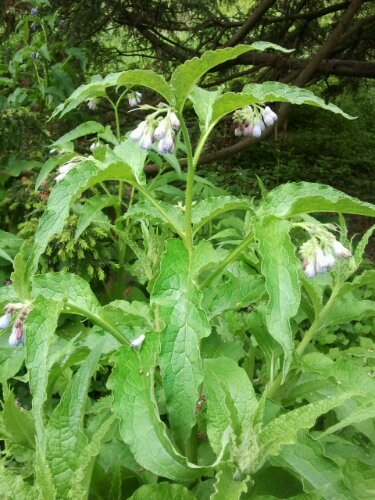
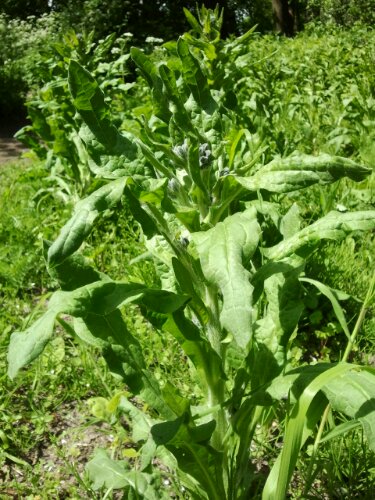
Here is Comfrey, still in full bloom and looking stately throughout the park and city.

Garlic Mustard leaves continue to grace many of my meals. The plants here are nearing the end of their flowering season but the foliage still tastes wonderful and only a leaf or two is needed to add a garlicky kick to regular meals.

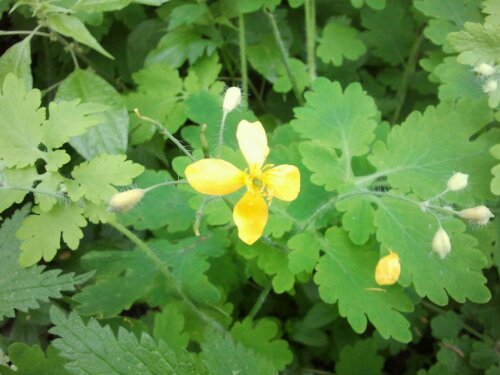
Greater Celandine continues to flower. It’s stems remain loaded with bright orange sap which is freely released when a stem is broken. This sap, containing a substance which is acrid and highly irritant but has been used medicinally since at least the middle ages. Historically it was used, in preparations such as lard and milk, to cure piles, cataracts, severe scurvy and some forms of cancer. These days it is still a popular remedy, amongst those who know it, for warts, corns and ringworm. To use for these three ailments, simply break a stem and apply the fresh sap to only affected skin. It will irritate healthy skin. The Latin name of this plant means swallow (the bird) and this is said to be because the plant’s flowering season coincides with the arrival and departure of swallows. So hopefully there should be some time to go before the flowers of Greater Celandine disappear from Amsterdam again.

Cleavers are looking particularly lush and juicy at the moment, about 50 cm long on average. Perfect for harvesting a clean handful and juicing for a cleansing tonic.

Wild Geranium is also looking striking, producing a mass of small purple flowers in the woodland, at present.

365 Frankendael day 26

Ransoms and Garlic mustard are gradually fading and being replaced by other tasty plants. Here are a selection of today’s urban herbs in Amsterdam’s Frankendael Park.

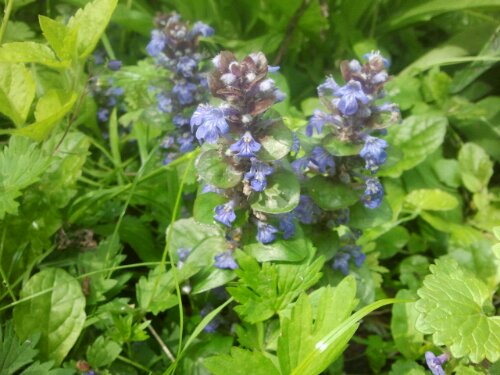
Bugle (Ajuga reptans). Used to be known as the Carpenters herb because it is yet another plant with blood staunching abilities. It looks very similar to Sealheal but has small leaves throughout the flowers whereas Selfheal(which I am keen to find) has flowers all at the top of the stalk, without leaves between). It is a member of the mint family and has digestive uses and historic herbalists apparently used it for all manner of ailments.

Caution
I can’t find much about this from truly reliable sources but there are many Internet posts mentioning narcotic and hallucinogenic properties for pretty, evergreen Bugleweed. So perhaps you should do some research and make your own mind up on that one but it’s probably not a herb to experiment with in the family stew!

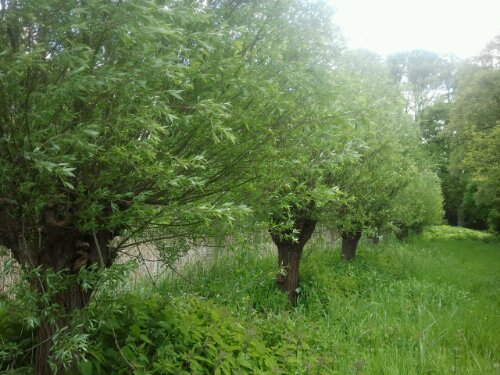
Willow. Here’s a lovely row of fast growing coppiced Salix, growing beside water at the Middenweg edge of the park.

Ground Elder (Aegopodium podograria) is growing bigger and bolder each day. I did notice a few flower heads developing on Groundelder today so now is the time to harvest if you are interested in foraging this plant. The leaves of this invasive, woodland loving perennial look quite similar to Elder and Ash tree foliage. It tastes really good and can be cooked as spinach. I noticed that my old copy of Food For Free only shows the flower of this foragers favorite. It is worth mentioning that foragers should only use such books as a source of inspiration. I use two detailed wild plant guides when identifying and getting know new plants. Foraging books are good for suggesting what to look for and how to use them.

365 Frankendael day 25

Today, daisy, magnolia, pine cones and ribwort during an after work wander between the two Frankendael tram stops.

Daisy (Bellis perenis)has quite a number of historic uses. You can eat this herb as a salad or a pot herb but in places like Frankendael it’s highly likely that your harvest will have been quite heavily soiled or trampled. Have a look at the Uses section on the linked Wiki entry about this plant for details of how the Romans used its astringent qualities to assist soldiers.

Tasty Magnolia is still in flower here in Amsterdam. This photo is of a flower on a young tree within the park, so these particular flowers won’t be on my plate. There are plenty of other mature trees overhanging gardens and in public spots which you may be able to locate using boskoi. Before now I have collected leaves straight after a strong wind or shower. That’s a nice way to avoid upsetting anyone who thinks you are just spoiling the beautiful display by plucking blooms.

Above are a few Pinecones, found by my daughter, which I had completely forgotten could yield great food, in fact one of the least polluted and most nutritious- Pinenuts! And they are another harvest to acquire from fallen plant material rather than plucking. The tree these fell from is shown next…

I’m not sure of the species but I have already had a peak inside the cone and there are some tasty looking nuts within.

Lastly, trusty Plantago lanceolata, Ribwort. I harvested from several really juicy looking plants today, ready to make a foot oil tomorrow morning. The link above goes to day 2 of the 365 project where I gave further info and links about the plant.

365 Frankendael day 24

On my wander through the woods of Frankendael today, I saw a beautiful woodpecker sat on a park bench! No time to photograph it but maybe this park will turn me into a bird spotter, by the time this project is through!

Another exciting discovery today was made thanks to the Meetup group. Yi wondered if I knew of Butterbur (Pestites sp.) and if it grew here in Amsterdam. She likes to eat it when at home in Japan. I wasn’t aware until then, that Butterbur and it’s immediate relatives, are edible, tasty and are reported to have health benefits.

Butterbur throws up very strange looking flowers on thick stalks during spring, a while before it’s foliage appears. When it’s often massive leaves do appear, they all come from the rootstock rather than a leaf stem. Leaves can be 60 cm or more across and are very easy to spot as they are unmistakably kidney-shaped and come out of the soil not a central plant stem. There are lots of them near the old entrance of Frankendael. I await Recipe advice from Yi’s Mum, before deciding just what to do with the plant but a google search for Fuki, it’s Japanese name will provide you with lots of ideas. If you live in the UK you may be familiar with the vanilla scented relative called Winter heliotrope. I can still remember my delight and disbelief when I first sniffed its flowers in Somerset, many years ago. I had no idea it was edible at the time.

Now onto another huge-leaved perennial, which many will be familiar with: Burdock! Arctium lapa shown above, is a truly enormous plant with a mighty rootstock, prized particularly as a liver tonic. Dandelion and Burdock is a delicious drink, I remember well from my childhood. Dandelion is also a super liver tonic. Now Burdock is not such an Urban Herbology favourite as it’s very difficult to dig up and what a mess of parkland it would make to do that! However is a good herb to know about in case you happen upon a huge patch of them in the countryside or a bottle of tincture in a herbal supplies shop. When Giant Butterbur and Burdock coexist you should notice Burdock has pointed leaves and Butterbur kidney shaped leaves. burdock leaves grow out from an upright central plant stem, the burs eventually grow out of the top of this central stem, on their own stem.

Here above is a sign that there’s a Burdock closeby. Dried burs from last years growth.

Other wild beauties today…
Soapwort bolting up after done extra sunshine and showers. Yes, it is soapy, well the roots at least, and can be used for cleaning. It contains saponins but such a pretty flower is better left in the soil.

Euphorbia close up. Extremely toxic and irritating to skin.

A type of Mullein, in bud. This plant will be well over a meter high very soon. It’s flowers can provide an earache remedy.


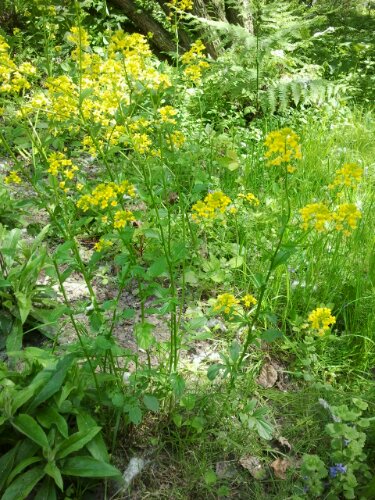
Lastly, a member of the Brassica family, I thought possibly Creeping Yellow Cress although it’s leaves are slightly stubbier than that. It tastes uncredibly strong! I then wandered into the labelled herb garden of the park and found a very similar looking plant called Barbarakruid (Barbarea vulgaris, Yellow Rocket Cress). I think that’s the most likely candidate. It tastes like super strength Rocket. Umm!

365 Frankendael day 23


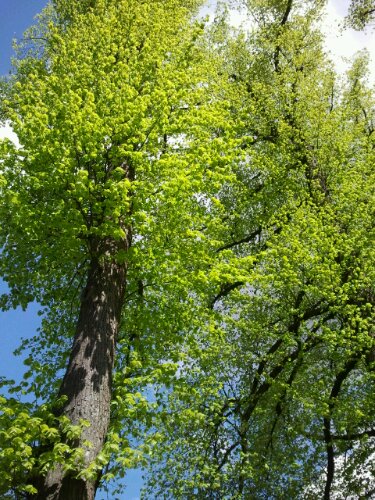
Today, Sameena from the Meetup group joined Livvy and I, on day 23 of our herb seeking mission. We saw several beautiful herbs, not least Garlic mustard, Geranium, Horsetail, the beautiful Lime trees with their glutinous leaves and Comfrey which the local bees were going crazy for.

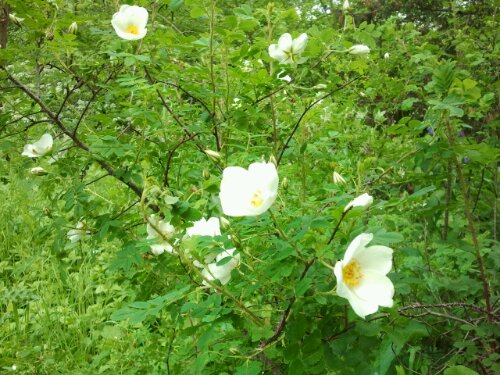
Afterwards I found borage and wild rose in flower, both for the first time this year – a real treat! If you fancy harvesting either please remember that borage is an annual so if you take the flowers there won’t be a plant there next year and vitamin C rich Rosehips only form when Roses are fertilised by insects and allowed to develop unhindered all the way into autumn.

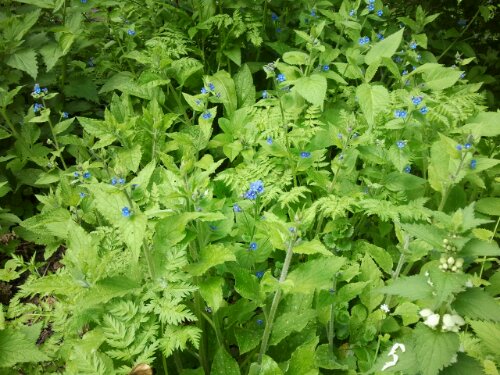
Above, Borage (Borago officinalis), mixed in with some Sweet cicely and Dead nettle. The small blue flowers are the easiest feature to help you distinguish this plant, it also has very hairy foliage. An alternative name for it is the Cucumber herb or plant, that’s because it tastes like cucumber! It makes a welcome addition to salads and it has uses in skin care.

Frankendael 365 day 22

A beautiful afternoon walk showed me the following herbs in particular…

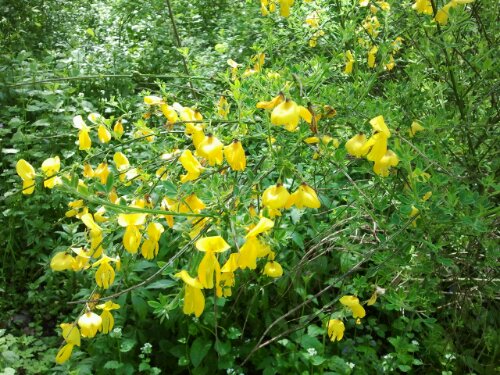
Firstly A beautiful Broom shrub in full bloom. The flowers are edible.

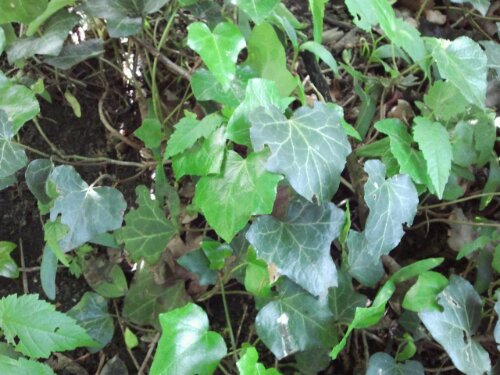
Ivy, really looking more verdant and fresh that any other time of year.

The tall plant with orange yellow flowers against the bridge is a type of Euphorbia. All members of the family should be avoided as the white latex like sap is poisonous and contact with it readily causes quite severe photosensitive irritation. It is a plant well known to many gardeners for this reason and should be avoided by foragers.

The photo above shows a typical scene at the edge of Frankendael’s woodland. Edges are renowned for their productivity because both shelter, support and light are available to plants. Here we can see Yellow dead nettle, ferns, garlic mustard, Purple/red dead nettle, Greater celandine and other plants all nestled against one another.

Here is Wild Sorrel, a very tasty plant of which only a leaf or two are required to really add great flavour to many dishes and is well done for Sorrel Soup.

Lastly today, Ground ivy and stinging nettle, both on top form for foraging at present.

Frankendael 365 day 21


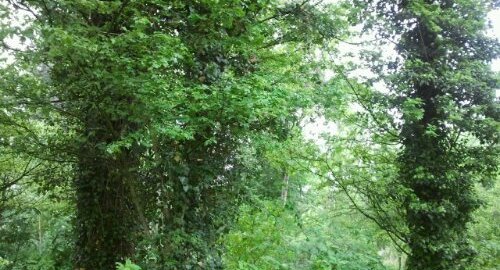
Today Ivy and Horsetail. Firstly Ivy (Hedera helix). Here it is scaling three massive trees on the edge of Park Frankendael. Yes, it is a herb but not really one for the pot. Ivy has mystic qualities and associations as well as medicinal properties and many traditional uses. I’ve also posted a lotions recipe for Ivy cellulite oil today which may be of interest. Ivy is available year round but harvesting it in spring or summer us likely to have a lesser effect on the plant.

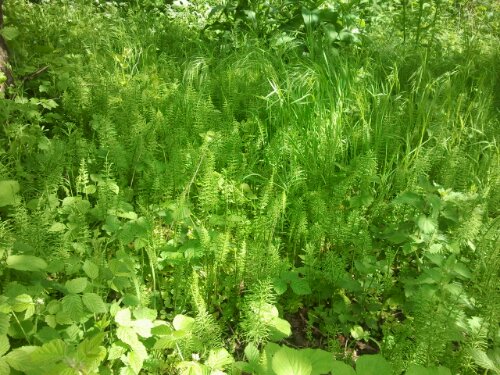
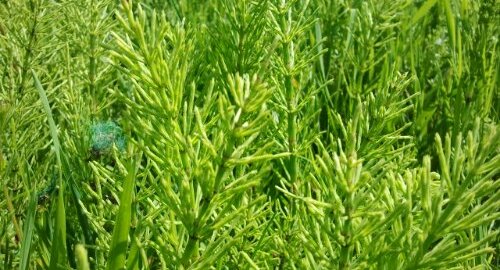
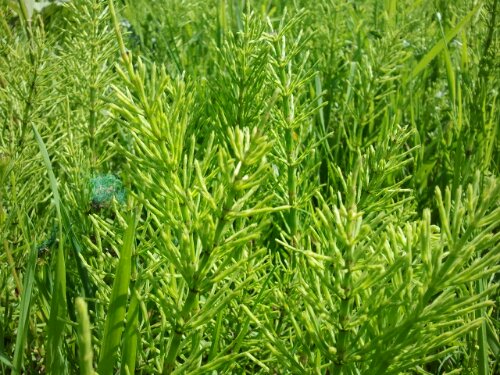
Horsetail is very vigorous at the moment and perhaps more useful than you thought. Here’s a link to a lotion recipe for Horsetail cuticle cream and an oil nail treatment.

Horsetail Nail and Cuticle Cream


Horsetail is a traditional remedy for weak and brittle nails. The source of it’s reputation is plant silica which it contains in relatively high quantities. The following recipes are adapted from Josephine Fairley’s book..

Make a heat infused oil of Horsetail, which has been left to wilt overnight after harvesting. Then stir in enough beeswax to make a light salve. (You can test the solidity of your salve before it sets, by dabbing a drip or two of your mix onto the back of a cold spoon. Add more base oil if it’s to solid, as more beeswax if it’s too runny)

If you have it available, add 5 drops Benzoin tincture, just before the beeswax, as it may help to further nourish cuticles. You could also add a few drops of a complementary essential oil (such as Lavender) at the beeswax stage but it’s not really necessary.

Quantities:
50g Fresh Horsetail stems, preferably in spring (or 25g dried)
150 ml Olive oil
1 tablespoon grated beeswax

Follow the instructions for making heat infused oils, simmer gently for 30 minutes.

Another way to nourish nails with Horsetail, is to make a heat infused oil and use it as a warm nail soak, once a week our so. The book says you can reheat this oil as often as you like but I urge you to beware of impurities entering your infused oil by repeated use and rewarming. You could achieve a similar effect by coating your nails and cuticles with a sufficient amount of the oil then put a pair of cotton socks or gloves on your hands for 10 – 20 minutes to retain the heat and help the oil to penetrate.

Ivy (Hedera helix) Anti Cellulite Oil

This recipe for anti cellulite body oil is inspired by one in Josephine Fairley’s book, The Ultimate Natural Beauty Book. My sister gave it to me as a present several years ago and although I don’t use it very often, it always provides inspiration for natural skin care. The recipe in the book uses a few drops of essential oils of Rosemary, Fennel and Juniper.

In my adaptation, I use small amounts of the fresh plants or seeds. I also substitute olive oil, argan oil or sweet almond oil for grape seed oil as that oil quickly becomes rancid whereas my substitutes don’t. If you prefer a lighter oil then you could substitute coconut oil, mixed with a little of one of the other options.

15 large fresh Ivy leaves
Tip of a fresh Juniper sprig
Tip of a fresh Rosemary sprig
1/2 Teaspoon of fennel seeds
125ml oil (see above for options)

1. Bruise the plant material with a pestle & mortar or similar.
2. Place in a clean glass container and put over the oil.
3. Use a chopstick to push the herbs into the oil and to dislodge any trapped air bubbles.
4. Leave in a sunny spot for about 4 Weeks.
5. Strain off and save the infused you’ll into a clean glass container. Compost the spent herbs our return then to where you found them.
6. Use the oil as you would any massage oil, with upward strokes to move the circulation towards the heart. Do this preferably after
skin brushing with a dry sisal brush or similar.