Category Archives: Herbs

Foraging Wild Garlic

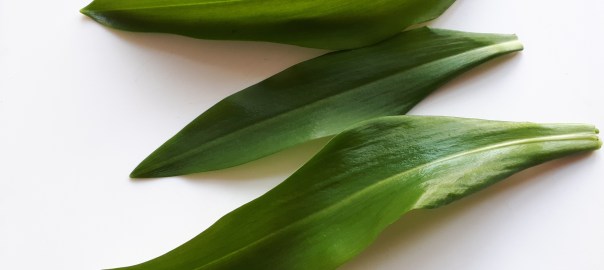
Three beautiful blades of Wild garlic / Ramsons / Daslook (Allium ursinum), plucked from the River of Herbs orchards in Park Frankendael today. I made some pungent daslook sauce from these, by blending them with olive oil and a little apple cider vinegar.

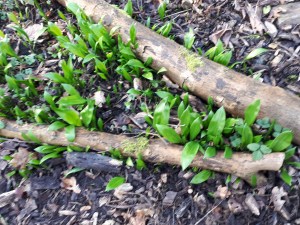
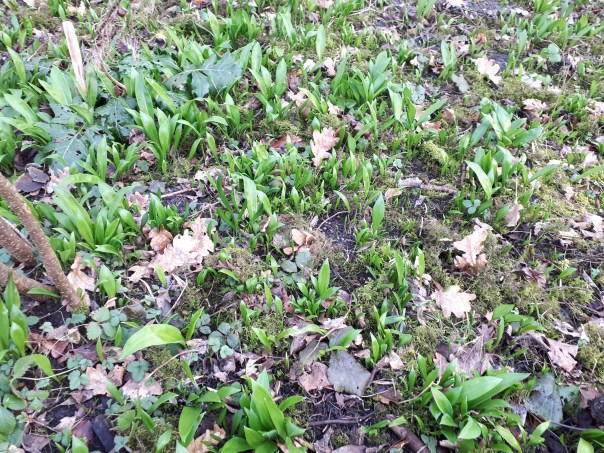
And here are a couple of year old wild garlic bulbs which I removed from the orchard path. The reason for this is discussed in the podcast. Have a listen and let me know your uses for the plant and if you have had any success growing it. The paths are edged with fallen branches. In this photo you can see how the plant spreads into the paths.

I only forage wild garlic when there are huge swathes of it and the leaves are a few inches long.

I’m off to make some dinner using a little of that sauce now. Perhaps you would like to listen to my latest podcast, about ethically foraging Wild Garlic and how to use it.

Green spirit

Gardening is good for you. Whether inside or out, spring, summer, autumn or winter, it is not difficult to see why. Being in contact with earth, plants, air and water feeds the soul, tones muscles, lifts spirits and aligns us acutely with the cycles of nature. As research about biophilia, horticultural therapy, woodland bathing and related topics mounts, I wanted to share a few thoughts about the importance of gardening in the city.

Some of my earliest memories are of gardens – growing lupins and marrows, following snail families, the smell of radishes, cut grass and just pulled potatoes, cress heads, apples, maggots and bee stings, blackberries, sweet blackberries, weeding, muddy nails, stone scratched skin, daisies and rose petal perfume. I think that I have been a gardener since birth. And I think that you have too.

People speak about gardeners having green fingers (or thumbs), about knowing what to do with plants, about experience, having a feel for it and so on. Experience amongst gardeners is most certainly wide ranging but I am sure that we all have green spirit within us and that spending time in nature helps it to grow. I love to see that spirit grow within those around me. It can manifest as a quiet self confidence, improved physical coordination, lightness of touch, imagination, appreciation of others, interest in life, a desire to learn more and a need to be to nature – often. When green spirit reaches the level needed, I see people literally blossom. It radiates from them, they appear bigger, bolder and more connected to nature. It then touches those around them and invariably causing the creation of more beautiful green places and a deeper respect for nature. Green spirit is a wonderful thing!

Bench crafted by Bobby van Vliet

Due to my somewhat selfish desire to fill the world with green spirit, I began a project in 2012 called River of Herbs. The aim was to help more people, plants and wildlife to flourish in the city. Over the years, I have run free courses for individuals, schools and groups, in the name of the project and I have trained and built up experience in Horticultural therapy. The aspect of the project which I have loved most is the herbal orchards of Park Frankendael. I adopted them from the city council in 2014; four fertile patches of land, occasionally mowed, care homes for old fruit trees, shady retreat for dog owners. They are behind the grand old Huize Frankendael. Beneath the trees were about 20 sorts of wild plants, some edible, some not, all ‘weeds’. The aim was to create a garden base for River of Herbs, to teach people about wild herbs – how to grow them and use them. From the start the orchards have been blessed by incredible volunteers. Some come and go. Some come, connect and stay for a long time.

All of the volunteers amaze me.  We have welcomed research students, chefs, job seekers, couch surfers, retired people, dog owners, cat lovers, busy people, tourists, translators, writers,  teachers,  herb people, psychic people, IT people, number people, tired-out people, life/law/loved – struggling people, new people, local people, energetic people, artists, actors,  jewelers, designers, whirlwind people, tranquil people, mature people, young people… so many people have volunteered and made their mark on the orchards. Together, we have laid paths, grown herbs and good friendships.

Japanese wineberry taste so good!

Lots more edible and medicinal herbs have been added to the orchard ‘borders’. Saffron, Sweet cicely, Japanese wineberry, Valerian, Motherwort and Sweet violets are probably my favourites.  We have planted cherry trees, made Elder cuttings, nurtured seedlings and re-homed poisonous plants. We have built benches, a willow hut, a barefoot path, stung our arms and legs on nettles more times than I like to remember and drunk a lot of herb tea.  We have worked together in the green, we have made a community garden and green spirit radiates from each of the volunteers. And how many of these volunteers arrived calling themselves a gardener?  None. Well actually one,  a wonderful chap who helped us to lay woodchip paths in 2014. But that’s not many is it?

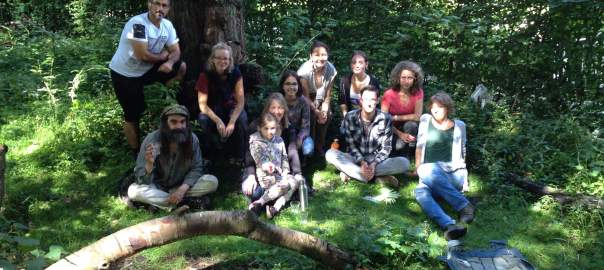
Volunteers River of Herbs orchards July 2017

The measure of a good gardener is not how well they clean their tools, how long their runner beans grow or how weed-free their flower borders are. To me, the measure of a good gardener is how far green spirit radiates from their being and strives to improve the world.


River of Herbs orchards are open to the public 24/7 all year round. 

We generally meet there every Wednesday morning, 10.30 – 12.00 unless the weather is stormy.

Address – Behind Huize Frankendael (Middenweg 72, 1098 BS Amsterdam).

Email – riverofherbs@gmail.com or urban.herbology.lynn@gmail.com 


Ramson mackerel spread

Urbanherbology ramson-mackerel pasteThere seems hardly time to do anything except forage and garden at the moment. Spring has truely sprung and wild garlic / ramsons (Allium ursinum) is on my menu each day! As ever,  I can’t get enough of this herb and have been experimenting with how to stretch the harvest.

Mostly, I have been preserving this spicy-pungent herb in ghee or olive oil. The infused ghee is wonderful, easy to make, versatile as a cooking ingredient and a useful ready to use remedy.  Today though, an even smellier yet wonderful flavour pairing emerged.

At lunchtime, a forgotten smoked mackerel, called out to me from my fridge. As I’m off colour at the moment, I couldn’t face eating the whole thing in one sitting but equally didn’t want to waste it.  So I set about making something simple.  Eight silken ramson leaves, lovingly plucked from the orchards on Wednesday also cried out from my fridge. I blended them together into a paste/dip/sandwich spread and the combination works, so here is my recipe for ramson-smoked mackerel paste:

1. In a bowl or food processor, thoroughly combine the bone and skin-free meat from one whole smoked mackerel, the juice of 1/2 to 1 lemon, a small handful of washed wild garlic leaves and a generous tablespoon of ghee or butter. (I used wild garlic infused ghee today).

2. Blend or mix to your desired consistency. Season to taste with salt,  pepper and perhaps extra lemon juice.

3. Transfer to a glass storage container. It should keep for a few days if refrigerated.

Do let me know if you try this recipe and if you have other ways for using wild garlic. On April 3rd I’ll be harvesting and processing more wild garlic at the spring apprenticeship gathering. Let me know if you would like to join us! Details are on my events page.


Great soil for amazing herbs

​​My friend Madelon Oostwoud has written a wonderful book about growing amazing edible perennials in small gardens. Now in its second print, Een Kleine Eetbare Tuin is an absolute treasure trove of gardening information, perfectly tailored to small urban gardens. Her book is published by the KNNV and is widely available to purchase. I highly recommend it!  Madelon has kindly sent me the following extract in English to help urban herb gardeners develop a meaningful relationship with their soil.
een-kleine-eetbare-tuin
Knowing your Soil
Garden soil differs from region to region, district to district and sometimes from garden to garden, and even from one end of a big garden to the other. Top soil is built up from small particles of sand, silt and clay, depending on the deeper layers of the ground below. Changing a garden on barren sand into a garden with fat clay is obviously impossible. Gardeners today know that you have to choose plants that suit your ground, and not vice-versa. The mineral material defines the choice of plants. The plants influence the organic material, and together they influence the soil. Improving your soil is certainly possible but should not be confused with changing the soil. Soil improvement is to improve the structure of the soil in your garden. It can be done in different ways.
Know your soil
Every ground or soil is suitable for an edible garden but not every plant grows everywhere successfully. Also, one soil may be easier to work then another. But complaining about unworkable soil has everything to do with wrong assumptions made by the gardener and little to do with the soil being unsuitable, a pet subject of one of Holland’s best known gardeners Romke van de Kaa.
Mineral material
Soil quality is determined by the ratio between the different particles of mineral material. Sand has the coarsest grain, clay the finest and silt is located in between. A loamy soil has sand, clay and silt, and is clearly a mixed form.
Types of soils
The different soils in most of Europe are described in the Soil Atlas of Europe, an initiative of the European Soil Bureau. It consists of a large number of maps, with an introduction to soil that explains the role and importance of soil, how soil is created, how to identify the soil in your garden, the relationship between soil, agriculture, our cultural heritage, forests and as a source of raw materials. Soil mapping and classification are also explained together with an illustrative and informative guide to the major soil types of Europe. You can find the Soil Atlas of Europe online at the site of the European Commission. Search for http://globalsoilweek.org/ if you are looking for information on the soil in your region outside Europe.
  • Sand
Sandy soil is light in weight, often also in colour and it feels grainy and loose. Sand cannot hold much water, neither many nutrients. Sand warms towards summer and stays cool long after the frost is out of the ground. Because sand does not retain nutrients we usually call it poor soil. Not all plants can grow on sand but it is easy to work and easy to improve using organic material.
  • Clay
Clay is heavy and compact. It holds nutrients and water well. Clay that is low on organic material is heavy, impermeable and intractable. Roots therefore have a hard time growing in clay. Working clay is heavy, as the particles literally stick together. Clay soils tend to dry slowly and do not easily warm up. Dry clay is hard and brittle. It freezes easily, which does generally not harm your perennials. A mix between clay and loam is loamy clay.
  • Peat
Peat comprises very few mineral ingredients. Peat is compact organic material that consists of plant remains. It is dark coloured – often almost black. Peat is moist and mostly low in oxygen. If your garden has peat soil on the surface, you have the most difficult ground with which to create a garden. It is in fact quite acidic, sticky when wet and crumbly when dry. This is also a reason to not purchase commercial potting soil because it consists mainly of peat. There is no food in it and it does not have a good structure. The structure is sponge-like. You are likely to recognise remains of undigested plants and roots. Dry peat is very flammable and used to be used as fuel in stoves and heaters.
  • Saline
The soil in extremely dry regions is usually brackish because of its high salt content. You’ll probably see a white layer coating the surface of the soil, your plants are growing poorly, and they’re suffering from leaf tip burn, especially on young leaves. Saline soil can stall plant growth, impede germination, and cause difficulties in irrigation.
  • Loam
Loam has an equal amount of sand, silt and clay particles, as well as organic material. It has the positive qualities of clay and feels soft and smooth. It is light structured. Loam is not lumpy, very fertile, well-drained without letting all water through and so often proclaimed the ideal garden soil. A mix between sand and loam is called sand-loam or loamy sand.
Improving your soil
If your soil is clayey, it is rich in calcium and minerals, and most likely alkaline. Apply a thick layer of compost or mulch (leaves, woodchips, biological cacao shells, freshly mown grass, hay or a few layers of cardboard or newsprint pages). This will improve soil life, and improve the structure of the soil. It also ensures that the soil can better retain heat, which can be especially important in the winter. Compost and mulch keep evaporation and the growth of weeds at bay.
Compost
Ideally compost will contain a large amount of soil organisms: worms, beneficial nematodes, woodlice, centipedes, bacteria, etc. These organisms and the plant-remains in the compost get the soil going. Therefore homemade compost is best. Commercial compost (in bags at the garden centre) is admittedly organic in composition, but does not have any bacteria and fungi in itself. Once you opened the packaging you will not be able to detect one single worm. In homemade compost there are always all kinds of insects and worms. Once outside the composter, they will get to work for you to improve your soil. If there is virtually no organic life in your soil it can easily be started in no time with your own compost. Divide the mature compost from the bottom of your compost bin and simply distribute it in your garden. The easiest way to do it is with a soil sieve. Simply sieve the compost over your plants, and tip the particles that do not pass through the sieve back in the compost bin to further compost. Mature compost can be divided over the ground with a rake or by hand. If you have a worm tower (also see chapter : Compost) use the compost when it looks dark, and you do not ‘recognize’ anything any more. To separate worms and compost – briefly put the compost out in the light. Worms do not like light, and will crawl away into the deep. You can view the contents of (part of) your worm tower also by throwing out worms and all the plants. They will be just as happy in the top layer of your garden as in the worm tower or compost bin. If your worm tower has a tap for the worm tea, dilute it with water and poor it over soil and plants.
Improving acid soils
Sand and peat are usually acidic. Sand is acidic and additionally nutrient-poor soil. You could add some lime to ‘ease up’ the structure of the soil. Lime is alkaline, the opposite of acid. Lime thus de-acidifies acidic soil. But be careful with the addition of lime. In sandy soil lime connects the sand particles, in clayey soil usually only enough calcium is present and lime would just reduce the structure. Acid soil is therefore best improved by adding compost.
Just spread compost on your garden and soil and let nature take its course. By ‘feeding’ the soil, it becomes healthy. Healthy soil can hold enough water and all other elements by which plants grow. Healthy soil grows healthy plants that do not suffer from diseases and pests.
Mulching
Mulching with leaves (dry, coarse, old and brown material) creates a low pH, where fungi and bacteria feel at home. That’s good for trees, woods and spices. Mushrooms can also find their way there.
Mulching with compost (wet, green, young material) creates a higher pH with more bacteria than fungi.
Green manures
Another way to improve soil and structure of your ground is by planting green manures. Green manures are plants that ‘work’ the ground for you. They are almost always and everywhere successful.
Bare areas with new houses or vegetable gardens where the soil for a long time has been exhausted by monoculture, sowing green manure is an even better solution than applying compost. While the plants take root and grow, thousands of organisms underground start to give your soil a nutrient-boost. Even in winter, when the ground is bare and reflect on lies. In the coldest months, when your soil seems deep asleep and no the plants are yet stabbing their heads above ground level, the roots of green manure do a perfect job. They improve your soil simply by rooting, making ways for insects and small craetures, airing the soil with their burrows, feeding the soil with their feces.
Sow from spring to late September, work the seeds lightly with a rake and let the plants grow and do their job for you as long as you like. A mixture of natural plants works most effective and is additionally wonderful in your yet un-landscaped garden. You can leave the plants grow until after flowering, and even after being felled by frost. Over time you can mow them, leave them to ‘wither’ or rake them in.
Plants that you let ‘die’ and digest on the ground, such as alfalfa, mustard, winter rye, bring structure and humus in the soil. Real green manure! Legumes, such as clover and vetch, enrich the soil with nitrogen. Nitrogen is vital to plants and therefore to the success of your garden. Without sufficient nitrogen, plants will be unable to grow. Though nitrogen is abundant in the world, most of it is a gas and most plant cannot use nitrogen as a gas. They must rely on the addition of nitrogen to the soil in order to be able to use it. A few plants love nitrogen gas. They are able to draw the nitrogen gas from the air and store it in their roots. These are called nitrogen fixing plants. Besides being green manures they also fixate the nitrogen. Please note that each nitrogen-fixer is a green manure, but not every green manure is a nitrogen-fixer.
Examples of green manure
Below green manures are annuals. They did not return and will not proliferate. You can buy the seeds at any garden centre. Most are not suitable for consumption, so do not use them for it.
Buckwheat (Fagopyrum esculentum) Applicable to the poorest lands; Sowing: spring t / m summer. Growing rapidly and deeply rooted.
  • Fenugreek (Trigonella foenum graecum) For heavy and light drained soil.
  • Crimson clover (Trifolium incarnatum) Suitable for all grounds and nitrogen-fixer
  • Lupine (Lupinus angustifolius) Especially on light, acid soils.
  • Alfalfa or alfalfa (Medicago sativa) Applicable on dry ground; sowing: Summer, let stand until the following spring.
  • Mustard (Sinapis alba) Apply to all grounds; sowing: March September.
  • Phacelia (Phacelia tanacetifolia) Apply to all soils.
  • Serra Delle (Ornithopus sativus) as green manure especially on sandy soils.
  • Field beans (Vicia faba) to be applied on all grounds, seeding: September-October. Makes a perfect mulch after mowing.
  • Vetch (Vicia sativa subsp. Sativa, Vicia villosa) Suitable for all grounds and nitrogen-fixer
  • Winter rye (Secale cereale) Applicable on all grounds; sowing to November and leave until Spring.
Japanese Quince

Japanese quince
Japanese quince

At first glance it may seem that these early spring weeks are quite dark and dull. But look a little closer and you will see that there are a lot of beautiful flowers around at the moment. Here is one of my Imbolc favourites: Japanese quince (Chaenomeles japonica) Japanse sierkwee.

  • This plant has edible fruit and flowers,
  • Grows easily in Amsterdam,
  • Roots from cuttings and layered branches,
  • Provides nectar through the darker months,
  • Is spiky and protective,
  • Looks very pretty in early spring.

The flowers emerge by this time and keep on blooming until April or even longer. They grow from quite architectural and spiky branches. The shrub is deciduous and the leaves grow back as the flowers fade. They are lush and glossy. Those branches can reach out a long way or can be easily pruned into a sturdy almost impenetrable hedge. I used to have one such hedge in my Somerset cottage garden. I am very pleased that Japanese quince surrounds my Amsterdam school building and am delighted that Amsterdam council seem to like to use it as urban landscaping. You can read about the growing conditions which are preferred by this plant on Plants for a Future.

Japanese quince
Japanese quince entrance screen.

Japanese quince flowers can be red, bright pink, peach-coloured, white, pale orange or anything in between. There are a number of different coloured varieties growing in landscaping along Johannes van der Waalstraat in my part of town. I plan to take a few small cuttings some time soon and will try to introduce the plant to my volkstuin and the orchards of Park Frankendael.

The fruit, or quinces can be surprisingly large. They are edible raw or cooked (foraging site dependent of course). I rarely find very many so I usually clean and chop one into small pieces and then cook them up with other fruit to make a sort of compote. The photo below is of two pots of such compote or jam made by Ilko who volunteers at the orchards. The yellow one contains Japanese quince. The easiest (and perhaps tastiest) thing that I do with these fruit is to simply add them (chopped) to my everlasting Rumtopf.

Ilko's fruit compotes.
Ilko’s fruit compotes.

Japanese quince is a member of the Rosaceae family. The showy, numerous stamen in five petaled flowers point to them belonging to the Rose family.

Spring Herbs Risotto

Fennel and Lemonbalm harvest
Freshly plucked Fennel and Lemonbalm leaves

This time of year provides a bounty of nourishing and tasty spring herbs. Here is one way that I like to cook them – a simple, no-fuss risotto.

Today I harvested two large feathery  Fennel leaves and three verdant tops of Stinging nettle (from Frankendael herb orchards). Yesterday I plucked three huge Dandelion leaves from the school garden (where I work). The dandelion leaves were wilting away in my fridge today but still taste great cooked, so those three herbs were chopped and added to the pot this evening. I could have many other herbs of course (Dead nettle, Wild garlic seedheads, Geranium and Ground ivy for instance) and I could have harvested heaps of Nettle and Dandelion leaves but there are other days, other meals, other foragers and other creatures who need those plants.  Upmost in my urban foraging mind is that by using foraged material as I would use herbs (i.e. in small amounts for culinary seasoning), I reduce my environmental impact and reduce the risk of eating contaminants and plant poisons (should they happen to be on or in the foraged plants). This is why I call my work Urban Herbology, rather than urban foraging. To find out more, do come along on one of my herb walks soon!

Lynn's Spring Herb Risotto
Lynn’s Spring Herb Risotto


Spring Herb Risotto
(makes about 2 main dish sized portions)

1/2 cup risotto rice – (non risotto rice will do, it just won’t become so creamy)
1 cup of good stock and 2 cups hot water (or 1/2 an organic chicken or vegetable stock cube in 3 cups hot water)
1 cup finely chopped seasonal fresh herbs (e.g. Fennel leaf, Dandelion, Stinging nettle).
1 small onion, finely chopped
1/2 cup frozen peas
Salt/Nori flakes/pepper/Parmesan cheese
to taste.

Method
1. Add the rice, stock and hot water to a heavy based pan.
2. Stir briefly to prevent it sticking to base of pan and bring to a boil.
3. Add chopped herbs and onion, stir and bring to boil again before reducing heat to simmer gently with lid on.
4. Simmer as per instructions for your specific rice, the dish thickens up considerably and may require lots more water, it depends on the type of rice used. My risotto rice took about 25 minutes to cook through completely and become nicely loose and creamy.
5. Whilst simmering, continue to stir briefly whenever you think about it. You may need to add a little more water to prevent stickiness.
6. When the rice is cooked through and of a good consistency, add the frozen peas to the pan. Simmer for a further 5 minutes.
7. Check and adjust seasoning (it may need a pinch of salt,nori flakes or pepper)
8. Serve with a hearty grating of Parmesan cheese if desired.

Bones, Bites and Bali

As some of you know, I fell from my bike in November and was out of action for quite some time. In short, I broke my cheek bone in several places, took quite a hit on my bum and was rather shaken up. Illness is one of the greatest teachers so naturally lessons were learned. I wrote a few of them down as the weeks went by and thought I’d emerge from hibernation today, to share some of the ways I used herbs and other things to aid recovery. I have tried to relate the story to the Wise Woman system of healing, just as I ask my apprentices to relate a health incident they have been through to the system.

Step Zero – Serenity medicine
Bali lily and water cabbage

For the first week I did nothing but allow my body to quietly sort itself out. The cut over my eye was quickly glued together in hospital as this was clearly necessary but the rest was left to calm down, in readiness for a facial reconstruction operation. No herbal ointments, no supplements, no infusions, nothing. The body’s powers of repair and regeneration are amazing. Stores of nutrients from deep within the body are called upon to fight the cause. There was clearly nothing to do except rest and sup on water, chicken soup, pumpkin soup and all manner of smoothies. The nutrients which are taken from the storehouses of the tissues must be replaced. Adding anything extra to my diet felt wrong at this point, even dangerous so I stayed away from everything other than plain food. My mental taste-buds were my guide.

Step One – Collect information
I wanted to know several things:
1. How the accident had happened. It was a mystery and this was not helping me. It took three weeks to find out that a stone or similar must have wedged between the front wheel and mudguard, stopping the bike very suddenly. Knowing helped in some ways. Knowing that I am not able to prevent this happening again didn’t help. So I researched bike helmets. That helped. More people should wear one.
2. I wanted to know about the imminent operation. Without it my sight could be lost, with it I should look normal again. Risks of anesthetic, risks of not operating. Knowing helped.
3. I believe nothing happens by chance. Why did this happen at that moment? I searched, through dreamwork and visioning. I found answers. The answers are for me. That helped. I act on my findings.
4. Shaking, why did my body persist in shaking? Shaking is a natural response to trauma and I needed to welcome it. Whole schools of therapy revolve around it. This is an interesting field!

Step Two – Energy medicine
The energetic body is an incredible part of us. It is us. When it disappears we disappear. To feel the flow of Nwyfre / prana / chi (whatever you want to name it) through a major chakra almost disappear and not return for weeks is a terrifying thing, speaking personally anyway! I was unable to correct this easily so a dear friend helped. Being aware that the energy body is out of balance is important. Knowing how to track it’s state and assist it’s return to balance is important.

Nourishing Comfrey – Boneknit

Step Three – Nourishment
Let food be thy medicine. After the operation I incorporated Oatstraw infusion into my daily diet. One liter a day. This helped to soothe my nerves (they were rather frazzled). Motherwort tincture helped in this way also. Ten drops as and when needed to bring things into perspective again. I keep a green ointment in stock here at home for all manner of skin ailments. This was very helpful after the operation. I kept it away from the broken skin and used it with intention to seep into the skin and speed the bone and flesh healing. Comfrey within the ointment came into its own as I have never felt before. So soothing, healing, scar reducing and welcome. I trusted my thoughts on when to begin using it – not before the bone setting operation, not before the skin had stopped it’s healing fluid oozing. All had calmed before I used it. I did not wash my face for three weeks and then moved onto a regime of plain tepid water, then a little ointment here and there above the breaks plus the SJW oil mentioned below. My face was cut and grazed from my eyebrow to my collarbone. All marks went quickly, except for the super glued cut (which is not surprising). What money we waste on skin care preparations!

Another thing that nourished me was friends. They helped nourish me with food, books, cards and they nourished me by making contact in whatever way felt best. Nourishment on all levels! I must nourish my friends.

Step Four – Stimulate / Sedate
When the cheekbone breaks the supplying nerve tends to be constricted and stops working so that side of the face becomes numb. This can remain permanently in some people, due to the way the bones heal, degree of nerve damage during the trauma etc. I was keen to avoid permanent nerve damage so as the bones began to feel more fixed I turned to St John’s Wort oil. This herb has an affinity to nerves and it was all I wanted on my skin other than the green ointment. Soon after I began working with the oil the nerve began to return to action. It was completely back to normal after 6 weeks.

Nadis Herb Shop, Ubud

Step Five – Supplements and Drugs
Paracetamol seemed inescapable for me in the first weeks after the accident. I took paracetamol and codeine erratically. I don’t touch them usually but I wanted help. They certainly helped with pain but it was quickly clear that they could not remove the cause of the pain. This may sound obvious and of no consequence but for me it was something of an issue.  When I took the pills I could sleep but it was not very restful sleep. It made me feel out of control, detached from myself and although it stopped my shaking, it didn’t stop the cause so when they wore off, the shaking and fear returned with a vengeance. I found other ways to deal with the worry and shaking eventually (Motherwort and Oatstraw) but if I had not realized that these would help, I imagine I would still have been taking the drugs. That’s not a comforting thought as most people don’t know about those simple herbs. It was also a learning experience in that by simply removing the worry, I could remove the pain. 

We went on holiday  three weeks after the accident, to Bali, not exactly a hardship and certainly an opportunity for herbal learning. I learned all I could about Jamu – traditional Indonesian medicine. During my quest I met Lilir, a generous herbalist at Nadi Herbal in Ubud. A bug bite on my calf had grown to the size of a tennisball overnight and I needed local herb advice. Lilir calmly applied a hot herb tea compress, applied some herbal antiseptic spray, advised me that Patchouli essential oil is a useful first aid antiseptic in the tropics, and then taught me about Sambiloto. I began a course there and then. What an amazing herb! Sambiloto or King of Bitters (Andrographis paniculata) is a herb competing (and combining) with Sweet Annie from the Artemisia family in the fight against Malaria and Dengue Fever. Get to know it. It could really help you out. I used it to make me less appetizing to the bugs. It is really incredibly bitter so Lilir recommends it in pill form and not at a high dose. I began with one pill a day for 14 days and then down to two pills a week.

Kunjit asam Jamu

Another Jamu which I fell in love with is Kunyit Asam. I have learned how to make this at home and am trying to make a litre bottle of the orange wonder each week. It is a potent concoction of Turmeric, Tamarind, Galangal (or Ginger) and sweetened water. It has many useful properties and I treat it as a supplement to reduce inflammation and stimulate digestion. It is to be respected and should not be used by certain groups of people.  Interestingly, powdered versions are available in Balinese supermarkets and chemist shops. I bought a few packets but find them super sweet and poor immitations of the freshly made potion. But it is good to see that there is demand for such a mass produced Jamu product. An interesting read if you want to know more about Jamu was written quite recently by Susan-Jane Beers.

Since returning to Amsterdam I have found a great source of fresh Turmeric rhizome and have been experimenting with homemade Mead, infused with Turmeric, Ginger and Lemon. So far so good!

Jamu powder for sale in Bali

Whilst I was researching various nasties which can be transmitted via tropical insect bites, I learned about natural ways to treat Dengue Fever. Fresh Papaya leaf appears to be a very promising remedy. Here is some interesting reading about it. In learning about that, I found out about how fresh Papaya fruit can help keep various intestinal bugs at bay. So Papaya also became part of my daily regime.

Step Six – Break and Enter
VUAmsterdam
An operation was necessary in my case. It went very well and was less intrusive than it could have been but all operations are a shock to the system. Returning from the anesthetic was an unexpectedly “interesting” experience. Chanting a deeply ingrained Sanskrit  mantra from the Upanishads on and on and on, whilst drinking in delicious oxygen did the trick – after a while. Mantras are very powerful, whatever they are and wherever they are from. Choose a powerful one and a positive one and one for which you know the words well. It helped me to focus and to shut out worrying thoughts. It brought me back down to Earth and made me breathe slowly and steadily. Thank you Ranju for teaching it to me all those years ago!

Arnica gel was also a useful remedy at this stage. I rubbed a little on my temples to lessen the shock to the body. Here in Amsterdam I buy a homeopathic Arnica gel called Eerste Hulp Gel. It is a combination, containing also Calendula and I find it very useful for shock.

Moving on
So that’s my Wise Woman style summary of my recent healing experience. Now my biggest issue is recounting the events each time I meet friends for the the first time in a while. They want to know and I want to tell but looking back is not always beneficial. My new response is simply to be – I am healing well.

Now that’s a nice mantra!

River of Herbs @ Pakhuis de Zwijger

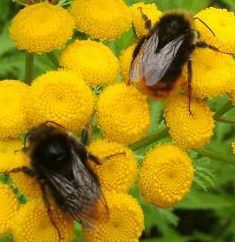
Tansy Bees
Are you are interested in:
Growing edible & medicinal herbs in public spaces,
Encouraging pollinating insects into the city,
Increasing Urban Food Security,
Creating a community food forest,
Learning and sharing gardening skills,
Creating an edible wildlife corridor through Amsterdam, by planting tiny unused pockets of land?

Then please come along to the River of Herbs Amsterdam launch meeting at Pakhuis de Zwijger on Monday 3rd February, 7-10pm.
Free entry – All welcome.

Full details available on the River of Herbs website. If you think you will be coming along, please let me know so that we have a better idea of numbers. It’s on the events page, Facebook and my meetup site. I set up the River of Herbs project in 2012, to encourage people to grow herbs and help wildlife. That’s why I mention it here.

If you are interested but can’t come along to the launch, don’t be shy, get in touch and let me know what you are planning to do or are doing already. Whether you plant a tiny plantpot with daisies, or a geveltuin with herb seeds, or a row of tree pits with rainbow shades of herbs or whatever else – everything you do makes a difference!

Bifurcated Carrots

BifurcatedCarrots.eu is all about seed saving: Why we should do it. Who is doing it already. And how we can do it. It’s run from Amsterdam by Patrick Wiebe and Steph Mandel who seem to be as passionate as me about increasing food security. They keep us up to date on the attempts of government and certain corporations to regulate the plants which we can grow and they publish a list of where interesting seeds to swap/sell are available around the world. It’s a very useful blog to follow.

You can watch Patrick, giving part of a workshop on seed saving at the Educational Gardens at Sloterdijkermeer Volkstuin complex, on this video. The River of Herbs demo plot is in the same garden and gets a nice mention.

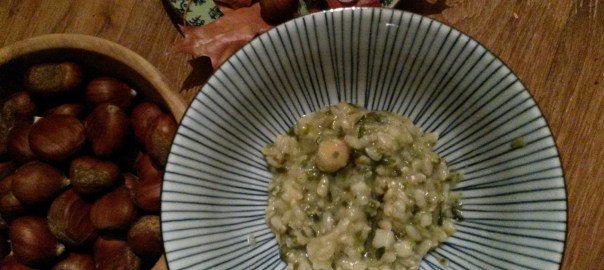
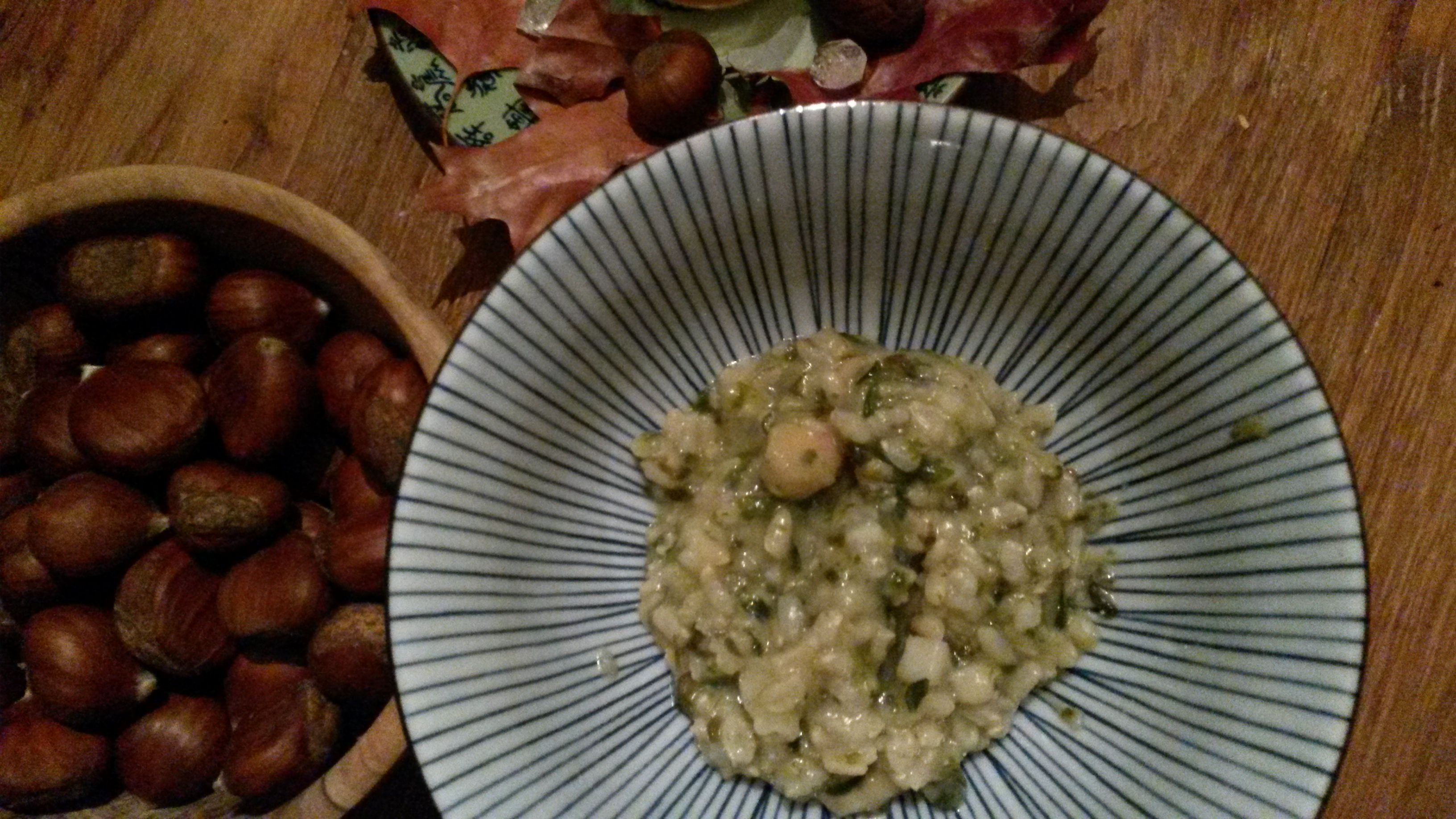
Sweet Chestnut & Parsnip Risotto

Sweet Chestnut and Parsnip Risotto

I learned on Saturday, from one of my Willow apprenticeship group, that many Japanese cooks like to peel Sweet Chestnuts when raw and add them to rice whilst it cooks. So today I tried it out and wow – what a sensation this cooking combination can create! I intended to take a huge portion of this risotto into work for tomorrow’s lunch. Umm, there is now only about half a portion left so must think again about lunch. This risotto uses sweet parsnips, sweet chestnuts and rice which is naturally on the sweet side. The other ingredients are savoury and the result is sweet savoury. Never again will I cook sweet chestnuts without thinking of rice first. These sweet chestnuts came to me as a gift – foraged in the east of The Netherlands – unfortunately I have not found them of this quality in Amsterdam, though I’m sure they exist!

So here is my latest wildfood recipe for…

Sweet Chestnut and Parsnip Risotto

(makes about 2 main dish sized portions)

1 cup risotto rice – I used wholegrain (non risotto rice will do, it just won’t become so creamy)
1 small onion, finely chopped
Oil or butter
Parsley, sprig finely chopped
1 large parsnip, finely chopped
1/2 organic chicken or vegetable stock cube or 1/2 cup of good stock added in place of hot water
6 -8 fresh sweet chestnuts, shell and skin peeled, then the creamy nut broken into rough pieces.
Seaweed – I used 1 frond of Dulse or  equivalent, finely chopped.
A little Spinach, finely chopped (seasonally available local leaves would also have worked very well, e.g. Dandelion, Ground Elder)

Method

1. Gently fry the onion in a heavy based pan and when translucent add the dry, unwashed risotto rice.
2. Fry the rice in the onion, very gently, for a minute or so.
3. Add 1 cup of boiling hot water. Stir to prevent it sticking to base of pan and simmer steadily with the pan lid on.
4. Continue to stir breifly whenever you think about it.
5. Add the other ingredients to the pan and stir every now and again.
6. Add more hot water, cup at a time whenever you see the rice absorb the cooking water and the dish thickens up considerably.
7. Simmer and add water in this way until the rice is translucent and thoroughly cooked through.