Category Archives: Herbs

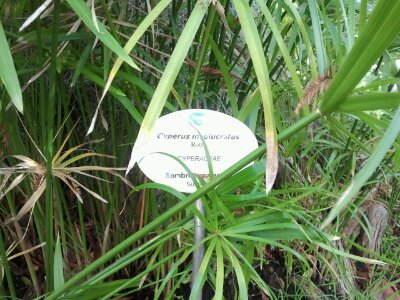
More herbs from Tenerife

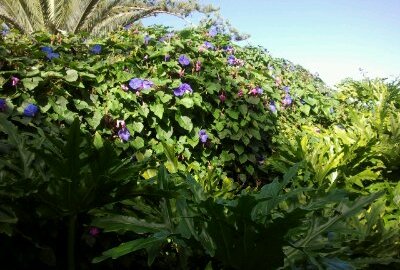
I thought this was Kudzu, Mile a minute plant, solver of addictions, remedy for many ailments, causer of headaches for gardeners who try to eradicate it… But thank you to Fran from Serendipity Farm in Tasmania who politely put me straight. It is more likely to be Morning Glory. Here’s a link showing the flowers of Kudzu

image

Ginger, not from my bathroom windowsill this time…

image

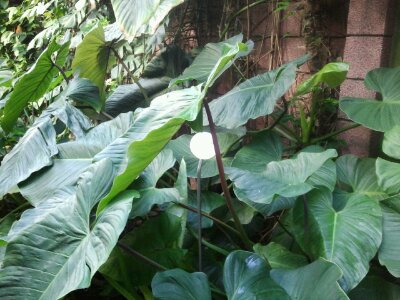
Taro

image

365 Frankendael 247 from Tenerife

Whilst away from Amsterdam, I’ve taken some photos of just a few beautiful  Tenerife herbs. So many here are familiar to me and extremely useful. Many are available in Amsterdam as well at present. Some clearly not but most are probably familiar to readers of this blog.

image

Pennywort above. I remember this from my years in Somerset.

image

An extraordinary plant which looks quite like a type of Chicory or Dandelion. I need to look this one up. It grows all around the lush North of the island and is generally found alone, massive and growing out of cracks in stone walls and rocks.

image

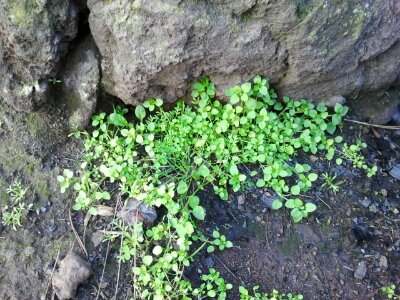
Above is Chickweed. We’ve been feeding it to local chickens.

image

Above  an unusual Mallow species, growing beside the Wine museum.

image

A familiar site, African Marigolds, Tagetes, non edible but an extremely potent herb and one used by many as a garden companion plant. They spread like a weed here, at the edge of the vineyard where we are staying.

image

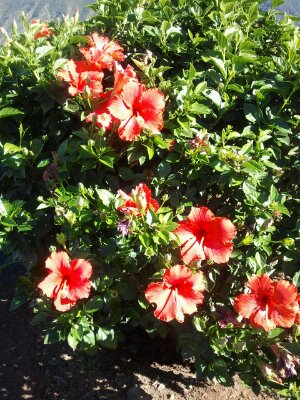
Hibiscus. I can’t stop thinking about the usefulness of Hollyhock, even here. This plant has similar looking flowers and is also a useful herb. More about it later.

image

Pelitory of the wall. Growing prolifically. I look forward to seeing how out is fairing up I the Netherlands at the moment.

image

Beautiful, peppery and healing Nasturtiums. Growing wild and prolific. An old use of these on Tenerife is to use a leaf fresh as a natural substitute for toilet roil. It can cure hemorrhoids when used in this way.

That’s it for today. Time to get back to the plants and the sunshine.

River of Herbs

A little update on what is happening with the River of Herbs project

I have chosen two sites to focus on for the course which I’m running between February and June 2013. One will be Fraunhofferstraat in Oost Watergraafsmeer and the other is hopefully going to be a portion of Spuistraat, in Amsterdam Centrum. We will work on the two sites as a group, helping to spruce up the neighbourhoods and to create public examples which will hopefully inspire people to recreate the idea in their own streets.

By planting appropriate medicinal and edible herbs in dull patches of land (however small or large) we aim to make the place more beautiful, more attractive to wildlife, to increase urban food security and to encourage community participation with improving the immediate environment.  I don’t envisage Amsterdammers harvesting heaps of herbs from doggy tree pits but I do see them harvesting useful seeds to grow in clean spots or use directly, taking cuttings from the public herbs, making spaces look and feel better and safer and of them learning about how useful and essential plants are to us on every level. All this in addition to boosting the wildlife population of the city – that’s more pollinating insects, birds & bats which feed on them and less mosquitoes! If people get something from these deliberately planted “herb meadows” then I trust that they will be better maintained and provide usefulness to people and wildlife for far longer (than the insect friendly plantings I notice here and there).

If you have ideas of other areas which could benefit from a River of Herbs makeover then please contact me via the comments box below, or directly by email (lynn.shore@gmail.com)

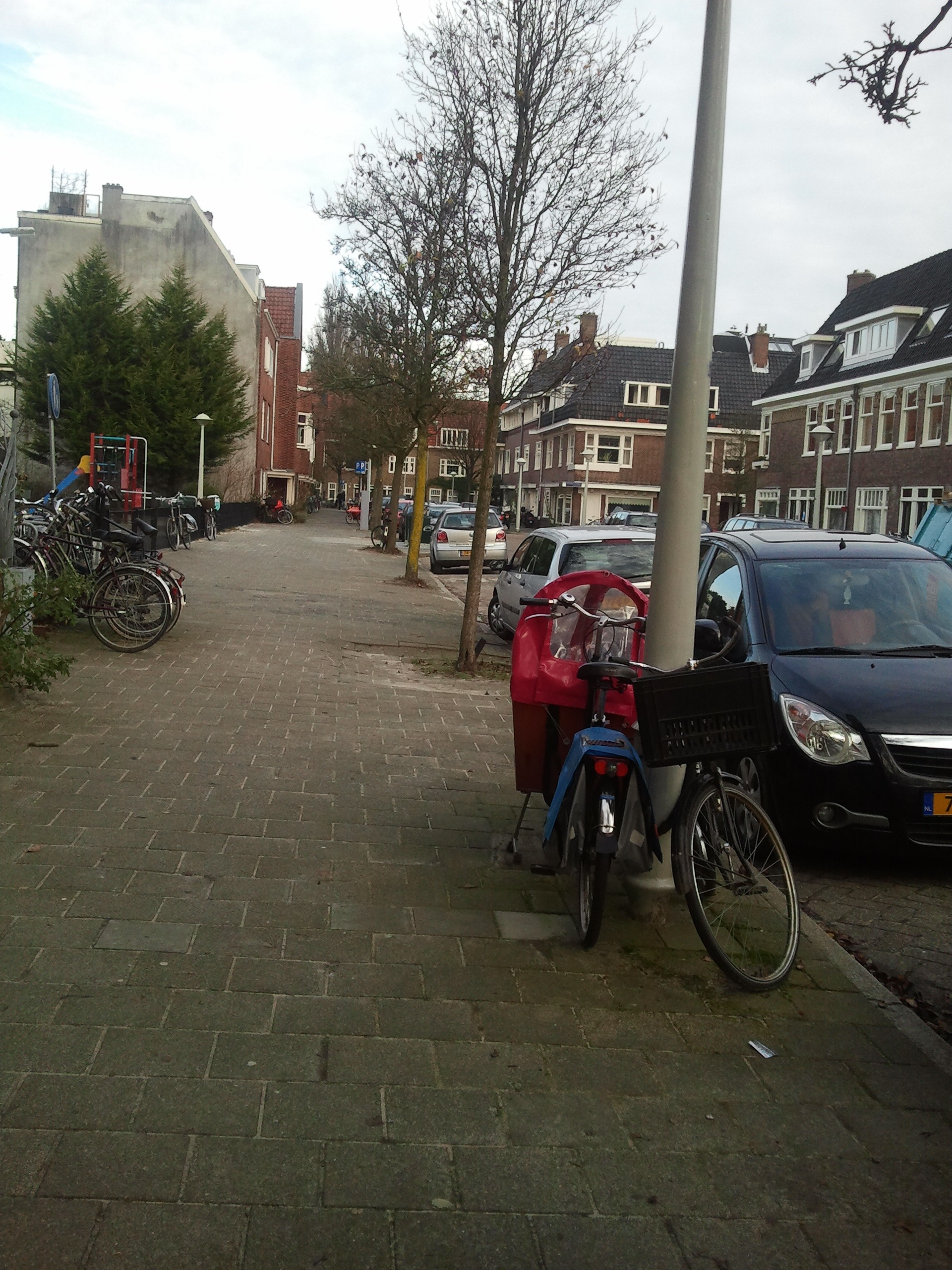
Fraunhofferstraat is a street which I look at from my front windows at home. It’s a typical tidy Watergraafsmeer street that has a children’s play ground partway along and about a dozen bare treepits. the tree pits are so uninteresting and uninspiring, especially those running beside the playground. They are simply strimmed back by the council a couple of times a year and left to do their own thing for the rest of the time. When most lucky, we get Chickweed, some Brassicas and Fat Hen growing there along with poisonous Euphorbia species and heaps of low growing tree burrs. The pits get plenty of dog interest and they are sites where a small amount of litter collects at times. Because they are unplanted (aside from the trees of course) the pits beside the playground get a fair bit of human trampling. The Fraunhoffer tree pits are next to the road, a local street which is a turn off from the Middenweg (a main road into the centre of town).

I have been quietly collecting seeds from locally growing Hollyhocks, Poppies, Calendula, Rocket and other easy to grow plants. Whenever I remember, I strew a handful in the tree pits of Fraunhofferstraat and nudge them into the soil with my shoes. Maybe some will germinate in the spring, maybe not but either way I believe it’s a better fate than the seed being swept up and thrown in the garbage and incinerated.  In the early spring the River of herbs group will start by looking at the site, thinking about the uses of the area and how the tree pits could be planted and simply managed with minimal effort and upkeep, to create a more useful and beautiful scene.

Spuistraat
My friends at Funky Chickin hotel, Spuistraat 90 have been inspired by the River of Herbs project from it’s conception. They are located on part of a busy central street which could do with some greening.  I have chosen that area  as the second location. Just as with Fraunhofferstraat, I’ll be working closely with the local council to ensure that the herbs and exact locations chosen are suitable and useful and that they help to enhance the area in many ways.

On my quest to get this project going I’ve learned about tree pit adoption protocol, geveltuin (pavement garden) regulations, council spraying policies and realities, restricted plants, invasive plants, perfect city herbs and people who consider matching unmanaged geveltuinen with folks who’d like to tend them. There is a lot of interest and need, it seems. I’m really excited about starting with the group in February, I hope it takes off.

365 Frankendael day 218

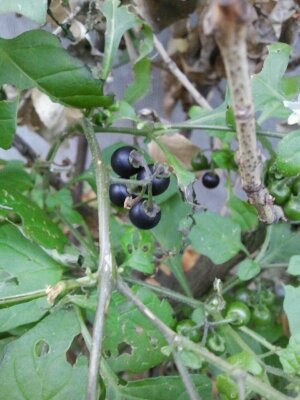
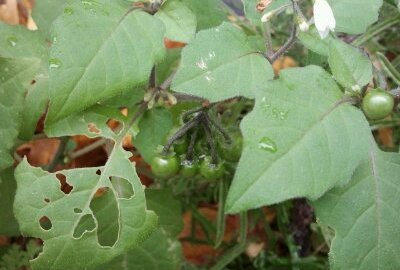
Black Nightshade (Solanum nigrum) today. The pretty tomato like fruits and white/yellow flowers, give them away at this time of year. They are toxic.

image

Historic uses of this annual plant include being mixed with horehound and wine for dropsy, the juice or poultice for burns, skin ulcers, pain relief and earache. The berries will certainly harm children and sometimes adults. The toxicity of the plant varies between seasons.

You’ll be able to find many Black Nightshade plants in Amsterdam pavement gardens and plant pots, at this time of year.

Proposed dates for 2013 River of Herbs course

Some time ago, 24 people signed up for my River Of Herbs training course, which will take place during 2013. There are no more spaces available at this time. The course is being completely funded by a Dutch government initiative to help the volunteer greeners of this country, obtain training.

I’d like to set the dates for the meetings now. If you are one of the 24, please could you take a look at the dates listed below and let me know if you are able to make them. Either reply to this post in the comments box or email me at Lynn.Shore@gmail.com.

Clearly, I’d like the dates to work for as many of people as possible so please feel free to suggest alternatives. Timings to be 10.30 – 12.30 for all the meetings and the venues will alternate between Oost / Oost Watergraafsmeer (near Park Frankendael, Oosterpark or Linneausstraat along tram 9 route) and Spuistraat (Centrum).

Thank you!

(NB: These dates are not yet fixed)
Sunday 10th February (Oost)
Sunday 17th March (Oost)
Sunday 28th April (Mercatoplein, West)
Sunday 19th May (TBA)
Sunday 30th June (TBA)

365 Frankendael day 210

image

Inside all day today, my little foraging buddy is poorly and my throat is pounding, so a balcony photo for a change and lots of herbal honey for us both!

This is the Camellia sinensis (Tea) plant which I bought in the summer from Intratuin. It’s still doing well, in the bonsai form and pot.  As you can see here, it is developing pretty little flower buds. I look forward to seeing them open in the very early spring.

I’ve not tried it yet but it is perfectly possible to make all types of conventional tea from the leaves if this lovely plant. White tea being leaves almost straight from the plant. Soon, I’ll give it a try.

365 Frankendael day 204

image

Been preparing for Monday’s apprenticeship meeting and almost forgot to write today’s post…

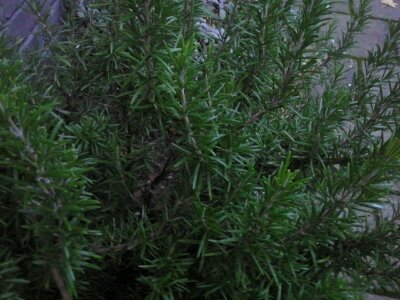
Here’s a delicious and stimulating Rosemary (Rosemary officinalis) bush which resides beneath my apartment in a bone dry  geveltuin. One of the most well known culinary herbs, Rosemary is also very medicinal. It makes an easy herb oil, useful for rubbing on sore muscles or congested chests. It is known as a remedy for indigestion, some scalp ailments and when you brush past the plant it’s obvious that it can clear the sinuses and enliven the senses. Here’s a useful link to lots of information about Rosemary, including it’s drug interactions.

Now is the time to seek out healthy evergreen urban herbs, in readiness for the coldest months when foragers need to