Category Archives: Trees

365 Frankendael day 41


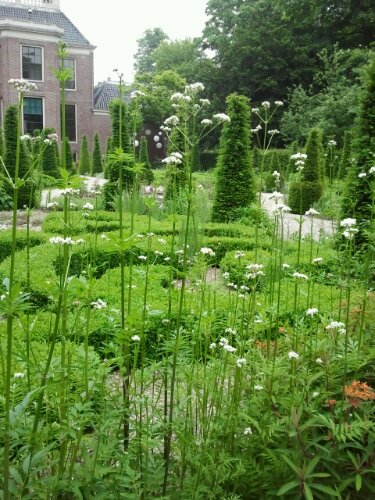
Today a lovely scene, if you like tended gardens, of the old partitioned garden at the back of Frankendael Huis. I really appreciate how the gardeners allow the plants to spill out here and there and especially so with the stunning Valerian officinalis which is shown here. Valerian medicine is traditionally focused on the roots but the flowers are also useful and have more subtle effects than the other parts of the plant. I have a big Valerian plant on my roof and this weekend, harvested every third flower cluster, for drying. Doing so leaves the beautiful appearance and special scent almost intact, for everyone else to enjoy.


Here is a photo Stinging nettle (Urtica dioica), NL: Brandnetel, in bloom. Now is not at all the time to harvest this wonderful tonic herb but I took the photo to illustrate the difference between the plant and other look a likes, such as Lamium alba, White Dead Nettle, shown yesterday.


Here is a photo of a plant that I want to learn more about, creeping along the ground rather like a Strawberry with similar leaves and runners. Growing amongst it, with purple flowers, is familiar Ground Ivy (Glechoma hederacaea) which is edible, useful and tastes minty. I have been watching the Strawberry look a like, in several shady parts of the park, for several weeks. Today it is coming into flower, yellow flowers, so I now remember that the plant a little better. It is a member of the Cinquefoil (Potentilla) family, I’ll have a closer look tomorrow to find out which. I brought a sample home but my cat ate it in seconds – maybe that should tell me something!? Strawberries are members of the Fragaria family.


Not one to eat until next Spring, here is an update of how Ramsons (Wild garlic, NL: Daslook) look at the moment. Not very tasty but the seed heads are developing well.


Next, and again for future reference, the closest Sweet Chestnut tree to my home. Totally unrelated to Horse Chestnut, far more tasty but possibly less interesting for herbalists.


Lastly today, an enormous Dandelion(Taraxacum officinale), two 50 cm long leaves of which, are destined for my plate this evening…

365 Frankendael day 36

Today again, is quite hot so the translucent and spiky Teasel (Dipsacus spp.) foliage does not have pools of water at the leaf bases.  Teasel shouldn’t be harvested at all, due to it’s wildlife benefits. But the pools of water which accumulate within them can be useful.

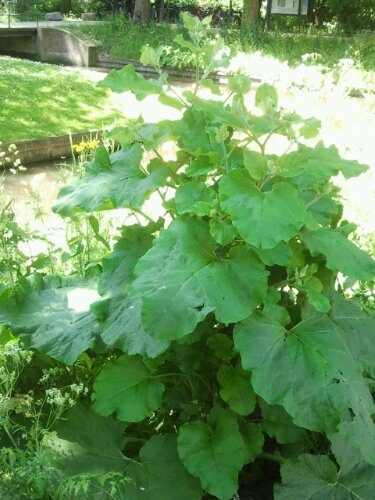
Here is a Burdock (Arctium lappa) plant preparing to flower.

Restaurant De Kas has a lovely herb and vegetable garden wrapped around it, within park Frankendael. Obviously it’s not for public harvesting but the fresh young leaves on the Copper Beech hedge around that garden, may look quite tasty to some.

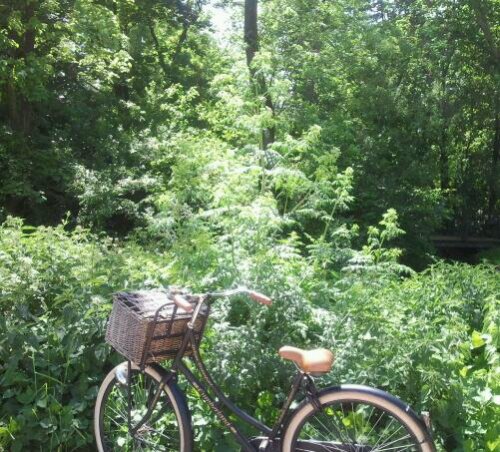
Here’s the Poison Hemlock (Conium maculatum) on the outside edge of the park, which I found some time ago. It now towers above my bike and it’s flowers are almost ready to open. Quite an imposing sight, close up.

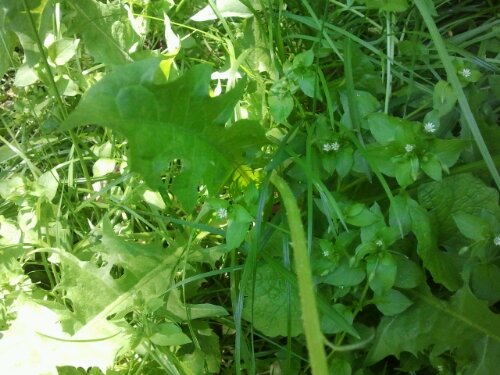
Lastly today, two plants which I underuse from wild Amsterdam. If you have access to clean sources of Chickweed or Dandelion, they may be useful to you. There are many look a likes for both plants. Those for Chickweed are generally edible to but those for Dandelion are mostly not and some are poisonous.

Chickweed (Stellaria media) has a line of tiny fine hairs running down the medial line of the stems. Dandelion leaf teeth point downwards, but you need to have your guide book with you for this as any other edible plant, until you are totally secure about it’s identity. Here’s a nice link if you are interested in Chickweed and Dandelion in particular.

365 Frankendael day 35

Today a very speedy look around the park, in the late afternoon sunshine…

Roses are opening up all over the city. Perfect weather for them to bloom. This is one of my favorites in the park, Rosa arvensis, the Field Rose. Very pretty now and produces excellent hips in autumn.

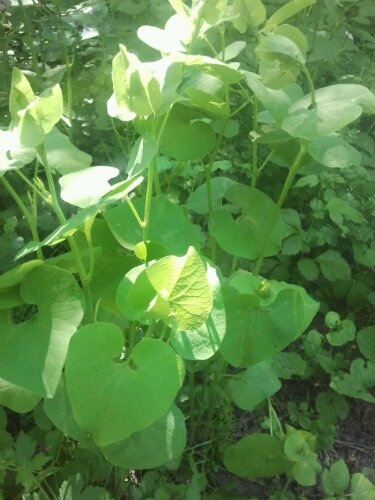
Birthwort, NL: Pijpbloem (Aristotolochia clematis) highly poisonous, with some historic uses (and recent infamy from causing kidney failure when accidentally incorporated into ground wheat flour). I am looking forward to finding out what the Latin name is all about.

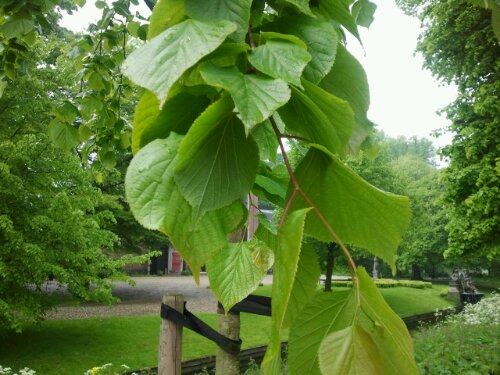
Lime leaves (Tilia) are mostly covered in something sweet & sticky at the moment. Either excrement from the masses of insects seeking out nectar from the new flowers, or the nectar itself dripping down onto lower leaves. I’m not too sure which it is but at the moment this sticky stuff is clear, but visible and certainly delicious. Wash it off or not, the leaves taste great and many blossoms are already present so let the harvest begin! In a short while the sticky covering will thicken and blacken. Then it needs a good scrub and or soak in clean water to get it all off. The leaves do stand up well to such treatment and can then be dried thoroughly for storage or used directly.

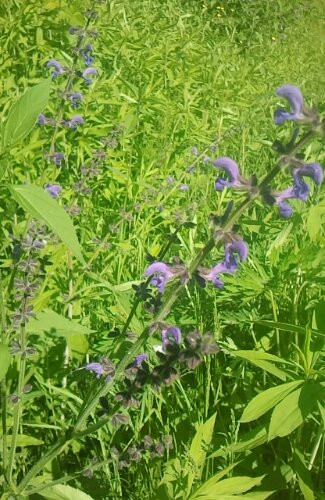
Sage, (Salvia officinalis). Beautiful and so tasty! Beware the power of Sage if taken in higher than culinary doses and stay away for it during the few few months of pregnancy. Not a tonic herb but a very useful one for the body and mind.

365 Frankendael day 31

What lovely people I met today, on my first guided herb walk of this year. We looked at lots of lovely and useful herbs. I’ll post a few photos taken by the others when they reach me.

In the meantime here’s a Frankendael Lime leaf photo which I took yesterday, for those who didn’t get to pick one to keep with their handouts. This is a perfect time to harvest a few healthy, non sticky leaves and enjoy them between slices of bread.

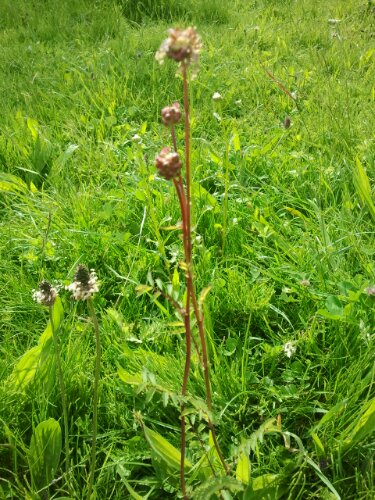
After the walk today, I also spotted Salad Burnet (Sanguisorba minor NL: Kleine pimpernel), poking it’s flower stalk up in a grassland area of the park. In my photograph there is also a ribwort to the left, with a completely different flower stalk. Salad burnet is a useful but endangered plant in the Netherlands so completely out of bounds to foragers and herbalists alike. I feel very priveledged to have seen it today. I hope to be able to take a better photograph of this plant soon. I mentioned to some people to day, the useful website called Bioimages.Org.uk where you can search for images of plants and animals to help with identification. Here’s a link to their photos of Salad Burnet. It seems like a good resource but of course never forget your field guide!

Also plenty of healing Ribwort, in the same area, with it’s long slender leaves and unusual dull coloured flower at the end of a long stalk.

Here’s a pretty tree pit from the same patch, full of a tiny flowered Cranesbill, Ribwort, Horsetail and a non edible Chrysanthemum, all mixed together by fortunate chance.

Urban Herbal Planting Scheme in Amsterdam Oost

I was so pleased when I realised that the local council had commissioned simple herbs for the planting scheme at Christian Huygensplein in Oost Watergraafsmeer, Amsterdam.

About a year on, the herbs are looking great so I thought I’d share a photo. I hope you can see a Pine Tree trunk surrounded by thick Lavender and an Ivy plant climbing up the trunk.

Three practical herbs in an area which needed a little smartening up at the time. Mostly the planting, which had a lot of hot dry weather soon after it was completed, has faired well. It looks good, smells good and could be used for a multitude of remedies, should the need arise.

Thank you Amsterdam Oost! Now how about a few more nut trees?

365 Frankendael day 25

Today, daisy, magnolia, pine cones and ribwort during an after work wander between the two Frankendael tram stops.

Daisy (Bellis perenis)has quite a number of historic uses. You can eat this herb as a salad or a pot herb but in places like Frankendael it’s highly likely that your harvest will have been quite heavily soiled or trampled. Have a look at the Uses section on the linked Wiki entry about this plant for details of how the Romans used its astringent qualities to assist soldiers.

Tasty Magnolia is still in flower here in Amsterdam. This photo is of a flower on a young tree within the park, so these particular flowers won’t be on my plate. There are plenty of other mature trees overhanging gardens and in public spots which you may be able to locate using boskoi. Before now I have collected leaves straight after a strong wind or shower. That’s a nice way to avoid upsetting anyone who thinks you are just spoiling the beautiful display by plucking blooms.

Above are a few Pinecones, found by my daughter, which I had completely forgotten could yield great food, in fact one of the least polluted and most nutritious- Pinenuts! And they are another harvest to acquire from fallen plant material rather than plucking. The tree these fell from is shown next…

I’m not sure of the species but I have already had a peak inside the cone and there are some tasty looking nuts within.

Lastly, trusty Plantago lanceolata, Ribwort. I harvested from several really juicy looking plants today, ready to make a foot oil tomorrow morning. The link above goes to day 2 of the 365 project where I gave further info and links about the plant.

365 Frankendael day 19

I’ve been walking in Frankendael with Elodie today, we found heaps of herbs, several new to us. If you’d like to join me for a herb walk there are a few spaces left for the Sunday May 27th Amstel to Frankendael walk. Here are some striking examples from today…
Solomon’s Seal looks rather like an enormous version of Lily of the Valley so I always steer clear of it. I have always thought of Lily of the valley as a poisonous plant so lethal that I shouldn’t even go near it. Upon reading about it last night I learned that it is called the herbalist’s Digitalis. It has a potent specific effect on heart muscles, causing them to open and fill more intensely and to raise blood pressure. It is thus lethal in even small doses and is not a herb of interest to me. However this arching beauty of the woods is very interesting. Solomon’s seal is used to make traditional remedies for many ailments, ranging from speeding muscle and bone healing, to menopausal symptoms, diabetes, acne and other skin afflictions. The native Americans reportedly ate it frequently.

I was thrilled to turn a corner in the wood today and be greeted by this scene:

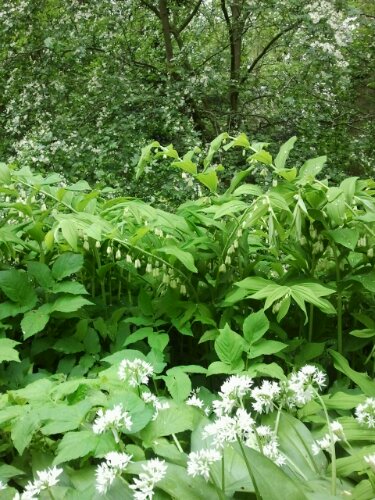
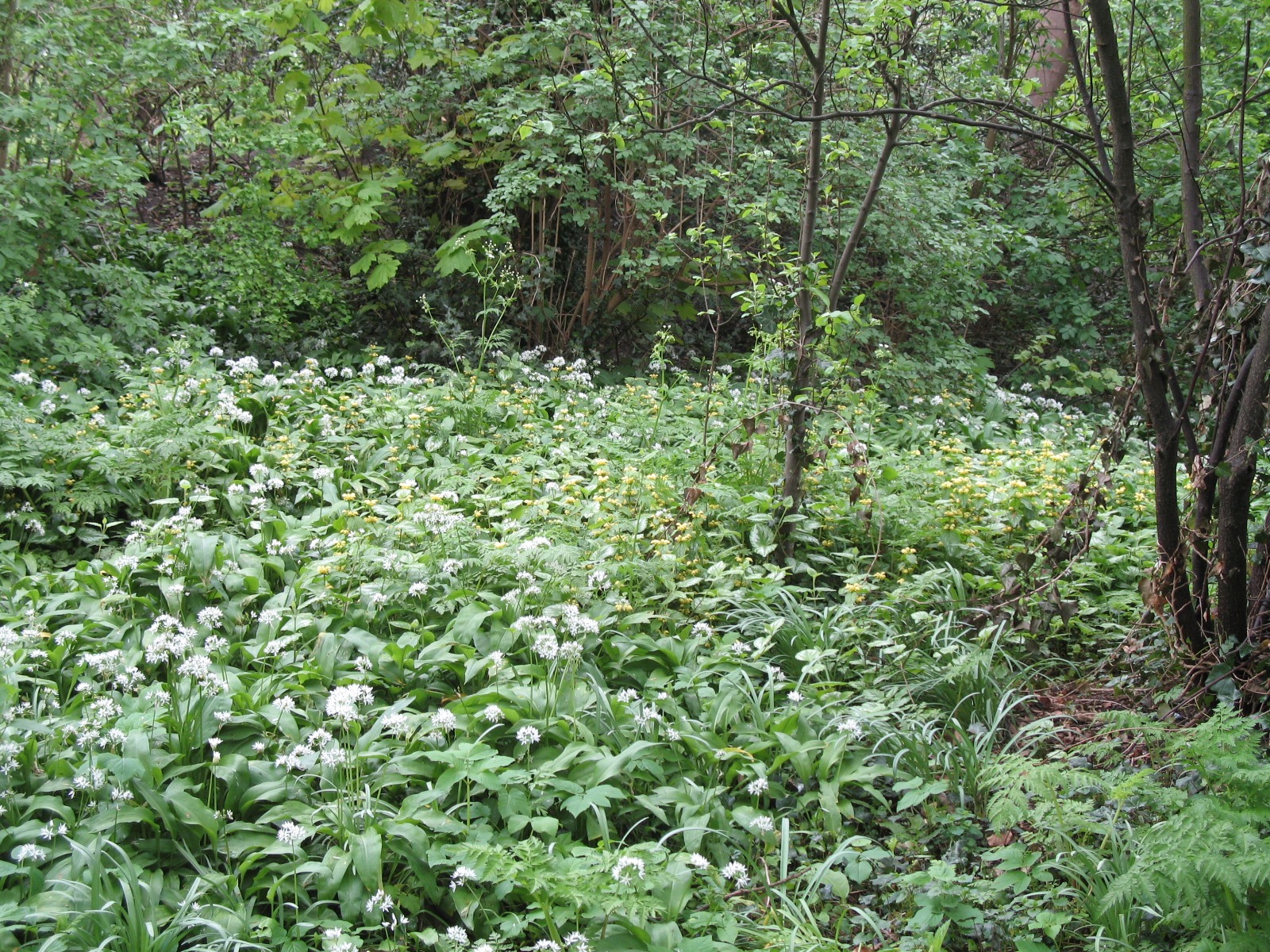
It is difficult for a photograph to do it justice – especially one of mine! Here is Hawthorn arching over a swathe of Solomon’s seal and Wild garlic, all three in flower at the same time.

Other herbs of note today…
Below, endangered Hoary Plantain (Plantago media). I first saw this herb last year and remember not really knowing what it was, although it was obviously some kind of plantain, but wanting to hide it and protect it from trampling feet! Of course I couldn’t and this plant is well adapted to living in well trodden locations. However, should you find it, especially in a week or two when it’s flower stalk will look like some sort of moth-plant hybrid, then please don’t touch it. I hope that this one has a chance to set seed.

Chicory foliage:

Yarrow (Achillea millefolium)

Endangered Greater burnet (Sanguisorba officinalis)

Frankendael 365 day 18

This lush mixture of foliage and flower buds, belongs to a variety of Hawthorn (Crataegus spp.) called NL: Maidoorn As you may see in the photo, it’s leaves are quite different to those of common Hawthorn (shown below). These are larger, more delicate to the touch, a far lighter shade of green and are less deeply palmate. On the foraging trip this weekend I didn’t recognize it as Hawthorn because the variety I am used to has tough, small and dark leaves – Fit for windy hill sides! But I was assured by fellow foragers that this variety also makes great Hawthorn Ketchup and tonic medicine.

After a little research, I learn that there are over a hundred Hawthorn varieties worldwide and just three main ones in the UK, many with leaves unrecognizable as Hawthorn to me. The main European variety is Crataegus monogyna. Apparently all have similar medicinal properties and the whole species is part of the Rose family. This variety appears to be C. Laevigata.

Here’s an interesting link if you are interested in the folklore and English Witchy side of Hawthorn.

Here’s a nice Hawthorn tea recipe…
Infuse 1-2teaspoons of fresh leaves and flowers in a cup of boiling water for 5 minutes. Drink three times daily.

Caution
Although Hawthorn is not associated with side effects, it is associated with traditional heart medicine. Of course heart disease of any sort is serious and should not be treated without consultation with a qualified doctor.

365 Frankendael day 11

Here’s a Mayday Hawthorn bough, happily still attached to it’s tree! I’m sure that last Mayday the Hawthorns of Frankendael had opened their flowers by now. They certainly haven’t today and the weather is still not exactly encouraging the plants to grow as they could. None the less Hawthorn looks beautiful at the moment is most trees I see are loaded with green buds, ready to explode into a froth of white/pink blossom. Hawthorn is a spiky, irregularly shaped shrub or small tree which is easy to spot in hedgerows around town. It has unique, small, deeply lobed leaves, a froth of flowers around this time of year and bright red berries come autumn. It is long associated with heart medicine and Mayday country frolics.

Hawthorn is a renowned tonic for the circulatory system. The leaves, berries and flowers can be used to treat angina and several other heart conditions – obviously under the guidance of an experienced medical practitioner as heart disease is always a serious and often life threatening, condition. Hawthorn can be used as a preventative tonic, to guard against future heart problems. It can lower blood pressure, help dissolve cholesterol and calcium deposits.

365 Frankendael day 9

Today was the monthly Puur Markt in Frankendael. At this time of year, there’s a great stall which sells herb plants quite cheaply. I picked up a small Curry plant for €2.75 and a little Verveine for €2. The stall is always there through the main growing season and they also work at the weekly Saturday Noordermaarkt. They don’t have a website but are well worth a visit.

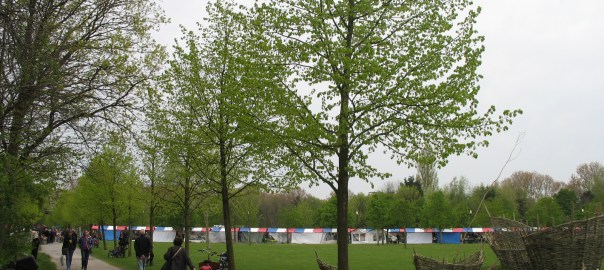
I thought I’d take a photo of the newest section of Frankendael’s Lime tree avenue today. Lime is an under appreciated herb, in my opinion. It has a multitude of historic uses and come midsummer, yields the most heavenly fragrant flowers, which drive the city bees wild. With these you can make a wonderful, lightly intoxicating tea. At this time of year, Lime leaves can be eaten as an unusual and medicinal sandwich filling. They have a mucilage within which makes them very useful as a soother of the respiratory system. If you take a moment to chew a leaf you will feel the mucilage release from the leaf tissues. It’s more pleasant than it may sound!

There are lots of Yellow Dead Nettles (Lamium galeobdolom) in flower at present.  I’ll write more about them another day. The link above is to an interesting blog post about the plant.  The photo shows a large swathe of the plants at the back of this woodland undergrowth.