Category Archives: Blog

Day 1- UH foraging challenge

My 30 day foraging challenge is underway and already I’ve received lots of lovely photos from people who have signed up for the challenge in the Netherlands,  Northern Ireland and England. Am looking forward to receiving more!

Burdock, daisy,  wild garlic,  chickweed, hawthorn leaf,  dandelion, cherry blossom,  garlic mustard,  ground elder,  rose leaf,  mugwort, honeysuckle, red valerian,  rosemary, violet and far more have been found. Also a couple of poisonous plants (dog’s mercury and cow parsley) – equally important to know about!

IMG_1265

My harvest of the day: three Japanese rose buds and young leaves, collected en route home after a swimming lesson. I’ll add them to my tea mix when dry.

As promised here are links to:

Dandelion and burdock honey

red valerian

And here’s a photo of poisonous Dog’s mercury.

25042012-010


If you would like to join my 30 day challenge, it’s not too late! Simply send me a message and I’ll begin sending you an email a day and answering your questions.

Happy foraging!


Join my 30 day challenge!

Today's weeding at the orchards.

A few years ago I challenged myself to blog every day for a year about the edible plants which I find in Amsterdam.  I loved the experience!  Now, I want to challenge you!

The 365 Frankendael project taught me a lot and helped to spread the word about ethical urban foraging. It was a nourishing experience on many levels.

My 30 day challenge is to encourage you to find something edible growing in your town, city,  suburb or village every day.

  • Take a photo or make a quick sketch.
  • Find out a little about the plant.
  • Maybe try to do something useful with it.
  • Tell me about it.

I’ll support you as much as possible by answering enquiries about the plants you find and by suggesting how they can be used. I’ll also send you a little inspirational email each day (only if you’d like that). No pressure, no requirement to eat the plants or even pick them but a lot of encouragement to find out more about the edible plants which grow around you.

So who’s up for it?! Either reply with a comment here or send me an email to urban.herbology.lynn@gmail.com.

I’ll start posting my daily finds and feedback from people who take up my challenge,  from tomorrow.


Urban herbology of Mugwort

IMG_1225

My first book is available to purchase via Kindle and Amazon.  Urban Herbology of Mugwort teaches how to find,  harvest,  preserve,  eat,  drink and craft with Artemisia vulgaris and her silken sisters. Esoteric, historic and medicinal uses of Mugwort are also explored in an accessible, down to earth way. This book is written to help people find Mugwort, grow it and use it. It contains lots of clear recipes and guidance about urban foraging and herb crafting.

For too many years,  I have been bogged down by the complexities of writing a big book about Urban Herbology. So I recently decided to create a series of focused books, each about a different significant herb. Mugwort is the first for many reasons.

The Kindle version of Urban Herbology of Mugwort is available for preorder and the print version will be available for preorder very soon.  Release date is anticipated as 31st May 2017 so not long to wait!

If you would like to stay informed about the book release please send me a personal message urban.herbology.lynn@gmail.com

Ramson mackerel spread

Urbanherbology ramson-mackerel pasteThere seems hardly time to do anything except forage and garden at the moment. Spring has truely sprung and wild garlic / ramsons (Allium ursinum) is on my menu each day! As ever,  I can’t get enough of this herb and have been experimenting with how to stretch the harvest.

Mostly, I have been preserving this spicy-pungent herb in ghee or olive oil. The infused ghee is wonderful, easy to make, versatile as a cooking ingredient and a useful ready to use remedy.  Today though, an even smellier yet wonderful flavour pairing emerged.

At lunchtime, a forgotten smoked mackerel, called out to me from my fridge. As I’m off colour at the moment, I couldn’t face eating the whole thing in one sitting but equally didn’t want to waste it.  So I set about making something simple.  Eight silken ramson leaves, lovingly plucked from the orchards on Wednesday also cried out from my fridge. I blended them together into a paste/dip/sandwich spread and the combination works, so here is my recipe for ramson-smoked mackerel paste:

1. In a bowl or food processor, thoroughly combine the bone and skin-free meat from one whole smoked mackerel, the juice of 1/2 to 1 lemon, a small handful of washed wild garlic leaves and a generous tablespoon of ghee or butter. (I used wild garlic infused ghee today).

2. Blend or mix to your desired consistency. Season to taste with salt,  pepper and perhaps extra lemon juice.

3. Transfer to a glass storage container. It should keep for a few days if refrigerated.

Do let me know if you try this recipe and if you have other ways for using wild garlic. On April 3rd I’ll be harvesting and processing more wild garlic at the spring apprenticeship gathering. Let me know if you would like to join us! Details are on my events page.


Apprenticeship places available

Hoar frost on rosehips

Update: The next start date for my course is 20th March 2017. If you need to begin before that date,  it can be arranged. 

For the past year, I’ve been running my updated apprenticeship course with an information and activity packed online course running alongside a workshop series.

I am very pleased with how that first year has gone,  allowing my recent students to study at their own pace and reach out for contact with me and other students whenever they want and need to. Everyone has a different pace and different ambitions.

wpid-2013-06-17-15.08.49.jpg

Now it is time to offer new places on my course so if you would like to know more, let me know and I’ll send you further details. The next start date is 1st February 2017 – Imbolc – It’s a great time for beginnings!  I am able to accept up to 6 new students at that time. And the next apprentice gathering will be in March.

20160926_170105

If you would like to know more about joining me as an apprentice,  learning about herbal:

Foraging,

Crafting,

Gardening,

Nourishment and

Nature based spirituality,

Please contact me by leaving a comment on this post or email: urban.herbology.lynn@gmail.com or simply call me on 06 2759 6930 for a chat about it.


Great soil for amazing herbs

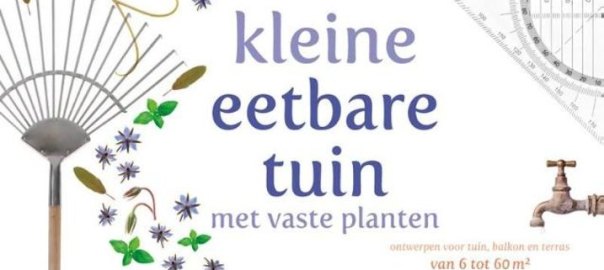
​​My friend Madelon Oostwoud has written a wonderful book about growing amazing edible perennials in small gardens. Now in its second print, Een Kleine Eetbare Tuin is an absolute treasure trove of gardening information, perfectly tailored to small urban gardens. Her book is published by the KNNV and is widely available to purchase. I highly recommend it!  Madelon has kindly sent me the following extract in English to help urban herb gardeners develop a meaningful relationship with their soil.
een-kleine-eetbare-tuin
Knowing your Soil
Garden soil differs from region to region, district to district and sometimes from garden to garden, and even from one end of a big garden to the other. Top soil is built up from small particles of sand, silt and clay, depending on the deeper layers of the ground below. Changing a garden on barren sand into a garden with fat clay is obviously impossible. Gardeners today know that you have to choose plants that suit your ground, and not vice-versa. The mineral material defines the choice of plants. The plants influence the organic material, and together they influence the soil. Improving your soil is certainly possible but should not be confused with changing the soil. Soil improvement is to improve the structure of the soil in your garden. It can be done in different ways.
Know your soil
Every ground or soil is suitable for an edible garden but not every plant grows everywhere successfully. Also, one soil may be easier to work then another. But complaining about unworkable soil has everything to do with wrong assumptions made by the gardener and little to do with the soil being unsuitable, a pet subject of one of Holland’s best known gardeners Romke van de Kaa.
Mineral material
Soil quality is determined by the ratio between the different particles of mineral material. Sand has the coarsest grain, clay the finest and silt is located in between. A loamy soil has sand, clay and silt, and is clearly a mixed form.
Types of soils
The different soils in most of Europe are described in the Soil Atlas of Europe, an initiative of the European Soil Bureau. It consists of a large number of maps, with an introduction to soil that explains the role and importance of soil, how soil is created, how to identify the soil in your garden, the relationship between soil, agriculture, our cultural heritage, forests and as a source of raw materials. Soil mapping and classification are also explained together with an illustrative and informative guide to the major soil types of Europe. You can find the Soil Atlas of Europe online at the site of the European Commission. Search for http://globalsoilweek.org/ if you are looking for information on the soil in your region outside Europe.
  • Sand
Sandy soil is light in weight, often also in colour and it feels grainy and loose. Sand cannot hold much water, neither many nutrients. Sand warms towards summer and stays cool long after the frost is out of the ground. Because sand does not retain nutrients we usually call it poor soil. Not all plants can grow on sand but it is easy to work and easy to improve using organic material.
  • Clay
Clay is heavy and compact. It holds nutrients and water well. Clay that is low on organic material is heavy, impermeable and intractable. Roots therefore have a hard time growing in clay. Working clay is heavy, as the particles literally stick together. Clay soils tend to dry slowly and do not easily warm up. Dry clay is hard and brittle. It freezes easily, which does generally not harm your perennials. A mix between clay and loam is loamy clay.
  • Peat
Peat comprises very few mineral ingredients. Peat is compact organic material that consists of plant remains. It is dark coloured – often almost black. Peat is moist and mostly low in oxygen. If your garden has peat soil on the surface, you have the most difficult ground with which to create a garden. It is in fact quite acidic, sticky when wet and crumbly when dry. This is also a reason to not purchase commercial potting soil because it consists mainly of peat. There is no food in it and it does not have a good structure. The structure is sponge-like. You are likely to recognise remains of undigested plants and roots. Dry peat is very flammable and used to be used as fuel in stoves and heaters.
  • Saline
The soil in extremely dry regions is usually brackish because of its high salt content. You’ll probably see a white layer coating the surface of the soil, your plants are growing poorly, and they’re suffering from leaf tip burn, especially on young leaves. Saline soil can stall plant growth, impede germination, and cause difficulties in irrigation.
  • Loam
Loam has an equal amount of sand, silt and clay particles, as well as organic material. It has the positive qualities of clay and feels soft and smooth. It is light structured. Loam is not lumpy, very fertile, well-drained without letting all water through and so often proclaimed the ideal garden soil. A mix between sand and loam is called sand-loam or loamy sand.
Improving your soil
If your soil is clayey, it is rich in calcium and minerals, and most likely alkaline. Apply a thick layer of compost or mulch (leaves, woodchips, biological cacao shells, freshly mown grass, hay or a few layers of cardboard or newsprint pages). This will improve soil life, and improve the structure of the soil. It also ensures that the soil can better retain heat, which can be especially important in the winter. Compost and mulch keep evaporation and the growth of weeds at bay.
Compost
Ideally compost will contain a large amount of soil organisms: worms, beneficial nematodes, woodlice, centipedes, bacteria, etc. These organisms and the plant-remains in the compost get the soil going. Therefore homemade compost is best. Commercial compost (in bags at the garden centre) is admittedly organic in composition, but does not have any bacteria and fungi in itself. Once you opened the packaging you will not be able to detect one single worm. In homemade compost there are always all kinds of insects and worms. Once outside the composter, they will get to work for you to improve your soil. If there is virtually no organic life in your soil it can easily be started in no time with your own compost. Divide the mature compost from the bottom of your compost bin and simply distribute it in your garden. The easiest way to do it is with a soil sieve. Simply sieve the compost over your plants, and tip the particles that do not pass through the sieve back in the compost bin to further compost. Mature compost can be divided over the ground with a rake or by hand. If you have a worm tower (also see chapter : Compost) use the compost when it looks dark, and you do not ‘recognize’ anything any more. To separate worms and compost – briefly put the compost out in the light. Worms do not like light, and will crawl away into the deep. You can view the contents of (part of) your worm tower also by throwing out worms and all the plants. They will be just as happy in the top layer of your garden as in the worm tower or compost bin. If your worm tower has a tap for the worm tea, dilute it with water and poor it over soil and plants.
Improving acid soils
Sand and peat are usually acidic. Sand is acidic and additionally nutrient-poor soil. You could add some lime to ‘ease up’ the structure of the soil. Lime is alkaline, the opposite of acid. Lime thus de-acidifies acidic soil. But be careful with the addition of lime. In sandy soil lime connects the sand particles, in clayey soil usually only enough calcium is present and lime would just reduce the structure. Acid soil is therefore best improved by adding compost.
Just spread compost on your garden and soil and let nature take its course. By ‘feeding’ the soil, it becomes healthy. Healthy soil can hold enough water and all other elements by which plants grow. Healthy soil grows healthy plants that do not suffer from diseases and pests.
Mulching
Mulching with leaves (dry, coarse, old and brown material) creates a low pH, where fungi and bacteria feel at home. That’s good for trees, woods and spices. Mushrooms can also find their way there.
Mulching with compost (wet, green, young material) creates a higher pH with more bacteria than fungi.
Green manures
Another way to improve soil and structure of your ground is by planting green manures. Green manures are plants that ‘work’ the ground for you. They are almost always and everywhere successful.
Bare areas with new houses or vegetable gardens where the soil for a long time has been exhausted by monoculture, sowing green manure is an even better solution than applying compost. While the plants take root and grow, thousands of organisms underground start to give your soil a nutrient-boost. Even in winter, when the ground is bare and reflect on lies. In the coldest months, when your soil seems deep asleep and no the plants are yet stabbing their heads above ground level, the roots of green manure do a perfect job. They improve your soil simply by rooting, making ways for insects and small craetures, airing the soil with their burrows, feeding the soil with their feces.
Sow from spring to late September, work the seeds lightly with a rake and let the plants grow and do their job for you as long as you like. A mixture of natural plants works most effective and is additionally wonderful in your yet un-landscaped garden. You can leave the plants grow until after flowering, and even after being felled by frost. Over time you can mow them, leave them to ‘wither’ or rake them in.
Plants that you let ‘die’ and digest on the ground, such as alfalfa, mustard, winter rye, bring structure and humus in the soil. Real green manure! Legumes, such as clover and vetch, enrich the soil with nitrogen. Nitrogen is vital to plants and therefore to the success of your garden. Without sufficient nitrogen, plants will be unable to grow. Though nitrogen is abundant in the world, most of it is a gas and most plant cannot use nitrogen as a gas. They must rely on the addition of nitrogen to the soil in order to be able to use it. A few plants love nitrogen gas. They are able to draw the nitrogen gas from the air and store it in their roots. These are called nitrogen fixing plants. Besides being green manures they also fixate the nitrogen. Please note that each nitrogen-fixer is a green manure, but not every green manure is a nitrogen-fixer.
Examples of green manure
Below green manures are annuals. They did not return and will not proliferate. You can buy the seeds at any garden centre. Most are not suitable for consumption, so do not use them for it.
Buckwheat (Fagopyrum esculentum) Applicable to the poorest lands; Sowing: spring t / m summer. Growing rapidly and deeply rooted.
  • Fenugreek (Trigonella foenum graecum) For heavy and light drained soil.
  • Crimson clover (Trifolium incarnatum) Suitable for all grounds and nitrogen-fixer
  • Lupine (Lupinus angustifolius) Especially on light, acid soils.
  • Alfalfa or alfalfa (Medicago sativa) Applicable on dry ground; sowing: Summer, let stand until the following spring.
  • Mustard (Sinapis alba) Apply to all grounds; sowing: March September.
  • Phacelia (Phacelia tanacetifolia) Apply to all soils.
  • Serra Delle (Ornithopus sativus) as green manure especially on sandy soils.
  • Field beans (Vicia faba) to be applied on all grounds, seeding: September-October. Makes a perfect mulch after mowing.
  • Vetch (Vicia sativa subsp. Sativa, Vicia villosa) Suitable for all grounds and nitrogen-fixer
  • Winter rye (Secale cereale) Applicable on all grounds; sowing to November and leave until Spring.

Herbology recipe testing

Ayurvedic winter remedy

Dear Urban Herbies,  If you have followed this blog for the past few years you will know that I have been erratically working on a book which details herbology methods for people living in towns and cities. I have been building up my methods for herbal preparations and wild food recipes, teaching them to my apprentices and refining the descriptions. Now the time has come for me to ask if you any of you would be willing to help me out by testing? I need recipe testers for my Herbology Handbook and would be delighted if you could try out my recipes to make sure they work in all kitchens – whatever size or location. I want to be sure that the recipes are crystal clear and easy to understand by everyone, whatever level of culinary and herbal experience.

I am looking for people to test at least three recipes/methods (although more testing is possible if you would like!) and to give me honest feedback. I need you to tell me how clear or difficult the recipe is for you and what you think of the end product. Some of my recipes are a little time consuming, others are quick to set up but require a waiting time of up to 3 months. Others are simple, speedy and very straightforward. Hopefully none of them are too difficult and all should help to increase your knowledge of Herbology and wild food cooking. I will need you to make the recipes/preparations exactly as written, with no substitutions (other than those which the recipe explicitly suggests) which means they may require you to source some unusual ingredients.  Even so, I am very happy to hear about what you would have substituted if you were allowed, or how you would have changed the recipes.

A quick photo of the final product, would also be appreciated, to ensure that the final products are very close to what I have made and described. I want the Herbology Handbook to be thoroughly reliable, containing recipes that people turn to, because they know that they will work. Your photos won’t be used in the book or shown anywhere else, they are purely for research.

If you would like to test some of my recipes please email me at urban.herbology.lynn@gmail.com. Tell me your name, your location, your comfort level in the kitchen and your experience level with identifying and using wild herbs. Please also tell me if you have any dietary preferences (e.g. gluten free, vegan…) and if you have any recipe preferences (do you want to test wild food recipes or perhaps you would prefer skin salves/oxymels/lozenges etc). I will choose appropriate testing recipes, sending them to you with instructions on when and how to feedback.

Please understand that you cannot share my recipes with anyone until my book is published!  I will need the feedback quite soon (a month turn around would be perfect for most of the recipes and methods, two months for others) so do bare that in mind if you decide to be a recipe tester. I aim to reply to your email within two weeks, if you ask to be a recipe tester.

Finally, I am not able to pay anyone for testing my recipes. If that makes things difficult for you, I completely understand. If you do help me by testing some recipes, you will be mentioned in the book and I will be forever grateful! I hope this all makes sense. Please let me know if you have any questions.

Samhain Herbology Workshop

20160926_170105

Join my special Samhain workshop to create magical herbal gifts, lotions and potions and to explore the herbology of autumn.

Schellingwoude apples

We will spend over 4 hours in and around my Schellingwoude volkstuin (a wild ecological garden with wooden house, log fire etc). It is in a beautiful nature oriented setting, within the A10, along bus route 37 and far from the business of the city.


This small group workshop is open to anyone who is interested in deepening their connection with nature. It is also a perfect opportunity for those who are contemplating my apprenticeship,  to come and meet me as we immerse ourselves in seasonal herbal work.  All levels of experience are welcome!

Fly agaric Frankendael Park Amsterdam

We will:

  • Walk and forage through wooded lanes, identifying edible, medicinal and poisonous leaves, roots and fruits.
  • Craft lotions, potions and natural gifts from herbs, which will see you through until spring.
  • Celebrate Samhain in nature!
  • Enjoy plenty of herb tea, homemade vegetarian soup, herb bread and snacks will be provided.

Rosehips and hawthorn

Date: Monday 31st October 2016

Time: 09.30 – 14.00

Cost (incl. Btw): €60 per person (€30 deposit is due when booking and the remaining €30 to be received before or at the workshop).

Maximum 6 participants.

Please email urban.herbology.lynn@gmail.com to subscribe for this workshop or for more information.


Bread of the dead

Full of bounty, shifting colours and scents, autumn’s creeping darkness brings a welcome depth of mystery to our lives. It is the perfect time to create tasty, crafty and intriguing preparations which you can share with friends throughout winter. Samhain is an extra special time in autumn where the veil between worlds is said to be at its most thin. During the workshop,  those who are interested will also explore what that means.


Apprentices Gathering – Mabon

wpid-20150914_184145_lls.jpg

What a pleasure it is to work with enthusiastic people on the topics I love. On Saturday, I welcomed a small group of apprentices into my home and foraging grounds, to work on a variety of preparations and experience more of the world of Urban Herbology. The apprentices are studying my online course at their own pace at home, we meet 4 times a year with additional meetings and communication when needed. The next such meeting will be in December and is open to all my apprentices, online and from the original Amsterdam groups. Further details, at the end of this post.

Here are supplementary links and photos to assist those who were with me on Saturday.

Rumtopf

I make mine from the few fruits that I forage and don’t eat straight from the plants. I use honey in place of refined sugar and I don’t always use rum. My recipe is in the apprenticeship notes but the link here shows a selection of suitable (purpose made) containers and explains the process.

Photo credit - http://www.sauerkrautpots.com/
Photo credit – http://www.sauerkrautpots.com/

Heat infused oils

My usual method. Of course there are other ways to do this but this is my regular way of infusing herbs into oil, with heat.

calendula-heat-infused-oil-004

Beech nuts

Here’s a nice short video by Wild Edibles, showing how to open beechnuts (although it’s also possible with teeth) and a good mention about their toxicity.

Hawthorn Recipes

Hawthorn and Blackcurrants Amsterdam 2012

Hawthorn elixir

hawthorn-elixir-urban-herbology

Rosehip honey

How to process the rosehips, to make rosehip honey.

Rosehip Amsterdam

Turkish hazelnuts

turkish-hazelnut-case

Himalayan balsam

A very invasive plant in this country. The green seeds smell pleasantly of butter and the plant is edible. Flowers can be eaten in salads, stems used as drinking straws and the plant chopped into salads and cooking. The link post shows several plants (including balsam) which I harvested at this time a couple of years ago.

himalayan-balsam

Tradescantia

Some useful information about how to care for the plants which you took home today.

photo credit - Plantsarethestrangestpeople
photo credit – Plantsarethestrangestpeople

Peperomia family

The plant we tasted at my house was Peperomia maculosa. It tastes of coriander and has many medicinal uses. Here is another link about these wonderful plants which are well known as houseplants, outside of the tropics. The Peperomia species which seems to be the best studied regarding its medicinal properties is Peperomia pellucida. hat wasn’t available at the garden centre when I looked for it, but several other species were. I settled happily for P. maculosa (shown in photo) as I love the fresh, spicy flavour.

Photo credit - EatTheWeeds
Photo credit – EatTheWeeds

Japanese quince

I had a busy day at school recently, pruning the spiky Japonica which encircles the building. Hundreds of fruit were on the prunings so naturally, I harvested them. Here are some tasty ways to use Japanese quinces.

Japanese quince

Trikatu

Photo credit - wikipedia
Photo credit – wikipedia

Indonesian Jamu

The last two sections of this UH post mentioning Bali, give an example of how Jamu is used. The anti inflammatory orange drink is called Kunjit asam. We will make it (and sugar free alternatives) at the December meeting.

Jamu: Traditional herb system of Indonesia.

In December, among other things, we will look at;

  • Indonesian Jamu
  • Herbal wines
  • Immunity boosters
  • Schnapps
  • Midwinter foraging
  • Sacred spaces at home

If you are interested in joining or finding out about my apprenticeship course, please contact me or take a look at this page.

Earth Pathways Diary

image

I am so happy to tell you that eight pages in the 2017 Earth Pathways Diary were contributed by me.

The festival pages which I submitted, covering the main eight seasonal celebrations of the pagan calendar, were selected and are now beautifully published. They reflect how we can celebrate each passing season in an Urban Herbology way. So simple meaningful rituals suited for urban (and country) living.

Earth Pathways diaries always contain an inspiring selection of writings and artwork based around the natural year. Several years ago, I found it to be a lovely balance of spirituality, information and expression without dogma.

The diary will be available to purchase from me here in amsterdam from September 2016. If you would like to purchase directly from me, it may save you postage and will help me to earn a little income for writing those pages.

To find out more about Earth Pathways and to see some sample pages please see here.

Price including p&p to UK: £14
Price including p&p to Netherlands €16.50
Price including p&p within rest of mainland Europe: €16.50
Price for collection from me in Amsterdam: €14

Payment can be sent via my shop (which accepts paypal and credit cards) or direct bank transfer upon request

Please email me for further details.