Category Archives: 365 Frankendael

365 Frankendael day 159

image

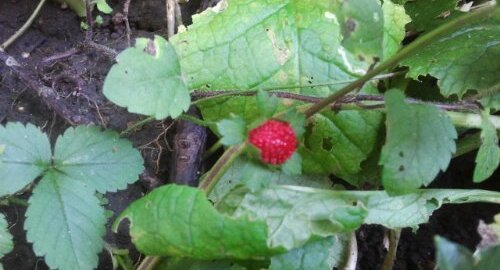
Here’s a welcome sight in Amsterdam at the moment; the fruit of Potentilla indica (Barren strawberry) continue to look just like little strawberries on the floor of shady areas. They are not at all strawberries but they are edible and interesting. Step them in vodka or honey for an interesting drink and pudding accompaniment respectively.

image

Another tasty herb, Ground ivy (Glechoma hederacae). Can be used in place of mint for teas and some medicinal preparations.

365 Frankendael 158

Just a quickie today;

image

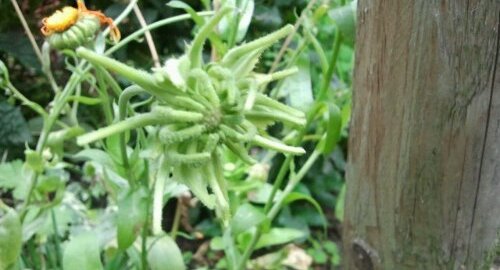
Calendula seed heads ripening on treepit plants. These plants will go on flowering into the winter. They grow very easily from seed so why not collect some and spread them around? The flowers and leaves taste aromatic and better, they have a multitude of uses in food and peoples medicine.

image

Here’s Yarrow, a scarlet flowering variety but just as useful as the white native variety. This evergreen herb is still flowering in town and still surviving the strimmers! One of it’s country names is nose bleed, it has many uses including regulating blood flow.

365 Frankendael day 157

image

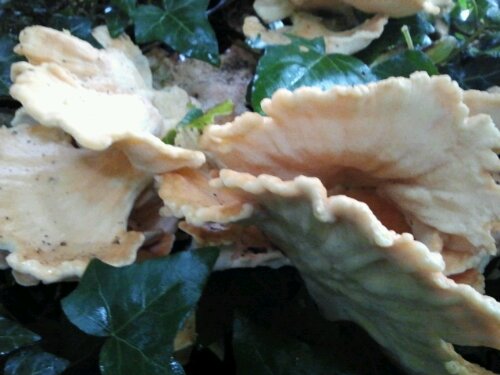
I harvested three tiny prices of that fungus which I found a couple of days ago. I have checked it’s identity in the woods, at home in books, online with reliable sites and as there is nothing nasty I could confuse it with, I felt happy to cook a little. The photograph above is a little washed out but below you’ll see I’ve placed my test harvest against the photo in one of my mushroom books. What a beautiful colour!

image

It is Chicken of the Woods (Laetiporus sulphureus) and boy does it taste good, simply fried in a little ghee! It does taste quite similar to chicken, it is meaty in texture too. If it sits well in my stomach, I’ll be harvesting some more tomorrow. This isn’t going to turn into a fungus foraging blog, I don’t have enough experience of them and it’s so easy to go disastrously wrong, but if I find more interesting autumn fungi I’ll certainly post them here.

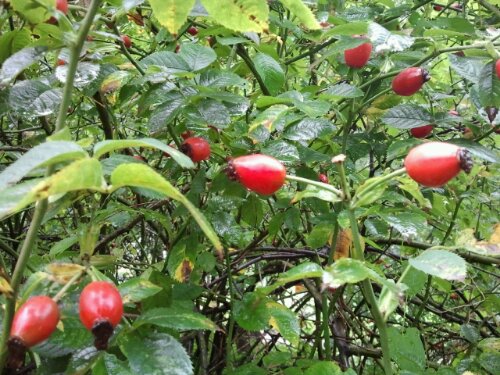
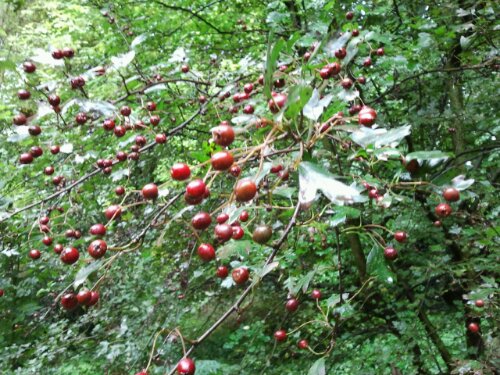
Rosehips (Rosa spp.) continue to ripen.
image

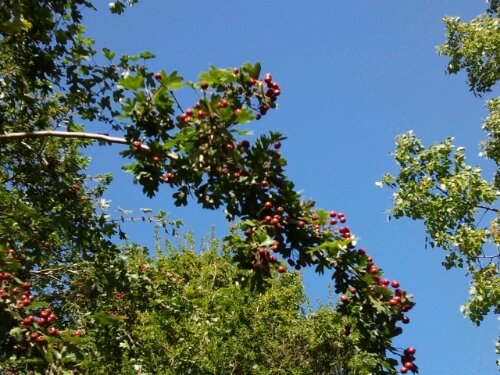
As do Haws on the Hawthorn (Crataegus monogyna) shrubs and trees.

image

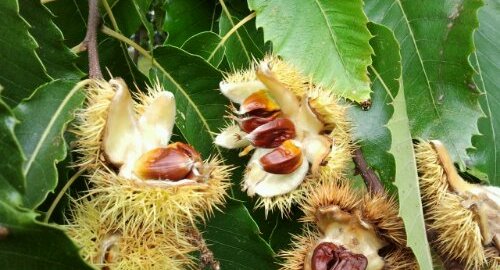
I got all excited to see thousands of fallen Sweet chestnuts, at the front if Huis Frankendael but they are to small to do anything much with. Hopefully they have been shed to help the tree focus on building up carb’s in the rest.

image

It’s still possible to harvest as much as you like of invasive alien Himalayan Balsam. The flowers have a nice taste, quite mild and like lettuce. I heard of someone using the stems as drinking straws recently. That could be interesting too.

image

I think these are the sought after roots of Cat‘s Tails, dredged up in the current canal clearance operation. They don’t look very appetising in that must soup though.

image

And lastly, Feverfew having a brilliant second flower flush. So bitter and do linked in traditional medicine to the treatment of migraine.

image

365 Frankendael 156

Today is beautifully autumnal; a crisp, bright morning followed by a dimmly lit afternoon and an all pervading air of quiet, inward, downward energy.

If you like to attune to the cycles of nature, you may notice that this is a time to slow down, to store energy, to reflect on what has gone well and otherwise in your life. It’s a time to sew seeds in your soul and the soil; seeds that will benefit from the transformative powers of winter darkness.
image

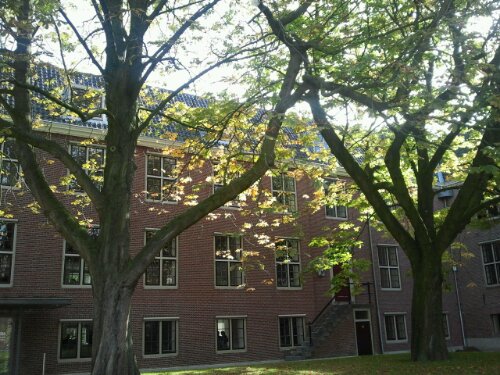
We visited the Hermitage museum this morning. There’s an enormous, somewhat stylish, lawn filled space in the middle of the building, which I hope is home to more than just grass. Close to the inner entrance of the museum is this stately pair of Horse Chestnut trees. Parts of this tree species can be used in capillary tightening preparations.

image

Back at home, I thought it was time to share a photo of this useful and (I think) beautiful, creeping evergreen herb. It arrived on the wind at “my” tree pit, sometime this summer. It’s such a tasty and interesting little plant, mostly overlooked but offering many uses thoughout the while year. If Ground Ivy sets root on a patch near you, I hope you’ll welcome it and try it.

image

Lastly, Hollyhock seeds – again! I keep on mentioning them, hoping and dreaming that there will be a few more of these useful beauties growing and being used in the city, as a result. Please collect them and save them to sew next spring, or better still collect them and sew them right away in every dull tree pit or neglected corner of soil you can find! Just rub the soil over a little with your shoe, to make them less obvious to paying birds. No digging required, just plant them and hope! Search this site and others for medicinal uses of this relative of Marsh Mallow.
365 Frankendael day 155

I’m enjoying the autumn equinox and making Hawthorn things, so a quick post today. I hope you are enjoying the day too!
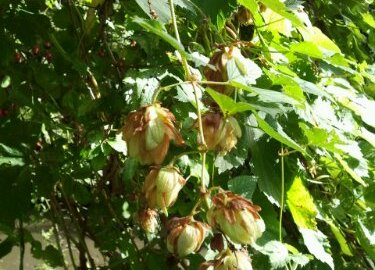
Hops (Humulus lupulus), beautiful flowers for drying, using, sleeping, brewing.

image

Hawthorn (Crataegus monogyna).

image

Pennsylvania Pelitory

image

Elderberries, not many of these left.

image

Holly berries (not edible)

image

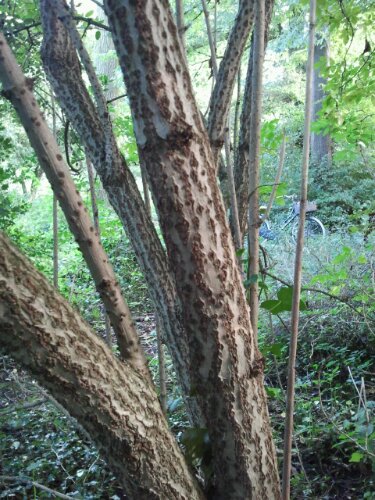
Elder trunk

image

image

Above, Cherry Laurel

image

A beautiful fungus, probably not edible but it looks remarkably like Chicken in the Woods to me and I remember that from Exmoor. May have to get my mushroom books out before tomorrow’s walk…

365 Frankendael day 154

image

Just one photo today, of Gallant Soldiers (Galinsoga parviflora, NL Kaal knopkruid) in a crack at the local garage (where we took our car to get the golfball hailstone dents taken out). I certainly would advise anyone against harvesting from such a location, as it’s sure to be polluted but it certainly is a nice example of this edible plant. Gallant Soldiers seems to be everywhere at the moment so if you develop a taste for it, you certainly won’t go hungry.

It was apparently brought to the UK Kew Gardens from Peru, in 1798 and made a very successful break for freedom. It has since become a garden weed throughout Europe and much effort is put into weeding it out. However it is edible and tasty, it’s used to spice up a particular potato & chicken soup called Ajiaco, in Colombia and I intend to try it out this weekend. The only problem for me being that each time I see it, it’s growing in quite dirty locations. It’s obviously quite a survivor! Here’s a recipe which seems to be fairly authentic, although it does use stock cubes. The herb they name as Guascas is Gallant Soldiers.

As I was searching for more uses of the plant I found this treasure trove of a website. Scroll through the list of herbs to find out African uses. Gallant soldiers is apparently a known wound herb in Kenya. Pound the leaves and stem, squeeze the juice onto the wound.

365 Frankendael day 153

image

I bought a few more lovely storage Kilner bottles, from a shop around the corner if my house today. On the way from it, I found a street full of well tended hollyhock plants, with this years flower stems removed and the first year plants, which should flower next summer, taking over the plots. Such a useful city herb.

image

Here is another wonderful herb, seen less often in the city, Hops (Humulus lupulus), growing up and over the front fence of the NH Tropen Hotel. What a wonderful choice of herb. Perfect for a good night’s sleep. Now is a good time to gather the seed heads, they are used to stuff dream pillows and make numerous remedies.

image

At the bases of the same fence other plants have crept in. this one looks like Hazel. I didn’t notice any nuts.

365 Frankendael day 152

image

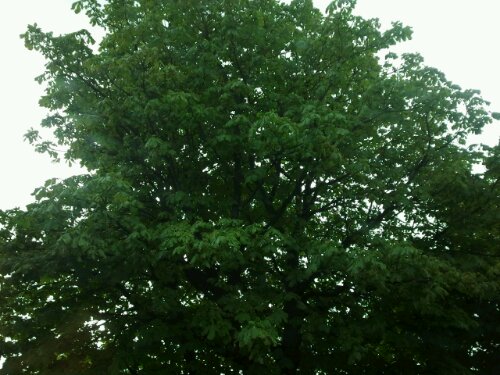
Today has been quite wet, will at least when I have had any free time. So I didn’t take many photos. Something that caught my eye was a row of Horse Chestnut trees, in front of Amstel station, with no conkers forming. This struck me as I’d because the enormous Horse Chestnut in the middle of my school is loaded with apple sized young Conkers. Not that they are edible, they do make useful medicine though. Will have to check whether there are male and females…

image

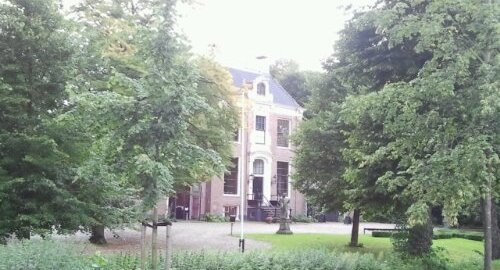
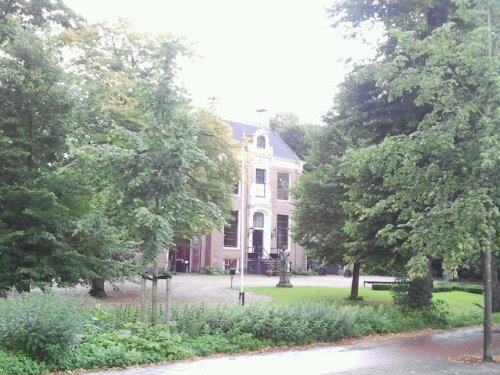
And here’s a photo of the enduring nettles and lime tree leaves at the front of Huis Frankendael.

365 Frankendael day 151

A beautiful double rainbow, formed over Amsterdam this evening. Not that you can eat it but the sight certainly can feed the soul.

image

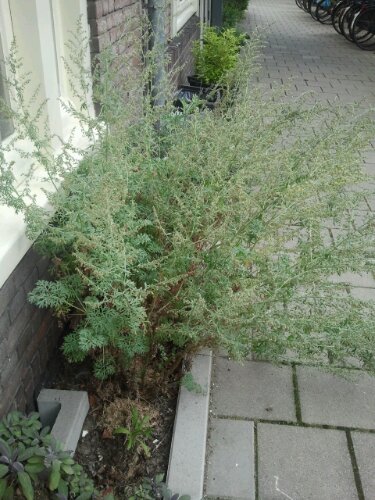
As for todays herbs; an update really, on how the pavement garden Wormwood (Artemisia absinthium) is getting along. Here it is today, exploding with tiny flowers onto the pavement – it needs a trim.

image

And here is one of it’s offspring, planted in the nearby treepit. I hope that the main plant manages to set seed, all down the street again next year.

image

Wormwood is useful for many things. I included it in a cooling and healing skin ointment this week.

365 Frankendael day 150

Thank you to the group of Urban Herbies who joined me For the Elder Workshop today. We harvested Elderberries, Elder leaves and Elder branches. We learned about and concocted Elderberry syrup and numerous other Elder based remedies. I had a lot of fun with you all, and the plants!

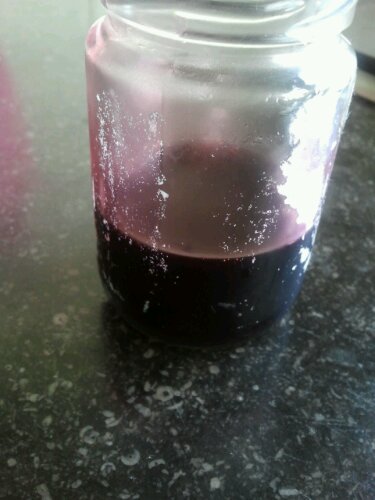
I was so busy enjoying the time that I forgot to take an Elder photo so here’s one of the syrup that we made together, from freshly pressed Elderberry juice and honey… It’s a clean but scrappy looking jam jar. That doesn’t matter as my portion of the syrup will be wolfed down very quickly!

As well as Elderberries, there are heaps of ripe Hawthorn berries in the city hedgerows at present. I did remember to take a photo of one such tree. It’s time to try out the Hawthorn recipes, kindly sent to me by one of the Amstel walkers earlier this year.

Here’s a link to the recipe for the Banana bread I baked for the workshop. I added a finely chopped 20cm Ginger plant leaf and I forgot to add the dates. All fine though!

Here’s a link to that information about recent scientific research supporting the use of Ghee and Honey impregnated wound dressings for serious wound recovery.

Thanks Nathaniel and Jade for sharing with us how the Native Americans revere their local Elder species. Here’s a link with a little information about that (at the end). Here’s a link with lots of information about Elder, particularly the US growing species. Not much about the indigenous people but lots of useful stuff.

Here’s a link to one of my mentors: Glennie Kindred in Britain. She wrote the hand sewn books I showed you today. We looked at the one called Sacred Tree in which Glennie lays out her interpretation of the Tree Ogham.

As we talked about honey, Katja shared her latest concoction – fresh ginger infused honey with lemon juice. Yum! I’ll be trying that very soon and will post some photos to brighten up the autumn. Maybe Katja has a photo of hers already?

Cindy, I don’t think you took your portion of ointment and certainly not the syrup. I also forgot to give you the Kombucha so let me know when you have time to collect them.

Thanks again everyone. See you again soon! xx