Category Archives: 365 Frankendael

365 Frankendael day 9

Today was the monthly Puur Markt in Frankendael. At this time of year, there’s a great stall which sells herb plants quite cheaply. I picked up a small Curry plant for €2.75 and a little Verveine for €2. The stall is always there through the main growing season and they also work at the weekly Saturday Noordermaarkt. They don’t have a website but are well worth a visit.

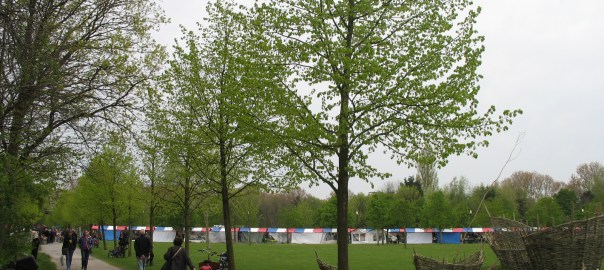
I thought I’d take a photo of the newest section of Frankendael’s Lime tree avenue today. Lime is an under appreciated herb, in my opinion. It has a multitude of historic uses and come midsummer, yields the most heavenly fragrant flowers, which drive the city bees wild. With these you can make a wonderful, lightly intoxicating tea. At this time of year, Lime leaves can be eaten as an unusual and medicinal sandwich filling. They have a mucilage within which makes them very useful as a soother of the respiratory system. If you take a moment to chew a leaf you will feel the mucilage release from the leaf tissues. It’s more pleasant than it may sound!
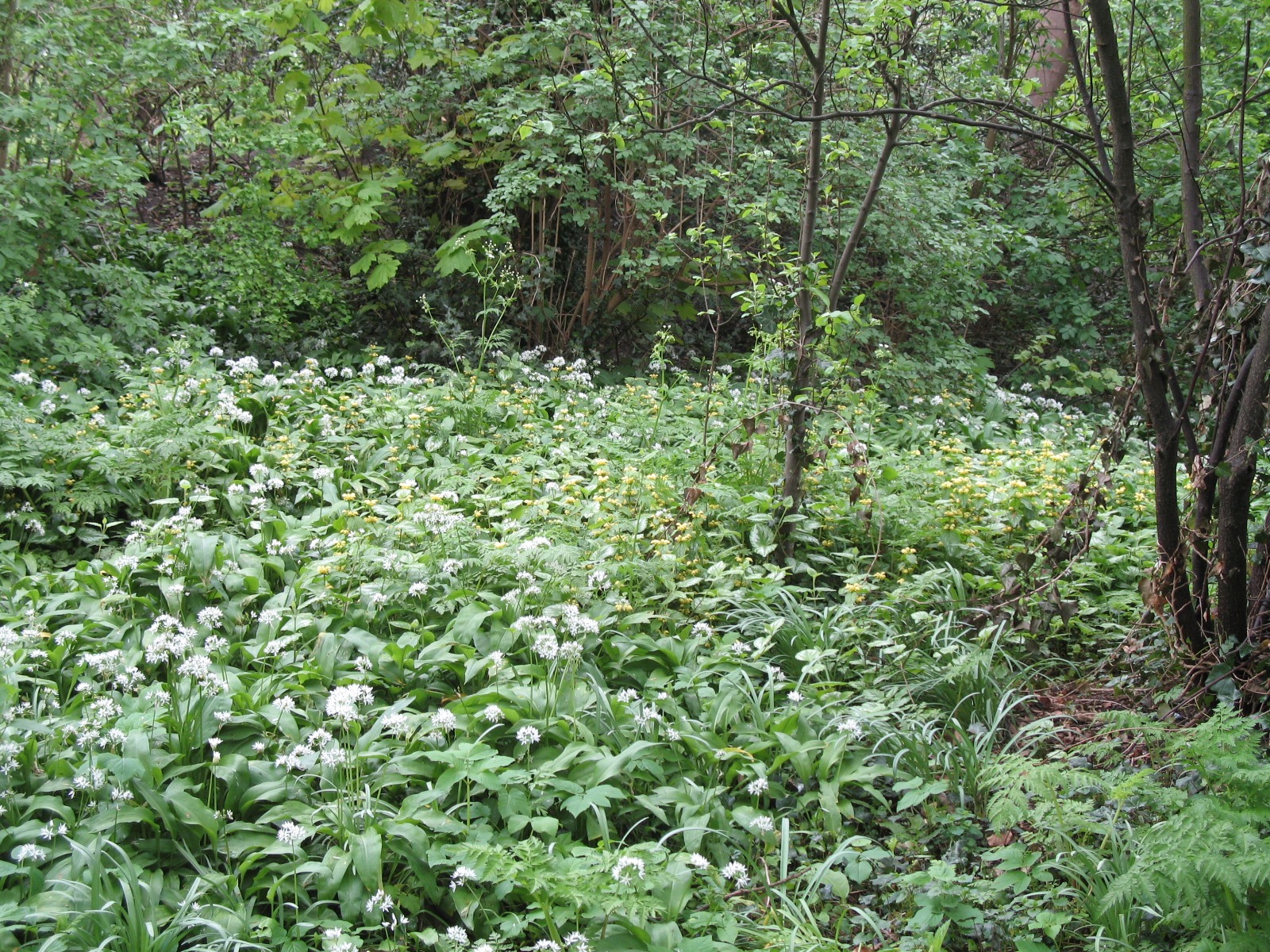
There are lots of Yellow Dead Nettles (Lamium galeobdolom) in flower at present.  I’ll write more about them another day. The link above is to an interesting blog post about the plant.  The photo shows a large swathe of the plants at the back of this woodland undergrowth.

365 Frankendael day 8


It’s very cold, damp and windy here today, well relatively speaking, so not the most pleasant day for a walk in the park with a toddler. Of course, I did see some beautiful plants but most photos were rather windswept. I think that this one clearly represents the last days of April. Ramsons in flower, Ground elder swallowing up other plants, Cowslip standing tall, yellow and delicate and at the back, a wild Ribes bush (could be black current, white current, raspberry etc. but its too early to tell). I

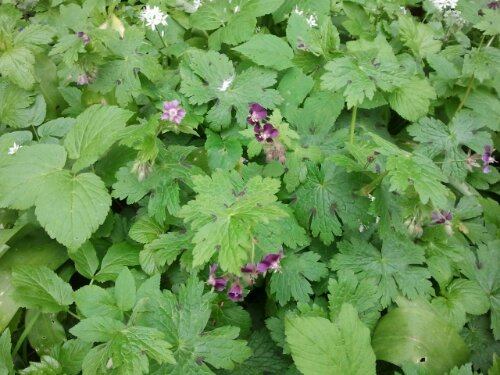
One of my favourite city herbs is really coming into flower at the moment. Wild geraniums (Wood geranium, Cranesbill) are often used in urban planting schemes because they bulk up nicely as the spring and summer develop. You can find geraniums in city tree pits where they receive lots of nutrition from passing dogs. If you can locate relatively clean plants, perhaps try them in the summer when they have had a chance to grow and will withstand a little harvesting.

All geraniums and all parts of them are said to be edible, but some varieties are hairier than others! This variety is prevalent in the park, the pretty purple flowers are fragrant and taste good in a salad, the leaves add an interesting dimension to raw food and cooked they blend well with other spring greens. I prefer to thoroughly wash any that I harvest and then to cook them, like spinach. I reserve geraniums growing at home, for salads.

Now is a good time to learn the differences between the many members of the Carrot family, which grow wild in Amsterdam. The most prevalent and obvious at this time of year is Sweet cicely. It is a good faraging food, makes pleasant aniseed flavoured drinks and is sometimes used as a tonic herb. But beware! There are some extremely toxic members of the Carrot family and all look quite similar until you know how to differentiate them. At present Sweet cicely is in flower.

365 Frankendael day 7

Greater Celandine (Chelidonium majus, NL Stinkende gouwe) is a plant that is very obvious at the moment. It belongs to the poppy family and its leaves certainly resemble those of other members of that family.  The plant is a perennial and spreads easily by seed.  It is considered an invasive garden pest by many, but not herbalists.

This herb is not one for the dinner plate as it contains several alkaloids which are toxic.  It can cause irritation to mucous membranes, if used innapropriately and shouldn’t be used by pregnant women or those with impaired liver function.  It is generally used only externally.

Warts
The orange-yellow sap from within the stems of Greater Celandine, is a really useful wart remedy.  Simply cut a stem and apply a few drops of the juice directly onto the wart.  Do this a couple of times daily and soon the wart should begin to disappear.  Continue use until the wart has gone completely.   To maintain a supply of this valuable remedy when the plant is no longer available outside, you could make a tincture and use a few drops of that in place of fresh sap.

The plant in the photo is in a patch of waste land, right on the outside edge of Park Frankendael. There are plenty of Greater Celandine plants within the park and throughout Amsterdam at present.

Endangered Plants NL – De Rode Lijst

The list of threatened and endangered species in the Netherlands is extensive. I recently contacted a City Ecologist to find out more about the legality of foraging in this country and he kindly forwarded the list to me. Unfortunately, for non Dutchies like me, the common names are in Duth and the Latin names are not alphabetical. One day I shall try to work my way through the list and translate the common names. Many of the endangered plants will be of little interest to city foragers, but some will be, so before you decide to pick anything please look up the Latin name and check its status. I did find this list in English regarding endangered plants across Europe. I don’t feel it’s very comprehensive and it doesn’t mention The Netherlands, but it may give an indication of what is threatened.

A few plants which instantly stand out to me are Artemisia absinthe (Wormwood), Juniperis communis (Juniper) and Viola canina (Dog violet). Also Pennyroyal, Plantago media (a type of plantain), White Mint, Pulsatilla, Lesser Skullcap, Betonie, a type of Red Clover, Wild Strawberry, a type of Bedstraw and several types of Lady’s Mantle are on the list. Some are foraging favorites, others are wonderful herbs but all must be avoided and protected. Also, some species of fern, cling to existence on the local canal sides and must be protected. I’m not a fern eater myself but know that some international foragers seek them out.

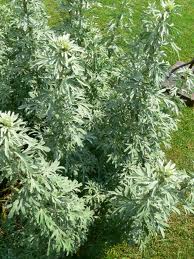
I grow Wormwood in my geveltuin (pavement garden). It provides me with a great harvest every year and perhaps its seeds will spread the plant elsewhere. Growing-on your own rare plants, from seed or nursery plants, is a way to ensure you can use what you like.

365 Frankendael day 6

Willow (Salix alba, S. fragilis, NL: Wilgen) catkins have been my wild flavour of this afternoon. They taste very like Aspirin tablets because they contain the same active ingredient (Salicyclic acid). It is found throughout the tree, particularly in the bark but spring catkins are an easily measurable source of this natural pain reliever.  When catkins (which can be dried for use later in the year) are not available, simply chewing on a short length of a Willow tendril  may also the trick. The approximate equivalent of 2 Aspirin tablets is said to be about about 6 – 8 inches of tendril or 10-15 catkins (Linda Runyon). Treat the herb with caution and respect, as you would other medicines.  I find that Willow really helps for pain but that eating it on an empty stomach (especially the catkins), makes me feel a little nauseous.

There are many beautiful Willow trees in Amsterdam, including this wavy Willow and the play structures in Park Frankendael.

Other herbs of note today include Cleavers (Galium aparine) which are already speeding up some fences and my favourite Motherwort (Leonurus cardiaca). It is too early to harvest either herb but a great time to find where they are growing.  Also, Mugwort (Artemisia vulgaris), the dream herb is just starting to wake up.  It’s too early to harvest but it is becoming very obvious. Look for the silver undersides of the Chrysanthemum-like leaves and for tall dry stems from last year.  It is best to harvest this herb at midsummer.

365 Frankendael day 5

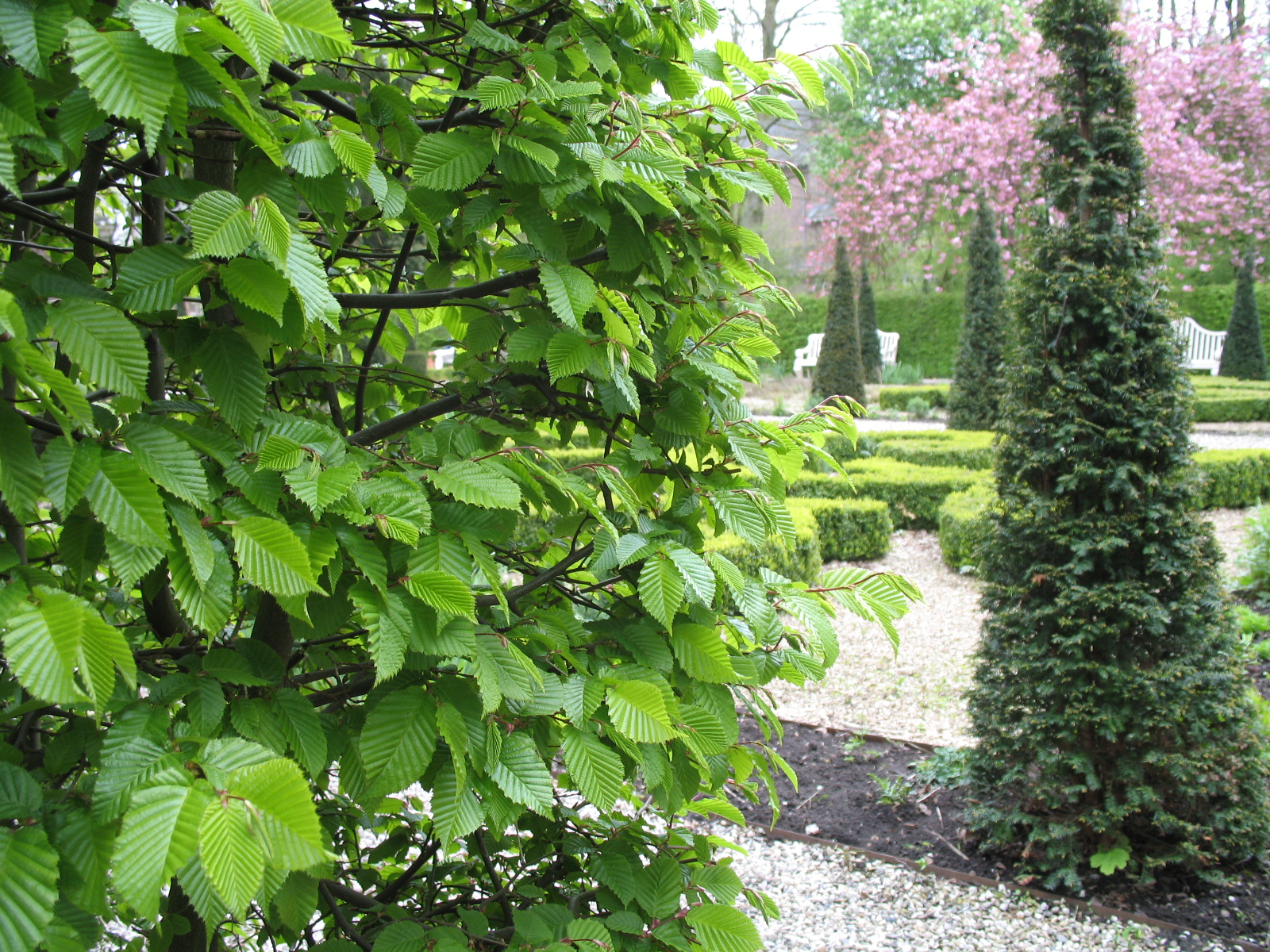
Orchard hedge – Park Frankendael

Lots of photos and less chat today, I’ve had a long walk and am itching to make Italian Beech twigs…
Here’s one of several Beech hedges in the park.  If you didn’t read my post about tree foraging Linda Runyon, then please take a look, for some eye opening ideas.

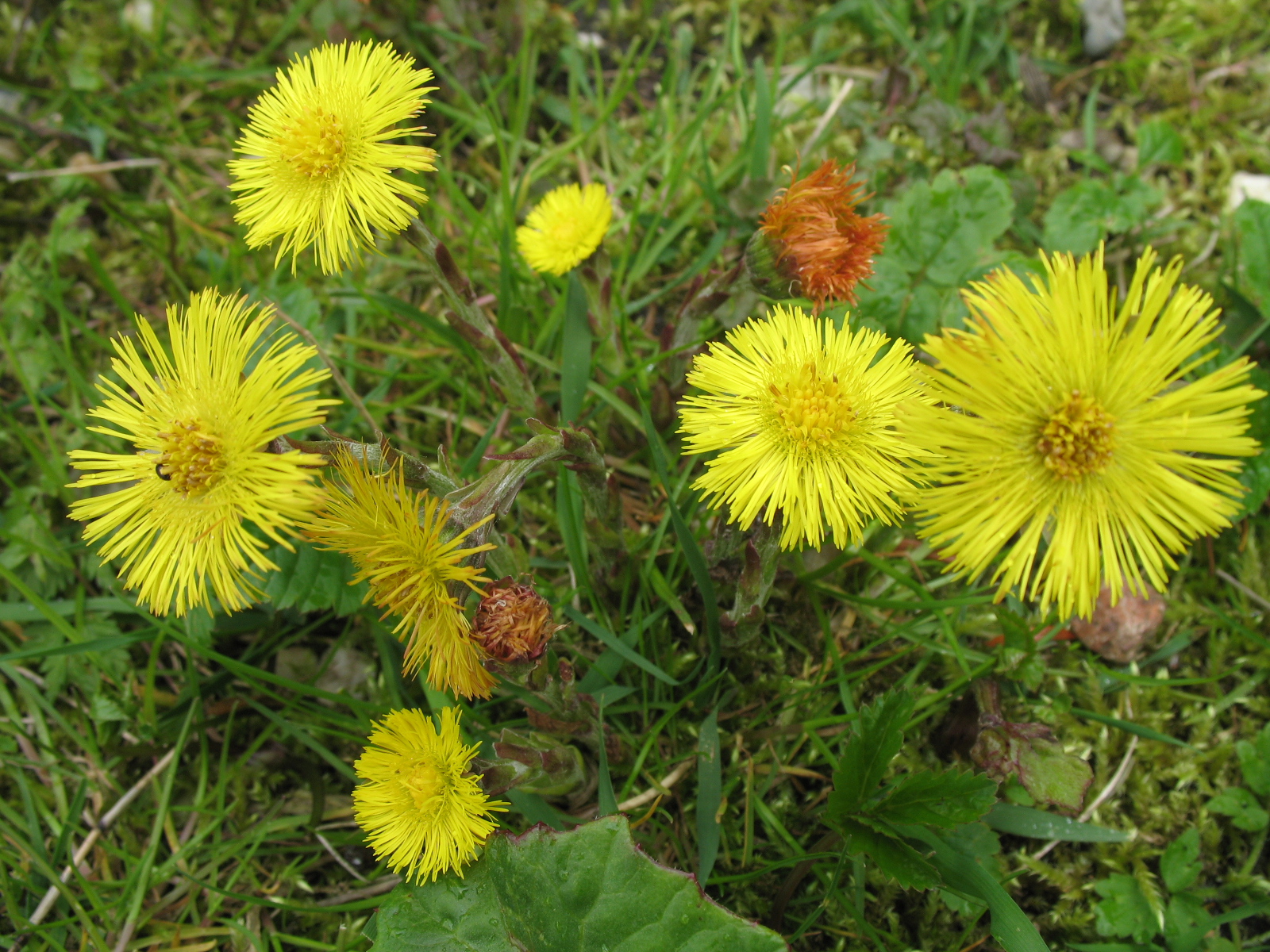
Coltsfoot, still blooming:

Coltsfoot (Tussilago farfare)
White dead nettle, in bloom is the time to harvest, but it is an annual
HIGHLY POISONOUS Dog’s mercury, which is in bloom (tiny white flowers) and is prevalent throughout several areas of the park:
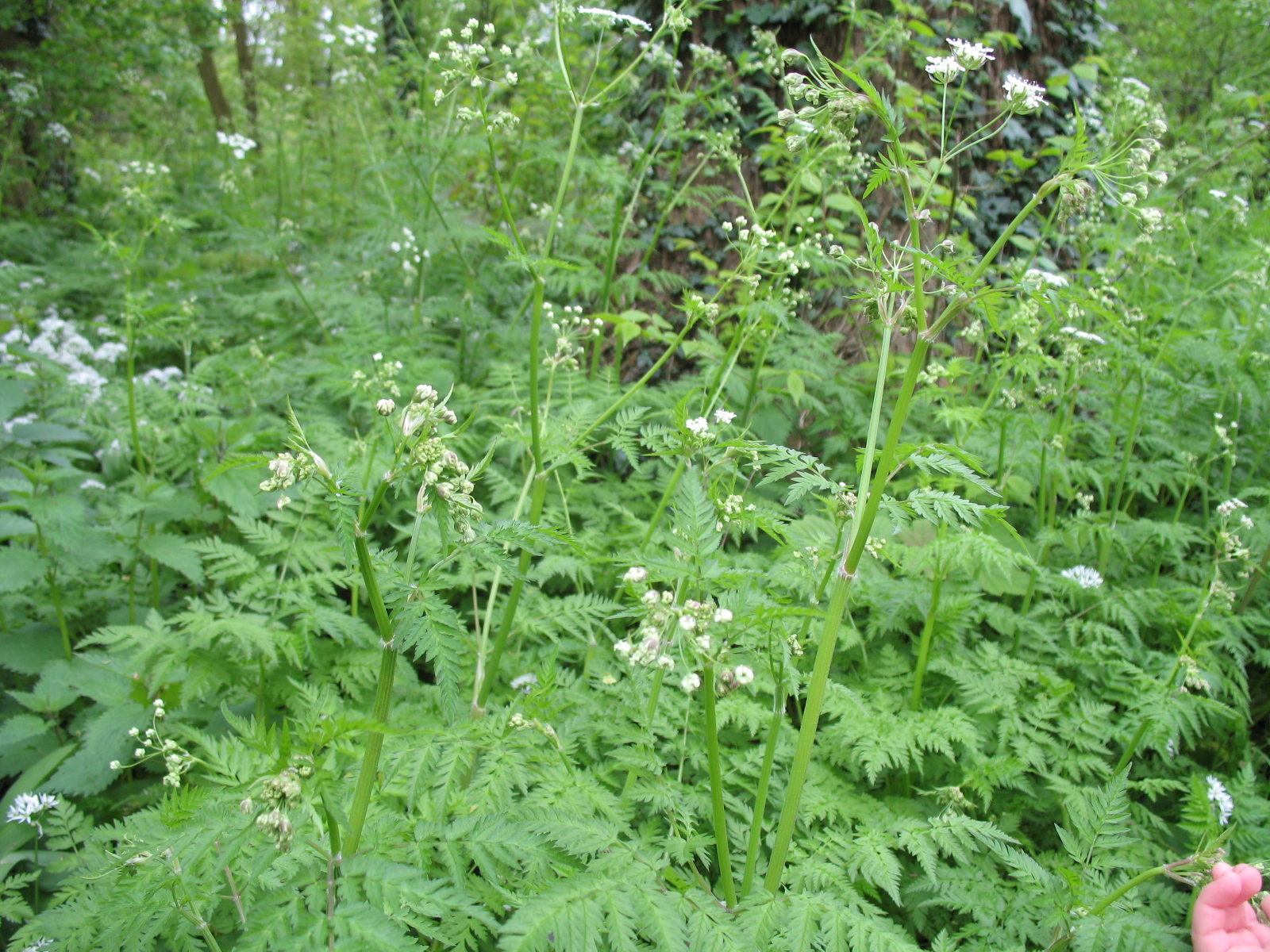
Sweet cicely is in bloom so can be identified more easily with a field guide
Sweet woodruff (Galium odoratum)

Sweet woodruff (Galium odoratum), easily confused with Cleavers (Galium aparine). Cleavers are far more succulent than Sweet woodruff, and can grow very tall, using other plants and structures for support as shown yesterday.  The two plants have quite different uses.

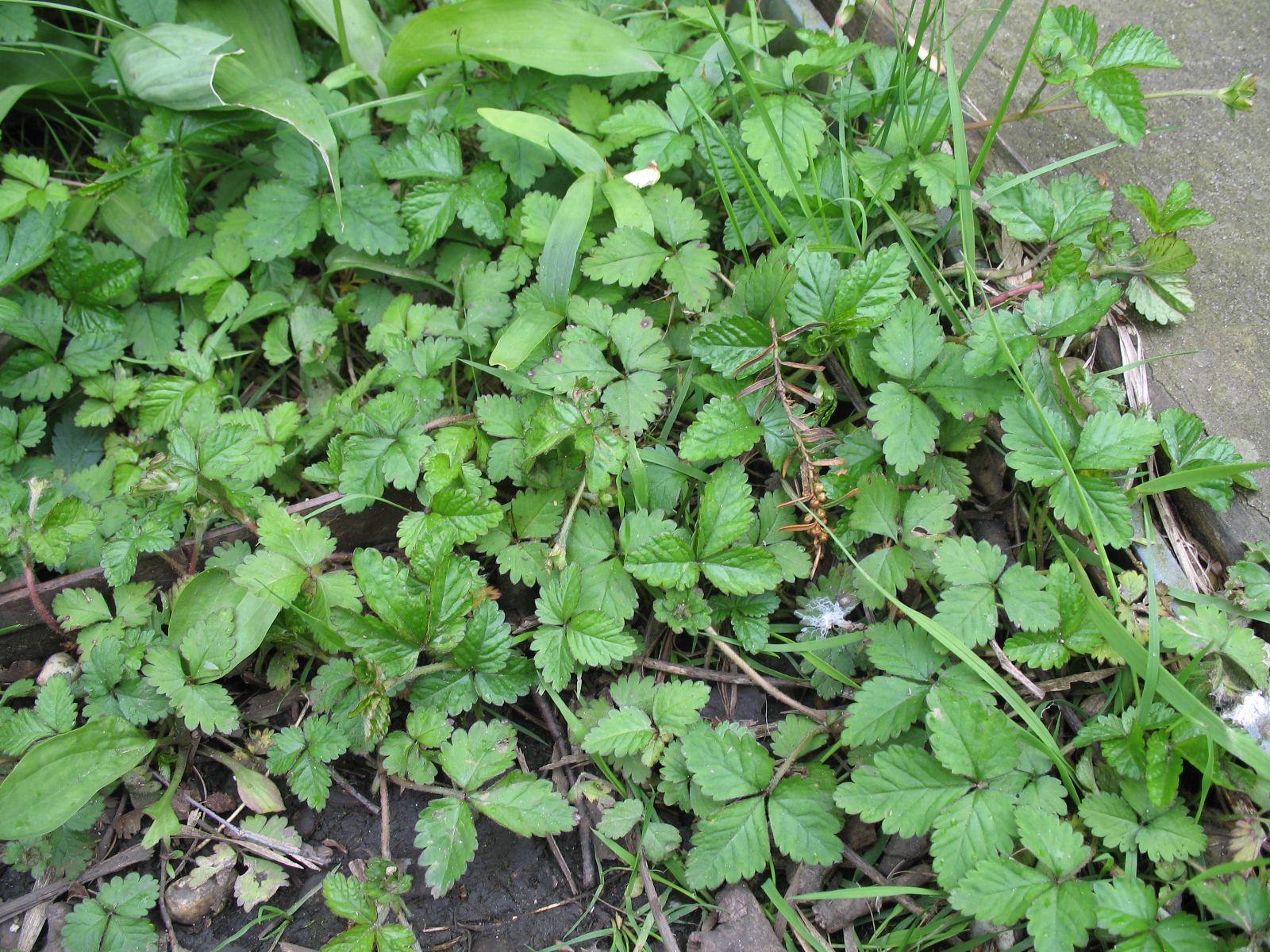
Indian strawberry
A stunning mound of Ground elder (Aegopodium podograria)
The flowers of Garlic mustard are now maturing and are easy to spot
Geranium and cowslip

Geraniums are really bulking up.  The cowslips shown here amongst the Geraniums, should never be harvested from the wild as they have such a hard time surviving when their source of seeds is removed.  Wild garlic is also in the photo.

365 Frankendael day 4

A quick posting today… The plants are growing so quickly that it’s hard to keep up! Photos today of Stinging Nettle (Urticaria dioica, NL: Brandnetel) with Cleavers (Galium aparine, NL: Kleefkruid), Ribwort (Plantago lanceolata) and a lovely painting of White dead nettle (Lamium album) by fellow Urban Herbie, Elodie den Otter.

In the first photo you may be able to see Cleavers using our prickly friend as a support, to enable its own upward growth. For further information and links about Stinging Nettle, including a video on how to make nettle infusion, see my previous posting. These days it’s quite fashionable to eat nettles – the Italians have been doing it for millennia and nettles really do taste great – so there are hundreds of recipes around. I usually just throw a handful of chopped nettles into regular dishes such as ratatouille, it really beefs them up and to me this spring green tastes like an improved version of spinach. Here’s a link to a few recipes featured by the BBC.


Also today, Ribwort (Plantago lanceolata), which is so handy to remove the burning pain of nettle stings. As a child I was taught about Dock being used in the same way but these days I find Ribwort far more effective.


White Dead Nettle looks similar to the Stinging nettle but is in fact completely unrelated. This plant is just beginning to flower in Amsterdam and is often found growing alongside Stinging Nettle. Unlike Stinging nettle, this plant is best harvested whilst in flower. It has a multitude of traditional uses, ranging from easing sore throats to helping heal burns and eczema. Many thanks for the painting, Elodie!

365 Frankendael day 3

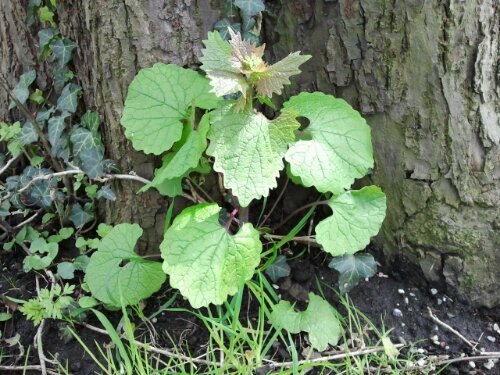
Garlic mustard (Alliaria petiolata) is featured today. I wouldn’t say it is plentiful in the park but I noticed lots of plants, particularly at the base of large tree trunks and along the edges of woodland and hedges. It is just in flower at the moment, so very easy to identify, not only by the distinctive smell of garlic when the leaves are bruised but also by the tiny white flowers at the top of the plant. Garlic mustard is a favorite amongst foragers and can grow up to 120 cm in the right location.

This plant is a biennial and can provide year round nutritious greens, for salads or the cooking pot. All parts are edible. Even the roots can be eaten, they should be harvested just before flowering, but of course removing the whole plant will limit the foraging potential the following year as the plant will be unable to spread by seed.

I see lots of garlic mustard growing around Amsterdam. You are very likely to find it along the edges of canals, hedges and overgrown areas. Now is the best time to identify it.

Other plants, calling out to me today are:
Coltsfoot – starting to open its seed heads which have been turned down towards ground since last week,
Nettle – tops are ripe for harvesting at present, I used plantain to rub away the sings as I forgot my gloves again today!
Mentha x peperita blue balsam – no flowers until later in the year but the spicy, pungent burnt spice aroma of stroked leaves is ummatched.
Celandine – It carpets parts of the woodland area almost year round but it easiest to identify when it burst into flower, to announce the spring. The last few flowers remain now, especially beneath the trees of the Lime avenue. If you don’t know how to recognise this useful woodland herb, learn now as the foliage is so useful at most times of the year.

365 Frankendael day 2


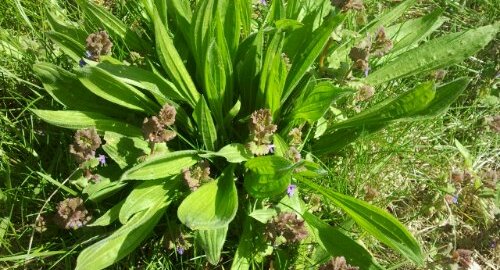
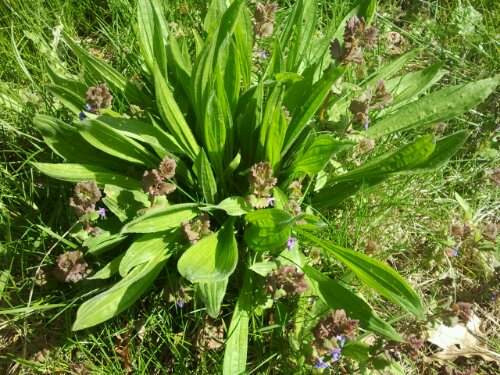
This photo shows the narrow form of Plantain, known as Ribwort, with Ground ivy flower stems growing up through it.

Ribwort (Plantago lanceolata), is a very useful first aid herb. It is part of the plant family to which Psyllium belongs and shares it’s usefulness as a soother of mucous membranes. Amongst other things, it can be used as a simple insert in shoes, to ease tired aching feet and can be rubbed on grazes and insect stings as it releives pain. It was previously recommended as a plant to be added to the seedmix for pastureland, it is a favorite of sheep. Ribwort contains lots of mucilage, easily released by chewing. For more simple uses see Susun Weed link.

Ground ivy (Glechoma hederacea) also known as groundsel or cat’s paw, was an age old remedy for stomach ailments, was used to clarify beer in the absence of hops, is useful for soothing chapped hands, tastes pungent and minty and is great raw or cooked. It is a favorite of birds and can apparently entice a rabbit to eat when is unwell and refuses all other food. Mrs Grieve’s Modern Herbal (from 1931) advises harvesting Groundsel along with Chickweed in the spring and summer, to dry and then feed to rabbits along with their straw in the winter.

The plant is a very successful annual, now renowned as a garden weed. Ground ivy, with its scalloped kidney shaped leaves, creeps across the ground, setting root at regular intervals and throwing up relatively tall flower stems (10 -20cm high) at this time of year. Today, purple ground ivy flowers looked stunning throughout the park. There are striking patches at the entrance closest to the garden centre and dotted throughout the less trampled grassland, notably next to the woodland area beside Frankendael Huis. This plant is definitely a must-try for foragers, provided you can find clean plants.

Lastly today, a photo of Marjoram (Origanum vulgare) which thrives in just a couple of spots in the park. I am always delighted when I see it in flower but at this time of year the plants are growing rapidly and the leaves are loaded with the aromatic oils, so prized by cooks.

365 Frankendael day 1

<img class="alignleft My new project to identify and document herbs in Amsterdam’s park Frankendael, every day for a year, began today. It’s quite damp and cold at present but many herbs are looking resplendent in Amsterdam. The parks give a good indication of biodiversity in the city as a whole. Here are a few photos of useful plants which are in full foliage or flower today, in Park Frankendael. They show Tansy (Tanacetum vulgare, a powerful emmenagogue) Purple Dead Nettle (Lamium purpureum, a salad and pot herb) and Comfrey (Symphytum uplandica). Hover over the photos for the names, if you are not sure which is which.
Some days I’ll be adding less photos and more information about the plants, other days will be more focused on photos. I’m really looking forward to watching the plants throughout the year, to sharing more ways to use them and find them on the streets and verges of Amsterdam and to improving my photography skills!
Several people have kindly offered to get involved with taking photos from time to time. There will be a little meeting on Sunday May 13th to share ideas.