Category Archives: Projects

Wild Garlic Mojo / Pesto

image

People tend to call herbs blended with pine nuts and cheese, Pesto. I know of another herb blend called Mojo, from holidays in Tenerife. Green mojo is similar to pesto but has more kick to it due to it containing garlic and coriander and they don’t add pinenuts, basil or cheese generally. I began turning today’s Wild Garlic harvest into a sort of pesto and it turned out far more like spicy Mojo. So I’m calling this Wild Garlic Mojo, because if you know both you’ll find this far more akin to Mojo than Pesto. I also like the name as the garlic properties certainly get your mojo up and running!

Wild Garlic Mojo
Take one handful of ethically harvested wild garlic leaves. Place in blender.
Add 250 ml best quality Olive oil, juice of half a lemon,
pinch of quality sea salt,
handful of freshly grated parmesan cheese.
Sprinkling of pine nuts.
Now blend to a fine consistency which should be very easy to pour. Mojo is runny.

Store in sterile glass containers and use as a spicy, aromatic, digestive dressing for grilled cheese, meat, tofu etc or as a useful cooking seasoning.

image

Mojo originates from the Canary islands and should have heaps of colour, flavour and punch. This has them all.

365 Frankendael day 316

image

Lemonbalm (Melissa officinalis) is springing up from its perennial roots. This little patch, which will become half a meter tall in a couple of months time, has a treepit as its home.

Many people know how refreshing and uplifting a pot of Lemonbalm tea can be. Not so many use it as an antiviral. It’s very easy to make an infused oil from this herb and then to turn a little of that into  cold sore healing lip balm, just with the addition of a little beeswax.

365 Frankendael day 313

image

It’s great to see the sun on my way to work this week – it had been dark at that time of day for many weeks. As we feel more energetic due to the increased light so too
do our plant neighbours.

This is the herb garden of park Frankendael, seen from Hugo de Vrieslaan, this morning. It doesn’t look much at present but give it a few weeks and it will be green, lush, medicinal and tasty. I don’t pick from that garden – it’s for everyone but I do look out for escapes which have naturalised close by. Skullcap is one such favourite from that patch.

image

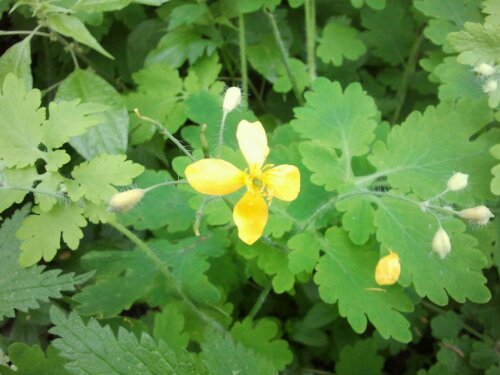
And here’s a herb which also grows in that planted herb garden but which loves Amsterdam! Greater celandine, toxic but very useful for some skin conditions  (if used appropriately) such as Herpes. I wouldn’t put it anywhere near lips or delicate skin. Benign moles are also sometimes treated with the sap.

365 Frankendael day 312

image

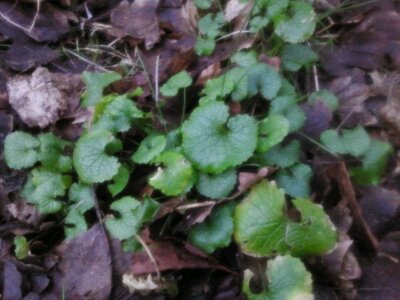
Ground ivy (Glechoma hederacae) today, near the bus shelter on the corner of the park, where I start my working day. I stepped into the waste land there, to look for early signs of Mugwort. Too early for that but this Ground ivy stood out due to it’s large leaves. It looks almost like the first leaves of Garlic mustard and that is always a welcome sight. Ground ivy has been used a lot over the years. It is an interesting aromatic evergreen Labiate which has varied uses. I like it as an occasional salad leaf or chopped up in a soup or stew. It also makes a tea that can refresh winter sinuses.

New Events

Please check out the a Urban Herbology events page for details of my forthcoming herbal forays in Amsterdam.

Love Your Elders  (Sunday 7th April)

365 Frankendael Urban Herb Walk (End April/Start May)

Embrace Your Weeds (June)

As well as details of the new Apprenticeship group and River of Herbs.

I’m also planning a spring picnic in the park for people who have helped me during the  365 Frankendael project and a street herb walk in Bristol, later in the year.

365 Frankendael day 311

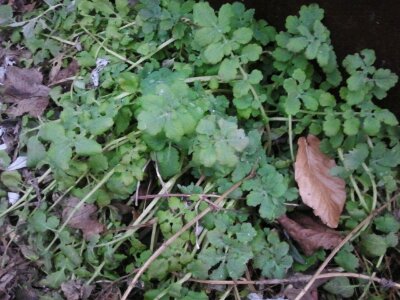
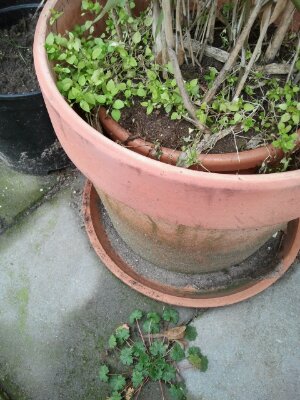
Here is a tasty, nutrient packed, flowering patch of Chickweed (Stellaria media), snuggling around the base of some planted Bamboo (young shoots are edible) in a plant pot on the Middenweg. At the foot of the pot is a very pretty little herb Geranium.

image

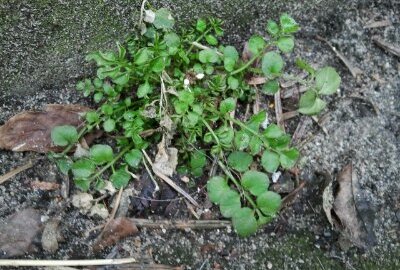
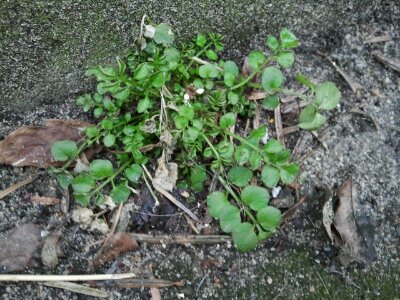
And here is Hairy bittercress, a very tasty little plant, closely related to Chickweed and very easy to identify and eat in salads or cooked food.

image

Wild garlic bread sticks

These bread sticks are chunky and have more than a hint of wild garlic about them. We love making them and eating them and hope you will too. If you came to the River of Herbs or February Apprenticeship meetings then you tested the recipe with my first Wild Garlic harvest of the year. The plants are getting bigger, bolder and more tasty by the day. Only a few leaves are needed for this recipe. Please remember to pick carefully and to leave the plants in excellent shape, with their bulbs intact in the soil.

Wild Garlic Oil
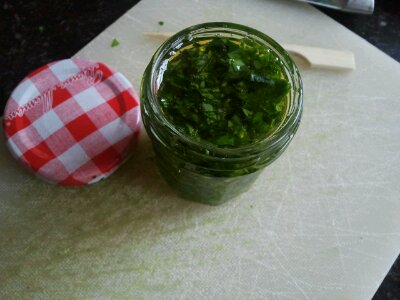
Firstly, gather three Wild Garlic (Allium ursinum, Ramsons, NL: Daslook) leaves. Give them a quick rinse and pat them dry with a clean tea towel or similar. Finely chop the leaves and place them in a very small glass jam jar. Cover with extra virgin olive oil and poke around a little with a chopstick or cocktail stick, to release trapped air bubbles. Top up if necessary, to keep the leaves covered in oil.

Leave your wild garlic oil to infuse, with the lid on, whilst you make the bread as follows.

NB: The infused oil will be ready to use in as little as an hour but will keep at room temperature for several weeks, provided there was no water on the outside of the leaves when you chopped them. Mine never lasts that long as we eat it in everything at this time of year.
image

My basic bread recipe

4 cups of bread flour (I generally use 3 cups spelt flour and 1 cup strong wheat flour)
1 and 2/3 cups luke warm water
2 tablespoons olive oil
2 teaspoons fast action dried yeast
1 teaspoon fine sea salt

Gently and gradually mix together all of the above ingredients. When doing this by hand, I place the flour in a big heap on my worktop and make a volcanic crater in the centre. I sprinkle the yeast and salt around that crater but pour the water and oil into the crater. I’m then able to work everything in, bit by bit, avoiding it all spilling onto the kitchen floor…

When everything is well combined you need to knead it! Aim for a good ten minutes of therapeutic kneading, by which time your dough should be silky and springy to the touch. Then place your ball of dough in a glass or ceramic bowl, covered with a damp clean cloth or cling film, in a warm place, “until the dough has doubled in size”. I must say that I find that standard bread making statement of limited use. Dough “proving” is sometimes hard to gauge as the dough will change shape and texture as it rises. Mine generally mutates in a glass bowl, filling it gradually with long bubbles, rather than simply doubling up neatly. Use your judgement and common sense with this, the time needed for the first proving, will depend on your room temperature and specific ingredients. 40 to 90 minutes should do the trick but don’t worry if it doesn’t exactly seem to double in size.

Now give your dough a second kneading. This will make the dough decrease a lot in size and that’s fine. This step is called “knocking back”. After the quick knocking back knead, cover your dough ball again and leave in a warm place to double in size, again.

(Unless I am on holiday I generally use a bread machine for the kneading and proving stages of bread making (machine set to the dough setting). This recipe works equally well for bread machines and for hand working).

image

Creating the herby bread sticks:

Turn out your twice risen dough, onto a floured worktop and sprinkle a little flour over the top. Then pour about a tablespoon or two of your wild garlic infused oil (including the leafy bits) and a teaspoon or two of Malden Sea Salt Flakes onto the dough.

image

Work this in just a little, so that you feel that the oil and salt are throughout the dough.

image

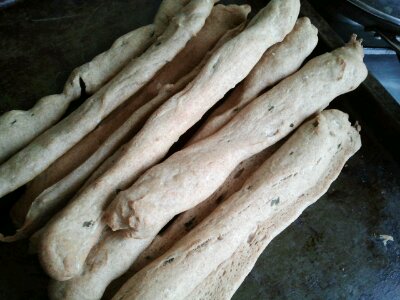
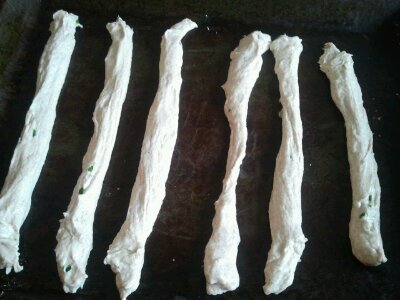
Divide the mixture into about twelve small balls and make each into a long stick shape. Or whatever shape you like.
image

Place on an oven tray and bake at 200°C until they turn hard on the outside and light golden brown.

image

365 Frankendael day 310

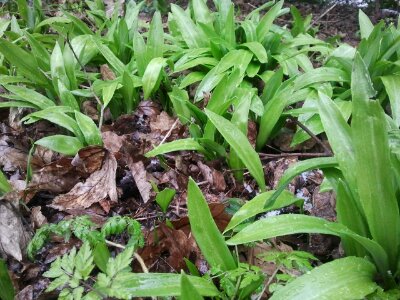
More snow in Amsterdam today so a pleasant but chilly walk in park Frankendael, to collect a few Wild Garlic (Allium ursinum) leaves.

image

I gathered nine leaves, that’s enough to see my family through the week, with a garlicy meal a day. I preserved them in a tiny jam jar of olive oil, after chopping the leaves finely. Storing them in this way, at room temperature, makes using Ramsons in cooking as simple a possible.

image