Day 12 – UH foraging challenge

20170503_155923

Walking home from swimming on this day 12, I found a pavement garden containing some rather well cared for stinging nettles. No picking from that spot but I did weed some out from the beautiful Tuin van Darwin this morning whilst being shown around the gardens. Those beauties are heading for a nettle omelet and smoothie tomorrow.

I can’t eat enough nettles in April – they are on the menu in myhome 3 times a day! By early May, my appetite is waning for them but I still feel the need once or twice a week. Stinging nettle contains a high proportion of protein, compared with other plants. And an impressive assortment of minerals (iron being the most associated with nettle). I greatly enjoy eating them wilted in a splash of olive oil and water, in omelets,  in drinks,  in anything really – so long as the stings are wilted. The ways to eat this plant are endless and it is possible to harvest without being stung. Nettle also plays host to many insects,  notably butterflies.  So although I could eat them all,  I eat only the succulent tops of a scarce few plants from each swathe that is found.

Now some photos from the most active challenger:

Peter in Belfast had been finding Herb Robert, a very special geranium species.

Photo credit: Peter Warnock

It has really seeded all over the place from hillside to valley,  countryside to city.

Belfast. Photo credit: Peter Warnock.

A stunning and strongly scented plant which usually goes unnoticed but has a lot to teach us.

Photo credit: Peter Warnock
Food for free. Herb Robert outside of an old homeless mission in Belfast. Photo credit: Peter Warnock


Day 11 – UH foraging challenge

A pleasant walk into work this morning, yeidled a few nice edible finds in Oud Zuid. Here are my two favourites:

Wormwood
Wormwood

Wormwood (Artemisia absinthum) gracing a lamppost near Apollo house. A classy spot for a classy herb and a nationally endangered one at that!  I had to supress the urge to pull this up and replant it safely at school. It’s sure to be obliterated by the council strimmers within weeks and yet the size shows that it is a couple of years old. Perhaps the strimmer guys like it too or perhaps it’s just a strong perennial which bounces back after twice yearly strimming?

I’ll watch it with interest over the coming weeks.

Hollyhock
Hollyhock

Then a sturdy hollyhock, building strength against a rubbish bin. Hollyhock should be the municipal plant of Amsterdam – it is really part of the landscape on every street.

Ground elder
Ground elder

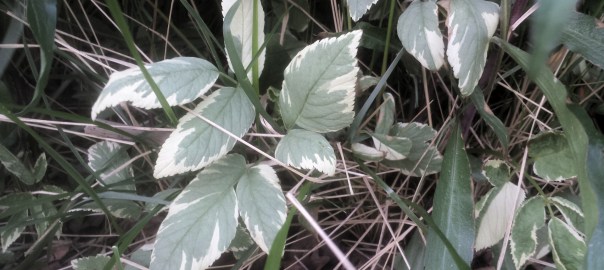
And on my walk home through Jeruzalem, a variegated ground elder (zevenblad)! Very pretty and very invasive. This fills a few of the gardens along one street.


Thanks for the challenger photos which have arrived this evening. I’ll add more tomorrow.

Day 10 – UH foraging challenge

Today,  lots of beautiful photos and experiences from the 30 day challengers:

Elodie has been experimenting with Japanese knotweed and realises how stringy those stems can be. Best to push them through a metal sieve if this happens and make the best of it by using some sour pulp. Next time is best to use only the tender shoot tips for cooking.

Photo credit: Elodie den Otter.

Carlijn has been very busy also. Here is Greater celandine (Stinkende gouw)

Photo credit: Carlijn Potsma

Veronica

Photo credit: Carlijn Potsma

Pensylvania pellitory

Photo credit: Carlijn Potsma

From me,  Hawthorn. Happy Beltane everyone!

20170423_120309

Peter has found some amazing plants along the Belfast peace line:

Here is Herb Robert in bloom.

Photo credit: Peter Warnock

Keep up the great plant hunting everyone.  We are 1/3 of the way through the challenge!

Day 9 – UH foraging challenge

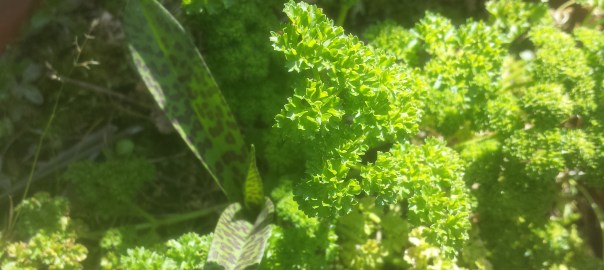
My latest find is a succulent crop of  English Chamomile leaves and parsley.

Parsley, Chamomile and mystery speckled plant.
Parsley and mystery speckled plant.

Growing amongst it is a speckled plant which I don’t know. Any idea what it is? The leaves are rubbery and almost orchid like.  A few of these have popped up in my rooftop planters amongst the perennial herbs. I am looking forward to seeing the flowers and identifying the plant.

Here is a very familiar plant – Holly (Ilex aquifolium) currently in flower.  The whole plant is well known for being poisonous,  especially to children and yet in small quantities it has been long used as a tea and effervescent a coffee substitute. I’ve found several recipes over the years for tea and infused wine from Holly leaves but always wonder if the plant has been muddled with Barberis aquifolium for those recipes.

Photo credit - Peter Warnock.
Photo credit – Peter Warnock.

This is certainly not a plant to be considered for regular consumption but those flowers are stunning and I’m more tempted to add one or two of those to a recipe,  than the leaves. If you have experience of using Holly, I’d love to hear about it. In the meantime,  let’s leave it for the bees.


Day 8 – UH foraging challenge

Today, more beautiful photos from the challengers. We now are a group of 12, if you would like to join please do!

Photo credit - anya Godden. Cardamine pratensis.
Photo credit – Tanya Godden. Cardamine pratensis.

From Tanya in Devon, UK, delicate Lady’s smock (Cardamine pratensis). Yes, it is edible but no we don’t harvest it because it is a wild flower and what a pretty one. It is a close relative of Hairy bitter cress (Cardamine hirsuta) and it shares the same peppery flavour. I planted this next to my little garden pond last year – that’s about the only way to be able to harvest it – grow your own.

Photo credit - Hannah McDonald. Bluebell and dandelion
Photo credit – Hannah McDonald. Bluebell and dandelion

From Hannah in Amsterdam, another lovely sketch of poisonous bluebells and edible dandelion.

Photo credit - Peter Warnock. Choysia.
Photo credit – Peter Warnock. Choysia.

From Peter in Belfast, beautiful Choysia flowers. Stunning blooms which are not edible. So another plant to raise the spirits as we see them rather than thinking of ways to eat them.

Photo credit - Elodie den Otter. Japanese knotweed.
Photo credit – Elodie den Otter. Japanese knotweed.

Elodie in Badhoevendorp, has been cooking up foraged Japanese knotweed at home.

So what have you found this weekend?


Herbology Club for Children

Lynn’s Herbology Club is for children aged 4 – 6 years.
Maximum 6 children in the group.

Snail climbing dry stem Frankendael Park

Each session is practical and fun. They build self-confidence and provide a wealth of sensory experiences in a green, social setting. Herbology Club allows children to play in a thoughtful and creative way with nature. No experience is needed, just a willingness to be outdoors in a beautiful green space. Parents are welcome to stay for all or part of the sessions. They are encouraged to share some food and learn from their children’s green experiences. Lynn is English. Sessions are in English and/or Dutch (depending upon the children).

June-2012-021

Session Format
We start each session with a simple yoga or mindfulness activity. Then we explore what has changed in the four herb gardens and work together on practical tasks and nature games. Often we make simple food and share this at the end of the session. All activities reflect the seasons and include:

  • Creating barefoot paths
  • Wildlife shelters
  • Kokedame – hanging herbs
  • Willow weaving
  • Growing and using herbs
  • Fairy gardens
  • Making simple, safe wild food

20140524_151919

Lynn Shore (Herbology Club Leader)
Is an experienced school teacher (science and special needs – UK and British School of Amsterdam), horticultural therapist and home tutor. Children of all backgrounds and abilities are welcome to join this club. If your child has particular needs then you should contact Lynn before enrolling, to check that enough support can be offered during the sessions. Lynn has a current VOG (police check for working with children). She is the founder of River of Herbs, and has lived in Amsterdam for 13 years.

Lynnsittingwildlowers1-200x200

Location
River of Herbs Orchards (behind Huize Frankendael, Middenweg 72)
Park Frankendael,
Oost Watergraafsmeer.

Each session is outdoors (with WC and shelter available).

2015-05-12 20.15.59

Dates and Cost
A series of Wednesdays, 13.00 – 14.00
Starting late June / early July 2017 

Exact dates to be set ASAP

Drop-in session: €15 per session (if space available)

Booking full series will create a discount.

Herbology Club Amsterdam

Contact
To book a place or find out more information, please email or call Lynn (06 275 969 30).

wpid-2013-06-17-15.14.26-1.jpg

Day 7 – UH foraging challenge

20170424_172328

Pollinators certainly benefit from pavement gardens such as this one which is full with yellow broom and purple wallflower blossom. As mentioned yesterday,  clean wallflowers are edible and broom flowers are too. I like to infuse them in honey. Here’s a useful summary of the plants uses and note of its toxicity.

Here are a couple of gorgeous photos from our friend Peter in Belfast. The more I see of that city,  the more I want to visit!

Firstly,  Fumitory, Earth smoke. This plant has many historical uses. It can cause gastric distress in some people and is generally associated as a laxative,  cleanser,  aid in healing psoriasis, eczema and dermatitis. To me,  it’s all about cleansing and preparing the way for fresh things to come. It makes a nice tincture and a couple of those tiny flowers sprinkled on food are very pleasant. But only when I find a hope swathe of the plant. Fumitory is a pretty plant friend from the poppy family as you’ll notice by examining the leaves. Quite a special appearance and texture.

Photo credit: Peter Warnock

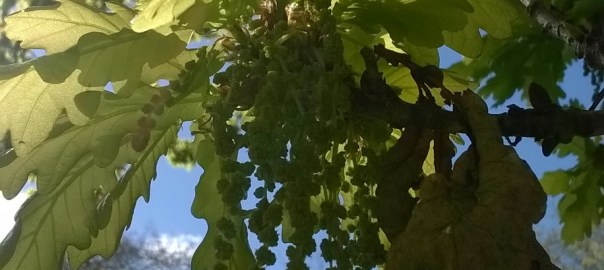
Second, young oak leaves and flower clusters. So rarely noticed or foraged but far tastier than mature acorns! Peter makes Oak flower essence – a great use for the plant.  My partner visited central Spain recently and brought me back a packet of rather delicious acorn candies. A thoughtful gift! Something to recreate in Belfast perhaps Peter?

Photo credit: Peter Warnock


Day 6 – UH Foraging Challenge

Wallflower (Erysimum)
Wallflower (Erysimum sp.)

This was the closest I could get to orange flowers today as I wandered the Amsterdam King’s Day street market. Perennial wallflowers look bright and cheerful and are edible (depending upon their location of course). They belong to the cabbage family (Brassicacea).

So, what have the challengers been finding? Here’s another lovely plant record from Hannah McDonald showing hollyhock, rosemary and plantain.

Photo credit - Hannah McDonald
Photo credit – Hannah McDonald

And from Carol Poye, gorgeous dandelions

Photo credit - Carol Poye
Photo credit – Carol Poye

and white deadnettles.

Photo credit - Carol Poye
Photo credit – Carol Poye

More tomorrow…

Day 5 – UH foraging challenge

20170426_104418

Day 5. Had a lovely morning in Park Frankendael, weeding sycamore seedlings and cow parsley from the orchards. Found the hostas looking beautiful and gathered cleavers,  wild garlic,  ground ivy and lemonbalm with one of my past apprentices.

Hosta

Then it hailed and was cold so we drank hot chocolate.

Tomorrow is King’s Day so I really should hunt for some orange flowers.


At the moment, my phone is over loaded with photos from challengers and won’t do what I want. I’ll add some to this post later…

Day 4 – UH foraging challenge

Here are some lovely images from my foraging challengers. I’m so impressed by their efforts!

Image and photo credit: Hannah McDonald

Hannah (who is working on illustrations for my books!) has been sketching her finds whilst wandering Amsterdam.

Peter is currently trying to ID this mustard type brassica.

Photo credit: Peter Warnock

And Elodie has been considering the edibility rating of thistle…

Photo credit: Elodie den Otter

Dana has found a herb she has known about since childhood (not for eating) – greater celandine / stinkende gouw – with the yellow flowers. It is a traditional topical remedy for several skin complaints.

Photo credit: Dana Marin

Is great to see people branching out from the usual foraging favourites!

I was at work today so took a lunchtime walk past lots of green spaces. Here’s some purple deadnettle growing opposite the Amsterdam Hilton.

Purple deadnettle
Purple deadnettle

More tomorrow…