Tag Archives: Crataegus

Hawthorn oxymel

Perhaps you would like to try this recipe. It’s really simple and needs only three ingredients: honey, apple cider vinegar and hawthorn berries (haws).

Gather a handful of ripe haws (be sure you gather the correct herb), check them for bugs and damage before washing then clean. Dry off on a cloth. Select the best haws, when surface dry, and add to a small, clean and dry glass jar. Now smother them in honey. Poke gently with a chopstick to help the honey spread between the haws. Add more honey, ensuring the jar is two-thirds full with berries and honey. Now fill the rest of the space in the jar with vinegar. Poke around some more, with the chopstick, to help the honey and vinegar to mix. Seal the jar, label, and store in a cool dark place for several weeks. Then strain and bottle the resulting Hawthorn oxymel.

This oxymel can be diluted with water to make a refreshing drink, or taken by the spoonful to help soothe sore throats.
365 Frankendael day 29

Hop (Humulus lupulus – what a latin name!) is entwined about a meter up last year’s dead stems today and looks far healthier and more vigorous than any cultivated Hop plant I have seen. I am really looking forward to seeing whether or not its flowers are as impressive.

Mugwort is growing beautifully on wasteland near a Frankendael bus stop. It is helpfully showing the silver underside of a few leaves in the breeze.

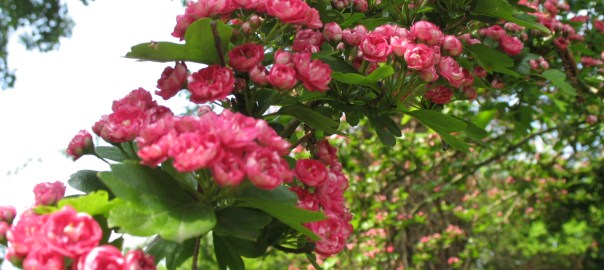
This member of the Hawthorn species reminds us clearly that Hawthorns are members of the Rose family.

Valerian officinale is almost ready to flower in wetter areas of the park.


And Agrimony plants are making themselves more obvious is some drier sunny areas.

Also today, towering Pink Purslane (Montia sibirica) is in flower. It looks similar in structure to Winter purslane (Montia perfoliata, which is low growing and currently growing like crazy along the Centuurbaan fence of Sarphatipark. Often called Miner’s Lettuce it tastes great!) However, Pink Purslane is said to have a nasty acrid aftertaste and should be avoided by foragers. It’s such a beautiful flower at this time of year that it’s good to know it tastes bad!