A beautiful afternoon walk showed me the following herbs in particular…
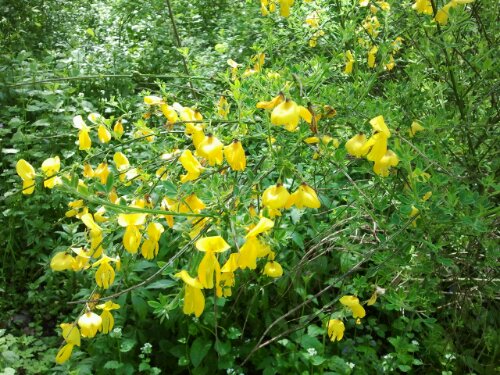
Firstly A beautiful Broom shrub in full bloom. The flowers are edible.
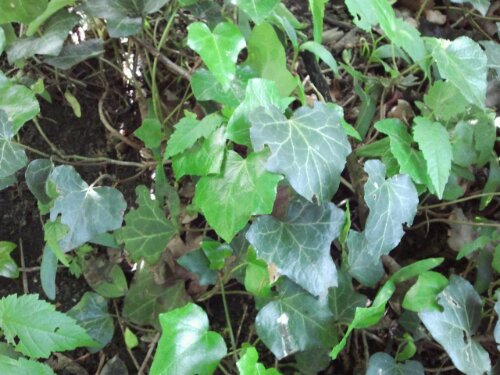
Ivy, really looking more verdant and fresh that any other time of year.

The tall plant with orange yellow flowers against the bridge is a type of Euphorbia. All members of the family should be avoided as the white latex like sap is poisonous and contact with it readily causes quite severe photosensitive irritation. It is a plant well known to many gardeners for this reason and should be avoided by foragers.

The photo above shows a typical scene at the edge of Frankendael’s woodland. Edges are renowned for their productivity because both shelter, support and light are available to plants. Here we can see Yellow dead nettle, ferns, garlic mustard, Purple/red dead nettle, Greater celandine and other plants all nestled against one another.

Here is Wild Sorrel, a very tasty plant of which only a leaf or two are required to really add great flavour to many dishes and is well done for Sorrel Soup.

Lastly today, Ground ivy and stinging nettle, both on top form for foraging at present.
Tag Archives: Greater Celandine
365 Frankendael day 7
 Greater Celandine (Chelidonium majus, NL Stinkende gouwe) is a plant that is very obvious at the moment. It belongs to the poppy family and its leaves certainly resemble those of other members of that family. The plant is a perennial and spreads easily by seed. It is considered an invasive garden pest by many, but not herbalists.
This herb is not one for the dinner plate as it contains several alkaloids which are toxic. It can cause irritation to mucous membranes, if used innapropriately and shouldn’t be used by pregnant women or those with impaired liver function. It is generally used only externally.
Warts
The orange-yellow sap from within the stems of Greater Celandine, is a really useful wart remedy. Simply cut a stem and apply a few drops of the juice directly onto the wart. Do this a couple of times daily and soon the wart should begin to disappear. Continue use until the wart has gone completely. To maintain a supply of this valuable remedy when the plant is no longer available outside, you could make a tincture and use a few drops of that in place of fresh sap.
The plant in the photo is in a patch of waste land, right on the outside edge of Park Frankendael. There are plenty of Greater Celandine plants within the park and throughout Amsterdam at present.
 Urban Herbology