
Here is a link to my latest Substack post, mostly about yoga, partly about herbalism, and completely about Guru-dom. If you would like to read more of my ramblings about things sideways connected to my work, consider subscribing to my Substack.
Today I was kindly sent a batch of beautiful photos of herbs in the park by Joop Eisenberger. I often meet Joop in Frankendael whilst I hunt for herbs and he hunts for dragonflies, butterflies, frogs, bees, plants etc. He is well known for taking the most wonderful nature photos in this area. Joop, thank you so much for sending these to me! I am showing a few photos today and will post more over the coming days. It’s always inspiring to see the work of someone who takes such time and effort to get just the right shot.
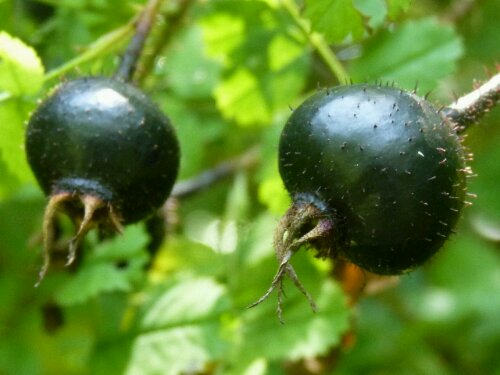
Firstly, black rosehips of Burnet Rose (Rosa pimpinellifolia). These are really quite an amazing colour, compared to most other hips. I showed the flowers of this shrub a few months ago and now the hips are maturing and standing out gloriously. All rose hips, of whichever colour, from whichever species, can be transformed into delicious and nutritious vitamin c rich conserves. I look forward to giving these a gentle squeeze, when I return from holiday, to see how ripe they are. Rose hips need to be fairly soft but not at all rotting, to be harvested. Whatever preparations are made from hips, the pips (seeds) must be carefully removed by sieving, before the final storage as they are covered in tiny irritating hairs.

I thought most St John’s / Joan’s wort flowers (Hypericum perforatum) were over now but this photo taken yesterday prove otherwise. I have taken a bottle of oil, infused with this plant, on holiday with me. It is my sun lotion. Contrary to popular beleif, this sunny little wonder herb can prevent sunburn as well as soothing aches and pains and uplifting depressed minds. Avoid the dried herb for depression, it tends to make things worse. The tincture seems to do a better job. If you are interested in this herb, take a look at the writings and recordings about it by Susun Weed. The herb can interect with the contraceptive pill, so beware.
Speaking of contraceptives, I’ve a renewed interest in Wild Carrot (Daucus carota) flowers and seeds at present because where I’m holidaying is absolutley covered in the plant. There is some extrememly interesting reseach into its effectiveness as a birthcontrol herb, by Robin Rose Bennett. Read her research findings and updates if it is of interest to you. In short, it appears to work like a herbal morning after pill. If taken regularly it stops working. So if you facy trying it, read up on it thoroughly, get some advice and make sure you harvest the right flowers or seeds!
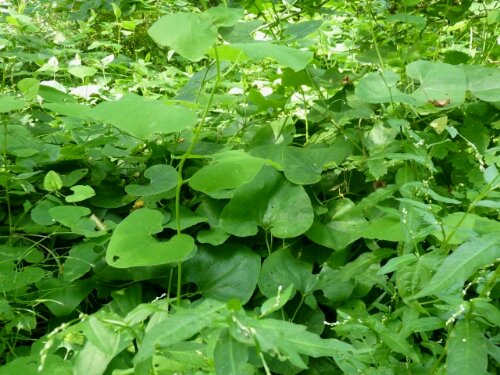
Lasty today, here is a poisonous herb, also associated with birth, or otherwise. It is called Pijpbloem in Dutch, Birthwort in English and Aristotolochia clematis in Latin. The Doctrine of Signatures was responsible for wrongly linking many herbs with dieases of body parts which they resemble. This is one such herb. It was thought to resemble the birthcanal or uterus and was used by many for quite sometime to help childbirth proceede and for other gynacological issues. It does cause the uterus to contract, eventually, but it all also causes kidney damage and failure and thus sometimes death. It’s quite a beautiful plant, creeping around the woodland area with unusual leaves, tendrills and a vibrancy that really makes it stand out from the other plants. It is very poisonous and shouldnt be ingested.

 Chickweed makes a delicious and nutritious sandwich filling, it’s also plentiful, easily forage-able and available almost year round (it gets scorched and disappears at midsummer and has a slightly different form in mid winter but still tastes great).
It’s a popular medicinal herb, used as a tonic and for a multitude of ailments including skin complaints. It tastes fresh and peppery and it’s so successful that you are very likely to notice it as a”weed” in any plant pots or borders you may have. Birds love it, hence the name.
I took the photo this afternoon in my neighbourhood, the chickweed is growing in a city tree pit (aka dog latrine) so I won’t be harvesting this patch. But when I find chickweed on my balcony or in a nice clean area, I don’t hesitate to pick some for food.
If your not familiar with it use a good field guide for wild flowers to help with correct identification. Herbalist Susun Weed has lots of detailed information about this plentiful nourishing herb on her website.
As low impact lunch items go, I don’t think you can get much better than a weed which most people dig up and send for incineration here in town. If you haven’t already, please give it a try and let me know what you think.
Update:
Today I shared an exquisite meal at gastronomic restaurant Bord’deau in Amsterdam with my lovely and was delighted to find chickweed in one of the amuses! In the photo you will see a sprig of fresh chickweed nestling against beetroot and mustard ice cream. A perfect combination and what a great recipe that would be for the blog. The meal also included a sprig of what seemed to be rock samphire and many other seasonal herbs. Umm, no dinner required for me this evening.

 How To Make Cold Infused Herbal Oils
This is how I make cold infused herbal oils. Infused oils are very useful; they are sometimes used directly (as with Calendula oil) or may be used to make ointments and salves. Generally I infuse a single herb, blending the finished product with other infused oils if required, but you can try infusing two or three herbs together. I wouldn’t advise this for beginners as you should first understand how the herbs will interact. This method is straightforward, I have tried other oils and techniques but this method gives reliable results. Quantities are not specified; simply harvest as much fresh herb as you wish and choose a jar (or jars) which you can comfortably pack them into. Generally I make a litle more but I often use tiny pesto jars to make small quantities of infused oil, they hold around 100ml. That’s enough to make several ointments or will last a while for massage.
This method is based upon the one advised by Susun Weed in several of her books.


Using olive oil as a base for infused oils helps prevent them becoming rancid, at cool room temperature, for several years. Where they are likely to become warm, try adding the contents of one or two vitamin E capsules to the final decanted oil. Tincture of Myrrh or Benzoin can be added to ointments or salves (made from infused oils). Use about ten drops of either tincture per ounce of oil.
 Urban Herbology