All posts by Lynn

Unknown's avatar

About Lynn

Learning

365 Frankendael day 115

I’ve been to Proef in Westerpark today to have a look at their organic garden, which City Plot tend. It is another inspiring example of how to grow lots of food and herbs without a garden. The site is next to the old gas factory storage tanks and hence the soil is deemed unsuitable for directly growing crops. City Plot have overcome the problem by using raised beds. They look great, house hundreds of very healthy plants and are quite a haven for wildlife. The Growing and Using Exotic Herbs Workshop on Sunday October 14th will take place there. Myself and Suzanne from City Plot will run it.

On my way back home I found this exciting sight… A fully ripe Elderberry spray!

So the time has arrived. Get your paper bags and recipes ready, these berries are packed with nutrients and can be cooked and preserved to deliver them when needed, through the winter.

Inspiring Precarious Gardens

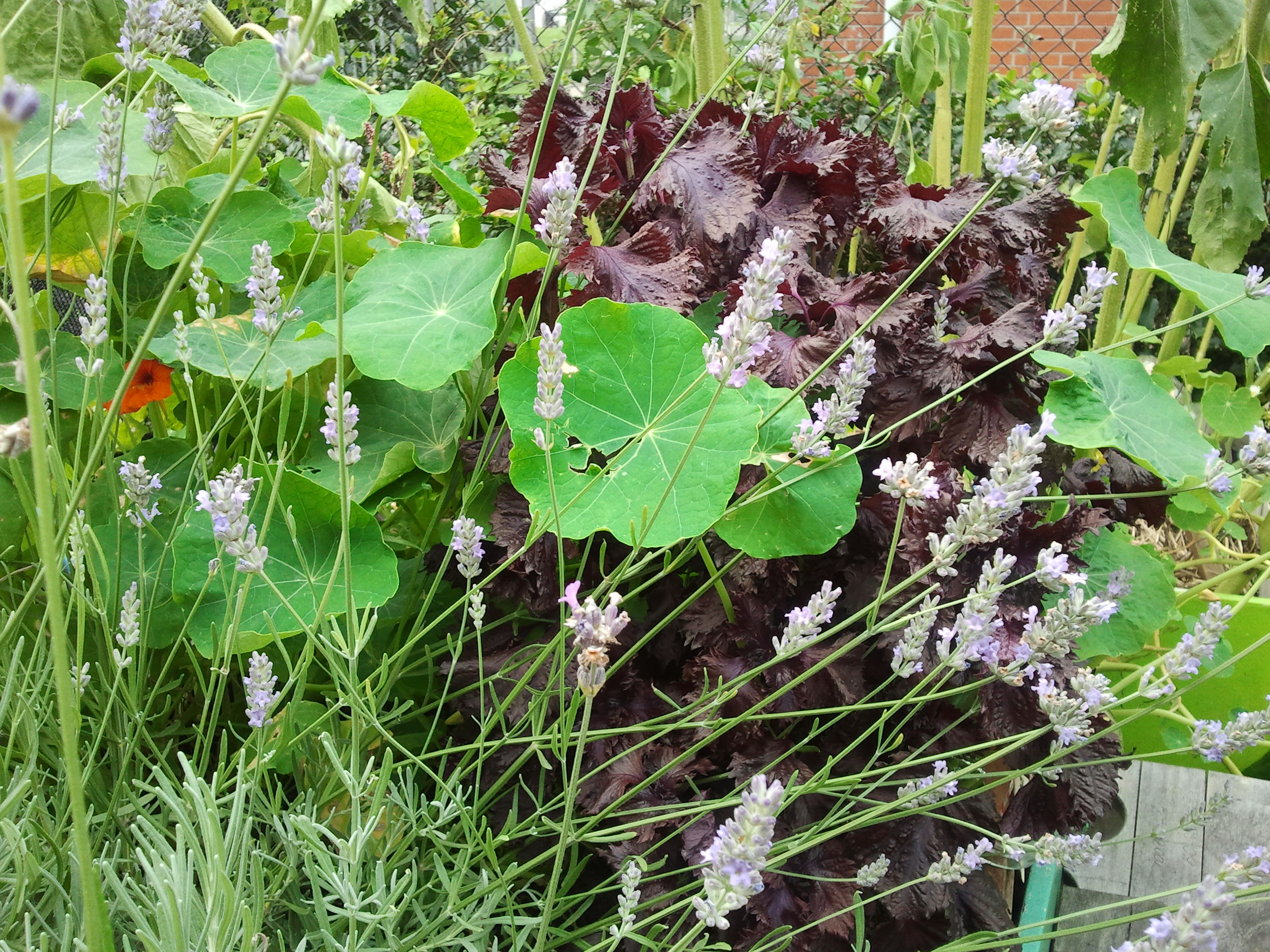
Just look at this healthy mixed crop of herbs and vegetables! They look good, don’t they? Now look closer at the backdrop. I had a wonderful lunch at Youko’s 3rd floor Amsterdam apartment recently, this is one of her window boxes, planted with a huge variety of edibles and medicinals. I was so impressed by the selection she has managed to nurture up there and the plants that I was fortunate enough to taste, were first class.


Here’s her other window box. An equally fine assortment! Youko is currently growing courguettes, marjoram, spring onions, cabbage, nasturtiums, peas, a sugar plant, shiso, vervaine, and many more.

An interesting point we discussed, over the window boxes, was that many of her neighbours have followed suit and now tend edibles in similar locations.

Obviously not everything does well in this exposed situation, where drying winds are the main challenge. Youko and I seem to share the same philosophy that if a plant thrives it can stay, if it doesn’t it can be replaced next year. It’s not a bad way of thinking when gardening anywhere.

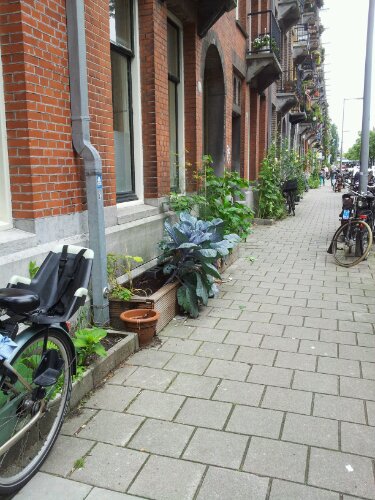
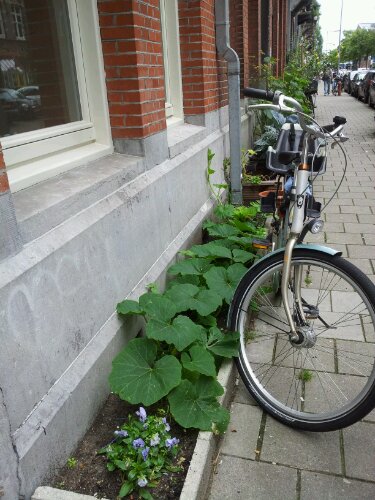
This morning Youko sent me the following photos of pavement gardens, planted and tended by a 5 year old. Now if that 5 year old can do it so can many more of us!

The day before visiting Youko, I’d posted about Elodie’s third floor balcony and other ways to garden in small spaces. I’d love to see more photos of your edibles growing in unexpected, mundane or precarious urban spaces. If you have any, please feel free to email them to me or to post them on the Urban Herbology Facebook group. Maybe they will inspire someone else to take up the rewarding and addictive habit of urban edible and medicinal gardening. My email address is Lynn.Shore@gmail.com

365 Frankendael day 114

Beautiful weather today and a lovely stroll through the park.

Day Lilies (Hemerocallis fulva), beautiful, edible flowers, not to be confused with standard Lilies which are highly toxic. Please scroll through the photos on day 75 to see what they look like.

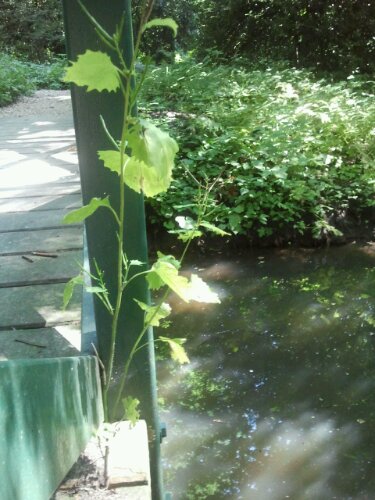
Garlic mustard (Aliaria petiolata) growing out of some dirt on a woodland bridge.

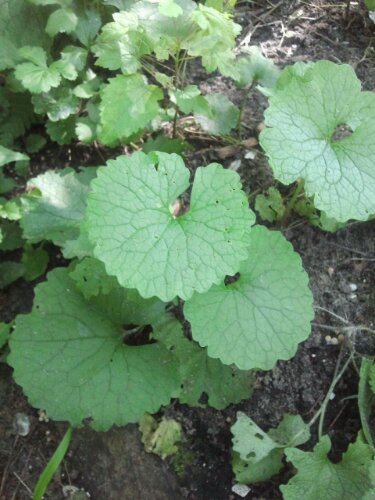
Garlic mustard seedlings, coming up for a second edible crop of the year. This is a biennial plant so although there is not enough time for these seedlings to mature and set seed before the frosts, they should survive and flower next year. Probably best to forage only from the second year plants (which are now almost over, foraging wise).

Motherwort (Leonurus cardiaca) is setting seed and what spiky seed heads they are proving to be! If you need to harvest some, it’s probably best to have gloves on and shake the seeds straight into a paper bag. I gave up trying today and threw the few I collected into nearby soil.

It’s still going strong in some areas: Ground Elder (Aegopodium podograria).

First year Burdock (Artica lappa). This is what is needed if harvesting the medicinal and nutritious Burdock roots, is your mission.

Blackberries.

Fat hen growing In the shelter of a Beech hedge.

365 Frankendael day 113


I’ve been to De Hortus Botanicus today and busy planting exotic things for the workshop with Suzanne from City Plot in the autumn, so not much time to visit the park. Here are just a couple of photos of a beautiful Hazel tree which stands on the outside. It’s quite easy to confuse Hazel with Beech. Both have similar leaf shapes and both have edible nuts but Hazelnuts are my favourite. Roasted they taste almost chocolaty and go really well with it, hence my fondness. I need to make some notes of where I find Hazel this year. Hazel is a very useful tree, it can be coppiced to produce dozens of fine branded, in the same manger as Willow. it’s great to see that the council road cleaners, here in Amsterdam, still use broomsticks make of Hazel. It’s perfect for the job, grows locally and is completely sustainable. I hope the council brooms don’t come from abroad, if they are, at least they are not made of plastic.

Apparently there’s a nice copse of Hazel somewhere at the bottom of Pythagorasstraat, I haven’t found it yet. It’s well worth foraging nuts when you find them. They contain such a lot of nutrition and are apparently the least polluted part of a plant, that may be harvested. That is a great thing to remember when foraging in mucky city autumn weather.

365 Frankendael day 112

These plants are growing alongside Frankendael by the windy dirt path that follows the Middenweg. At first glacé everything simply looks green there but if you take a closer look there are several great edibles and a few plants that if eaten, would upset your body quite substantially.

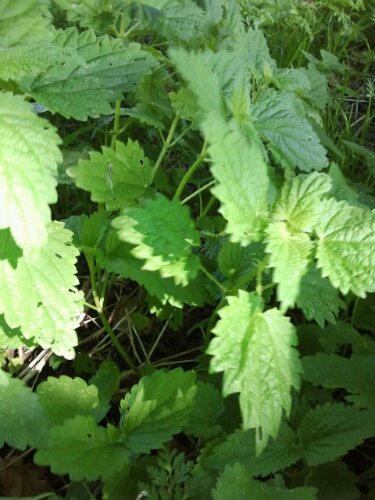
Here is nutritious Stinging Nettle (Urtica dioica), regrowing after a recent mowing.

Next is White Deadnettle (Lamium alba). Not a stinger but very useful and also nutritious.

Here’s a poisonous berry, I know it as Snowberry (Symphoricarpus alba).

Here are some of those half eaten unripe Elderberry heads, that I mentioned last week. We can only eat them safely when they are fully ripe, for birds it’s obviously another story.

Lastly today some ripening Hawthorn berries (Crataegus monogyna). If you are not sure then how’s a good time to get to know how to identify them, in readiness for the autumn harvest.

365 Frankendael day 111

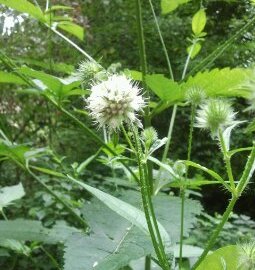
I’ve been noticing this Scabious looking plant around the park for a couple of weeks now. It is known as Small Teasel (Dipsacus pilosus) and grows well in damp hedgerows. I don’t think it is known as a useful herb or substitute for Common Teasel (Dipsacus fullonum).

image

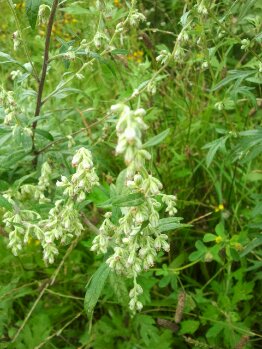
Here is a close up if the tiny flowers produced by Mugwort (Artemisia vulgaris). I cut a little today to make a for soak.

image

Next is Wild Basil (Clinopodium vulgare), setting seed but still easy to identify and eat, should you want to.

image

Lastly today, Mullein (Verbascum sp.). More for earache and lung complaints than the plate. A stately and useful herb.

image

Herbs & Honey Workshop

I’m running one more workshop this summer. It’s about ways to use honey with herbs, in simple, unusual and delicious ways.

There are two spaces left and as ever, the maximum number of participants is small.

Cost €15, upon booking (but fully refundable upto 24 hours before)
Tuesday 14th August,
Oost Watergraafsmeer
14:00-16:00

If you would like to book a place, please do so through the meetup group.

Labour of Love – VU Hortus Botanicus

Whilst in the American Book Center today, I was told about an interesting event which they will host very soon and may interest you too. There will be plants, cello music, raw food, the book author, photographer and no doubt lots of other people who love plants and beautiful urban gardens.

Labour of Love: Portrait of A Botanical Garden
Book signing

Saturday 25th August
15:00 and 17:00
ABC Spui
Amsterdam

The VU Hortus Botanicus is a very interesting place which is open to the public, Mondays to Fridays 08:00 – 16:30. Entrance is free. It is on the way to Amstelveen from Amsterdam Zuid, very easy to get to and well worth a visit.

365 Frankendael day 110

Here are a few street herbs, from close to the park…

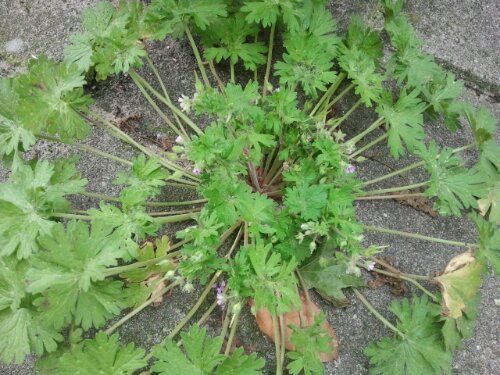
This one is an update on that pretty rosette forming Geranium, growing in a pavement. It is now flowering and has retained the rosette habit.

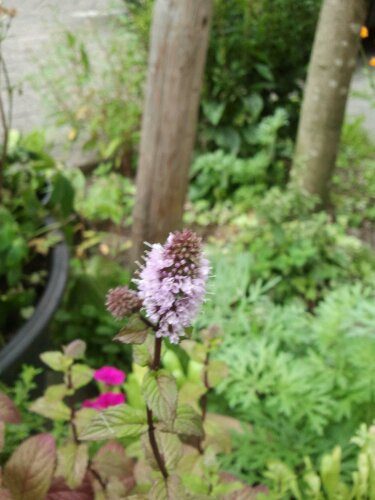
Second is a Chocolate Mint growing in my geveltuin tuin. I’m showing it today because so many mints are presently in flowmaking ambling even easier identification. The Mint family (Mentha spp.) is quite enormous, they are Labiates, have square stems and smell strongly of mint. I chose Chocolate mint for my home some years ago as I like to add the leaves to chocolate puddings, intact I just love chocolate, so this variety was a logical choice. Mints are great pot plants, they spread easily by setting out runners. This is not such a positive feature when grown in many gardens. It can take over the whole garden if allowed to grow unchecked. When foraging mint, which is a water loving plant, always harvest clean parts which have not been submerged in water. The water and thus submerged parts of water plants, may harbor really grizzly parasites which will have a fun time with your internal organs before you realize what has happened. This is not just a tropical occurance, it is potentially true of all water. Mint and other water plants which are harvested well above the water level should then be treated with the same cautious foraging rules as other plants.

Here is an Ivy plant (Hedera helix) which catches my eye everytime I walk past it. It is unusual in its leaf shape and sometimes I see small leaves growing directly out the mature leaves. It grows very close to a front door so I suspect it is an escaped specially bred garden plant. You may remember that skin toning and stimulating cellulite treatments can easily be made from this herb. Not one to eat though.

365 Frankendael day 109

Today was the Comfrey workshop. We harvested from a lovely patch of Russian Comfrey (Symphytum x uplandicum) in a quiet corner of  Park Frankendael. After torrential rain before the workshop, the sun shone and the plants looked even more verdant than usual. After meeting the plants, off home to drink some 8 hour Comfrey infusion that I set up last night, make some Comfrey ointment (from infused oil), Comfrey Witchhazel gel and to prepare for making a Comfrey leaf tincture. The Tincture and gel instructions are on the workshop handout and will also be in my forthcoming Urban Herbology Essentials book.

So much more can be done with this wonderful herb. Another time! In cities I always harvest leaves alone, so no digging up Comfrey roots today, but plenty of healing unctuous goodness in the leaves. Also a reminder that Russian Comfrey doesn’t contain the much feared liver toxin in it’s leaves.

Thanks everyone for coming along, I really enjoyed it and hope you have further fun and healing using your preparations at home and in setting up your tincture jars. Any problems, just let me know. The next workshop is fully booked. I’m thinking of running a winter warmer lotions and potions 3 hour workshop later this year. If that sounds interesting then let me know.