All posts by Lynn

Unknown's avatar

About Lynn

Learning

365 Frankendael day 61


Today is the Summer Solstice, Midsummer’s Day and I am having a lovely time! Myself, Livvy, Isobel, Esther, Isobel and the two babies, harvested leaves and flowers from some of the Lime trees (Tilia sp.) Which form the main avenue in Frankendael Park. It was so pleasant to share the Midsummer harvest with other like minded people. We cleaned the honeydew from the leaves, in a bowl of fresh water, made tea in flasks of boiled water and sandwiches from the harvest and some Lime honey.
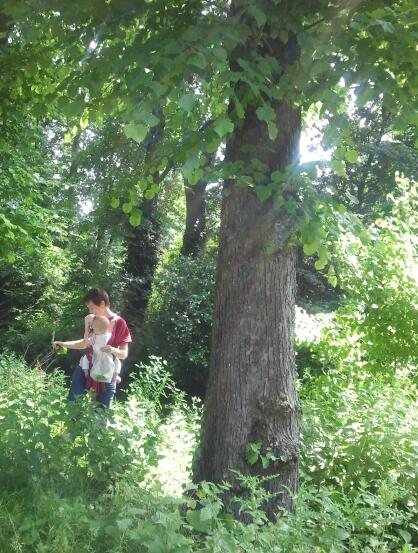
I’ll be doing this again on Sunday in a different location, but I think there is nothing quite like the burgeoning green energy of Midsummer’s Day. The plants seem to be about to pop with the amount of goodness within them and some of them have certainly sprung suddenly into flower today.

I found lots of Motherwort (Leonurus cardiaca) just in flower, today and harvested some for a tincture. Likewise, Mugwort (Artemisia vulgaris) is in perfect form for tincturing. These and Lime are the three summer herbs which I love the most so I spent time with them today.

I was also pleased to see that some of the Mullein plants in the park have quietly started to flower and patches of Feverfew close to Frankendael park are also standing out. The Plantain (Plantago major) leaves are currently enormous and I will be tincturing some of them and their flowers in the days to come along with Lime tree leaves and flowers.

If you tend to see Midsummer as the end of the lightness and you morn its passing, perhaps try and see it in a different way. More as a time to thank the Sun and light for all the transformation it has provided and welcome in the gradually approaching darkness. The darkness can teach us much about ourselves, it gives a chance to reflect inwardly on what has happened in the preceding time and encourages us to appreciate the light, when it returns.

365 Frankendael day 60


Very early this morning I was out tasting dew that had collected in this Teasel’s “water cup”, the part of the leaf that joins the stem.  There had been a heavy morning mist over most of Amsterdam but by the time I got to the park it had been burned through by the midsummer Sun.  This Teasel (Dipsacus sp.) had quite a lot of water stored in it’s “cups” or “traps” this morning.  There are different ideas about why the plants are adapted in this way. Some think that the cup shaped leaf joints serve the purpose of trapping insects, perhaps to prevent them climbing the plant, perhaps which the Teasel then somehow digests and absorbs.  The trap/cup which I chose was high up, fresh and insect free. The water within it tasted delicious and set me up for the rest of my cycle.  Teasel is increasingly valued as a useful herb to help counter the effects of Lyme’s disease.


Next is the beautiful, if unextravegant, flower head of  a small Mugwort plant (Artemisia vulgaris).  This plant really is my Midsummer favourite.  So many uses, so common, so inconspicuous to most, so tasty and so much interesting associated folklore.  This plant grows as a welcome weed, beside a park planted tree.  Just notice the moon-like silvery grey undersides of the leaves.  A beautiful contrast to the dark green upper sides.


Lastly today is Brassica oleracea, Wild Cabbage.  Yes, it tastes of cabbage!  No need to harvest the whole plant though, this one is good as a cut and come again plant – cutt a leaf off now and again throughout it’s season.  Very tasty and convenient!

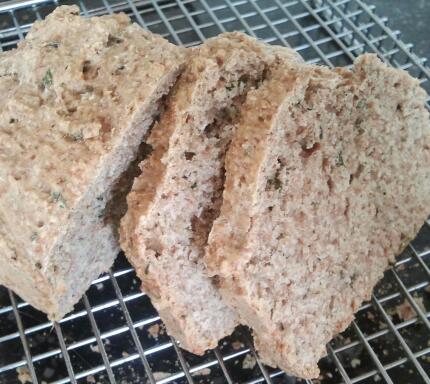
Mugwort Teabread

Here’s a basic outline of how to make the Mugwort Teabread from the late Maida Silverman’s book, “A City Herbal. Lore, Ledgend, & Uses of Common Weeds.” The book is available from the publishers; Ash Tree Publishing, Woodstock, NY. I highly recommend it to anyone interested in city foraging and herbs.

I posted Information about adding Mugwort to my usual bread recipe previously but I made this Teabread for the Mugwort Workshop today and some of the participants wanted the recipe. I have slightly changed the ingredients to match what I used today and am not reproducing the recipe exactly. To see it in full, have a look at the book from a library or perhaps purchase a copy, it is full of lovely and tasty ideas.

2 cups spelt flour
1 1/2 teaspoons baking powder
1 teaspoon salt
3/4 cup water
1 egg beaten
2 tablespoons olive oil
1 tablespoon dried or 2 tablespoons fresh chopped Mugwort leaves
1/2 cup grated firm cheese (I used goat cheese)

Preheat oven to 180 C.
Mix all the ingredients in a bowl and spread evenly in a small or medium, greased bread tin.
Bake for about 30 – 40 minutes, until an inserted sharp knife comes out clean.
Turn out onto a rack and eat warm or cold.

This recipe is extremely easy and I like to make it regularly when Mugwort is plentiful. You could easily adapt the recipe to miss out the egg and or cheese, should you want to.

365 Frankendael day 59

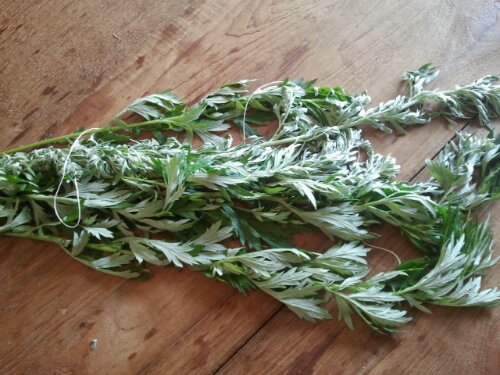
Today was the first Urban Herbology Herb-by-Herb workshop, introducing Mugwort to a small group and helping them to experiment with making tinctures, infused oils and other herbal preparations. So my photo for today is simply of the remains of our Mugwort (and Wormwood) harvest!

Mugwort (Artemisia vulgaris) which is dark green on the top leaf sides and silver grey beneath, is very closely related to Wormwood (Artemisia absinthium) (silver-grey all over). Mugwort is a very common scrubland herb and Wormwood is currently quite rare, here in the Netherlands at least. The Wormwood we harvested today comes from my front pavement garden and the Mugwort comes from behind my local bus stop, alongside Frankendael Park.

Both are edible but both who should not be consumed in quantity. At this time of year, the active chemicals within the plant are at their most potent so only small amounts are advisable for consumption but both do give a wonderful and unique savory flavour to cooking. Mugwort is considered a powerful dream herb but as the workshop discussed today, this is most likely due to the fact that it is a slight irritant. It is thought to simply keep the Mugwort “consumer” in a slightly lighter sleep state than normal and so they are more likely to remember their more vivid dreams. Whatever the reason, I really like both of these herbs and use them for various applications throughout the year. I’ll post the Mugwort Tea bread recipe, as requested, seperately in a moment.

Thank you again to the lovely people who joined me for the Mugwort workshop today!

365 Frankendael day 58

Today a few photos of beautiful flowers from useful plants and a tasty Fat Hen plant.

Firstly a front on photo of Soapwort, Bouncing Bet or Saponaria officinalis She is just coming into bloom at the moment and isn’t ready useful to many people these days but is still made into one of the most delicate cleansing natural soaps for heirloom lace and woolen articles.


Next, above, those delicate and delicious purple flowers of Geranium.

Here above is a familiar Poppy flower. The seeds of this annual plant are so precious to it that it’s not acceptable to harvest them in places such as this, where they stand out due to their scarcity. But, if you find dense swathes of them growing and can positively the plant without doubt, it may be worth considering sprinkling a few onto a home made loaf of bread.

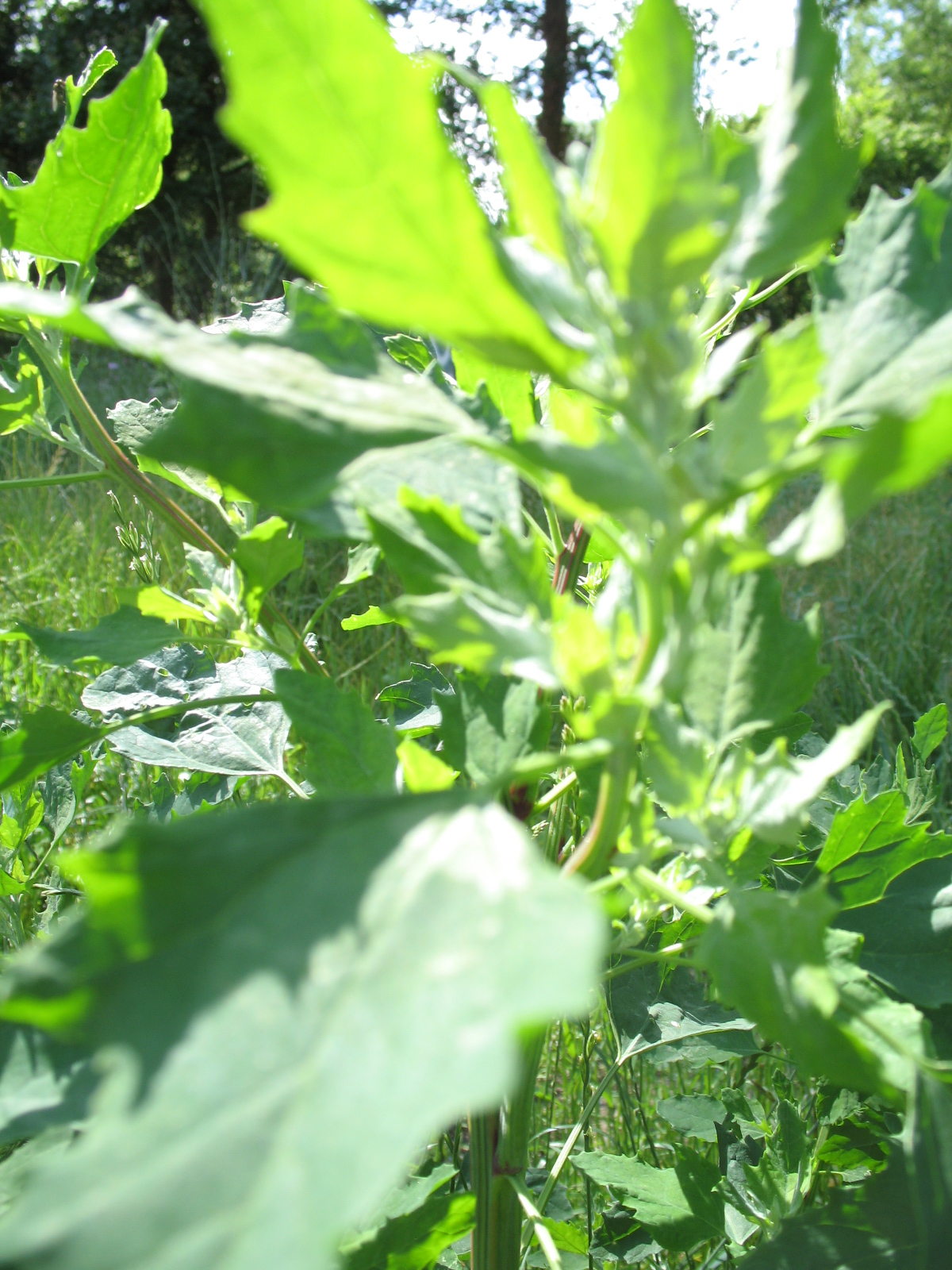
Here’s the Fat hen plant which I harvested a few leaves from today.

I also picked a 5 cm top of a Mugwort stem, ready to make some savoury bread to share at the Herb by Herb Mugwort Workshop. I’m really looking forward to working with this plant tomorrow morning. Whatever the weather, at midsummer there is also plenty that can be learned from Artemisia vulgaris, the plant that shimmers like the Moon and nourishes our bodies and spirits.

365 Frankendael day 57

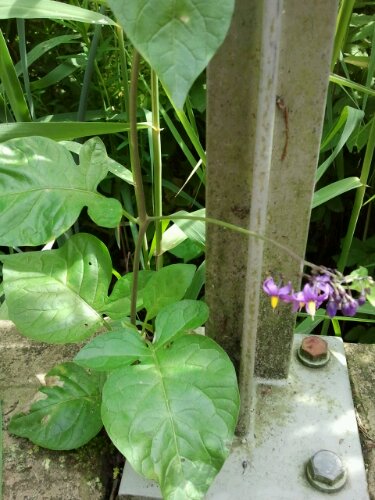
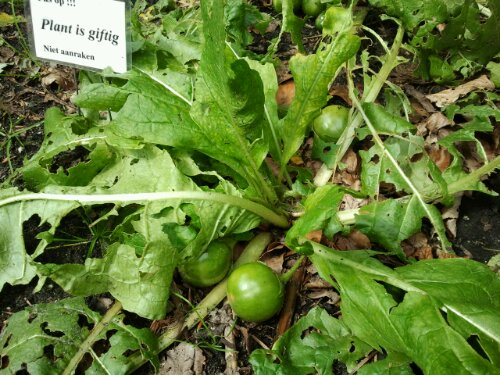
Firstly today a poisonous member of the Nightshade family, which I have seen for the first time this year, today in Park Frankendael. It is called Bittersweet (Solanum dulcamara) And if you know what potato and tomato plants look like (also in the Nightshade family) then hopefully you will easily recognize this plant when you see it. Unbeleivably I found the tomato like fruits of related and extremely poisonous Mandrake (Mandragora officinarum) on Thursday, growing on display in Beatrix Park’s beautiful herb garden. It is labelled poisonous, in Dutch, but I’m sure that young tomato loving children may not understand that sign. It isn’t labelled with the plant name, perhaps to avoid Harry Potter fans and the like, from recognising the name and sampling it. It was wonderful to see the plant in real life and up close, but very worrying none the less. I wonder if the volunteer herb gardeners wear ear protection when they dig up the Mandrake roots? If love to meet the gardener there with an interest in such plants.

Here’s Bittersweet in Frankendael…

Here’s the Beatrix Park Mandrake…

On the topic of interesting park management decisions, I returned to the patch of Pellitory, in Frankendael today. It has been strimmed down to the ground. I photographed it a couple of weeks ago and it has not yet set seed. Perhaps it was managed to prevent it spreading too much. Sure enough it does grow quite successfully in this part of the park and it certainly bounces back each year from this sort of management. It also reminds me that when I worry about harvesting from parks, at least I use what I harvest.

Here is Ground Elder, ripe for foraging today:

365 Frankendael day 56

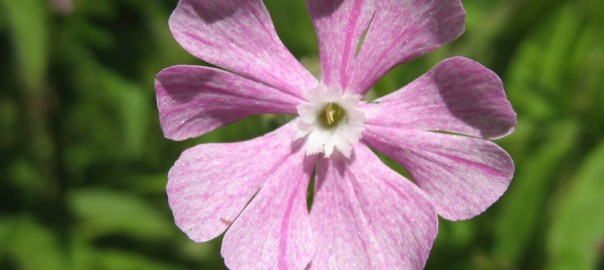
I visited the park very early this morning and was pleased to find a surprise clump of my favourite herb for grounded-ness and muscle pains – Motherwort (Leonurus cardiaca). It is shown in this photo growing in a location quite far away from the ones I already know. So, I have high hopes that there is quite a good population of this useful plant in the park and also the city.  I’d really like to know if any followers f this project know of Motherwort growing near them in other locations.  I know that Jennie Akse knows of plenty in Beatrix Park, I’m not sure in which part they are but they certainly like it there too.  Note that the pink flowers, next to the Motherwort leaves, are from another plant (see below).  Motherwort is sometimes mistaken for a member of the Geranium family due to it’s leaves, however it is easy to spot the square labiate family stems. Failing that, if you mistakenly taste even a fraction of a Motherwort leaf, the extreme bitterness will soon teach you it’s not an aromatic Geranium!  Motherwort is generally used as a tincture.

Here is a beautiful plant, from a very common and varied city tolerant herb family – called the Cranesbills or Scented Geraniums or Pelargoniums.  I think that this one is most likely Geranium pyrenaicum, Hedge Crane’s-bill and as I’ve mention plenty times before, all member of the Geraniums are edible, tasty and useful.  I read the other day of an old Rose Geranium infused alcoholic punch recipe, from Arabia.  It is in Patricia Telesco’s Kitchen Witch’s Cookbook – a nice resource book containing many traditional and interesting herbal recipes. This plant is not Rose Geranium but itis related and extremely fragrant.  I am quite tempted to have a go at it, maybe when the summer really arrives.

Another herb which is in season for harvest at present, is Lavender.  I don’t see much of it in this park but it grows prolifically in the city and can be used very easily for many applications.  Christian Huygensplein, near my home is planted out with it.  Thank you Amsterdam Oost! Unfortunately, each day I have had time to visit any Lavender with my scissors, the weather has been damp so harvesting those pretty flower stems has been out of the question.  No point in harvesting when the flowers are likely to mould, before they can dry out thoroughly.  If you are lucky enough to find a huge patch of Lavender, the flower stems can be carefully but quickly thinned out, just above the foliage, perhaps taking every 20 stems, without much visible impact on the plant.  I’m sure that my neighbours would not appreciate anyone chopping clumps of the flowers from the shopping area but I’m sure a few carefully flower stems wouldn’t be missed.

Lastly and shown above, is a striking herb which I have no experience of using at all but know it has historic uses.  It is called Yellow Loosestrife (Lysimachia vulgaris) and I know it only as a garden plant from Somerset.  Here’s a link to a page from a wonderful recent-historic book, offering a glimpse into historic uses of herbs.

365 Frankendael day 55

Today we did a Herb Sit, rather than a Herb Walk. It’s amazing what you can sometimes find when you simply sit still and take a close look at what’s around you…

Here’s a Ribwort (Plantago lanceolata), with a small Dandelion (Taraxacum officinalis agg.) plant and some Field Horsetail (Equisitum arvensis) growing just behind it.


Above is a feather leaf of Yarrow (Achillea millefolium).


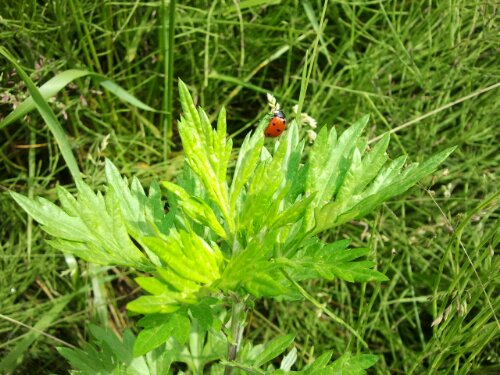
The tip of a young Mugwort (Artemisia vulgaris) plant featuring a Lady Bird.


Above, a not so clear photo of Salad Burnet (Sanguisorba minor).

We also found several types of clover and other legumes, within an arms reach of where we sat. I need my better camera to take decent photos of those. Here are the leguminous plants that we found and were able to identify today:

Red clover (Trifolium pratense)
Zigzag clover (Trifolium medium)
White (Dutch) clover (Trifolium repens)
Lesser Trefoil (Trifolium dubium)
Bird’s-foot-trefoil (Lotus corniculatus)
Please be aware that Bird’s-foot-trefoil is not a clover and is poisonous and should not be eaten. It has some historic medicinal uses. The clovers are edible. The flowers and leaves are tasty in salads and Red clover has many medicinal uses.

365 Frankendael day 54

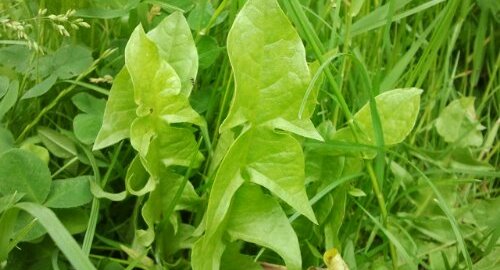
Today, I went out to the park specifically to find Dandelion flowers. I wanted to try a recipe from The Kitchen Witches Cookbook which features closed Dandelion flowers opening up into a sea of cooked egg. After meeting Joop Eisenberger, who was trying to make one of his beautiful photos of a Lepelaar (Spoonbill), I had a good look around. However, it seems I had left it too late or the day was just too over clouded to open up the flowers. I found just a few flowers but took advantage of finding the plants and harvested a handful of Dandelion leaves. All will be eaten this evening. Notice how the exaggerated leaf teeth point down towards the ground?

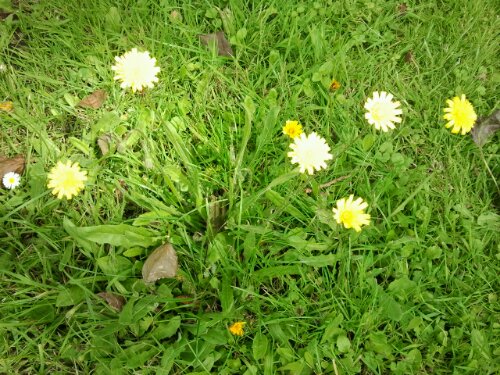
One Dandelion (Taraxacum officinalis agg.) look a like is flowering quite prolifically in the park today. It seems to be Common Cat’s-ear (Hypochoeris radicata) or Lesser Hawkbit (Leontodon taraxacoides). I’ll need my Field guide and magnifying loupe to hand, to decide which but either way they are both edible and not just a pretty distraction to the Dandelion forager! They are both hairy, whereas Dandelion is always smooth. Dandelion is always very bitter and these two are almost always not bitter. The leaves and roots of the Hawkbit and Cat’s ear are generally the interesting parts for foragers.

Here on my photo you may be able to see that the plant has leaves quite like Dandelion, has stub ended petals on dandelion like heads and it’s spend flowers tip down towards the ground like Coltsfoot.

Chives on a Green Roof

This is a photo I took yesterday through a drainage duct. It is of a wonderful Green Roof, carpeting a large parking garage near some apartment blocks. I see it every week and notice the pretty Sedums growing there but on this occasion I noticed that a large area contains flowering Chives. What a treat for the people living close by! I managed to harvest two leaf blades by reaching through the short duct and used them in dinner last night. The location will be posted on the Boskoi interactive foraging map.