A beautiful afternoon walk showed me the following herbs in particular…
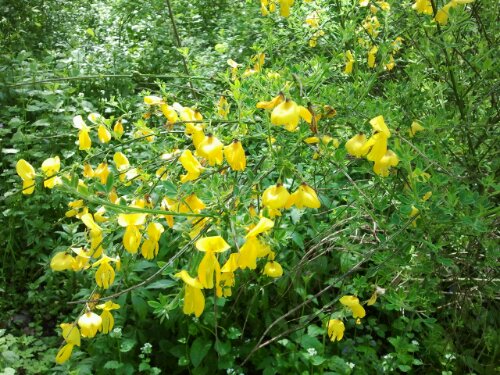
Firstly A beautiful Broom shrub in full bloom. The flowers are edible.
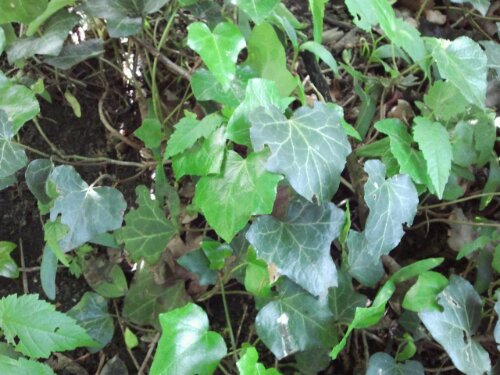
Ivy, really looking more verdant and fresh that any other time of year.

The tall plant with orange yellow flowers against the bridge is a type of Euphorbia. All members of the family should be avoided as the white latex like sap is poisonous and contact with it readily causes quite severe photosensitive irritation. It is a plant well known to many gardeners for this reason and should be avoided by foragers.

The photo above shows a typical scene at the edge of Frankendael’s woodland. Edges are renowned for their productivity because both shelter, support and light are available to plants. Here we can see Yellow dead nettle, ferns, garlic mustard, Purple/red dead nettle, Greater celandine and other plants all nestled against one another.

Here is Wild Sorrel, a very tasty plant of which only a leaf or two are required to really add great flavour to many dishes and is well done for Sorrel Soup.

Lastly today, Ground ivy and stinging nettle, both on top form for foraging at present.
All posts by Lynn

Frankendael 365 day 21

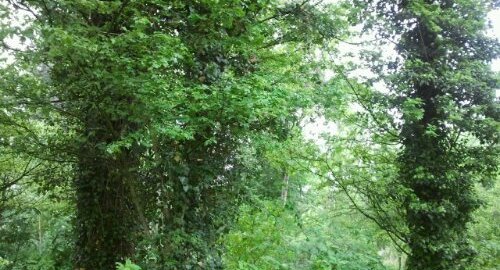
Today Ivy and Horsetail. Firstly Ivy (Hedera helix). Here it is scaling three massive trees on the edge of Park Frankendael. Yes, it is a herb but not really one for the pot. Ivy has mystic qualities and associations as well as medicinal properties and many traditional uses. I’ve also posted a lotions recipe for Ivy cellulite oil today which may be of interest. Ivy is available year round but harvesting it in spring or summer us likely to have a lesser effect on the plant.
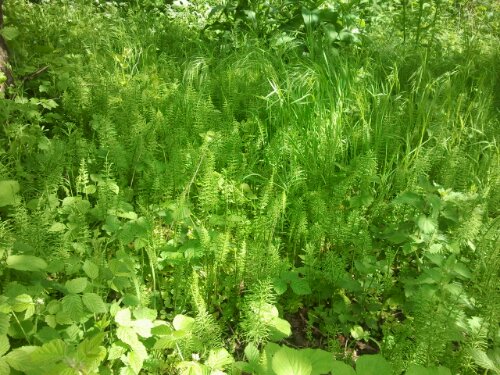
Horsetail is very vigorous at the moment and perhaps more useful than you thought. Here’s a link to a lotion recipe for Horsetail cuticle cream and an oil nail treatment.
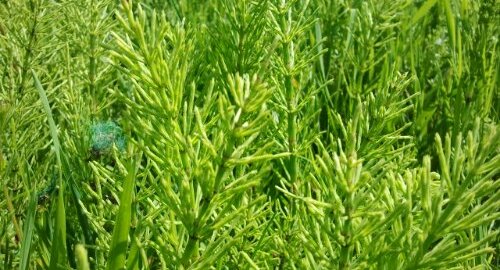
Horsetail Nail and Cuticle Cream
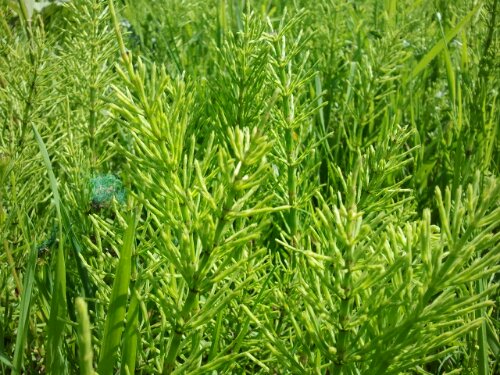
Horsetail is a traditional remedy for weak and brittle nails. The source of it’s reputation is plant silica which it contains in relatively high quantities. The following recipes are adapted from Josephine Fairley’s book..
Make a heat infused oil of Horsetail, which has been left to wilt overnight after harvesting. Then stir in enough beeswax to make a light salve. (You can test the solidity of your salve before it sets, by dabbing a drip or two of your mix onto the back of a cold spoon. Add more base oil if it’s to solid, as more beeswax if it’s too runny)
If you have it available, add 5 drops Benzoin tincture, just before the beeswax, as it may help to further nourish cuticles. You could also add a few drops of a complementary essential oil (such as Lavender) at the beeswax stage but it’s not really necessary.
Quantities:
50g Fresh Horsetail stems, preferably in spring (or 25g dried)
150 ml Olive oil
1 tablespoon grated beeswax
Follow the instructions for making heat infused oils, simmer gently for 30 minutes.
Another way to nourish nails with Horsetail, is to make a heat infused oil and use it as a warm nail soak, once a week our so. The book says you can reheat this oil as often as you like but I urge you to beware of impurities entering your infused oil by repeated use and rewarming. You could achieve a similar effect by coating your nails and cuticles with a sufficient amount of the oil then put a pair of cotton socks or gloves on your hands for 10 – 20 minutes to retain the heat and help the oil to penetrate.
Ivy (Hedera helix) Anti Cellulite Oil
This recipe for anti cellulite body oil is inspired by one in Josephine Fairley’s book, The Ultimate Natural Beauty Book. My sister gave it to me as a present several years ago and although I don’t use it very often, it always provides inspiration for natural skin care. The recipe in the book uses a few drops of essential oils of Rosemary, Fennel and Juniper.
In my adaptation, I use small amounts of the fresh plants or seeds. I also substitute olive oil, argan oil or sweet almond oil for grape seed oil as that oil quickly becomes rancid whereas my substitutes don’t. If you prefer a lighter oil then you could substitute coconut oil, mixed with a little of one of the other options.
15 large fresh Ivy leaves
Tip of a fresh Juniper sprig
Tip of a fresh Rosemary sprig
1/2 Teaspoon of fennel seeds
125ml oil (see above for options)
1. Bruise the plant material with a pestle & mortar or similar.
2. Place in a clean glass container and put over the oil.
3. Use a chopstick to push the herbs into the oil and to dislodge any trapped air bubbles.
4. Leave in a sunny spot for about 4 Weeks.
5. Strain off and save the infused you’ll into a clean glass container. Compost the spent herbs our return then to where you found them.
6. Use the oil as you would any massage oil, with upward strokes to move the circulation towards the heart. Do this preferably after
skin brushing with a dry sisal brush or similar.
365 Frankendael day 20
Day 20 of the project and after going to the park expecting to see just one or two new things I was delighted to find my first Elder blossom of the season, Wild Aspraragus shoots and several other delights. Here are a few…

Above, Japanese knotweed is still fair game for Foragers looking for something a little exotic in Amsterdam. Here’s a link to my
sweet sour JKW yoghurt recipe
 .
.
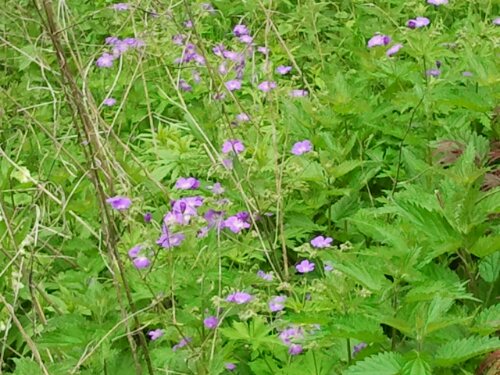
Next is A Geranium species in flower. Very tasty cooked or raw.
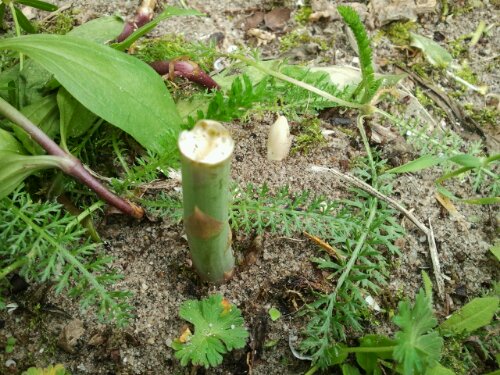
Someone got to this Asparagus before me. It makes a stunning tall feathery plant when allowed to flower. I hope that whoever harvests this one leaves some other shoots to flower and fruit unhindered.

Above is Plantago major (NL: Wegbrood, Plantain) in full effect, prior to flowering. It’s not as useful a medicinal than its slender sister Ribwort (Plantago lanceolota) but its useful and quite good eating.
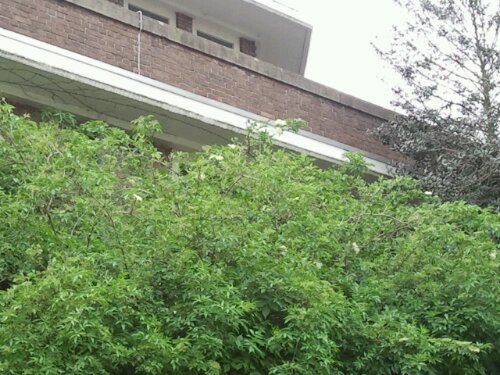
I feel like a bird spotter with this one… Above is my first sighted Elder blossom of 2012 and it gets me very excited. Elderflower fritters, Elderflower champagne, Elderflower tea and a host of other flower and Elderberry recipes are not far away! This huge Elder shrub is on the Middenweg, just up from the top entrance of Frankendael and opposite the Vomar supermarket. If only my arms were long enough! Remember to harvest with respect and leave LOTS for the birds and bees. Also be very aware of Elderflower look-a-likes. Here’s a photo of Ash or Rowan in flower, growing above an Elder shrub which is not in flower. It would be an easy mistake to harvest the flowers believing them to be Elderflower, when here is nothing to compare them with.


Guerilla Beans = Rabbit Fodder
 Anyone with ideas for edible climbers, suitable for a spot of guerilla gardening in a rabbit hot spot? I went back to Oosterpark today, to check on the runner beans which Sameena, me and two young guerillas planted out last week. Unfortunately, not a single one is evident but there are mounds of rabbit droppings everywhere and lots of fresh warren holes. It seems that I chose a rabbit haven, rather than a runner bean haven. If you have any top tips for suitable plants for this sort of place, or have tried runner beans in good locations, please let me know…
Permapots – Perennial Herbs
For several years now, I’ve been growing herbs on my roof terrace in what I call Permapots. Inspired by the first Permaculture course I attended, run by Patrick Whitefield at the Sustainability Centre, I began growing mixtures of perennial herbs in large planters.
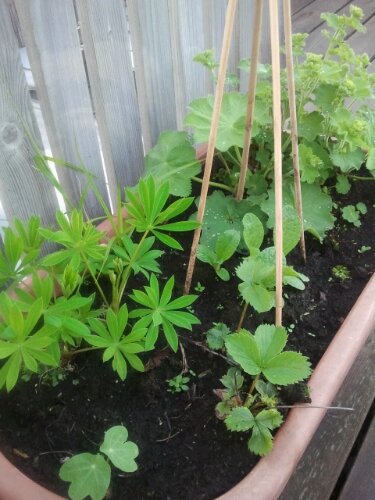
Permaculture advocates low maintenance gardening of edibles by growing a mixture of perennials and annuals in a way that reduces the need for weeding, watering and feeding. My idea of the ideal Permaculture garden is one that is self-sustaining, produces a useful yield of food throughout the year, is pleasing to the eye and is in harmony with nature.
This is a tall order for a small roof garden but I thought it was worth a try. My Permapots have been going strong for 4 years now and have provided us with a nice variety of edibles and medicinals year round. We have enjoyed roof-grown Rocket at Christmas, occasional summer Strawberries, year round Yarrow and countless herbs for teas and various lotions and potions.
From time to time, I thin out the perennials and refresh useful annuals, such as Calendula and Nasturtium. but mostly I just leave the pots to do their thing and am grateful for whatever harvest we receive. Some plants have done well, some have disappeared and others have done phenomenally well.

Tips for Permapots…
Grow perennials suited to your environment.
Sew annuals which self seed readily.
Be prepared for change and some failures.
Plan for a low to moderate but varied yield.
Grow Lupins our clover in some pots and dig them in each season.
Thin out plants from time to time and share with your friends.
My favourite Permapot plants are…
Borage (self seeds readily)
Sorrel
Lady’s mantle
Lupin
Chives
Yarrow
Strawberry
Calendula (seeds are easy to collect & sew)
Nasturtian (seeds are easy to collect & sew)
Rocket
Marshmallow
Valerian
Permapots save money and effort as I don’t need to buy new plants each year and I am provided with baby plants to sell our give away.
Permapots allow for failure, if one plant does in bad weather there are always plenty of others to enjoy.
Permapots welcome unexpected guests – chickweed, hairy bitter cress and dandelion being the tastiest here.
Permapots don’t need much work.
Edible Table Planter Update
Today, a quick update on the Edible Table Planter which I set up on our roof terrace on April 11th. Just a few weeks on, herbs and salads in the planter are now pluckable! That seems pretty good to me, especially during a very dull weather period.
Here’s a before photo…

Here’s today’s photo…

I planted self seeded plantlets which had sprung up in my Permapots. The plants I included are:
Cut and come again lettuce
Chamomile
Welsh onion
Watercress
I also threw in a sparse handful of beetroot seeds, we will eat the leaves.

365 Frankendael day 19
I’ve been walking in Frankendael with Elodie today, we found heaps of herbs, several new to us. If you’d like to join me for a herb walk there are a few spaces left for the Sunday May 27th Amstel to Frankendael walk. Here are some striking examples from today…
 Solomon’s Seal looks rather like an enormous version of Lily of the Valley so I always steer clear of it. I have always thought of Lily of the valley as a poisonous plant so lethal that I shouldn’t even go near it. Upon reading about it last night I learned that it is called the herbalist’s Digitalis. It has a potent specific effect on heart muscles, causing them to open and fill more intensely and to raise blood pressure. It is thus lethal in even small doses and is not a herb of interest to me. However this arching beauty of the woods is very interesting. Solomon’s seal is used to make traditional remedies for many ailments, ranging from speeding muscle and bone healing, to menopausal symptoms, diabetes, acne and other skin afflictions. The native Americans reportedly ate it frequently.
I was thrilled to turn a corner in the wood today and be greeted by this scene:
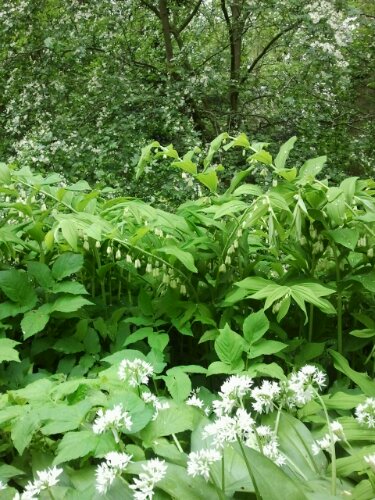
It is difficult for a photograph to do it justice – especially one of mine! Here is Hawthorn arching over a swathe of Solomon’s seal and Wild garlic, all three in flower at the same time.
Other herbs of note today…
Below, endangered Hoary Plantain (Plantago media). I first saw this herb last year and remember not really knowing what it was, although it was obviously some kind of plantain, but wanting to hide it and protect it from trampling feet! Of course I couldn’t and this plant is well adapted to living in well trodden locations. However, should you find it, especially in a week or two when it’s flower stalk will look like some sort of moth-plant hybrid, then please don’t touch it. I hope that this one has a chance to set seed.

Chicory foliage:

Yarrow (Achillea millefolium)

Endangered Greater burnet (Sanguisorba officinalis)

Frankendael 365 day 18
 This lush mixture of foliage and flower buds, belongs to a variety of Hawthorn (Crataegus spp.) called NL: Maidoorn As you may see in the photo, it’s leaves are quite different to those of common Hawthorn (shown below). These are larger, more delicate to the touch, a far lighter shade of green and are less deeply palmate. On the foraging trip this weekend I didn’t recognize it as Hawthorn because the variety I am used to has tough, small and dark leaves – Fit for windy hill sides! But I was assured by fellow foragers that this variety also makes great Hawthorn Ketchup and tonic medicine.

After a little research, I learn that there are over a hundred Hawthorn varieties worldwide and just three main ones in the UK, many with leaves unrecognizable as Hawthorn to me. The main European variety is Crataegus monogyna. Apparently all have similar medicinal properties and the whole species is part of the Rose family. This variety appears to be C. Laevigata.
Here’s an interesting link if you are interested in the folklore and English Witchy side of Hawthorn.
Here’s a nice Hawthorn tea recipe…
Infuse 1-2teaspoons of fresh leaves and flowers in a cup of boiling water for 5 minutes. Drink three times daily.
Caution
Although Hawthorn is not associated with side effects, it is associated with traditional heart medicine. Of course heart disease of any sort is serious and should not be treated without consultation with a qualified doctor.
 Urban Herbology