All posts by Lynn

Unknown's avatar

About Lynn

Learning

365 Frankendael day 13

Today two beautiful climbers, one deadly the other delicious.

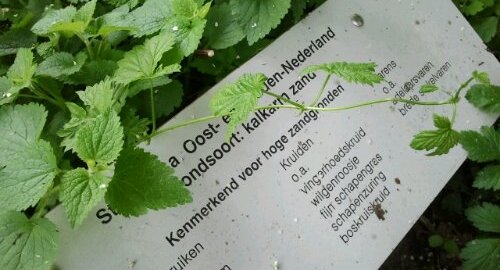
Here is a photo of Hops (Humulus lupulus) scrambling over an information plate in the woodland section of Frankendael. Several Hops plants are becoming obvious at the moment. They begin the season by growing tall thin stems which arch high above other plants, reaching out for a suitable structure to climb. Then their leaves broaden and identification becomes easier.

Hops has been a popular plant for centuries, since it was discovered that it added a delicious flavor to beer. Medicinally, hops is useful as a relaxant and sleep inducer. It is found in many herbal sleep blends. If you have access to enough, it is very simple to stuff a pillow with dried hops, which is then slept on to bring about restful sleep.
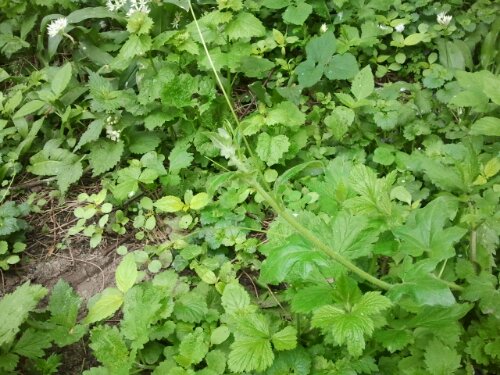

Now to the poisonous climber: White Bryony (Bryonia dioica) has some ancient medicinal and several magical uses but all parts of this plant are highly toxic. Even small ingested quantities can be lethal. It’s a member of the Cucumber family. I’ve been watching the plant in this photo grow for a few weeks, admiring it’s resemblance to squash plants but until today, not knowing it’s true nature. It really blends into its surroundings today but up close it has rather an out of place appearance. As if someone had planted melon seeds in the woodland. However this is a native plant, often found in woodlands and hedgerows.

Bryony has several colloquial names which suggest historical uses and appearance; English Mandrake, Wood Vine & Mad Root being my favourites. It was traditionally used in image, money and protection magic. The roots of this perennial were particularly significant. Here is a clearer photograph of Bryony, taken today in Oosterpark. An enchanting and deadly specimen.

365 Frankendael day 12

Comfrey (Symphytum officinale, Symphytum uplandicum) is just coming into flower here in Amsterdam. It’s easy to identify now due to it’s broad, furry, fast growing leaves, it’s dropping purple or white flowers and it’s standout appearance as it towers over many neighbouring wild plants.

If you keep any plants, outside or in, I urge you to learn how to make the easiest liquid feed from nourishing Comfrey. If you don’t know about it’s deep and rapid healing effects on the body, I urge you to learn about them too and to keep some form of this plant in your herbal first aid kit.

Most of the Comfrey found wild and is gardens, descends from garden escapes of purple flowering, Russian Comfrey (S. uplandicum). It works just as well externally and as plant feed and its leaves don’t contain the toxins found in the roots and all parts of cream flowering, Wild Comfrey (S. officinale). The toxins are harmful when ingested. Because it’s hard to tell the two plants apart when they are not in flower, I suggest you always air on the side of caution and don’t use it internally. Today I photographed a white flowered Comfrey, the colour suggests it is Wild Comfrey but most plants in the park are purple flowering and the two are very interbred, so this may be a white flowering mutation of S. uplandicum. Either way, it is beautiful, useful and I will only use it externally or for my plants.

Comfrey can be applied directly as a poultice (for sprains for instance) made into a heat infused or a cold infused herbal oil which can be used for massage or blended with beeswax to make a healing salve. Worth mentioning, is that sometimes Comfrey may speed healing faster than you’d like, such as when infection is present in a wound. Ensure wounds are clean and healthy looking, not infected, when you begin using this herb. This will help to ensure the wound heals cleanly, a well as quickly. Comfrey also has a reputation as the herb to prevent or remove scars, both internally and externally by please remember my warning about internal use.

To make a superb and cheap liquid plant feed, simply immerse a couple of Comfrey leaves in water, in a bucket or similar. Leave it to ferment for a few weeks. You should see that the water becomes a dark and rich brew. Store this “Comfrey tea”in a suitable container and dilute well before feeding to your plants. A plastic bottle cap full, in a home watering can of water, should suffice. Use regularly, throughout the growing period, for pleasing results.

Here’s a link to an online Permaculture Magazine video article, about why we should all have a Comfrey plant on our patch. Be prepared, the video is ten minutes long and contain lots of info for people with vegetable gardens – If only! I don’t have space for one at home but I know where plenty grow! I hope you’ll have a look around and find some near your home also.

Comfrey is an essential herb to become well acquainted with, your plants will thank you and so will your body, when it needs to heal quickly.

365 Frankendael day 11

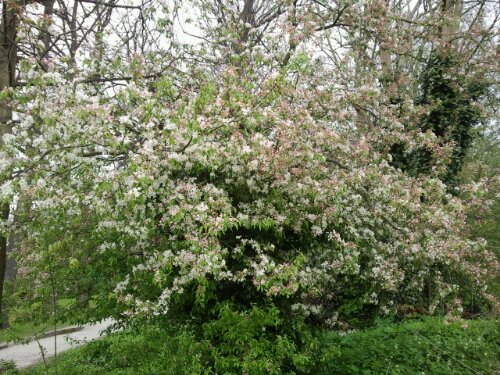
Here’s a Mayday Hawthorn bough, happily still attached to it’s tree! I’m sure that last Mayday the Hawthorns of Frankendael had opened their flowers by now. They certainly haven’t today and the weather is still not exactly encouraging the plants to grow as they could. None the less Hawthorn looks beautiful at the moment is most trees I see are loaded with green buds, ready to explode into a froth of white/pink blossom. Hawthorn is a spiky, irregularly shaped shrub or small tree which is easy to spot in hedgerows around town. It has unique, small, deeply lobed leaves, a froth of flowers around this time of year and bright red berries come autumn. It is long associated with heart medicine and Mayday country frolics.

Hawthorn is a renowned tonic for the circulatory system. The leaves, berries and flowers can be used to treat angina and several other heart conditions – obviously under the guidance of an experienced medical practitioner as heart disease is always a serious and often life threatening, condition. Hawthorn can be used as a preventative tonic, to guard against future heart problems. It can lower blood pressure, help dissolve cholesterol and calcium deposits.

365 Frankendael day 10


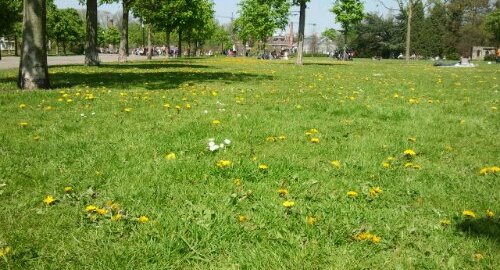
Today is Queen’s Day in the Netherlands and the sun has finally come out to play! Amsterdam is awash with orange people so what better herb to look at than Dandelion.

Dandelion is another foragers favourite and another much misunderstood and maligned herb. Yesterday I surprised a few friends by picking a dandelion, plucking it’s petals and eating them. I was quite surprised that they didn’t know anything about the plant, but I guess to most it is just a pretty weed. There are so many uses for this herb, it’s so prolific and so associated with folklore.

Not much time to write today but please see the link to a previous Urban Herbology post for further information and useful links.

365 Frankendael day 9

Today was the monthly Puur Markt in Frankendael. At this time of year, there’s a great stall which sells herb plants quite cheaply. I picked up a small Curry plant for €2.75 and a little Verveine for €2. The stall is always there through the main growing season and they also work at the weekly Saturday Noordermaarkt. They don’t have a website but are well worth a visit.

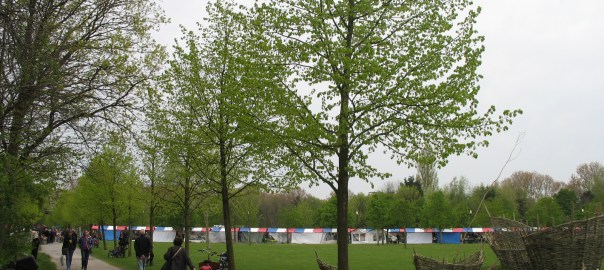
I thought I’d take a photo of the newest section of Frankendael’s Lime tree avenue today. Lime is an under appreciated herb, in my opinion. It has a multitude of historic uses and come midsummer, yields the most heavenly fragrant flowers, which drive the city bees wild. With these you can make a wonderful, lightly intoxicating tea. At this time of year, Lime leaves can be eaten as an unusual and medicinal sandwich filling. They have a mucilage within which makes them very useful as a soother of the respiratory system. If you take a moment to chew a leaf you will feel the mucilage release from the leaf tissues. It’s more pleasant than it may sound!

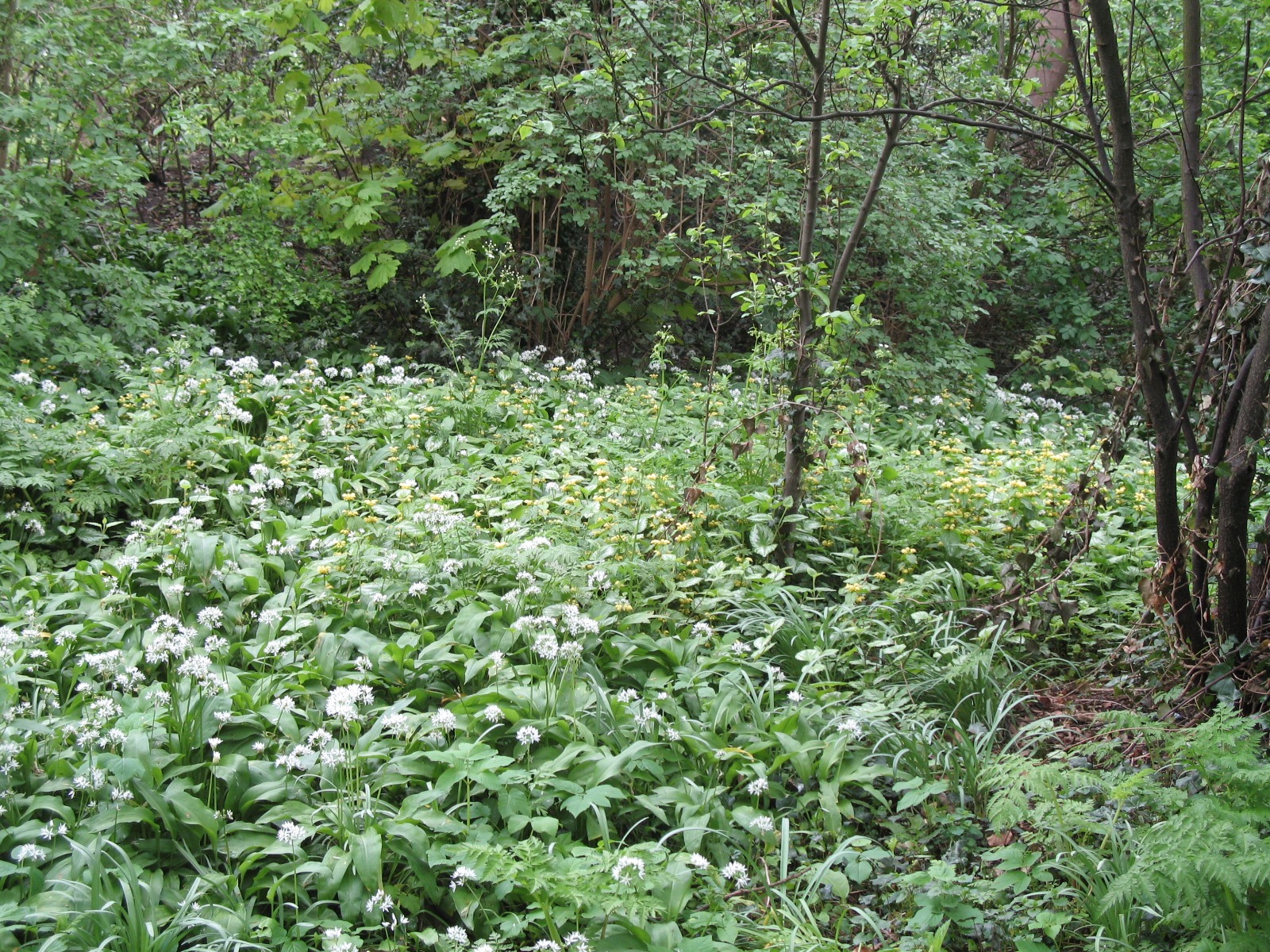
There are lots of Yellow Dead Nettles (Lamium galeobdolom) in flower at present.  I’ll write more about them another day. The link above is to an interesting blog post about the plant.  The photo shows a large swathe of the plants at the back of this woodland undergrowth.

Pea Dosa with Yoghurt & Fresh Mint

Dosa are Indian pancakes, traditionally made by soaking and then fermenting rice and black lentils, in a ratio of 2 parts rice: 1 part lentils. They are extremely tasty, popular and versatile. I recently read in Wild Fermentation that the lentils may be substituted by other dried legumes. So I have been trying dried peas, left over in my cupboard from the winter.

To be honest, I prefer this pea version to the traditional recipe so thought I’d share it. I also found it easier to blend the soaked rice and peas, than blending rice and lentils. It was less effort for my Kitchen Aid which is also a bonus.

To make pea dosa I follow my usual dosa recipe and simply substitute dried peas for lentils. The toppings are endless, today I used a mixture of fresh yoghurt, two finely chopped mint leaves from the balcony, a dribble of runny honey and some blueberries.

Mint is a great wake up call in the morning and extremely easy to grow in a pot. It’s probably better in a pot than anywhere else as this perennial is very invasive and if allowed, can take over a garden in no time.

Another great topping is mashed banana and yoghurt, with or without honey.

I hope you enjoy it! Do let me know if you try any other legumes in place of peas.

365 Frankendael day 8


It’s very cold, damp and windy here today, well relatively speaking, so not the most pleasant day for a walk in the park with a toddler. Of course, I did see some beautiful plants but most photos were rather windswept. I think that this one clearly represents the last days of April. Ramsons in flower, Ground elder swallowing up other plants, Cowslip standing tall, yellow and delicate and at the back, a wild Ribes bush (could be black current, white current, raspberry etc. but its too early to tell). I

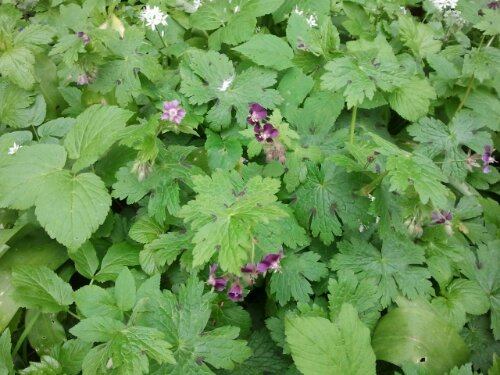
One of my favourite city herbs is really coming into flower at the moment. Wild geraniums (Wood geranium, Cranesbill) are often used in urban planting schemes because they bulk up nicely as the spring and summer develop. You can find geraniums in city tree pits where they receive lots of nutrition from passing dogs. If you can locate relatively clean plants, perhaps try them in the summer when they have had a chance to grow and will withstand a little harvesting.

All geraniums and all parts of them are said to be edible, but some varieties are hairier than others! This variety is prevalent in the park, the pretty purple flowers are fragrant and taste good in a salad, the leaves add an interesting dimension to raw food and cooked they blend well with other spring greens. I prefer to thoroughly wash any that I harvest and then to cook them, like spinach. I reserve geraniums growing at home, for salads.

Now is a good time to learn the differences between the many members of the Carrot family, which grow wild in Amsterdam. The most prevalent and obvious at this time of year is Sweet cicely. It is a good faraging food, makes pleasant aniseed flavoured drinks and is sometimes used as a tonic herb. But beware! There are some extremely toxic members of the Carrot family and all look quite similar until you know how to differentiate them. At present Sweet cicely is in flower.

365 Frankendael day 7

Greater Celandine (Chelidonium majus, NL Stinkende gouwe) is a plant that is very obvious at the moment. It belongs to the poppy family and its leaves certainly resemble those of other members of that family.  The plant is a perennial and spreads easily by seed.  It is considered an invasive garden pest by many, but not herbalists.

This herb is not one for the dinner plate as it contains several alkaloids which are toxic.  It can cause irritation to mucous membranes, if used innapropriately and shouldn’t be used by pregnant women or those with impaired liver function.  It is generally used only externally.

Warts
The orange-yellow sap from within the stems of Greater Celandine, is a really useful wart remedy.  Simply cut a stem and apply a few drops of the juice directly onto the wart.  Do this a couple of times daily and soon the wart should begin to disappear.  Continue use until the wart has gone completely.   To maintain a supply of this valuable remedy when the plant is no longer available outside, you could make a tincture and use a few drops of that in place of fresh sap.

The plant in the photo is in a patch of waste land, right on the outside edge of Park Frankendael. There are plenty of Greater Celandine plants within the park and throughout Amsterdam at present.