Category Archives: Foraging

365 Frankendael day 105

I was on my way to meet a friend this lunchtime and didn’t want to arrive empty handed so stopped off at Park Frankendael to collect a little food for her. Both plants have been shown here many times but they still taste good and are still in season.

image

Firstly that delicious Copper Beech Hedge (Fagus sylvatica) that wraps around restaurant de Kas. Only the very young leaves are easily palatable and a good way to harvest them is by pinching the twiggy stem with finger and thumb mail. If the stem doesn’t break of instantly you are trying to harvest to fat along the twig. The best way I know to cook them is in a little olive oil and water with a clove if garlic. Summer covered for ten minutes and serve as a bitter side dish our unusual starter.

image

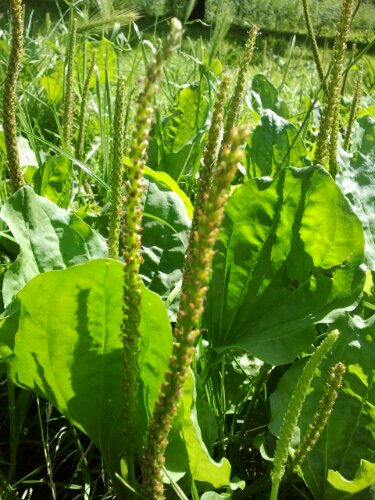
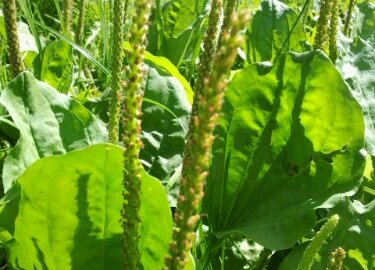
Next up is Plantain (Plantago major), rather than those lovely big leaves, try the seed stems. The easily removed seeds make a welcome green addition to boiled rice, quinoa, amaranth etc. Just add the clean seeds at the start of your regular grain cooking.

365 day 102 Sarphatipark

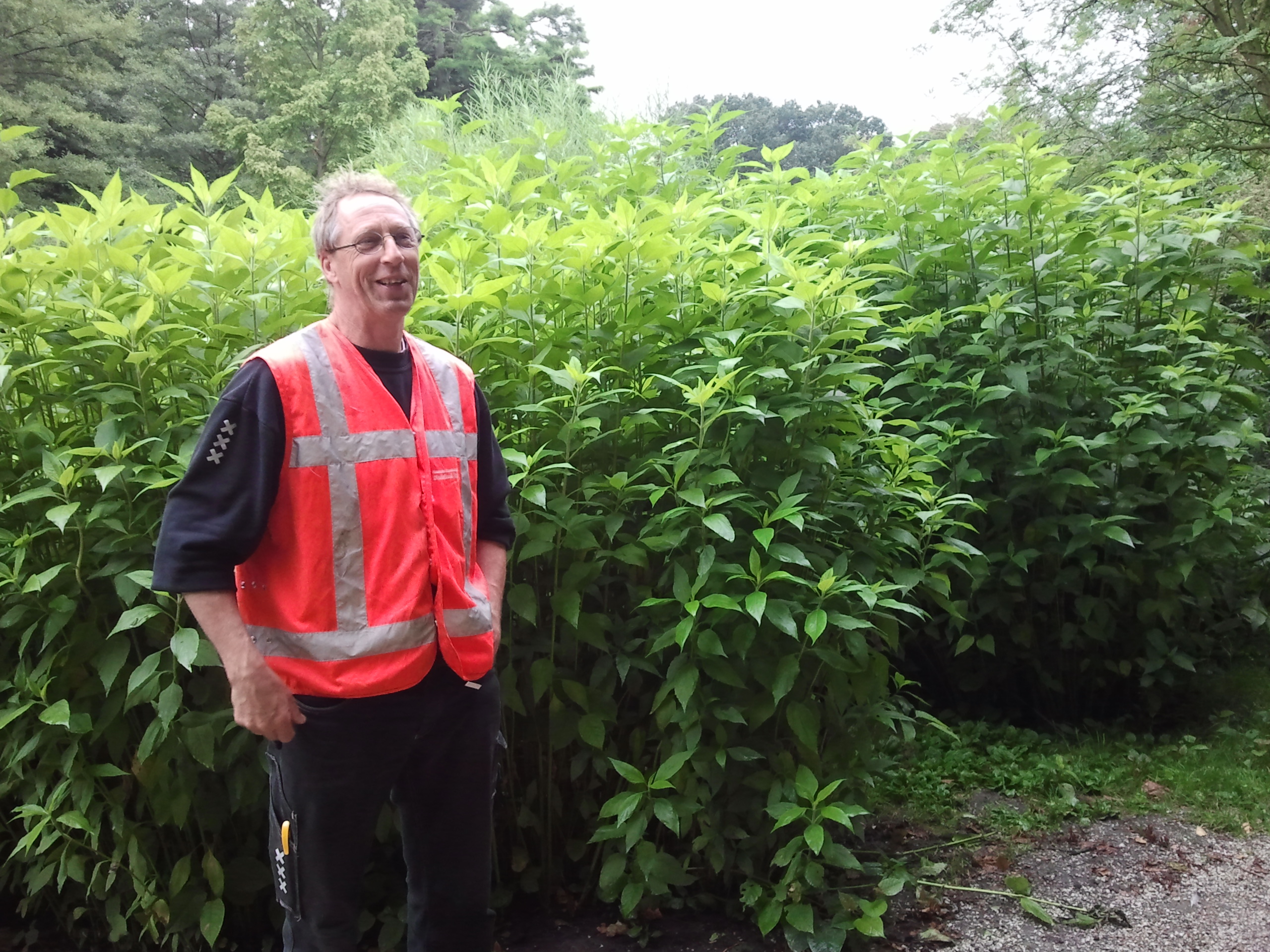
Thanks to the watertolerant group who joined me to herb walk in Sarphatipark today. We found lots of useful herbs and also interesting park workers who told us how the park is maintained by a dynamic group of volunteers and is trying innovative edible approaches to eradicate Japanese knotweed. Above is a park warden, pictured by the enormous Jerusalem artichokes which are being used to keep knotweed at bay. When the invasive plant is removed, the ground can quickly turn into a home for other unwelcome invaders or can see the return of knotweed. Using Jerusalem artichoke, another rapidly growing and spreading plant, can provide tasty tubers and quash the knotweed. So far so good!

I was also reassured to learn that the Ginkgo trees I’m so fond of in parts of Our Zuid are indeed female and yield plentiful Ginkgo nuts. Amsterdam is fortunate to have such edible plant loving folk in its green spaces team.


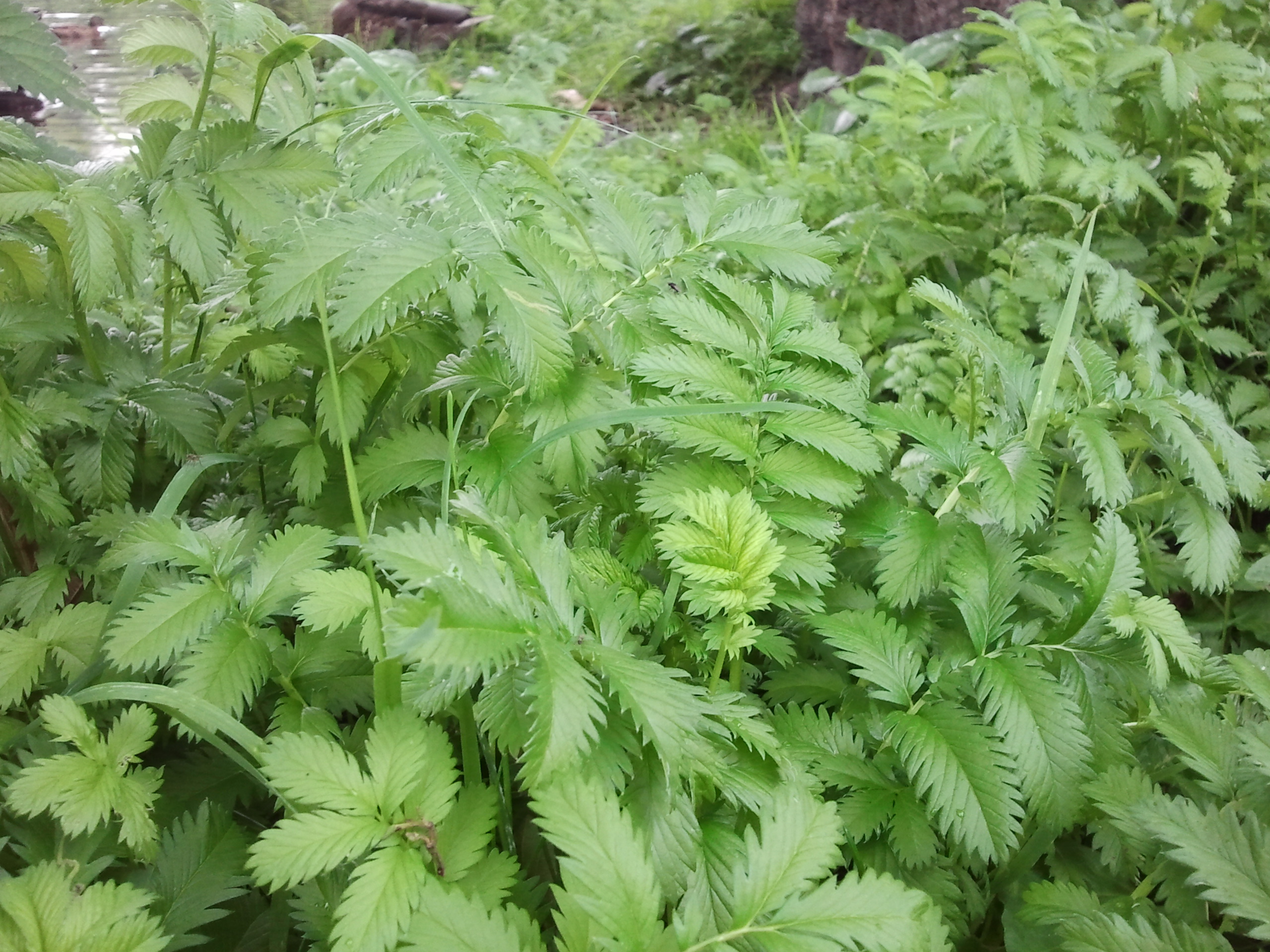
The plants I remember finding today are listed as tags to this entry. The spreading soft leaved plant which looked quite like Agrimony but wasn’t, was indeed a cinqefoil, called Silverweed previously called (Potentilla anserina) but now reclassified as Argentina anserina . It is shown above and it is edible. If you were on the walk and can remember other plants which I have missed from the tag list then please let me know.

Thanks again to everyone who joined me. It was a real pleasure to walk around with you. If you signed up but were not brave enough for the wet weather, remember there are always trees to shelter under next time 🙂

365 Frankendael day 100

For the past 100 days, I’ve been going to Park Frankendael, Amsterdam to photograph and document some of the useful, edible and medicinal herbs growing there. Parks are amongst the best places for urban foragers and this one gives an indication of what can be found all over the city, along streets, canals, against houses, in hedges and amongst offices.

I hope to go on holiday quite soon and want the project to go on without gaps. So if you would like to send me a photo of any herbs you find in Amsterdam, I’ll gladly check their identity and publish the photos with credits here. All of my photos are taken in and around Park Frankendael but during my holidays, photos from anywhere in Amsterdam are fine and I’ll be very grateful of you’re involvement.

Please send your urban herb photos to Lynn.Shore@gmail.com with you’re name, the location of the plant and the date you photographed it. If you know the name of the herb, in English, Dutch or Latin, then that would also be helpful. Send them anytime from now.

So what have we got on Day 100?
Plantain (Plantago major, NL Weegbree) with towering seed spikes, very tasty, nutritious and soothing to the gut when cooked in rice, quinoa or similar. It is easy to harvest too, simply pick a few spikes and use a thumb nail to strip the seeds from the spike. Wash them and cook, that’s it.

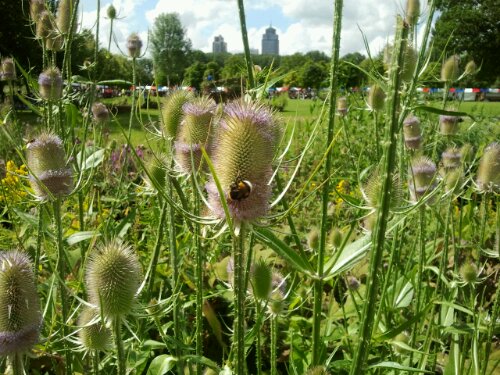
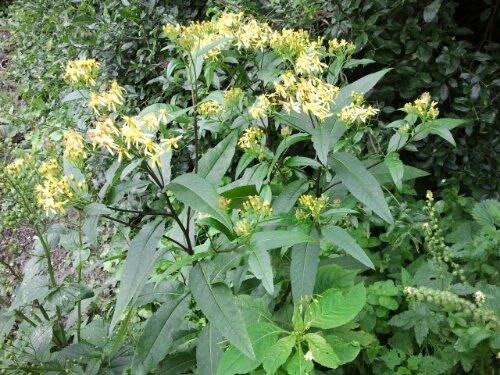
Here is Teasel in flower, offering food for insects and candy to the eyes of thousands of Amsterdammers, attending today’s Puurmarkt in the park. Behind the Teasel you may see Goldenrod and Rosebay willowherb.

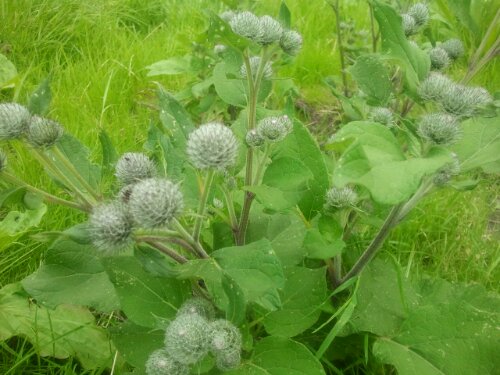
Here is a small but second year Burdock, having a second attempt at flowering in the park orchard after being mowed down a few weeks ago. No good for harvesting but a great indicator of where to find medicinal first year Burdock plants, now and next year.

Here’s a Gingko biloba tree. Those easily identified fossil like leaves, can be best harvested when they start to tinge with yellow, for drying and using as a circulation boosting tea. The circulation enhancing action gives this herb a reputation as a good one to help improve memory.

I know of dozens of street Gingko trees in Oud Zuid, close to Beethovenstraat particularly. I’m sure there are more areas with lots of them in the city. Someone who recently joined an urban herb walk told me that she is currently harvesting and drying the leaves, to help her during periods of study.

Loads more herbs in the park and city today. The above is just a taster. Please feel free to send me what you find, as and when you like.
365 Frankendael day 98

What a beautiful day again today! I have been off on my bike to Nieuwemarkt, stocking up on Carageen (dried Irish moss seaweed) and dried Arnica flowers from Jacob Hooy and dried strands of Agar agar from the Oriental Supermarket, in readiness to write a section in my book about herbal gel making. Then back down the road to the park to collect a few Willow tendrils from Park Frankendael, to make plant rooting hormone tea for the Let’s Make Elder Babies gathering tomorrow morning. I learned about using Willow tea as a rooting hormone, quite recently from Ann at City Plot. Here is a useful link with some background about why the tea works and how to make it.

Willow (Salix sp)

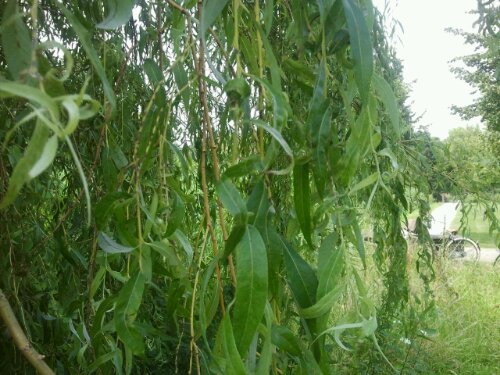
Here’s the Willow (Salix sp) I harvested from to make the tea today. All Willows contain Salicyclic acid but this Weeping Willow has so many babies growing at her feet, probably from ripped off tendrils which self rooted, that I thought she was the one to use.

Elder (Sambucus nigra)

I had a look along the Hugo de Vrieslaan outer edge of the park, to check that the Elder shrubs are in good shape to harvest from tomorrow. They look beautiful, with glossy leaves and lots of developing berries.

Teasle flowerhead with Blackberry behind

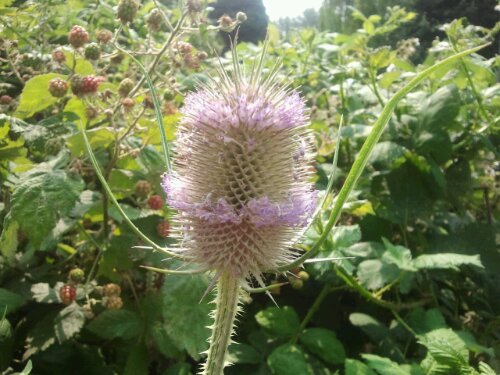
And here is another sort of berry developing, Blackberry, with a beautifully flowering Teasle plant growing alongside. I was asked about this plant on a recent herb walk. When should it be harvested and which parts are most valued for treating Lymes disease. I had little idea, its a plant I’m not used to using as in the UK you are not supposed to pick it due to its value to wildlife. I have just read the latest Ezine from Susun Weed and she mentions the first year roots being harvested in winter for this purpose so I suggest that route is followed by those I spoke to who have lots of Teasel growing in their gardens.

365 Frankendael Day 92

Not much time to write today, I really need to get my UH essentials book finished!

I did find some lovely herbs though..
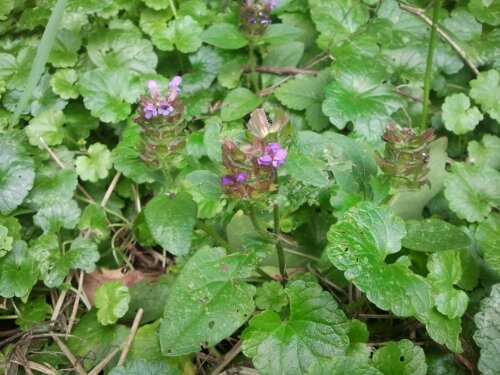
Firstly, a carpet of dark green evergreen Ground ivy (Glechoma hederacea) with a few purple flowering spikes of Self Heal (Prunella vulgaris) poking through.

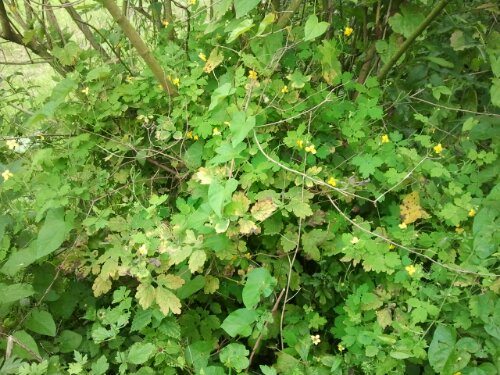
Greater celandine (Chelidonium majus), fading but still flowering and still oozing that amazing (poisonous orange) wart zapping sap, when a stem is broken.

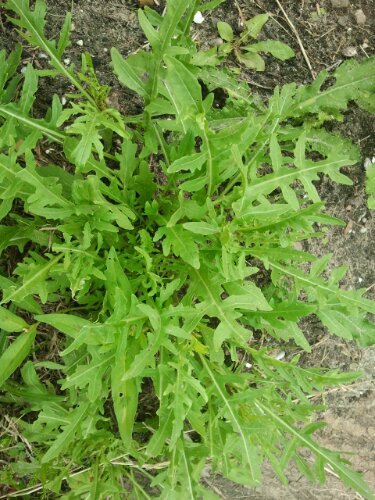
Wild Rocket (Eruca sativa), Arugula.

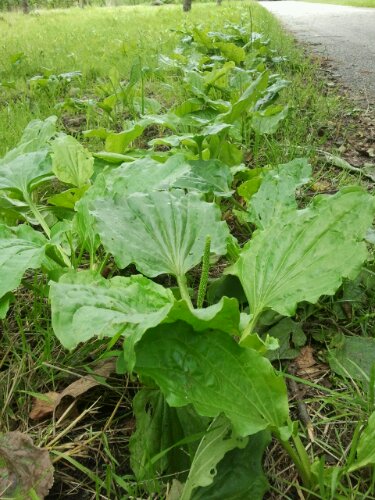
Plantain (Plantago major).

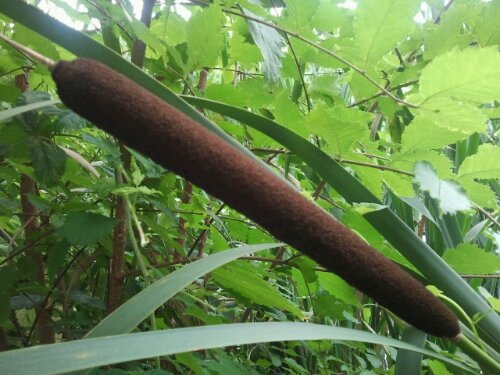
The flower head of a Reed Mace / Cat’s Tail (Typha sp.)

My little girl and I were so pleased to meet this flower head as it is developing on a bent over stem. All other flower heads in this part of the park are growing too far out in the water for us to reach safely. I don’t know if that’s the reason for the US common name, but it feels very like our cat’s tail when you stroke it! Maybe I’ll ask the Park gardeners, if I can help out when the autumn clearing comes?

365 Frankendael day 91

I harvested some of this beautiful Pennsylvania pelitory this morning and set up a vodka tincture for Tobias my canine neighbour.

I’m looking out for Arnica at the moment, I’ve no idea if it grows in Amsterdam or this park, but I want to make a fresh batch of Arnica gel so need to make a tincture first. I found this pretty plant on my quest…

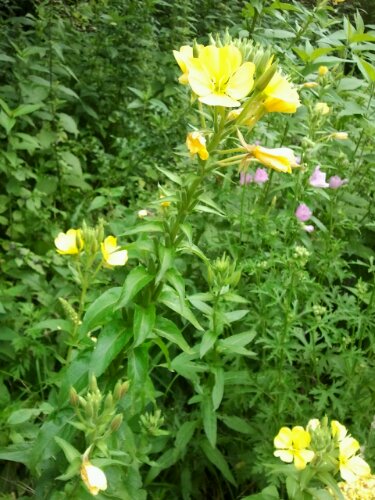
Also today, I’m often asked about Evening primrose. Yes its edible and medicinal and you can see it has big blousy flowers. I’m not a big fan of taking the seed oil but its nice to make a tincture from or to cook the leaves or roots.

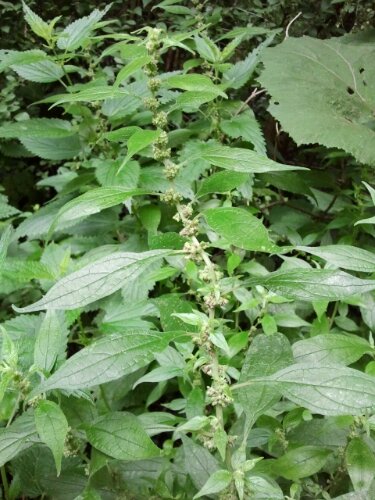
Ground Elder (Aegopodium podograrium) is making a comeback in parts of the woodland. I suspect that the recent plentiful rain has helped it to freshen up. There is a little Enchanter’s nightshade also in this photo.

Here is a beautiful Marsh Mallow plant (Althaea officinalis) downy and gentle amongst Tansy and Geraniums and more, not so far from a waters edge.

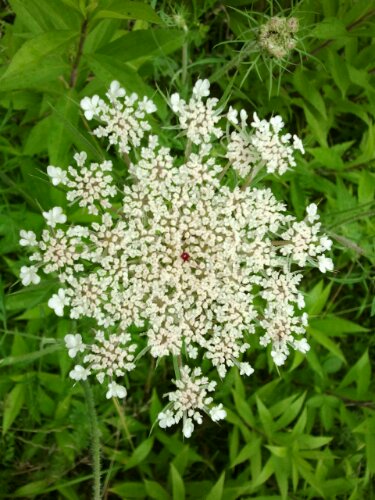
And lastly, another beautiful Queen Anne’s Lace flower (Daucus carota) with the tell tale red spot.

Tuesday 31st July 2012 Urbanherbology Walk in Sarphatipark

Every time I walk or cycle past Sarphatipark, edible and medicinal plants seem to leap out at me, through the iron fence! So, as I continue to build material for my project and book, I think its time I ran an Urban Herb Walk there. I’d like to see just how many urban edibles and medicinals, can be found in 90 minutes.

Sarphatipark Urban Herb Walk
Tuesday 31st July
1230 –  1400
€8 per person
Max 12 Walkers.

Please contact me directly (lynn.shore@gmail.com) if you’d like to join this walk. The price includes a handout, to help you learn more about some of the herbs we are likely to find.

You may like to forage a snack or herb tea, on the way around.
– Bring a small flask of hot water, if you fancy making an urban herbal brew whilst we walk.
– Bring a small bottle of cold water, to wash any herbs that you may want to eat directly

We will meet at the main entrance of the park, the one near the children’s play area and the small building beside the plant swap centre.

The walk will go ahead, come rain or shine!

365 Frankendael day 88

Three lovely people joined me to learn about Ribwort (Plantago lanceolata, NL: weegbree) this afternoon. We made Ribwort succuss honey, Ribwort ointment from Ribwort infused oil and learned of the many ways in which Ribwort, and it’s sister Greater Plantain (Plantago major), have made themselves indispensable to communities around the globe.

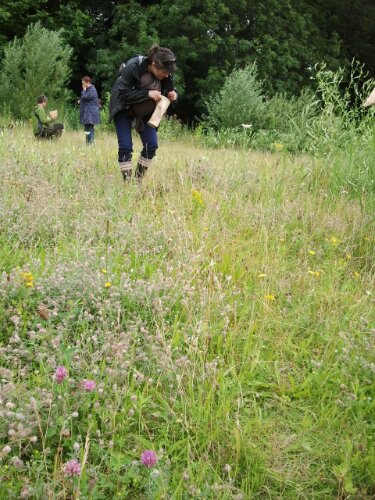
We harvested a small paper bag full of Ribwort leaves from the meadow section of Park Frankendael and whilst doing that noticed some other very lovely plants…


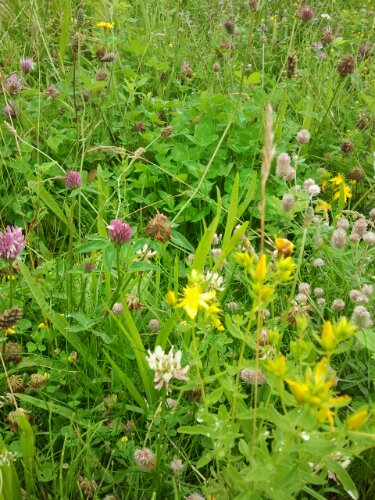
Here is a tiny section of the meadow with St. Joan’s / St John’s wort (Hypericum perforatum, NL: Sint Janskruid), Red and White clover, Ribwort and more.


Above is Teasel (Dipsacus fullonum, NL: Grote kardebol) in flower. That beautiful ring of tiny blooms will move as the flower head progresses into an equally stunning seed head.


Chicory (Chicorium intybus, NL: Wilde cichorei) in flower, I think this is the most beautiful blue in the plant kingdom. It always calms and cheers me when I am fortunate enough to see it.

Here is a a very furry looking and feeling clover, Hare’s-foot clover (Trifolium arvense, NL: Hazenpootje). A very pretty spreading plant which really livens up this already beautiful meadow. Its silky flower heads bob about in the breeze and I must say that apart from the hairs, it looks almost good enough to eat. I can only find confusing information about the eatability of this plant online and no reference to it in my wild food books. I did fine one definitive “don’t eat it” reference on a useful website, which is good enough for me to say – probably poisonous, not one to eat.

365 Frankendael day 87

I’ve been preparing for tomorrows Ribwort workshop but found time for a few photos of other herbs in the park..


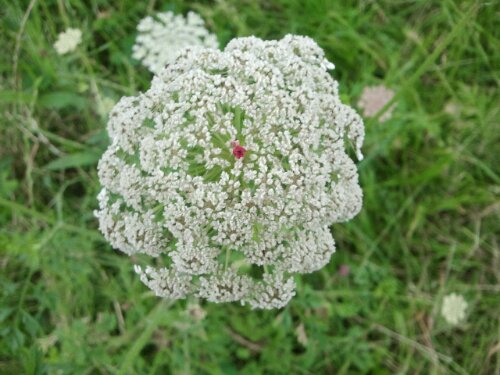
This one shows the signature red spot in the centre of a Queen Anne’s Lace flower. Apparently, if you eat enough of those spots alone you may experience a hallucinogenic effect. Not sure about that but I think they are really pretty flowers and they signify the Wild Carrot growing beneath. As I mentioned on the herb walk yesterday, I’m not a big fan of hunting for wild roots, due to the harm it causes, and less still of the carrot family, due to the numerous toxic family members, but it’s good to know that Wild Carrots are around.


The photo above is of Motherwort (Leonurus cardiaca) in full bloom.


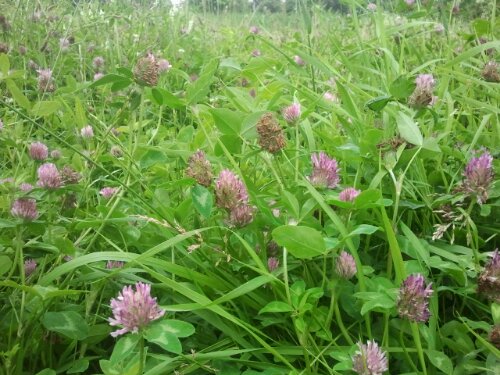
And here is a field of Red Clover looking very fertile in the park.


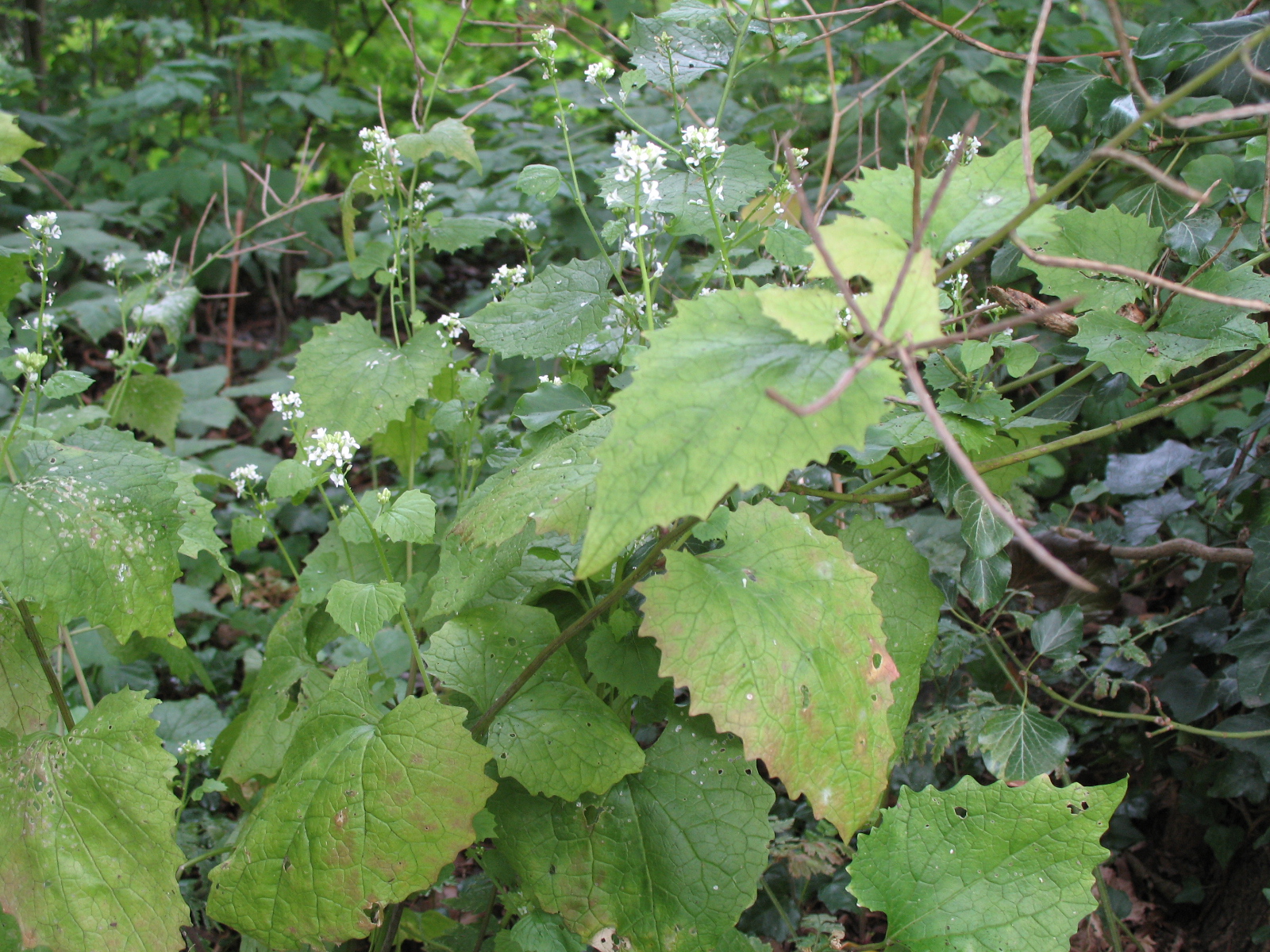
Lastly today, is a Garlic Mustard plant with ripe and dry seeds – well until it rained again today. I took two seed pods home and will save them for sewing in my street or nearby next spring. I love that plant!