Category Archives: Foraging

365 Frankendael day 31

What lovely people I met today, on my first guided herb walk of this year. We looked at lots of lovely and useful herbs. I’ll post a few photos taken by the others when they reach me.

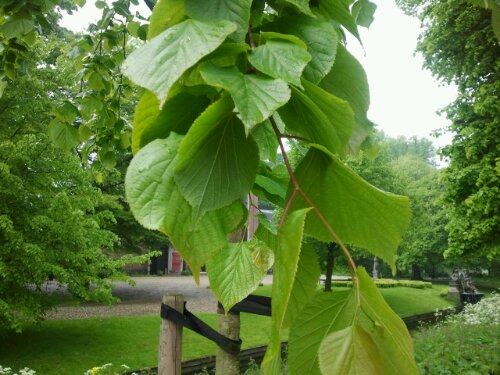
In the meantime here’s a Frankendael Lime leaf photo which I took yesterday, for those who didn’t get to pick one to keep with their handouts. This is a perfect time to harvest a few healthy, non sticky leaves and enjoy them between slices of bread.
After the walk today, I also spotted Salad Burnet (Sanguisorba minor NL: Kleine pimpernel), poking it’s flower stalk up in a grassland area of the park. In my photograph there is also a ribwort to the left, with a completely different flower stalk. Salad burnet is a useful but endangered plant in the Netherlands so completely out of bounds to foragers and herbalists alike. I feel very priveledged to have seen it today. I hope to be able to take a better photograph of this plant soon. I mentioned to some people to day, the useful website called Bioimages.Org.uk where you can search for images of plants and animals to help with identification. Here’s a link to their photos of Salad Burnet. It seems like a good resource but of course never forget your field guide!
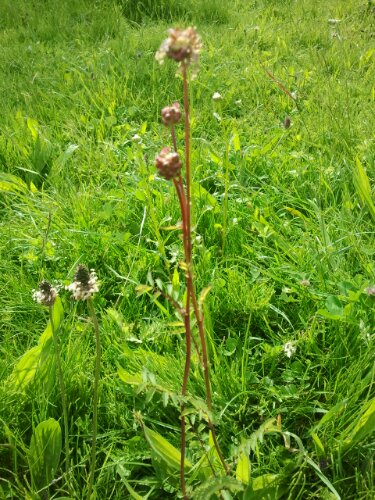
Also plenty of healing Ribwort, in the same area, with it’s long slender leaves and unusual dull coloured flower at the end of a long stalk.

Here’s a pretty tree pit from the same patch, full of a tiny flowered Cranesbill, Ribwort, Horsetail and a non edible Chrysanthemum, all mixed together by fortunate chance.

365 Frankendael day 30

In just a 1 meter square patch of land, on the outer edge of park Frankendael, I found all these useful herbs today…

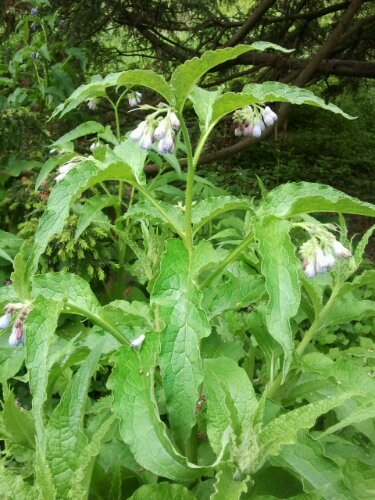
Medicinal Comfrey (Symphytum uplandica):

Stinging nettle (Urtica dioica) and Ground Elder (Aegopodium podograria) growing amongst each other:

Also, Burdock (Arctium lappa)

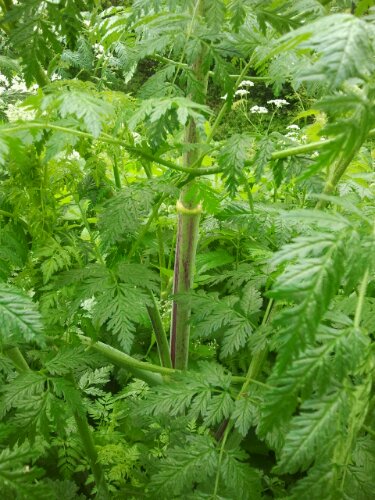
Poisonous member of the Carrot family, Hemlock (Conium maculatum):

Notice how similar it looks to Chervil. It has a smooth stem and leaves. It smells a little unpleasant and has notable purple staining on the stem. This is not a plant to be handled or foraged at all! This plant was used in ancient Geek executions, including that of Socrates. The Latin name means to whirl, pertaining to one of the symptoms of hemlock poisoning, vertigo. This plant is deadly poisonous and I show it here as so many foragers are keen to find plants such as wild carrot. It is very easy to confuse members of the family, especially those with finely divided leaves such a hemlock, carrot and sweet cicely
.
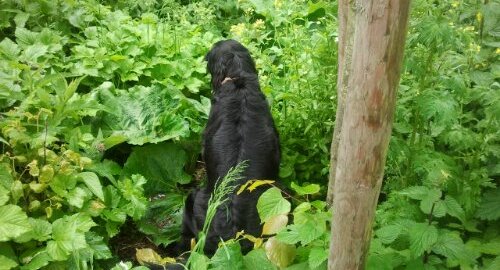
Lastly another beauty which is not helpful to foragers. A Labrador delivering a little fertilizer to that interesting 1m square patch of park edge!

Easy Dandelions


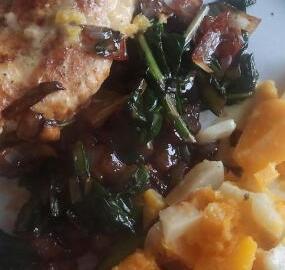
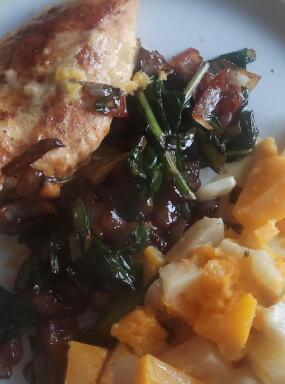
Here’s our dinner this evening.
Between us, as a side dish, we enjoyed the leaves of two large dandelions (Taraxacum officinale) picked from Ben & Riny’s garden a couple of hours ago.

After a good rinse, I roughly chopped the leaves and simply added them to the pan juices after frying chicken and eventually an onion. I added a slosh of the vegetable cooking water, from the celeriac and pumpkin you can also see in the photo. that just loosened things up a little and helped to stop the dandelion from frying. The result was very tasty indeed and rather healthy!

The root came up easily, from one of the plants so I’ll add that to a soup tomorrow.

365 Frankendael day 29

Hop (Humulus lupulus – what a latin name!) is entwined about a meter up last year’s dead stems today and looks far healthier and more vigorous than any cultivated Hop plant I have seen. I am really looking forward to seeing whether or not its flowers are as impressive.

Mugwort is growing beautifully on wasteland near a Frankendael bus stop. It is helpfully showing the silver underside of a few leaves in the breeze.

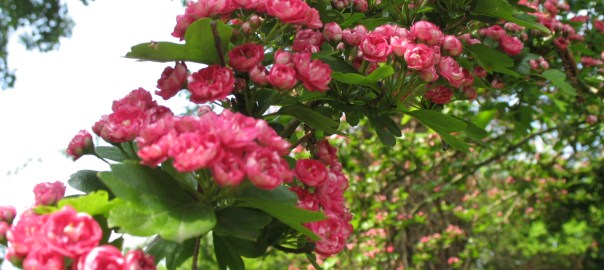
This member of the Hawthorn species reminds us clearly that Hawthorns are members of the Rose family.

Valerian officinale is almost ready to flower in wetter areas of the park.


And Agrimony plants are making themselves more obvious is some drier sunny areas.

Also today, towering Pink Purslane (Montia sibirica) is in flower. It looks similar in structure to Winter purslane (Montia perfoliata, which is low growing and currently growing like crazy along the Centuurbaan fence of Sarphatipark. Often called Miner’s Lettuce it tastes great!) However, Pink Purslane is said to have a nasty acrid aftertaste and should be avoided by foragers. It’s such a beautiful flower at this time of year that it’s good to know it tastes bad!

365 Frankendael day 28

Today, two new arrivals for 365 Frankendael…

Red clover is starting to bloom in the park. At least today is the first day I have noticed it. Unfortunately the huge clover area next to Restaurant de Kas was cleared for some purpose, this spring so that won’t be available for harvesting but it is present in many other places and is very easy to identify. The blossoms are harvested for most remedies and a red clover infusion is easy to make. The blossoms also dry well.

Koninginnenkruid in Dutch, Hemp Agrimony, in English, (Euphatorium cannabium) is an interesting herb which I have only really noticed here in the Amsterdam canals but it is also prolific elsewhere. It’s a very tall plant, up to about 1.5m at it’s peak in mid summer, bearing quite attractive fluffy looking pale pink flowers and leaves which are a little like those of hemp (hence the English name). It has numerous historic uses, ranging from preventing bread from going moldy, as an infusion to spring cleanse the body and prevent scurvy, to fight off colds and flu and my favourite… to help Dutch people who had jaundice accompanied by swollen feet.

However if you are suffering from such a complaint, think twice before racing off to a local patch of this herb. Hemp agrimony contains a highly volatile oil which has been found to stress the liver and even cause cancer so much caution is advised. Hemp Agrimony is considered toxic these days. The plant does smell quite pleasant when cut so this year I intend to try it in some home decorations. Here’s a patch growing beside still water in Park Frankendael. You can see the dried stems from last summer, towering above the new foliage and suggesting how tall this perennial will grow over the next few weeks.

Lastly, here’s Another pretty Wild Scented Geranium (Pelargonium sp.). This one is growing in a full sun position and looks quite different to the ones we looked at yesterday.

365 Fraendael day 27

Today, a lovely walk through the park with Lucile and the little ones. We each went home with a few leaves of Ground Elder and a little Ground Ivy. Plenty of other herbs in season though…

Here’s the foliage from a Wild Carrot! Not one to be dug up, though it would probably taste great. I hope to revisit it later in the year to double check it’s identity when it is in full bloom. Wild carrot has been used in folk medicine for centuries and has recently been researched by Robin Rose Bennett. It is often found to be quite a useful contraceptive. For more information on the research take a look at Robin’s website.

Here is Comfrey, still in full bloom and looking stately throughout the park and city.

Garlic Mustard leaves continue to grace many of my meals. The plants here are nearing the end of their flowering season but the foliage still tastes wonderful and only a leaf or two is needed to add a garlicky kick to regular meals.

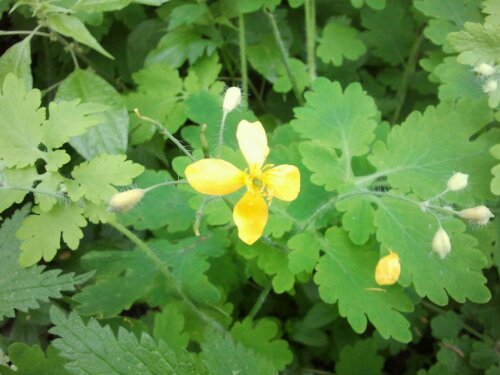
Greater Celandine continues to flower. It’s stems remain loaded with bright orange sap which is freely released when a stem is broken. This sap, containing a substance which is acrid and highly irritant but has been used medicinally since at least the middle ages. Historically it was used, in preparations such as lard and milk, to cure piles, cataracts, severe scurvy and some forms of cancer. These days it is still a popular remedy, amongst those who know it, for warts, corns and ringworm. To use for these three ailments, simply break a stem and apply the fresh sap to only affected skin. It will irritate healthy skin. The Latin name of this plant means swallow (the bird) and this is said to be because the plant’s flowering season coincides with the arrival and departure of swallows. So hopefully there should be some time to go before the flowers of Greater Celandine disappear from Amsterdam again.

Cleavers are looking particularly lush and juicy at the moment, about 50 cm long on average. Perfect for harvesting a clean handful and juicing for a cleansing tonic.

Wild Geranium is also looking striking, producing a mass of small purple flowers in the woodland, at present.

TimeOut Amsterdam features Urbanherbology Walks!

Journalist Lake Montgomery contacted me a while ago to find out more about urban foraging in Amsterdam. In this month’s TimeOut Amsterdam magazine, her article is part of the Awsome Outdoor Adventures feature. Forage for your supper, gives information about my foraging walks and enthusiasm for eating lime leaves and roses!

Forage for your supper also mentions Theun Karelse of UrbanEdiblesNL (Boskoi foraging app) and Claud Beimans who is a local naturalist and edible plants researcher. Claud and I met for the first time at the recent Cryptoforest forage in Sloterdijk. She has produced a simple and helpful photobook called Stoepgroente (Pavement veg). It’s on my new book list.

Thank you Lake, I look forward to you joining me on a quiet urban forage sometime soon.

365 Frankendael day 26

Ransoms and Garlic mustard are gradually fading and being replaced by other tasty plants. Here are a selection of today’s urban herbs in Amsterdam’s Frankendael Park.

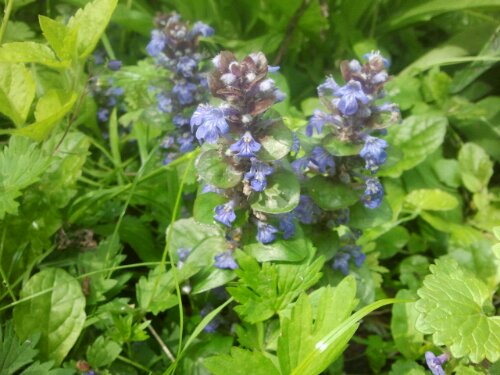
Bugle (Ajuga reptans). Used to be known as the Carpenters herb because it is yet another plant with blood staunching abilities. It looks very similar to Sealheal but has small leaves throughout the flowers whereas Selfheal(which I am keen to find) has flowers all at the top of the stalk, without leaves between). It is a member of the mint family and has digestive uses and historic herbalists apparently used it for all manner of ailments.

Caution
I can’t find much about this from truly reliable sources but there are many Internet posts mentioning narcotic and hallucinogenic properties for pretty, evergreen Bugleweed. So perhaps you should do some research and make your own mind up on that one but it’s probably not a herb to experiment with in the family stew!

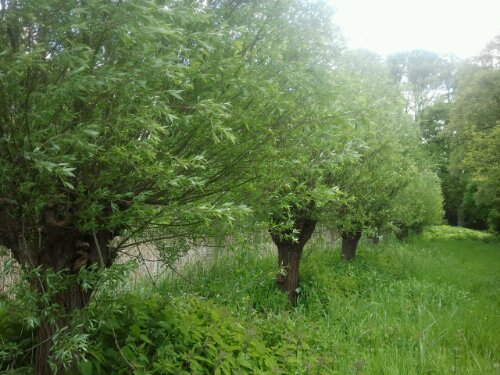
Willow. Here’s a lovely row of fast growing coppiced Salix, growing beside water at the Middenweg edge of the park.

Ground Elder (Aegopodium podograria) is growing bigger and bolder each day. I did notice a few flower heads developing on Groundelder today so now is the time to harvest if you are interested in foraging this plant. The leaves of this invasive, woodland loving perennial look quite similar to Elder and Ash tree foliage. It tastes really good and can be cooked as spinach. I noticed that my old copy of Food For Free only shows the flower of this foragers favorite. It is worth mentioning that foragers should only use such books as a source of inspiration. I use two detailed wild plant guides when identifying and getting know new plants. Foraging books are good for suggesting what to look for and how to use them.

Gathering Herbs in May


Here are a few tips on what to take with you, if you go foraging in Amsterdam, or anywhere else for that matter…

Paper bags
Fabric/plastic carrier bag
Rubber/gardening gloves (stinging nettles)
Small scissors (nettles/elderflower/processing herbs)
Sun hat
St. John’s wort oil (sun protection)
Aloe vera gel (sun burn remedy)
Layered clothing
Waterproof jacket
Sturdy shoes/boots
Long trousers and socks (Lymes disease)
Drink
Water for hand/plant washing
Plant ID guide book
Mini magnifying lens
Foraging book
Paper/book and pencil (samples, notes)
Bread/trail mix
Clean small glass jars with lids (for instant processing of herbs, pesto jars are a good size)
Olive oil and/or vodka (for filling the glass jars of herbs)

Of course you don’t have to take any of these things with you at all and the list is not exhaustive. But if you head out with foraging in mind, you may as well be prepared.

if you intend to forage some kind of root (such as Wild Carrot or Burdock) then something to dig them out with would be needed. I don’t usually harvest wild roots, for ecological, health and social reasons but if it’s your preference then pack a trowel or spade!

365 Frankendael day 25

Today, daisy, magnolia, pine cones and ribwort during an after work wander between the two Frankendael tram stops.

Daisy (Bellis perenis)has quite a number of historic uses. You can eat this herb as a salad or a pot herb but in places like Frankendael it’s highly likely that your harvest will have been quite heavily soiled or trampled. Have a look at the Uses section on the linked Wiki entry about this plant for details of how the Romans used its astringent qualities to assist soldiers.

Tasty Magnolia is still in flower here in Amsterdam. This photo is of a flower on a young tree within the park, so these particular flowers won’t be on my plate. There are plenty of other mature trees overhanging gardens and in public spots which you may be able to locate using boskoi. Before now I have collected leaves straight after a strong wind or shower. That’s a nice way to avoid upsetting anyone who thinks you are just spoiling the beautiful display by plucking blooms.

Above are a few Pinecones, found by my daughter, which I had completely forgotten could yield great food, in fact one of the least polluted and most nutritious- Pinenuts! And they are another harvest to acquire from fallen plant material rather than plucking. The tree these fell from is shown next…

I’m not sure of the species but I have already had a peak inside the cone and there are some tasty looking nuts within.

Lastly, trusty Plantago lanceolata, Ribwort. I harvested from several really juicy looking plants today, ready to make a foot oil tomorrow morning. The link above goes to day 2 of the 365 project where I gave further info and links about the plant.