Category Archives: Foraging

Edibles at Bristol Harbour

This week, I am with my family in the UK. We began the visit on Tuesday with a stroll around the harbour area of my birthtown Bristol.  What a pleasure to be there! In addition to the whole harbour area being very spruced up since I lived there, the weather is exceptional for this time of year; beautiful sunshine,  stunning skies and it is warm – well for February anyway!

IMG_20190219_173938_517.jpg
Leucanthemum vulgare (dog daisy, about to flower)

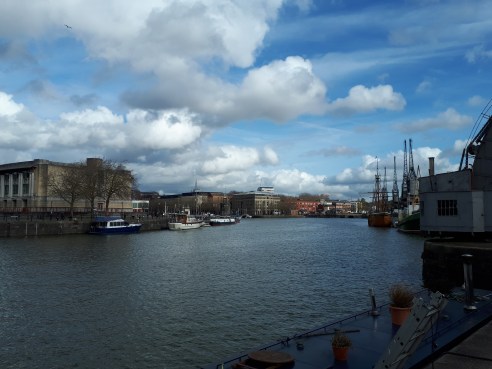
After a peek at the SS Great Britain, visiting a great whole food store (which sells oxalis tubers to eat!) and filling our bellies with fish and chips at Wrapping Warf , we wandered around the Arnolfini and Watershed areas.
20190219_124115.jpg
Ship shape and Bristol Fashion – I loved growing up in this city and I love to come back and visit!

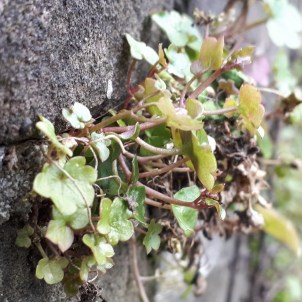
I took a few snaps of edibles which I noticed along the way. The place is very tidy, and popular so most of the plants that I found are resilient perennials. Just look at this little beauty: Ivy Leaved Toadflax (Cymbalaria muralis), sometimes called the Climbing Sailor which makes it so suitable for this nautical location!  What lovely geranium-like rubbery leaves. I do enjoy a nibble on this sort-of-cress-tasting-plant when I find it growing abundantly.  Today was neither the time nor place so the plants spotted in Bristol, carving out a quiet existence in the ship shape hustle and bustle, were left in peace.
 

IMG_20190219_174138_032.jpg
Climbing sailors – Cymbalaria muralis

Now, along this old railway track – a remnant of the old coal dock, I did find a lovely (if small) selection of urban edibles including Herb Robert (Geranium robertum), Chickweed (Stellaria media) and Mugwort (Artemisia vulgare).

20190219_123602.jpg
And here some of what I believe is Common Mouse-ear (Cerastium fontanum). Very pretty, clustered chickweed-like flowers, bouncing in the breeze, a top leafless stalks. I find this a stunning little edible. Darned tasty (if a little hairy on the tongue) and very fertile. So, if you can access one in a location that it flavours, you will not go hungry.


IMG_20190219_174408_139.jpg
Mouse-ear

The only place that I found around the harbour which was worthy of some urban herb harvesting was on the sloping path that runs towards the little ferry (to the SS Great Britain). There is a quiet green patch, full of brambles, stinging nettle and other lovelies. The plants are starting to build their foliage now so best left for now but in a month or so, that patch should be brimming with nettle tops and bramble buds. I find Bramble leaf buds a great source of fruity-tannic flavour, vitamins and minerals. By shrewd nibbing-out of buds, you can control the growth of a bramble patch in seconds whilst building up an interesting wild tea in your caddy.

So that was my little February Bristol Harbour edibles wander.  I am in Chepstow now, thoroughly enjoying the sounds, sights, taste and company. Will try to make a compilation of Chepstow forage-ables, before the week is out.


Want more?
If you want to learn about the edibles growing near you, how to ID, safely & ethically forage and how to include them in your life, take a look at my course. I would love to help you along your urban herbology journey!
 

Foraging Wild Garlic

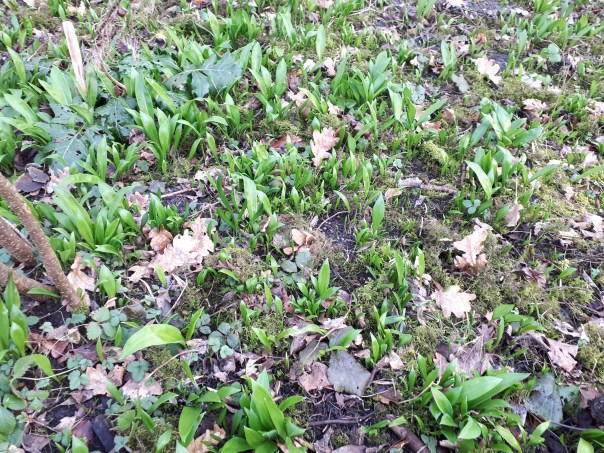
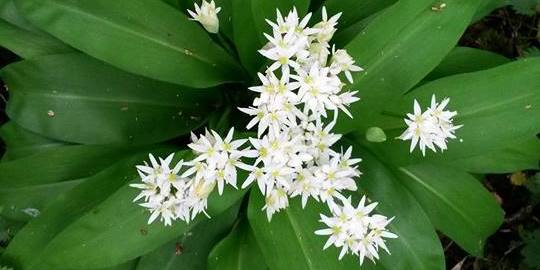
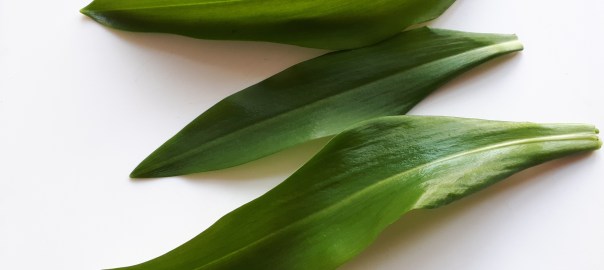
Three beautiful blades of Wild garlic / Ramsons / Daslook (Allium ursinum), plucked from the River of Herbs orchards in Park Frankendael today. I made some pungent daslook sauce from these, by blending them with olive oil and a little apple cider vinegar.

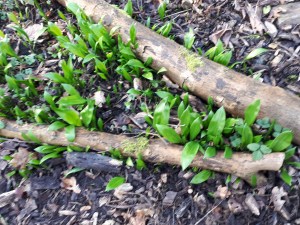
And here are a couple of year old wild garlic bulbs which I removed from the orchard path. The reason for this is discussed in the podcast. Have a listen and let me know your uses for the plant and if you have had any success growing it. The paths are edged with fallen branches. In this photo you can see how the plant spreads into the paths.

I only forage wild garlic when there are huge swathes of it and the leaves are a few inches long.

I’m off to make some dinner using a little of that sauce now. Perhaps you would like to listen to my latest podcast, about ethically foraging Wild Garlic and how to use it.

Elderflower time

This morning, I led a small group walk around Park Frankendael and one of the adjoining streets. There are so many edible and medicinal plants growing here at the moment, it’s a real delight to see!
A few of the plants which we found were Mugwort,  Elderflower,  Hedge woundwort, Valerian, Indian strawberry, Daisy,  Yarrow, Lime, Origano, Horsetail, Marshmallow, Comfrey, Sweet cicely, Catnip, Skullcap and Tansy.

Upon returning home from the walk, I’ve laid aromatic Tansy stems under my doormat (against basement odours and summer bugs), hung Meadowsweet stems to dry for a tummy soothing tea and drizzled Elderflower honey over chestnut, humus and cucumber crackers. Wild garlic seed heads are infusing in olive oil and a jar of Icelandic Fjällagras & Mallow flowers graces my kitchen.  In other words – Life is good!

Heart felt thanks to Jurtina from Reykjavik for reaching out to me last week and asking for the walk. It was a pleasure to walk with you,  Aline and the girls!


Day 6 – UH Foraging Challenge

Wallflower (Erysimum)
Wallflower (Erysimum sp.)

This was the closest I could get to orange flowers today as I wandered the Amsterdam King’s Day street market. Perennial wallflowers look bright and cheerful and are edible (depending upon their location of course). They belong to the cabbage family (Brassicacea).

So, what have the challengers been finding? Here’s another lovely plant record from Hannah McDonald showing hollyhock, rosemary and plantain.

Photo credit - Hannah McDonald
Photo credit – Hannah McDonald

And from Carol Poye, gorgeous dandelions

Photo credit - Carol Poye
Photo credit – Carol Poye

and white deadnettles.

Photo credit - Carol Poye
Photo credit – Carol Poye

More tomorrow…

Day 5 – UH foraging challenge

20170426_104418

Day 5. Had a lovely morning in Park Frankendael, weeding sycamore seedlings and cow parsley from the orchards. Found the hostas looking beautiful and gathered cleavers,  wild garlic,  ground ivy and lemonbalm with one of my past apprentices.

Hosta

Then it hailed and was cold so we drank hot chocolate.

Tomorrow is King’s Day so I really should hunt for some orange flowers.


At the moment, my phone is over loaded with photos from challengers and won’t do what I want. I’ll add some to this post later…

Day 4 – UH foraging challenge

Here are some lovely images from my foraging challengers. I’m so impressed by their efforts!

Image and photo credit: Hannah McDonald

Hannah (who is working on illustrations for my books!) has been sketching her finds whilst wandering Amsterdam.

Peter is currently trying to ID this mustard type brassica.

Photo credit: Peter Warnock

And Elodie has been considering the edibility rating of thistle…

Photo credit: Elodie den Otter

Dana has found a herb she has known about since childhood (not for eating) – greater celandine / stinkende gouw – with the yellow flowers. It is a traditional topical remedy for several skin complaints.

Photo credit: Dana Marin

Is great to see people branching out from the usual foraging favourites!

I was at work today so took a lunchtime walk past lots of green spaces. Here’s some purple deadnettle growing opposite the Amsterdam Hilton.

Purple deadnettle
Purple deadnettle

More tomorrow…

Day 3 – UH foraging challenge

Allium ursinum
Allium ursinum

Have just noticed that this is my 600th blog post on Urban Herbology – Thank you for reading it!

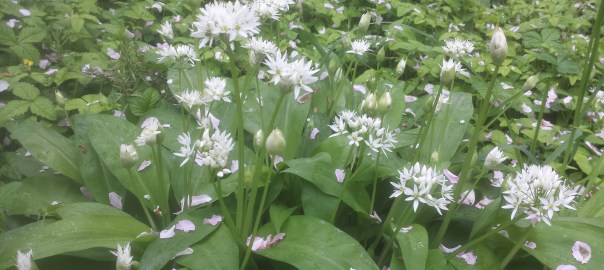
A friend and I harvested quite a lot of daslook / wild garlic (Allium ursinum) today in Amsterdam. This plant is on the Netherlands endangered plant list but it grows like a weed in some parts of Amsterdam and is frequently foraged.  One of the reasons for my running the River of Herbs orchards in Park Frankendael,  is to have a place where ethical foragers can carefully harvest this plant,  legally without getting into awkward situations.

We were sprinkled with cherry blossom confetti as we harvested.  A beautiful experience!  If you would like to help out at the orchards sometimes and learn more about herbs,  let me know. We are there (almost) every Wednesday morning – year round.

And what did the challengers get up to today?  I’ll update with some of their day 3 foraging challenge plants and photos later today…

So, they have reported back to me with notes and photos of Japanese knotweed, dandelion, mugwort, motherwort, daslook, spring/Himalayan balsam, valerian, winter purslane, cherry blossom, stinging nettle and more. Here is a beautiful photo from Carol Poye, of Claytonia perfoliata (winter purslane / postelein).

DSCN7107
Photo credit – Carol Poye

I love the taste of this plant and never cease to be amazed by it’s appearance. Just look at the leaf shape and how the flowers seem to emerge from their centre. What a special plant. I am not surprised that this is grown as a crop salad in the Netherlands.

Here is a substantial patch of Japanese knotweed which Ann Doherty photographed. What a sour tasting edible stunner this is and yet what a brute it can be!

Photo credit - Ann Doherty
Photo credit – Ann Doherty

I remember looking at an old house for sale in Somerset, many years ago and Jap. knotweed was growing into that house through one meter thick stone walls and a thick concrete floor. That house had stood looking like a Midsommer Murder’s location for centuries (it was very pretty) but Japanese knotweed brought it to it’s knees. The plant is native to Japan where it is apparently kept in balance by other local plants. But here in Europe, it does not have such competition so quickly spreads, smothers other plants and finds barriers such as concrete little challenge to penetrate. I have long found it rather worrying to have this plant growing all over the place here in Amsterdam. For years it has been spreading here and the costly related problems in countries such as Canada and the UK are well known, yet little has been done about it here. I wrote a post about it in 2012 – take a look at the healthy knotweed specimen in the Hortus Botanicus! I guess that the green managers of Amsterdam felt that a balance of nature would arise and that the problems abroad were perhaps exaggerated. Having seen them first hand, I find it all rather worrying.

Finally, there is a new local map of the spreading invader, restaurants are starting to serve it, there is mention in gardening magazines but I find this recent awareness raising all rather late in the day. The plant continues to grow in great robust smothering swathes throughout Amsterdam parks and elsewhere. It erodes the waterway banks, penetrates so deeply and widely into the soil. The smallest flinter, on a trowel or spade, in boot treads etc will cheerfully regrow. Of course, all plants have a value but I would like Japanese knotweed to stay away from my building and from the beautiful biodiversity of Amsterdam. If you find it and fancy a taste, be totally sure not to leave any part of the plant hanging around. Cleanly cut the part you want (young and tender shoots are best), prepare it and any left overs should be burned. Amsterdam household waste heads off to the municipal incinerators, that’s the best route for Japanese knotweed. Don’t leave left overs, trimmings etc in your compost heap or worm bin.  Here’s a simple recipe which I made up for the plant in 2012. I haven’t really eaten it since writing that post. The taste was good but perhaps thoughts of that crumbling cottage spoiled my appetite.

So with Japanese knotweed in mind, let’s journey on to day 4…


Join my 30 day challenge!

Today's weeding at the orchards.

A few years ago I challenged myself to blog every day for a year about the edible plants which I find in Amsterdam.  I loved the experience!  Now, I want to challenge you!

The 365 Frankendael project taught me a lot and helped to spread the word about ethical urban foraging. It was a nourishing experience on many levels.

My 30 day challenge is to encourage you to find something edible growing in your town, city,  suburb or village every day.

  • Take a photo or make a quick sketch.
  • Find out a little about the plant.
  • Maybe try to do something useful with it.
  • Tell me about it.

I’ll support you as much as possible by answering enquiries about the plants you find and by suggesting how they can be used. I’ll also send you a little inspirational email each day (only if you’d like that). No pressure, no requirement to eat the plants or even pick them but a lot of encouragement to find out more about the edible plants which grow around you.

So who’s up for it?! Either reply with a comment here or send me an email to urban.herbology.lynn@gmail.com.

I’ll start posting my daily finds and feedback from people who take up my challenge,  from tomorrow.


Gentle wild garlic

Ramsons in Frankendael Orchards

I stood stupefied and watched a woman take out a knife and cut bunches of Wild garlic from inside the entrance of Park Frankendael this evening. Felt so mad and sad and bewildered that I didn’t know where to begin with her. So just stared at the mini massacre until she saw me and my little girl watching and finally she stopped.

Ramsons/Daslook/Wild garlic/Allium ursinum tastes outrageously good but it should be harvested gently! It is currently on the endangered list in NL so strictly, even though it’s almost a weed in some parts of some Amsterdam parks, it should not be cut or ripped out in handfuls! And even if it is prolific everywhere how could it feel good to rip or cut it like that!

Cut rather than plucked.

If you know of a plentiful supply please go for the out-spill plants – where it’s growing in paths etc and will be rooted out by the park gardeners. Or grow your own. Or meet the park gardener and ask where/if he/she suggests you forage. And use your common sense. That woman foraged from the filthiest part of the park – dog spot number one – right by the main gates. Come on!

Badly foraged wild garlic.

And even when you find thousands of those leaves, please know that just three leaves, plucked between finger and thumb are needed to make enough pesto, herb oil or mojo to last several weeks. After plucking carefully, no one should be able to see that anything has gone.

If you want some Daslook but still don’t know where, when and how to pluck it, please come and see me on Wednesday morning at the Frankendael orchards (10.00 – 11.00 behind Huize Frankendael). You can take home your own plant too, if you like.

We are what and how we eat.


Spring Herbs Risotto

Fennel and Lemonbalm harvest
Freshly plucked Fennel and Lemonbalm leaves

This time of year provides a bounty of nourishing and tasty spring herbs. Here is one way that I like to cook them – a simple, no-fuss risotto.

Today I harvested two large feathery  Fennel leaves and three verdant tops of Stinging nettle (from Frankendael herb orchards). Yesterday I plucked three huge Dandelion leaves from the school garden (where I work). The dandelion leaves were wilting away in my fridge today but still taste great cooked, so those three herbs were chopped and added to the pot this evening. I could have many other herbs of course (Dead nettle, Wild garlic seedheads, Geranium and Ground ivy for instance) and I could have harvested heaps of Nettle and Dandelion leaves but there are other days, other meals, other foragers and other creatures who need those plants.  Upmost in my urban foraging mind is that by using foraged material as I would use herbs (i.e. in small amounts for culinary seasoning), I reduce my environmental impact and reduce the risk of eating contaminants and plant poisons (should they happen to be on or in the foraged plants). This is why I call my work Urban Herbology, rather than urban foraging. To find out more, do come along on one of my herb walks soon!

Lynn's Spring Herb Risotto
Lynn’s Spring Herb Risotto


Spring Herb Risotto
(makes about 2 main dish sized portions)

1/2 cup risotto rice – (non risotto rice will do, it just won’t become so creamy)
1 cup of good stock and 2 cups hot water (or 1/2 an organic chicken or vegetable stock cube in 3 cups hot water)
1 cup finely chopped seasonal fresh herbs (e.g. Fennel leaf, Dandelion, Stinging nettle).
1 small onion, finely chopped
1/2 cup frozen peas
Salt/Nori flakes/pepper/Parmesan cheese
to taste.

Method
1. Add the rice, stock and hot water to a heavy based pan.
2. Stir briefly to prevent it sticking to base of pan and bring to a boil.
3. Add chopped herbs and onion, stir and bring to boil again before reducing heat to simmer gently with lid on.
4. Simmer as per instructions for your specific rice, the dish thickens up considerably and may require lots more water, it depends on the type of rice used. My risotto rice took about 25 minutes to cook through completely and become nicely loose and creamy.
5. Whilst simmering, continue to stir briefly whenever you think about it. You may need to add a little more water to prevent stickiness.
6. When the rice is cooked through and of a good consistency, add the frozen peas to the pan. Simmer for a further 5 minutes.
7. Check and adjust seasoning (it may need a pinch of salt,nori flakes or pepper)
8. Serve with a hearty grating of Parmesan cheese if desired.