Category Archives: Foraging

Wild garlic cheese balls

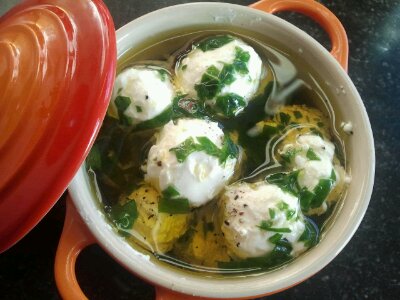
I’ve been making different types of soft cheese at home and this weekend and wanted to share this incredibly simple recipe. The soft cheese is made from yoghurt and then is infused with wild garlic leaves, fresh from the local park.
image

All that you need is:
A cup or two of good quality yoghurt (no added thickners etc, goats or cows is fine),
Cheesecloth, very clean and just scalded (by dunking in boiling hot water for a few seconds),
Olive oil
2 wild garlic leaves, finely chopped (other fresh herbs can be substituted)

To make the yoghurt cheese simply…
1. Pour the yoghurt into the centre of the cheesecloth and pull up the four cloth corners to prevent the yoghurt spilling out.
2. Use a rubber band/clean string etc to tie up the cheesecloth somewhere convenient.
3. Hang it up somewhere clean for about 24 hours, over a bowl so that the drips are collected.
4. After that time you should have a cream cheese consistency, with a milder taste than yoghurt – soft cheese!
5. Scoop out teaspoons of the cheese and form into small balls with your hands.
6. Place in a clean container along  with enough olive oil to cover the balls and of course, the chopped wild garlic.

image

7. You can eat it straight away but after a half a day or so, the cheese will become deliciously infused with the wild garlic flavour.
8. If you manage not to use it all up before hand, it should keep well in the fridge for a week.

365 Frankendael day 209

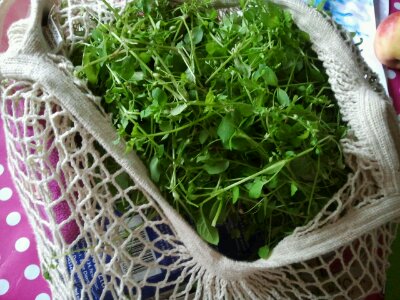
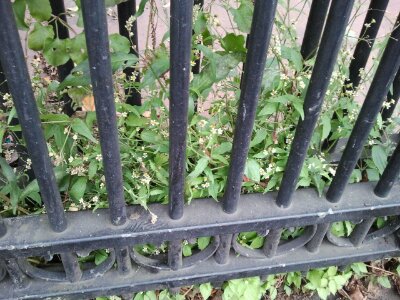
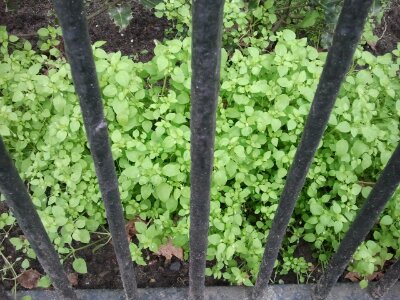
The Amsterdam Manor Hotel on Linneausstraat has a lovely wrought iron fence along side the road and I was delighted today, to find masses of delicious Chickweed (Stellaria media) tucked behind it, just within arms reach.

image

I harvested a bag full I’m no time at all, drawing a few interested glances. No matter, I now have a 500 ml tincture jar set up and a small apple cider vinegar infusing with this wonderful herb and wild food.

image

I’ll use the tincture for cleansing and if needed, to dissolve cysts our solve itchy skin complaints. Ill use the vinegar as a salad dressing, straight of the spoon or to draw minerals out of cooking food.

Chickweed is a nutrient dense plant, so easy to harvest and find and so tolerant of the cold weather.

Also today, behind another fence, this time belonging to Spanish tapas bar, Pata Negra, is a healthy patch of Gallant Soldiers. Quite appropriate I think!

image

Storing the Ginkgo Harvest

image

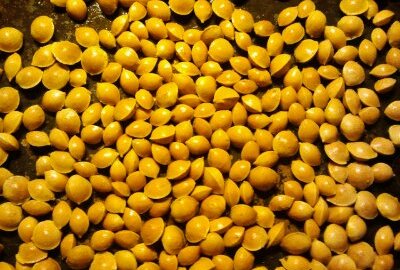
A few days ago, I harvested a small mountain of ginkgo fruit from a street in Amsterdam. Today I finally got around to soaking and cleaning them. Previously I have then dried them to store in a jar or roasted and eaten as many as I fancied. But they do spoil quickly even when cooked so roasted Ginkgo nuts are best eaten swiftly. Also, the ones I have dried to store, often sweat a bit more than I’d like, whilst sat in the glass container, so I’ve been looking for better preservation methods. Tonight I was looking through a book by Steve Brill (of NY Central Park) and he suggests roasting the lot and then freezing them for later use. To bring them back to life, so to speak, the frozen nuts should be roasted again for just a couple of minutes. So after reserving a handful to stratify over winter (as kindly recommended by Fran from Serendipity Farm in Tasmania), the rest have been roasted for 15 minutes and now cooled, reside in my freezer. The Apprentice group can test the results tomorrow morning!

Much as I love the taste of these nuts, I’m done with the pukey smell when I clean the fruit off, so that’s it for my Ginkgo foray this year. I’d also like to thank everyone who joined me to help clean up these smelly fruit and nuts over the past couple of weeks (they don’t smell bad when they are finally cooked by the way). Several of my colleagues have told me that they think the foraging this year has made a difference to the street where we work – less smell and less squishy fruit to avoid on the pavement. So I think it was all well worth it!

More Ginkgo Harvesting!

image

Today I was joined by two more groups of eager urban foragers, to harvest some more of the strange fruit which currently fall on several Amsterdam streets.

We harvested from Albrecht Durerstraat mainly. Although the enormous glut of fallers from last week, had already been removed by the council street team, we still found several bags full. There are many fruit left on the some of the female trees, it’s not to late of you want to try and haven’t yet had a chance.

image

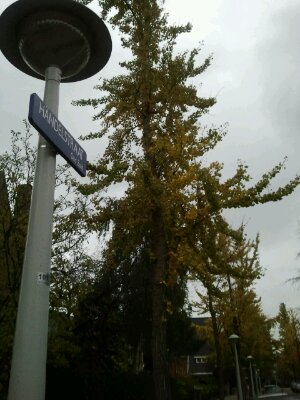
On my way home from work I noticed more streets which are home to Ginkgo biloba trees. This photo is of Handelstraat. I didn’t walk the street to see if it houses any fruit bearing females. Jennie Akse, who came along today, told me about a lovely female Ginkgo in Beatrixpark which is shedding fruit on the grass.

There are many places to harvest at the moment. People have asked if I know of any Ginkgo on Amsterdam West and I don’t. Of you do, please let me know.

Here’s a link to my post on how to safely harvest and prepare the fruits. It’s the nuts that foragers are after, the soft fruit part is toxic.

Eat Ginkgo Nuts from City Streets

image

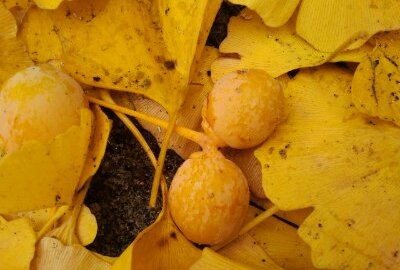
Today I prepared the Ginkgo nuts which I harvested from Albrecht Durerstraat, in Amsterdam Oud Zuid, yesterday. They taste great and the three of us are showing no ill effects from eating them this evening! To prepare Ginkgo nuts, a few methods may be employed. All involve removing the toxic apricot coloured flesh (sarcotesta) from around the precious nut, without harming yourself. The sarcotesta contains the irritant found in poison ivy so wear rubber gloves and be very very careful and if your skin or eyes do become irritated, seek prompt medical attention.

How to prepare freshly harvested Ginkgo nuts/fruits

1. Soak your gingko fruit harvest in a bowl of cold water, away from animals, children or prying hands. An hour our two is sufficient to fully hydrate the flesh, making it very easy to remove.

image

2. Wearing thick rubber gloves, simply rub the flesh off the nuts, into the soak water. Rub them off under the water, to avoid them squirting into eyes or surfaces where the toxic juice may go unnoticed. As each nut is exposed, place it in a small bowl. 3. Strain the water away, compost or bin the flesh. Rinse your sink drain well after this as the flesh starts to stink of apricoty vomit as it rots down. 4. Give the almost clean nuts another rinse in clean cold water, to remove almost all of the flesh (this is very quick and simple). Drain them and leave in the small bowl.

image

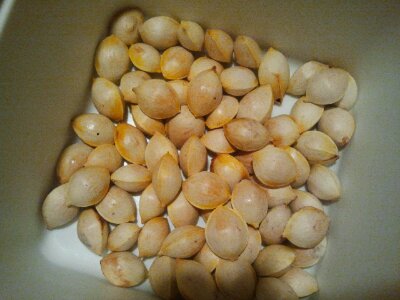
5. Spread the cleaned, wet nuts on a baking tray and place in an oven, preheated to 80°C (to dry off and store then – remove from oven when the surface is totally dry) or to 180°C (to roast)

image

6. To roast at 180°C in an oven (or in a small sturdy frying pan) simply leave them in the heat, toss them around once or twice and remove when the outside of the nut shells looks just toasted in places. Test one. 7. When cracked open and the inner skin peeled off, a ginkgo nut should be like a very firm jelly but not rock solid, the colour should be a beautiful translucent green. Mine took about 15 minutes in the oven to reach this point today.

image

Ginkgo Harvesting in Amsterdam

image

For some years, each autumn, I have trudged through putrifying Ginkgo fruits, fallen amongst fossilesque golden Ginkgo leaves, on Albrecht Durerstraat in Oud Zuid, Amsterdam. It is where I work and is a street that the local council chose to line with this amazing tree herb, many moons ago.

Ginkgo biloba is a fascinating plant. Often known as the Maidenhair tree or the living fossil tree, it is incredibly resilient to damage and pollution and is well suited to the urban environment. It has been long revered by traditional Chinese and Japanese medicine and apparently has many uses, particularly for the circulatory system.  This is apparently the most adulterated herbal extract that people buy. Most people seem to take the extract to improve their circulation, for cold hands and feet for instance and to boost their memory. Be aware that there is much conflicting evidence about the effectiveness of Ginkgo for memory loss and demetia. As ever, treat all claims with caution and if trying something new, be very cautious. Here’s a summary of the current research.

image

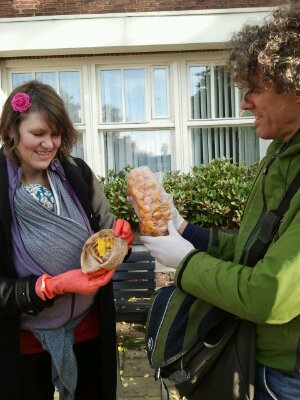
This lunchtime I was joined by 5 adults and two snuggly wrapped babies, to harvest some Ginkgo nuts which have dropped onto parked cars and the pavement.  The flesh (sarcotesta) around the nuts is HIGHLY TOXIC, containing the same chemical as poison ivy. Anyone wishing to harvest, should avoid touching it.  The chemical causes a very serious skin reaction and requires prompt hospital treatment.  Likewise, because Ginkgo acts as an anticoagulant, if you are already taking drugs which act to “thin the blood”, you should avoid the herb and consult your doctor for advice, if you really think it could be of benefit to you.   If you are allergic to aspirin or nuts, this is also a herb to avoid.

Please follow the instructions in this link if you want to know how to prepare the nuts. Note the rubber gloves and photo of blistered eyes, on that website!

By removing these smelly fruits from the pavement we are sparing the local residents from some nasal pollution and are harnessing an urban resource that people in some other countries would be very envious of.

image

So if you want to join me and a few others on Friday at 12:35 or on Tuesday at 12:45, please come equipt with a pair of rubber gloves, a couple of sturdy plastic bags and perhaps a spoon or chopsticks, to pick up the fruit.  Much of the current harvest has already been swept into the gutter but this is still fair game for the well prepared forager! We’ll be meeting outside of the AKO newsagent, on the corner of Beethovenstraat and Gerrit van der Veenstraat (trams 24 & 5). I’ll be wearing my yellow raincoat and rubber gloves 🙂

365 Frankendael day 181

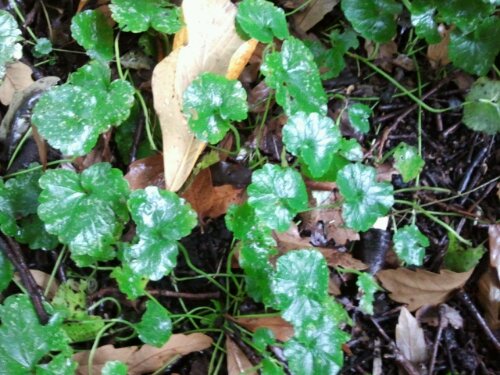
Here are two herbs which were added to my lunchtime soup today:

Ground ivy (Glechoma hederacea).

image

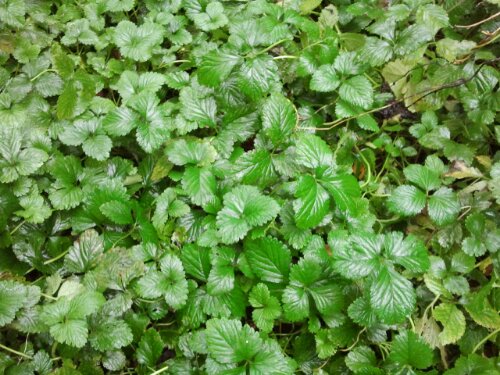
Potentilla sp.. Here’s a little information about the abundant and edible urban herb.

image

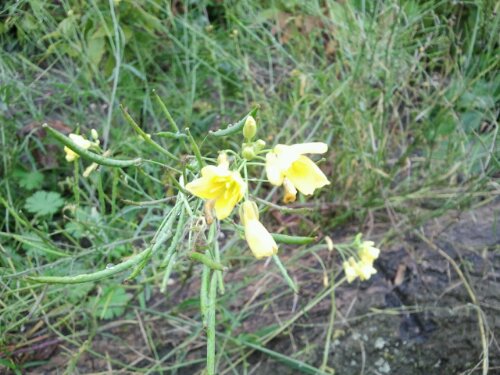
And here’s the herb that I’d had in mind, to as to the soup pot.. Wild  Rocket. It has already gone completely to seed so I was to late but thankful that there should be many more of these plants in the area next year.

image

365 Frankendael day 175

image

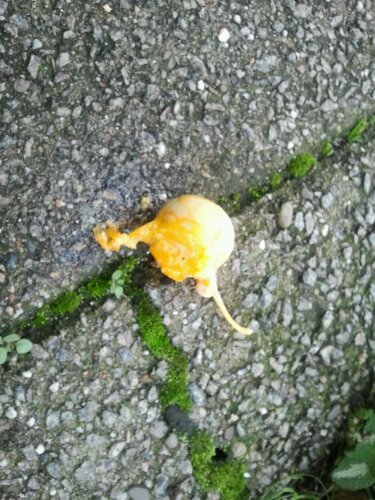
Today I noticed quite a few more Gingko biloba fruit had fallen from trees close to my workplace. There are not enough to organise a harvest yet but they are getting ripe and beginning to smell of vomit (as a colleague correctly put it today). Here is one of them. I thought I’d post a method for preparing them…

This link is to a very useful Instructables post about how to safely harvest and prepare the fruit and the nuts within. Note how seriously wearing rubber gloves is taken. The fruit contains a toxic chemical which is very likely to seriously irritate you, should you handle them with bear skin.

There are lots of female Gingko trees in Amsterdam, if you spot one near you it may be worth the effort of foraging the fruit in this way.

365 Frankendael day 173

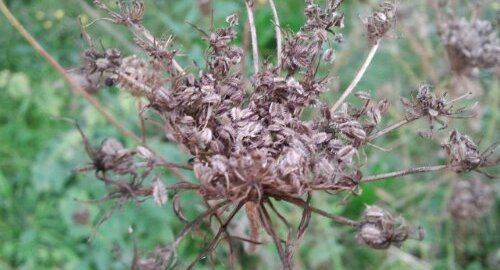
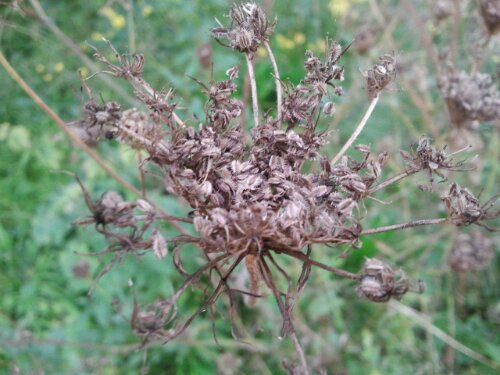
Today I noticed lots of Wild carrot seed heads (Daucus carota). Be careful to identify them directly as there are so many similar (but poisonous) plants in the family.

image

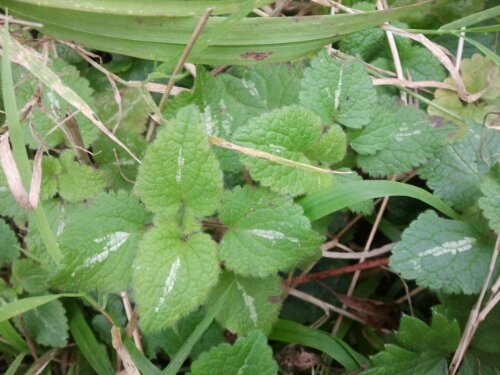
Also this lovely plant with white paint like markings. As other more familiar plants begin to die back it’s time to look this one up. It has yellow flowers earlier in the year. Must look up the name…

image

Also beautiful clumps of Russian Comfrey (Symphytum uplandicum x), still thriving, still sending energy reserves into it’s roots to help it through the winter.

image