Category Archives: Herbs

365 Frankendael day 143

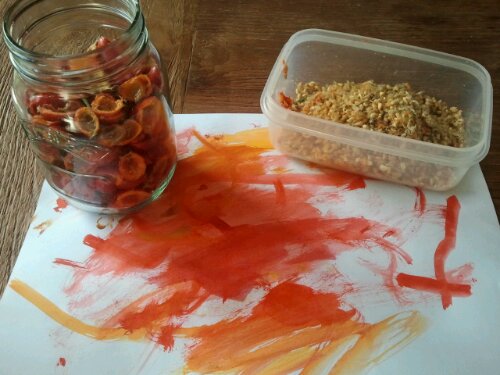
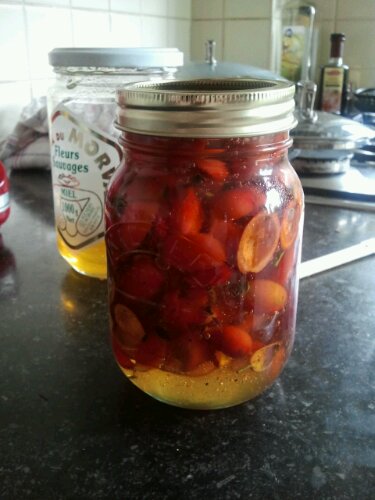
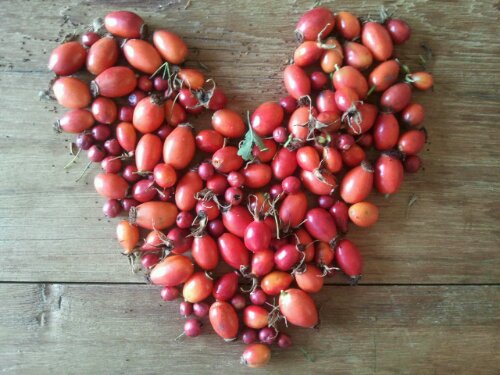
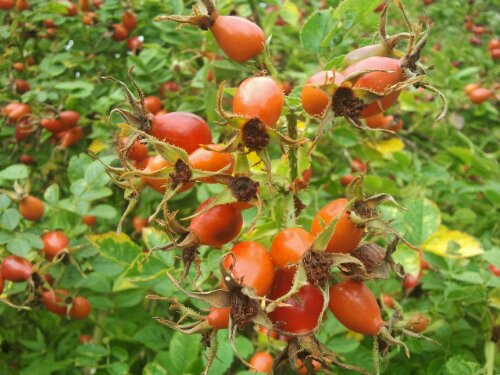
Today, more Rose hip harvesting. Without trying to sound corny, this really does seem to be a good year for the roses! I’m making the most of it by topping up my Rose hip honey infusion jar.
image

There are lots of Rose shrubs with green or very pale yellow orange hips at the moment. This shows that the Rose hip season should be around for a while yet.

I’m setting up a jar of Hawthorn berry elixir today, so also picked some more of those heart warming and toning berries to add to the mix.

image

To make an elixir, which is simply a preserve made of herbs in some sort of alcohol and sugar, all you need do is the following:

1. Place enough berries (clean, ripe and dry) to fill your jar, into a bowl. 2. Pour over enough honey so that,  with a little stirring, every berry can be coated in sweet goodness.
image

3. Now pour that sticky berry-honey mix into your sterile glass jam jar.
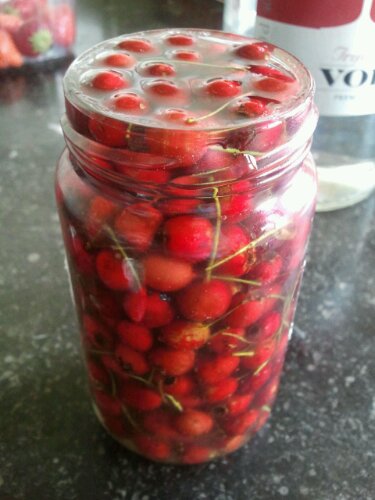
4. Put your chosen strong alcoholic spirit, Brandy and Vodka being the classic choices, into the jar.
5. Poke around a little, with a chop stick or clean knitting needle, to dislodge any trapped air bubbles. Make sure it’s filled right to the top of the jar.
image

6. Leave to sit and infuse, with a tight fitting lid on, in a quiet spot and out of direct sunlight, at room temperature, for about 6 Weeks, or as long as you can bear to wait.

image

7. When it comes to maturity, you simply take off a teaspoon of tasty elixir at a time and slurp it down, or you may like to strain off the berries (save and use them for fabulous desert topings although the stones need to be removed before eating) and store the elixir in a suitable sterile bottle (e.g. a used flip top Grolsch bottle or similar, is perfect).

Hawthorn is a renowned heart tonic.

Processing Rose hips

image

Rose hips are plentiful at the moment. They are nutritious and medicinal. All clean, unsprayed and legally obtained rose hips can be used to make immune boosting preparations. But this is often easier said than done. They are full of itchy, hair covered seeds. These need to be removed before the Rose hips can be ingested.

One way to do this is to make your syrup, or whatever else you choose, and then strain out the seeds and hairs before the final storage.

Another way, is to remove them at the start. It is fiddly but it works and is worth the effort, especially if you’d like to make a cold uncooked preparation, such as Rose hip honey. I also think it makes the harvester/forager quietly aware of each hip and that is a good thing, on many levels.

Here’s how I do it.

1. Cut a hip in half. Out is best to harvest them before they become soft and pulpy, but when they are fully coloured.
2. Scoop out all of the seeds and most of the hairs, using a strong thumb nail or a blunt ended knife. Quirk through all your hip harvest in this way. Place seeds in a container to return to the harvesting location and the deseeded hips in another.

image

3. When all of the hips are deseeded, place them in a bowl and fill it with water. Swill them around a little, to release the hairs and other unwanted particles.
4. Strain in a colander, whilst swilling around in more water.
5. Lay the washed hips out on a clean dry tea towel (or a dehydrator) and allow them to surface dry. I like to use another teatowel to dry of the tops and then I tumble them around now and again, on dry sections off the teatowel, to speed up the process.

image

6. Wash your hands, arms and wherever else three hairs contacted you, with cold water. They come off easily but may tickle for a long time if you miss an area.
7.Use as described in your chosen recipe. I simply pack mine into a jar and pour in honey, at this point.

image

365 Frankendael day 136

image
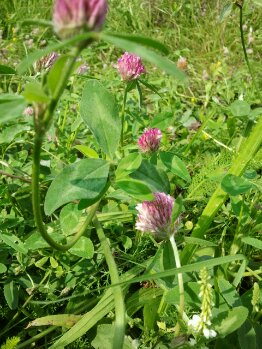
red clover

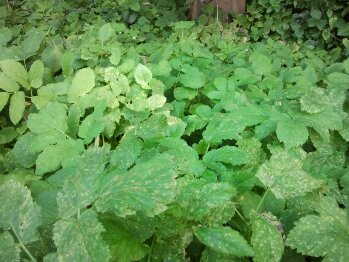
Today I harvested a few handfuls of Red Clover blossoms to make a small jar of tincture, three large leaves of Ground elder, to chop finely and add to our dinner and sat quietly in a beautiful, tiny grove, within the woodland part of park Frankendael.

image
Ground elder

The grove is somewhere I’ve walked by many times, have harvested little from and yet it drew me completely within itself today. This place has a wonderful energy about it, filled with sounds of the city and yet, cool, shaded, green, earthy, nurturing and sheltering. Sounds of birds chattering around me, branches crack as squirrels and other small animals climb around. Just the place to launch the apprenticeship course, I think. To sit on the ground here is a beautiful experience. I smell Ivy all around me and feel supportive earth beneath me. It is a magical place.

image
Grove in Frankendael park

I feel delighted that I will have an opportunity to take several people there, to share my love of this place and of the plants which choose to live in the city.

365 Frankendael day 131

Today I looked at small herbs, growing along the Middenweg, which could easily be”weeded” out and replanted in locations where they could be allowed to grow unhindered and provide food…

image

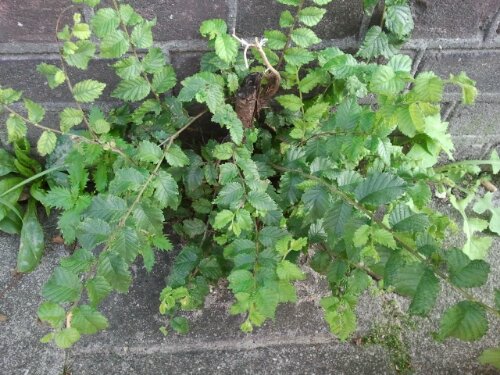
Here’s a little Hazel, coppiced by repeated strimmings and strong.

image

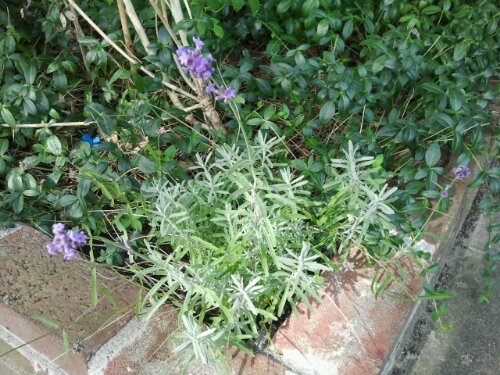
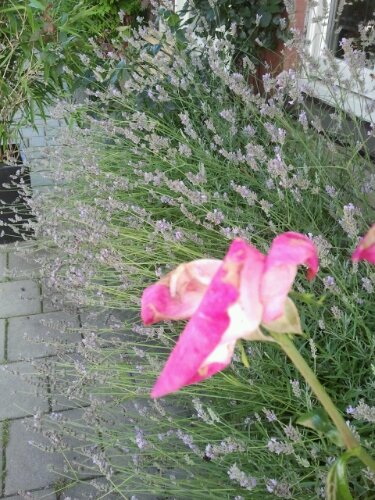
Lavender. Smells great, tastes interesting but more useful for remedies and use in the home. Consider adding a handful of the flowers or fresh seeds to a small jar of honey, infuse for anything from a few days and use on minor burns.

image

Hollyhock, seeds. Now’s the time to collect them and help new plants grow where you’d like them.

image

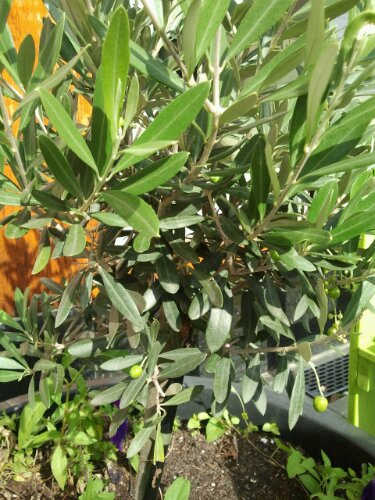
Olive, with little Olives! We lost our roof top Olive last winter, during the drop freeze, but they can do just fine here, if protected in mid winter. No need to wait for the fruit, the leaves are also useful.

image

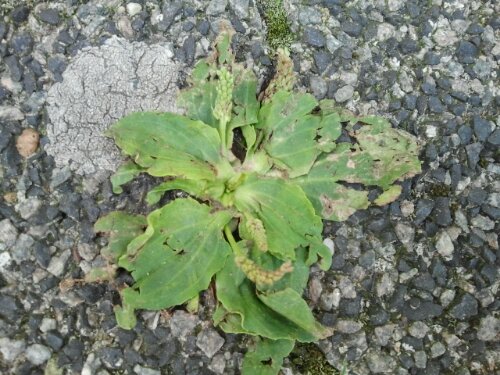
A very well trodden Plantain. These look great in a put and are so useful.They do well in tree pits, are evergreen and can look quite attractive.

image

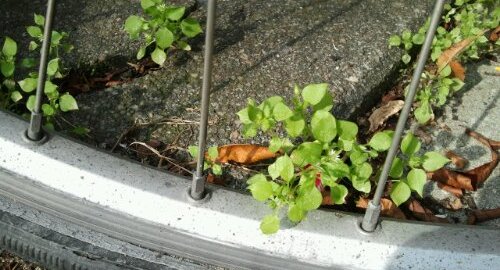
Chickweed, one if my favorites for food and remedies, even in the winter. grown in a put they can make a thick yet delicate edible herbal carpet.

image

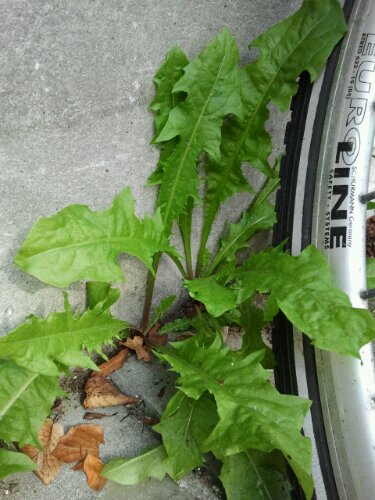
Dandelion. So useful and so bitterly tasty! Encourage strong roots by digging the soil before transplanting to your chosen location.

image

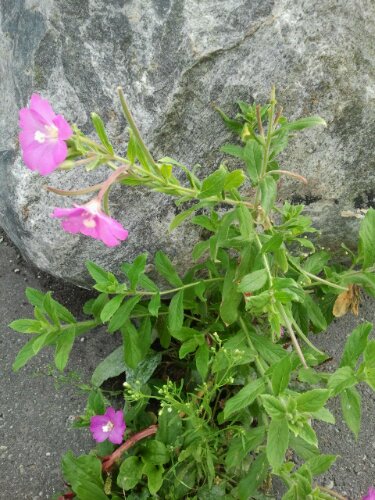
Lastly today, Rosebay willowherb. Such pretty and tasty flowers.

365 Frankendael Day 129

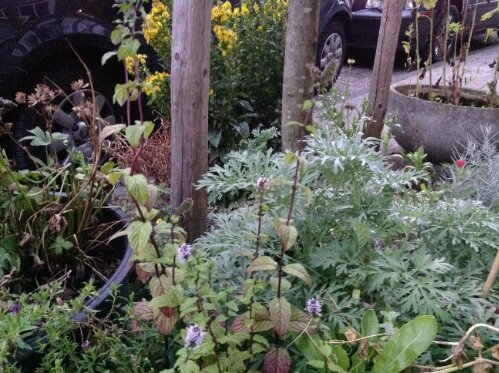
I am now back in Amsterdam but too late to visit park Frankendael today, so here is a twilight photo of the tree pit which I care for outside of my house.

It has faired very well over the summer. The self seeded Artemisia absinthium (Wormwood) is looking very strong, self seeded Geraniums also like the spot and a few other plants too. These include a Curry plant ( Also a type of Artemisia I think), Lavender, Calendula from seed, Mint, Ivy (that has less of a good time in the warm months) and Goldenrod.

Thanks ever so much to the people who sent me photos of edible plants in Amsterdam, whilst I was away. It was great to see what the plants were doing and also to be able to add an entry to this project every day.

I’m really looking forward to visiting the park tomorrow.

Golfball Hailstones in the Morvan

There are so many beautiful plants here in the Morvan, stunning landscapes and sometimes dramatic weather – as we discovered yesterday.

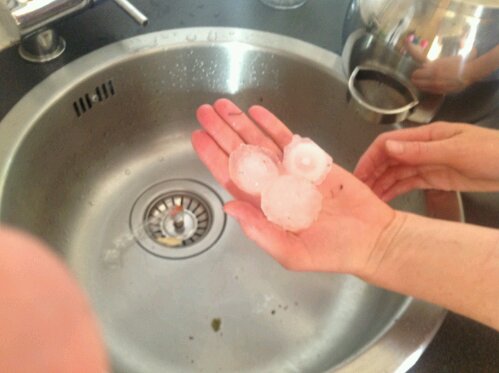
Here are a few supersized hailstones from one of the storms that reined down on us yesterday evening in France. It was quite an experience, I imagine similar to being trapped infront of a tennis ball practise machine that has been loaded with golfballs and turned on the fastest, hardest setting. Protected behind double glazing and shutters during such a storm was quite entertaining but our car did not fair well. It now sports hundreds of substantial dents and drew incredulous glances as we cruised by a local market today.

Many trees lost boughs and branches. Many smaller plants have been snapped in two or punctured cleanly by the hail. It did taste very refreshing though and in a way was welcome relief from the soaring temperatures.

I heard that recent weather has been quite disastrous for wine producers of the Burgany region. Now I can empathise when I hear of “hail” spoiling crops.

Elder and Sugar Plant Cuttings

How are you’re Elder babies getting on? Did they survive the dark wet weather and then the recent heat wave? It’s almost a month, since we snipped them from their parent bushes on Hugo de Vrieslaan and I know some have had a tough time. But be confident and don’t give them up for dead, even if they look lifeless. Just water when they or the soil seems to need it, they don’t like having soggy feet but they don’t like drying out either. Elder (Sambucus nigra) is once of the easiest cuttings to grow, they stand a very good chance.

Mine are in a quiet north facing balcony corner, with a large plastic bag at their base. I loosly pull it up when I feel it’s too windy for them, or too sunny. I pull it down at other times, when I remember. One cutting lost it’s leaves quite soon but now has fresh green buds. The other two have kept hold of their leaves and show new growth. I’m very pleased.

Here is a cutting I took from Youko’s Sugar plant. This is not Stevia and it’s clearly not Sugarcane or anything similar but it does taste of sugar – a lot! Youko, could you tell me the real name when you have a chance? I thought it died on the way home, it looked so limp for a couple of weeks, but it didn’t dry up so I kept faith and just monitored the soil wetness. Not too wet, not too dry, as with the Elder. I kept it in a similar location to where Youko has hers. Yesterday it seemed to gain energy (probably from roots!). It now looks positively perky and sports new leaves! I think it is now through the most tricky cutting phase so hopefully I’ll have a nice healthy plant for some time to come.

I’d love to hear how your Elder cuttings are getting on, and other plants you are trying to proliferate. Likewise, whilst I can’t take photos of herbs in Frankendael, I’d really love to receive any photos of plants you think may be edible or medicinal, in Amsterdam.

Hollyhock Seeds & Fraunhofferstraat

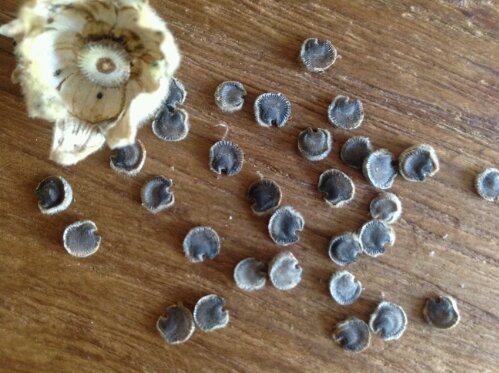
Here are some Hollyhock seed heads from the plant which found its way to my geveltuin last year. I harvested one really dry, ripe seed head today and collected the seeds from within. They are beautifully arranged in a wheel-like pattern and are big enough for kids to deal with.

Hollyhock is a biennial, is quite beautiful and can be used to soothe inflammation for such things as cystitis and sore throats and offers a remedy for several chest complaints such as persistent coughs and bronchitis. It is a close relative of Marsh Mallow. Obviously Hollyhocks won’t make a suitable remedy for everyone with a bad chest but it’s a good enough reason for me to want to proliferate them in the city.

I’ll be sewing some of these seeds in nearby tree pits this week and saving others to plant later, just I case the first batch fail.

Since I wrote about the untended tree pits close to my home, on Fraunhofferstraat, they have magically been tidied up! I don’t know when it happened or who did it but every single tree pit now looks really tidy, seems to have been hoed and is ready for seeding or planting! Thank you whoever it was!! I began with sewing some poppy seeds at the weekend and will move a few useful pretty herbs in there, which I find in pavement cracks etc.