Category Archives: Herbs

365 Frankendael day 20

Day 20 of the project and after going to the park expecting to see just one or two new things I was delighted to find my first Elder blossom of the season, Wild Aspraragus shoots and several other delights. Here are a few…


Above, Japanese knotweed is still fair game for Foragers looking for something a little exotic in Amsterdam. Here’s a link to my
sweet sour JKW yoghurt recipe
.
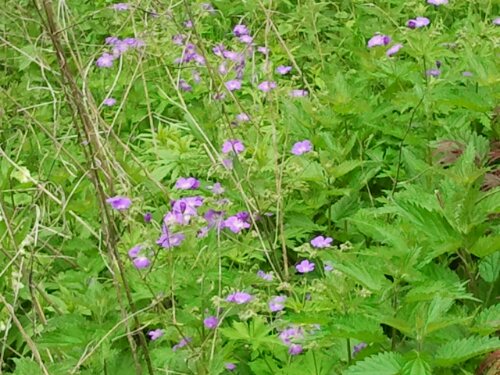
Next is A Geranium species in flower. Very tasty cooked or raw.
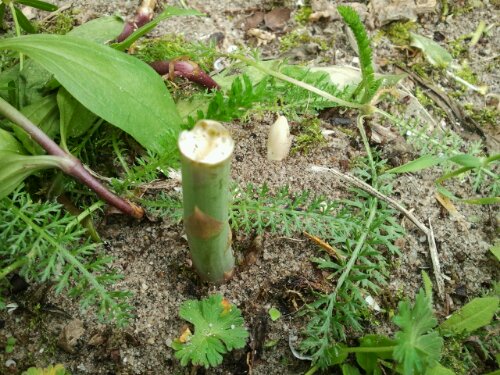

Someone got to this Asparagus before me. It makes a stunning tall feathery plant when allowed to flower. I hope that whoever harvests this one leaves some other shoots to flower and fruit unhindered.


Above is Plantago major (NL: Wegbrood, Plantain) in full effect, prior to flowering. It’s not as useful a medicinal than its slender sister Ribwort (Plantago lanceolota) but its useful and quite good eating.
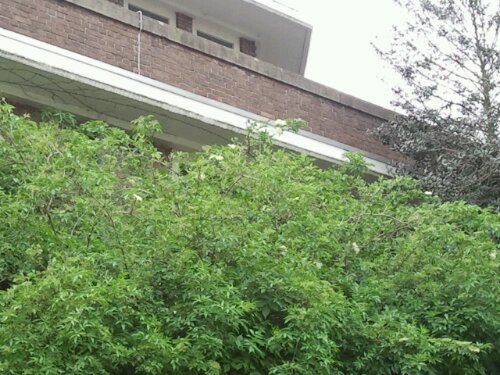
I feel like a bird spotter with this one… Above is my first sighted Elder blossom of 2012 and it gets me very excited. Elderflower fritters, Elderflower champagne, Elderflower tea and a host of other flower and Elderberry recipes are not far away! This huge Elder shrub is on the Middenweg, just up from the top entrance of Frankendael and opposite the Vomar supermarket. If only my arms were long enough! Remember to harvest with respect and leave LOTS for the birds and bees. Also be very aware of Elderflower look-a-likes. Here’s a photo of Ash or Rowan in flower, growing above an Elder shrub which is not in flower. It would be an easy mistake to harvest the flowers believing them to be Elderflower, when here is nothing to compare them with.

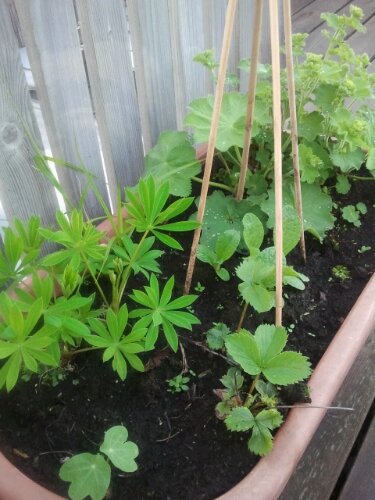
Permapots – Perennial Herbs

For several years now, I’ve been growing herbs on my roof terrace in what I call Permapots. Inspired by the first Permaculture course I attended, run by Patrick Whitefield at the Sustainability Centre, I began growing mixtures of perennial herbs in large planters.

Permaculture advocates low maintenance gardening of edibles by growing a mixture of perennials and annuals in a way that reduces the need for weeding, watering and feeding. My idea of the ideal Permaculture garden is one that is self-sustaining, produces a useful yield of food throughout the year, is pleasing to the eye and is in harmony with nature.

This is a tall order for a small roof garden but I thought it was worth a try. My Permapots have been going strong for 4 years now and have provided us with a nice variety of edibles and medicinals year round. We have enjoyed roof-grown Rocket at Christmas, occasional summer Strawberries, year round Yarrow and countless herbs for teas and various lotions and potions.

From time to time, I thin out the perennials and refresh useful annuals, such as Calendula and Nasturtium. but mostly I just leave the pots to do their thing and am grateful for whatever harvest we receive. Some plants have done well, some have disappeared and others have done phenomenally well.

Tips for Permapots…
Grow perennials suited to your environment.
Sew annuals which self seed readily.
Be prepared for change and some failures.
Plan for a low to moderate but varied yield.
Grow Lupins our clover in some pots and dig them in each season.
Thin out plants from time to time and share with your friends.

My favourite Permapot plants are…
Borage (self seeds readily)
Sorrel
Lady’s mantle
Lupin
Chives
Yarrow
Strawberry
Calendula (seeds are easy to collect & sew)
Nasturtian (seeds are easy to collect & sew)
Rocket
Marshmallow
Valerian

Permapots save money and effort as I don’t need to buy new plants each year and I am provided with baby plants to sell our give away.
Permapots allow for failure, if one plant does in bad weather there are always plenty of others to enjoy.
Permapots welcome unexpected guests – chickweed, hairy bitter cress and dandelion being the tastiest here.
Permapots don’t need much work.

Edible Table Planter Update

Today, a quick update on the Edible Table Planter which I set up on our roof terrace on April 11th. Just a few weeks on, herbs and salads in the planter are now pluckable! That seems pretty good to me, especially during a very dull weather period.

Here’s a before photo…

Here’s today’s photo…

I planted self seeded plantlets which had sprung up in my Permapots. The plants I included are:

Cut and come again lettuce
Chamomile
Welsh onion
Watercress

I also threw in a sparse handful of beetroot seeds, we will eat the leaves.

365 Frankendael day 19

I’ve been walking in Frankendael with Elodie today, we found heaps of herbs, several new to us. If you’d like to join me for a herb walk there are a few spaces left for the Sunday May 27th Amstel to Frankendael walk. Here are some striking examples from today…
Solomon’s Seal looks rather like an enormous version of Lily of the Valley so I always steer clear of it. I have always thought of Lily of the valley as a poisonous plant so lethal that I shouldn’t even go near it. Upon reading about it last night I learned that it is called the herbalist’s Digitalis. It has a potent specific effect on heart muscles, causing them to open and fill more intensely and to raise blood pressure. It is thus lethal in even small doses and is not a herb of interest to me. However this arching beauty of the woods is very interesting. Solomon’s seal is used to make traditional remedies for many ailments, ranging from speeding muscle and bone healing, to menopausal symptoms, diabetes, acne and other skin afflictions. The native Americans reportedly ate it frequently.

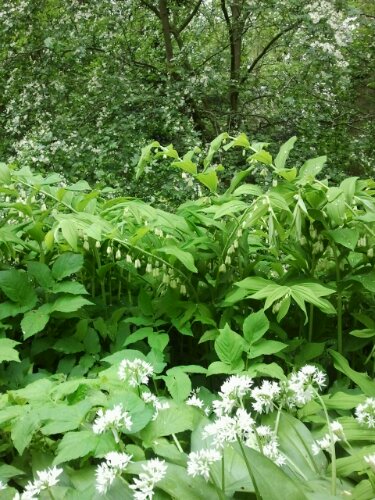
I was thrilled to turn a corner in the wood today and be greeted by this scene:

It is difficult for a photograph to do it justice – especially one of mine! Here is Hawthorn arching over a swathe of Solomon’s seal and Wild garlic, all three in flower at the same time.

Other herbs of note today…
Below, endangered Hoary Plantain (Plantago media). I first saw this herb last year and remember not really knowing what it was, although it was obviously some kind of plantain, but wanting to hide it and protect it from trampling feet! Of course I couldn’t and this plant is well adapted to living in well trodden locations. However, should you find it, especially in a week or two when it’s flower stalk will look like some sort of moth-plant hybrid, then please don’t touch it. I hope that this one has a chance to set seed.

Chicory foliage:

Yarrow (Achillea millefolium)

Endangered Greater burnet (Sanguisorba officinalis)

Frankendael 365 day 18

This lush mixture of foliage and flower buds, belongs to a variety of Hawthorn (Crataegus spp.) called NL: Maidoorn As you may see in the photo, it’s leaves are quite different to those of common Hawthorn (shown below). These are larger, more delicate to the touch, a far lighter shade of green and are less deeply palmate. On the foraging trip this weekend I didn’t recognize it as Hawthorn because the variety I am used to has tough, small and dark leaves – Fit for windy hill sides! But I was assured by fellow foragers that this variety also makes great Hawthorn Ketchup and tonic medicine.

After a little research, I learn that there are over a hundred Hawthorn varieties worldwide and just three main ones in the UK, many with leaves unrecognizable as Hawthorn to me. The main European variety is Crataegus monogyna. Apparently all have similar medicinal properties and the whole species is part of the Rose family. This variety appears to be C. Laevigata.

Here’s an interesting link if you are interested in the folklore and English Witchy side of Hawthorn.

Here’s a nice Hawthorn tea recipe…
Infuse 1-2teaspoons of fresh leaves and flowers in a cup of boiling water for 5 minutes. Drink three times daily.

Caution
Although Hawthorn is not associated with side effects, it is associated with traditional heart medicine. Of course heart disease of any sort is serious and should not be treated without consultation with a qualified doctor.

Eating Foraged Greens

Aside from knowing what is safe to forage, it’s rather important that foragers know what they are going to do with their harvest. After all, what’s the point in harvesting a heap of plant material when only a couple of leaves are needed for seasoning, or only the youngest leaves are tasty? At the end of the day, many foragers end up with a slightly smaller heap of unwanted plant material in their kitchen which ends up in the bin, or at best, on the compost heap. If you dont know which part of an edible plant to harvest or how much of it is needed to make a food item, please leave those plants where they belong.

Just because there is a wild glut of a plant, you don’t need to harvest much of it to make a great difference to your diet. This thought is central to my reasoning for foraging herbs rather than other edible plants. Generally a little goes a long way, in terms of flavour and benefits. An exception is Stinging Nettle, where I like to harvest a bowlfull of ‘tops’ at a time, many days in a row, to make tonic infusions.

Here are a few ways to use just a little foraged Spring Greens, such as Chervil, Ramsons, Geranium, Nettle or Ground Elder. These are my favorites, no measurement involved and less is more…

1. Finely chop a few leaves and add, ten minutes or so before the end of cooking, to whatever you are cooking (stews, casseroles, soups, fried chicken, baked fish, baked beans! etc). The photo above shows my pan cooked chicken with some sour cream added to the juices near the end along with a few chopped leaves of ground elder and wild garlic.

2. Add whole or chopped leaves to a pan of spinach and cook As usual for spinach.

3. Eat raw in a mixed salad (obviously the leaves or flowers need to be super clean and above suspicion for this)

4. Boil the greens in a little water for ten minutes, adding a chopped or pressed clove of garlic and a pinch of salt & pepper, near the end of cooking. This even works well for edible tree leaves such as Beech.

If you prefer a little sophistocation for your foraged fayre, there are plenty of recipes around. I like to experiment sometimes but if you want to incorporate more wild food into your diet then I suggest you keep it simple, keep it sparse and use those vitamin packed spring greens to spice up your usual meals. It’s also safer that way.

365 Frankendael day 17

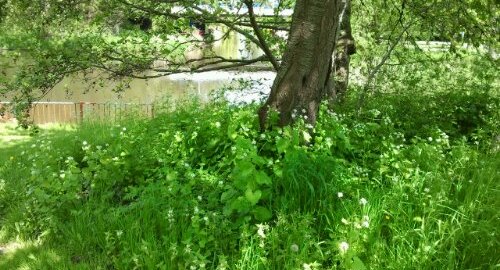
There’s so much green around at the moment, many of the plants seem to merge into one and it can be difficult in places to see which herbs are around. Especially along the water edge.
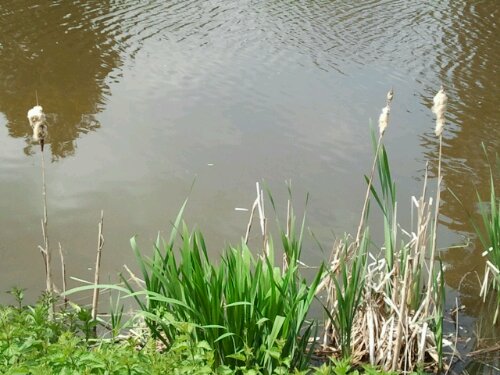
Here is a plant which does stand out along the waters edge – Cat’s Tail (Typha spp.). More about this one another time, buts it’s edible, delicious and very useful. However, what a shame it would be to take it from a location where so many people can enjoy its striking appearance.
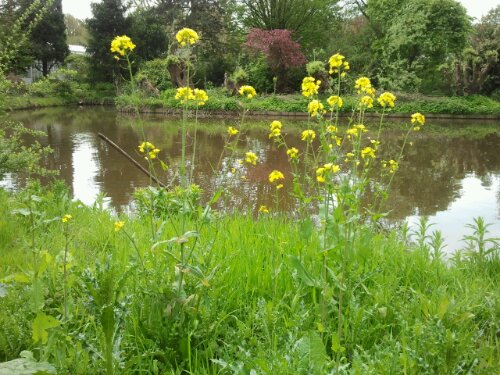
This pretty yellow flowering plant is Wild Turnip (Brassica campestris). A useful way to eat more health giving members of the cabbage family perhaps?

Amstel to Frankendael Herb Walk

Because there’s a waiting list, for the Monday 21st May walk, I would also like to offer an extra UrbanHerb Walk the weekend after:

Sunday 27th May 2012,
Amstel to Frankendael Herb Walk,
11.00 – 12. 30,
€8 per person,
Includes comprehensive handout,
Booking essential.

You will learn about local wild herbs, along the route from Amstel Station to (and within) Park Frankendael.
You will learn:
How to identify local culinary and medicinal herbs,
How some people use them,
Related herbal folklore and
How to harvest & use them with safety and the environment in mind.

The walk will take about 90 minutes and will go ahead come rain or shine. We will look at herbs growing alongside roads, buildings, in woodland, hedgerows and parkland.

The date I have chosen is also Puur Maarkt in Frankendael, so you will be able to check out the cheap herb stall, local & organic produce and perhaps Restaurant De Kas or Restaurant Merkelbach, after the walk if you like.

Please contact me via lynn.shore@gmail.com, if you would like to book a place or would like further information.

365 Frankendael day 16

It’s been a busy day as I went with my little girl to the Cryptoforest foraging expedition in Sloterdijk. We met some great people and plants there!

So today’s entry for 365 is mainly photos…

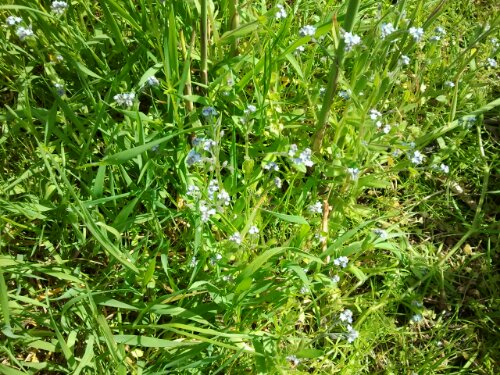
First up, Forget me not – yes it’s edible! I need to do more research but here’s a link to get your mouth watering if edible flowers interest you.

Next is highly toxic Taxus baccata, Yew tree; The plant symbol of death and yet giver of life to many with terminal cancer. Equally contradictory, it’s deadly seeds are surrounded by the most delicious fruit I have ever encountered. They are truely bewitching.

Above is Horsetail, looking great at the moment. It makes a great tonic tea for weak nails because it is high in the mineral silica.

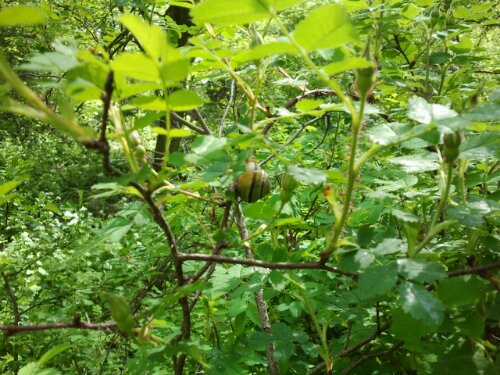
Here’s a snail getting acquainted with a rose bush. It’s a good time to seek out your neighbour roses, ready for the flowering season.

Crypto Forest Walk

Thank you to Cryptoforest for a great foraging exploration of Sloterdijk today. I really enjoyed meeting other urban foragers and learning about food plants which I don’t usually notice. The photo shows Theun and a wild carrot which was found in the central reservation of a main road!

Here’s a selection of the food species we found today. I think you’ll agree that there is more to edible Sloterdijk than meets the eye when you travel through by car or train:
Wild lettuce, Burdock, Beech, Hawthorn, Hairy bitter cress, Chickweed, Wild carrot, Plantain, Horsetail, Mugwort, Sorrel, Stinging Nettle, Dead Nettles, Rocket, Ground Elder, Elder, Comfrey, Raspberry, Hazel… There was far more, which I can’t recall right now.

I’m sure Cryptoforest will post details soon. Hopefully they will organize another Foraging expedition on the first Sunday in May 2013. It was great fun and I liked the Pac Man random sampling edge, certainly different to my usual excursions!