Category Archives: Perennial herbs

Herb by Herb – Part 3 – Comfrey

Once a month a chance to learn in detail about a different common urban herb from either Jennie (who I run the meetup group with) or me, Lynn.

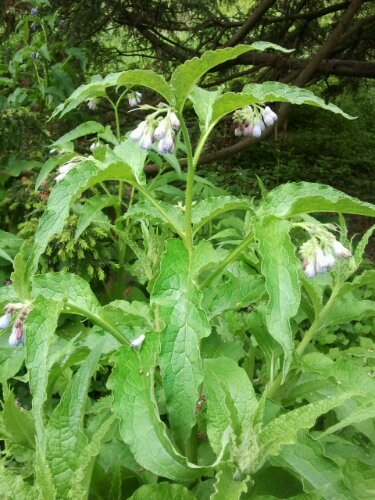
Part three is about Comfrey (Symphytum x uplandicum, S. officinalis). A deep healing plant growing all over town, with many uses and a confusing recent reputation. It’s an easy herb to find, identify, process and use. I will take this session in Park Frankendael on Tuesday 7th August 2012. 10.00 – 11.30.

In this short and sweet field workshop, you will learn how to make an infusion, poultice, infused oil and herb gel and about the properties, habitat, folk and medicinal history and current uses of the plant. You will take home a bag full of little herbal preparations and knowledge of how to do it time and time again with everyday materials.

We will try to run each monthly Herb by Herb workshop near the New Moon and the days of the week will vary. The August workshop is earlier than usual, due to the summer holiday. You are welcome to attend all, some or none of the series! Most materials will be provided. You’ll need to bring along a small pair of scissors, perhaps a flask of hot water and 2 small and clean glass jars (such as 90ml pesto jars).
Cost of the workshop is €10. Maximum 5 participants. Cost includes materials and a handout with plant details and preparation instructions.

As we will also make a gel during this workshop, you may like to bring a small used plastic tub.

Please contact me by email (lynn.shore@gmail.com) or through the meetup group if you are interested in joining this workshop.

Wormwood Rescue

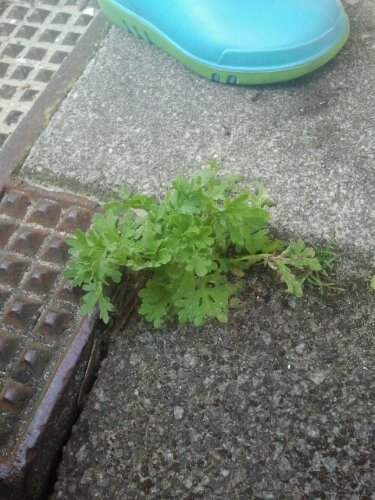
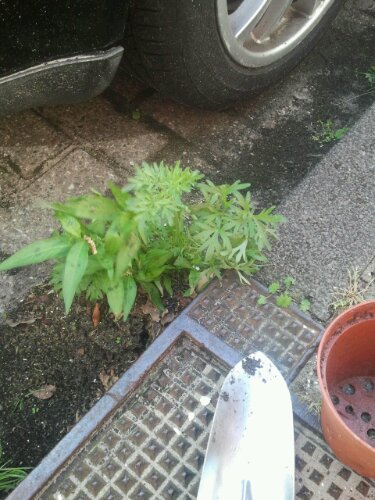
When the council next comes to strim weeds in my street, these lovely Wormwood babies would be lost, so this afternoon I whipped lots of them out of the ground, to save them in plant pots.

I grow a vigorous and useful Wormwood plant in our super-dry geveltuin. I wrote about it recently, when I had to harvest lots of its growth to prevent damage by builders.

Since then I’ve been noticing its seedlings all down the street! The recent weather seems to have helped them to thrive in the road gutter, treepits and pavement cracks.

Wormwood (Artemisia absinthium) is a herb which gives Absinthe its flavour, works internally and externally as a natural pesticide (think intestinal parasites, plant pests, malaria etc) and can help with several digestive disorders including indigestion, gut spasms and lost appetite. Wormwood contains a mind altering, dangerous chemical which shouldn’t be consumed in quantity. It increases the likelyhood of a person having brain seizures, gives Absinthe it’s flavour, increases creativity and is the reason for Absinthe’s prohibition in some non-European countries. Wormwood is a rare plant in The Netherlands. It can be eaten very sparingly, in salads or cooked food. It is easily vinegared, tinctured, dried, infused in oil and more. Wormwood is the most potent member of the Artemisia family and needs to be treated with great respect. If you’d rather not consume the herb, be aware that it is associated with magical properties related to love and protection and I think it smells very pleasant when dried or fresh. I also find it very beautiful and love seeing it’s shimmering silver-grey foliage outside of my home.

If you would like one of these easy to grow Wormwood babies, please contact me. Bring me a clean small plant container with a little soil and you are welcome to have one or, for a Euro, you can buy one from me that is already potted-up.

I find that the plant grows best in well drained, sandy soil and a good sunny location. I grew it on a north facing balcony for a few years and it did fine but it revealed itself as a real goddess, when I planted it in the south facing pavement garden. I have uprooted only the seedlings that would have been strimmed, about ten more continue to grace the plant pots and tree pits of my neighbours.

365 Frankendael day 64

Here is a spindly wild plant that needs a closer look to be appreciated. It is Chicory or Succory (Cichorium intybus). The Dutch nation seems to love to eat the leaf heads of a cultivated & blanched version of this plant, called Witloof. Wild Chicory is best known for its tasty bitter roots which can be roasted and ground to produce a useful though non medicinal, substitute (or addition to) coffee. The young leaves of Wild Chicory (scroll through link for photo) are very tasty, not dissimilar to Dandelion and favoured by some bitter-leaf connoisseurs, for their more delicate flavour. They are rich in bone strengthening Calcium and Magnesium and may be eaten raw in salads through most of the year, or gently cooked. The green leaves, grown in open light, are far more bitter than their blanched sisters. To blanch a plant such as this it must be grown in complete darkness for a season. It is also simple to make a vinegar from Chicory roots and leaves, please see Susun Weed but where I live, there is not enough of this plant to harvest any roots.

To harvest the root, the hardy perennial plant must die and that is not reasonable here but by pot-growing your own, on a balcony (or in your work locker as my friend Micheal used to do at De Hortus) you may be able to produce a tasty and unusual crop for personal use.

Apart from being something of a bitter delicacy, Chicory was historically prised as a non-irritatant laxative, suitable for children when prepared as a syrup or similar. It is also a diuretic and a tonic herb, rather like Dandelion. Being strongly bitter, it acts as a Liver strengthening tonic. The flowers were used historically to make an anti inflammatory eye wash. All parts of the plant are edible and generally seen as safe but historical texts point to over consumption causing unusual side effects such as congesting the blood supply of digestive organs and depleting the power of the retina. They also saw it as unsuitable for people with easily depleated energy. Some modern herbals also point out that Chicory root is an emmenagogue, so it is best avoided during pregnancy.

This Frankendael plant is preparing to flower at the moment and what beautiful blue flowers they will be! I hope to save some of it’s seeds, if the plant is left undisturbed long enough for them to ripen and sow then next spring.

365 Frankendael day 58

Today a few photos of beautiful flowers from useful plants and a tasty Fat Hen plant.

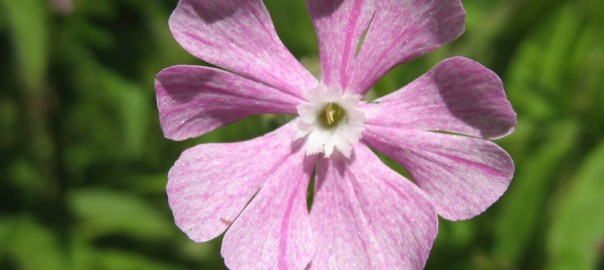
Firstly a front on photo of Soapwort, Bouncing Bet or Saponaria officinalis She is just coming into bloom at the moment and isn’t ready useful to many people these days but is still made into one of the most delicate cleansing natural soaps for heirloom lace and woolen articles.


Next, above, those delicate and delicious purple flowers of Geranium.

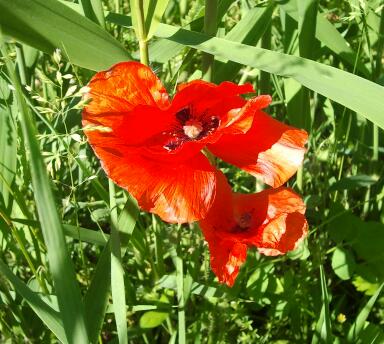
Here above is a familiar Poppy flower. The seeds of this annual plant are so precious to it that it’s not acceptable to harvest them in places such as this, where they stand out due to their scarcity. But, if you find dense swathes of them growing and can positively the plant without doubt, it may be worth considering sprinkling a few onto a home made loaf of bread.

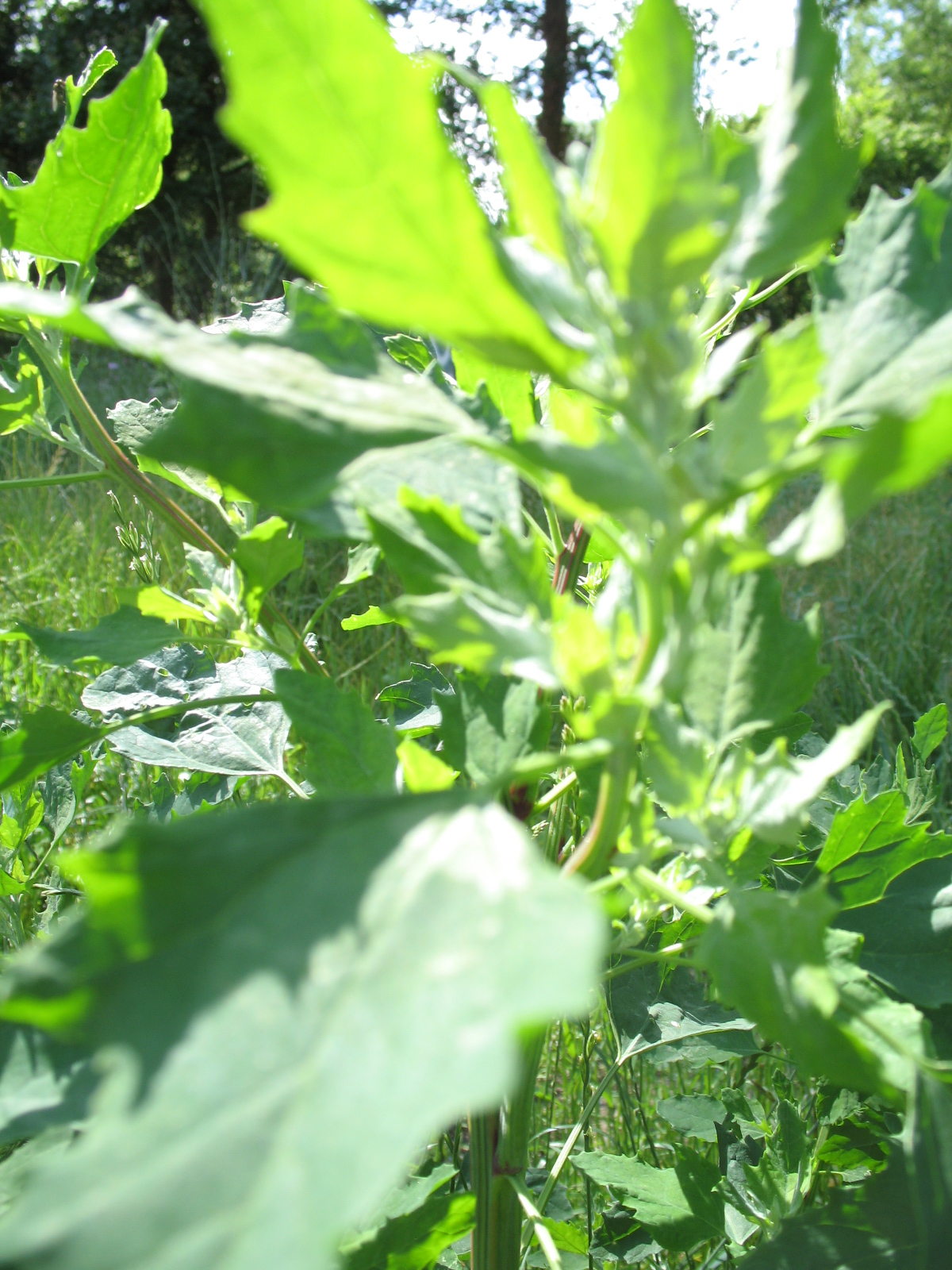
Here’s the Fat hen plant which I harvested a few leaves from today.

I also picked a 5 cm top of a Mugwort stem, ready to make some savoury bread to share at the Herb by Herb Mugwort Workshop. I’m really looking forward to working with this plant tomorrow morning. Whatever the weather, at midsummer there is also plenty that can be learned from Artemisia vulgaris, the plant that shimmers like the Moon and nourishes our bodies and spirits.

365 Frankendael day 56

I visited the park very early this morning and was pleased to find a surprise clump of my favourite herb for grounded-ness and muscle pains – Motherwort (Leonurus cardiaca). It is shown in this photo growing in a location quite far away from the ones I already know. So, I have high hopes that there is quite a good population of this useful plant in the park and also the city.  I’d really like to know if any followers f this project know of Motherwort growing near them in other locations.  I know that Jennie Akse knows of plenty in Beatrix Park, I’m not sure in which part they are but they certainly like it there too.  Note that the pink flowers, next to the Motherwort leaves, are from another plant (see below).  Motherwort is sometimes mistaken for a member of the Geranium family due to it’s leaves, however it is easy to spot the square labiate family stems. Failing that, if you mistakenly taste even a fraction of a Motherwort leaf, the extreme bitterness will soon teach you it’s not an aromatic Geranium!  Motherwort is generally used as a tincture.

Here is a beautiful plant, from a very common and varied city tolerant herb family – called the Cranesbills or Scented Geraniums or Pelargoniums.  I think that this one is most likely Geranium pyrenaicum, Hedge Crane’s-bill and as I’ve mention plenty times before, all member of the Geraniums are edible, tasty and useful.  I read the other day of an old Rose Geranium infused alcoholic punch recipe, from Arabia.  It is in Patricia Telesco’s Kitchen Witch’s Cookbook – a nice resource book containing many traditional and interesting herbal recipes. This plant is not Rose Geranium but itis related and extremely fragrant.  I am quite tempted to have a go at it, maybe when the summer really arrives.

Another herb which is in season for harvest at present, is Lavender.  I don’t see much of it in this park but it grows prolifically in the city and can be used very easily for many applications.  Christian Huygensplein, near my home is planted out with it.  Thank you Amsterdam Oost! Unfortunately, each day I have had time to visit any Lavender with my scissors, the weather has been damp so harvesting those pretty flower stems has been out of the question.  No point in harvesting when the flowers are likely to mould, before they can dry out thoroughly.  If you are lucky enough to find a huge patch of Lavender, the flower stems can be carefully but quickly thinned out, just above the foliage, perhaps taking every 20 stems, without much visible impact on the plant.  I’m sure that my neighbours would not appreciate anyone chopping clumps of the flowers from the shopping area but I’m sure a few carefully flower stems wouldn’t be missed.

Lastly and shown above, is a striking herb which I have no experience of using at all but know it has historic uses.  It is called Yellow Loosestrife (Lysimachia vulgaris) and I know it only as a garden plant from Somerset.  Here’s a link to a page from a wonderful recent-historic book, offering a glimpse into historic uses of herbs.

Mugwort Bread

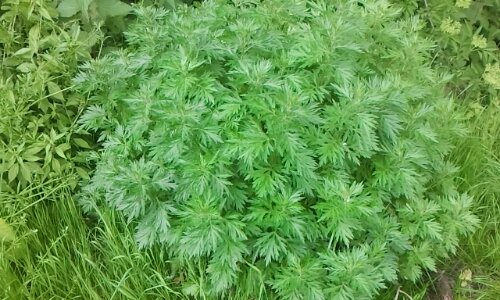
Mugwort (Artemisia vulgaris) is one of my favourite herbs, particularly at this time of year. It grows as a tall, bushy, common weed in cities. It is easy to identify by appearance and scent and I love to add it to cooking, several remedies and household herbal products. After one of my recent Herb Walks, two of the group reported back that they had incorporated some Mugwort into homemade bread. Today I had a go at the same, adding a good heaped tablespoon of fresh, chopped Mugwort leaves to my usual bread recipe. I think it tastes very nice and I’ll use it this way again. Mugwort bread is not as dramatic tasting as using Mugwort as a vegetable but it is pleasantly savory and quite aromatic. It also seems to add to the moistness of the bread. Very agreeable. I have just enjoyed a few slices, loaded up with peanut butter, not a bad combination!

I’ll add my bread recipe another time but there are plenty to find online and in cookbooks. I make mine with half Speltflour and half Wheatflour, 4 cups in all, plus 1 teaspoon dried yeast, 2 teaspoons salt, 1 3/4 cups water. Simply add the chopped herb at the start of the dough making process.

Mugwort used to be a popular culinary herb but has fallen out of fashion. The herb is bitter and aromatic and can be substituted for similar, more familiar herbs such as Tarragon (Artemisia dracunculus) and Sage (Salvia officinalis). As with all familiar culinary herbs, it should be used in small quantities and introduced gradually into the diet, keeping an eye out for personal reactions. You should also be aware that Mugwort is said to be unsafe for ingestion during pregnancy (although in China it is sometimes recommended to prevent miscarriage).

So if you like making bread and you have properly identified some Mugwort near your home, maybe give Mugwort bread a try. Thank you Daniel and Amalie for the tip!

365 Frankendael day 39

Today some photos without much comment or translations…
Firstly the flowers of that Poison Hemlock on the Middenweg. It’s carrot family flowers opening to the sun today.

Next, some lovely Meadowsweet foliage.

Next Ground elder, just coming into flower. Another member of the carrot family but with completely different and easily recognisable leaves.

Here is Red clover. Perfect for harvesting, if you can find it growing in a clean spot.

Lastly today, a sign that tasty berries are not too far away; A Bramble (NL: Bramen) just opening it’s first flowers of the year.

365 Fraendael day 38

The weather is unusually warm again today, which has causes Chickweed to shrivel up and die and Poppies (not edible, but poisonous, a historically useful medicinal herb) to flower.

Here is Ribwort (Plantago lanceolata), discretely in flower amongst long grass.

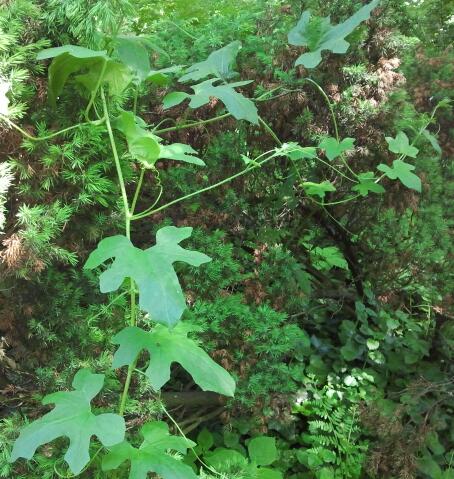
Poisonous White Bryony, looking as though it fancies strangling the Juniper bush.

Motherwort flourishing, still at a useful stage for harvesting and tincturing.

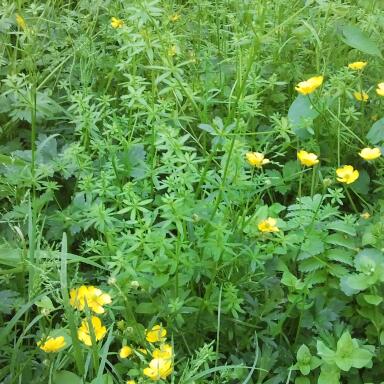
Hedge bedstraw. Looking similar to Cleavers.

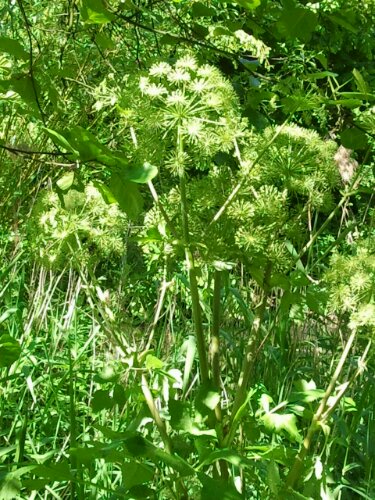
Angelica archangelica, with it’s out-of-this-world flower heads, towing over the other pond plants.

Watermint, or at least a mint species growing in water, will decide which soon. Low growing still, building its strength in readiness to flower.

365 Frankendael day 35

Today a very speedy look around the park, in the late afternoon sunshine…

Roses are opening up all over the city. Perfect weather for them to bloom. This is one of my favorites in the park, Rosa arvensis, the Field Rose. Very pretty now and produces excellent hips in autumn.

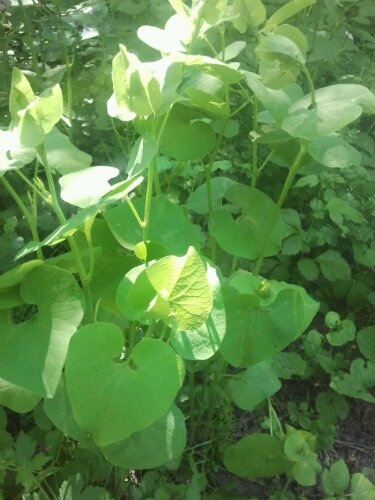
Birthwort, NL: Pijpbloem (Aristotolochia clematis) highly poisonous, with some historic uses (and recent infamy from causing kidney failure when accidentally incorporated into ground wheat flour). I am looking forward to finding out what the Latin name is all about.

Lime leaves (Tilia) are mostly covered in something sweet & sticky at the moment. Either excrement from the masses of insects seeking out nectar from the new flowers, or the nectar itself dripping down onto lower leaves. I’m not too sure which it is but at the moment this sticky stuff is clear, but visible and certainly delicious. Wash it off or not, the leaves taste great and many blossoms are already present so let the harvest begin! In a short while the sticky covering will thicken and blacken. Then it needs a good scrub and or soak in clean water to get it all off. The leaves do stand up well to such treatment and can then be dried thoroughly for storage or used directly.

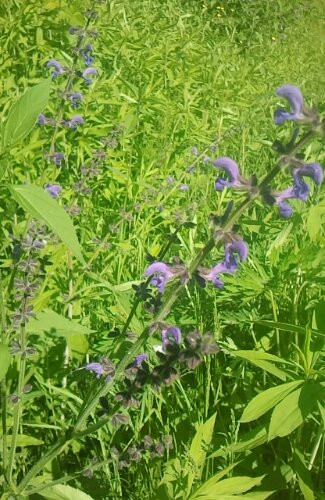
Sage, (Salvia officinalis). Beautiful and so tasty! Beware the power of Sage if taken in higher than culinary doses and stay away for it during the few few months of pregnancy. Not a tonic herb but a very useful one for the body and mind.

Herb by Herb – Part one – Mugwort


Once a month a chance to learn in detail about a different common urban herb from either Jennie (who I run the meetup group with) or me, Lynn. 

Part one is about Mugwort (Artemisia vulgaris). An amazingly mystical, powerful and yet underused plant, usually found in neglected places.  Cronewort, the Dreamherb, is a great herb to learn crafting techniques on, such as how to make an infusion, oil, tincture, dream pillow and more. I will take this session in Park Frankendael on Monday 18th June 2012. 10.30 – 12.00.

In this short and sweet field workshop, you will make (or prepare for) all of those things and learn about the properties, habitat, folk and medicinal history and up to date uses of the plant. You will take home a bag full of little herbal preparations and knowledge of how to do it time and time again with everyday materials.

We will try to run each monthly Herb by Herb workshop near the New Moon and the days of the week will vary. You are welcome to attend all, some or none of the series! Most materials will be provided. You’ll receive a simple pack list when you subscribe. Cost of the workshop is €10.

Please contact me by email or through the meetup group if you are interested in joining this workshop.