 Here’s an article, published last year in the New York Times, about the potential harm foraging can cause. If you are interested in foraging please read it.
Category Archives: Wild herbs
365 Frankendael day 7
 Greater Celandine (Chelidonium majus, NL Stinkende gouwe) is a plant that is very obvious at the moment. It belongs to the poppy family and its leaves certainly resemble those of other members of that family. The plant is a perennial and spreads easily by seed. It is considered an invasive garden pest by many, but not herbalists.
This herb is not one for the dinner plate as it contains several alkaloids which are toxic. It can cause irritation to mucous membranes, if used innapropriately and shouldn’t be used by pregnant women or those with impaired liver function. It is generally used only externally.
Warts
The orange-yellow sap from within the stems of Greater Celandine, is a really useful wart remedy. Simply cut a stem and apply a few drops of the juice directly onto the wart. Do this a couple of times daily and soon the wart should begin to disappear. Continue use until the wart has gone completely. To maintain a supply of this valuable remedy when the plant is no longer available outside, you could make a tincture and use a few drops of that in place of fresh sap.
The plant in the photo is in a patch of waste land, right on the outside edge of Park Frankendael. There are plenty of Greater Celandine plants within the park and throughout Amsterdam at present.
Endangered Plants NL – De Rode Lijst
 The list of threatened and endangered species in the Netherlands is extensive. I recently contacted a City Ecologist to find out more about the legality of foraging in this country and he kindly forwarded the list to me. Unfortunately, for non Dutchies like me, the common names are in Duth and the Latin names are not alphabetical. One day I shall try to work my way through the list and translate the common names. Many of the endangered plants will be of little interest to city foragers, but some will be, so before you decide to pick anything please look up the Latin name and check its status. I did find this list in English regarding endangered plants across Europe. I don’t feel it’s very comprehensive and it doesn’t mention The Netherlands, but it may give an indication of what is threatened.
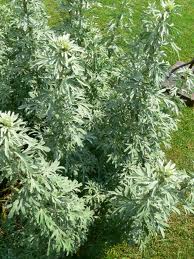
A few plants which instantly stand out to me are Artemisia absinthe (Wormwood), Juniperis communis (Juniper) and Viola canina (Dog violet). Also Pennyroyal, Plantago media (a type of plantain), White Mint, Pulsatilla, Lesser Skullcap, Betonie, a type of Red Clover, Wild Strawberry, a type of Bedstraw and several types of Lady’s Mantle are on the list. Some are foraging favorites, others are wonderful herbs but all must be avoided and protected. Also, some species of fern, cling to existence on the local canal sides and must be protected. I’m not a fern eater myself but know that some international foragers seek them out.
I grow Wormwood in my geveltuin (pavement garden). It provides me with a great harvest every year and perhaps its seeds will spread the plant elsewhere. Growing-on your own rare plants, from seed or nursery plants, is a way to ensure you can use what you like.

365 Frankendael day 6
Willow (Salix alba, S. fragilis, NL: Wilgen) catkins have been my wild flavour of this afternoon. They taste very like Aspirin tablets because they contain the same active ingredient (Salicyclic acid). It is found throughout the tree, particularly in the bark but spring catkins are an easily measurable source of this natural pain reliever. When catkins (which can be dried for use later in the year) are not available, simply chewing on a short length of a Willow tendril may also the trick. The approximate equivalent of 2 Aspirin tablets is said to be about about 6 – 8 inches of tendril or 10-15 catkins (Linda Runyon). Treat the herb with caution and respect, as you would other medicines. I find that Willow really helps for pain but that eating it on an empty stomach (especially the catkins), makes me feel a little nauseous.

There are many beautiful Willow trees in Amsterdam, including this wavy Willow and the play structures in Park Frankendael.

Other herbs of note today include Cleavers (Galium aparine) which are already speeding up some fences and my favourite Motherwort (Leonurus cardiaca). It is too early to harvest either herb but a great time to find where they are growing. Also, Mugwort (Artemisia vulgaris), the dream herb is just starting to wake up. It’s too early to harvest but it is becoming very obvious. Look for the silver undersides of the Chrysanthemum-like leaves and for tall dry stems from last year. It is best to harvest this herb at midsummer.


Garlic mustard, Jack in the hedge (Alliaria petiolata)
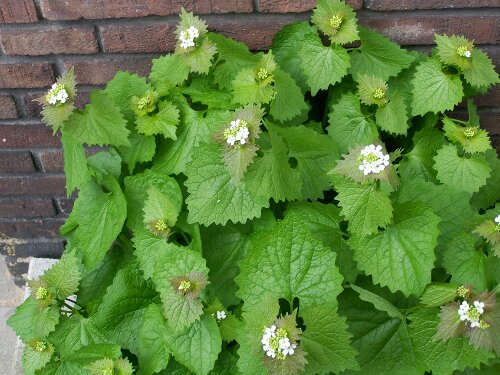
Photo courtesy of Elodie and Herman, in De Baarsjes, Amsterdam. 25th April 2012.
Garlic mustard (Alliaria petiolata) is easy to find in many cities and is also very easy to eat!
It is often easy to spot them at the base of large tree trunks and along the edges of woodland and hedges. They also thrive within woodland. It flowers at the end of April into May. Whilst flowering, it is very easy to identify, not only by the distinctive smell of garlic when the leaves are bruised but also by the tiny white flowers at the top of the plant. Garlic mustard is a favorite amongst foragers and can grow up to 120 cm in the right location.
This plant is a biennial and can provide year round nutritious greens, for salads or the cooking pot. All parts are edible. Even the roots can be eaten, they should be harvested just before flowering, but of course removing the whole plant will limit the foraging potential the following year as the plant will be unable to spread by seed. Far better is to pick a leaf or two at intervals, throughout the growing season and leaving the plant to flower and set seed unhindered.
Garlic mustard isn’t known as a medicinal herb, more a culinary one. It is a member of the mustard family, Brassicaceae, so I like to think of it as a tasty replacement for sprouts.
I see lots of Garlic mustard growing around Amsterdam. You are very likely to find it along the edges of canals, hedges and overgrown areas, such as railway embankments. Mid to late spring is probably the best time to identify it.
Eating Garlic mustard is straightforward. It can be eaten raw, if very clean or cooked. It has a garlicky spinachy taste so works well with many ingredients. In like to chop up a leaf or two and mix them in with other spring greens, which I steam.
365 Frankendael day 5
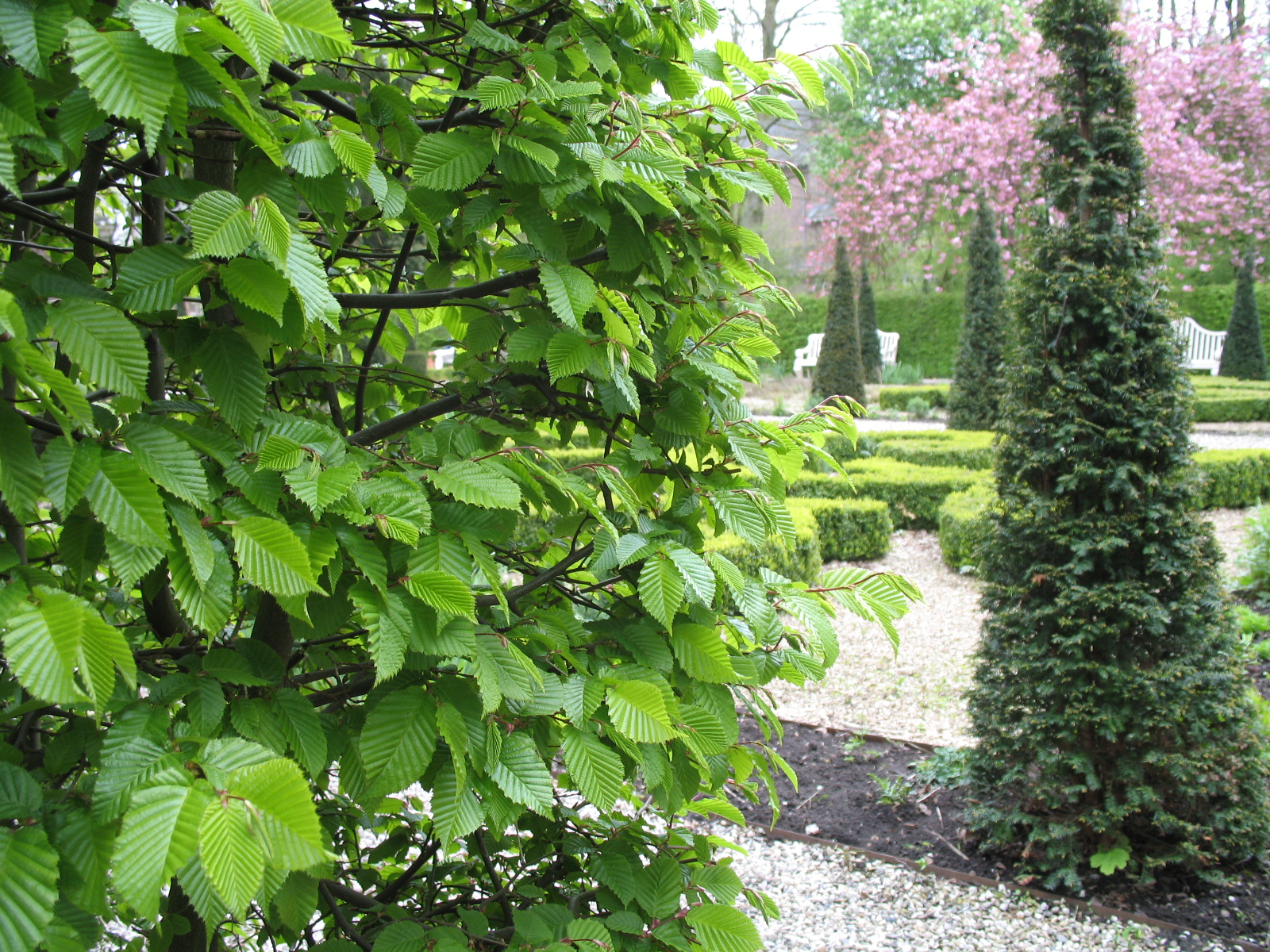
Lots of photos and less chat today, I’ve had a long walk and am itching to make Italian Beech twigs…
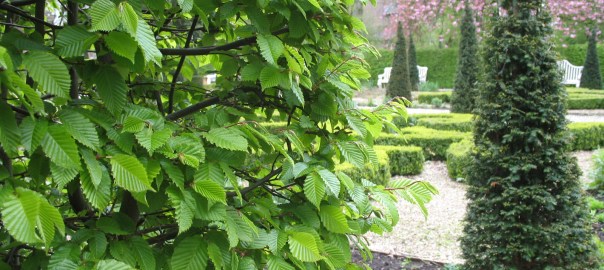
Here’s one of several Beech hedges in the park. If you didn’t read my post about tree foraging Linda Runyon, then please take a look, for some eye opening ideas.
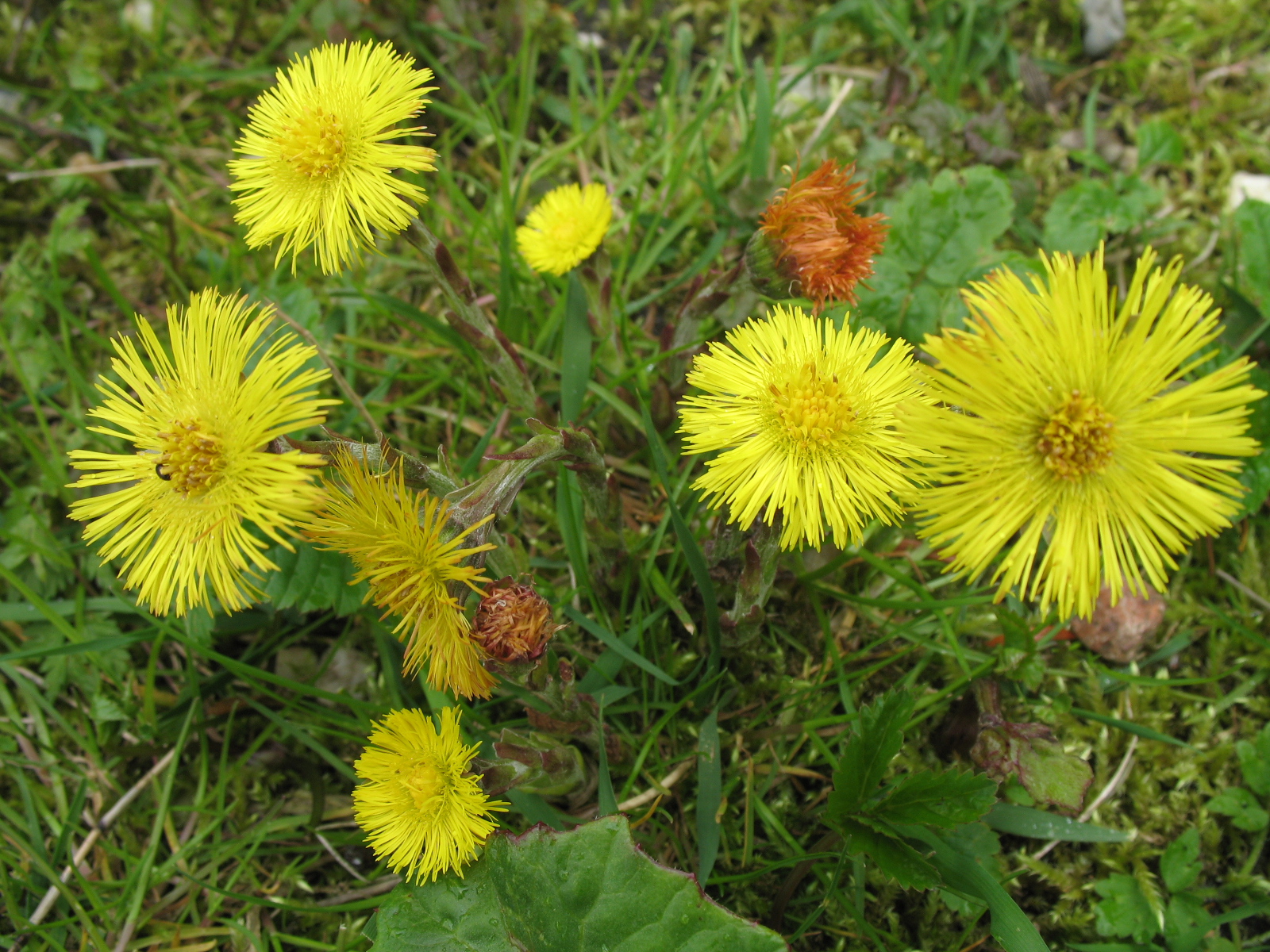
Coltsfoot, still blooming:


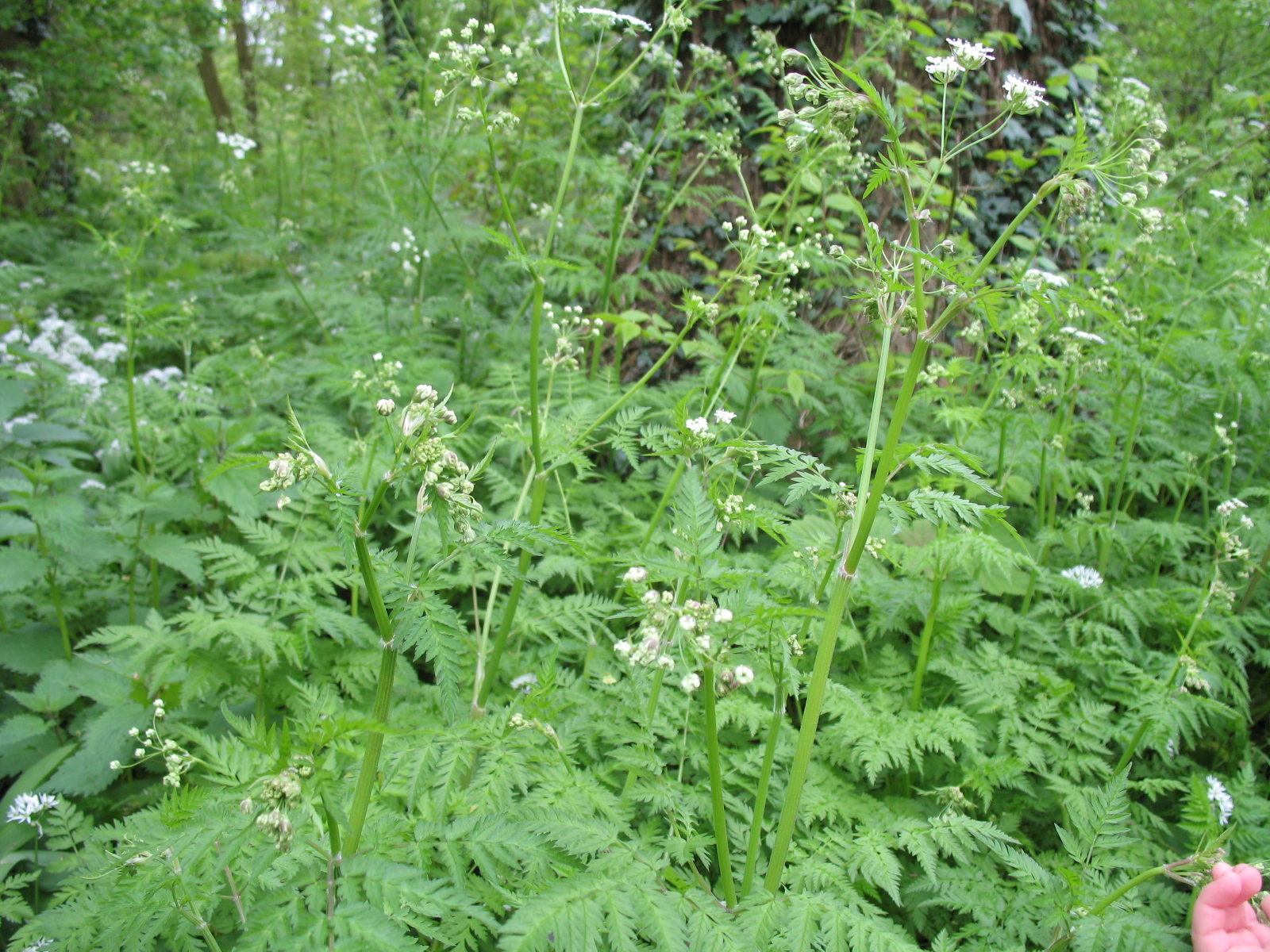

Sweet woodruff (Galium odoratum), easily confused with Cleavers (Galium aparine). Cleavers are far more succulent than Sweet woodruff, and can grow very tall, using other plants and structures for support as shown yesterday. The two plants have quite different uses.
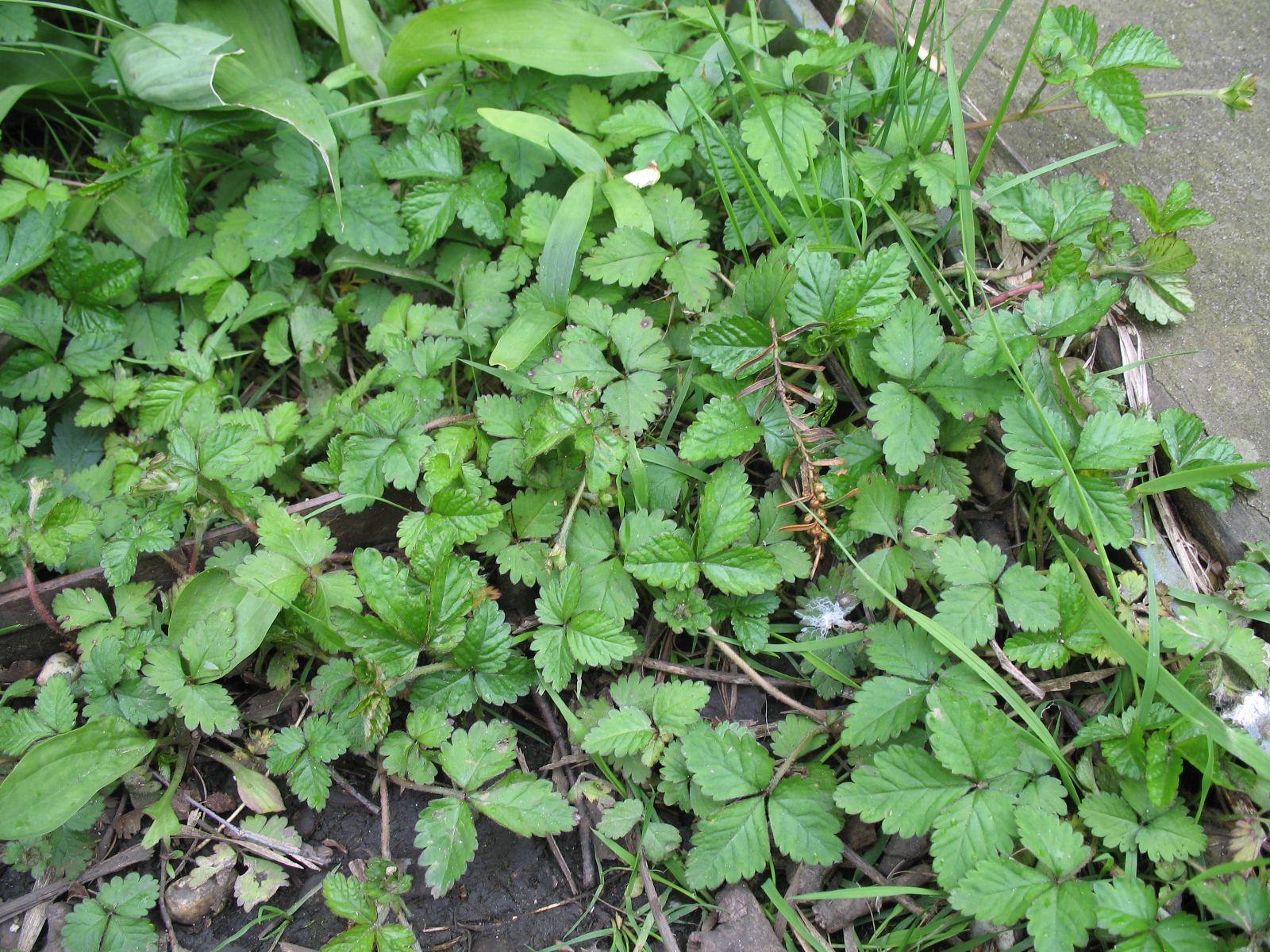


Geraniums are really bulking up. The cowslips shown here amongst the Geraniums, should never be harvested from the wild as they have such a hard time surviving when their source of seeds is removed. Wild garlic is also in the photo.

Linda Runyon – Eat The Trees!
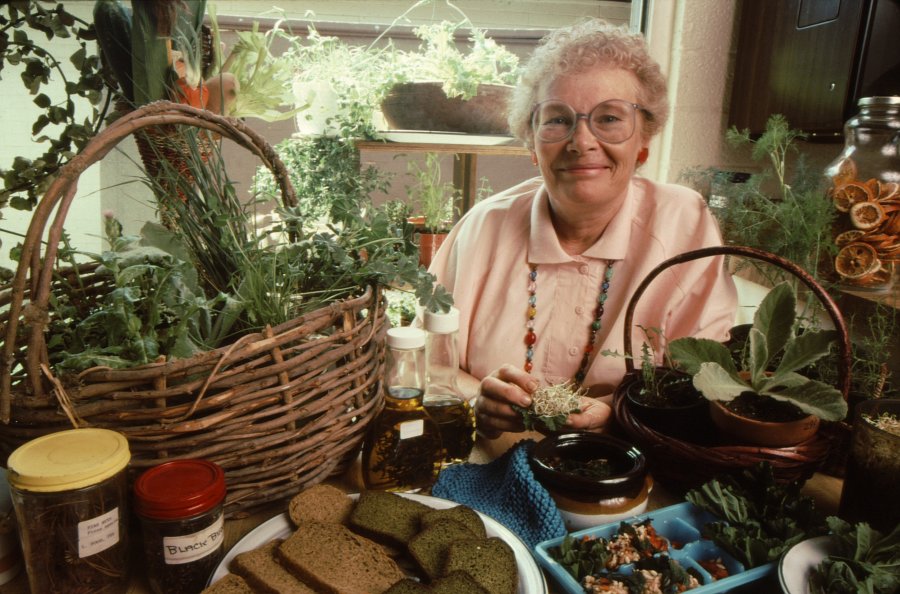 Linda Runyon is a wise woman who literally “lived off the trees” some years ago, during a particularly harsh winter, whilst homesteading in the US Adirondack Mountains. She taught herself how to harvest from trees and how to preserve and use their plenty. It was a matter of survival at the time so you really learned how to make the most of the trees around her. She has published several books, DVDs and plant ID cards over the years, helping countless people to live in harmony with the land. Her latest offering is an extraordinary book, full of tips and ideas for foraging from trees. The link above gives lots more info about her life and books and how to buy them directly. Mine was ordered via Amazon. I hope that I am also happily surrounded by herbs, when I reach her age.
Many of her methods are applicable to urban spaces, though she discourages foraging from trees located less than 200m from a road. She also lays out how to harvest inner bark from parts of useful trees, this is unlikely to be possible or desirable in an urban setting. Removing bark from living trees will kill them. That said, when winter gales return to Amsterdam, I’ll be happy to find a few small fallen branches to experiment with.
Inspired by this book, tomorrow I’m planning to try willow basket and edible wreath weaving with fresh withies. For dinner, I’ll try to cook up some beech leaves and twigs, Italian style. I also learned how much willow is equivalent to 2 aspirin tablets – its about 6 – 8 inches of tendril or 10-15 catkins. Overconsumption can cause unpleasant side effects.
The book is a quick read, has a study guide at the back to encourage practical learning and is packed with knowledge that is truly worth preserving.
I will never look at a Christmas tree in the same way again!
Here is a link to Linda’s foraging forum.
365 Frankendael day 4

A quick posting today… The plants are growing so quickly that it’s hard to keep up! Photos today of Stinging Nettle (Urticaria dioica, NL: Brandnetel) with Cleavers (Galium aparine, NL: Kleefkruid), Ribwort (Plantago lanceolata) and a lovely painting of White dead nettle (Lamium album) by fellow Urban Herbie, Elodie den Otter.
In the first photo you may be able to see Cleavers using our prickly friend as a support, to enable its own upward growth. For further information and links about Stinging Nettle, including a video on how to make nettle infusion, see my previous posting. These days it’s quite fashionable to eat nettles – the Italians have been doing it for millennia and nettles really do taste great – so there are hundreds of recipes around. I usually just throw a handful of chopped nettles into regular dishes such as ratatouille, it really beefs them up and to me this spring green tastes like an improved version of spinach. Here’s a link to a few recipes featured by the BBC.

Also today, Ribwort (Plantago lanceolata), which is so handy to remove the burning pain of nettle stings. As a child I was taught about Dock being used in the same way but these days I find Ribwort far more effective.

White Dead Nettle looks similar to the Stinging nettle but is in fact completely unrelated. This plant is just beginning to flower in Amsterdam and is often found growing alongside Stinging Nettle. Unlike Stinging nettle, this plant is best harvested whilst in flower. It has a multitude of traditional uses, ranging from easing sore throats to helping heal burns and eczema. Many thanks for the painting, Elodie!
What a waste!

Finding this discarded bunch of foraged ramsons, made me very sad yesterday. Not only did someone harvest the flowers of this wonderful wild herb but they also didn’t even eat them! I was even sadder to see them still on the ground, this morning. The flowers of wild garlic taste inferior to the leaves and by removing them, careless foragers prevent new seeds being formed so this bulbous plant can spread far and wide.
Please spread the word about how to forage responsibly so that everyone can enjoy herbal beauty and bounty in our cities, for generations to come.

365 Frankendael day 3
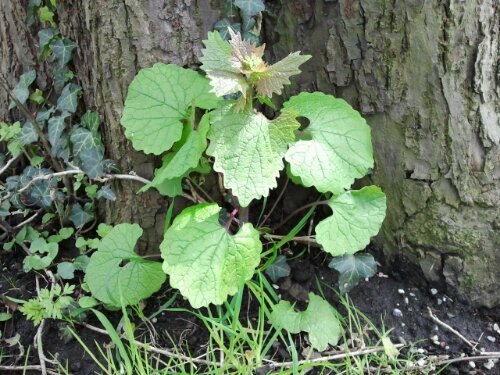 Garlic mustard (Alliaria petiolata) is featured today. I wouldn’t say it is plentiful in the park but I noticed lots of plants, particularly at the base of large tree trunks and along the edges of woodland and hedges. It is just in flower at the moment, so very easy to identify, not only by the distinctive smell of garlic when the leaves are bruised but also by the tiny white flowers at the top of the plant. Garlic mustard is a favorite amongst foragers and can grow up to 120 cm in the right location.
This plant is a biennial and can provide year round nutritious greens, for salads or the cooking pot. All parts are edible. Even the roots can be eaten, they should be harvested just before flowering, but of course removing the whole plant will limit the foraging potential the following year as the plant will be unable to spread by seed.
I see lots of garlic mustard growing around Amsterdam. You are very likely to find it along the edges of canals, hedges and overgrown areas. Now is the best time to identify it.
Other plants, calling out to me today are:
Coltsfoot – starting to open its seed heads which have been turned down towards ground since last week,
Nettle – tops are ripe for harvesting at present, I used plantain to rub away the sings as I forgot my gloves again today!
Mentha x peperita blue balsam – no flowers until later in the year but the spicy, pungent  burnt spice aroma of stroked leaves is ummatched.
Celandine – It carpets parts of the woodland area almost year round but it easiest to identify when it burst into flower, to announce the spring. The last few flowers remain now, especially beneath the trees of the Lime avenue. If you don’t know how to recognise this useful woodland herb, learn now as the foliage is so useful at most times of the year.
 Urban Herbology