Some lovely photos today from Joop and Lina, in Amsterdam, whilst I’m in the UK. Thanks very much both of you, they are beautiful!
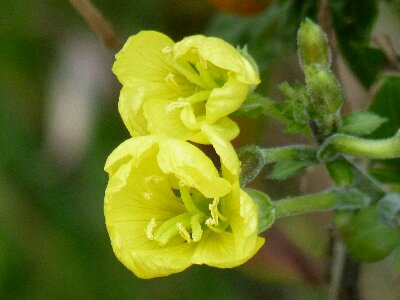
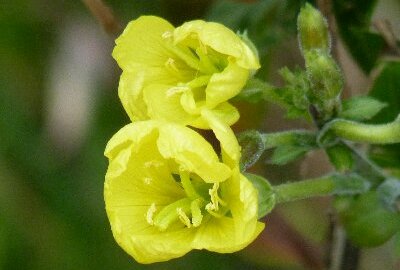
Evening Primrose
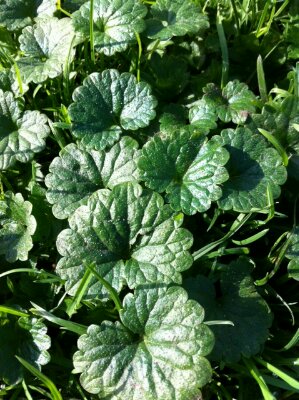
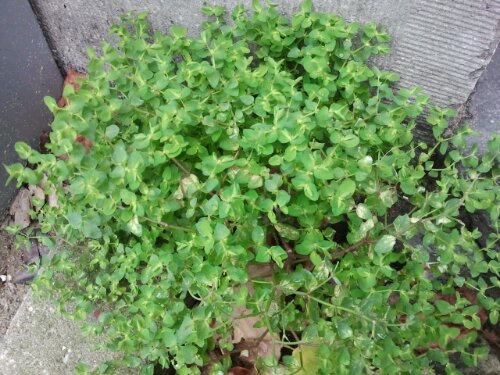
Ground Ivy
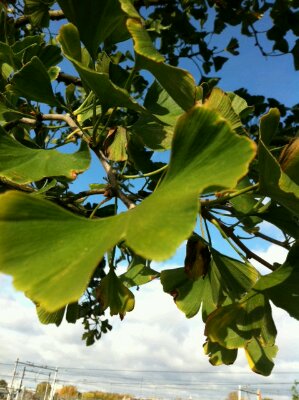
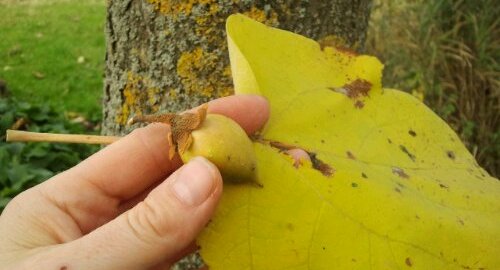
Gingko biloba
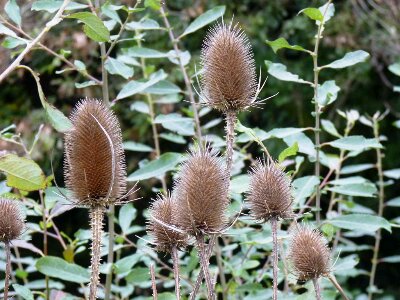
Teasel
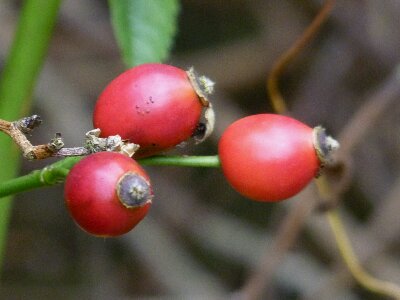
Rosehips
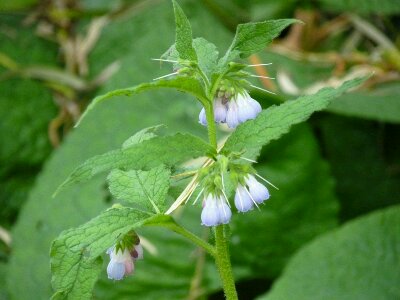
Russian Comfrey
Immature Blackberries

Some lovely photos today from Joop and Lina, in Amsterdam, whilst I’m in the UK. Thanks very much both of you, they are beautiful!
Evening Primrose
Ground Ivy
Gingko biloba
Teasel
Rosehips
Russian Comfrey
Immature Blackberries
Beautiful Roses, still in bloom and edible if unsprayed and growing in clean locations, here in Amsterdam.

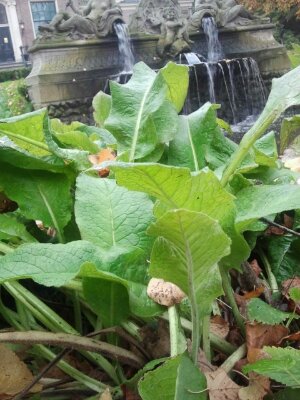
Next is Russian Comfrey (NL: Smeerwortel, Symphytum uplandicum x) which I picked a leaf from today. Am currently brewing a tea from it ready to feed to my houseplants.
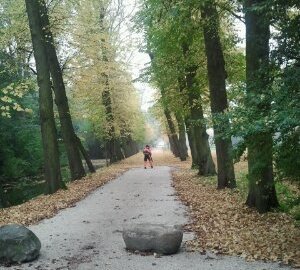
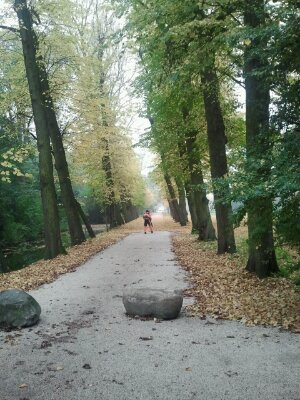
And lastly, the Park Warden blowing leaves from beneath the Lime tree avenue (NL:Linden, Tilia sp.) in Park Frankendael. Today seems to be Amsterdam leaf drop day, they are thick along the pavements and streets. Time to make the most of the beautiful autumn colours.
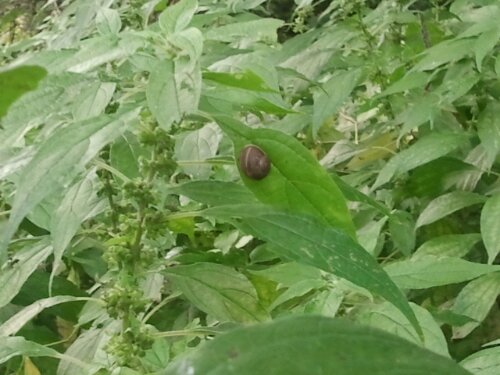
Some Hops (Humulus lupulus) today,

Along with Pennsylvania Pelitory (Parietaria pensylvatica).
I was back at the mysterious “French nut tree”, in the park also today. I’d thought it may be a member of the Pistachio family but my tree identification book tells me it’s not. I’m still clueless as to it’s real identity and whether it’s edible our not. Any ideas?
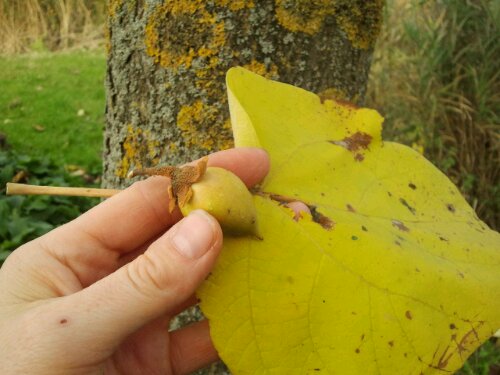
The leaves are heart shaped, wooly on both sides (particularly beneath but a little on top) smooth edged and my full hand span across. The fruit has a five pointed calyx and it tapers to a sharp point at the end of the fruit. The one I picked today is a little sticky on the outside.
An early start for me this morning. Cathy Leaung kindly invited me onto her morning radio show – The English Breakfast. So off to the Salto studios I went and had a very enjoyable time, sharing Mugwort Bread, Hawthorn Elixir, Four leaves ointment and Rosehip Honey with Cathy and her co-presenters.
Here’s a link to the interview. You may need to turn the sound up a little, to hear me clearly as I kept turning away from the mic to speak to the co-presenters. The link will remain active for a month or so.
I have given them a voucher to give away in a competition, for a free Herb Walk with me, either the Halloween walk or a private one. Names will be pulled from a hat at the end of today. You need to look at my post from yesterday (21st October 2012) and tell English Breakfast Radio which herb I was talking about in that post, via their Facebook page.
On the way home I found the following herbal lovelies…
Mugwort (Artemisia vulgaris)
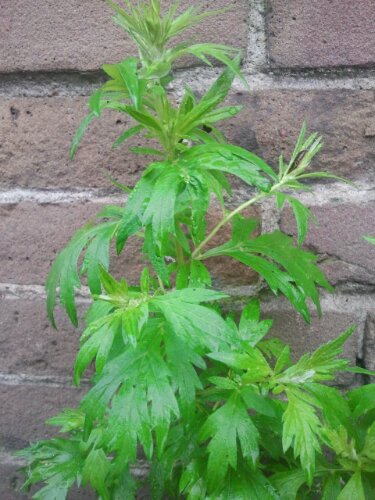
He is the underside of the Mugwort leaves, beautifully silvery.

Here’s a pretty, poisonous but useful Greater celandine (Celidonium majus).

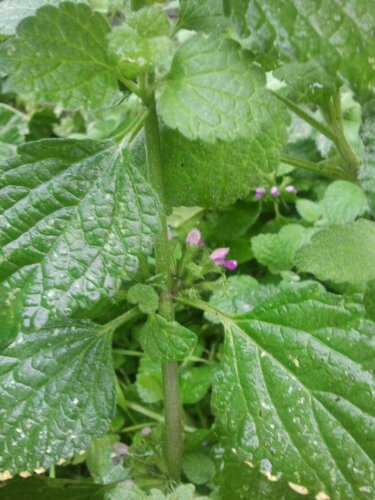
And lastly a beautiful labiate which I need to properly identify (was in a rush to get home from the interview). I think it is most likely to be Black Horehound (Ballota nigra).

The Amsterdam marathon is taking place as I write this. We caught a glimpse of the leading group as they sped along Hugo de Vrieslaan this morning.
Tomorrow morning I shall be up before the lark, to join the English Breakfast Radio show in Amsterdam. Presenter Cathy joined one of my September herb walks. I look forward to meeting her again, along with her team. To tune in and here us at around 8am tomorrow, tune in to 99.4FM, look at http://www.englishbreakfast.nl or watch the show (7-9am) on Salto 1 TV. I hope they are gentle with me at that early hour!
Haven’t had time to take many other photos today but did spot this beautiful clump of Hollyhock (Alcea rosea) foliage. It is often realised that Hollyhocks look like Marsh mallow plants and sure enough, the two species are very closely related. In western Europe only the flowers of the plant were used medicinally and the leaves were used as pot herb. All parts can be used however, for many different ailments. It is best known as a nice remedy for sore throats and minor chestiness. Most simply, you can steep the flowers in honey to make such a soothing remedy or drink tea, made from any part of the plant.

At this time of year, few flowers remain on city Hollyhock plants so we are left with the foliage. To use it, be careful only to harvest a small proportion of a plant, perhaps one medium sized leaf in every five.
Here’s my Recipe for Hollyhock Leaf Ointment
Clean your harvest, surface dry it thoroughly (clean tea towel and a warm place) and chop it finely. Add it to some warm ghee in a small, heavy based saucepan. Add enough ghee to allow for free movement of the chopped herb in the melted ghee.
Simmer really gently, stirring constantly, until the foliage starts to crisp up. When this happens, remove from the heat and strain the infused ghee through a cheesecloth or similar super clean fabric.
Store in an airtight container and use on rough skin. Amongst other things, Hollyhock is an emollient, it has the ability to soften skin.
Remember to return the used herb to the land. Hollyhock infused ghee should keep well for a year or so, I prefer to refrigerate mine. Discard (to the land) if it begins to look or smell peculiar.
Hollyhock Love!
If I was forced to have just a single herbal mission in life, I think it would be to teach city people just how useful Hollyhocks are and to encourage their proliferation and use (is that two?). Hollyhocks are a perfect urban herb, in my opinion! They have a multitude of uses, many linked to soothing or maintaining a healthy respiratory systems. They grow really well in sandy soil, especially with the support of a building beside them, they look spectacularly beautiful for months long and they are so easy to harvest, store and use.
In my mind Hollyhocks are an urban blessing. They cohabit with the people who most likely live in pollution and can solve many of the ills which air pollution brings upon us.
Here’s a link to a colorful post about Hollyhocks from a blog called Choosing Voluntary Simplicity.
Here again is the Plants for a Future link, about Hollyhocks. Prepare to be impressed by its uses around the globe 😉

A stroll around my neighbourhood, led me to some very useful plants and a poisonous one, today…
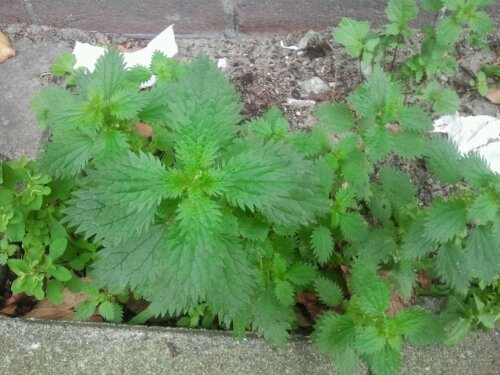
Firstly, Annual Nettle (Urticaria urens). Full of nutrients, rather like it’s better known perennial sister but with less ferocious stings. If you are used to seeing Stinging nettle (Urtica dioica) around town you may notice that this annual has more toothed leaf edges.
Next is a handsome, deep rooted Dandelion (Taraxacum officinalis agg.)

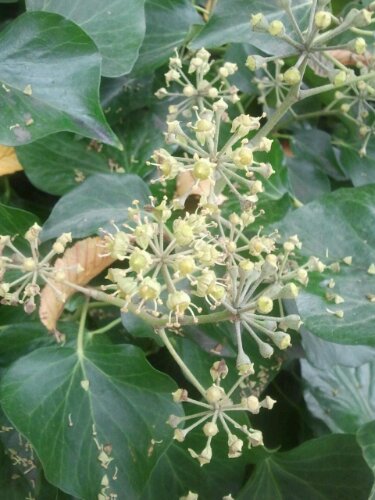
Then a strong, protective Ivy plant (Hedera helix) in full autumn insect feeding bloom.
Here is a lively patch of vitamin packed Chickweed (Stellaria media) making three most of a protective playground fence.

Here’s a tiny Hollyhock seedling, growing in a pavement crack.

I also liked the look of this decorative (and edible) Pansy (Viola tricolor).

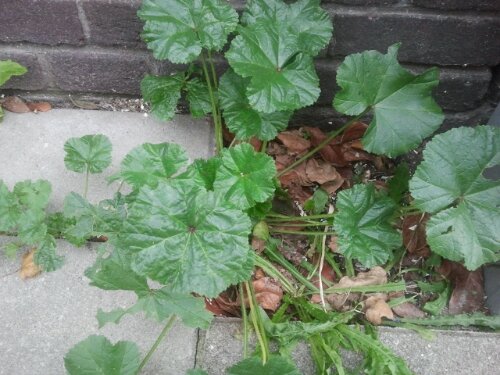
And a lovely nutritious Mallow growing against the building where I live.
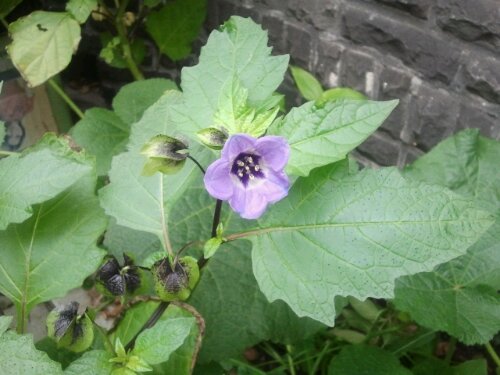
Lastly a striking plant which I’m quite sure is a poisonous nightshade. This one seems to be used as a decorative addition to pavement garden. I will try to find it’s name but think it is sometimes called Love Apple, Nicandra spp.


Evening Primrose flowers are still around in Park Frankendael and many other city locations. On the ground behind this plant you may also notice a healthy patch of Mint and various other herbs.

Above is a delicious patch of Wild Marjoram.

Here are two herbs which were added to my lunchtime soup today:
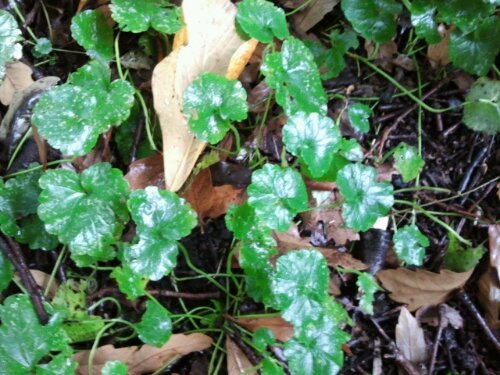
Ground ivy (Glechoma hederacea).
Potentilla sp.. Here’s a little information about the abundant and edible urban herb.
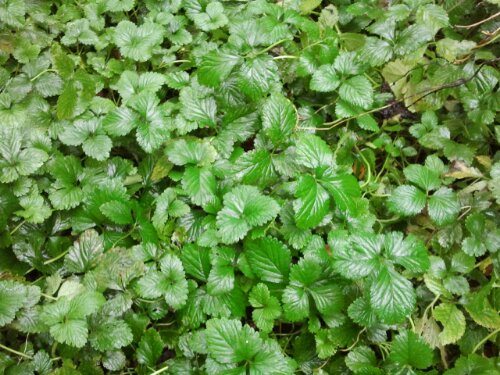
And here’s the herb that I’d had in mind, to as to the soup pot.. Wild Rocket. It has already gone completely to seed so I was to late but thankful that there should be many more of these plants in the area next year.


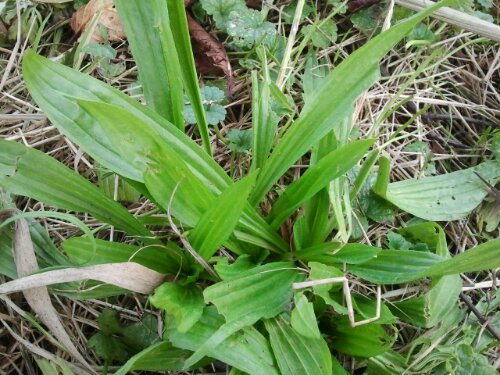
This is Ribwort (Plantago lanceolata) growing in Frankendael and all over the city. A very useful herb.

Hairy bittercress (Cardamine hirsuta) growing in a school yard paving crack.
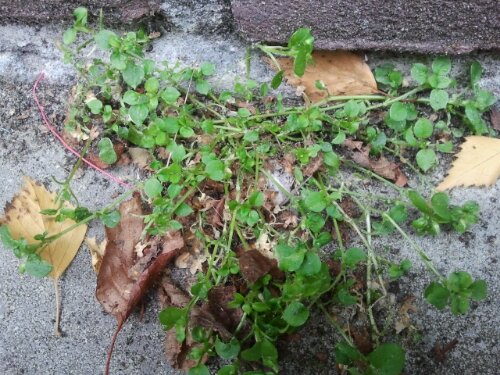
Chickweed (Stellaria media).
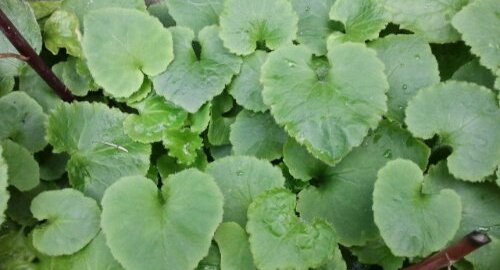
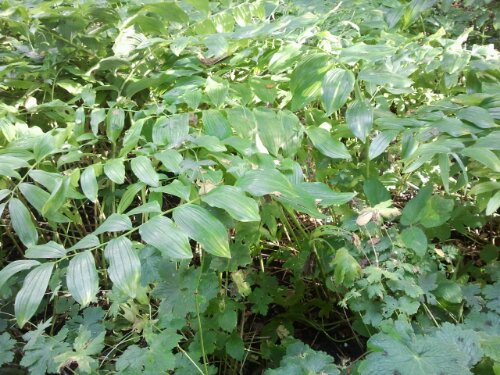
Above is Solomon’s seal. The roots of this plant are eaten by some. It is easily confused with other, poisonous plants.
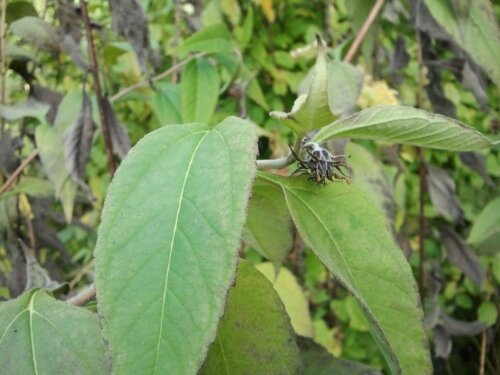
Here is one of the last remaining green Jerusalem artichokes in the park. The rest, at least in the flower meadow area have started to blacken and wither.
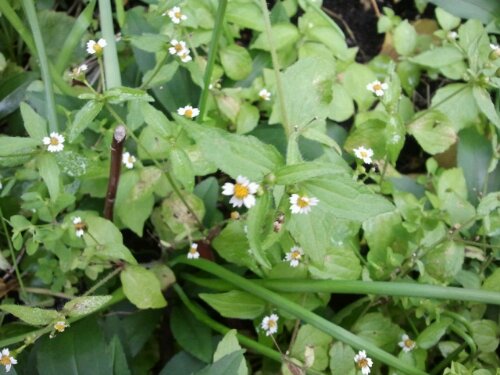
Gallant soldiers.
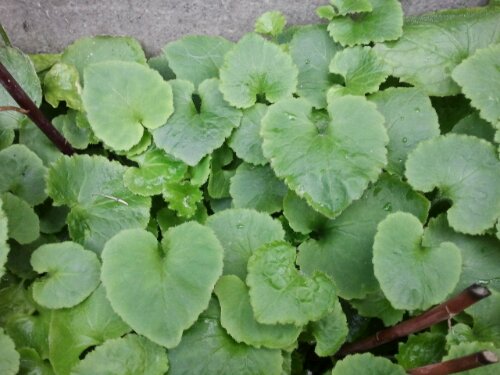
I thought this was Violet (Viola odorata) foliage but since decide that it’s more likely to be Lobelia foliage (poisonous).
A Poisonous Euphorbia species.
 Urban Herbology