Category Archives: 365 Frankendael

365 Frankendael day 346

Today I went to a very small park, close to de Hortus Botanicus. In the undergrowth I noticed this rat poison. Not such a tasty site! Apparently feeding ducks and herons in the city is fueling the local rodent population.

image

So what’s around today that we could use or eat?

Berberis, more useful as a Dyer’s herb than anything else at this time of year.

image

Hollyhock, really starting to grow ask over the city.

image

Roses, also really starting to show promising growth.

image

Red Valerian

image

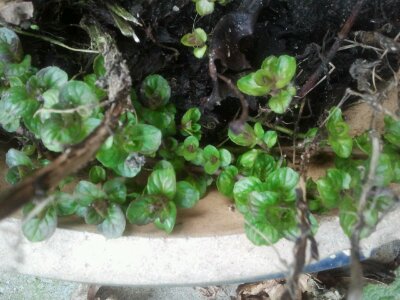
Catnip, growing back again in the native canal bridge planters near the KIT and Tropenmuseum.

image

365 Frankendael day 345

Today is Puur markt in park Frankendael and that brings lots of extra traffic to the woodland as well as the main park.

image

As I arrived, a fire was being put out on the edge of the woodland.

Here are a few plants which I noticed today:

Lungwort (Pulmonaria officinalis)

image

Primrose (Primula vulgaris)

image

Marshmallow (Althaea officinalis) of last year. There are still a few seed heads on these dry flower spikes.

image

Wild garlic (Allium ursinum) Daslook. A nice area of it with a toxic Arum maculatum (Lords and ladies) growing proudly in the middle of this shot.

image

365 Frankendael day 344

I passed by Flevopark this afternoon and saw masses of Wild Garlic, still looking very good! At the front of the photo you may be able to see lots of Elder (Sambucus nigra) shrubs, just coming into leaf.

image

At the nearby childrens farm and outdoor play centre there were some lovely wild plants and cultivated ones.

Here’s the strawberry planter that I noticed last year..

image

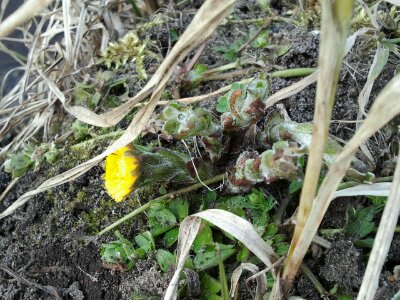
My favourite find of the day, Coltsfoot (Tussilago farfara). It makes a wonderful mild but effective remedy for coughs. Here’s a link to Susun Weed harvesting and preparing it for such a purpose. Making Coltsfoot honey is very easy and very useful.

image

Coltsfoot is of the same family as Butterbur and Fuki which I’ve been noticing a lot lately. All of these plants send up flowers before their kidney shaped leaves. All are quite striking. I’ve never found enough Coltsfoot in Amsterdam to harvest but I’ll keep on hoping.

image

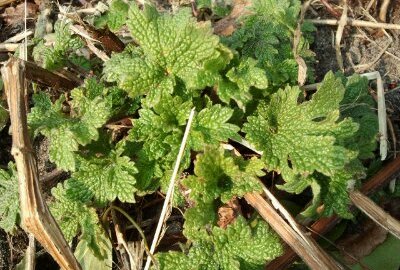
Here’s a plentiful herb which nobody ever minds me harvesting – Stinging Nettle (Urtica dioica). It is getting better by the day at present.

image

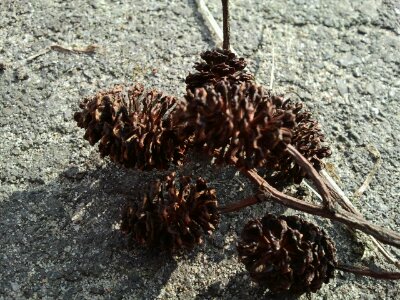
And lastly today, another plant I was delighted to find on our trip today. These are the cones of an Alder tree (Alnus sp). Alder is the only deciduous tree which bears cones. I’m saving lots which I collected from the ground today, to help create a well dressing. Glennie Kindred has helped revive this ancient craft and I’ll be having a go at making one very soon in Amsterdam. Scroll through the 18 images on that link and you’ll see how the cones are used – quite stunning! Alder comes were traditionally used to create the edges or lines of the designs.

image

Alder also bears beautiful catkins, giving more than a hint that it belongs to the Birch family. I found a branch of Italian Alder on the ground in Oud Zuid a few weeks ago. That is now growing lovely leaves in a base of water at home. Still no roots though.

image

365 Frankendael day 343

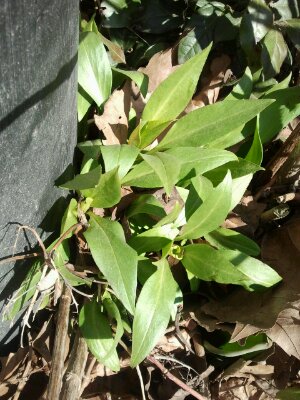
Today in park Frankendael, I found my new herbal friend. I thought this was Black Horehound (Ballota nigra) but now am sure that it is Common or White Horehound (Marrubium vulgare), a very hairy and equally useful plant!

image

It is growing next to an old faithful friend, Motherwort (Leonurus cardiaca)

image

Its the first time I have seen Motherwort in Amsterdam this year. I had a little taste and wow, it’s so strong, bitter and useful! Looking forward to tincturing this plant later in the year. The two plants above, can look very similar at first glance. Both have obvious leaf veins and a similar texture but their properties are very different and the deep invaginations of Motherwort’s leaves will become more obvious by the day.

image

Above, Witch Hazel flowers are going over at the moment. It will be difficult to tell this shrub from others once the extraordinary flowers are gone.

image

And these flower buds are truly a taste of heavenly things to come! This is Magnolia. The plant is said to have been brought to Europe by Chinese medics or Europeans who realised its place in traditional Chinese medicine and fancied it for themselves. But these days it’s simply grown as an ornamental. In park Frankendael there is a small stand of different Magnolia sisters, which bloom sequentially, offering a long period of beautiful blooms. It is an extremely useful but underused herb. I enjoy making Magnolia petal infused honey and now have my eyes peeled for the first Magnolia blooms of the year…

365 Frankendael day 342

Perishingly cold in Amsterdam today but most of the local plants don’t flinch at this strange weather! Here’s a small sample of what you could be harvesting or eating from Amsterdam streets and green spaces today:

Today perennial Russian Comfrey (Symphytum uplandicum x) plants are standing proud again. I’m very pleased about this as I’d like to try placing a Comfrey leaf beneath my potato plants this year. My spuds are almost ready to be planted out, just in time for the Comfrey fertiliser!

image

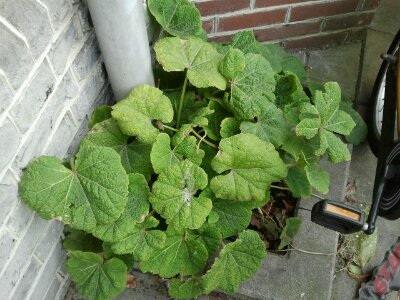
Hollyhock plants (biennials) are looking strong and almost ready for some leaf harvesting. I’ve got lots of plans for this plant this year. An interesting herb to help soothe bronchial congestion and infection.
image

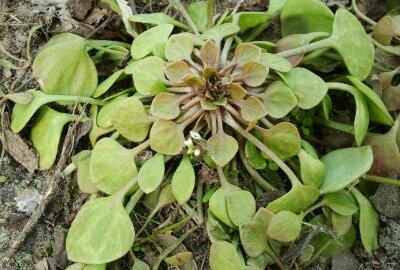
This lovely plant (in Sarphatipark, next to the railings along Centuurbaan) is Miner’s Lettuce, Winter Purslane (Claytonia perfoliata) and delicious it is too! This is the basal rosette of young leaves. Just wait until the little white flowers come in abundance – they grow out of the centre of the mature leaves. Quite amazing!

image

A Butterbur species (Petasites sp), in alien-like flower. Edible in small quantities, contains a liver toxin. It will have massive kidney shaped leaves soon, less interesting to the forager and then more likely to be dangerously confused with other very irritating plants. Now is the time to be interested in this plant.
image

Beautiful (not edible) Bluebells, just coming up beside a Lime tree trunk and an up coming Garlic Mustard perennial plant.

image

This purple flowering perennial is Red Dead-nettle ( Lamium purpureum). Edible, nutritious and gently medicinal.

image

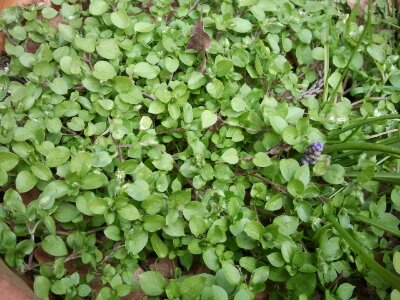
Below is flowering Chickweed (Stellaria media)
image

Here is Wild Garlic (Allium ursinum). Mouth wateringly delicious, if you like the taste of garlic, and with the benefits of garlic, though probably less effect on vampires as it’s milder in strength. Now’s the time to try it if you haven’t already.

image

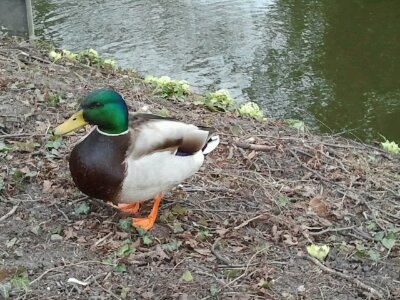
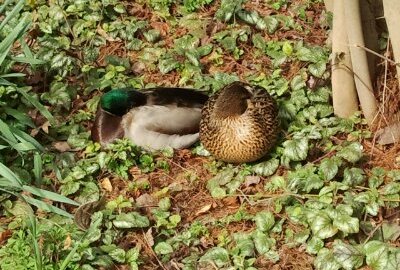
Next, a Mallard duck checking out Park Frankendael’s Japanese spring delicacy – Fuki (Petasites japonica), before checking out my telephone and trying to eat it – or me, not quite sure which. The beautiful yellow flowers look like primroses from a distance. Primroses are also in flower in the park right now but shouldn’t be touched as they don’t multiply very well here.

image

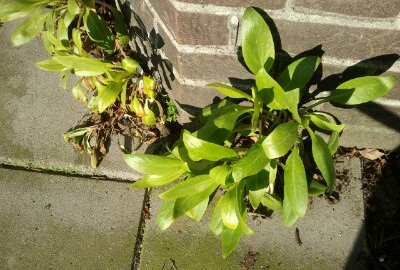
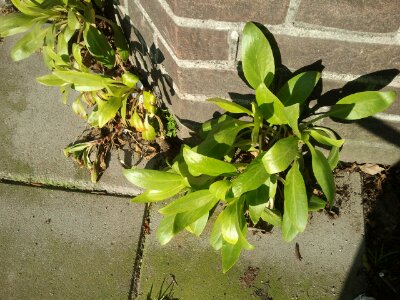
And last but not least the plant which I found recently and thought was Black Horehound (Ballota nigra). It could also be Common/White Horehound (Marrubium vulgare) I’m measuring this patch each day, waiting patiently for it to be big enough to harvest for a tincture. For the first option, its Latin name, Ballota, comes from its unattractive scent. Its not so bad and helps to identify the plant. It can be used to lift the spirits, act as a mild sedative, ease morning sickness, nausea, gout, bronchial congestion, nervousness, menopausal ailments and many more conditions. I’ve been munching it in the park each day I see it and find it really quite palatable, the smell doesn’t seem so strong or distasteful. Those who named it Ballota must have smelt not so many foul odours! Or perhaps I’ve smelled lots in the chemistry lab so am not so bothered anymore… Or perhaps it is Common Horehound instead? Either way, the two options are edible and I’m really looking forward to trying the tincture and feel that it may become a staple for me during times when I’d usually reach for Motherwort but also feel the effects of cold dampness and chestiness. An infused honey will be the second thing I make from this plant.

image

365 Frankendael day 338

It’s bitterly cold here today, bizarrely cold for late March. Ponds are frozen solid and there is a strong biting wind which is keeping most people in there homes. As hardy Urban Herbologists, my little girl and I wrapped up warm, took a few herb photos in Park Frankendael, harvested some Black Horehound to test at home and then thawed out whilst enjoying a warm milk and a hot chocolate in Merkelbach restaurant.

Here is the White or Common Horehound (Marrubium vulgare)

image

And some increasingly delicious swathes of Wild Garlic.

image

image

All in all, a great day to visit the park and test out a new coat.

image