Category Archives: Urban Herb Walks

Gathering Herbs in May


Here are a few tips on what to take with you, if you go foraging in Amsterdam, or anywhere else for that matter…

Paper bags
Fabric/plastic carrier bag
Rubber/gardening gloves (stinging nettles)
Small scissors (nettles/elderflower/processing herbs)
Sun hat
St. John’s wort oil (sun protection)
Aloe vera gel (sun burn remedy)
Layered clothing
Waterproof jacket
Sturdy shoes/boots
Long trousers and socks (Lymes disease)
Drink
Water for hand/plant washing
Plant ID guide book
Mini magnifying lens
Foraging book
Paper/book and pencil (samples, notes)
Bread/trail mix
Clean small glass jars with lids (for instant processing of herbs, pesto jars are a good size)
Olive oil and/or vodka (for filling the glass jars of herbs)

Of course you don’t have to take any of these things with you at all and the list is not exhaustive. But if you head out with foraging in mind, you may as well be prepared.

if you intend to forage some kind of root (such as Wild Carrot or Burdock) then something to dig them out with would be needed. I don’t usually harvest wild roots, for ecological, health and social reasons but if it’s your preference then pack a trowel or spade!

365 Frankendael day 25

Today, daisy, magnolia, pine cones and ribwort during an after work wander between the two Frankendael tram stops.

Daisy (Bellis perenis)has quite a number of historic uses. You can eat this herb as a salad or a pot herb but in places like Frankendael it’s highly likely that your harvest will have been quite heavily soiled or trampled. Have a look at the Uses section on the linked Wiki entry about this plant for details of how the Romans used its astringent qualities to assist soldiers.

Tasty Magnolia is still in flower here in Amsterdam. This photo is of a flower on a young tree within the park, so these particular flowers won’t be on my plate. There are plenty of other mature trees overhanging gardens and in public spots which you may be able to locate using boskoi. Before now I have collected leaves straight after a strong wind or shower. That’s a nice way to avoid upsetting anyone who thinks you are just spoiling the beautiful display by plucking blooms.

Above are a few Pinecones, found by my daughter, which I had completely forgotten could yield great food, in fact one of the least polluted and most nutritious- Pinenuts! And they are another harvest to acquire from fallen plant material rather than plucking. The tree these fell from is shown next…

I’m not sure of the species but I have already had a peak inside the cone and there are some tasty looking nuts within.

Lastly, trusty Plantago lanceolata, Ribwort. I harvested from several really juicy looking plants today, ready to make a foot oil tomorrow morning. The link above goes to day 2 of the 365 project where I gave further info and links about the plant.

365 Frankendael day 24

On my wander through the woods of Frankendael today, I saw a beautiful woodpecker sat on a park bench! No time to photograph it but maybe this park will turn me into a bird spotter, by the time this project is through!

Another exciting discovery today was made thanks to the Meetup group. Yi wondered if I knew of Butterbur (Pestites sp.) and if it grew here in Amsterdam. She likes to eat it when at home in Japan. I wasn’t aware until then, that Butterbur and it’s immediate relatives, are edible, tasty and are reported to have health benefits.

Butterbur throws up very strange looking flowers on thick stalks during spring, a while before it’s foliage appears. When it’s often massive leaves do appear, they all come from the rootstock rather than a leaf stem. Leaves can be 60 cm or more across and are very easy to spot as they are unmistakably kidney-shaped and come out of the soil not a central plant stem. There are lots of them near the old entrance of Frankendael. I await Recipe advice from Yi’s Mum, before deciding just what to do with the plant but a google search for Fuki, it’s Japanese name will provide you with lots of ideas. If you live in the UK you may be familiar with the vanilla scented relative called Winter heliotrope. I can still remember my delight and disbelief when I first sniffed its flowers in Somerset, many years ago. I had no idea it was edible at the time.

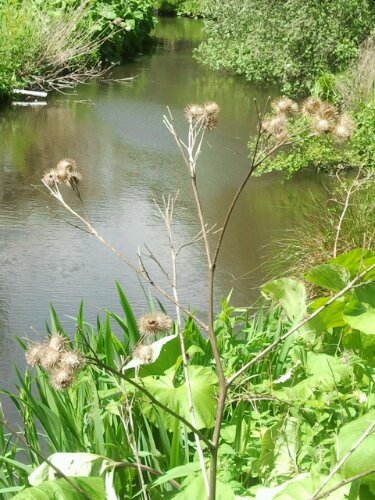
Now onto another huge-leaved perennial, which many will be familiar with: Burdock! Arctium lapa shown above, is a truly enormous plant with a mighty rootstock, prized particularly as a liver tonic. Dandelion and Burdock is a delicious drink, I remember well from my childhood. Dandelion is also a super liver tonic. Now Burdock is not such an Urban Herbology favourite as it’s very difficult to dig up and what a mess of parkland it would make to do that! However is a good herb to know about in case you happen upon a huge patch of them in the countryside or a bottle of tincture in a herbal supplies shop. When Giant Butterbur and Burdock coexist you should notice Burdock has pointed leaves and Butterbur kidney shaped leaves. burdock leaves grow out from an upright central plant stem, the burs eventually grow out of the top of this central stem, on their own stem.

Here above is a sign that there’s a Burdock closeby. Dried burs from last years growth.

Other wild beauties today…
Soapwort bolting up after done extra sunshine and showers. Yes, it is soapy, well the roots at least, and can be used for cleaning. It contains saponins but such a pretty flower is better left in the soil.

Euphorbia close up. Extremely toxic and irritating to skin.

A type of Mullein, in bud. This plant will be well over a meter high very soon. It’s flowers can provide an earache remedy.


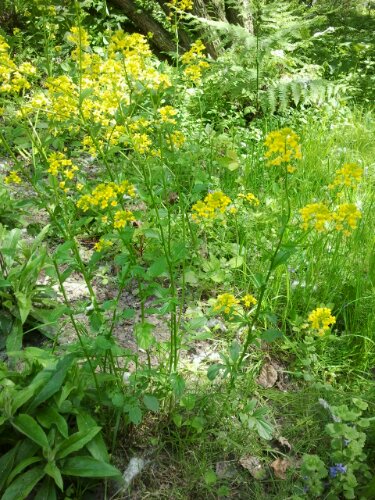
Lastly, a member of the Brassica family, I thought possibly Creeping Yellow Cress although it’s leaves are slightly stubbier than that. It tastes uncredibly strong! I then wandered into the labelled herb garden of the park and found a very similar looking plant called Barbarakruid (Barbarea vulgaris, Yellow Rocket Cress). I think that’s the most likely candidate. It tastes like super strength Rocket. Umm!

365 Frankendael day 23


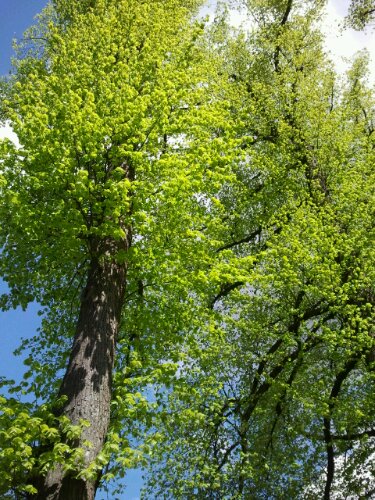
Today, Sameena from the Meetup group joined Livvy and I, on day 23 of our herb seeking mission. We saw several beautiful herbs, not least Garlic mustard, Geranium, Horsetail, the beautiful Lime trees with their glutinous leaves and Comfrey which the local bees were going crazy for.

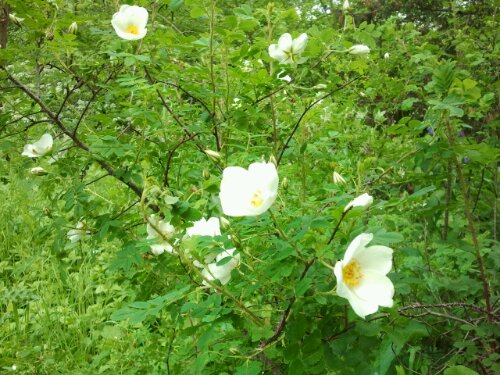
Afterwards I found borage and wild rose in flower, both for the first time this year – a real treat! If you fancy harvesting either please remember that borage is an annual so if you take the flowers there won’t be a plant there next year and vitamin C rich Rosehips only form when Roses are fertilised by insects and allowed to develop unhindered all the way into autumn.

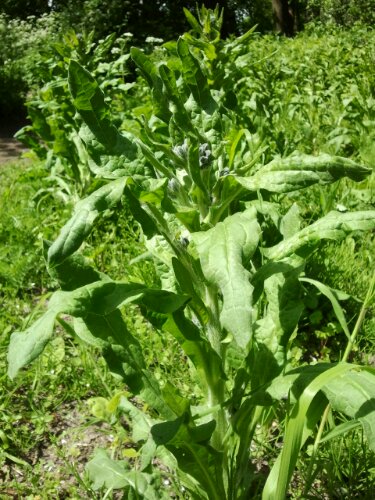
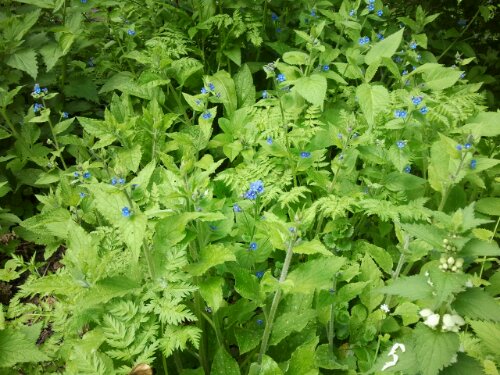
Above, Borage (Borago officinalis), mixed in with some Sweet cicely and Dead nettle. The small blue flowers are the easiest feature to help you distinguish this plant, it also has very hairy foliage. An alternative name for it is the Cucumber herb or plant, that’s because it tastes like cucumber! It makes a welcome addition to salads and it has uses in skin care.

Frankendael 365 day 21


Today Ivy and Horsetail. Firstly Ivy (Hedera helix). Here it is scaling three massive trees on the edge of Park Frankendael. Yes, it is a herb but not really one for the pot. Ivy has mystic qualities and associations as well as medicinal properties and many traditional uses. I’ve also posted a lotions recipe for Ivy cellulite oil today which may be of interest. Ivy is available year round but harvesting it in spring or summer us likely to have a lesser effect on the plant.

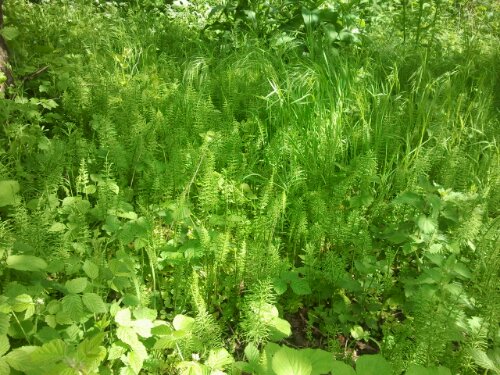
Horsetail is very vigorous at the moment and perhaps more useful than you thought. Here’s a link to a lotion recipe for Horsetail cuticle cream and an oil nail treatment.

365 Frankendael day 20

Day 20 of the project and after going to the park expecting to see just one or two new things I was delighted to find my first Elder blossom of the season, Wild Aspraragus shoots and several other delights. Here are a few…


Above, Japanese knotweed is still fair game for Foragers looking for something a little exotic in Amsterdam. Here’s a link to my
sweet sour JKW yoghurt recipe

.
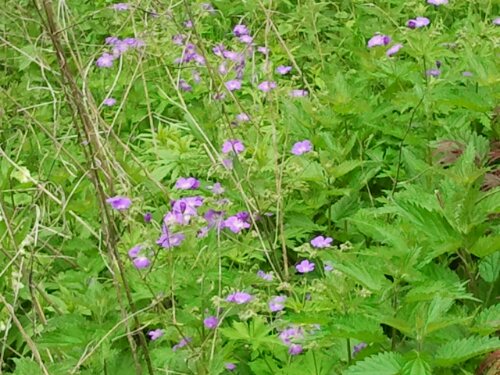
Next is A Geranium species in flower. Very tasty cooked or raw.


Someone got to this Asparagus before me. It makes a stunning tall feathery plant when allowed to flower. I hope that whoever harvests this one leaves some other shoots to flower and fruit unhindered.


Above is Plantago major (NL: Wegbrood, Plantain) in full effect, prior to flowering. It’s not as useful a medicinal than its slender sister Ribwort (Plantago lanceolota) but its useful and quite good eating.

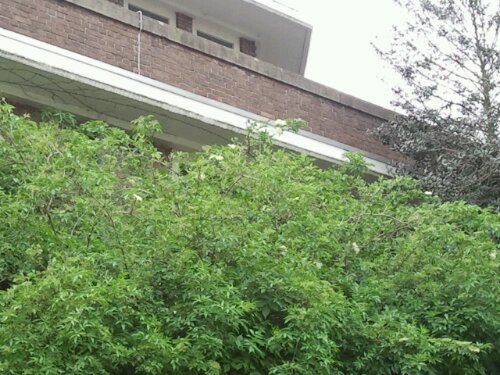
I feel like a bird spotter with this one… Above is my first sighted Elder blossom of 2012 and it gets me very excited. Elderflower fritters, Elderflower champagne, Elderflower tea and a host of other flower and Elderberry recipes are not far away! This huge Elder shrub is on the Middenweg, just up from the top entrance of Frankendael and opposite the Vomar supermarket. If only my arms were long enough! Remember to harvest with respect and leave LOTS for the birds and bees. Also be very aware of Elderflower look-a-likes. Here’s a photo of Ash or Rowan in flower, growing above an Elder shrub which is not in flower. It would be an easy mistake to harvest the flowers believing them to be Elderflower, when here is nothing to compare them with.

Guerilla Beans = Rabbit Fodder

Anyone with ideas for edible climbers, suitable for a spot of guerilla gardening in a rabbit hot spot? I went back to Oosterpark today, to check on the runner beans which Sameena, me and two young guerillas planted out last week. Unfortunately, not a single one is evident but there are mounds of rabbit droppings everywhere and lots of fresh warren holes. It seems that I chose a rabbit haven, rather than a runner bean haven. If you have any top tips for suitable plants for this sort of place, or have tried runner beans in good locations, please let me know…

365 Frankendael day 19

I’ve been walking in Frankendael with Elodie today, we found heaps of herbs, several new to us. If you’d like to join me for a herb walk there are a few spaces left for the Sunday May 27th Amstel to Frankendael walk. Here are some striking examples from today…
Solomon’s Seal looks rather like an enormous version of Lily of the Valley so I always steer clear of it. I have always thought of Lily of the valley as a poisonous plant so lethal that I shouldn’t even go near it. Upon reading about it last night I learned that it is called the herbalist’s Digitalis. It has a potent specific effect on heart muscles, causing them to open and fill more intensely and to raise blood pressure. It is thus lethal in even small doses and is not a herb of interest to me. However this arching beauty of the woods is very interesting. Solomon’s seal is used to make traditional remedies for many ailments, ranging from speeding muscle and bone healing, to menopausal symptoms, diabetes, acne and other skin afflictions. The native Americans reportedly ate it frequently.

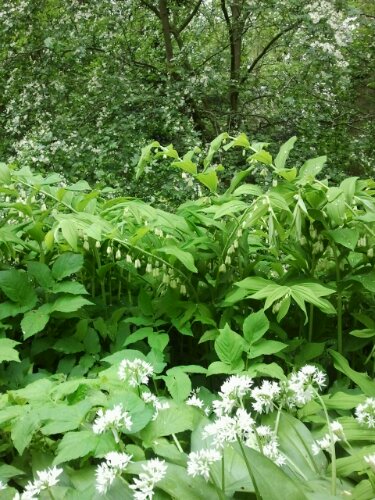
I was thrilled to turn a corner in the wood today and be greeted by this scene:

It is difficult for a photograph to do it justice – especially one of mine! Here is Hawthorn arching over a swathe of Solomon’s seal and Wild garlic, all three in flower at the same time.

Other herbs of note today…
Below, endangered Hoary Plantain (Plantago media). I first saw this herb last year and remember not really knowing what it was, although it was obviously some kind of plantain, but wanting to hide it and protect it from trampling feet! Of course I couldn’t and this plant is well adapted to living in well trodden locations. However, should you find it, especially in a week or two when it’s flower stalk will look like some sort of moth-plant hybrid, then please don’t touch it. I hope that this one has a chance to set seed.

Chicory foliage:

Yarrow (Achillea millefolium)

Endangered Greater burnet (Sanguisorba officinalis)

Eating Foraged Greens

Aside from knowing what is safe to forage, it’s rather important that foragers know what they are going to do with their harvest. After all, what’s the point in harvesting a heap of plant material when only a couple of leaves are needed for seasoning, or only the youngest leaves are tasty? At the end of the day, many foragers end up with a slightly smaller heap of unwanted plant material in their kitchen which ends up in the bin, or at best, on the compost heap. If you dont know which part of an edible plant to harvest or how much of it is needed to make a food item, please leave those plants where they belong.

Just because there is a wild glut of a plant, you don’t need to harvest much of it to make a great difference to your diet. This thought is central to my reasoning for foraging herbs rather than other edible plants. Generally a little goes a long way, in terms of flavour and benefits. An exception is Stinging Nettle, where I like to harvest a bowlfull of ‘tops’ at a time, many days in a row, to make tonic infusions.

Here are a few ways to use just a little foraged Spring Greens, such as Chervil, Ramsons, Geranium, Nettle or Ground Elder. These are my favorites, no measurement involved and less is more…

1. Finely chop a few leaves and add, ten minutes or so before the end of cooking, to whatever you are cooking (stews, casseroles, soups, fried chicken, baked fish, baked beans! etc). The photo above shows my pan cooked chicken with some sour cream added to the juices near the end along with a few chopped leaves of ground elder and wild garlic.

2. Add whole or chopped leaves to a pan of spinach and cook As usual for spinach.

3. Eat raw in a mixed salad (obviously the leaves or flowers need to be super clean and above suspicion for this)

4. Boil the greens in a little water for ten minutes, adding a chopped or pressed clove of garlic and a pinch of salt & pepper, near the end of cooking. This even works well for edible tree leaves such as Beech.

If you prefer a little sophistocation for your foraged fayre, there are plenty of recipes around. I like to experiment sometimes but if you want to incorporate more wild food into your diet then I suggest you keep it simple, keep it sparse and use those vitamin packed spring greens to spice up your usual meals. It’s also safer that way.

365 Frankendael day 17

There’s so much green around at the moment, many of the plants seem to merge into one and it can be difficult in places to see which herbs are around. Especially along the water edge.
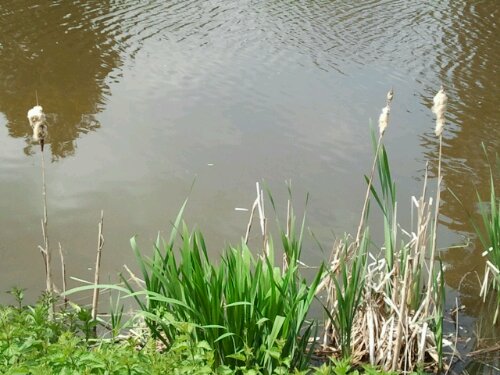
Here is a plant which does stand out along the waters edge – Cat’s Tail (Typha spp.). More about this one another time, buts it’s edible, delicious and very useful. However, what a shame it would be to take it from a location where so many people can enjoy its striking appearance.
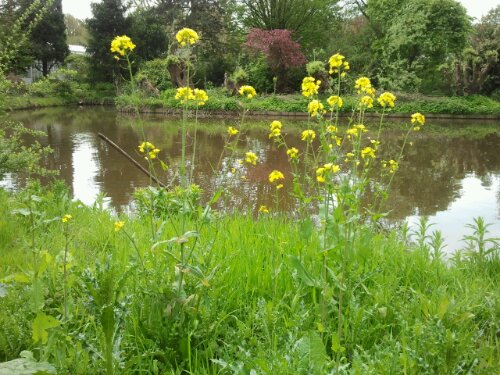
This pretty yellow flowering plant is Wild Turnip (Brassica campestris). A useful way to eat more health giving members of the cabbage family perhaps?