Dear foragers,

Dear foragers,
Here is a selection of recent photos from some of the foraging challengers. They have been very busy…
Leonie has found some lovely plants. I thought this looked like Meadowsweer on first glance but the flowerhead looks more like a celery family plant (Apiaceae). That with a red stem sets alarm bells ringing. I think we need some close ups of this one Leoniek.

and this bright flowering plant seems to belong to the Lamiaceae family but what is the name.. Gypsywort has similar serrated leaves but completely different flowers.

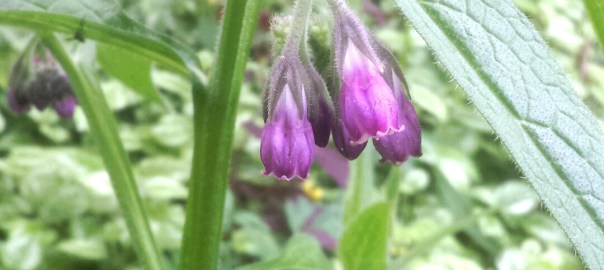
Dana has been finding lots of stunning Comfrey at Sloterplas

Peter has been finding Green alkanet in Belfast

and a super patch of waterside Mugwort (Artemisia vulgaris). Those dead flower stems from last year make it very easy to find.

And Carlijn has been extremely active. Here is Bugle –

Cleavers

and Japanese knotweed

Just 7 days to go and lots of plants to be found! Thanks so much to everyone who has sent in photos.

I really need to catch up on the beautiful photos which the challengers have sent me this week! Tomorrow, I’ll work through them all and add more to a post. It’s been a bit of a roller coaster week but now I’m back in Amsterdam and can happily reflect on good times spent with my family.

Chepstow has a VERY old castle (1067, so my Dad tells me) and around it grow a lot of beautiful plants. Stinging nettles and wild garlic are the two edible show stoppers around the castle and dell, but there are dozens of other tasty plants. Alkanet and Veronica are growing amongst the cow parsley here.

Walking through the town, I found Lime trees with leaves almost begging to be nibbled, brambles offering fresh new growth and this perky patch of Pellitory of the wall. I’m always very pleased to find this herb. It does like the protection of walls and it can offer a lot of benefits as well as taste. Best known to me is its talent for nourishing the urinary system. I stumble into Pellitory in the older parts of Amsterdam but Park Frankendael is home to a massive colonie of its cousin, Pensylvania pellitory. I’ve found it to be very useful too but it has an infortunate reputation in some areas due to its synchronised emissions of pollen. Pensylvania pellitory looks very similar to its cousin but lacks any redness and had an air of glassiness (and it’s conveniently called Glaskruid in Dutch).

I’ve been in the UK with my family hence no day 19. Here are a few green momentos from the trip…
Above, a handsome Yew tree.
What things this beautiful tree must have witnessed over the years and what quiet comfort it offers to those who gaze upon it. May it continue to do so for millennia to come.
Next, Stinging nettles with tasty nutty seeds hanging – already. Offerer of protection, strength and vigor.

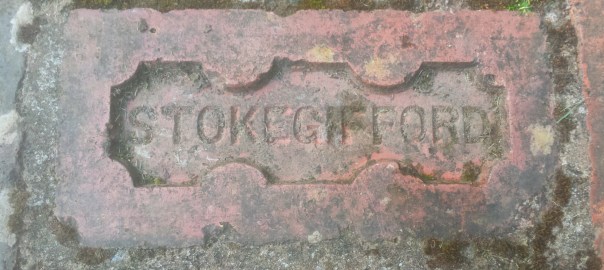
And lastly, a small symbol which happily catapults me back in time:

Formed from the red clay of north Bristol; so thick, staining and pure that it can be scooped out of the ground with bare hands, then moulded and baked. Real sticky clay. This brick is from the house where I grew up in Nowhere (a tiny in between place, now part of Stoke Gifford). I’ve always found it wonderful for houses to be made from the land on which they stand.
My first foraging experiences were around that house and oh how I enjoyed them! Plums, gooseberries, blackberries, lupins, marrows, willows and lilac. Their scent and flavour come back in a flash and yes, lupins are poisonous. Faithful dogs, hungry goats, rabbits and grazing cows… Lying in sunny fields of moon daisies and poppies, reading poetry, biology and Laurie Lee. Snow drifts, baths by the fire and a cold leaking roof. Buried conch shells, old farm machinery, half dry brooks, skeletons, deep wells, roman treasure and music…
Oh how fortunate a childhood I had!
Today had been a travelling day for me but I have seen some tasty plants on my route.
At Station Zuid in Amsterdam some thoughtful edible Lady’s mantle in a council flower bed.

And near Beethovenstraat, one of my favourites – Alkanet with those pretty blue flowers alongside Greater celandine.

Another lovely day and lots of gardening so plenty of finds. My favourite being a patch of wild garlic, only just showing flower buds.

Beautiful weather drew me to the volkstuin again today. It’s been a while since I spent a full day gardening there which meant the Ground elder (Aegopodium podogarium) has really grown tall and needed thinning out. I brought a shopping bag full of it home with me and plan to make a simple olive oil blend from it all. That will freeze and store in the fridge, allowing me to add a spoonful to cooking whenever I feel the urge for a parsley type taste.

I also harvested more Lovage (what a strong trasting herb!) and my daughter made a photo herb tour for us, of chives –

and Rosebay willowherb.

Here are some beautiful photos from Peter in Belfast:
Ferns with wild garlic in bloom –

Horsetail –

And this mystery plant –

The leaves don’t seem to belong to the flowers, at least not for a true rose such as Burnet. And the petals are not rose enough. They do remind me of a sort of rubus but the flowers seem too blousey ad the petals slightly overlap at their base. Almost like Cloudberry but not really. I hedge my bets on it being a sort of Rubus rather than a true rose and I look forward to seeing what develops after the flower gives way to the swelling fruit.
This morning I was gardening at my volkstuin and there lots of delicious edible plants there. Here are a few…
Russian comfrey (Symphytum x uplandicum).

Herb Robert (Geranium robertum)

Yellow deadnettle (Lamium galeobdolon)

More lovely photos today…
From Ann in Spain, beautiful flowers which look rather like a type of lily or Allium. Not seeing the whole plant, the flower could belong to a sort of Star of Bethlehem (Ornithogalum angustifolium). It also looks almost like Allium molly but white rather than yellow…

And here a beautiful plant which could be a type of chives or a small scabious (Scabiosa columbaria). Those leaves look too slender for scabious.. Very pretty, whatever it is.

And from Hannah, at the Dutch dunes, a Celery family plant and a mallow. Alexanders are my favourite from the celery family.

And I found lots of Dutch spring snow as I walked to work today – the seeds of Elm trees (Ulmus), on Beethovenstraat. Not a place to forage from but I’ll find this falling in clean places over the next few weeks.

Carlijn in Amsterdam has been busy. She is posting her 30 day challenge finds on Instagram – have a look here if you have time – some gorgeous photos.
More tomorrow, when we will be half way through the challenge…

Today I took a stroll in the Vondelpark and found lots of beautiful plants. Here is a little cluster of comfrey (white and purple flowers), stinging nettle, purple deadnettle and at the back, ground elder. Each one a useful plant but in a place where thousands of people should have the chance to see them and wildlife needs those plants far more than us.
Hannah has been sketching stinging nettle and comfrey whilst on holiday:

Peter has been finding Coltsfoot going to seed,


Guelder rose and some interesting litter which I’ll show another time.