Tag Archives: Mugwort

365 Frankendael day 58

Today a few photos of beautiful flowers from useful plants and a tasty Fat Hen plant.

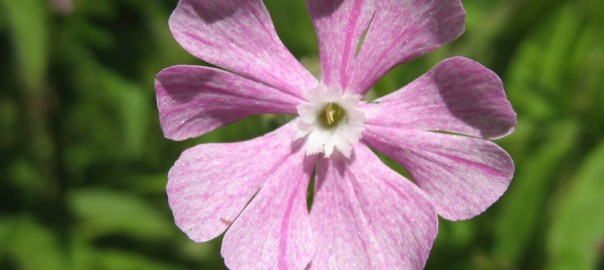
Firstly a front on photo of Soapwort, Bouncing Bet or Saponaria officinalis She is just coming into bloom at the moment and isn’t ready useful to many people these days but is still made into one of the most delicate cleansing natural soaps for heirloom lace and woolen articles.


Next, above, those delicate and delicious purple flowers of Geranium.

Here above is a familiar Poppy flower. The seeds of this annual plant are so precious to it that it’s not acceptable to harvest them in places such as this, where they stand out due to their scarcity. But, if you find dense swathes of them growing and can positively the plant without doubt, it may be worth considering sprinkling a few onto a home made loaf of bread.

Here’s the Fat hen plant which I harvested a few leaves from today.
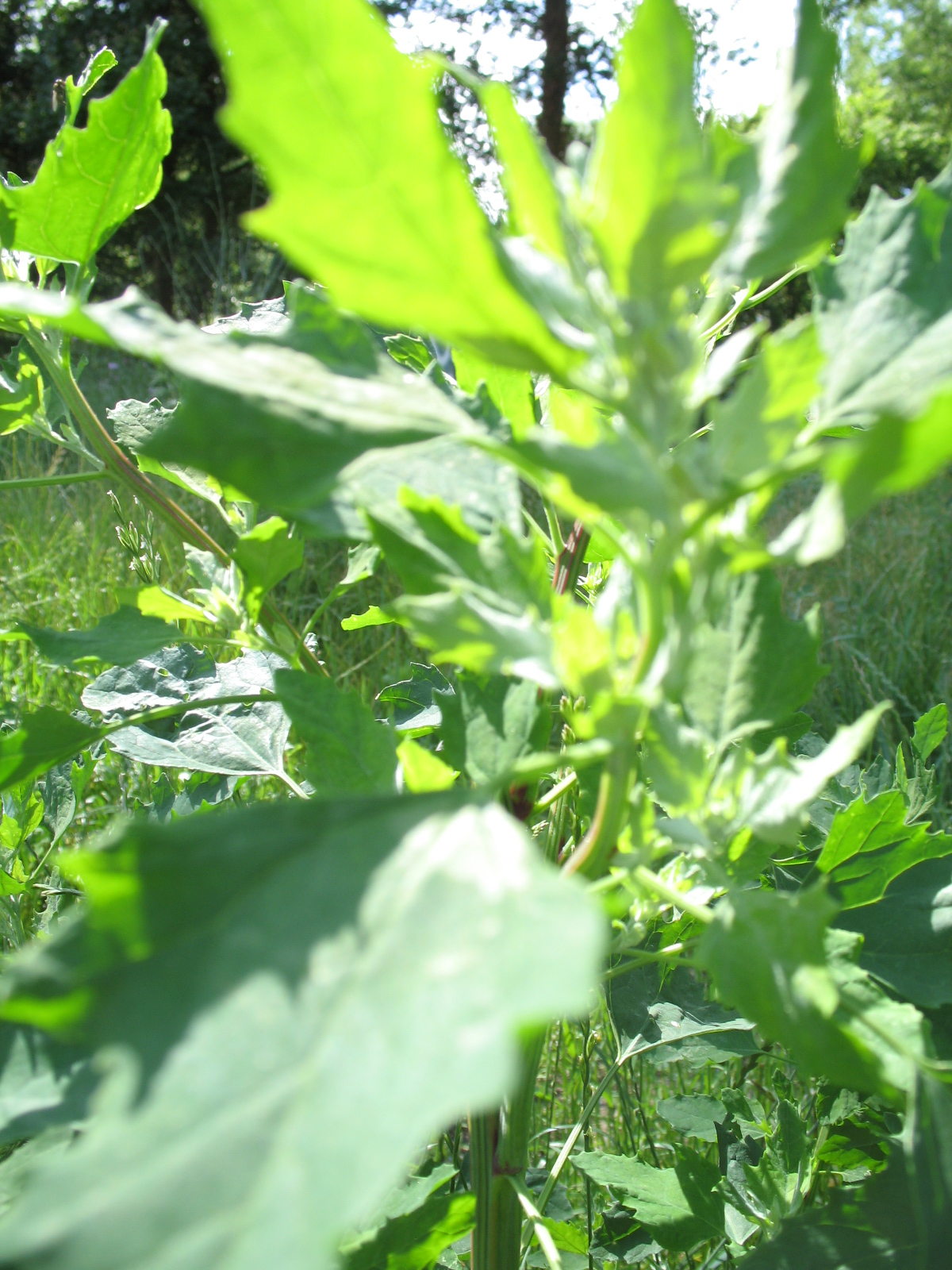
I also picked a 5 cm top of a Mugwort stem, ready to make some savoury bread to share at the Herb by Herb Mugwort Workshop. I’m really looking forward to working with this plant tomorrow morning. Whatever the weather, at midsummer there is also plenty that can be learned from Artemisia vulgaris, the plant that shimmers like the Moon and nourishes our bodies and spirits.
365 Frankendael day 55

Today we did a Herb Sit, rather than a Herb Walk. It’s amazing what you can sometimes find when you simply sit still and take a close look at what’s around you…

Here’s a Ribwort (Plantago lanceolata), with a small Dandelion (Taraxacum officinalis agg.) plant and some Field Horsetail (Equisitum arvensis) growing just behind it.


Above is a feather leaf of Yarrow (Achillea millefolium).


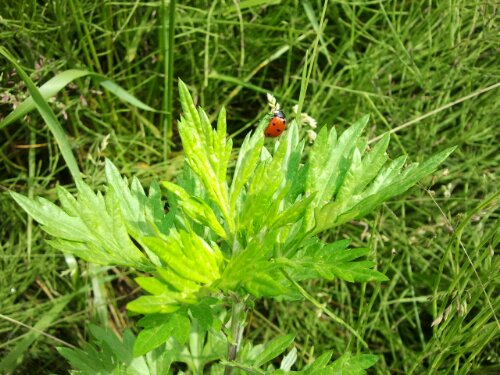
The tip of a young Mugwort (Artemisia vulgaris) plant featuring a Lady Bird.


Above, a not so clear photo of Salad Burnet (Sanguisorba minor).

We also found several types of clover and other legumes, within an arms reach of where we sat. I need my better camera to take decent photos of those. Here are the leguminous plants that we found and were able to identify today:

Red clover (Trifolium pratense)
Zigzag clover (Trifolium medium)
White (Dutch) clover (Trifolium repens)
Lesser Trefoil (Trifolium dubium)
Bird’s-foot-trefoil (Lotus corniculatus)
Please be aware that Bird’s-foot-trefoil is not a clover and is poisonous and should not be eaten. It has some historic medicinal uses. The clovers are edible. The flowers and leaves are tasty in salads and Red clover has many medicinal uses.

365 Frankendael day 53

A busy day today, including a lunchtime reconnaissance mission to Amsterdamse Bos, in preparation for some private herb walks. So just a quick look at the herbs on the edge of the Frankendael this evening…

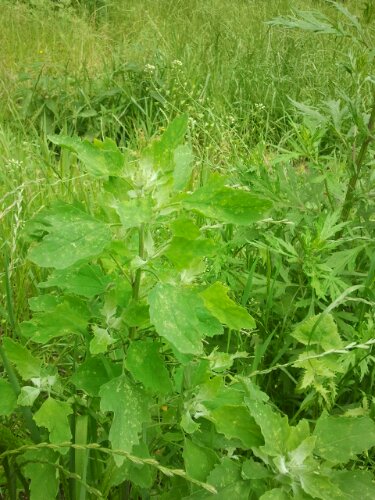
Here is a mixture of Fat Hen (Chenopodium album), Mugwort (Artemisia vulgaris) and Shepherd’s Purse (Capsella bursa-pastoris) growing together on neglected ground.

Here is Ground Elder (Aegopodium podograria)growing amongst some purple stained carrot family foliage. It may be Knotted Hedge Parsley but I need to check it carefully another time and in any case it’s not very interesting due to the similarity to very poisonous members of that family. There is one look a like of this plant, Sweet Cicely which I enjoy in the very early spring. It’s strong aniseed scent when the leaves are crushed is unique.

Urban Herb Love


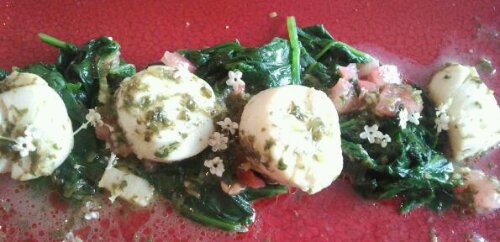
Yesterday was our seventh anniversary, here is what we cooked: Scallops, marinated in the juice of half a lime, a sprig of fresh coriander leaves, finely chopped and a small nugget of fresh ginger, squeezed. After cooking in the marinade, the scallops and sauce were laid on wilted spinach and Elderflowers were sprinkled on top.

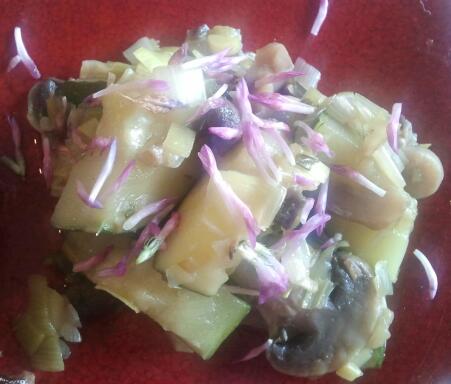
Next came grilled lamb cutlets served with a caprese salad and most importantly, Mugwort vegetables. The taste of a top of almost flowering Mugwort (Artemisia vulgaris) infused into mixed vegetables, as they cooked in one of my magical cast iron pots. It was served sprinkled with detached individual Red Clover flowers. Mugwort (Cronewort, Artemisia vulgaris, NL: Bijvoet)  is extremely tasty and aromatic when cooked in this gentle way. Just a splash of olive oil, finely chopped leeks softened then chopped aubergine and courgette added to the pan. Lid on and simmer gently for ten minutes or so.

Umm, now that’s Urban Herb Love!

365 Frankendael day 45

It has rained all day and it although I got soaked through, it was a real pleasure to be out photographing and foraging this Full Moon morning when hardly anyone else was about in Park Frankendael.  I managed to harvest some gorgeous Elderflowers, Ribwort, Red Clover and Mugwort, without anyone casting me a glance of suspicion or sympathy!

Here are today’s photos:
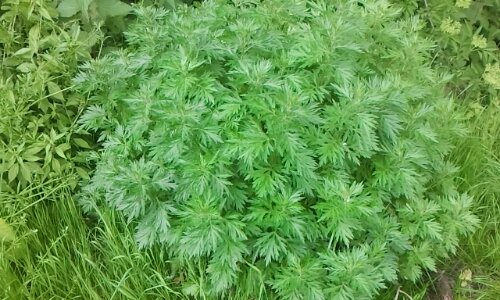
Firstly, Mugwort (Artemisia vulgaris), it is abundant on in some parts of the park.  Here is a lovely patch with a dozen or so plants.

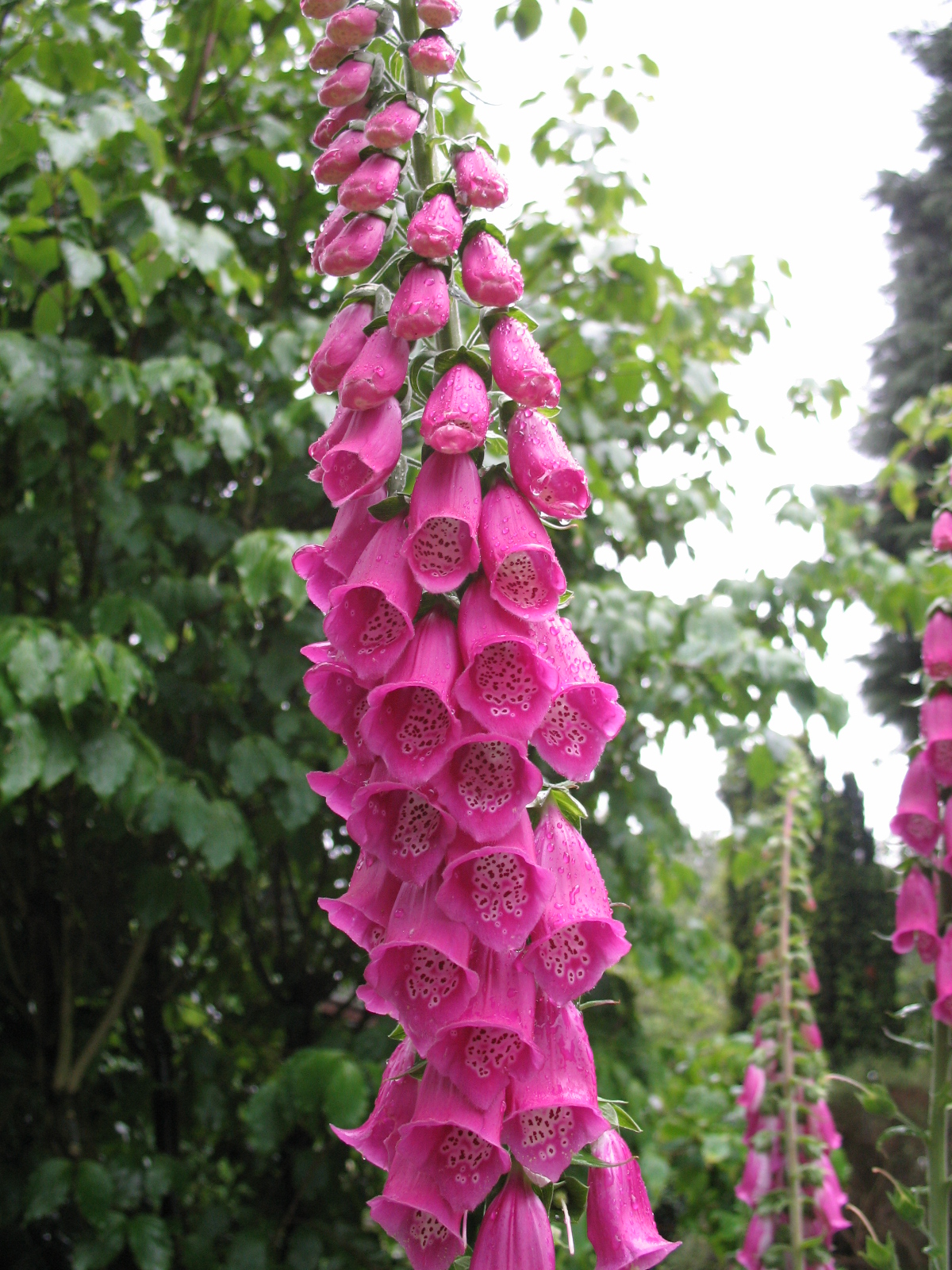
Next is Foxglove (Digitalis). What a beauty and so useful in times gone by particularly.  This is a poisonous plant and I think too rare in Amsterdam to harvest even if you knew what to do with it.

Now for my favourite of the day, Willow.  In fact two copiced Willows, one containing a lovely Garlic Mustard plant and the other just looking stunning, with light shining through a gnarled old trunk.  Perhaps it’s because Willow is such a water lover, or perhaps it’s the full moon energy, or perhaps neither but all the Willows in the park looked quite strikingly beautiful today.

Here’s the gnarly one:

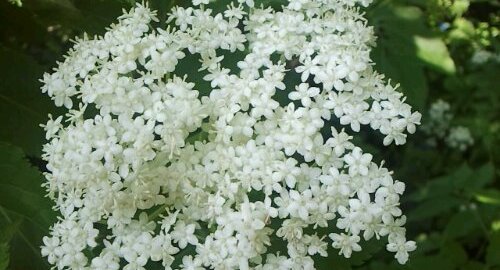
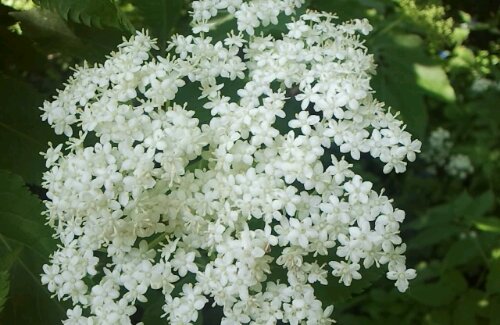
Next is Elderflower.  Most flowers are in full bloom right now but some of the earlier bloomers are already going over and setting seeds within tiny berries.  Remember that Elderberries always need to be cooked to be safe and palatable. The flowers are different and can be eaten raw, although most prefer them cooked or infused, for various purposes.
Here is an Elderflower well on the way to making berries.

Lastly, beautiful rain filled Teasel (Dipsacus sp.). This plant is well known to Chinese herbalists but less so to those in the West. It has traditional applications in the treatment of muscle, tendon and join injuries and disease.

Herb by Herb – Part one – Mugwort


Once a month a chance to learn in detail about a different common urban herb from either Jennie (who I run the meetup group with) or me, Lynn. 

Part one is about Mugwort (Artemisia vulgaris). An amazingly mystical, powerful and yet underused plant, usually found in neglected places.  Cronewort, the Dreamherb, is a great herb to learn crafting techniques on, such as how to make an infusion, oil, tincture, dream pillow and more. I will take this session in Park Frankendael on Monday 18th June 2012. 10.30 – 12.00.

In this short and sweet field workshop, you will make (or prepare for) all of those things and learn about the properties, habitat, folk and medicinal history and up to date uses of the plant. You will take home a bag full of little herbal preparations and knowledge of how to do it time and time again with everyday materials.

We will try to run each monthly Herb by Herb workshop near the New Moon and the days of the week will vary. You are welcome to attend all, some or none of the series! Most materials will be provided. You’ll receive a simple pack list when you subscribe. Cost of the workshop is €10.

Please contact me by email or through the meetup group if you are interested in joining this workshop.

365 Frankendael day 32


Today a lovely elderflower on the Hugo de Vrieslaan edge of the park. There are Elder shrubs all over the city and now is the time to covet those in the cleanest spots. Each day for the next couple of weeks elder blossoms will burst open, inviting local insects to do their thing and foragers and herbalists to get harvesting! You only need a flower head or two to make a great addition to a meal. As I have mentioned recently, only seven flower heads are required for a hearty quantity of Elderflower Champagne. So if you want to pick elder flower, be nice, thi about how many you really need and spread your harvest between healthy well flowered shrubs. In years gone by, Elderflower lovers would know which local Elders yielded the sweetest flowers. These days I think it’s more a matter of where there are healthy shrubs in the least polluted areas. I’ll certainly be out and about in clean spots, with my paper bag and scissors, over the next few weeks.

It is possible to confuse Elderblossom with other flowers (such as distastful and smelly Ash blossom). Look closely at the photo here (which is deliberately large) and others in good guide books. Notice the way the inner male parts (stamens loaded with pollen) of the tiny flowers protrude between the petals. Notice the colors of the parts of the flowers. Elder blossom is a creamy white, not a stark white. The flower heads are flat, aligning themselves to attract insects the best they can. Learn the shape of the shrub. It is often a messy shape, with areas where quite brittle branches have stapped off. Elder can be enormous, like those against buildings and at other times can hug the ground where they constantly fight their way back from repeated attempts to prune them to death. Be nice to Your local Elders this foraging season. Get to know This herbal medicine chest and in time, it may become a good friend. See the comment about Elder on 365 day 20 for several useful Elder links.

Here’s my favourite Frankendael bus stop clump of mugwort again; still growing, still no flowers, still dreaming.

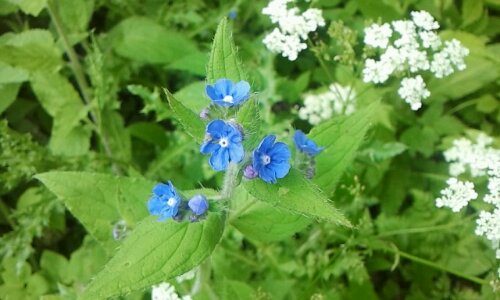
And finally today, a pretty Green Alkanet (Pentaglottis sempervirens) plant. Also from the edge of the park. Green Alkanet is a lovely plant with many uses. It is edible and medicinal.

365 Frankendael day 29

Hop (Humulus lupulus – what a latin name!) is entwined about a meter up last year’s dead stems today and looks far healthier and more vigorous than any cultivated Hop plant I have seen. I am really looking forward to seeing whether or not its flowers are as impressive.

Mugwort is growing beautifully on wasteland near a Frankendael bus stop. It is helpfully showing the silver underside of a few leaves in the breeze.

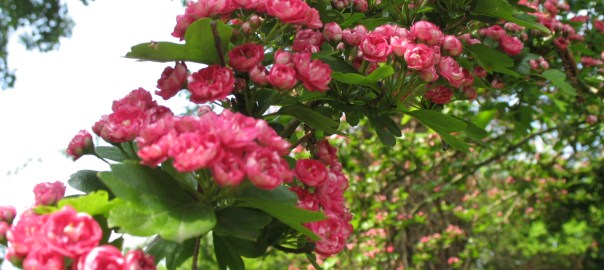
This member of the Hawthorn species reminds us clearly that Hawthorns are members of the Rose family.

Valerian officinale is almost ready to flower in wetter areas of the park.


And Agrimony plants are making themselves more obvious is some drier sunny areas.

Also today, towering Pink Purslane (Montia sibirica) is in flower. It looks similar in structure to Winter purslane (Montia perfoliata, which is low growing and currently growing like crazy along the Centuurbaan fence of Sarphatipark. Often called Miner’s Lettuce it tastes great!) However, Pink Purslane is said to have a nasty acrid aftertaste and should be avoided by foragers. It’s such a beautiful flower at this time of year that it’s good to know it tastes bad!