Category Archives: Alchemy

Kombucha – fermented tea drink

Kombucha is something I’m being asked a lot about at the moment.  Here are some of my thoughts and experiences of it and also some links which you may find useful.  Please do let me know what you think of the drink, good or bad.  I’m including it in the Urban Herbology blog because tea (Camelia sinensis) is indeed a herb and Kombucha is another way to process and consume it…

My Kombucha
I make Kombucha in my airing cupboard.  I drink a small amount of Kombucha from a cute Marrocan tea glass most mornings, as I prepare breakfast for my family.  I like my Kombucha on the acidic side and I let some batches ferment so long that a strong vinegar is produced.  I then use the vinegar in cooking or to infuse fresh herbs, in place of apple cider vinegar.  I let my two year old drink a little diluted Kombucha now and then.  I feel it kick starts my system, particularly my digestive system, much as a glass of water with an ample squeeze of lemon juice does.  I don’t drink it close to eating starches as starch digestion occurs optimally in an alkaline environment. I give my Kombucha babies (or mothers or SCOBYs or what ever you like to call them) away periodically so that others can start their own brew. SCOBY stands for Symbiotic Culture of Bacteria and Yeast.

I don’t think that Kombucha is a panacea for all ills, an elixir of life that will prevent all manner of disorders.  I also don’t think one should drink too much of the stuff, an absence of scientific research doesn’t mean there is anything amiss with Kombucha but I don’t feel that a single food stuff should be consumed copiously.  But I do like it and will continue to brew it, to use it and to share the babies as and when there is interest.

So what is Kombucha?
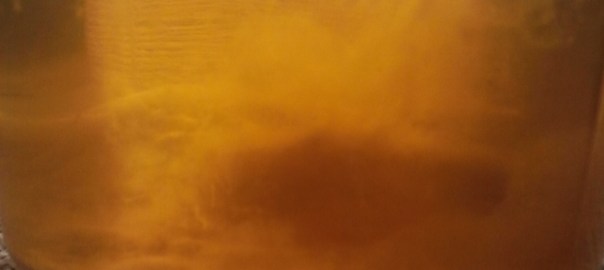
It’s the drink made when a jelly like bacteria/yeast symbiosis ferments sweet tea.
If you like, you can read more about the specific microbes which have been isolated from kombucha cultures via the links below.

How to make Kombucha?
You will need…
1 large glass or plastic container (2 litre Italian, rubber seal pickling jar from Blokker is perfect)
Kombucha mother/baby/scoby/tea mushroom/ tea monster (or a part of one)
Some good quality loose tea*
Some sugar**
Water, filtered preferably
Rubber band (to fit top of jar)
Very clean teatowel or muslin

*Any tea can be used, black, green, oorlong etc but not what we would call “herb teas” (e.g. rooibos, mint or chamomile).  I use green tea flower bombs, provided periodically by freinds who live in China. I’ve never been a regular tea drinker so green tea gives me the least classic tea taste and I like the result.

**I use organic white or “halfwit” sugar.  I have not experimented with other types of sugar because the guidance I have read from many sources states overwhelmingly that brown/ golden/dark etc sugar gives very inconsistant results.  So I keep a bag of white in stock specifically for my Kombucha.

You’ll find different recipes around and there are whole books on the subject but here’s the way I make it…

1. Boil 1 to 1.5 litre filtered water
2. Fill a large tea pot with the water and add 2 (Numi brand style) tea flowers/bombs.
3. Leave to brew until the water is warm enough to dissolve sugar but cool enough to have a good strong tea inside, and be easy to handle.
4. Pour the tea through a strainer into the large glass jar.
5. Stir about 16 tablespoons of sugar into the strained tea.  It needs to dissolve.  If it doesn’t then heat the water a little or add some freshly boiled water.
6. Leave to cool to body temperature.  I close the lid properly for this part.
7. When cooled, so you don’t cook your live culture, slip in your mother/scoby/baby/tea mushroom/monster and the Kombucha vinegar that it arrived with. It doesn’t matter if the SCOBY floats or sinks, so long as it is in the sweet, tepid tea, it will have what it needs to grow.
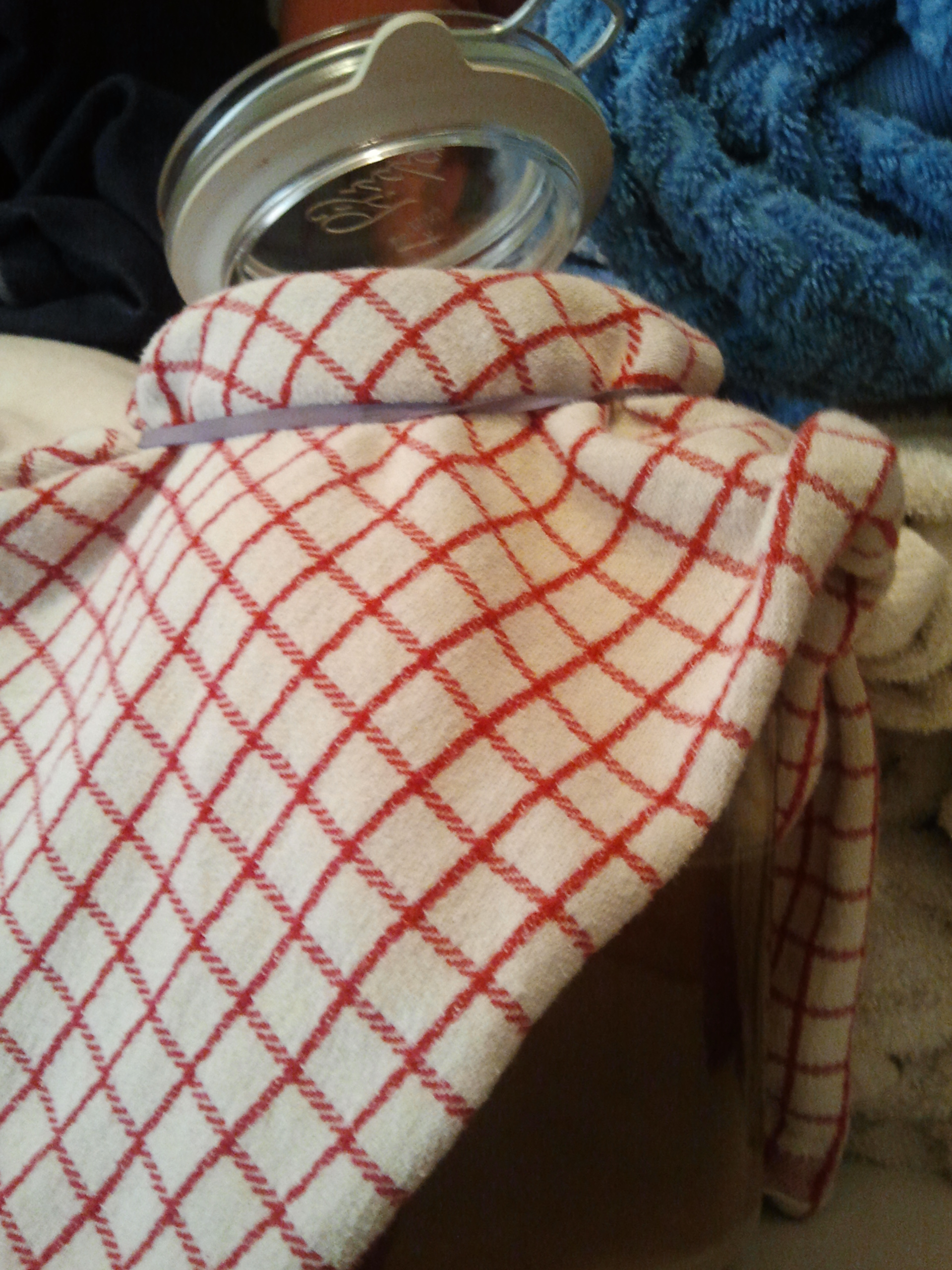
8. Place a clean tea towel or similar over the top so the ferment can breathe and secure that with a clean rubber band.  Do not close the jar properly as Kombucha is made aerobically, not anaerobically.
9. Take to a clean, dark and moderately warm environment (my boiler room/airing cupboard works a treat) and leave it for 7 days to 3 weeks.
10.  Check your jar periodically for signs of unwelcome mould growth.
11. The longer you leave it to ferment, the more acidic the Kombucha will become.  So taste the liquid now and then, especially when you are getting familiar with the process.  Find out what you like and make a note of the time required to produce that (although things change).
12. When you are ready to harvest the ferment, get a couple of super clean glass jars ready. Reserve your scoby in about a cup of the ferment  – to start your next batch  – and pour the rest into your bottle for refrigeration and use.  I like to store in used tomato passata bottles – they take up less fridge door space.
13.  The reserved liquid and scoby can be refrigerated for quite some time, the more acidic the liquid, the longer it will keep.
14. After the first ferment or two you will probably see a baby scoby being formed beneath the mother.  It will in time peel off.  This is your symbiotic colonie multiplying so much that it is seeking out a new home.  You can store these babies in acidic/vinegar kombucha for yourself, compost them or give them to an interested friend – with 1/2 cup of Kombucha vinegar.

So that’s how I make it.  If you don’t feel good or confident about the taste then don’t drink it or offer it to others.

Now why do people want to drink it?

Claims about Kombucha
Please be aware that most claims about Kombucha are annecdotal. I’m not aware of any good scientific research about it’s effects or any side effects.  It seems that any problems have resulted from contamination at some stage in production.

The following list, summarises many of the claims to be found on the internet.  You will see many are very attractive and some far fetched.  The list is taken directly from a website called KombuchaKamp.com
*Probiotics – healthy bacteria
*Alkalize the body – balances internal pH
*Detoxify the liver – happy liver = happy mood
*Increase metabolism – rev your internal engine
*Improve digestion – keep your system moving
*Rebuild connective tissue – helps with arthritis, gout, asthma, rheumatism
*Cancer prevention
*Alleviate constipation
*Boost energy – helps with chronic fatigue
*Reduce blood pressure
*Relieve headaches & migraines
*Reduce kidney stones
*High in antioxidants – destroy free-radicals that cause cancer
*High in polyphenols
*Improve eyesight
*Heal excema – can be applied topically to soften the skin
*Prevent artheriosclerosis
*Speed healing of ulcers – kills h.pylori on contact
*Help clear up candida & yeast infections
*Aid healthy cell regeneration
*Reduce gray hair
*Lower glucose levels – prevents spiking from eating

Getting a Kombucha culture
One of the links below has a worldwide list of Kombucha brewers who are often happy to pass on their excess scobies. My kombucha builds up spare SCOBY very regularly – It is an amazing creature!

Join my Kombucha list 
if you would like one and you live in Amsterdam. I’ll send you an email when I have one spare. I’ll swap SCOBY for a small organic herb plant, organic seeds or a little organic chocolate. Don’t worry, I won’t spam you! I just can’t manage the emails otherwise.

Kombucha Links
http://www.naturalpedia.com/Kombucha.html–  informative  and referenced quotes about Kombucha, by natural health / natural lifestyle authors.

www.kombu.de – exchange list, some charge a small fee, others not, some will post the scoby to you, some ask you to collect it in person.

www.wildfermentation.com – I love this website!  The man who runs it (Sandor Ellix Katz), has made learning and teaching about traditional fermentation his life’s work.  He has also published a really wonderful book called Wild Fermentation and has another coming out in the summer (Update: It’s called The Art of Fermentation and is fabulous!). Everything from kefir to fermented rice to kombucha to sour dough containg left over cooked oats… he’s a fermentation activist!

Sprouting Chayote

I’m coming out of hibernation to ask if anyone has experience of growing a vegetable called Chayote, in Northern Europe or a similar climate.

I was given a plentiful supply of Chayote whilst on holiday in Tenerife recently.  They are a member of the cucumber/squash family and in Tenerife most small holdings and vegetable plots have a large permanent frame erected purely for this plant.  Chayote are apparently quite medicinal and are used widely in the Canary islands in everyday cooking and as a tonic for children.  They are popular in many tropical and subtropical cultures, including Mexico where they apparently form a staple part of the diet.

Since returning from holiday with half a dozen chayote, I haven’t been able to find much information about their medicinal properties but I have found information about how to grow them. I am going to have a go at growing them here in Amsterdam; two are sprouting healthily in my fruit bowl and according to the instructions linked here in a 1980 article from Mother Earth News, they may even produce a crop!  Chayote don’t form hard dry seeds, instead they sprout directly from the centre of the fruit and when the sprout is about 6 inches long, the whole thing can be planted in a pot.

So I am really keen to know if anyone has experience of growing this medicinal tropical perennial vegetable in a climate such as this.  Please email me directly if you have…

Yoghurt Pastry

This pastry recipe is used in several foods which I often make – quiche, pasties, pies etc.  There are no herbs in the pastry but you could easily add a teaspoon of finely chopped fresh or dried herbs at the start to add extra flavour.  The recipe is based upon one in a favourite cookbook of mine – Nourishing Traditions, by Sally Fallon.

Yoghurt Pastry Dough
1 cup plan whole yoghurt
1 cup (whole block – 250g) butter, softened
3 1/2 cups spelt flour (or wholewheat)
2 teaspoons quality rock salt or sea salt

This recipe makes enough for two quiches or a quiche and 12 muffin sized pies. I find it delicious, and hard to resist, even uncooked…

  1. Cream yoghurt and butter together
  2. Blend in flour and salt (and herbs if using)
  3. Knead a little to form a tidy (albeit sticky) large ball of pastry dough
  4. Place in a bowl and cover with a clean tea towel or similar
  5. Place in a clean, warm place for 12 – 24 hours, this allows the yoghurt time to work on the flour and make it more easily digestible
  6. Split the dough in two and roll out with a flour dusted rolling pin, on a floured cold surface or pastry cloth.
  7. If using it to make a quiche or tart base then it is advisable to prebake it, shaped.  Place in a cold oven and set it to 180 degrees C. Bake in this warning oven for 30 minutes.

Herbs and breastfeeding

Many herbs impact upon breast health, milk production and the health of babies.  Women who are pregnant or nursing should become aware of how herbs can impact upon themselves and their child.  Some herbs can reduce or stop milk flow (such as Sage); useful at the end of nursing or to reduce engorgement, less useful if you want a good milk flow!  Other herbs can increase milk flow (galactogogues).  Others can remedy problems such as blocked ducts, mastitis (such as Echinacea applied as a compress) and colic.

The best information I have found on the subject comes from Susun Weed.  Her book about herbs and the childbearing year contains lots of excellent information related to pregnancy, birth, postnatal recovery and nursing.  I highly recommend it if you want to be empowered with knowledge about how to be safe with herbs and babies.  There is a link to that book and others on these linked articles:

Susun Weed on Breastfeeding  part 1
Susun Weed on Breastfeeding part 2

There is also an interesting free e-book available from the Earth Mama Angel Baby website. It is a compilation of information about herbs and breastfeeding.  The information covers topics such as herbs which can boost milk supply, herbs which may help babies in certain ways and herbs which should be avoided.  The e-book is free to download and may be interesting to some of you so here’s a link photo:

Butternut Squash & Sage Pies

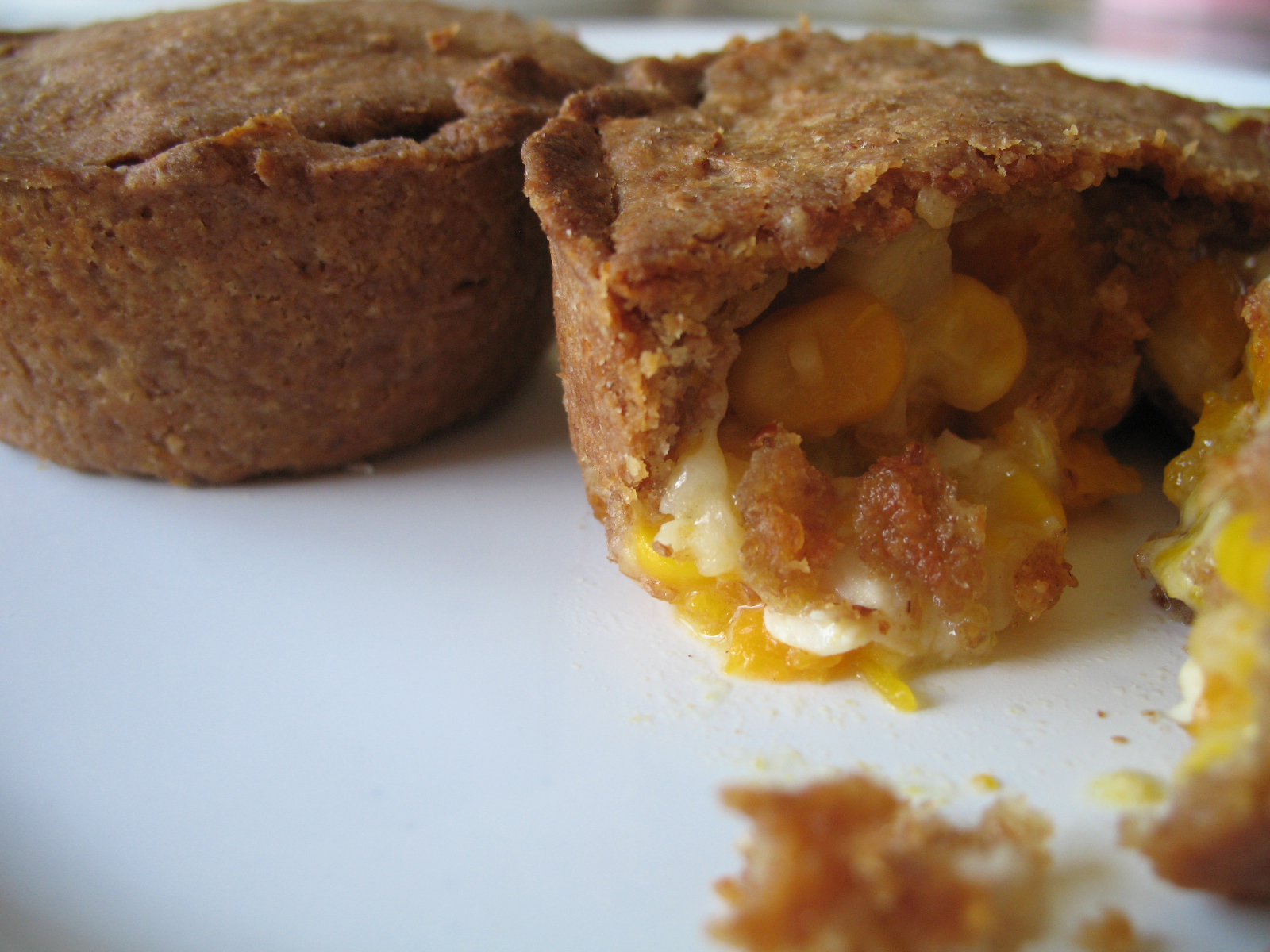
Pies remind me of home.  Here is a recipe for very tasty muffin sized pies which uses purple sage to enhance the flavours of butternut squash, sweetcorn and chicken.  They taste great hot or cold and make a handy packed lunch food.

I use homemade yoghurt pastry dough for my pies and quiches, I will post the recipe for that later.  Alternatively you could use an all butter short crust pastry or puff pastry for the crust.  The recipe includes a very small amount of fresh chicken,  I just added some leftovers to my pie filling, but this can easily be omitted for vegetarians.  You may also like to add a little chopped fennel to the filling.  Pies are a good way to use up fresh left overs as from a little filling you can create a lot of tasty little pies!

Butternut Squash & Sage Pies – makes 12 (muffin size)

Ingredients
Pastry (see above) –  enough for a quiche base
Knob of butter, ghee or olive oil
5cm slice Butter nut squash, peeled, deseeded and finely cubed
1/2 small can of sweetcorn or a handful of frozen kernels
1 medium-large onion, finely chopped
1 chicken or vegetable stock cube, or 1 dessert spoon of bouillon powder or 1/2 cup fresh stock
1 garlic clove, peeled and finely chopped
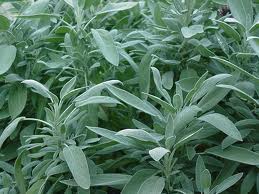
6 large fresh  purple sage leaves, finely chopped (or 1/2 tsp chopped dried sage)
1 dessert spoon creme fraiche
1 dessert spoon finely chopped lean fresh chicken
Handful grated goats’ cheese or cheddar type cheese
Salt and pepper to taste
12 hole non stick muffin tray, greased with butter or ghee

  1. Preheat oven to 190° C (375° F) and prepare muffin tray.
  2. In a pan with well fitting lid, heat the ghee/butter or oil and gently cook onion, with lid on pan, until sweet and clear.
  3. Add the garlic and sage to the onions and cook for a further minute, stirring all the while to prevent the garlic from burning.
  4. Add the cubed butternut squash, chicken and sweetcorn and quickly mix into the oily onion/herb mixture.
  5. Add about 1/2 cup of water and the stock cube or fresh stock and bring to the boil.
  6. Cover with a tightly fitting lid and simmer for about 7 minutes, until the pumpkin is tender.  Check now and then that the water has not evaporated or been soaked up completely.  You should end up with a well cooked mixture which is moist but not sloppy.  If the mixture is too wet, cook a little longer with the lid off.
  7. Remove from heat, add the cheese and creme fraiche.
  8. Stir into the mixture, adjust seasoning to taste and set aside to cool whilst you line the muffin holes with pastry
  9. Roll out pastry quite thinly (probably about 1/5cm thickness).
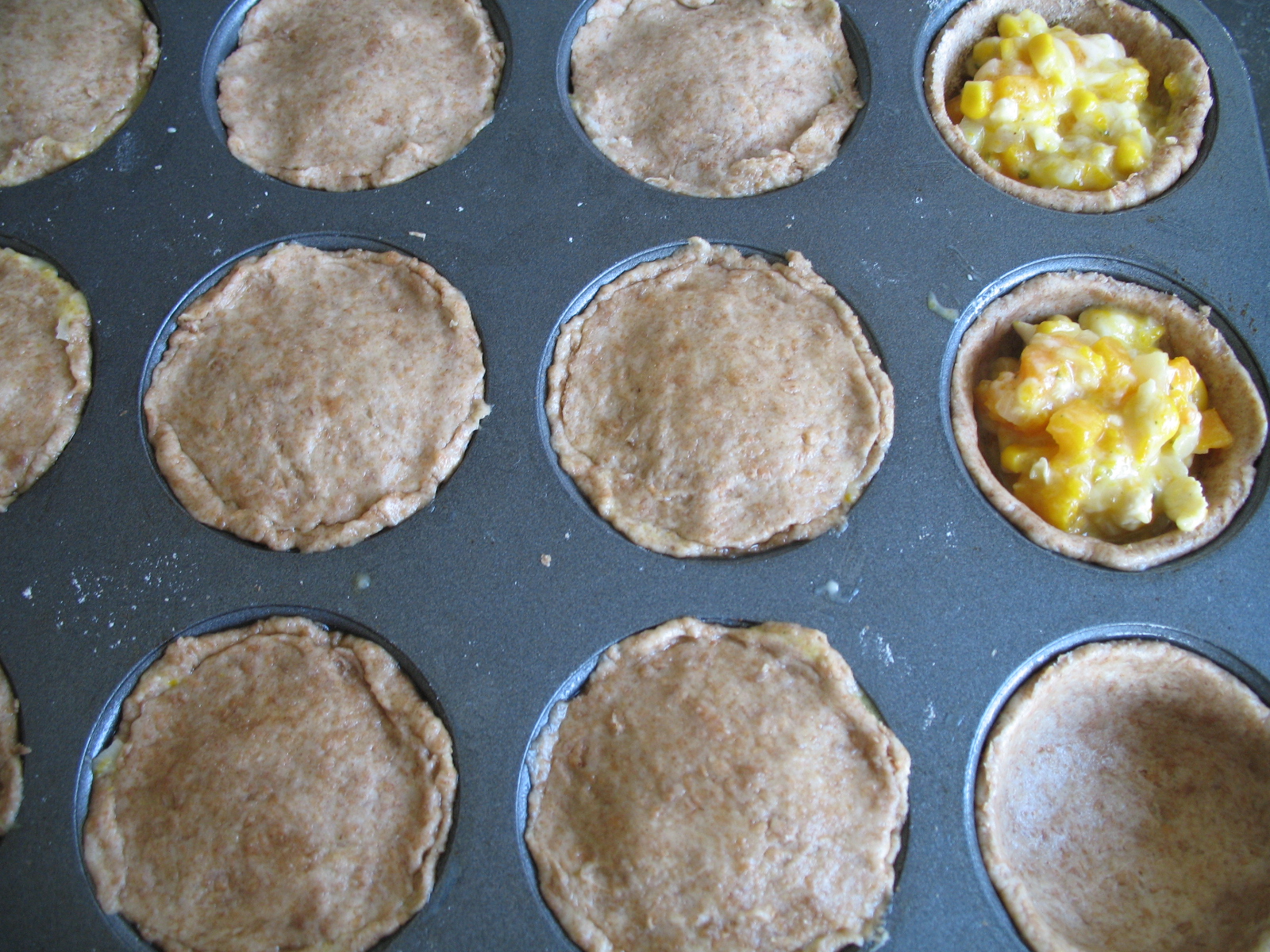
  10. Use a round pastry cutter or similar to cut out 12 circles, large enough to just line each muffin hole.  Push the pastry into the holes carefully so that the filling will not break through it when added.
  11. Add a desert spoonful of filling to each hole.  It should come close to the top of the pastry lining but not above it.
  12. Cut 12 smaller circles of pastry, just large enough to top each pie.
  13. Gently press the edge of each pastry top into the pastry which lines each hole.  You don’t need to be too exact with this but if you are too rough your pie contents may bubble out.
  14. Cook at 190° C (375° F) for about 25 – 30 minutes.  Keep an eye on your pies to ensure they don’t burn.
  15. Remove muffin tray from oven and allow to cool for about 10 minutes, until the pies can be easily extracted.  You may need to loosen them carefully with a knife.  Check they can spin in the muffin hole before removing.
  16. Eet smakelijk!These pies can be frozen BEFORE they are cooked in the oven.  I much prefer to cook the whole batch, eat half hot on the day I make them, store the rest in the refridgerator and eat those cold the next day.

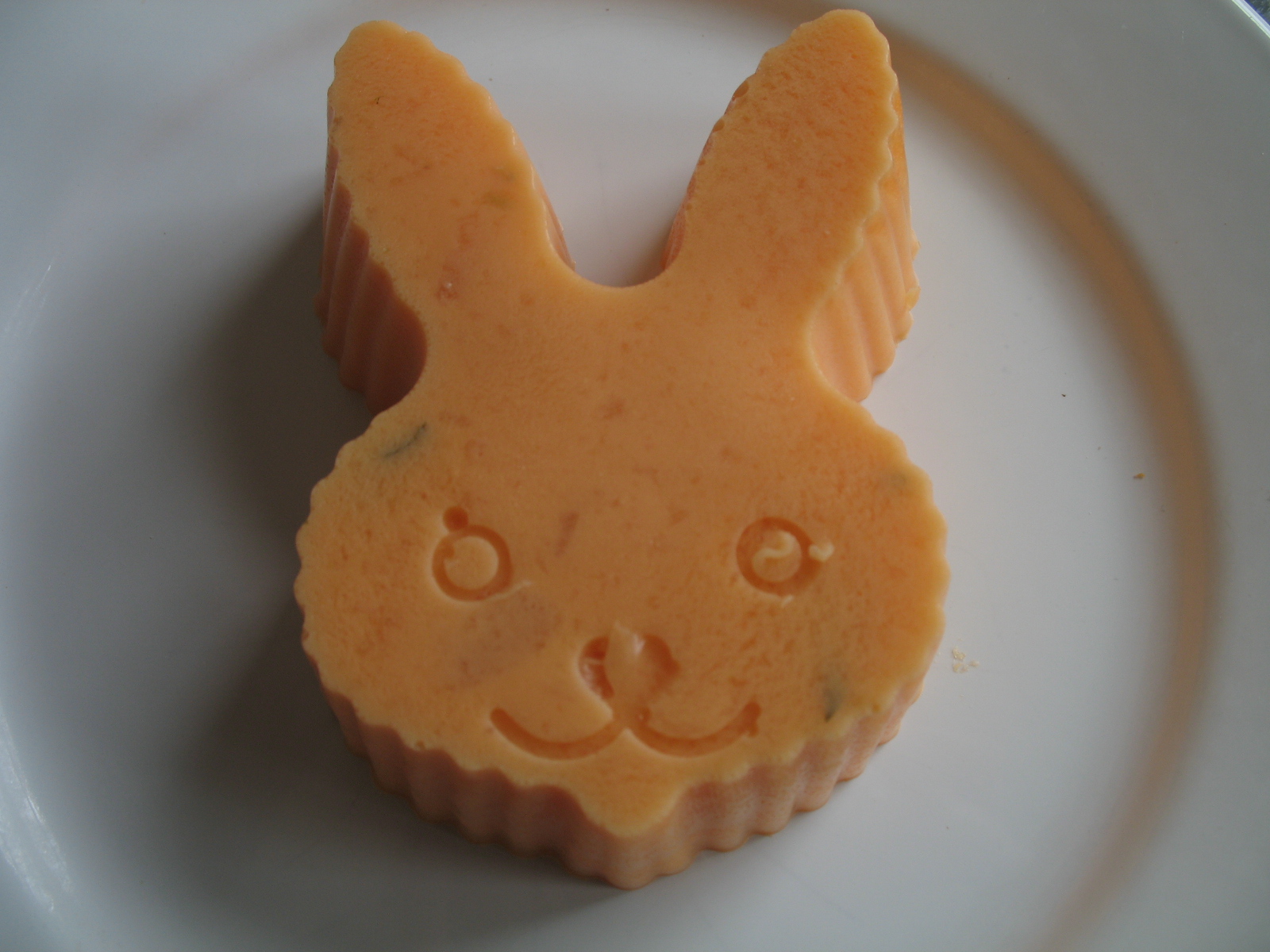
Nijntje Jellies

Making jelly is a simple way to encourage little people to become interested in herbs and provide them with a different way to eat some useful ingredients.  The jelly eater that these were made for, selected the herbs herself from balcony pots.

You can use many combinations of fruit and juice, whatever you have fresh to hand really.  Apple juice is very useful to sweeten up a more sour juice and yoghurt adds more substance.  I like to add a dash of rosewater here and there but it is not essential.  Many herbs are unsuitable to children so be cautious, adding only a little of herbs you know are very safe for children.

Gelatin is an animal product.  Agar agar, dervied from seaweed, could be used in place of gelatin as a setting agent.

Nijntje Orange, Peach & Mint Jelly

5 leaves of gelatin
Juice of 2 large juicy oranges
Apple juice
1/2 fresh peach or nectarine (peeled and chopped)
A few clean, finely chopped leaves of fresh garden mint or lemon balm
Dash of rosewater
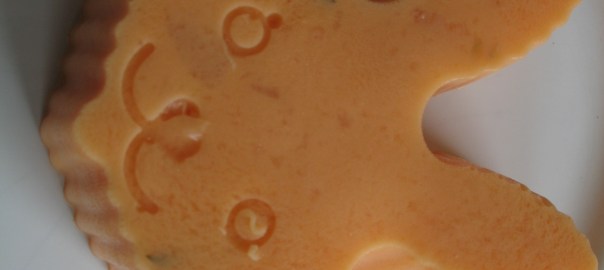
Bunny shaped food moulds (or food safe plastic cups)

1. Soak the gelatin leaves in cold water for about 5 minutes before draining and squeezing out the excess.
2. Pour the squeezed orange juice through a seive into a measuring jug and top up to 250ml using apple juice.
3. Pour the fruit juices and dash of rosewater into to a small saucepan.
4. Add the soaked gelatin and chopped herbs. Heat very gently, not allowing to boil, stirring constantly until all the gelatin dissolves.
5. Add the chopped fruit and stir well to combine.
6. Pour carefully into the jelly moulds and allow to set in a refrigerator for a few hours.
7. Serve from the moulds or remove firstly.

Nijntje Carrot & Yoghurt Jelly

10 leaves of gelatin
125ml carrot juice
125ml pear juice / apple juice
250ml yoghurt
2 whole canned pears chopped
A few clean leaves of lemon verbena or mint or lemon balm, finely chopped
Pinch of ground ginger
Bunny shaped jelly moulds

1. Soak the gelatin leaves in cold water for about 5 minutes before draining and squeezing out the excess.
2. Pour the juices and yoghurt into a saucepan, whisk up a little to combine.
4. Add the soaked gelatin, chopped herbs and ginger. Heat very gently, not allowing to boil, stirring constantly until all the gelatin dissolves.
5. Add the chopped pear and stir well to combine.
6. Pour carefully into the jelly moulds and allow to set in a refrigerator for a few hours.
7. Serve from the moulds or remove firstly.

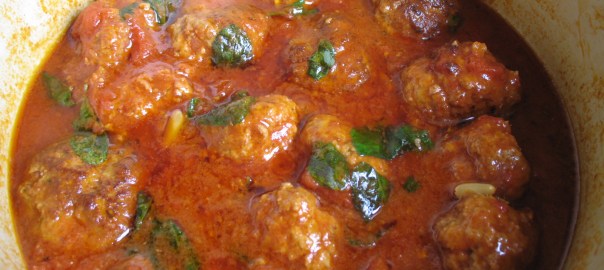
Lamb & Mint Meatballs with Tomato Sauce

Mint comes in many shapes and sizes. On my kitchen balcony grows a chocolate mint and an unspectacular variety which was given to me as a cutting and tastes great in teas and cooked dishes.  Mint is well loved by many warmer cultures for its ability to promote sweating and thus cool the body in hot weather.  It eases many digestive disorders such as flatulence, colic and nausea.  Mint can reduce teething pain in children, is disliked by rats and the British know that it makes a great accompaniment to lamb dishes, when served as mint sauce or jelly.

This recipe combines mint and lamb directly.  It is inspired by the French Elle a table magazine (number 69, spring 2010). It is cheap to make, easy to make and tastes great.

A note about pine nuts…
Increase or decrease the quantity of pine nuts to suit your taste and wallet.  I implore you not to buy cheap pine nuts, especially those from China. I buy the best quality Italian pine nuts that I can find from a trusted source. For some reason many cheaper (organic and non organic) pine nuts can cause adverse reactions and at best can remove your sense of taste for a week or so. If you can’t find good pine nuts then you could use more almond butter.  Almond butter is available from many health food shops.  If you can’t find that, use ground almonds!

You can also add a little chili, curry or cayenne pepper during cooking, to make this dish spicier, if desired.  This is a child friendly version.

Ingredients:

500g quality minced lamb
1 large onion
Small – good handful best quality pine nuts
Tablespoon of ground almond butter
Good handful of fresh mint
400g can of chopped tomatoes
Tablespoon tomato puree
1 vegetable stock cube or teaspoon vegetable bouillon powder
Salt and pepper to taste
Butter
Olive oil

Directions:

  1. Peel the onion.
  2. Wash the mint and remove any woody parts.
  3. Finely chop the onion.
  4. Reserve about 10 mint leaves before finely chopping the rest and adding it to the onion.
  5. If serving to children, very finely chop or grind the pine nuts.  Combine with the onion and mint.
  6. Combine the almond butter with the onion and mint.
  7. Add the minced lamb, mix well to thoroughly combine the flavours.
    (steps 3-7 are very simply achieved with a food processor)
  8. Hand shape the meatball mixture into fairly small balls.  I use about a heaped desert spoonfull for each ball.
  9. Gently brown the meatballs on all sides in some melted butter combined with olive oil.
  10. Transfer the juices and browned meatballs to a casserole pan.
  11. Add the can of chopped tomatoes, tomato puree, remaining mint leaves, stock cube or powder and a little salt and pepper to taste.  If serving to adults perhaps add a few more whole pine nuts to the sauce.
  12. Heat gently to begin with and stir very carefully to combine the sauce ingredients without breaking up the meatballs.
  13. Bring to a gentle boil and then simmer on a low heat for about 40 minutes.
  14. Serve with white beans (cannellini) and perhaps white rice.

Lime leaves & flowers – sandwiches, scented water and drying (NL:Linden, Tilia)

Yesterday I walked to a local public garden and harvested a carrier bag full of leaf and blossom sprigs from Lime/Linden (Tilia) trees.  These trees smell great at the moment. Whole neighbourhoods are perfumed by Lime flowers, loaded with nectar to attract hoards of bees.

If you pluck clean a clean lime flower from a tree in a safe location, you may like to eat it directly. They taste sweet and aromatic with a hint of bitter tannin. The aroma which will fill your mouth, nose and mind is uniquely delicious and has been highly prized, by many cultures, for centuries.  Lime flowers will quickly release a little glutinous, sweet mucilage as you chew.  More details about properties of this amazing tree in the main post on Lime.

So with limited space and time…
How to dry tree leaves and flowers.

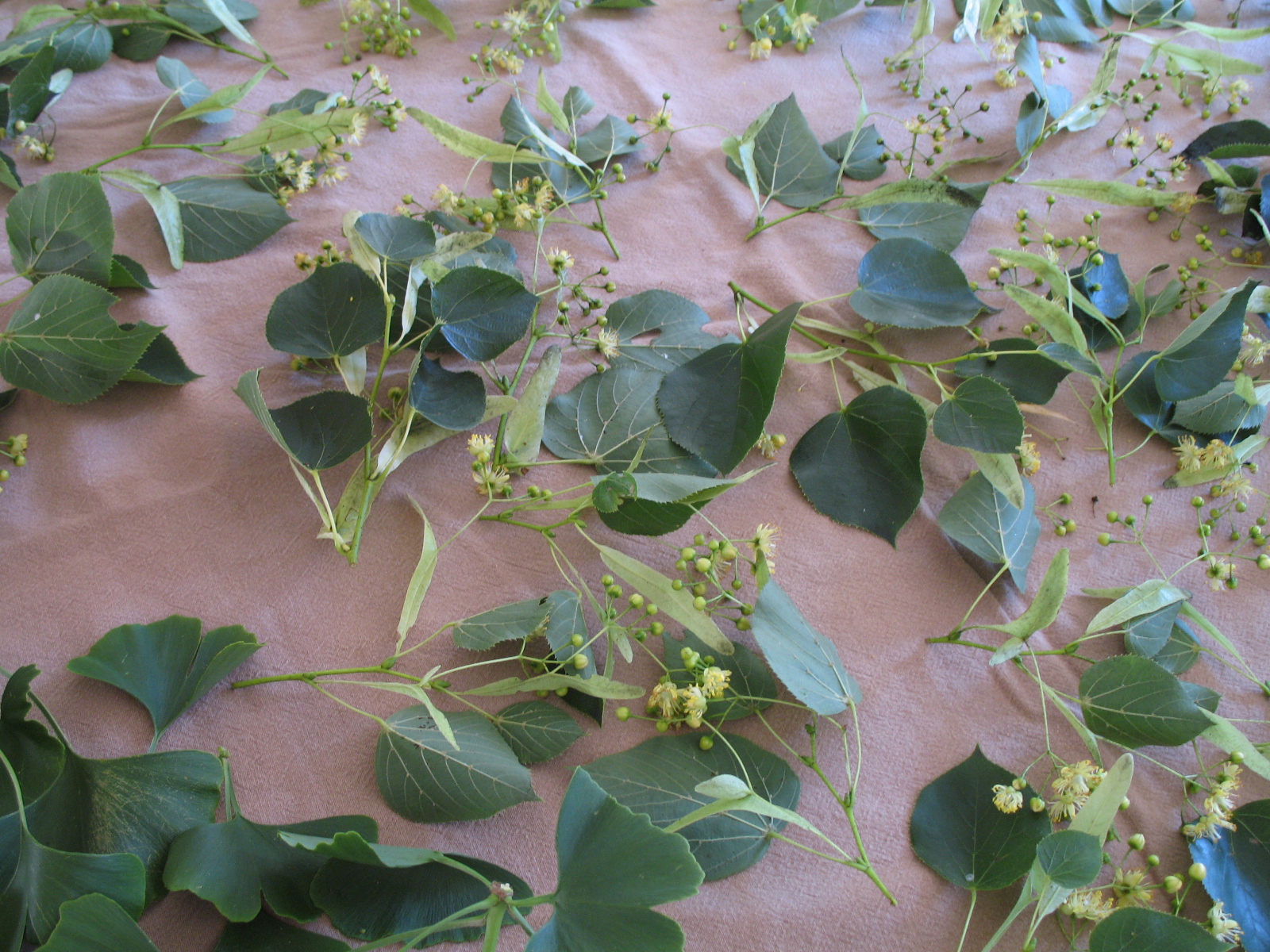
  1. Once home, lay out the harvest on a light surface and discard any rough, diseased or otherwise unhealthy looking leaves, flowers or sprigs.
  2. Allow time for bugs to escape and find them a new home if they seem lost.
  3. My harvest was partly covered in a dried black film – originating from greenfly droppings in the canopy – so I then used scissors to separate the flowers from the leaves.  99% of the flowers were unaffected.
  4. Gently but thoroughly wash any dirt or film from the leaves, using cold water.  If you wash the flowers you will loose the valuable nectar and pollen.
    (It was very difficult to remove the black film from some parts so I discarded these and added them to my balcony pots as a mulch)
  5. Dry the leaves with a clean tea towel or muslin.
  6. Lay out the leaves and flowers separately to dry, on clean paper, cloths or trays.
    (I spread my harvest out on my dining room table, with a clean, absorbent, cotton table cloth beneath.  The room used needs to be well ventilated and fairly warm to facilitate good drying)
    This could be done in a very cool oven, I prefer to save electricity and let time do the drying.
  7. Turn the harvest from time to time to allow all surfaces to dry.
  8. If necessary, when the herbs feel dry to touch, move them to a more convenient drying area.
  9. Keep checking and shifting the herbs around to facilitate drying, for as long as it takes them to become completely brittle.
    (The flowers will dry much more quickly than the leaves, which could take 3 weeks)
  10. Inspect again for mould, unhealthy looking herbs.
  11. Store in glass airtight containers.Uses:
    Lots of information is given in the main Lime post but here are couple of others…

    • I couldn’t wait to use some of my harvest so I made Lime leaf, blossom and Amsterdam honey sandwiches for lunch.
    • I also added a few flowers to my cold water bottle this morning.  The water tasted and smelt very fragrant after about an hour.  It tasted far better than any shop bought, flavoured water and had the added benefit of a few cooling, gooey flowers to chew on during my 30 degree Dutch class.  The flowers would also look very pretty in a decanter of dinner table water.
    • Lime is magical – if you have the chance, give it a try!

Lime (NL:Linden) for Magical Midsummer Happiness

City bees are dizzy with happiness at present. The sweet perfume of Lime (NL:Linden, Tilia spp.) trees fills the air in many streets and parks, attracting bees from far and wide.  This tree looks wonderful, can grow to a stately height, is great for wildlife and it’s flowers are used to make the best herb tea and honey on Earth (well, I think so anyway!).  The Lime tree is able to calm our nerves and bring us happiness.

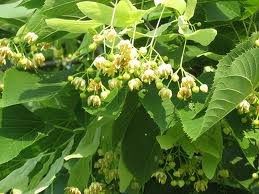
The tree is easily identified. It has a classic tree shape, if allowed to grow unchecked, has large heart-shaped and sharply toothed leaves which are smooth above. Lime flowers hang yellowish-white from the trees from Midsummer to July, not necessarily all over the tree. There are often burrs on the handsome trunks.

Uses

  • Linden flower tea is very popular here in the Netherlands and across the continent.  Lime grows abundantly in the UK yet is less widely used.  The French prize the herb tea made from Linden flowers above most others and call it Tilleul.  It was used traditionally in Europe to treat nervous disorders such as hysteria, nervous vomiting and palpitations brought about by stress.
  • Linden honey has been highly prized for generations, has a heavenly taste and carries many of the properties of the tree.
  • Lime wood is excellent for minutely detailed carving and turning, being close grained, strong, durable and unattractive to woodworm.
  • Lime bark has been traditionally used in Europe to make baskets and fishing nets.
  • The sap is plentiful in spring and has a high sugar content.  It can be tapped in the same as Maple and Birch.
  • The leaves can also be made into a tea/infusion whereupon they yield an extremely thick (mucilaginous) and cooling drink.  They also make a simple and tasty sandwich filling.
  • It is found by many to be helpful for coughs, colds, fevers, headaches, inflammation, as a diaretic, general tonic, to calm the gut and to soothe nerves.
  • In general this herb is thought of as soothing, relaxing and promoting feelings of happiness.

Narcotic intoxication:
Lime blossom is easy to harvest, dry and use but as with all herbs, it should be treated with great respect.  Harvest when in full bloom and all should be well but beware that Lime blossom tea can produce a mild, non addictive intoxication.  Flowers left on the tree too long before harvesting are said to have a more intoxicating effect.  The mildly intoxicating effect of appropriatly harvested Lime makes many of us feel happy. It also makes Lime extremely valuable to those seeking to enter a state of trance and other magical journeying.

On a spiritual level, Lime is renowned as a tree herb which can help relieve grief and induce feelings of vibrancy and youthfulness.  To appreciate these qualities it is said that you should carry a small bag, filled with dried Lime leaves, or that you place them under your pillow.

How to harvest Lime/Linden.

Harvest from mature Lime trees, in as clean and unpolluted an area as is possible.
Choose a dry day, preferably before it becomes too hot and after the dew has dried.
Snip off young healthy sprigs, containing blossoms and a few leaves, from branches which you can reach easily.
Respect the trees and harvest sparingly.
Spread the harvest out on a clean dry surface, preferably on trays so air can circulate easily.
Leave in a warm, well ventilated place for 2 – 3 weeks, until the sprigs are thoroughly dry and brittle.
Store in sterilised airtight containers.

How to make Linden/Lime tea and infusion.
You can make Linden tea by simply steeping a sprig of fresh Lime in a cup of boiling hot water for as long as desired for taste.  Or you can use a teaspoon full of dried crushed herb per cup.

To make an infusion place about 5 tablespoons of crushed dried herb in a pot or jar which holds about 500ml of water (you could scale this up to suit the size of your container).  Add 500ml boiling water and leave with a tightly fitting lid and without heat, for between 4 and 8 hours (preferably overnight).  Then strain, separately retaining both the herb and infusion.  The infusion should be good for 24 hours if refrigerated.  Return the “used” herb material to the pot and add about 300ml of boiling water.  Simmer gently, for up to 2 hours, after which a very mucilaginous fluid should be obtained.  Again this should be good for about 24 hours if refrigerated.

Midsummer Schnapps

There is just enough time remaining to make a simple Midsummer Schnapps, to help celebrate the summer solstice on 21st June.  In Scandinavian countries, where the midnight sun arrives to delight at midsummer, Schnapps is a key ingredient of many celebrations. There are several recipes available for Midsummer Schnapps, here’s one which I like.  Ideally it is made a month or so before midsummer, allowing time for the properties of star anise and juniper berries to infuse into the vodka, but St John’s wort will infuse far quicker. Just a few days are required to get a reasonable colour, pleasant flavour and sunny properties from this herb, into the liquor.

St. John’s wort is renowned for helping people through periods of depression.  Capsules of the herb can have unpleasant side effects and may interact with some drugs so beware if you are taking any medication. The tincture (and the Schnapps is a weak tincture) is more likely to leave you feeling sunny and calm.  St John’s wort blooms on midsummer’s day, it is full of sunshine in so many respects, making it perfect for this drink.  I have not tried it but apparently the flower buds may be frozen for later use.  This recipe calls for buds which are fully developed but not yet opened, thus pick them before midsummer’s day.  The plant is full of a red oil, particularly at midsummer so use a good field guide to check you have the real thing and tear a petal to see if it “bleeds” red oil, showing it to be ripe for picking.

Recipe for Midsummer Schnapps

Pick St John’s wort flower buds before noon or before the sun becomes too hot, leave sepals on the plant or strip them from harvested flowers.  They do not add a good flavour to the schnapps.

Pick only black, fully ripened Juniper berries (or buy them dried and crush before use).  Blue and green Juniper berries do not taste pleasant. If necessary wash and carefully dry the flower buds and berries with paper towels before use.

Use wholes, fresh or dried star anise pods.

  1. Add about 3/4 cup of St John’s Wort flower buds, 45 – 55 Juniper berries and 10 Star anise pods to a clean glass jar with tighly fitting lid (preferably sterilised in dishwasher or low oven).
  2. Add enough unflavoured vodka (40% alcohol / 80 proof ) to cover the berries, pods and flowers.
  3. Secure the lid and leave in a room temperature, dark place for anywhere between 3 days and a month.  (As mentioned above, the St John’s wort will impart it’s properties in just a few days, the berries and pods require much longer but you should get a pleasant Schnapps after a few days).
  4. Shake the jar gently every few days.
  5. When you are ready, strain and filter your infusion into a clean (preferably sterile) glass bottle or jar with a tight-fitting lid.

So, get your flower garlands and schnapps ready and enjoy the summer solstice!