Category Archives: Alchemy

May Herbs Sauce

image

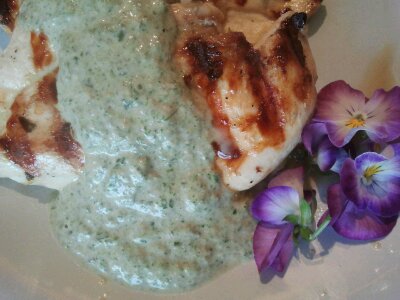
This herb sauce was the result of today’s rainy forage in Frankendael park.

image

After a quick chat with the park warden who was chopping up a massive fallen tree, Livvy and I collected a little each of Ground elder (Aegopodium podograria), Wild garlic (Galium ursinum), Wild geranium (Geranium sp), Ground ivy (Glechoma hederaceae) and White deadnettle (Lamium alba).

image

I took those herbs (a small handful in all), chopped them, sweated them down in a pan over low heat, with a splash of water for 10 minutes, then added a little blue goats cheese and a desertspoon of sour cream. I them blended it all to a smooth sauce with a hand blender.

The result was very tasty indeed and the balcony harvest Pansies (Viola sp) also went down a treat!

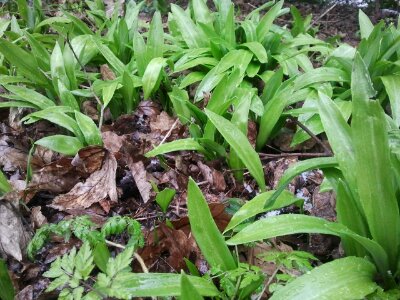
On a less tasty notes: Here is patch of poisonous Lily of the Valley, growing in the park. Just notice how similar the leaves are to those of Wild garlic. The easiest way to distinguish them (apart from the flowers) is that Wild garlic smells very strongly of garlic and Lily of the Valley doesn’t.
image

Pop-up City – Tuesday 27th May

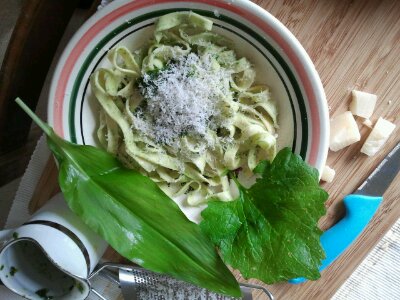
Pasta impregnanted with wild herbsTo celebrate the fifth birthday of Pop-up City Live, they are hosting The Pop-Up City Live, an experimental event for urban innovators in Amsterdam on Tuesday May 21st where they will bring the blog to life on stage. They have invited me along for a live cooking show with wild veggies and herbs from the sidewalks and parks of Amsterdam. Eleftheria Rosi, one of my apprentices and an awesome wild food cook, will transform my foraged finds into some tastey treats. Whilst that goes on, they will chat to me about urban foraging.

For more info about my foraging part of the evening

For the full line up (The Mobiators, A Physchogeographic tour of Venice, Qion, Saskia de Coster, The Deer Friends… …)
.
For tickets (6 Euro in advance, 8 Euro at the door – if available)It is nearly sold out. Please contact via the link for tickets (don’t email me, I don’t have any).

Urban Dandelion and Burdock

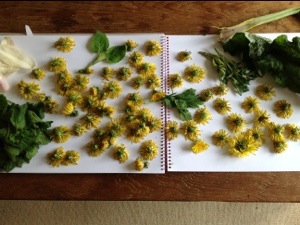
Europe is awash with roaring Dandelions at the moment. They are standing proud and showing their wooly faces in parks, along roadsides, in fields and hedgerows. They also grow happily on my roof (and from there I harvest its leaves and roots) .

I love the taste of Dandelion and Burdock syrup, especially when mixed with water and drunk in the summer sunshine. Not many flavours remind me so fondly of my English childhood. But to make Dandelion and Burdock syrup, the roots of Burdock and leaves of Dandelion should be collected and boiled up with sugar water. I don’t use using sugar unless there is no other option and I don’t dig up Burdock roots. Roots tend to concentrate toxins, they are tough to dig up, fellow park visitors may pounce on me and tell me to stop and most of all, I’d like the plants to grow to maturity so that I may harvest the seeds and leaves.

Regarding the Dandelion leaves, I don’t ever harvest them in quantity from Amsterdam public spaces. They live on the plants for a long time, they get walked on and everything else you may like to think of happens on them, whereas the flowers are far more transient. I can more easily see if they are dirty, they only stay on the plant for a short time so are less open to pollution and I just love the sight of them in a jar of honey! Having said this, harvesting herbs from ground level in public spaces is always a bit of a risk, pollution is everywhere. But with syrups, a small amount is consumed in one go, the use of honey kills many bugs naturally and I feel that the benefits far outweigh the concerns. But that’s just me perhaps!

My version of Dandelion and Burdock simply requires honey, 20-30 fresh Dandelion flowers and a small Burdock leaf. That’s all. It has all the medicinal properties that Dandelion and Burdock plants offer, it is quick to make, tastes deliciously bitter-sweet and it keeps well.

20130510-164455.jpg

How to make Urban Dandelion and Burdock Syrup

1. Harvest 20-30 clean, fresh and lively Dandelion heads from a clean area.
Harvest one young, equally vibrant Burdock leaf from a super-healthy looking plant.

2. Place your harvest on a clean white surface for about an hour, to allow any resident bugs time to crawl away.

3. Tear up the Burdock leaf and layer dandelion heads and burdock leaf in a medium sized (250ml) jam jar.

4. As you layer the herb, carefully spoon in runny honey. Poke around a little with a clean chopstick so that air bubbles are released.

5. Continue to layer herb, spoon in honey and prod with the chopstick until the jar is full.

6. Check for obvious air bubbles and prod some more. Top up with honey (right to the lid) and secure with a well fitting lid.

20130510-164708.jpg

7. Leave to stand and infuse for at least three days.

8. Use as it is, as a toast spread or strain (or not) and use as a syrup base for refreshing summer drinks.

Bitter-sweet yum! It taste’s of the English summers of my childhood. We’ll try it on the Pluck Your Lunch! forage this Sunday

Putting my feet up

image

About 8 weeks ago I strained my foot, lugging a heavy suitcase upstairs, in worn out shoes. Clearly not a good idea as I’ve been annoyed by a sore foot since then. I gave in and headed for the doctor on Friday, suspecting something worse than a strain. Thankfully nothing else seems to be wrong, apparently just more time is needed and some pain killing anti-inflammatories to settle things down. Fed up with limping and not being able to do yoga, I slicked two of the pills. After a 12 hour psychedelic sleep and then a day feeling like a space cadet, it seems I’m allergic to the tablets. So back to the herbs and surprise surprise, they are working a treat and my brain feels clear again.

Here’s what I made to speed the healing and ease the inflammation (if you dislike the idea of lard, use ghee or a quality vegetable oil – which you can later thicken with beeswax). This healing lard based ointment feels silky smooth, cooling, calming and takes the pain away.

20130427-235923.jpg

1 block of lard (250g)
9 medium Comfrey leaves (Symphytum uplandicum x)
9 Elder leaves (Sambucus nigra)
Handful Ground Ivy stems (leaves, flowers and all) (Glechoma hederacea)
3 Wormwood leaves (Artemisia absinthum)
3 Ribwort leaves (Plantago lanceolata)

1. Chop all the fresh herbs and place in a heavy based saucepan along with the lard.
2. Heat over the lowest possible flame to melt the lard and then to simmer it for approximately 40 minutes (stay with it and stir every minute or so, obviously the lard is highly flammable if left unattended).
3. After 40 minutes the herbs should be just turning slightly crispy, as all the moisture leaves them. This is a good time to stop, turn off the heat, move the pan from the stove and allow the mixture to cool for a few minutes.
4. Strain the herbs from the infused lard by carefully pouring through a muslin/super clean tea towel and sieve.
5. Add the spent herbs to the compost bin and pour the infused lard into a sterile container or two.
6. I keep this ointment in a fridge and use it freely on sprains, strains and skin irritations that benefit from cooling.

Wild Garlic Meat and Potato Pie

Meat and potato pie is the comfort food that potatoes were designed for. Well, in my mind anyway.

I had lots of yoghurt pastry dough, potatoes and some meatballs to use up today. I also had a couple of succulent, fresh Wild Garlic leaves in my fridge, which I had picked this morning. The logical combination for these ingredients was a meat and potato pie, packed with Wild Garlic flavour.

image

500g caserole beef
(I used 2 big meatballs in gravy from Scharrel Slagerij de Bouter and 250g organic minced beef)
1 medium onion
Olive oil
500g peeled potatoes
2 Wild Garlic leaves, torn or chopped
1 quantity of yoghurt pastry dough
1 stock cube (I used mushroom)
1 heaped desertspoon miso paste
1 egg

Chop and boil the potatoes in plenty of water, until just tender, so a sharp knife can go in with ease but they don’t fall apart.

Meanwhile finely chop the onion and fry it gently in a small saucepan with some olive oil, until transparent.

Add the meat to the onion, stir now and them whilst the meat cooks through.

Add the stock cube to the meat and enough water to make a plentiful gravy.

Drain the potatoes.

Roll out 2/3 of the pastry, to a size that will comfortably line the base and sides of a buttered pie dish.

Line the dish with the pastry.

Spoon the potatoes into the pastry, follow with the meat, onion, chopped wild garlic and gravy.

Roll our the rest of the pastry, to make a nice pie top. Lay this over the filled pie, crimp it at the edges so it stats together during cooking and fork the top in several places, to slow steam to escape during cooking.

Beat the egg in a cup and brush the tip of the pie.

Cook on a preheated oven at 180°C for about 40 minutes, until the pie crust is a beautiful golden brown and your kitchen smells of wild garlic heaven!

This makes enough to serve 4 – 6, accompanied with vegetables such as carrots

365 Frankendael day 327

image

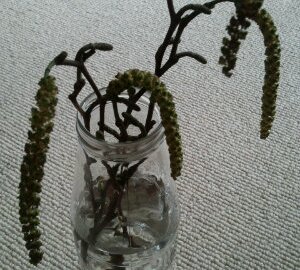
Walking home from work today, I found some stunning catkin laden branches, lying beneath a street tree. The male catkins of this tree are very long and very colourful. I decided to take some of the fallen branches home. I then removed most of the catkins (to preserve the energy expenditure of the branch) and split it up into manageable pieces. Some of the lower bark from each branchlet needed to be scraped back and then each was placed in a vase of water. I have hopes that a few of the small branches will send out roots and become new plants.

The street tree that these branches came from is an Italian Alder (Alnus cordata), apparently a popular street tree due to the catkins, its overall beauty and vigour.

It’s possible to find beautiful cones, inconspicuous female flowers and the enormous male catkins, as well as large leaf buds, all at the same time. I was pleased to see that today. Alder is the only deciduous tree to bear cones.

Alder is linked to much folklore and tradition. It’s a wonderful tree with many uses. Look up Glennie Kindred, particularly her Earth Wisdom book, for lots of information about this tree (and others). It produces several beautiful dyes. The leaves are usefully made into a cooling, soothing poultice or compress for swellings. Much like Plantain (Plantago sp), the leaves can cool and soothe the weary feet of travelers, by simply placing them inside of footwear.

Wild Garlic Mojo / Pesto

image

People tend to call herbs blended with pine nuts and cheese, Pesto. I know of another herb blend called Mojo, from holidays in Tenerife. Green mojo is similar to pesto but has more kick to it due to it containing garlic and coriander and they don’t add pinenuts, basil or cheese generally. I began turning today’s Wild Garlic harvest into a sort of pesto and it turned out far more like spicy Mojo. So I’m calling this Wild Garlic Mojo, because if you know both you’ll find this far more akin to Mojo than Pesto. I also like the name as the garlic properties certainly get your mojo up and running!

Wild Garlic Mojo
Take one handful of ethically harvested wild garlic leaves. Place in blender.
Add 250 ml best quality Olive oil, juice of half a lemon,
pinch of quality sea salt,
handful of freshly grated parmesan cheese.
Sprinkling of pine nuts.
Now blend to a fine consistency which should be very easy to pour. Mojo is runny.

Store in sterile glass containers and use as a spicy, aromatic, digestive dressing for grilled cheese, meat, tofu etc or as a useful cooking seasoning.

image

Mojo originates from the Canary islands and should have heaps of colour, flavour and punch. This has them all.

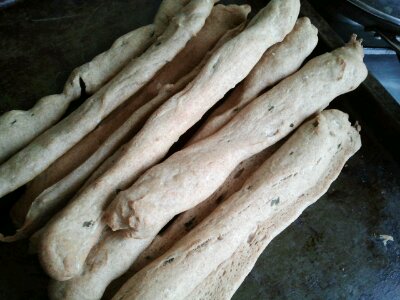
Wild garlic bread sticks

These bread sticks are chunky and have more than a hint of wild garlic about them. We love making them and eating them and hope you will too. If you came to the River of Herbs or February Apprenticeship meetings then you tested the recipe with my first Wild Garlic harvest of the year. The plants are getting bigger, bolder and more tasty by the day. Only a few leaves are needed for this recipe. Please remember to pick carefully and to leave the plants in excellent shape, with their bulbs intact in the soil.

Wild Garlic Oil
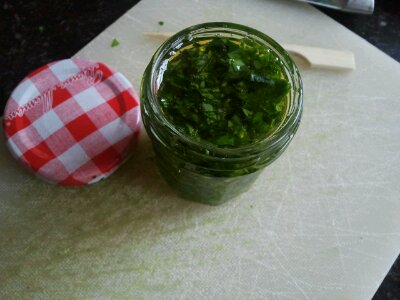
Firstly, gather three Wild Garlic (Allium ursinum, Ramsons, NL: Daslook) leaves. Give them a quick rinse and pat them dry with a clean tea towel or similar. Finely chop the leaves and place them in a very small glass jam jar. Cover with extra virgin olive oil and poke around a little with a chopstick or cocktail stick, to release trapped air bubbles. Top up if necessary, to keep the leaves covered in oil.

Leave your wild garlic oil to infuse, with the lid on, whilst you make the bread as follows.

NB: The infused oil will be ready to use in as little as an hour but will keep at room temperature for several weeks, provided there was no water on the outside of the leaves when you chopped them. Mine never lasts that long as we eat it in everything at this time of year.
image

My basic bread recipe

4 cups of bread flour (I generally use 3 cups spelt flour and 1 cup strong wheat flour)
1 and 2/3 cups luke warm water
2 tablespoons olive oil
2 teaspoons fast action dried yeast
1 teaspoon fine sea salt

Gently and gradually mix together all of the above ingredients. When doing this by hand, I place the flour in a big heap on my worktop and make a volcanic crater in the centre. I sprinkle the yeast and salt around that crater but pour the water and oil into the crater. I’m then able to work everything in, bit by bit, avoiding it all spilling onto the kitchen floor…

When everything is well combined you need to knead it! Aim for a good ten minutes of therapeutic kneading, by which time your dough should be silky and springy to the touch. Then place your ball of dough in a glass or ceramic bowl, covered with a damp clean cloth or cling film, in a warm place, “until the dough has doubled in size”. I must say that I find that standard bread making statement of limited use. Dough “proving” is sometimes hard to gauge as the dough will change shape and texture as it rises. Mine generally mutates in a glass bowl, filling it gradually with long bubbles, rather than simply doubling up neatly. Use your judgement and common sense with this, the time needed for the first proving, will depend on your room temperature and specific ingredients. 40 to 90 minutes should do the trick but don’t worry if it doesn’t exactly seem to double in size.

Now give your dough a second kneading. This will make the dough decrease a lot in size and that’s fine. This step is called “knocking back”. After the quick knocking back knead, cover your dough ball again and leave in a warm place to double in size, again.

(Unless I am on holiday I generally use a bread machine for the kneading and proving stages of bread making (machine set to the dough setting). This recipe works equally well for bread machines and for hand working).

image

Creating the herby bread sticks:

Turn out your twice risen dough, onto a floured worktop and sprinkle a little flour over the top. Then pour about a tablespoon or two of your wild garlic infused oil (including the leafy bits) and a teaspoon or two of Malden Sea Salt Flakes onto the dough.

image

Work this in just a little, so that you feel that the oil and salt are throughout the dough.

image

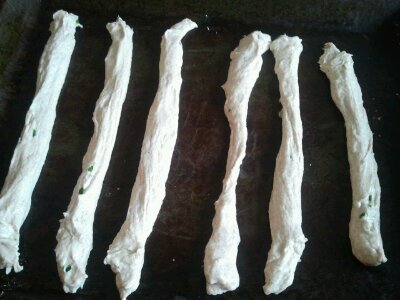
Divide the mixture into about twelve small balls and make each into a long stick shape. Or whatever shape you like.
image

Place on an oven tray and bake at 200°C until they turn hard on the outside and light golden brown.

image

365 Frankendael day 310

More snow in Amsterdam today so a pleasant but chilly walk in park Frankendael, to collect a few Wild Garlic (Allium ursinum) leaves.

image

I gathered nine leaves, that’s enough to see my family through the week, with a garlicy meal a day. I preserved them in a tiny jam jar of olive oil, after chopping the leaves finely. Storing them in this way, at room temperature, makes using Ramsons in cooking as simple a possible.

image

Wild garlic cheese balls

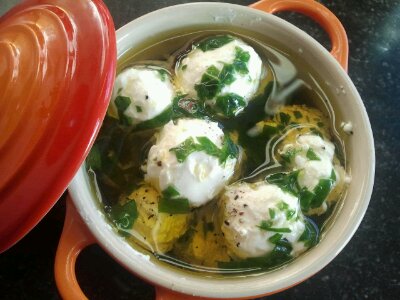
I’ve been making different types of soft cheese at home and this weekend and wanted to share this incredibly simple recipe. The soft cheese is made from yoghurt and then is infused with wild garlic leaves, fresh from the local park.

image

All that you need is:
A cup or two of good quality yoghurt (no added thickners etc, goats or cows is fine),
Cheesecloth, very clean and just scalded (by dunking in boiling hot water for a few seconds),
Olive oil
2 wild garlic leaves, finely chopped (other fresh herbs can be substituted)

To make the yoghurt cheese simply…
1. Pour the yoghurt into the centre of the cheesecloth and pull up the four cloth corners to prevent the yoghurt spilling out.
2. Use a rubber band/clean string etc to tie up the cheesecloth somewhere convenient.
3. Hang it up somewhere clean for about 24 hours, over a bowl so that the drips are collected.
4. After that time you should have a cream cheese consistency, with a milder taste than yoghurt – soft cheese!
5. Scoop out teaspoons of the cheese and form into small balls with your hands.
6. Place in a clean container along  with enough olive oil to cover the balls and of course, the chopped wild garlic.

image

7. You can eat it straight away but after a half a day or so, the cheese will become deliciously infused with the wild garlic flavour.
8. If you manage not to use it all up before hand, it should keep well in the fridge for a week.