Category Archives: Potions

Throat lozenges are child’s play

A perfect herbal activity for a drizzly morning when you have to stay inside for some reason – making Honey and Slippery Elm Throat Lozenges! My daughter and I, really love eating these first thing in the morning, or at any time when we have signs of a cold, sore throat or any other excuse.

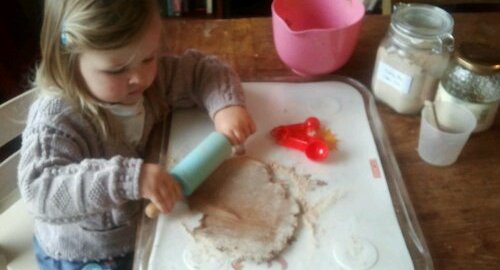
Here she is, happily making her own lozenges. Not sure if it was the end result she was most happy about, or being able to eat the mixture…

We covered this recipe during the Herbs and Honey Workshop in August. They are super-simple to make. You’ll need to obtain slippery elm powder (Ulmus fulva) from a herbal supplier. I beleive that Jacob Hooy sell it in town, otherwise it can be ordered online. Or if you are desperate for just a cup or it and you live in Amsterdam, I’ll sell you some of my stock. Slippery Elm is a useful food supplement which is very soothing to the intestines and can be made into a nourishing and easily digested gruel, especially good for those recovering from illness. I often add a heaped teaspoon of the powder to my porridge in the morning.

Here’s a brief method of how to make
Honey and Slippery Elm Throat Lozenges

1. Place 1 cup Slippery Elm powder in a large mixing bowl and if desired, add a teaspoon of extra herb powders (marshmallow root and horehound are my favorites) or of licquorice tincture, to enhance the throat soothing action.
2. Use a wooden spoon or spatula to work in about 6 dripping tablespoons of good quality runny honey. You are looking for a very thick paste/dough consistency. It’s easier to add more honey to get this right, than to add more powder if you make it too runny at first.
3. Roll out the dough on a Slippery Elm powdered surface.
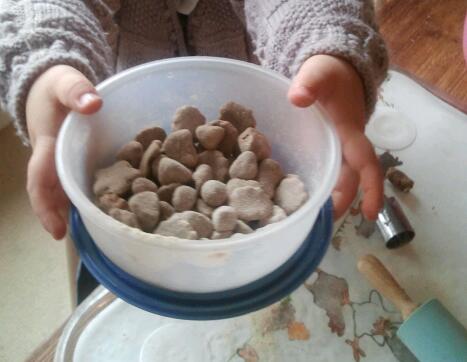
4. Cut the dough into tiny shapes or roll it into fine sausages and then nip off small lozenge shapes or the dough. I like to make tiny pyramids from the dough, my daughter prefers the shapes.
5. Place in an airtight container and toss them in a little more slippery elm powder, to prevent them sticking together.
6. Store in the container, in a cool and dry place for up to ten years. They are unlikely to remain uneaten for that long.

365 Frankendael day 150

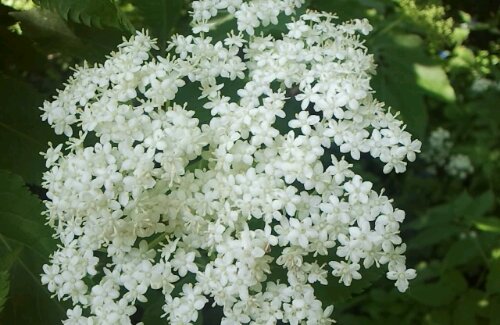
Thank you to the group of Urban Herbies who joined me For the Elder Workshop today. We harvested Elderberries, Elder leaves and Elder branches. We learned about and concocted Elderberry syrup and numerous other Elder based remedies. I had a lot of fun with you all, and the plants!

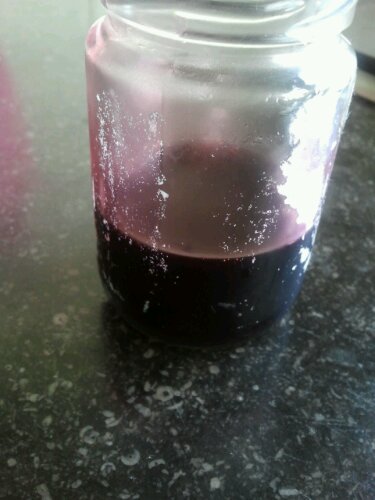
I was so busy enjoying the time that I forgot to take an Elder photo so here’s one of the syrup that we made together, from freshly pressed Elderberry juice and honey… It’s a clean but scrappy looking jam jar. That doesn’t matter as my portion of the syrup will be wolfed down very quickly!

As well as Elderberries, there are heaps of ripe Hawthorn berries in the city hedgerows at present. I did remember to take a photo of one such tree. It’s time to try out the Hawthorn recipes, kindly sent to me by one of the Amstel walkers earlier this year.

Here’s a link to the recipe for the Banana bread I baked for the workshop. I added a finely chopped 20cm Ginger plant leaf and I forgot to add the dates. All fine though!

Here’s a link to that information about recent scientific research supporting the use of Ghee and Honey impregnated wound dressings for serious wound recovery.

Thanks Nathaniel and Jade for sharing with us how the Native Americans revere their local Elder species. Here’s a link with a little information about that (at the end). Here’s a link with lots of information about Elder, particularly the US growing species. Not much about the indigenous people but lots of useful stuff.

Here’s a link to one of my mentors: Glennie Kindred in Britain. She wrote the hand sewn books I showed you today. We looked at the one called Sacred Tree in which Glennie lays out her interpretation of the Tree Ogham.

As we talked about honey, Katja shared her latest concoction – fresh ginger infused honey with lemon juice. Yum! I’ll be trying that very soon and will post some photos to brighten up the autumn. Maybe Katja has a photo of hers already?

Cindy, I don’t think you took your portion of ointment and certainly not the syrup. I also forgot to give you the Kombucha so let me know when you have time to collect them.

Thanks again everyone. See you again soon! xx

365 Frankendael day 143

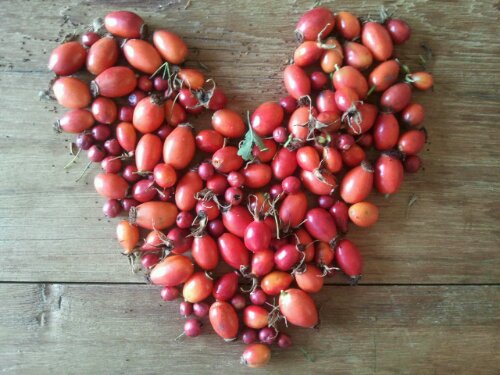
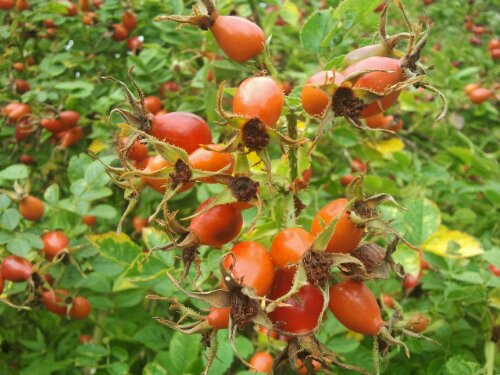
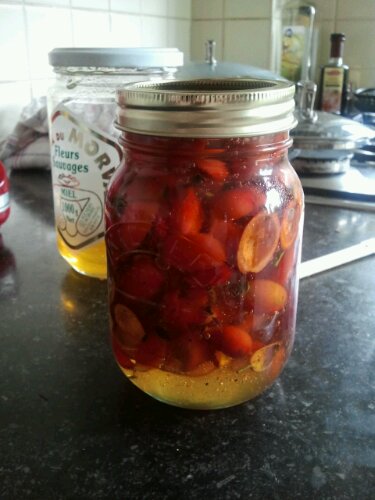
Today, more Rose hip harvesting. Without trying to sound corny, this really does seem to be a good year for the roses! I’m making the most of it by topping up my Rose hip honey infusion jar.

image

There are lots of Rose shrubs with green or very pale yellow orange hips at the moment. This shows that the Rose hip season should be around for a while yet.

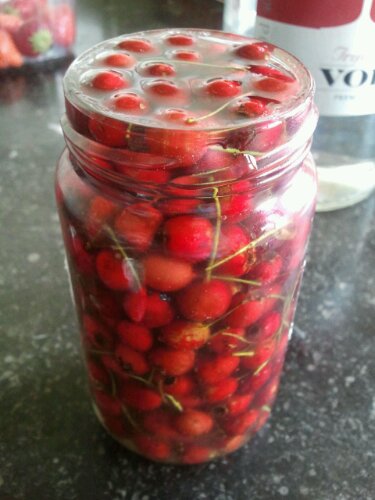
I’m setting up a jar of Hawthorn berry elixir today, so also picked some more of those heart warming and toning berries to add to the mix.

image

To make an elixir, which is simply a preserve made of herbs in some sort of alcohol and sugar, all you need do is the following:

1. Place enough berries (clean, ripe and dry) to fill your jar, into a bowl. 2. Pour over enough honey so that,  with a little stirring, every berry can be coated in sweet goodness.
image

3. Now pour that sticky berry-honey mix into your sterile glass jam jar.
4. Put your chosen strong alcoholic spirit, Brandy and Vodka being the classic choices, into the jar.
5. Poke around a little, with a chop stick or clean knitting needle, to dislodge any trapped air bubbles. Make sure it’s filled right to the top of the jar.
image

6. Leave to sit and infuse, with a tight fitting lid on, in a quiet spot and out of direct sunlight, at room temperature, for about 6 Weeks, or as long as you can bear to wait.

image

7. When it comes to maturity, you simply take off a teaspoon of tasty elixir at a time and slurp it down, or you may like to strain off the berries (save and use them for fabulous desert topings although the stones need to be removed before eating) and store the elixir in a suitable sterile bottle (e.g. a used flip top Grolsch bottle or similar, is perfect).

Hawthorn is a renowned heart tonic.

Processing Rose hips

image

Rose hips are plentiful at the moment. They are nutritious and medicinal. All clean, unsprayed and legally obtained rose hips can be used to make immune boosting preparations. But this is often easier said than done. They are full of itchy, hair covered seeds. These need to be removed before the Rose hips can be ingested.

One way to do this is to make your syrup, or whatever else you choose, and then strain out the seeds and hairs before the final storage.

Another way, is to remove them at the start. It is fiddly but it works and is worth the effort, especially if you’d like to make a cold uncooked preparation, such as Rose hip honey. I also think it makes the harvester/forager quietly aware of each hip and that is a good thing, on many levels.

Here’s how I do it.

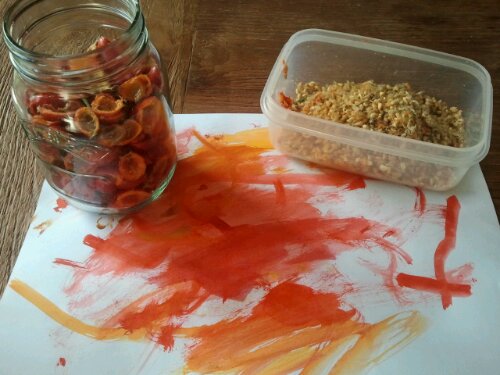
1. Cut a hip in half. Out is best to harvest them before they become soft and pulpy, but when they are fully coloured.
2. Scoop out all of the seeds and most of the hairs, using a strong thumb nail or a blunt ended knife. Quirk through all your hip harvest in this way. Place seeds in a container to return to the harvesting location and the deseeded hips in another.

image

3. When all of the hips are deseeded, place them in a bowl and fill it with water. Swill them around a little, to release the hairs and other unwanted particles.
4. Strain in a colander, whilst swilling around in more water.
5. Lay the washed hips out on a clean dry tea towel (or a dehydrator) and allow them to surface dry. I like to use another teatowel to dry of the tops and then I tumble them around now and again, on dry sections off the teatowel, to speed up the process.

image

6. Wash your hands, arms and wherever else three hairs contacted you, with cold water. They come off easily but may tickle for a long time if you miss an area.
7.Use as described in your chosen recipe. I simply pack mine into a jar and pour in honey, at this point.

image

365 Frankendael day 136

image
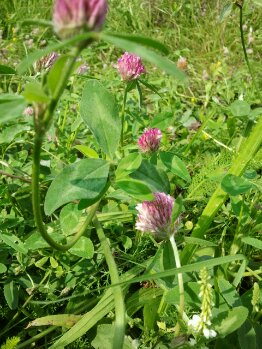
red clover

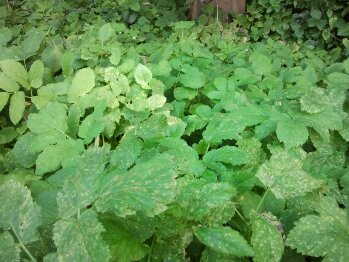
Today I harvested a few handfuls of Red Clover blossoms to make a small jar of tincture, three large leaves of Ground elder, to chop finely and add to our dinner and sat quietly in a beautiful, tiny grove, within the woodland part of park Frankendael.

image
Ground elder

The grove is somewhere I’ve walked by many times, have harvested little from and yet it drew me completely within itself today. This place has a wonderful energy about it, filled with sounds of the city and yet, cool, shaded, green, earthy, nurturing and sheltering. Sounds of birds chattering around me, branches crack as squirrels and other small animals climb around. Just the place to launch the apprenticeship course, I think. To sit on the ground here is a beautiful experience. I smell Ivy all around me and feel supportive earth beneath me. It is a magical place.

image
Grove in Frankendael park

I feel delighted that I will have an opportunity to take several people there, to share my love of this place and of the plants which choose to live in the city.

Herbs & Honey Workshop

I’m running one more workshop this summer. It’s about ways to use honey with herbs, in simple, unusual and delicious ways.

There are two spaces left and as ever, the maximum number of participants is small.

Cost €15, upon booking (but fully refundable upto 24 hours before)
Tuesday 14th August,
Oost Watergraafsmeer
14:00-16:00

If you would like to book a place, please do so through the meetup group.

365 Frankendael day 109

Today was the Comfrey workshop. We harvested from a lovely patch of Russian Comfrey (Symphytum x uplandicum) in a quiet corner of  Park Frankendael. After torrential rain before the workshop, the sun shone and the plants looked even more verdant than usual. After meeting the plants, off home to drink some 8 hour Comfrey infusion that I set up last night, make some Comfrey ointment (from infused oil), Comfrey Witchhazel gel and to prepare for making a Comfrey leaf tincture. The Tincture and gel instructions are on the workshop handout and will also be in my forthcoming Urban Herbology Essentials book.

So much more can be done with this wonderful herb. Another time! In cities I always harvest leaves alone, so no digging up Comfrey roots today, but plenty of healing unctuous goodness in the leaves. Also a reminder that Russian Comfrey doesn’t contain the much feared liver toxin in it’s leaves.

Thanks everyone for coming along, I really enjoyed it and hope you have further fun and healing using your preparations at home and in setting up your tincture jars. Any problems, just let me know. The next workshop is fully booked. I’m thinking of running a winter warmer lotions and potions 3 hour workshop later this year. If that sounds interesting then let me know.

Herb by Herb part 4 – Elder


My favourite herb, it grows as happily in cities as it does in the country. Generally overlooked, this herbal treasure chest is steeped in ancient folklore and has a long long history of use. You can use parts of it, harvested at certain times, to make simple safe remedies for the whole family.

This workshop is timed to (hopefully) coincide with the Elderberry harvest time in Amsterdam. Elderberry syrup will be on the remedy making menu, as will other useful concoctions. Sambucus  nigra is a herbal gem!

Monday 17th September 2012
Frankendael (bus stop Hugo de Vrieslaan)
10-11.30
€10 each, 5 max
(Fully booked (6/8/12) – waiting list available)

365 Frankendael day 59

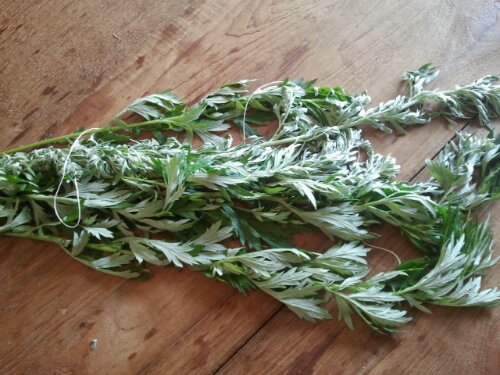
Today was the first Urban Herbology Herb-by-Herb workshop, introducing Mugwort to a small group and helping them to experiment with making tinctures, infused oils and other herbal preparations. So my photo for today is simply of the remains of our Mugwort (and Wormwood) harvest!

Mugwort (Artemisia vulgaris) which is dark green on the top leaf sides and silver grey beneath, is very closely related to Wormwood (Artemisia absinthium) (silver-grey all over). Mugwort is a very common scrubland herb and Wormwood is currently quite rare, here in the Netherlands at least. The Wormwood we harvested today comes from my front pavement garden and the Mugwort comes from behind my local bus stop, alongside Frankendael Park.

Both are edible but both who should not be consumed in quantity. At this time of year, the active chemicals within the plant are at their most potent so only small amounts are advisable for consumption but both do give a wonderful and unique savory flavour to cooking. Mugwort is considered a powerful dream herb but as the workshop discussed today, this is most likely due to the fact that it is a slight irritant. It is thought to simply keep the Mugwort “consumer” in a slightly lighter sleep state than normal and so they are more likely to remember their more vivid dreams. Whatever the reason, I really like both of these herbs and use them for various applications throughout the year. I’ll post the Mugwort Tea bread recipe, as requested, seperately in a moment.

Thank you again to the lovely people who joined me for the Mugwort workshop today!