Category Archives: Food

Last Chance Ramson Pesto (Wild Garlic, NL:Daslook)

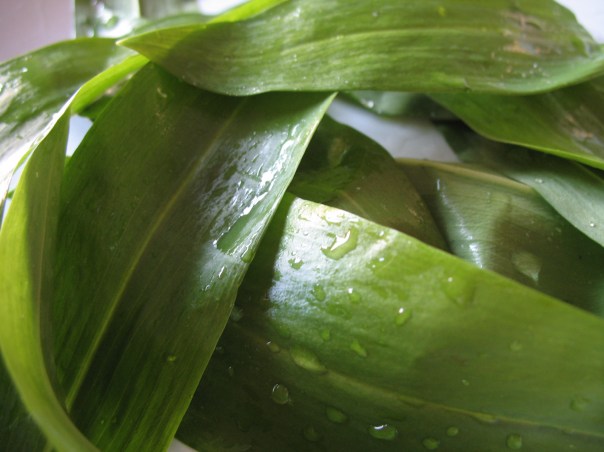
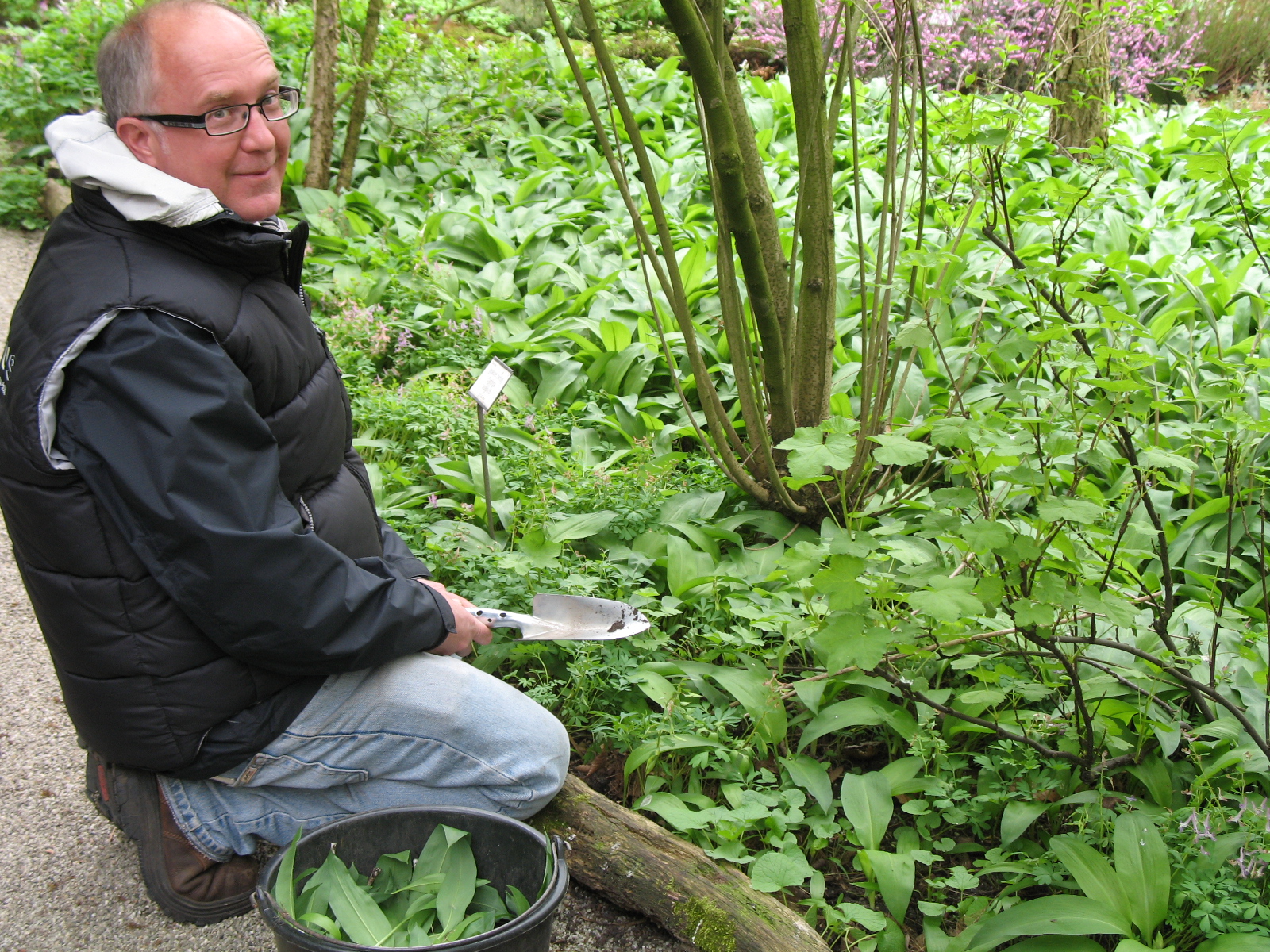
On Thursday I visited my freinds in De Hortus Botanicus and helped them to harvest some Wild Garlic/Ramsons (Allium ursinum, NL:Daslook). It grows vigorously in several parts of the beautiful garden and periodically is removed from paths and areas where it out-competes other plants in the Hortus collection.  I took home a large tub of whole Ramson plants; roots, bulbs, leaves and all.  I made a delicious batch of Last Chance Ramson Pesto.

So why Last Chance, you may ask?  In my local Frankendael Park, the Ramsons are currently in flower so it’s too late to harvest them. Ramsons are still edible when in flower but they taste rather unpleasant. The Ramsons in de Hortus are not yet in flower and they taste great!  In another week or so they too will be in flower and it will be almost another year until they are fit for the plate.  Another reason for my excitement is that I can only harvest Ramson leaves from the local parks.  Harvesting the roots and bulbs would destroy the plants so of course is completely out of the question for wild plants in their natural habitat.

Last Chance Ramson Pesto – vary the proportions as you wish.  Those stated made a good thick paste.

  1. Carefully wash the Ramsons (as you would spring onions), discard any odd squidgy bits from around the bulbs and trim off any really dirty roots.
  2. Roughly chop the clean Ramsons and place in blender.  I had about 150g Ramsons.
  3. Add Extra Virgin Olive Oil to blender. I added about 200ml.
  4. Add finest quality pine nuts (beware cheap ones, many people have a bad reaction to them). I added 50g.
  5. Add a good grating of rock salt and pepper.
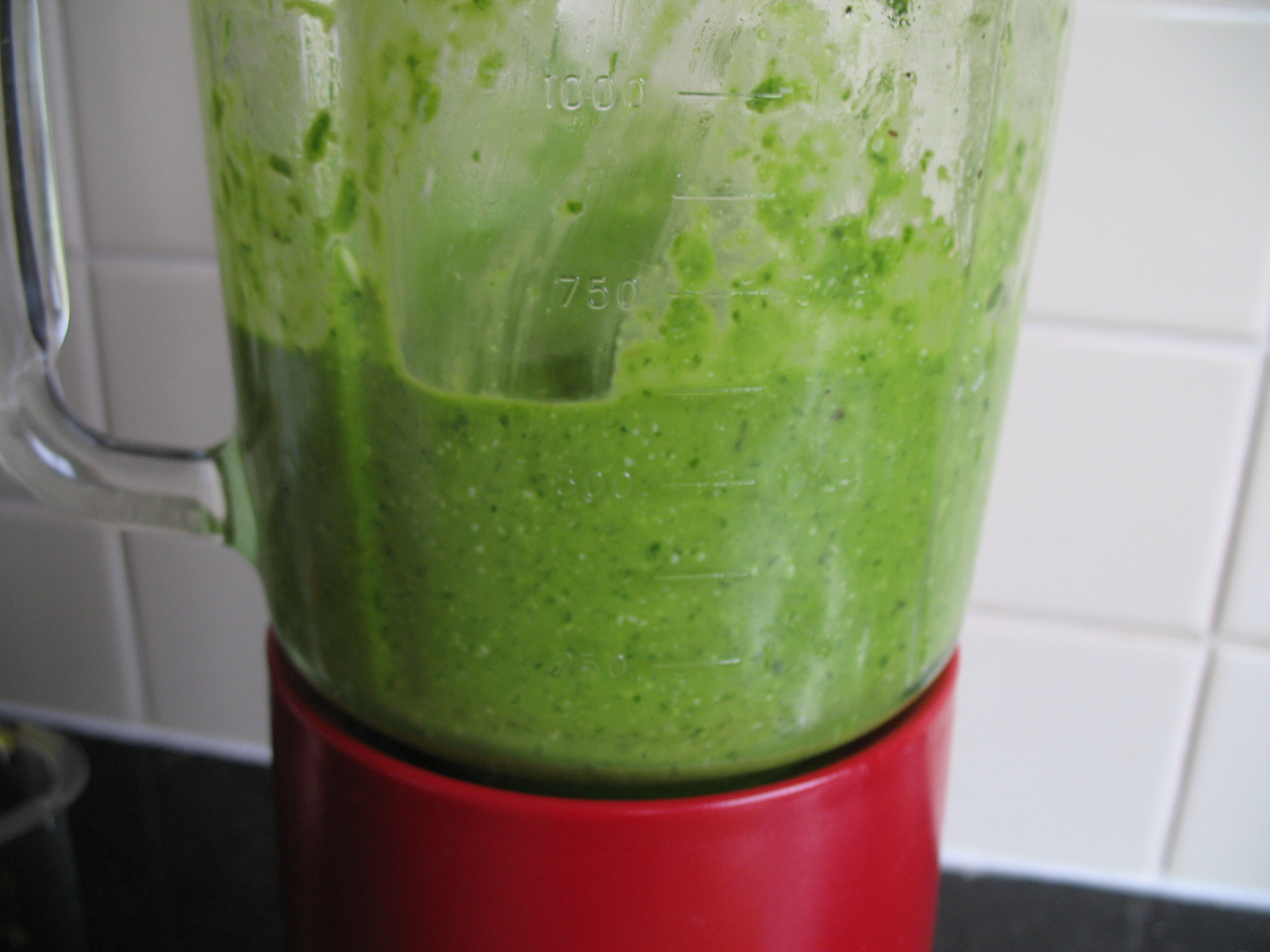
  6. Blend gradually until a thick paste is made.  I needed to interrupt blending several times to scrape down the paste.
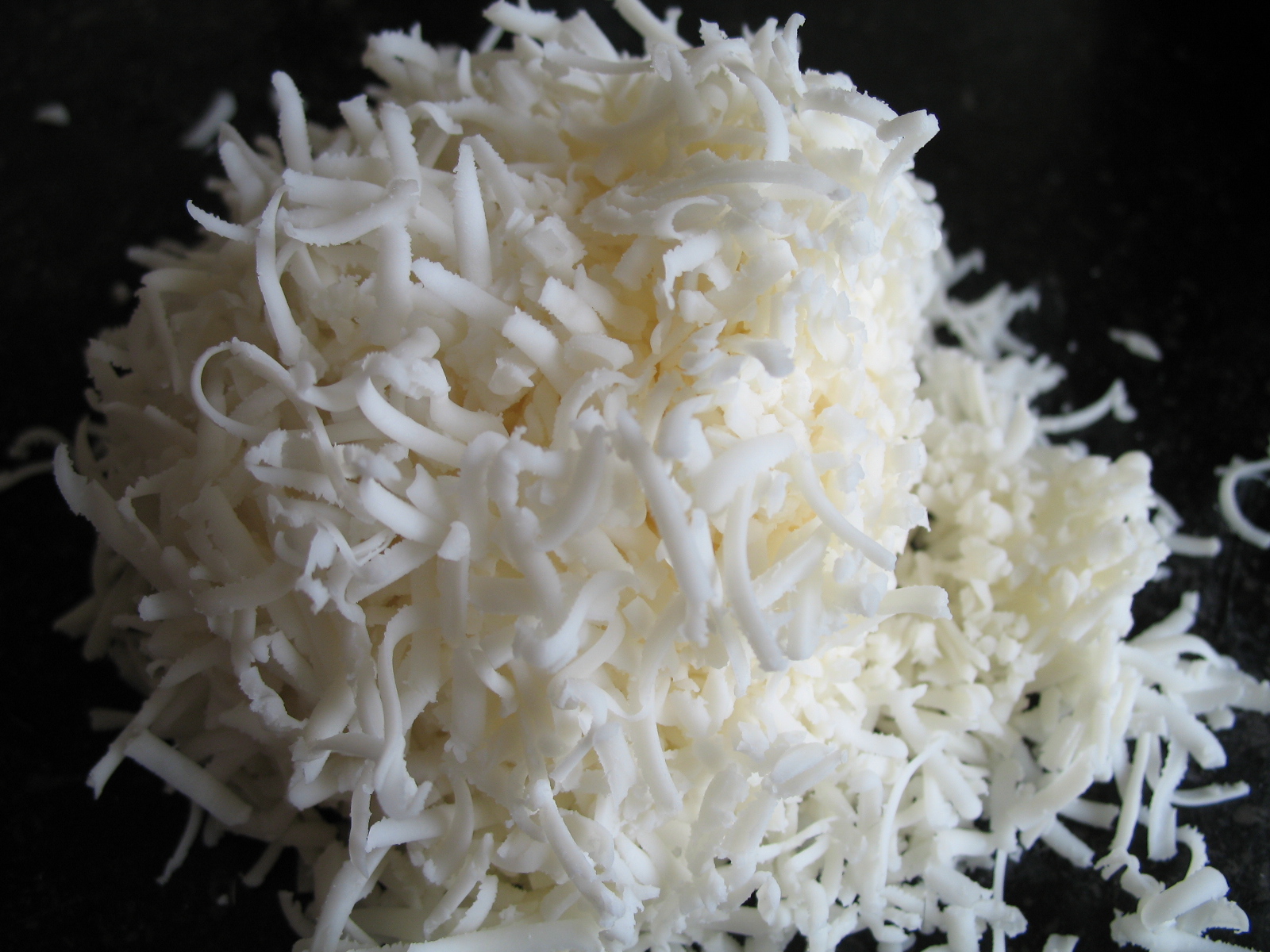
  7. When a homogeneous consistency has been made, add grated cheese and blend a little more to combine and break up the cheese (hard goats cheese for me, you may like Pecorino, Parmesan or similar).
  8. The result should be a paste which is thick enough to dollop into cooking mixes and thin enough to be stirred straight into hot pasta.  Add more Olive Oil or more cheese to obtain a better consistency if required.  I made about 650ml of pesto.  It will keep me going for quite some time.
  9. Store in sterile jars and refrigerate or freeze in ice cube trays.
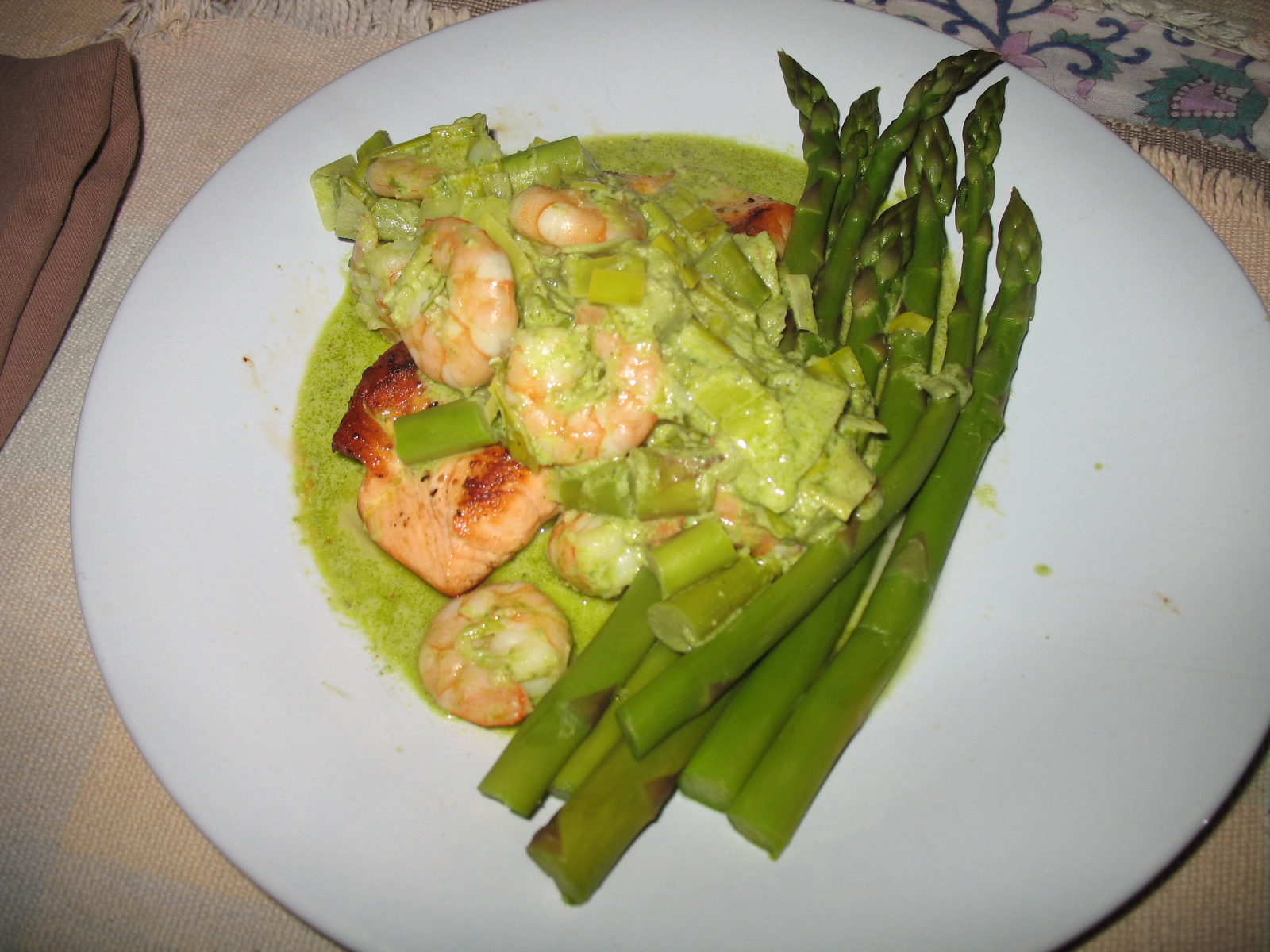
  10. Use as a straight pesto on pasta or as a super garlicy seasoning in other dishes. I added two teaspoons of my pesto to this sauce for salmon and prawns.  It was delicious!  I understand that Michael used it on fresh cheese ravioli and I used it the next day in a risotto.  The list of uses is endless…
Nettle Pasta – Strettine (Urtica dioica, NL: Brandnetel)

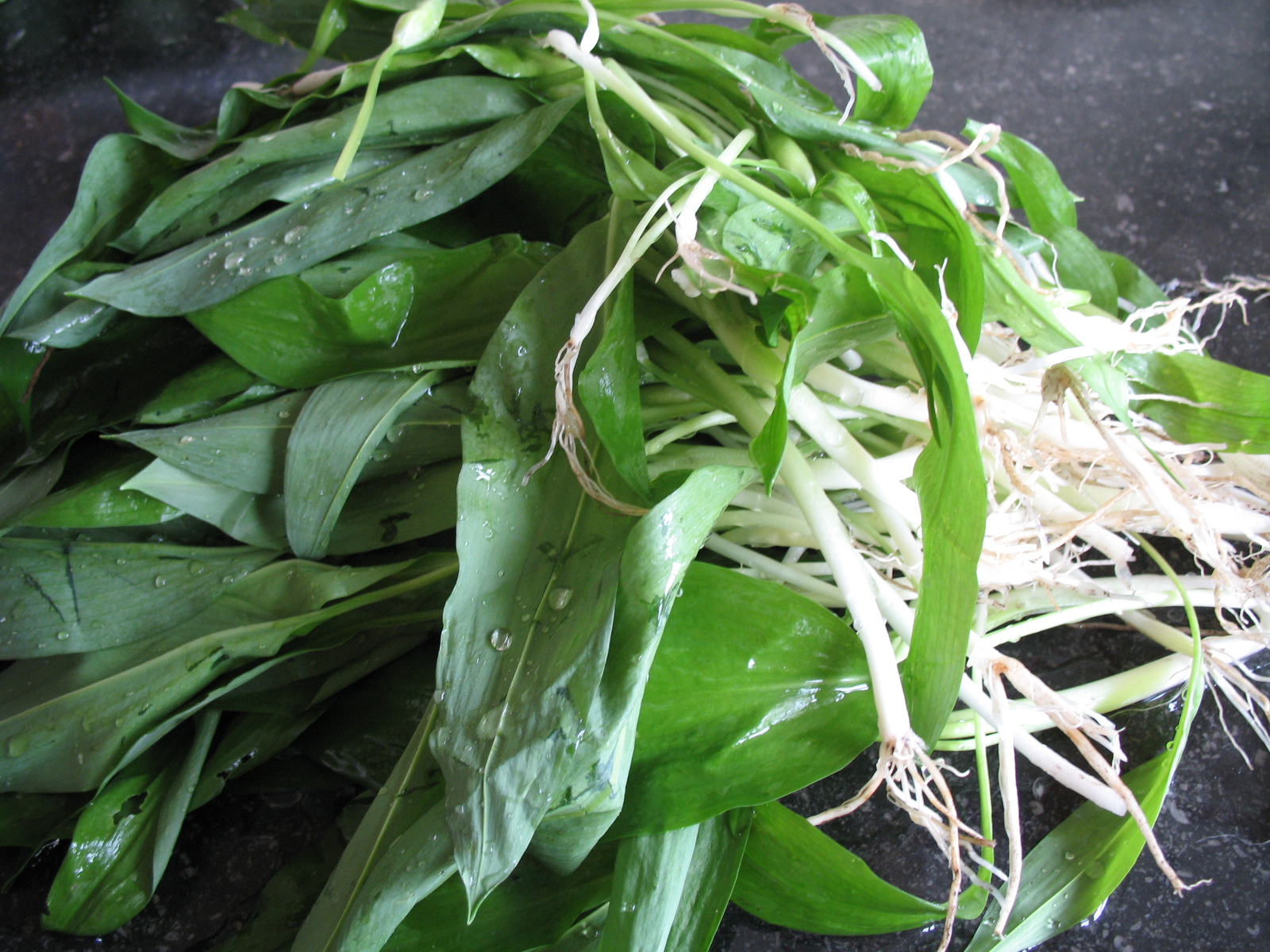
I love nettles and I love making fresh pasta. Here’s a little information about nettle and a great recipe which combines the two.

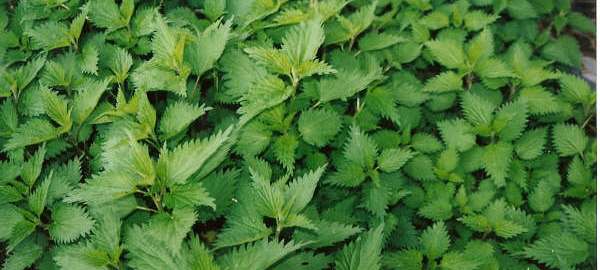
It is best to make use of stinging nettles (Urtica dioica) when they are young (in late March and early April – before they start to flower). I prefer to use them in strong overnight infusions, as a leafy veg in cooking and as a hair rinse.  The resilient perennial Urtica dioica is sure to be found fresh somewhere near you and dried nettle is quite easy to find from herbal suppliers.  It grows well in nitrogen rich soil, is present above ground almost year round but to avoid woodiness only harvest until it comes into flower.

This herb is packed with vitamins and minerals, is extremely nourishing and energises the body and mind. Taken regularly it can build strength in many ways.  I’ll post lots more about nettle in future but for now here’s a link to an informative post by Susun Weed about nettle and how to make effective, strong nettle infusions from dried herb. There are a many recipes available which include nettle, in my experience many are quite bland. However many traditional Italian recipes feature nettle and taste very good.  Here is a simple, tastey combination of pasta and nettle.  Stinging nettle tops are ripe for the picking at the moment, so it’s a great time to try this recipe.

Strettine – Nettle Pasta
120ml nettle purée
360g Italian tipo 00 flour
2 eggs
good pinch of salt
good pinch of black pepper

  1. Make nettle purée as follows: Harvest about 200g of healthy nettle tops, clean them before adding to a pan of boiling water. Boil rapidly for 2 minutes. Strain and place the wet, cooked nettles into a clean muslin, jelly bag or tea towel. Wring out until the nettles become quite dry. Blend the nettle in a food processor until smooth. You need about 120ml of nettle puree for this pasta, freeze the remainder for later use.
  2. Seive the flour onto a pastry board or clean worktop.
  3. Mix the nettle puree, salt and black pepper into the flour.
  4. Form a well in the centre of the nettle-flour mix and break the eggs into this well.
  5. Use a fork to lightly break up the eggs in the well and use it to start working the nettle-flour into the eggs.
  6. Use your hands to work the rest of the nttle-flour in with the eggs.
  7. When all is basically combined, knead the dough with your hands to form a smooth pliable ball.
  8. Wrap with a clean cloth or clingfilm and place in refrigerator to rest, for about 30 minutes.
  9. Now the pasta dough is ready to roll and cut.  Divide the dough into three roughly equal pieces and pass through the rollers of a lightly-floured pasta machine. Work through the machine several times until until you have obtained a smooth and elastic sheet, at least through roller setting number 3.
  10. Pass the rolled sheet of pasta through the tagliatelle cutting blades.
  11. Dry the taglietelle a little by spreading it out on a clean cloth or a pasta drying stand. Allow to dry at room temperature for about 15 minutes.
  12. Cook in salted boiling water for 2-4 minutes, until al dente.
  13. Strain and serve.

Ramsons (Allium ursinum, NL:Daslook)

The woodland floor in Frankendael Park is carpeted with flowering snowdrops and the emerging leaves of Ramsons (wild garlic, Allium ursinum). I’m sure snowdrops have their uses but when you find them, Ramsons are an urban herb forager’s dream.  All parts of the plant are edible and very useful, though the leaves and flowers are all you should use.  The bulbs should be left alone and only pick a leaf or two from any plant.  They taste truly delicious – if you like the taste of garlic!  They taste best, by far, before the pretty white flowers open and can be eaten from early spring, when the first leaves emerge from the soil.

Ramsons have similar properties to Garlic but are milder in all respects.  They are also more tolerable to those you have difficulty digesting other members of the onions family.

  • Ramsons can be eaten raw or cooked and act as a gentle spring tonic.
  • They act as a gentle blood cleanser, stimulating the circulatory system and so benefiting the heart, memory, eye sight and skin.
  • They can be very helpful to those suffering from bowel problems, such as Crohn’s disease, IBS, colic, ulcerative colitis, flatulence, gas and bloating.  They have a mild cleansing and calming effect and are said to balance gut flora.
  • They have mild antibacterial and antifungal properties, making them useful as a poultice for boils and minor cuts.

Featured Image -- 15472

Until yesterday I had only eaten Ramsons as a spicy addition to salads and cheese sandwiches.  Michael & Elodie at de Hortus told me about Ramson pesto last week so, after a quick afternoon forage, Ramson pesto and home made pasta was on the menu at my home last night.

The recipes I found for Ramson pesto called for a heap of leaves; fine if you live in the country and have access to huge swathes of Ramsons but I don’t.  The Ramsons in city parks need to be shared by many and have more pressures to endure throughout the year.  So today I picked twelve leaves and made enough pesto for two people – it was delicious and as you an see, the intense colour is striking.

ramson-pesto-003

Urban Ramson Pesto
6 Ramson leaves per person
Olive oil
10 Pine nuts per person (optional)
Pecorino or firm goats cheese (optional)

  1. Gently but thoroughly wash the Ramson leaves. Pat them dry.
  2. Chop as finely as possible, using a sharp knife.
  3. Place chopped leaves in a small bowl and add enough olive oil to loosen them up and create a useful pesto type consistency.
  4. Add finely chopped pine nuts and grated cheese if you like.
  5. Use in salad dressings, as a pasta sauce and generally in cooking in place of garlic.

Seeds For Food

There’s an interesting little article in the spring 2011 issue of Permaculture Magazine about the Seeds For Food project.  It aims to provide saved fruit and vegetable seeds to hungry people in developing nations.   The idea for the project arose in Saharawi refugee camps, in South-East Algeria, where there is a desperate need for fresh food and yet limited resources to purchase seed.  You are invited to save the seeds from fruit, vegetables and herbs which you already eat (simply collect, rinse and air dry them) and then post them to the following address:

Prof. Dr. Willem VAN COTTHEM
Beeweg 36
B-9080 ZAFFELARE (Belgique)

They will be used to help families grow their own food.  This seems to be an excellent initiative, I shall certainly be collecting and sending seeds to Prof. Dr. Willem Van Cotthem from now on.  He began the project after working as a UNICEF advisor at sub-Saharan refugee camps and learning how unaffordable fruit and vegetable seeds are to these needy people.

Sweet Cicely Schnapps (Myrrhis odorata, NL:Roomse Kervel)

Whilst walking around town today I noticed that Sweet Cicely (Sweet Chervil, Myrrhis odorata, NL: Roomse Kervel) is currently looking really strong and fresh.  It is a member of the Apiaceae family and is quite easy to identify at this time of year because it is one of the few plants which survives above ground throughout the winter.  It is useful as green leafy vegetable in its own right, the roots are also very tasty however if you are foraging, roots are not an option. Pulling Apiaceae roots destroys the whole plant.  Sweet Cicely has a distinctly Anise flavour and smells rather like Lovage. It is packed with nutrients at a time when not many other leafy wild herbs are around and is found to be aromatic, stomachic, carminative and expectorant by herbalists.

Caution
Many members of the Apiaceae family (formerly called Umbelliferae family) are highly poisonous (e.g. Hemlock), others are edible and several have been cultivated such as parsley, coriander and carrot. Few members of the family are above ground right now but when foraging for Sweet Cicely, as ever, you should consult a good feild guide before deciding to pick.  If in any doubt don’t pick or taste.  Sweet Cicely makes a lovely, easy to grow pot plant and seeds are available through gardening suppliers.

Uses
If your reliable source of Sweet Cicely is unpolluted you may like to eat it raw, chopped into a salad.  A simple tea can be made from the fresh leaves and stems, which is said to help releive indigestion and possibly help calm coughs.  I prefer the following recipe from Denmark.  I found it on a Danish Schnapps Recipe website which also contains some useful information about the herb and how to make the Schnapps from other parts of the plant, if you are using your own rather than foraged material.

Danish Sweet Cicely Schnapps

  1. Put about 200ml chopped fresh Sweet Cicely leaves or stems into a clean glass jar.
  2. Add 350ml vodka and seal with a well fitting lid.
  3. Let the mixture steep/infuse at room temperature for 1 to 3 days.
  4. Shake lightly and taste your infusion from time to time.
  5. Strain and enjoy.

An alcoholic infusion can also be made using brandy.  The vodka version apparently tastes rather like Greek Ouzo, I’m not sure if connoisseurs would agree.

Indian Day Dreams

I was day dreaming about being in India this afternoon and rustled up a really tasty drink which helped to transport me back to Mysore. It cleaned the cobwebs from my mind and got me back on my Yoga mat.  You may like to try it…

Lynn’s Ginger Pineapple Cobweb Cleaning Lassi
1 cup Goat’s Yoghurt
4 Pineapple slices (fresh or canned in pure juice)
1 teaspoon honey
1 teaspoon dried or 1/2 teaspoon fresh grated ginger

Adjust the quantities to suit your taste buds and mental cobwebs.

Simply blend all the ingredients together and drink!
I’m afraid the photo is not mine as my lassi tasted so good I drank it all before I could reach for my camera.

Lassi is a traditional yoghurt based drink from India, there are lots of variations.  If you request lassi in a restaurant you will be asked if you’d like it “sweet or salty”. My version is definitely sweet and the ginger gives it quite a kick.  Have a look at the Wiki Lassi page for more inspiration.

Vinegar and Brown Paper

wpid-2012-12-22-12.38.07.jpg
Chickweed (Stellaria media)

I recently bought a wonderful second hand copy of Herbal Remedies: A practical beginner’s guide to making effective remedies in the kitchen. It contains instructions on several traditional herbal remedies that many modern herbals omit.  One, which I read with interest, is Vinegar & Brown Paper, as featured in the nursery rhyme Jack and Jill.  Apparently it is quite an effective remedy for sprains, bruises and sore joints.  It made me think more about the virtues of vinegar.  So here are few preparations which you may like to try.

If you like investigating this sort of thing, you may be interested in the Urban Herbology Apprenticeship Course. The course covers foraging, crafting herbs, fermentation and nature celebrations, among other topics!

Vinegar and Brown Paper
This traditional remedy (taken from Hedley & Shaw’s book) is said to relieve swollen aching joints and limbs.  I have not yet tried it and am very interested to hear from anyone who does! Why not let me know in the comments or contact boxes below.

To prepare:
1. Cut 5 or 6 pieces of brown (packaging) paper, just big enough to fit over the affected area.
2. Place in a saucepan and cover with Sage vinegar (read on for how to make this).
3. Simmer very gently for about 5 minutes, until the brown paper becomes soft and has absorbed some vinegar, yet is not broken down.
4. When cool enough to safely handle, place the brown paper on the affected area and hold it in place with cling film (not too tight).
5. Cover with a roller bandage and leave in place for 4 hours.
Hedley & Shaw recommend reapplying fresh vinegar and brown paper twice daily.

wpid-2013-05-29-11.52.45.jpg
Ramsons – Wild garlic (Allium ursinum)

Herb vinegars
These are prepared in a similar way to tinctures but vinegar is used as a carrier for the herb properties, rather than alcoholic spirits.  Many herbs can be easily preserved in vinegars, a few favourites are Rosemary, Sage, Tarragon, Chamomile and Parsley but why not try wild herbs such as Chickweed, Catnip, Lemonbalm, Motherwort, Ramsons or Hyssop?  Dried or fresh herbs can be used but vinegars are a great way to preserve a glut of fresh herbs so that they can be used throughout the darker months.

Vinegar, particularly apple cider vinegar, is beneficial in its own right. It helps to build bones and has the ability to extract more minerals (such as calcium) from herbs than water. So preserving herbs in vinegar can provide a mineral rich preparation which is also very tasty and can be used in a variety of ways. They can be used in salad dressings, taken a tablespoon daily in a glass of water as a tonic, added to green vegetables and beans whilst they cook, used a flavouring in food or used in specific remedies.  Adding a splash of vinegar to the cooking water of green vegetables dramatically increases available calcium.

To prepare, completely fill a glass container of any size with chopped fresh herb and then fill it completely again with vinegar.  Seal (not with a metal lid), label and allow to sit (macerate) out of direct sunlight for between 2 and 6 weeks. After this time strain and bottle the herb vinegar in sterile dry containers.  Use plastic lids or waxed paper held in place with strong rubber bands. For advice on sterilising see the post on Cough Syrup.

If you prefer to measure your herbs and vinegar there is a traditional recipe which recommends adding approximately 25g dried chopped herb or 50g chopped fresh herb to every 600ml of vinegar. Pure malt vinegar, apple cider vinegar or white wine vinegar can be used.

wpid-2012-11-21-14.40.03.jpg
Sage (Salvia officinale)

Herb Vinegar Hair Rinse
When my sister and I were children, my mother would add a little lemon juice to our final hair rinse.  It makes hair shine beautifully and is a natural conditioner (shampoos are slightly alkaline, conditioners slightly acidic). Vinegar hair rinses work in the same way and can be very beneficial to the scalp.  I like to use apple cider vinegar when my scalp feels overloaded with hair products; it feels cleansing, cooling and calming.  Surprisingly it doesn’t make hair smell of vinegar.

To prepare simply add 1 tablespoon herbal vinegar, apple cider vinegar or fresh lemon juice to about 250ml water. Pour the rinse over washed hair and massage into the scalp.  Leave on for about 5 minutes and then rinse with plain water.

Sage vinegar is thought to darken hair,
Chamomile vinegar to lighten hair,
Parsley vinegar to relieve dandruff,
Rosemary vinegar to condition dry or falling hair

There are dozens of other uses for vinegar, I’d love to know of any which you or members of your family have used. Get in touch through the comments or contact boxes!

28/12/24 A recent comment from Val who says: My mother taught me the old fashioned remedy for a bad temperature.:- Soak a strip of brown paper in vinegar and apply to the forehead. As the paper dries the temperature decreases. Tried and tested.

This is great to hear! Thank you Val 🙂

← Back

Thank you for your response. ✨

Leek, Potato and Calendula soup

I often use fresh  petals to garnish soup; they are almost always available on my balcony, they look so pretty and their intense orange colour encourages appetite.  After writing about uses for Calendula, I thought I should make more of an effort to use the dried flowers in my food.   Adding dried Calendula flowers to soups, or broths, was seen as essential to Old English cooks.  They apparently felt that a broth without pot marigold was not a real broth, so that’s where I decided to start!

My Leek, Potato and Calendula soup requires about 5 dried Calendula organic flower heads.  If you have dried petals, rather than flower heads, then those will also work well.  Calendula flowers can taste quite bitter if infused for too long, so I added them to the soup just 5 minutes before the end of cooking and ensured that the leeks were thoroughly cooked at the start, to add a little sweetness.  Calendula flowers are most likely to work their magic if some of their astringency is allowed to shine through, so don’t try to mask their taste completely, enjoy it.

Ingredients
(Serves two)
2 long, thin leeks
4 medium potatoes, peeled and roughly chopped.
5 Dried Calendula officinalis flower heads (or 3 heaped tsp dried petals)
Vegetable stock (optional)
Olive oil for sweating leeks
Water

  1. Clean and trim the leeks.
  2. Slice the leeks and add to a pan with well fitting lid.
  3. Add a little olive oil and allow them to sweat gently over a low to medium heat, stirring occasionally.
  4. When the leeks are very soft add the chopped potatoes and enough water to amply cover the vegetables.
  5. Add a vegetable stock cube or 2 tsp bouillon powder if desired.
  6. Bring the vegetables and water to the boil and then simmer for about 15 minutes, until the potatoes are thoroughly cooked.
  7. Add the Calendula flowers or petals and simmer for a further 5 minutes.
  8. Remove from heat.
  9. Remove any hard flower parts (the stalks and flower centres) before liquidising the soup.
  10. Serve warm.


43 Uses for Calendula (NL:Goudsbloem)

Calming, cooling, cleansing. Calendula officinalis (Pot Marigold, NL: Goudsbloem) is one of the easiest herbs to grow and perhaps one of the most useful to Urban Herbologists. It is a hardy annual which does very well in containers, can flower throughout the year and self seeds readily. It is beautiful, tastes good and has gentle astringent, anti-inflammatory, cooling, detoxifying and antiseptic actions. If you only have space to grow one herb, this has to be one to consider. Many of the remedies mentioned here are very easy to make, if you prefer to buy them from a reliable source, I recommend Weleda products (some links are included in the list). N.B. Calendula is not to be confused with French marigold (Tagetes patula). Calendula is very gentle but when trying a new herb it is always wise to use very small quantities at first or to do a skin patch test.

43 uses for Calendula

Medicinal uses
1. Sprains
– make a compress from infused flowers.
2. Gum infections –
Mouthwash from tea or a few drops of tincture in water.
3. Sore throat pastilles – Powdered dried flowers, blended with honey.
4. Mastitis & sore nipples – Calendula Cream can help strengthen nipples and prevent mastitis in nursing mothers.
5. Cold sores – Calendula salve is helpful to many cold sore sufferers.
6. Acne – Lotion made from Calendula tea can help speed healing and reduce scarring.
7. Nappy rash – Infused oil, lotion or Calendula Cream can prevent and speed healing.
8. Athletes foot – Calendula cream or infused oil, anti fungal.
9. Ring worm – Calendula cream or infused oil, anti fungal.
10. Period pain – Many women find regular use of Calendula tea helpful as a menstrual regulator.
11. Digestive inflammation – Calendula tea can often gently reduce inflammation.
12. Scar reduction – Often Calendula Oil, cream or salve can help to reduce existing scars and prevent scars.
13. Lowering mild fever – Drinking Calendula tea at first signs may help.
14. Skin softening – Massage using Calendula infused oil.
15. Eczema – Calendula infused oil or cream often calms red, hot eczema conditions.
16. Dry chapped skin – Calendula salve or infused oil.
17. Varicose veins – Calendula salve or cream.
18. Chillblains – Calendula salve or cream.
19. Post operative recovery – Calendula tea. Gentle, cooling, nourishing, speeds healing, reduction of scarring.

Culinary uses
20. Herbal ice cubes/wands – Freeze petals in ice cubes for summer drinks.
21. Salad flowers – Pretty and tasty, sprinkle on top.
22. Soups Add dried or fresh flowers or petals to soups. An ancient broth without Calendula was incomplete, hence the name Pot Marigold.
23. Saffron colour substitute – The taste is different but the colour is very similar.
24. Risotto – Adding whole petals livens up the appearance of risotto.
25. Soft cheese –
Blend in whole or chopped fresh petals. Previously used to colour cheese yellow.
26. Yoghurt –
Mix in fresh petals or spinkle on top.
27. Butter –
Mix in finely chopped fresh petals. Can be frozen.
28. Omelettes –
Add fresh petals for colour and taste.
29. Cakes –
Use calendula butter or add fresh petals to cake mix.
30. Milk dishes –
Add to rice pudding, custards and similar dishes.
31. Sweet breads –
A little like saffron.
32. Vegetable bouillon – Add to mixes of dried herbs and vegetables.
33. Source of Vitamin A

Other uses
34. Fabric/Wool dye –
Boil flowers, yellow dye. Suitable mordant is alum.
35. Pot pourri – Whole dried flowers retain colour and mild scent.
36. Alter decorations – Used since ancient times to adorn spiritually significant objects and buildings.
37. Skin toner – Cooled tea.
38. Eye make-up remover – Infused oil.
39. Face cleanser – Infused oil or cream.
40. Lip balm – Soothing and calming, beeswax and infused oil.
41. Hair rinse – Tea, to brighten blond hair.
42. Companion planting – Useful for deterring pests in organic gardens.
43. Year round colour – The Romans noted this plant tends to be in bloom on first day of each month (calends), hence the latin name.

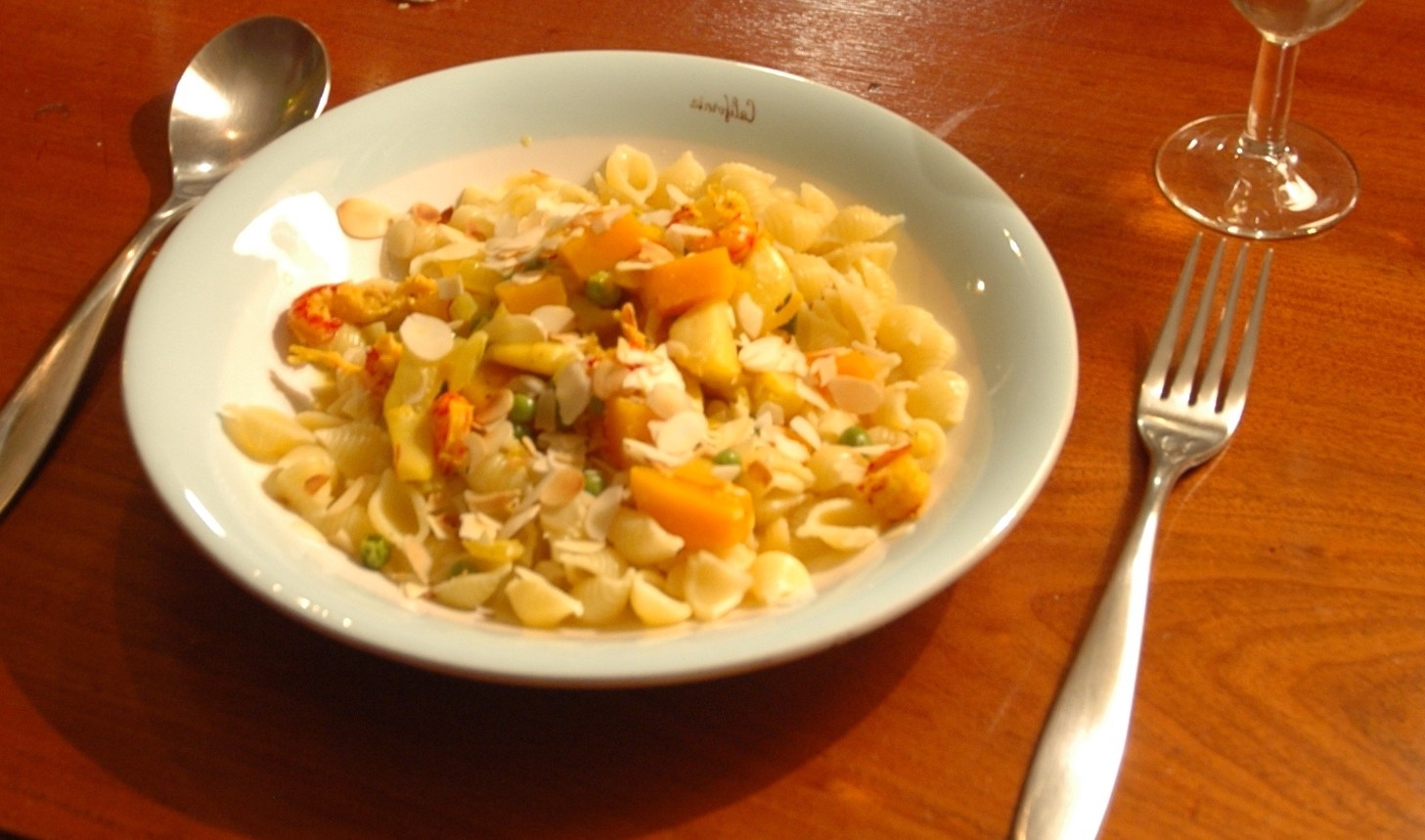
Pasta with Pumpkin, Sage, Saffron, St. Jacques Scallops and Crayfish.

This is a delicious recipe which uses sage and saffron to bring out the flavours of pumpkin and shellfish.  It has been sent to me by Elodie, from Amsterdam who I hope will be regularly contributing recipes.

Pasta with Pumpkin, Sage, Saffron, St. Jacques Scallops and Crayfish.

Serves 4
Ingredients

400 – 500g dried pasta shapes
1/4 small green or orange pumpkin (approximately 250g), seeded, peeled and diced
1 fish stock cube
1 medium onion
4 St. Jacques scallops (Coquilles), finely sliced or diced
10 – 12 Crayfish (Rivierkreeften)
Handful of frozen or fresh peas
1 garlic clove, peeled and sliced, chopped or mashed (depending upon strength preference)
5 sage leaves
2 saffron strands
1/2 cup almond flakes
Tablespoon cream / creme fraiche
Dash of Thai fish sauce (optional)

  1. Cook diced pumpkin in a little water until soft (approx. 5 minutes),  set aside.
  2. Make a cup of fish stock using the stock cube and boiling water, keep it ready.
  3. Cook your pasta of choice whilst preparing the sauce as follows.
  4. Dice onion and fry in a little olive oil until golden.
  5. Add saffron and garlic to the pan and cook gently.
  6. Add sage and peas.
  7. Add the crayfish and a little of the fish stock ( keep the rest so you can add more if required).
  8. Add a tiny dash of Thai fish sauce, if you happen to have it.
  9. In a separate pan fry the Coquilles St. Jacques in a little oil, until thoroughly cooked. Try a little piece to make sure the scallops are not under-cooked.
  10. In the same pan gently fry the almond flakes until light brown. Reserve the almonds separately.
  11. The minute your pasta is cooked and drained, stir the pumpkin, St. Jacques and cream into your sauce.
  12. Pour the sauce over the pasta and sprinkle with the almond flakes.
  13. Add salt and pepper to your own liking.

This is an excellent dish using the seasonal Pumpkin and Sage in a slightly different way!

Bon Appetite !