Category Archives: Growing herbs

Eostre Herbs in de Hortus Botanicus, Amsterdam

I have just been for a lovely walk in Flevopark and apart from masses of gorgeous Ramsons (NL: Daslook) there are not really enough wild herbs up to warrant an organised walk.  I am still really keen to gather a few Urban Herbologists together on Eostre (the spring Equinox, 20th March 2011) so a change of plan!

The new plan is to meet at the lily pond/herb garden area of de Hortus Botanicus, 11.00am on Sunday 20th March.  Any Urban Herbies who would like to join for a chat, a look at the herb garden and maybe a cup of tea in the Hortus cafe, are welcome.  The meetup.com link has been changed to reflect the new plan.  If you would like to see us there you will need to pay your own entrance to de Hortus.  I won’t be leading a walk this time and won’t be taking along any handouts.  That will have to wait until May Day.

I hope to see you there!

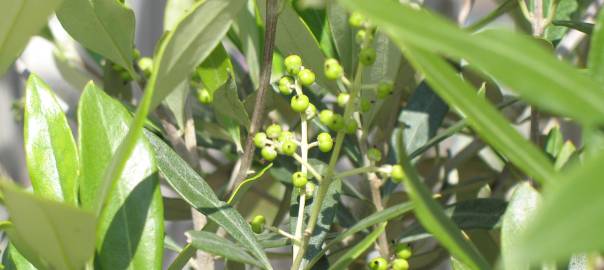
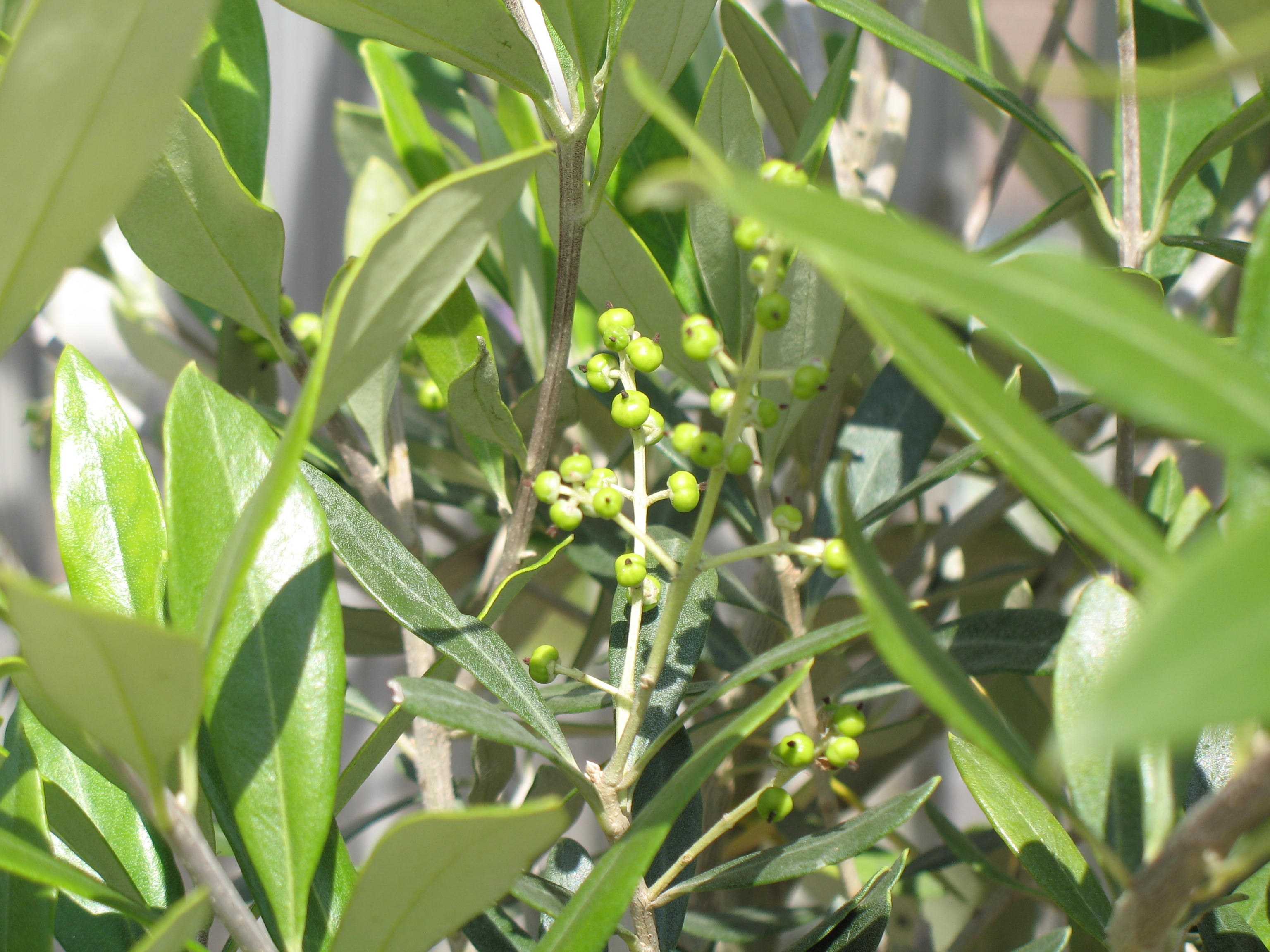
Uses for olive leaves?

A little Olive tree is growing in a pot on our roof terrace and I would like to make some use of it.  It is about 5 years old, a couple of feet tall and very healthy.  My sister sent it as a living birthday present and it seems to enjoy life on the roof.  I have re-potted it a couple of times and pruned it lightly last year.  It last flowered in 2007 and the birds ate all but one of the resultant fruits before they grew to a decent size.  It has not flowered since but the little tree is now able to withstand being outside all winter so I feel confident that a little leaf harvesting, come late spring or summer, would not harm it.

It would be nice to get a little yield from the plant and as I’m unlikely to get many olives the leaves seem to be the best resource to use – but how?  Olive leaf extract sounds interesting but I wonder if anyone has tried making something useful on a very small scale?  Perhaps a tea?  I haven’t found anything in my herbal books and am very keen to hear from anyone with Olive leaf ideas.

Seeds For Food

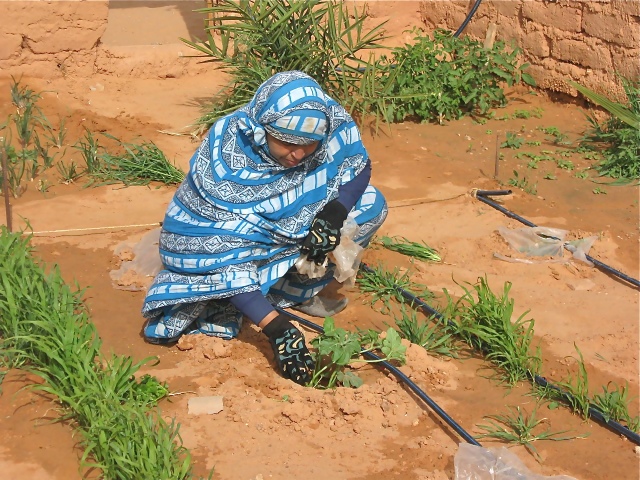
There’s an interesting little article in the spring 2011 issue of Permaculture Magazine about the Seeds For Food project.  It aims to provide saved fruit and vegetable seeds to hungry people in developing nations.   The idea for the project arose in Saharawi refugee camps, in South-East Algeria, where there is a desperate need for fresh food and yet limited resources to purchase seed.  You are invited to save the seeds from fruit, vegetables and herbs which you already eat (simply collect, rinse and air dry them) and then post them to the following address:

Prof. Dr. Willem VAN COTTHEM
Beeweg 36
B-9080 ZAFFELARE (Belgique)

They will be used to help families grow their own food.  This seems to be an excellent initiative, I shall certainly be collecting and sending seeds to Prof. Dr. Willem Van Cotthem from now on.  He began the project after working as a UNICEF advisor at sub-Saharan refugee camps and learning how unaffordable fruit and vegetable seeds are to these needy people.

Lunar Herb Gardening

Spring is well underway here in Amsterdam and I plan to begin indoor planting of a few annual herbs this week. As I pulled out my box of saved seeds it reminded me to find my lunar gardening guide so that I can get the seedlings off to a really good start.   Gardening by the moon is thought by many to increase crop yield and quality.  It is at the heart of biodynamic gardening and farming practices. Given the choice I buy biodynamic vegetables; I think they taste better and they seem more healthy.  I’ve been dabbling in lunar gardening for about 15 years, I’ve never approached it scientifically but it seems that when I pay more attention to lunar gardening my plants do better.  Perhaps they simply benefit from more love and attention, perhaps it is indeed the lunar effect.  I don’t mind which it is but my plants generally do very well when I garden by the moon.

Getting started
It is not difficult to get a feel for lunar gardening, you can start by simply:

  • Planting annuals which “produce” above the ground (such as Calendula & Nasturtians) during the increasing light half of the moon cycle (waxing moon).
  • Planting herbs which store energy below the ground; biennials, perennials, bulbs, and root plants (such as Madder, Dandelion, Garlic, Ginger & Soapwort) during the darkening half of the cycle (waning moon).
  • Increasing light (waxing) means the period from dark/new moon to full moon, decreasing light (waning) means the period from full moon to dark moon.

Going deeper
If you find gardening by the dark and light periods straight forward you may want to take things a step further.  This involves considering each quarter of the moon cycle. The 1st quarter begins straight after a New Moon:

1st Quarter (Increasing to Half Full Moon):
During the waxing moon gravitational forces are thought to pull water higher in the ground and plants. This is thought to assist seed germination and the growth and development of leaves and stems.

  • Plant leafy annual herbs which produce above ground and have seeds outside of fruit
    (E.g. Basils, Coriander, Borage, Dill, Rocket, Safflower, Stevia, Parsley-a biennial but treated as an annual)

2nd Quarter (Half Full to Full Moon):

  • Plant viny annuals that yield above ground and have seeds inside their fruit. (E.g. Red Clover, Dyer’s Broom, Nightshade family, Bitter Gourd, Chickweed – though it usually plants itself).

3rd Quarter (Decreasing to Half Full Moon):
During the waning moon, lunar gravitational forces are said to pull water down in plants and the soil.

  • Plant biennials, perennials, bulbs, and root herbs, those that overwinter and produce their crop the next year, trees, shrubs, berries and grapes
    (E.g. Dandelion, Rosemary, Sage, Gogi berry, Mellissa, Witch Hazel, Chives, Lavender, Myrtle, Garlic, Thyme, Oregano, Marjoram, Valerian, Yarrow, Mints, Lovage, Winter Savory, Marjoram & Lemongrass).

4th Quarter (Half Full to New Moon):

  • The best time to cultivate, prune woody shrubs, pull weeds, discourage garden pests and turn the soil (especially when the Moon is in a barren sign).

And finally…
If you fancy taking lunar gardening to the next level then you will also need to consider Moon Signs.  The following details of how to incorporate them is taken directly from the Llewellyn books website.  If you want to do this then it is probably best to get a copy of Llewellyn’s Astrological Calendar, Gwydion’s Planting Guide or another similar publication, to ensure your dates are correct.

Even simpler, visit Lunarorganics.com. A useful website on this subject, they sell a very easy to use lunar gardening year planner.

Planting by Moon Signs (From Llewellyn’s 2008 Astrological Calendar.

  • MOON IN ARIES: Barren, dry, fiery, and masculine; use for destroying noxious growths and pests, and for cultivating, plowing, and tilling.
  • MOON IN TAURUS: Productive, moist, earthy, and feminine. Use for planting crops, particularly root vegetables and potatoes, when hardiness is important.
  • MOON IN GEMINI: Barren, dry, airy, and masculine. Use for cultivating, or for destroying noxious growths, weeds, and pests.
  • MOON IN CANCER: Very fruitful, moist, and feminine. Use this productive sign for planting and irrigation.
  • MOON IN LEO: Barren, dry, fiery, and masculine. Use this barren sign for killing weeds, and other noxious growths, and for cultivation.
  • MOON IN VIRGO: Barren, moist, earthy, and feminine. Use this sign for cultivating, weeding, and destroying pests.
  • MOON IN LIBRA: Semi-fruitful, moist, airy, and masculine. Use for planting crops and enhancing root growth. It is a good sign for flowers and vines, seeding hay, corn for fodder, and other livestock needs.
  • MOON IN SCORPIO: Very fruitful, moist, and feminine. Use this very productive sign for planting most things; especially good for vines and sturdiness.
  • MOON IN SAGITTARIUS: Barren, fiery, dry, and masculine. Use this sign for planting onions, seeding hay, etc. Also good for cultivation.
  • MOON IN CAPRICORN: Productive, but dry, earthy, and feminine. Plant potatoes and other root crops.
  • MOON IN AQUARIUS: Barren, dry, airy, and masculine. Use for cultivation and for destroying noxious growths, weeds, and pests.
  • MOON IN PISCES: Very fruitful, moist, and feminine. Use for planting most things, and especially good for root growth.

New Moon Intentions

Happy 2011!  May this year bring you whatever you need at just the right time.

New Year resolutions don’t work well for me, a year is a long time wherein my will power for certain things slowly ebbs and flows. In the past, whenever I have attempted New Year resolutions, I have inevitably floundered within a few weeks, causing me disappointment and eventual failure to meet those well meant intentions.  I know that I am not alone in this character trait and last year was so pleased to read about a different way to meet personal targets.  Robin Rose Bennett writes about New Moon intentions in her beautiful book, I find the method very natural to work with and it has already helped me to make some positive changes.  Here’s how the idea goes….

  • On the eve of a New Moon I privately write out what I intend to work on during that moon cycle (about 29 days).  It could be something like eating less chocolate, or trying to use more fresh herbs in cooking.  When writing out the intention I try to make it a positive, achievable, present tense affirmation, such as: “I eat fresh herbs three times a week” or “I eat one chunk of chocolate a day.”
  • I keep the paper somewhere private but where I can easily reach it each evening. Each evening I take a look at it and perhaps light a candle for a short time to heighten my awareness of the intention, reminding myself of why I want to work on this particular intention.  It also helps to use that time to imagine/daydream/visualise how it feels to have achieved the intention.  I do this each night until the subsequent Full Moon, that’s about two weeks after the New Moon.
  • I then burn the piece of paper, perhaps with the candle I have used to heighten my awareness and let my affirmations free, allowing them to manifest in whatever way is most appropriate at that time.
  • For the rest of that moon cycle I try to keep to my intentions but I don’t focus on it as much as previously.  I just let it happen.
  • When the next New Moon arrives I think about how successful or otherwise I have been in meeting that target and adjust my affirmation for the next moon cycle accordingly.  So perhaps my next affirmation will be: “I eat one chunk of chocolate every week” or “I eat fresh herbs four times a week.”

In this way I find it possible to move steadily towards my goals, to adjust my expectations when needed and to feel positive about steps forward, even when they are not as great as I had initially hoped for.

The next New Moon will be Tuesday 4th January, the subsequent Full Moon will be Wednesday 19th January followed by a New Moon on Thursday 3rd February.

Thyme (NL:Tijm)

Evergreen hardy perennial Thyme (Thymus spp.) originates from the Mediterranean, has a great number of medicinal and culinary uses and is easily grown in containers, making it ideal for the Urban Herbologist.  It is a strong herb containing volatile oils and should be avoided by pregnant women and used sparingly by others.

Growing Thyme in Containers
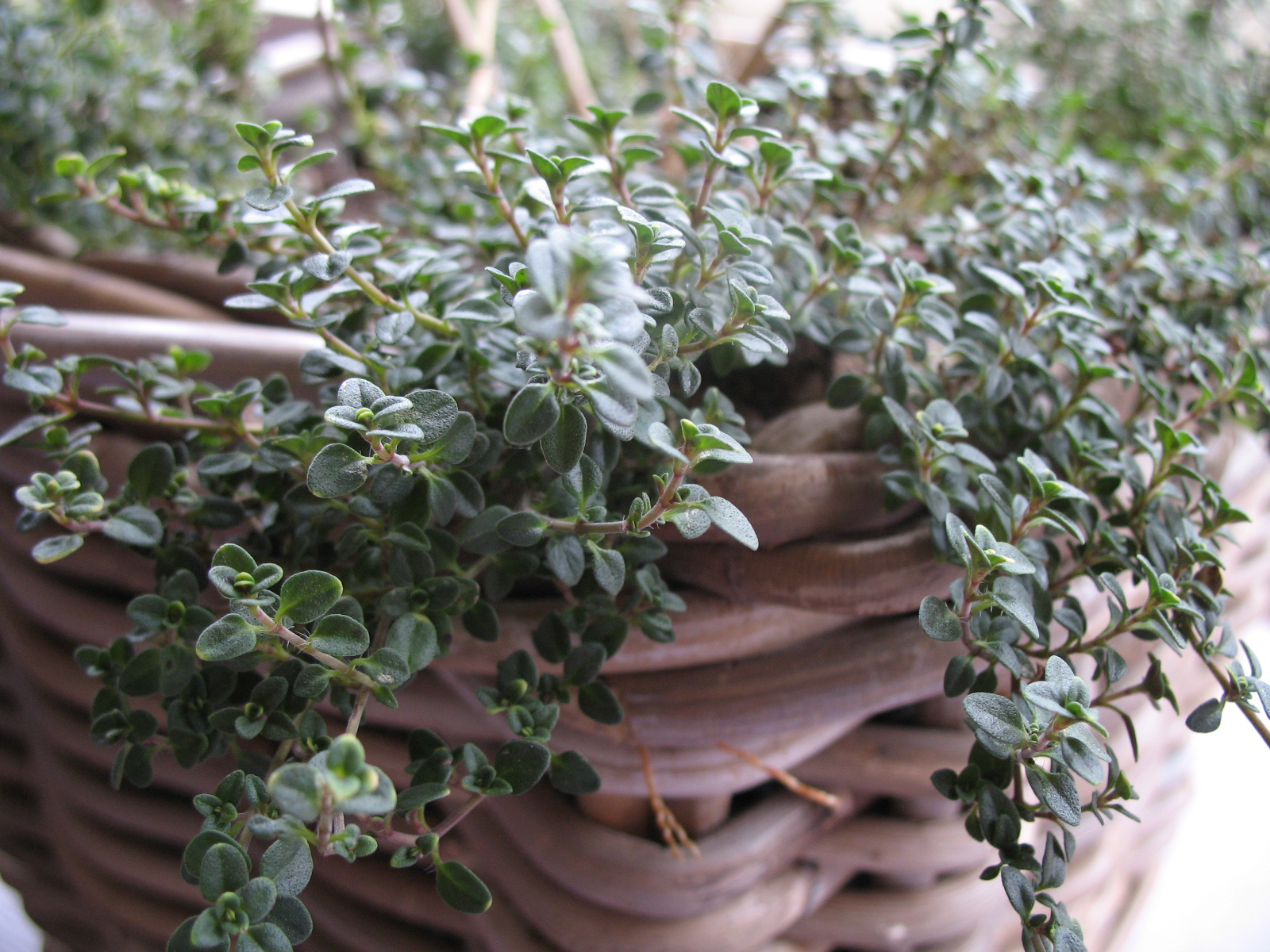
There are a vast number of Thyme varieties, each having a slightly different scent, appearance and flower colour. Thymus vulgaris is the Common Garden Thyme. All Thyme varieties have relatively shallow woody roots and form a soil covering carpet.  A healthy plant can be easily “split” to give you many new plants for free.  Being a Mediterranean herb, it does well in poor soil and should be allowed to dry out between waterings.  Thyme will quite rapidly use up the nutrients in soil, so do re-pot every year or so to encourage healthy growth. The leaves of Thyme  develop a more intense flavour and scent when grown in strong sunlight although dark leaved varieties can thrive in fairly shady locations.

This year I am experimenting with Lemon Thyme (Thymus citriodorus) grown in a container, around the base of a Lemon Verbena.  I bought one small pot of organic Lemon Thyme from my local garden centre and split the plant into four before re-potting.  Lemon Verbena is quite a tender deciduous shrub so drops its leaves in winter and needs to come inside to survive. Thyme is winter hardy but has the same watering requirements as Verbena so they should do well together.  I’m also hoping that Thyme’s shallow roots won’t out-compete the Verbena, when spring arrives.

Historical uses
Since ancient times Thyme has been prized for its antibacterial and anti-fungal properties.  It was used widely in combination with other herbs for; embalming, temple incense, nosegays to ward off disease, room purification and even to induce visions of fairies.  The Romans used it to add an aromatic flavour to cheese but generally ancient people used it medicinally.

Culinary uses
These days Thyme is best known as a culinary herb, it has a strong, pleasant flavour and reportedly has good antioxidant properties. Many stews, salads and sauces are enhanced by adding a little Thyme. Chicken and fish dishes are particularly well suited to it. Because of its strength I far prefer Thyme as a culinary herb, adding it to food more regularly when the cold and flu season is upon us.  If you like the taste of lambs liver, try cooking it with a simple sauce made from softened onion, garlic, chopped tomato and thyme.

Thyme remedies
Some people find Thyme tea a useful hangover remedy but it is more widely used as a throat gargle or mouthwash to help with sore throats or gum infections.  Thyme has expectorant properties so Thyme syrup or honey may be useful as a cough remedy.  However due to the strong volatile oils in this herb, it shouldn’t be used regularly as a tea, syrup or in any other concentrated form.

Thyme tea
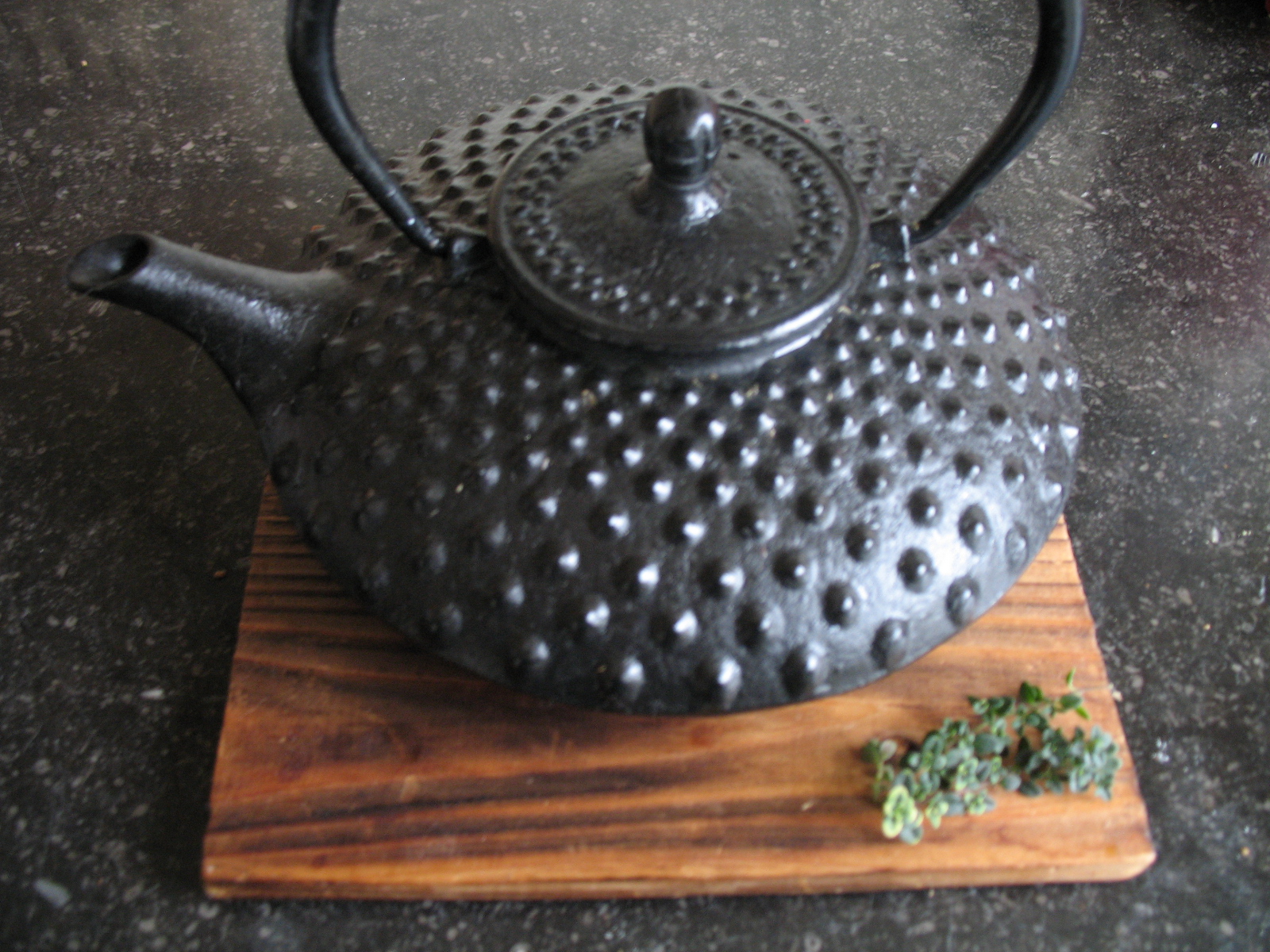
To make tea from Thyme simply add a few fresh or dry sprigs to a 2 cup teapot (maximum 1/2 teaspoon of dried chopped Thyme, or 1 teaspoon fresh chopped Thyme), fill with boiling water and leave to steep – but only for a short time.  Check the taste and appearance after just five minutes, that should be enough to release some oils and impart a good flavour.   If you cannot seed oil droplets on the surface of the tea then you may like to leave it to steep a little longer, perhaps another five minutes but be cautious with this herb.  It is strong and the volatile oils are unsafe in concentration or when used regularly.

Legal Disclaimer: The content of this website is not intended to replace conventional western medical treatment. Any suggestions made and all herbs listed are not intended to diagnose, treat,cure or prevent any disease, condition or symptom. Personal directions and use should be provided by a medical herbalist or other qualified healthcare practitioner with a specific formula for you. All material on this website is provided for general information purposes only and should not be considered medical advice or consultation. Always check with your personal physician when you have a question pertaining to your health and healthcare.

Saving Herb Seed

Buying seed is a recent thing.  Most gardeners used to routinely save seed from their best annual and biennial herbs and vegetables.  Seed saving is an easy and beneficial thing for Urban Herbologists to do, here’s why and how:

Why save herb seed?

  • It saves money and increases self sufficiency.
  • Saved seed is well adapted to your location. It has survived the local weather, soil type and pests.
  • You can save from plants with interesting characteristics.
  • Saved seed can be shared and swapped.
  • It increases plant variation, increasing the local gene pool and biodiversity.


How to save herb seed:

Plants use different methods to spread seed far and wide to new and favorable locations.  Most rely on the wind, animals, water, gravity or an explosive force to disperse their seeds.  The method your chosen herb uses will dictate how you should set about collecting its seed.

  • Sew your annual or biennial herbs as usual.
  • Select a few of the strongest plants for seed saving.  Use the other plants of that type for your herbal needs.
  • Grow the seed savers on to maturity. Allow them to flower and for their bare seeds or fruit to develop freely.
  • Mature the seed.  Allow it to ripen and dry on the plant as much as possible.
  • Collect the ripe fruit or seeds before they disperse naturally. This may involve:
    Shaking ripe, dry seed-pots into a paper bag (Nigella),
    Pulling dry seeds out of dead flower heads (Calendula),
    Cutting off dry seed heads (Allium),
    Cutting off ripe but unexploded pods (Legumes, pea family),
    Cutting off and into ripe fruit and scooping out the seeds (Rosa)
  • Clean the seeds. This may involve sorting or sieving seeds from plant debris or removing a soil covered outer layer (garlic).
  • Dry the seeds. Seed allowed to dry on the plant, in warm dry weather, may be enough. For better results also lay them on a sheet of kitchen roll or newspaper, in a dry room for a few days.  Seed collected from wet fruit needs extra care.  Super dry rice can be used to effectively suck moisture out of seeds. I’ll post an easy method for this later this week.
  • Pack and label your seeds when you are certain they are bone dry.  I use ordinary envelopes or small glass jars.  Label the name, date and where you collected the seeds from on the packet.
  • Store your seeds in a relatively cool, dry and dark place.  Some take storage further by freezing their seed, this can prolong their viability by several years, if done with very dry seed. My freezer is otherwise occupied.
  • Share and Grow on your saved seed.  Don’t forget to plant your seed the following year. It may keep for longer but reduce the risk of losing your seed stock by growing some of your saved seed and then repeating the cycle.  You are likely to save far more seed than you need so consider sharing or swapping seed with other Urban Herbologists.

If you are thinking of collecting and saving seeds from the wild please don’t. Wild annual herbs rely on seed dispersal for their survival.

Kew Millenium Seed Bank provides a wealth of information about why global seed saving is important and how they manage their collection.  The Real Seed Catalogue and similar organisations, can help by providing “real seed” to get you started.  Seed collected from the plants you grow from “real seed” will be viable and reliable, unlike that from many hybrid varieties often sold by the large seed companies.  Hybrids often yield sterile seed or nonuniform seed.

Ginger roots!

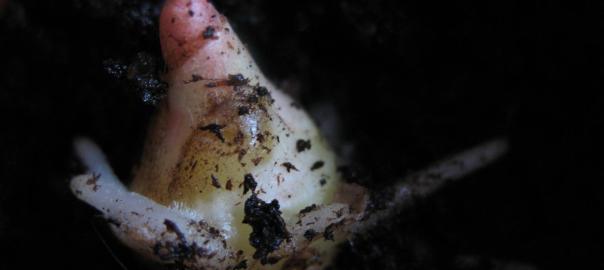
ginger-roots1There is life in my airing cupboard…  The ginger rhizome I wrote about on Monday has sprouted lots of strong roots, after just 4 days!  Each bud has started to look shoot-like, become slightly pink and sent out between 6 and 10 healthy roots.  I am delighted with this first attempt at growing one of my favourite exotic herbs.
The pot is now in a bright but cooler room so I hope that it will continue to do well.  The soil has been moistened a little more and I shall leave the plastic bag on for a couple of days, to ease the transition from the toasty warm airing cupboard.  I have high hopes of honey, ginger and lemon using my ginger plant, ths winter.  Perhaps that’s a little ambitious!

Growing ginger (NL: Gember)

Have you ever tried to grow ginger (NL: gember)?

Ginger (Zingiber officinale) is a great herb to use in all seasons but I find it especially useful in the autumn and winter. It adds a gentle warmth to food, stokes up the digestive fire and stimulates the circulation.  It has been used medicinally since ancient times and is still employed for many ailments.  I love to add freshly grated, or powdered, ginger to a mug of hot lemon and honey, as a cold remedy. I also find ginger biscuits or chunks of crystallised ginger very helpful against nausea (though not against motion sickness).  It is also very tasty!

Ginger features strongly in the Ayurvedic system of medicine and it is quite common in parts of India to eat a little sliced ginger, soaked in lemon juice, before a meal or a little crystallised ginger afterwards.  I do find that this really helps me to digest a meal more effectively, especially a heavy meal.

ginger-in-pot

I found a forgotten piece of ginger (a rhizome) in my kitchen this weekend and was delighted to see that it had started to show signs of life. Three green tinged buds had started to form so I decided to help them along.  Jekka’s Complete Herb Book provides simple instructions about how to encourage fresh ginger to grow, so today potted it up and hope to add a healthy ginger plant to my indoor herb collection very soon.

ginger-in-plastic-bag

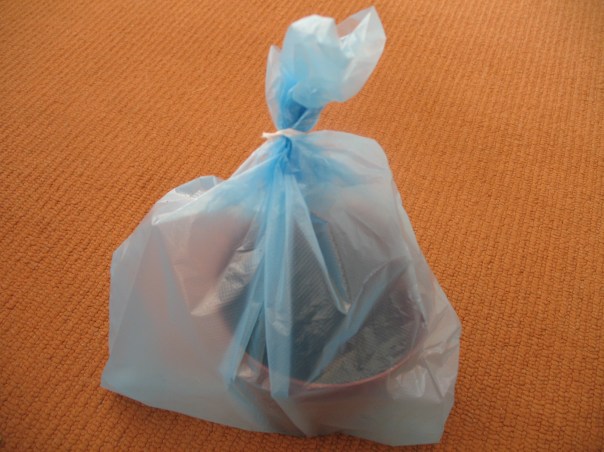
I cut the rhizome about 5cm below the first bud with a sharp knife and placed it in a small pot of moistened compost, with the buds facing upwards.  The buds are just covered in compost. I then placed the pot in a small plastic bag, and placed it in my airing cupboard.  Jekka recommends leaving the pot at 20 oC  and hopefully after around three weeks shoots will start to emerge.  I shall let you know how it goes.