I’m a foraging teacher and herbalist in Amsterdam. I have been eating something wild and local every day for many years and I believe that it helps my body and mind, but does it really? To find out, I’ll be participating in the Wildbiome 2 research project, eating only wild food for one full month in April 2025. I need help to pay for my tests to see the health effects of the study.
Wildbiome 2 is a large follow-up study looking at how eating a wild food diet (like our hunter gatherer ancestors) affects human health today. The first study in 2023 was relatively small but delivered some fascinating results so I’m looking forward to finding out more this time as 120 foraging volunteers will take part.
During April 2025 I will eat only locally foraged wild food, no sneaky extras, no chocolate, matcha, spelt or homegrown veg, just 100% wild and local food. In Amsterdam, I’m sure it’s possible to be healthy by adding locally foraged food to our diet each day, but will eating it 100% show up issues? Will it show the effects of pollution? Will I be lacking in some nutrients? I think it will be fine, positive, but as someone who used to work in a research lab, I want to put this to the test scientifically. So some clinical tests need to be done.
Blood, stool and other testing will be done at the start and end of the trial month to look for effects on my gut microbiome, blood sugar, hormones, inflammation levels and many other health/illness markers. The tests are quite expensive so I need to raise funds to cover those costs alongside preparing my wild food store with acorns, apples, roots, leaves, berries, etc.
If you want to support this project, to help find out how wild food affect us, and to help pay for my tests, please donate through my Gofundme appeal.
The project starts on 1 April 2025 but I need to raise funds now.
As a token of my gratitude, I am offering the following:
First 20 people giving €25 donations: each a place on one of my Amsterdam herb group foraging walks, during Autumn, Winter or Spring 2024/5.
€50 donations: join a 1:2 walk.
€100 donations: a 1:1 walk at a mutually convenient time.
Join Lynn Shore, professional forager and herbalist, to explore local nature on the autumn equinox.
SUNDAY 22nd SEPTEMBER – Fully Booked 14.00 – 16.00 – Park Frankendael €30 per person – Full booked waiting list only through Meetup not email.
On this 2-hour gentle walk, timed when the sun should be at its peak, we will look to local plants and animals for signs of balance and change, on the autumn equinox. This is the time when light and day hang in balance. From now till midwinter the nights get longer, days get shorter and nature turns inward. This is traditionally, the last day of the year to harvest some plant material and the start of harvest time for others.
You will learn about Local wild creatures, edible and medicinal plants Signs in nature as the seasons change Wild and feral Amsterdam plants How to identify, harvest and safely use local herbs Ways to help local wildlife Increasing your connection to place and self-reliance Simple rituals to bring yourself closer to urban nature through autumn
What to expect This small group walk will be 2 hours long, starting and ending at the same location, near the bike racks closest to Huize Frankendael/Restaurant Merkelbach. We will walk in the woods, alongside water, on grass and other areas of the park. The walk will go ahead in all weather except for storms, so dress for the occasion. There will be opportunity to walk barefoot, but no pressure if you prefer not to. There will be a handout to help you remember things afterwards and we will drink herbal tea from herbal finds. If you want to forage, please bring along a small paper or cotton bag to take home some herbs and seeds. The walk is gentle and fairly slow, the paths are mostly natural, of woodchip or soil. We will sit outside to drink herbal tea and eat the wild snack. There is a public toilet in the park. Come prepared to connect simply and more deeply to urban nature.
About your guide Lynn is an experienced herbalist and professional forager, who is specialized in local herbs and reconnecting city people to nature. She has been teaching foraging in Amsterdam and helping city people become more self-reliant for 14 years, and has been a practicing herbalist for over 20 years. Her special interest is improving mental health through herbs and nature. Lynn set up the beautiful community foraging gardens, over 10 years ago, in Park Frankendael. Part of this walk will be in there. In April 2025, she’ll be participating in the Wildbiome project, eating only wild food for one month, as part of a research project investigating how wild foods affect our health.
Booking – only through waitlist on Meetup now as event is full Email urban.herbology.lynn@gmail.com to book your place. When payment is received, your place will be confirmed by email. Please see the fair cancellation policy on the Events page.
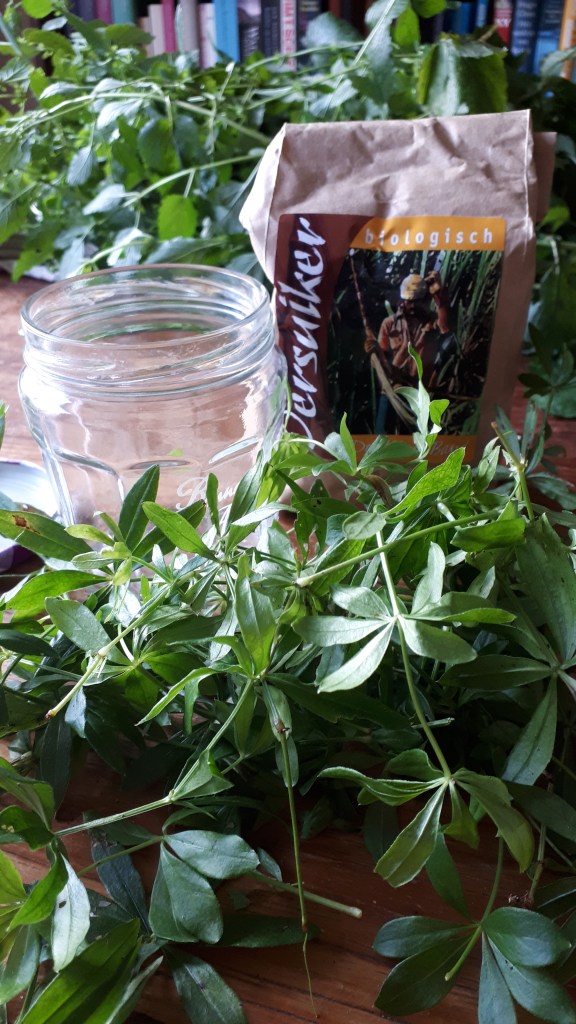
Several herbs can provide a sweet aromatic scent, similar to vanilla. One is Sweet Woodruff (Gallium odoratum) which is used in the simple recipe that I have just added to the Feast section of the Urban Herbology Apprenticeship course. If you would like a sneak peek at the recipe, hop on over to my SubStack (Weaving a Magical Life).
Hildegard von Bingen was a visionary medieval abbess with strong opinions about how to live life to the fullest, in deep connection with nature, inside and out.
Start your weekend with intention, step out to breathe in the sweet spring air and join Tamara for a nourishing morning ritual inspired by Hildegard’s monastic practices, favourite herbs and holistic approach to self-care.
We will share Hildegard stories, activate our senses by foraging for Hildegard herbs in the garden, prepare a wholesome communal breakfast, eat together in mindful silence and clean up after ourselves, ready to continue the day with a joyful bounce in our steps.
Participants should bring: a bowl and a spoon to eat with, a mug to drink from, a paper bag for foraged herbs.
About the guide Tamara Last Tamara Last’s emerging herbology practice is motivated by a desire to (re)connect adults with the wild and to nurture in children a profound and gentle connection with the natural world. Plants are the golden thread that help her integrate her work as a birth doula, a gardener, a cook, a craft-maker, a mother, a community organiser and an interdisciplinary social scientist.
Location: Anna’s Tuin & Ruigte (Science park, Amsterdam)
Cost € 10–25 (pay what you feel like)
Sign up by sending an email to info@annastuinenruigte.nl
City Herb Foraging for Children Sunday 7th April and Sunday 21st April Park Frankendael Foraging Gardens 10:30-12:00
These are small group sessions for children aged 7+ and their parents.
An introduction to some common Amsterdam herbs that grow in parks, streets, and gardens. A handout with information and recipes will be provided. We will make herb tea and some herbal concoctions after foraging the herbs.
Learn how to:
Identify, forage, and use key plants safely & ethically
Identify (and avoid) look-a-likes and common poisonous plants
Create simple foods, lotions, and potions using local herbs.
Each session will be led by Livvy de Graaf and assisted by Lynn Shore. Lynn is a professional foraging teacher (member Association of Foragers) and consulting herbalist. Livvy, is Dutch-British and has been harvesting and eating wild food for longer than she can remember. She is Lynn’s daughter.
We will be mainly in the River of Herbs foraging gardens, behind Huize Frankendael, which Lynn has run as a community project for the past 10 years.
Price per session 1 child – €15 1 child + 1 parent – € 25 [8 spaces available in total – no spaces available for adults alone]
Sugar and rain As the beautiful Dutch saying goes, we are not made of sugar. So our events go ahead come rain or shine. We will postpone (and refund) if severe weather is forecast, such as a storm, because that could make the outdoor event unsafe. Otherwise, as the other saying goes – There’s no such thing as bad weather, only bad clothing..
To Book Please Email stating your preferred date of event and how many children/adults. To secure your place, payment must be received by bank transfer. We will send you the payment details when you email to book. Please look out for that reply as without payment, your booking is not complete and only a small number of places are available for Livvy’s events.
Refund Policy – Fully refundable up to 24 hours before the event. If you need to cancel after that time (so less than 24 hours before the event start time) a refund can only be made if we can fill your place with someone else.
Each year, I get approached by a small handful of inspiring students who want to spend some internship time with me. Learning about their studies is always enlightening but usually, I need to say no to their requests. Not because of their ideas and motivation, but because I lack the time these enthusiastic students deserve.
Last year, Neleah Moureau, from HAS green academy of Den Bosch, contacted me. She wanted to conduct herb-related research as part of her Horticulture and Business Management course. Aeroponics, an innovative growing system where nutrient-rich water is sprayed onto plant roots, was the topic of Neleah’s research. With the right setup, and without soil, aeroponics can offer optimal light, temperature, moisture, and micronutrients to a wide variety of interesting plants. Neleah wanted to know if aeroponics could be a viable solution for the lack of prime herb growing space in urban settings. I was intrigued. Perhaps this could be an energy-efficient way to grow herbs in tiny urban spaces. Could aeroponics reduce the need for soil, transport, and the heavy water tanks of hydroponics I have seen in Amsterdam? Maybe this type of system could improve the life of city pot plants, by replacing some of that depleted store-bought compost I see them struggling in. And just possibly, aeroponics could provide an alternative for what most urban herbalists lack and long for; a fertile garden in which to grow their supplies.
Seeing the potential in this concept, and wanting to know the answer to her research question, I said yes and Neleah promptly joined me as a regular volunteer. We met at the foraging orchards in Amsterdam Oost. Hidden within an Amsterdam park, the herb orchards are rich in local edible and medicinal herbs; a place where those in the know learn about herbs, and forage without being disturbed. I have run the orchards for the past ten years, in a way that supports local wildlife, people, and plants. Neleah took part in our low-intervention herb-growing, helped catalog the plants, and worked on her main research question back at the college campus.
So how do aeroponics work? The plants are set up in “plugs” which stabilize the plants in the absence of soil. Their roots hang naked beneath, periodically sprayed with aeroponics substrate. That is water enriched with organic fertilizer. The composition is fine-tuned to satisfy the known needs of the target plants. Because the spraying happens in a sealed system both evaporation of water, and fertilizer run-off don’t happen. The system can be made from repurposed materials and root spraying can be timed and controlled using solar-powered apparatus.
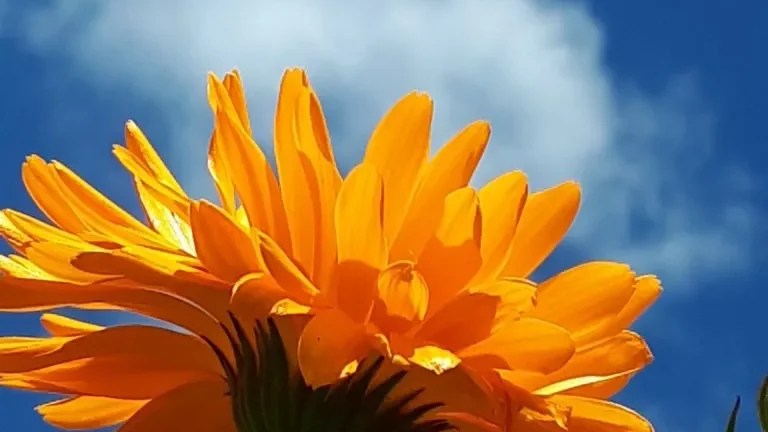
Neleah chose an easy-to-grow popular medicinal herb – Pot Marigold (Calendula officinalis). She found that it has significant commercial value here in Europe and of course, has many therapeutic uses. She wanted to compare how Calendula performed in pots of soil or an aeroponics system. Lighting, CO2, and temperature were kept the same for both sets of plants. By the end of Neleah’s research, the outcome was clear (and little surprise to the volunteer gardeners); although everything these plants are thought to need can be provided by aeroponics, the Pot Marigold plants did far better in soil. Plants grown with aeroponics, at least in this experiment, were a poor version of what they could have been. The soil-grown plants had more flowers, bigger flowers, more foliage, and richer colour, and were more appealing to herbalists and wildlife.
Soil So what exactly was lacking from the aeroponic setup, to cause such a difference? I am sure that it was the ecosystem of the soil itself. Most plant roots have not evolved unclothed, dangling in a nutrient-rich mist (although air plants such as Tillandsia spp. have). In nature, roots spread out to anchor the plant and to capture watery resources. The plugs in Neleah’s system took over the anchorage role, and the spray delivered nutrient-rich water but what else is in soil?
Naturally, plant roots are surrounded by and penetrated by an almost invisible ecosystem. It lives on, in, and between the non-living particles of soil. Soil is a complex living community. When examined with a lens, grains of sand, clay, and stone are visible in the soil. Those grains are the inorganic components of soil, they are not living but lifeforms and water in the soil, gradually break them down. Within tiny pores in the grains and on their surface, life cycles relentlessly. Fragments of decaying plants, tiny bugs, and maybe even the fungi and bacteria which connect it all up, can be found. With the bare eye, worms, ants and beetles can be seen, all helping move things around and shake things up.
Soil is not simply a mix of NPK a few trace elements and water, it is a complex ecosystem that we can hardly begin to understand. Soil is magical, a place of constant transformation, alchemy beneath our feet! For me, there is no substitute for real soil, that stuff made from molehills, compost, leaf litter, and more; that stuff teaming with lifeforms. That is what plant roots need to be surrounded by. Without it, I don’t see how the magic of plant growth can occur. And what use is a herb if not a magical plant?
I wonder how far aeroponics will go. Solutions for small urban growing spaces are certainly needed and I hope that in time, aeroponics will incorporate plant pro- and pre-biotics, as well as the usual nutrients. Neleah’s work has opened my eyes to the soil-less growing of herbs, and I look forward to seeing where it goes. But in the necessary striving for solutions, I hope we don’t lose sight of the life of the soil.
May plant roots of the future be stylishly clothed in the ecosystem they belong to, one of cycling life, death, microbes, and magic.
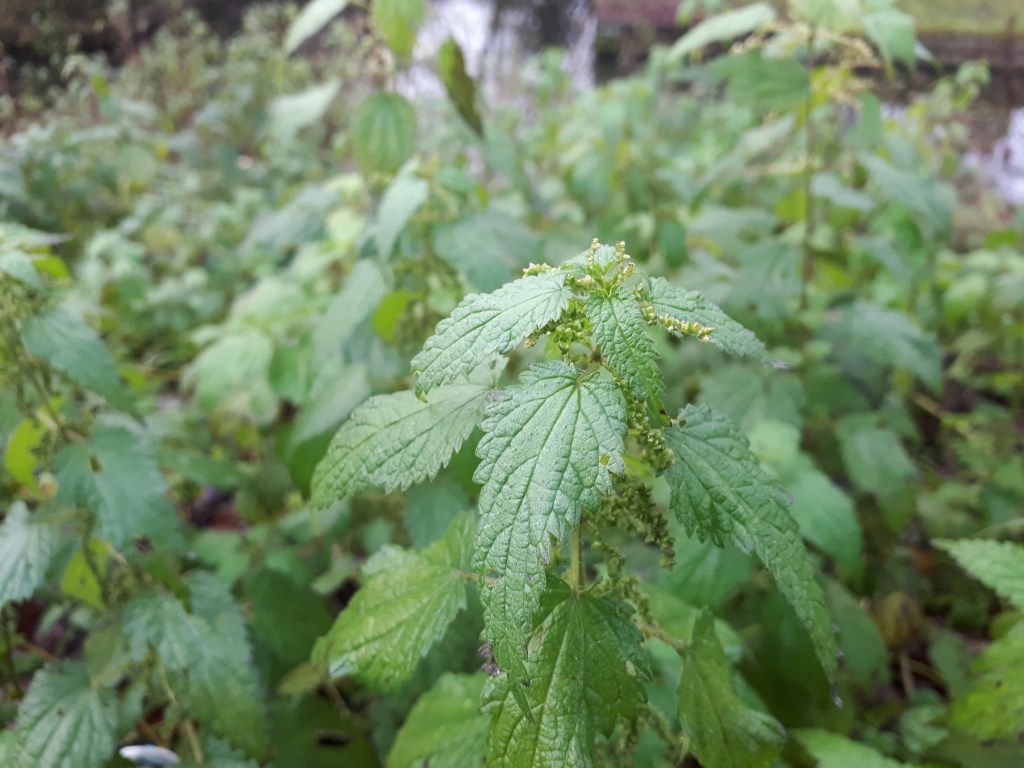
It is nettle time! Learn how to identify, ethically harvest, craft, eat, grow, use and generally make the most of locally growing nettles, so Stinging nettles (Urtica species) and several Deadnettles (some of the Lamiaceae family), with Livvy de Graaf, assisted by Lynn Shore. Lynn is a professional foraging teacher (member Association of Foragers) and consulting herbalist. Livvy, is Dutch-British and has been harvesting and eating wild food for longer than she can remember. She is Lynn’s daughter and certainly knows her way around the woods and foraging orchards, where this event will take place. She looks forward to sharing some of her skills with you. The walk will be primarily in English.
Location We will be working mainly in the River of Herbs foraging gardens, which Lynn has run for over 10 years, so unusually will be able to dig up some of the stinging nettle roots, to plant elsewhere or for you to cook/preserve/process at home. Meeting at main entrance of Park Frankendael, closest to Middenweg 72, Amsterdam (Restaurant Merkelbach / Huize Frankendael).
Handout Written info and recipes will be provided. You will learn about and try different preparations made from the focus plants (including a cup of tea). You will then be able to make your own potions/creations at home, using what we forage together and the handout.
Who is Stinging nettle’s sister?Yellow deadnettleStinging nettle
The plants Different “nettles” are up and forageable in Amsterdam all through the year, but at this time the Stinging nettles are growing strongly, and different Deadnettles begin to flower. This is the best time to start using them in simple remedies and to enrich food. As you learn about Stinging nettles and Deadnettles, you will also meet some other amazing wild herbs that are around at the same time. For instance, wild garlic is also in full growth at this time, so you will be able to dig some of those bulbs up, from legal places, if you want that and have uses for them.
Please bring along cup/mug paper bag (grocery small bag to take the harvest home) pen/pencil to add to the notes. hand trowel / handschep (we will have a few to share if you don’t have one).
Booking €15 per person, paid in advance Please email to reserve your place and receive the bank details for pre-payment. Your place is secured when your payment has been received.
Cancellation policy 100% refund if cancellation more than 24 hours before event start time. Cancellation after that time (so less than 24 hours before the start time) can only be refunded if we can fill your place with another person.
Extra Date: Saturday17th February, 10.00 – 11.30, Park Frankendael. Amsterdam
This is an event for wild garlic lovers!
Learn how to identify, ethically harvest, craft, eat, grow, use and generally make the most of wild garlic (Allium ursinum) or Daslook, with Livvy de Graaf, assisted by Lynn Shore, professional foraging teacher and herbalist. Livvy, is Dutch-British and has been harvesting and eating wild food for longer than she can remember. She is Lynn’s daughter and certainly knows her way around the woods of Park Frankendael, where this walk will take place. She looks forward to sharing some of her skills with you.
We will be working mainly in the River of Herbs foraging gardens, so unusually, will be able to dig up some of the fresh wild garlic bulbs, to plant elsewhere or for you to cook/preserve at home.
Handout with wild garlic info. and recipes, and a cup of herb tea will be provided. You will learn about and try different preparations from sweet, sour, savoury to medicinal. And will be able to make your own potions/creations at home, using what we forage together and the handout.
Wild garlic emerging from the early spring soil, heralds the start of the main foraging season. As you learn about wild garlic, you will also learn to recognise other amazing wild herbs which are around at the same time.
Please bring along: drinking cup Paper bag (grocery small bag to take the harvest home) pen/pencil to add to the notes. hand trowel / handschep (I will have a couple to share if you forget or don’t have one).
Cost: 15 Euro per person – Payable in advance Please email urban.herbology.lynn@gmail.com and you will receive the bank details for payment. When payment is received your place is booked.
Cancellation Policy: If canceling, for any reason, 24 hours or more before the start of the event – Full refund. If canceling after that time (so less than 24 hours before the start time of the event) you will be refunded only if we have a replacement.
Do you sometimes suffer from empty-headedness, unwilling forgetfulness, melancholy, or wrath? If so we have something marvellously medieval for you!
The next Urban Herbology Hildegard von Bingen’s Herbs of Joy workshops will be: Sunday 3rd December 3pm – 5.30pm (full) Saturday 2nd March 3pm – 5.30pm Venue: Mediamaticin central Amsterdam. Tamara Last, one of my wonderful apprentices will be leading these workshops.
Medieval abbess Hildegard von Bingen was way ahead of her time. She was an esteemed advocate for scientific research, specifically the use of herbal medicines to treat ailments, thought that raw onions were dangerous and understood how to live in harmony with nature. What’s not to love?
During the workshops, the Urban Herbology Team will share 12th-century recipes to bring a little more joy into the world.
During the workshops, you will recreate the recipes of Hildegard using local plants and kitchen herbs to improve mental health. You will take home both knowledge on how to softly treat your body using natural remedies and a deep herbal concoction made out of foraged herbs. Curious about what these ancient recipes can offer our modern minds?
Sunday December 3rd 15:00-17:30, Saturday 2nd March 3pm – 5.30pm at Mediamatic.
For more information and to purchase tickets, visit mediamatic website. #mediamatic #herbsofjoy #urbanherbology #herbsformelancholy #hildegardvonbingen
I adore scrolling through fungi foraging photos, always, but especially at this time of year. However, something bothers me about some of the fungi fever photos and I think we can do something about it.
All foragers worth their salt are delicate in their work; they respect and take care with the plants, just harvesting a bit, leaving the patch looking untouched afterward etc etc. They want the plants to survive, thrive and multiply. If for no other reason, this helps ensure that there is plenty to forage next time. That’s great, that’s part of how I teach on my urban herbology walks and courses but I’m seeing a very different impression in many fungi trophy photos.
Are the fungi foragers (who are often experiened and wonderfully ecologically minded plant foragers too) doing the same and being subtle in their work?
I guess so and hope that many fungi trophies that I see posted, simply show happy hunters taking home whole huge polyphores and the like, which have been gathered with great respect for the environment and awareness of how those fungi fit into the delicate ecosystem.
Oysters
Some polyphores can weight several kilos, taste mouthwateringly awesome, can cover a lot of meals, or be prepped and store well over-winter. With such virtues, I completely understand why we want to take the whole thing home. But we also know that fungi spread through hyphae and spores. These fruiting bodies in which we so delight, and may harvest, help ensure that the fungus can proliferate and reach new uncharted territory. They help ensure their survival. And we are wrapped up in their survival. Put simply, fungi make the world go round. Yes they can spread to new territories by stretching their hyphael networks in soil but they fruit for a reason. They fruit to spread far and wide. Just as foragers are guardians of the wild plants, we are also guardians of the fungi
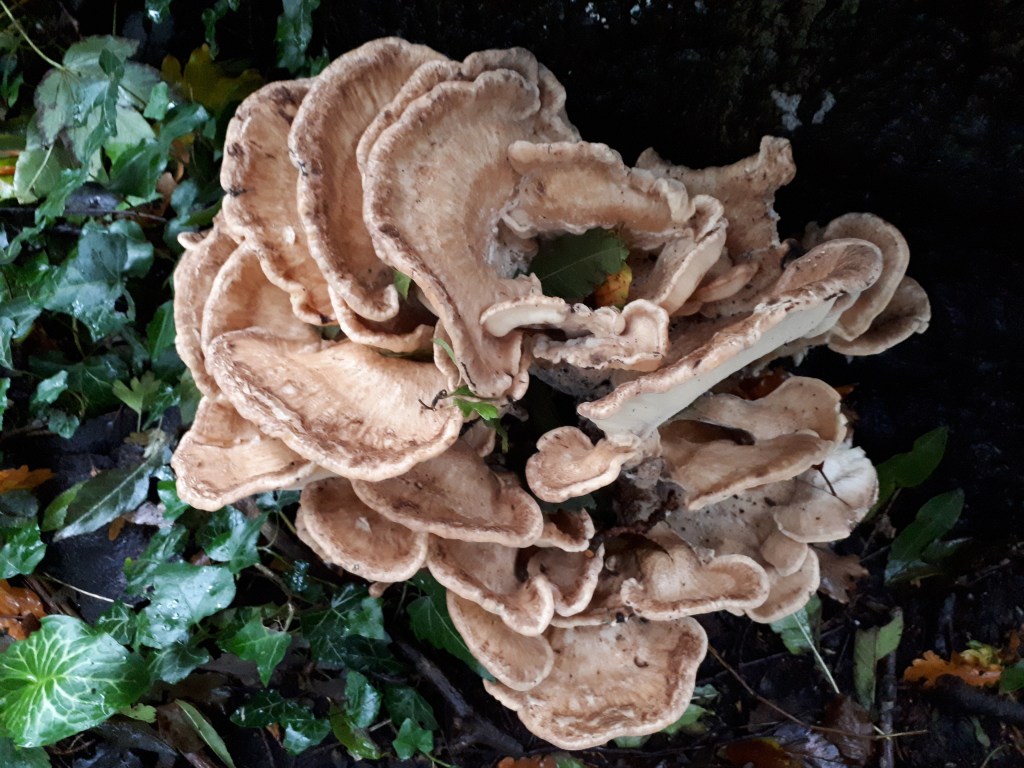
Early stage Giant polyphore fruiting body on Beech.
When I’m lucky enough to find a Giant Polyphore or Chicken Of The Woods developing in a clean enough and accessible spot in Amsterdam, I like to harvest a little when I need it before leaving the polyphore looking untouched so casual foragers don’t copy. When I harvest this way I get fresh mushroom for my family meals for weeks on end. Maybe being able to revisit the spot is a rare privilege and that’s how I can do it this way.
Before today’s harvest.
The beauty in three of today’s photos is one such Giant Polyphore, at different stages of development. I’ve been carefully snapping off a frond from this one, for two or three weeks now, returning every few days when I feel the urge. And with fungi fever in the air, the urge is pretty much a constant! Can you see where I’ve harvested? Hopefully not too easily.
After today’s harvest.
During these weeks, no one has sliced at or whipped the whole thing off the tree, which happens.. So I’m pleased that this fungal fruiting body can ripen and will spread heaps of spores quite soon.
This is the amount harvested today. Plenty for two meals. Teaspoon as scale element.
Maybe we can encourage other fungi foragers to at least comment in their social posts on how they took just a tiny proportion of what was on offer. How about some before and after shots of what and where we harvest? I’m not one to show the precise location of my best finds, I live in Amsterdam so there wouldn’t be much left if I did, but I think it’s possible to make it clear to social media foraging fans that the foraged area (and fungus) looks great after harvesting and that only a little was taken.
I’d love to know what you think about this. Am I being a bit penickety and over-sensitive or do other people feel something similar? Maybe new knowledge that I’m unaware of shows that fungi fruit purely for the pleasure of our human tastebuds and immune systems, and are no longer necessary for their own survival?
Let me know your thoughts and especially tips you may have for reducing the impact of foraging on fungal populations.










 Urban Herbology