Category Archives: Blog

Foraged-only days

Could you add more foraged food to your diet?
Years ago, I set myself a challenge to find wild growing edible plants in Amsterdam, every day for a year. It was fun and it was possible, the posts are in this blog listed under 365 Frankendael. I have set myself a new challenge, to have one complete day a week, for a year, where I eat only foraged foods and drinks made from foraged finds. For the other six days a week I will eat as I usually do, some foraged food, mostly shop-bought food, but with some adjustments.

On the foraged-only days, I will drink herb teas made with plants that I have foraged, and eat only foods made from plants that I have foraged myself, or other foragers have given me. Or, the meals could include meat or fish which has lived wild and is caught or culled locally to Amsterdam or places where I travel. My foraged-only meals will not include purchased grains, seeds, powders, tubers, spices, herbs, eggs etc. If food is not foraged, I will not eat it that day and if I do not have enough foraged foods to make a hearty meal on that day, then so be it; I will have a light eating day. This is not a great problem for me as I generally overeat and I see this challenge as a way to embrace intermittent fasting more than I usually do. I love food and derive great enjoyment from creating meals from foraged finds, so If I do have enough for a hearty foraged-only day, I will be delighted!

Today’s finds in Amsterdam

Meals on the partly-foraged days will involve some foraged foods mixed with my regular foods, purchased from local shops. These purchased foods include rice, oats, meat, fish, vegetables and fruit. The dietary adjustments that I plan are firstly, adding more foraged foods daily than I usually do and secondly, to make far more effort to buy and eat seasonally appropriate foods.

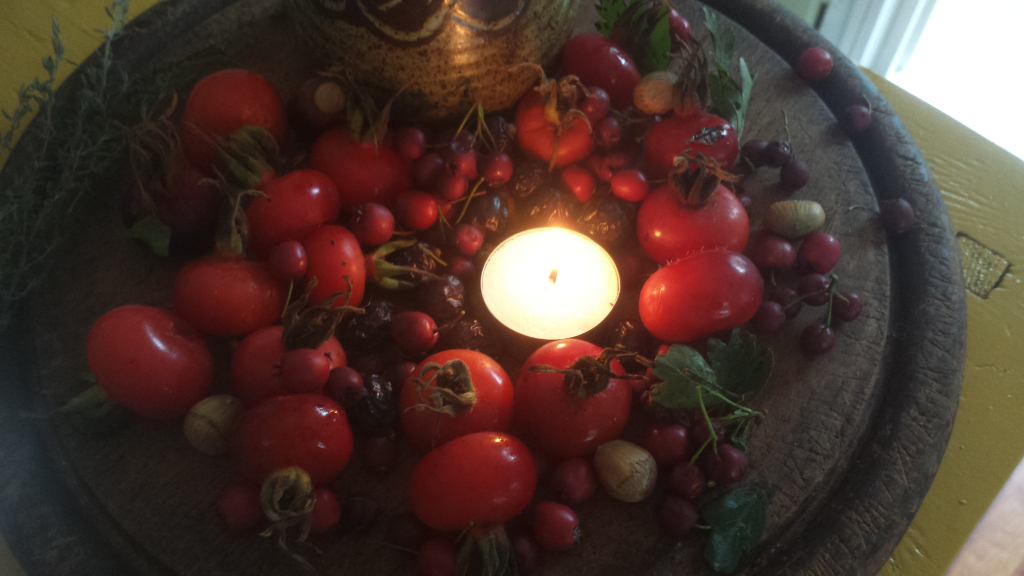
The photo shows what I foraged in Amsterdam east today. This is a little more than I would usually forage weekly because an annoying edible weed (Pennsylvania pellitory) is in great shape at the moment so I took more than I ususally would. These finds will add foraged goodness to my family’s diet. This will be my main forage for this week because I have a busy schedule the coming days. Some of this plant material will be eaten this week (it keeps well in my fridge), some will be preserved (in salt, alcohol, dried in paper bags etc) which will make it available to me throughout the year. That will become especially useful during the winter/early spring “hungry gap”, where the nuts and berries have gone and wild spring greens are yet to show themselves above soil. I will keep to the ethical foraging rules which I created many years. So, no root harvesting, unless I have permission from the landowner, and of course being highly attentive to light, safe, clean and environmentally sustainable harvesting.

This feels a great time of year to start a foraging challenge, for several reasons;
1. Nuts, berries and other fruit are foragable late summer into autumn, so it is a perfect time for stocking up on those.
2. There are still plenty of leafy green vegetable type plants, growing locally as weeds. So time to make the most of them directly and presevere as much as possible before the days shorten and those plants fade underground.
3. This will give me something green, wholesome and enriching to focus on as the days become shorter. Foraging is great for mental health!
4. I am a year round forager, but tend to forage tiny amounts of wild herbs alone during the winter and I stick to my favourite others throughout the year. This challenge will encourage me to use a wider range of foraged food, especially through the winter.
5. I love mushrooms. I don’t teach others how to forage them as my expertise is in plant foraging but I safetly forage about 8 common local species myself. The main mushroom season is fast approaching.. nuff said.
6. I want to find out more about local sources of wild caught fish and locally culled meat (such as venison). I shop organically (especially for dairy, meat and fish) but I do not like the physical and psycological distance between consumer and food source (especially animals).

Inspiration for this challenge
The Wilderness Cure by Mo Wilde, is an excellent book which I now highly recommend to anyone interested in foraging and food sovereignty. Mo is also a professional forager and herbalist. She lives in the Scottish countryside. Her book documents how she lived completely off wild food (foraged, caught or hunted) for a year. From the first page, it is inspiring! The book also includes lots of ideas for how to eat the diverse foraged foods which Mo found. The information is beautifully woven into diary entries. It also contains useful tables at the back, to help readers build their plant knowledge. I have been teaching people to forage in Amsterdam for well over a decade, and almost never recommend foraging books. Many regurgitate the same information, others contain quite dubious recipes and advice, but, I am thoroughly excited by Mo Wilde’s book and won’t be lending this one out to any freinds for a long time!

As much as I would love to live off the land year-round, and probably could in the right setting, I live in Amsterdam, surrounded by built up streets and well-used public spaces. Added to this, I work most of the week and foraging is not legal in the Netherlands. So, I decided to challenge myself to a lighter version of the Wilderness Cure. Hence one foraged-only day per week and a boost to my other part-foraged days. I can manage that, and I am sure it will be fun and enriching. I hope that my doing this will encourage at least a few other people, especially those towns and citys, to get out and ethically forage in their neighbourhoods. Foraging is such a wonderful way to connect with your local envirnment and get you out in more fresh air. Maybe you don’t live in much fresh air, but I see that all the more reason to get outside and realise that change is needed. In my experience, people who live in urban environments tend to be the ones who think that foraging is impossible for them, but it is not, I really see it as a birthright. We need to forage very carefully and ethically in urban spaces, but shouldn’t everyone, wherever they go? I think that every one could include at least a touch of foraged food to their lives. And in doing so, green magic can start to evolve in their lives.

As Mo Wilde did, I will chart a few personal health markers, at the start of the challenge and periodically as I move through the year. It will be interesting to see if this diluted version of the Wilderness Cure will have much impact on my body and mind. I will share updates on this blog periodically, less on the health markers, more about the food and finds.

Something for you?
If you are interesting in taking up the foraged-only challenge, and getting some moral support by sharing your successes and difficulties with me and others, please follow my blog or insta posts, reply to this post, or send me an email. I think that a foraged-only day a week, or simply challenging yourself to eat some foraged finds, can bring great rewards on many levels.
Ant farming friends

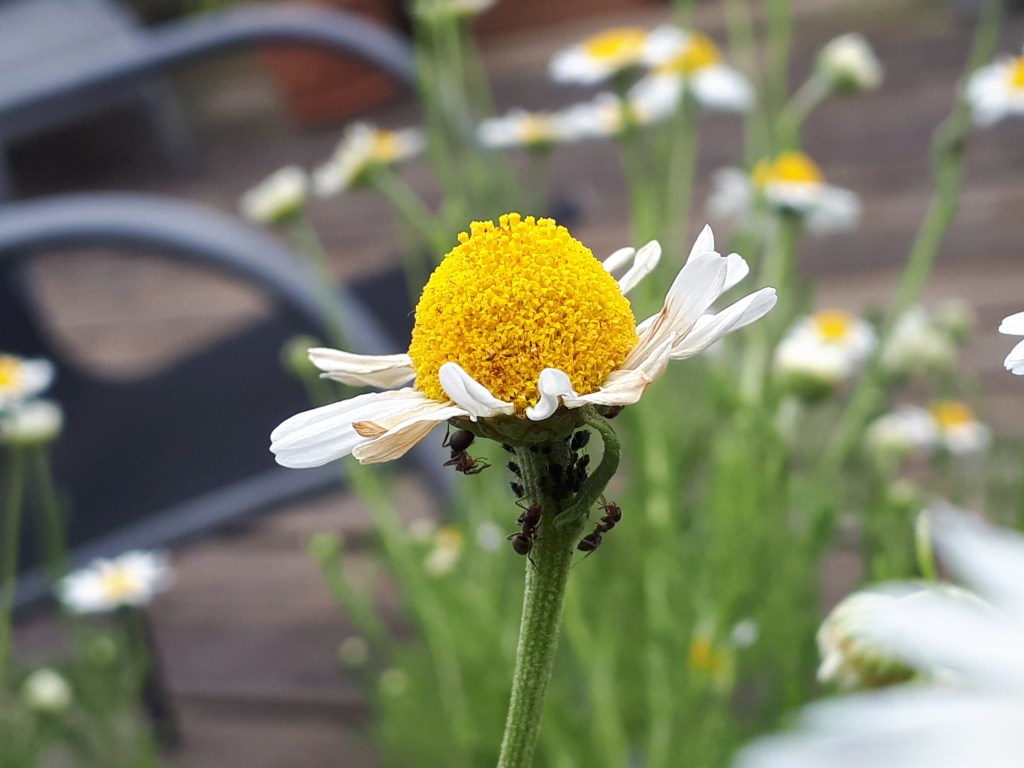
Ants have been farming on my herb plants.

For about 15 years, generations of ants have been successfully maintaining a helpful aphid population on herb plants, in a couple of my roof terrace pots. I grow Chamomile and Valerian in the pots which the ants prefer; they seem less impressed with the other herbs that I grow.

At first, I battled the aphids, rehoming Ladybird larvae to the aphid-struck plants (ladybird larvae feed ferociously well on aphids) because I feared that they would suck my Chamomile and Valerian lovelies dry. But now we’re freinds and here’s why: Because those aphids and their ant farmers keep the little ecosystem in the plant pots just right. Just right, because the aphids poke and suck the Camomile and Valerian just enough to stay alive themselves and keep their 6-legged offspring healthy, whilst provoking the herbs to produce high levels of phytochemicals in an attempt to keep the insect population manageable. The protective phytochemicals make the flowers even more medicinal for me too. Btw, plants which don’t have to work to survive become soft in my opinion and far less robust and medicinal than I’d like. The ants protect the aphids by keeping them nestled under the flowers, and away from me when I dare to handle the plants for too long. That’s the only time they nip me. I find them very relaxed otherwise. Ants like to keep themselves to themselves. So the ants give the aphids shelter and protection and stop them from over harvesting the plants. Not sure exactly how, I guess by eating them or killing some aphid larvae (need to study this further).

If the aphids overharvested the herb sap, their own population would explode temporarily but the host plants would then whither from too much sap removal, the aphids would need to fly elsewhere and the ants would not get their food. How unfortunate. And I wouldn’t get my Chamomile or Valerian harvest.

So what do the ants get out of all this? Well they sup on aphid honeydew, aka aphid excrement. Can’t get enough of it but actually they are quite restrained. Honeydew is sweet and tasty stuff (like me, you may occasionally enjoy it on Lime tree leaves) packed with plant sugars and no doubt also herbal wonderfulness, from the aphids’ diet. And what do the Chamomile and Valerian plants gain from all these shenanigans? Well they thrive well enough to produce thousands of seeds each summer; hundreds of which land in my other plant pots, dozens of which make it to becoming new plants – Plants which are tough, medicinal and can be friends with aphids, ants and me.

I guess that was a long way of saying, when you next see a cluster of aphids under a flower, along with an ant wandering over them, take a closer look. Maybe you’re lucky enough to have insect farmers working magic in your plant pots or garden. Please don’t just squish them away; watch what’s happening and perhaps you’ll have better herbs and a more balanced garden ecosystem by just letting them do their thing.

#urbanherbology #antfarmingaphids #urbanecosystems #urbanecosystem#mugwortandmarigold

Saturday Morning Herb Gardening

Many moons ago, I set up an urban gardening project in Amsterdam, called River of Herbs. It is to teach people how to grow and use edible and medicinal herbs, for free. Via River of Herbs I have been managing four quite large orchard gardens, in Park Frankendael, for the past years. Volunteers help to keep the place tidy but in harmony with nature. We garden there at different times and days, to do a little peaceful gardening as and when we have time. And the place is thriving, with beautiful herbs, fruit and wildlife, mingling with the occasional foragers who come to learn and harvest in this place.

Saturday Mornings
I am now trying to get a regular Saturday morning gardening session running at the River of Herbs orchards, weekly, from 9.30 – 11.00.

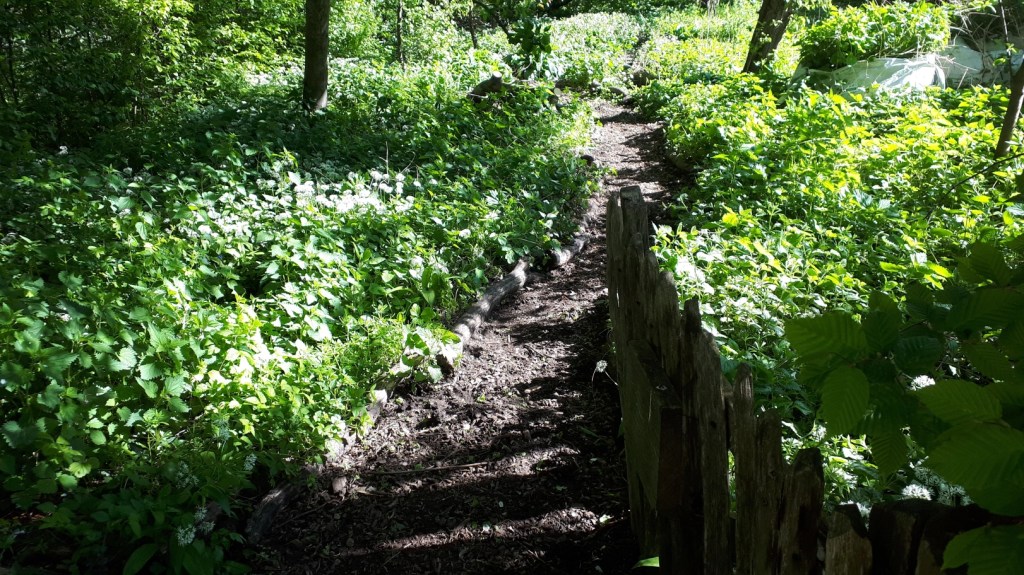
The location is directly behind Huize Frankendael (Middenweg 72, 1097 BS Amsterdam), four hedged orchards, on two sides of the formal Stijltuin.  The orchards are a beautiful green oasis, where you are welcome to spend time, feed your mind and body, whilst gently nourishing the environment. 

All welcome, no experience needed
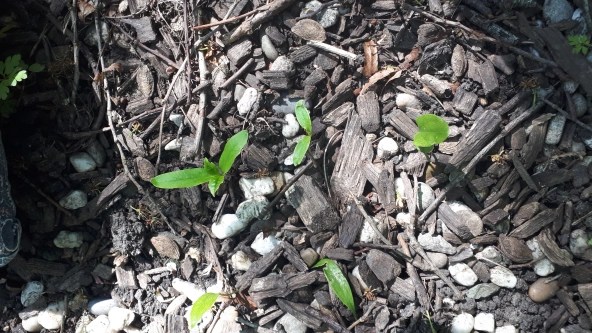
No heavy gardening happens here, the work is generally tasks such as light pruning of bird cherry and rose bushes, and thinning out the edible and medicinal wild herbs such as Geranium, Cleavers, Nettle, Sweet woodruff etc.  Sometimes it’s Zen work such as removing little tree seedlings from a woodchip path, other times it’s clearing Cleavers which tend to choke the fruit shrubs, or removing baby Wild garlic plants from a path. The plants and animals lead but as gardeners, our task is to keep it looking tidy and accessible. The work we do is kind to the plants, animals and land, and they depend on the season. 

You can take home the cuttings/harvest to use for food and home remedies.  It’s organic and managed in a permaculture-food forest kind of a way.  Would you like to join to help with this? 

I can’t be there every Saturday morning but if we can build a small group of folks who can sometimes meet and help at that day and time, it becomes simple for everyone to know confidently what to do and how to do it, on the days I’m not there. 

Would you like to come along this Saturday morning? I’ve got some spare hand tools and gardening gloves to use. I advise you wear long trousers and sleeves, closed shoes, bring a drink and snack. But mostly bring an open heart, love of nature and desire to learn from the plants and creatures of the herbal orchards.

If you need directions or have questions, call or what’s app me on 0627596930. The website for the project is: https://riverofherbsblog.wordpress.com/

Spring has Sprung

Ate my first wild garlic leaf of the year, whilst leading an Urban Herbology Walk, this morning. It was delicious and I’m now filled with spring fever (and garlic breath ;).

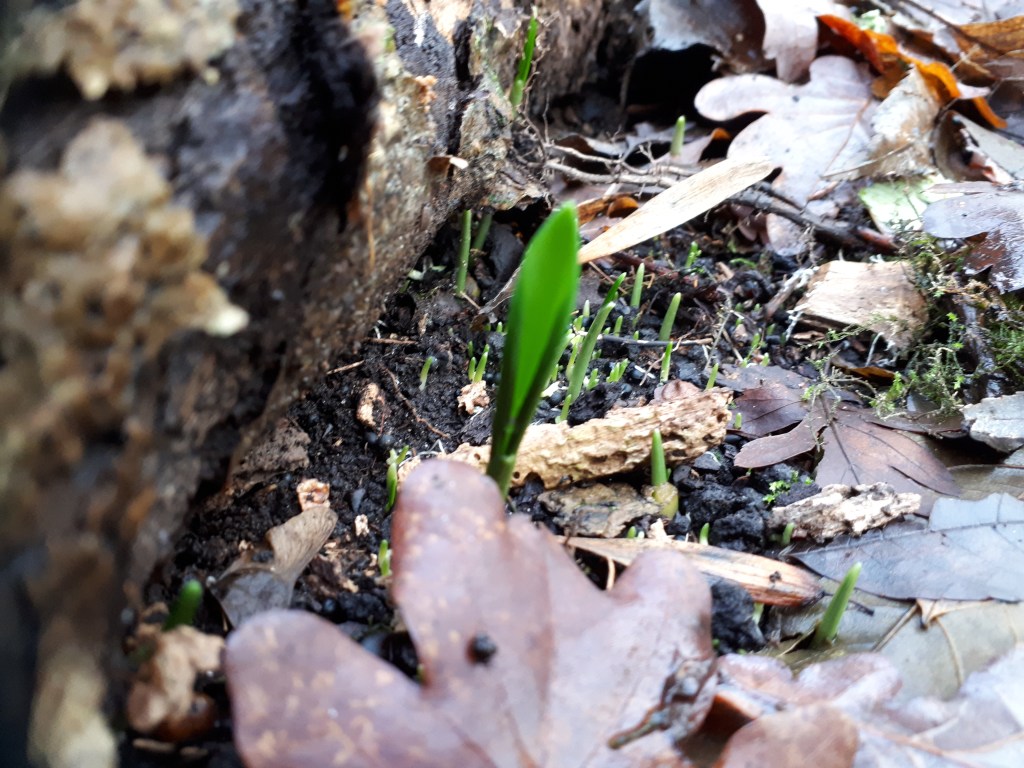
Wild garlic / Daslook / Allium ursinum is always to be found here in January, if you know where to look, but it’s a little ahead of normal. There are also lots of other bulbs pushing up, such as crocus and daffodil and you wouldn’t want to confuse those as they are not to be eaten.

My next public walk is February 9th (a Thursday) and I’ll set another date very soon for my Wild Garlic Workshop. Didn’t do it last year but feels good to offer it again soon.

So, today we all took home some oyster mushrooms and wild garlic bulbs, as well as a selection of edible leaves. Ground ivy and violet leaves being my favourites at present

I made an omelette of Oyster and Wood ear mushrooms, comté and brie. Hard to describe the experience in my body cells, which the wild garlic brings.

I could smell spring yesterday evening, cycling through town, didn’t dare mention it, but today it’s conclusive – Spring has Sprung! Well at least for foragers and those affected by Hazel pollen…

Please remember that you shouldn’t dig out any bulbs or roots, as a forager, unless it’s your garden (or the paths in the foraging orchards). If you’re determined to harvest so early, be sure that what you pick, stinks of garlic. And that you only take a little from a plant, so it can quickly bounce back and grow new leaves. Also keep your harvesting tidy and sharp, so it looks like you’ve never been there.

Happy foraging me hearties – May you be glowing with the chlorophyll, glutamyl peptides and sulfoxides of Allium ursinum, before too long!

#ramsons #wildgarlic #daslook #alliumursinum #urbanherbology #cityforaging

Winter

Solstice Blessings to you!

This shortest day certainly has all the mist and magical low sunlight that I enjoy at Yuletide. I hope that you are able to get outside and enjoy some of it, especially before 10am, when being out in fresh air, preferably in some degree of greenness, has been found to have the biggest positive impact on your mental health.

Today, I have set new dates for foraging walks and apprenticeship workshops throughout January and February. They are listed here and on Meetup. I also welcome a small group of new Urban Herbology Apprentices to my course today, as a celebration of Yuletide. The latest group is now complete but if you are interested to join the next one, which will start on 1st February, please read through the information on my Courses page and then get in touch with me.

Winter herbs to lift your spirits and immunity
My next few posts will be about locally growing “weedy” herbs which may help to lift your spirits and immunity through the winter months. The first one to look at is Ground ivy (Glechoma hederacea), known as Hondstraf in Dutch and le gléchome lierre terrestre, in French.

Ground ivy is a power packed shade-loving perennial plant, which creeping unnoticed throughout parks and gardens, could help you out if you catch a slimy cold. This plant belongs to the mint family and likes to grow in the shade of flowers, shrubs and trees. It needs that shade through the summer months but when autumn leaves fall, Ground ivy becomes glossy and full of energy, because it can access just the right amount of light for its needs.

Although we can forage this plant year round in Amsterdam, winter is my preferred time to harvest it, perhaps because this is the time when we most need its help.

Ground ivy (Glechoma hederacea) releases a strong aromatic scent, when the leaves are crushed and many people find this uplifting. It has square stems and leaves which come off the stem in alternate pairs just like most other members of the Lamiaceae plant family. Thyme, Rosemary and Sage are also in the mint family; If you take a close look at their flowers, they are all similar to the pretty little purple flowers of Ground ivy.

Uses
Ground ivy has been used in Europe since ancient times, to flavour and clarify ale, to calm fevers and chronic coughs, and to clear mucus from the nose, throat, ears and sinuses. It can also be helpful for acid indigestion and some stomach upsets. So it could be a great choice for a foraged herb tea, when you next catch a cold, have a stuffy headache, feel mentally blocked or to help you to digest a heavy festive meal.  There are more scientifically proven uses for this herb, so if it grows in a clean space near you, and you like the taste, I recommend you find out more about it. An interesting place to start your investigations, could be what Mrs Grieve had to say about ground ivy, in her 1931’s Modern Herbal.

A word of caution
Although most herbalists like myself, consider this a safe herb, especially when taken as a tea or occasional nibble, it should not be taken by pregnant women. And of course, as you already know, we are all quite individual, so do notice how you feel with the first sips of a mild ground ivy tea and don’t continue, if you feel it is not for you in any way.

So how can we use ground ivy?
I suggest that you keep some ground ivy aside, when you next find it when out foraging or want to weed it out from your garden. Brush off any dirt, maybe pick off the roots, discard any brown leaves before placing it in a paper bag. Label the bag (date and plant name) and leave it somewhere cool and dry for a few weeks. Allow the ground ivy to dry to a crisp. You could then crumble the dry leaves into a labelled jam jar. They should keep well for a year and could make a great base for a garden weed tea blend. Or use it alone when needed, by adding up to one teaspoon per cup of hot water. Let it mellow for 10 minutes before straining and sipping the infusion. 


Another simple way to use ground ivy, is to infuse it in runny honey. Simply fill a clear glass jar with clean fresh leaves, then pour over a good quality runny honey. Poke gently up and down through this minty gooey mix with a chopstick, to let any air bubbles out, then top up with a little more honey. Let this one mellow in a cool dark place at home for about six weeks. After which you could use it in drinks and deserts, or just take a teaspoonful directly, to soothe a sore throat.

For those of you who prefer your medicine a little stronger, replace the honey with vodka or a strong Jenever, to make Ground ivy tincture. Just a few drops are taken for colds and ear congestion. Or, if you like to homebrew your own beer, why not try making a traditional ale using some ground ivy in your mix, for a change. I will add some traditional recipes for that next time. 

Foraging and gardening for mental health
If you would like to find ground ivy with me this week, or in January, there are currently two spaces remaining on my Friday 23rd December herb walk in Park Frankendael, or you may like to join one of my Foraging for Mental Health workshops, at Mediamatic in Central Amsterdam, (close to the Scheepvaart Museum and Central Station). Next Mental Health workshop will be 24th January 2023. Links for booking are on my events page.

Also, if you don’t mind getting your hands a little dirty, there is lots of ground ivy, growing in the community garden which I run in Park Frankendael. So contact me, if you would like to help out there sometimes, or if you would like to know where that ground ivy grows.

Autumn

Last night was the first session of the Witching Season and I thoroughly enjoyed spending time in the woods, marking the autumn equinox with six wonderful nature-spirited people! The rest of that series is fully booked. I am planning a Winter Witching Season series; details to be released shortly. Feel free to email me or join the Meetup group, to hear about this promptly. I have set a date for an Autumn walk (Wed 19th October) 12 October please see my events page for this and other upcoming events. My Foraging for Mental Health – Mediamatic workshops are also listed.

Also yesterday, I was a guest at the kickoff night for the gastronomic plantcentric artistic gezellig Ears of Earth. It was wonderful and delicious; introducing me to so many intruiging flavours and unexpected creations, from the world of grains and microbes! It was an allround sensory delight. Mediamatic are enabling and hosting this wonderful series of meals, which is only running until 29th September. I think there may be some seats available still for a few of the dates. I highly recommend it!

The photo above is from one of the Mediamatic biome zones, used to host the event. I find this display of grasses and grains so fitting; Yesterday, being the equinox, was a traditional time to gather seeds on stems and weave them into a lovely creation, to store as an overwinter insurance. I often weave a plantain dolly but yesterday, didn’t manage to make one myself. As I entered the biome, I saw this lovely natural work of art, which serves a very related purpose, displaying the beauty of these grains.


Witching Season 2022

Mabon

Schools are back, holidays are over and the Witching Season has begun to creep in. I love this time of year! Seeds and berries are maturing, pumpkins are ripening and the smell of soil sometimes completely fills the air, even though we have had such a warm dry summer.

This time of year allows for deep connection to nature, before the time of greatest seclusion. As we move from the Autumn Equinox (Mabon) to Samhain (Hallowe’en), it becomes ever easier to connect with the many dimensions from which this world is woven, and to make peace with our need for quiet through the coming months.

Throughout the Witching Season 2022, I will be holding three small gatherings in Amsterdam as I last did in 2020. The purpose is to help others find ways to nurture their nature based spirituality through the autumn and winter. We will explore a number of local magical herbs, tune into the powers of nature, develop a moon practice to help you become more empowered as each month turns, and celebrate the very different qualities of Mabon and Samhain. We will walk, connect, enjoy some simple peace-filled ritual and outdoor crafting together.

The number of places available for these gatherings will be limited. The total cost per person is €60. Each meeting will be two hours long and will embrace whatever weather is present! They will take place in Park Frankendael, Amsterdam Watergraafsmeer. We will start the gatherings late afternoon, a different time each meeting, to allow us to work with the twighlight. The group will attend all three sessions, there will be some simple activities to do in between sessions. The intention is that the same people come for all three sessions, to give us continuity and deeper connection on this witching season journey. For this reason, I ask you to sign up if you plan to join all three of the sessions. These outdoor sessions will take place at the set times and dates unless we have extreme weather. In which case, I will contact you and we will postpone.

If you would like to join this special group, please book via Meetup or email me (mentioning Witching Time) at urban.herbology.lynn@gmail.com if you have any questions.

Dates (please note the different times and days)
Wednesday 21st September 17:30 – 19:30
Tuesday 11th October 17:00 – 19:00
Tuesday 1st November 16:30 – 18:30

Booking via Meetup.com (NB: Event is full with a waiting list)

Lughnasadh ramblings

Just felt like posting a few photos today, of herbs grown, found or harvested recently. Also to mention that I now have more availabilty to run workshops and walks, so have set some new apprenticeship dates for September – October and will soon be setting some Amsterdam herb walk dates.

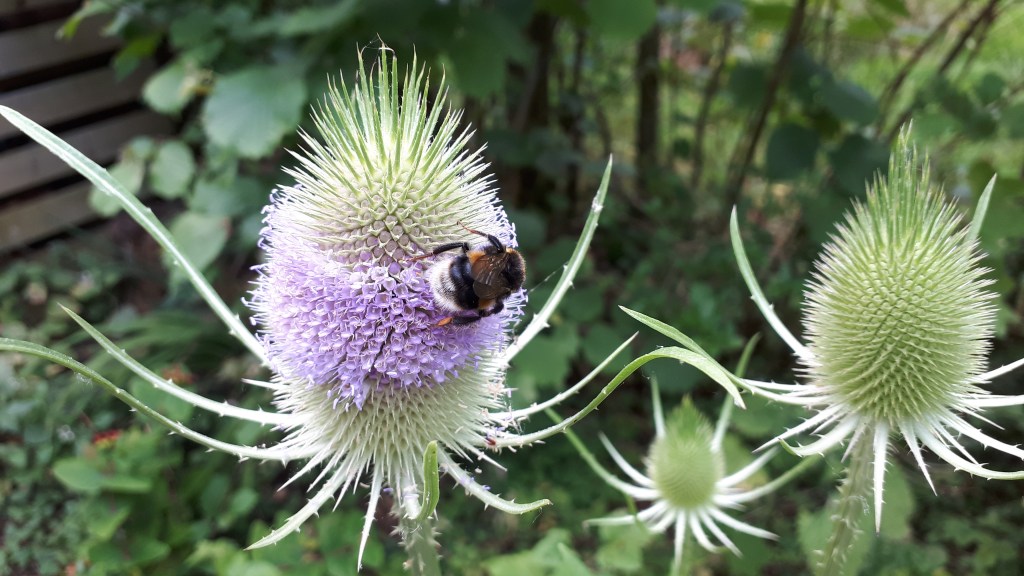
Bumble bee on teasle flowerhead

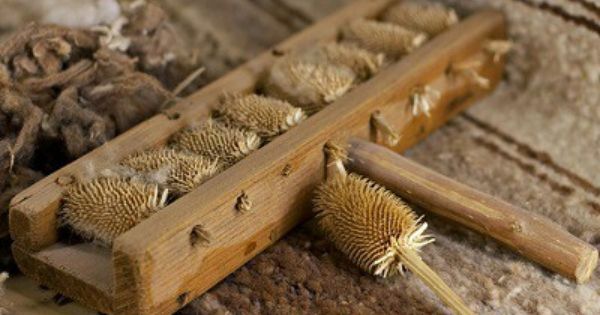
This summer, I have been spending lots of time at my volkstuin. Teasle (Dipsacus fulonum) is a tall wild flower, not best known in gardens because it tends to do its own thing, growing exactly where it likes, often at the edge of where humans would like to walk, and as the plants develop the often lollop over paths and catch on humans clothes. Clearly, this is not always desired (although this makes/made teasleheads perfect for carding wool – the Dutch name for the plant is Kaardebol – literally carding ball). Anyway, I love teasles and tend to encourage visitors to work around them and admire them in my garden, rather than pulling them up. They don’t transplant so well for me. People transplant with far more ease.

Dried teasleheads in a carder. Photocredit: Pinterest

I love watching these plants develop through the year, from their characteristic sturdy seedlings in spring to tall summer beauties. They always get me excited – in a herbalist kind of way. How tall will they grow? How many flowerheads will each plan bear? Will they make it through possible summer storms? Will I tincture the root of a two year old this autumn? How many bumblebee species will visit them this year? Is there a way to encourage more flowerheads on one plant? and so on..

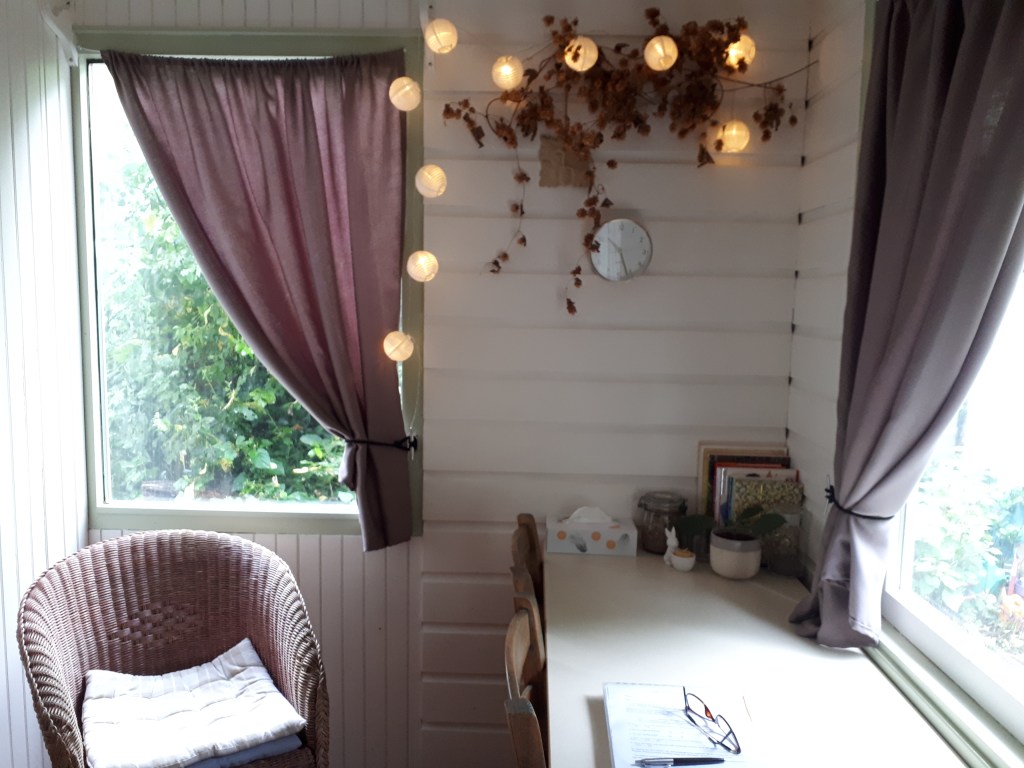
Last week, each morning that I woke at the gardenhouse, I pulled back the curtain and lay in bed admiring the bumblebees as they worked the teasle flowerheads. As you can see here, the flowerheads are made up of tiny pale purple flowers, apparently around 2000 per flowerhead, arranged in a phenomenally pleasing arrangement which seems to me to match the Fibonacci series. They open in sequence, as a ring, starting low on the flowerhead and day by day this ring to move up the flowerhead. Sometimes several rings are progressively ripening, moving up the flowerheads. The cause of this is progressive maturation of the tiny flowers, from the base to the top of the flowerhead. I looked up how this happens. For those of you interested in this, here’s an interesting research paper about the patterns of development in teasle flowers.

The bumblebees are essential to the process of pollinating those tiny flowers. They busy about, over the purple rings, from about 8am, each day that there is sun. As they wander around the flowers, burrowing in for nectar, they also kick off the dead flowers of the day before. They do literally seem to kick them off. If you manage to watch a teasle being “worked” one morning, you may be lucky enough to see the tiny purple flowers falling to the ground, as a bumblebee wanders around the flowerhead either biting or kicking them off. This appears to be pure symbiosis and is a great pleasure to observe. It puts the day to come in perspective and I recommend it!

Meadowsweet – Filipendula ulmaria

Next is Meadowsweet. I adore this herb. She is the absolute Queen of the Meadow in my eyes. She smells sweet and dreamy, is as tall as many teasle plants, is slender, takes away pain, eases the stomach and aches and pains of joints. She is oh so light and yet strong, effective and intoxicating. I make my mead when Meadowsweet is in bloom. I see these flowers as an essential ingredient in any mead. Perhaps that’s just me. This year, the fruits of my previous Meadowsweet planting labors have been rewarded as I now have several garden areas where the meadowsweet is flourishing. Meadowsweet is also beloved of bees, hoverflies and many other insects. The OBOD Seedgroup which I run, is also called Meadowsweet. We met amongst the flowers this weekend, to celebrate Lughnasadh, Druid-style.

Potentilla indica. Photo credit: Livvy de Graaf

These beautiful berries are growing throughout the beds at my volkstuin. They have almost no flavour and belong to the wild flower Potentilla indica (Schijnaardbei). It creeps between other plants, has trifoliate leaves and small 5-petalled yellow flowers, At this time of year, they may develop into bright red achenes which are fruit, covered with tiny seeds. The leaves, flowers and fruit of this plant are edible. The leaves are quite medicinal and can be added in small quantities to soups but in my opinion the best way to eat this plant, is to preserve the ripe fruits
in local honey or in a Rumtopf.

From September this year, I will be working only three days a week at school so will have far more time for running herbal workshops and walks. Many dates are already booked up, but if you are keen to book a walk during the autumn or winter, let me know and I hope that we can organise a green exploration together. I also offer private consultations. Please see my events page, or join Meetup.com for Urban Herbology happenings. Apprenticeship meetings are already listed there until end October. Meadowsweet OBOD Seedgroup gatherings are not listed there. Please contact meadowsweet.amsterdam@gmail.com, if you would like to be informed of open gatherings, for those interested in nature-based spirituality, and the closed gatherings which are only for OBOD members.

Gardening and harvesting

Turkey tail rainbows growing in the orchards, among the wild garlic

Thursday 21st April
Herbalists Without Borders – Gardening & Harvesting Morning

09.30 – 11.00
At the River of Herbs Orchards, in Park Frankendael
(Behind Huize Frankendael – Middenweg 72, 1097 BS Amsterdam)
We will be pruning the Elder shrubs, first harvest of the stinging nettle and more wild garlic harvesting. Loads of other herbs looking great at the moment so we will see what we have time for. Herbalists Without Borders remedies are the destination for the nettle tops today and the wild garlic. Donations in effort, money or oil/vodka/jenever etc welcome but just bring yourself to join in, if possible.
Come join me if you would like to – bring gardening gloves (not essential but handy) and a pair of secateurs if you have them (again not essential) and maybe a mug and flask of warm drink.
Call or Whatsapp me if you can’t find it – 0627596930

Urban Foraging Walk

Edible and medicinal flowers

Thursday 14th April 2022
Ethical Spring Foraging Walk
10.30 – 12.00
Park Frankendael

Join me for a walk around parts of the best park in Amsterdam!
We will look at many different edible and medicinal plants, which grow in and around Amsterdam. Learn how to identify, ethically harvest and safely use the plants for health, connection to place and to increase urban self-reliance, whilst caring for the environment.
€15 per person
Booking and details on Meetup

Learn heaps about incredible local herbs, how to find them, ethically forage, craft, eat and preserve them.
Full details and booking on Meetup
[Apprentices free – please contact me directly to let me know you are joining the walk rather than booking via meetup]

Lynn is a professional foraging teacher and forager. Also a qualified herbalist. She is a member of the Association of Foragers.