Category Archives: Urban Herb Walks

Come Rain or Shine

image

On Sunday, I took a large group of people around some cold, windy and weedy parts of Westerpark. Today a small group of us walked around the woods of park Frankendael in the sunshine and rain, before enjoying a warm drink in Restaurant Merkelbach.

Here are a few of the things we found and tasted on those walks…

Yellow deadnettle (NL:Gele dovenetel)
image

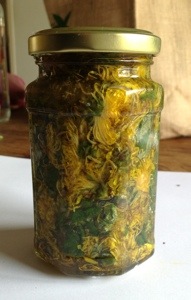
Urban Dandelion and Burdock honey (NL:Paardebloem en Grote Klis)
20130529-213655.jpg

Wild Garlic Bread Sticks.

Today’s group had the same bread but with Rosemary and roasted sesame seeds, mixed into the oil.

image

Comfrey NL: Smeerwortel (Symphytum x uplandicum), with it’s purple flowers, distinctive cucumber scent and taste alongside those winged leaf-stem joints.

image

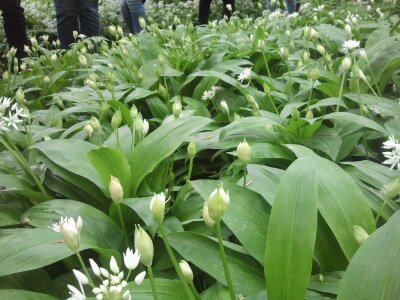
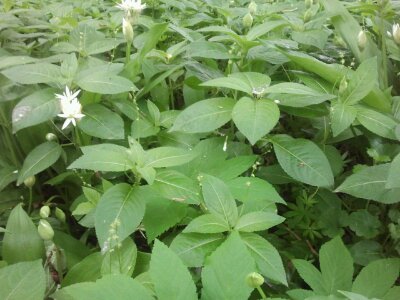
Wild garlic (Allium ursinum) NL:Daslook.
image

Catnip NL: Kattenkruid (as also found in huge quantities, planted along side some Amsterdam roads)
image

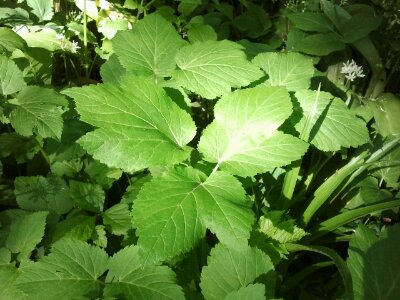
Here is Ground Elder (Aegopodium podograria) NL:Zevenblad.
image

Skullcap (Sculletaria longifolium) before flowering.
image

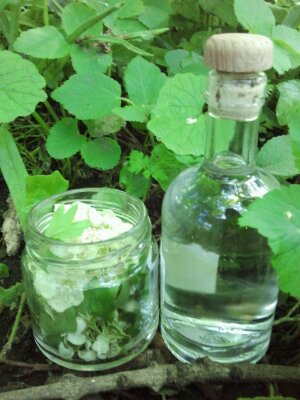
Here is a lovely post by Whispering Earth, all about the beautiful Hawthorn tree, which some of us tinctured blossom from today.
image

Both the recent groups also received a packet of River of Herb treepit seedmix. I hope that everyone will find a few moments to plant them in the weeks to come.

I won’t be leading any more walks until mid July but on Midsummer’s day (June 21st, 4.30pm) I am organizing a free Lime blossom (NL:Linden, Tilia sp.) harvest in park Frankendael. Do come along if you would like to meet some other Urban Herbies or simply to learn a little more about this magical tree.

Let’s Make Hawthorn Tincture!

What a perfect day!

image

I finally found time this morning to have a leisurely wander through the woods of Frankendael, seeking out the most pleasantly scented Hawthorn (Crataegus monogyna) trees.

I was not disappointed! The flowers and leaves of this heart toning tree always taste good to me. Munched on a late spring walk, not much else lifts my spirits and makes me stand tall as does Hawthorn “bread and cheese”. But the flowers (the cheese) do vary in their tastiness, so if you want to capture their essence, it’s worth taking time to seek out the ones which really appeal to you.

Some of the flowers smell rather unpleasant, like cat pee, others are unscented because their insect-attracting job is done. Just a couple smelled sweetly, really sweetly, like vanilla rice pudding. Those smelled and tasted jaw-droppingly good! So guess which ones ended up in my tincture jar?

image

Equipt with a small bottle of vodka and a little glass jar, I made my tincture at the tree. To do it yourself, simply fill a jar well with carefully picked Hawthorn flower clusters and a few Hawthorn leaves (the bread). Then fill the jar again with vodka, brandy or whatever strong spirit you choose. Check that you fill all the way to the brim. Flowers exposed to any air will quickly spoil, they need to be completely submerged in the spirit. Check for bubbles of air and top up if needed.
image

I’ll leave my tincture like this, labelled, in a cupboard until the autumn, when I’ll strain the flowers and pour the liquid over a fresh jar of Hawthorn berries. Then after a further six weeks of infusing, my double Hawthorn tincture will be ready for use. It will be infused with the properties of Hawthorn leaves, flowers and berries.

If a regular few drops of that doesn’t warm, tone and open my heart through the depths of winter, then not much will!

image

I could use the simple flower tincture after six weeks infusion time but I have enough Hawthorn elixir in stock, to see me through summer and autumn so I shall wait. And we all know that the best things come to those who wait 🙂

Hawthorn is an age old preventaive and remedy for many types of heart disease. It is a heart tonic, offering as it were, food specific to the heart. It is used by many, alongside allopathic (conventional drug based) medicine such as betablockers but of course you should always consult a qualified medical herbalist if considering using it as a remedy for heart disease.

If you’d like to join me for a walk in the park, to learn about tasty and useful plants of Amsterdam, and to set up you’re poem tincture, why not sign up for tomorrow’s lunchtime forage?

Embrace Your Weeds!

image

Sunday 2nd June
3-5pm
Westerpark (Proef Restaurant to the Educational Garden)
€25 per person

There are so many incredible plants which we dismiss, dig-up or discard. We could do so much with these humble weeds, if only more people knew how!

image

This workshop with foraging walk will open your eyes to the wonders of the weed world! Together with Ann from City Plot Amsterdam, I will lead you from Proef restaurant in Westerpark through to the City Plot educational garden, right at the back of the park. We will wander through prime public foraging grounds on our way. When we get there, we will plant some of our weedy wonders in the River of Herbs section of the Educational Garden.

Bring (if you like):
Paper bags for foraged finds,
Flask of hot water, to make a herb tea
Hand trowel, if you have one,

image

I will tell you about medicinal, nourishing and historical uses of the plants and Ann will show how to make the most of them in the garden and kitchen.

You will receive a comprehensive colour handout, to help you at home and the chance to spend quality time with us and the weeds, in a small group. To book, please email me or click here.

image

The Educational Garden is an inspirational place: It has been divided into different mini gardens, from a Mushroom farm, Permaculture patch, Medicinals section to the River of Herbs meadow.

image

Proeftuin is maintained as an organic restaurant garden by City Plot.
Westerpark is big, bold and full of foraging spots!

Our walks and talks go ahead, unless there’s a hurricane overhead. So please come prepared to get stuck into our wonderful urban nature, whatever the weather.

20130523-133953.jpg

So whether you have a garden, a plant pot or like to forage, join us to discover how to find, identify and Embrace Your Weeds!

Pluck Your Lunch in Frankendael!

Please join me for an urban herb foraging walk in the most beautiful park of Amsterdam Oost!

Park Frankendael (starting from main old entrance)
11:00 – 13:00
Wednesday 29th May
€10 per person (children free and very welcome)
Booking via email (lynn.shore@gmail.com)  or via this events page

Cleavers Kleefkruid

You will learn how to:

  • Ethically and safely forage from city parks, streets and green spaces
  • Identify lots of edible and medicinal plants which are available all over the city.
  • Turn your harvest into tasty food
  • Make simple home remedies
  • Pay back the land that we forage from


We will ethically forage some of the plants that we find (in and around the park) and turn them into tasty and nutritious teas and sandwich fillings and more, on the spot. This is my local foraging ground, where I pick something to eat every day. I am passionate about helping people to discover the edible plants growing around them. My 365 Frankendael Project ended a couple of weeks ago – identifying, photographing and writing about Amsterdam herbs each day for a year.

Frankendael Ramsons May

Please note: You don’t have to eat from the wild on this walk but you certainly can if you want to!


We can expect to find such tasty, useful treats as:
Lime leaves,
Garlic mustard, Comfrey,
Ground Elder, Dandelion,
Nettle, Wild Geranium,
Japanese knotweed,
Mugwort, Meadowsweet,
Edible trees, shrubs and far far more.
There are hundreds of edible plants around at this time of year.


You will receive a useful colour handout with names, photos, uses and folklore of many of the plants we will find on the walk.
I’ll bring along some herbal cake or breadsticks for everyone to try.

Deadnettle Dovenetel Frankendael


You don’t need to bring anything along to the walk but if you want to get the most out of it, here are some suggestions:


  • Bring along whatever food you like to accompany your herbal harvest.
  • A flask of hot water to make tea and some bread and butter would be useful but not essential.
  • A couple of paper bags to take some leaves and flowers home
  • A small glass jar filled with vodka, to make a tincture – I’ll show you how.
  • A small jar filled with olive oil to set up a herbal infusion.
  • Small notebook, to take a few personal notes and press some leaves, to help you find the plants another time.


Come celebrate the edible green gifts that this beautiful city has to offer!

Herb Walk & Pizza – Flevopark to Jeugdland

Thursday 29th August
10.30 – 12.00
Meeting at Buurtuin, Valentijnkade
Cost €10 per child* (parents free), includes an informative handout (in Nederlands & English), organic pizza ( for child and 1 parent), a packet of River of Herbs seedmix and the guided walk.
* for children from same family – 1st child €10, extra children €5 each.

There is no extra charge to enter the Jeugdland playground.
Booking essential as places are limited (and I need to prep the pizza 🙂

This walk is for children and their parents.

image

We will meet at 10.30 on Valentijnkade, at the community and nature gardens on the corner of Flevopark (called Buurtuin) and will wander through a short woodland section of the park before returning to Valentijnkade. Then we will walk on to the wonderful children’s farm, adventure playground and kids construction village for pizza (at about 12.00) and then parent supervised play for as long as you wish.

image

The children (and parents) will learn how to:

Safely identify, harvest and make use of some easy to find herbs such as Dandelion, Plantain, Chickweed and Deadnettles.

Identify a few common non-toxic plant families and two poisonous plant families.

Create homes for helpful bugs and insects.

Make some useful herbal preparations and fun crafts from plants.

Learn how to grow a small Urban Herb Meadowfor the River of Herbs and join the growing number of Elderberries!

image

This fun and informative walk is aimed at 7-12 year olds but children outside of that range are very welcome, with a parent.

image

Each child will receive a useful colour handout to reinforce what they experience and learn on the walk.

image

I am a school teacher (at the British School of Amsterdam) and an educator of adults and children in the ways of safe urban foraging and plant identification. I run guided walks in different parks and city streets to help others understand and conserve the green life that surround us. Last year I launched the River of Herbs project in Amsterdam.

image

If you would more details about this walk then please contact me via lynn.shore@gmail.com or 0627 596930.
To book please click here

May Herbs Sauce

image

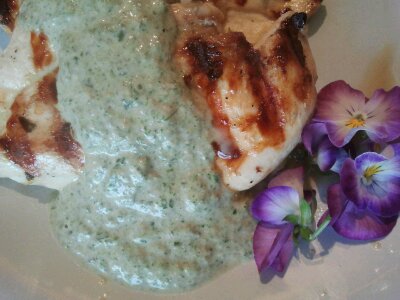
This herb sauce was the result of today’s rainy forage in Frankendael park.

image

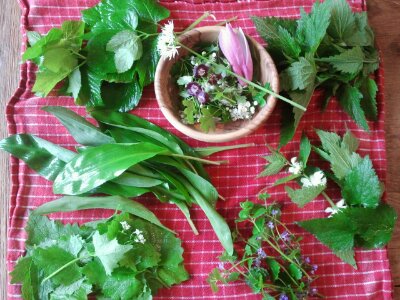
After a quick chat with the park warden who was chopping up a massive fallen tree, Livvy and I collected a little each of Ground elder (Aegopodium podograria), Wild garlic (Galium ursinum), Wild geranium (Geranium sp), Ground ivy (Glechoma hederaceae) and White deadnettle (Lamium alba).

image

I took those herbs (a small handful in all), chopped them, sweated them down in a pan over low heat, with a splash of water for 10 minutes, then added a little blue goats cheese and a desertspoon of sour cream. I them blended it all to a smooth sauce with a hand blender.

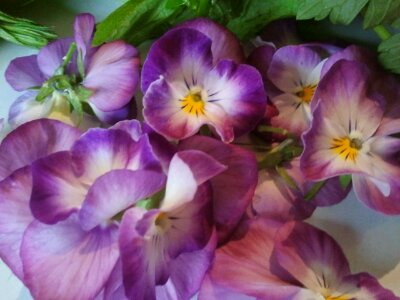
The result was very tasty indeed and the balcony harvest Pansies (Viola sp) also went down a treat!

On a less tasty notes: Here is patch of poisonous Lily of the Valley, growing in the park. Just notice how similar the leaves are to those of Wild garlic. The easiest way to distinguish them (apart from the flowers) is that Wild garlic smells very strongly of garlic and Lily of the Valley doesn’t.
image

Pop-up City – Tuesday 27th May

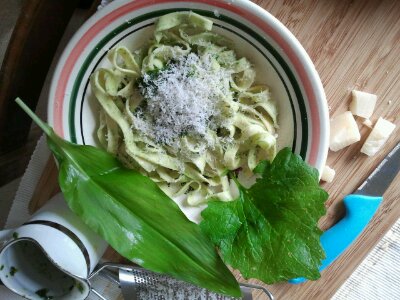
Pasta impregnanted with wild herbsTo celebrate the fifth birthday of Pop-up City Live, they are hosting The Pop-Up City Live, an experimental event for urban innovators in Amsterdam on Tuesday May 21st where they will bring the blog to life on stage. They have invited me along for a live cooking show with wild veggies and herbs from the sidewalks and parks of Amsterdam. Eleftheria Rosi, one of my apprentices and an awesome wild food cook, will transform my foraged finds into some tastey treats. Whilst that goes on, they will chat to me about urban foraging.

For more info about my foraging part of the evening

For the full line up (The Mobiators, A Physchogeographic tour of Venice, Qion, Saskia de Coster, The Deer Friends… …)
.
For tickets (6 Euro in advance, 8 Euro at the door – if available)It is nearly sold out. Please contact via the link for tickets (don’t email me, I don’t have any).

We Plucked Our Lunch!

Thank you very much to everyone who joined me for a lunchtime forage in Frankendael Park on Sunday 12th May. It was so nice to meet new faces and to welcome back several previous urban herb walkers.

image

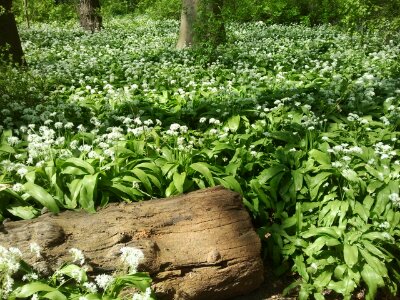
Miraculously it didn’t rain a drop throughout the two hour walk. But as expected, we found lots of beautiful herbs, many edible and tasty. Here is pungent Wild Garlic (Allium ursinum) Daslook.

image

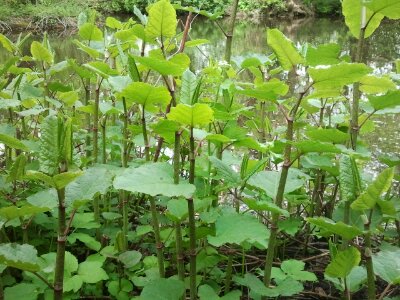
And bold, beautiful, bitter Burdock (Arctium lappa) Grote Klis, in a stand of potential urinary tonic Pennsylvania Pellitory, with a sprig of parsley scented Ground Elder (Aegopodium podograria ) Zevenblad in the left of the photo.
image

We also found some poisonous plants, to be known and avoided by foragers, like this patch of Dog’s Mercury (Mercurialis perennis) Bosbingelkruid. This unassuming little pointy leaved plant with delicate spikes of tiny flowers, is a member of the super toxic Euphorbia family (Wolfsmelkfamilie). In this photo (below), the Dog’s Mercury is mixed in with a little flowering Wild Garlic. Another reason why thoughtfully plucking one leaf at a time is a useful idea…

image

We talked about the Carrot family, with it’s crazy mix of tasty members such as Ground Elder, Fennel and Angelica (Angelica archangelica) Grotengelwortel, as well as deadly Poison Hemlock (Conium maculatum), Gevlekte scheerling Hemlock Waterdroplet (Oenanthe crocata) and Fool’s Parsley (Aethusa cynapium). All of these and more are found throughout Amsterdam. It is vitally important that foragers know how to identify plants such as these. A good field guide and taking walks with experienced foragers helps people to gradually build up their wild plant knowledge – plant by plant.

image

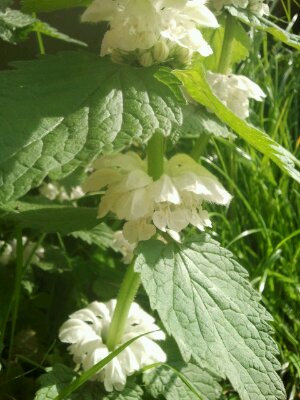
On a lighter note, we spread my three-day Dandelion and Burdock Honey onto Mugwort bread swirls, ate Lime leaves (Tilia europa) Linden, tasted Blackberry bush leaves, Horehound foliage, Meadowsweet (Filpendula ulmaria) Moerasspirea, White Deadnettle (Lamium alba) Dovenetel (above) and lots of other incredible plants.

20130513-222010.jpg

We learned how to prodding around with a chopstick can help make a good tincture, how honey often makes a great herbal carrier and is a remedy for many ailments. And, how a fairly damp day like yesterday, is not ideal for setting up a cold oil infusion.

I spoke about how to pay a little back to the land we forage from, by simple gestures such as tidying up, to longer term projects such as growing little Elder shrubs.

I always love showing people the plants and had such a great time with you all. Thanks again!

On Tuesday evening (21st May), I’ll be taking foraged plants to the Ready Stay Cook section of Pop-Up Amsterdam Live. It would be great to see some of you there.

My next guided foraging walks are on Sunday 26th May in Westerpark and Wednesday 29th May in Park Frankendael.

Urban Dandelion and Burdock

Europe is awash with roaring Dandelions at the moment. They are standing proud and showing their wooly faces in parks, along roadsides, in fields and hedgerows. They also grow happily on my roof (and from there I harvest its leaves and roots) .

I love the taste of Dandelion and Burdock syrup, especially when mixed with water and drunk in the summer sunshine. Not many flavours remind me so fondly of my English childhood. But to make Dandelion and Burdock syrup, the roots of Burdock and leaves of Dandelion should be collected and boiled up with sugar water. I don’t use using sugar unless there is no other option and I don’t dig up Burdock roots. Roots tend to concentrate toxins, they are tough to dig up, fellow park visitors may pounce on me and tell me to stop and most of all, I’d like the plants to grow to maturity so that I may harvest the seeds and leaves.

Regarding the Dandelion leaves, I don’t ever harvest them in quantity from Amsterdam public spaces. They live on the plants for a long time, they get walked on and everything else you may like to think of happens on them, whereas the flowers are far more transient. I can more easily see if they are dirty, they only stay on the plant for a short time so are less open to pollution and I just love the sight of them in a jar of honey! Having said this, harvesting herbs from ground level in public spaces is always a bit of a risk, pollution is everywhere. But with syrups, a small amount is consumed in one go, the use of honey kills many bugs naturally and I feel that the benefits far outweigh the concerns. But that’s just me perhaps!

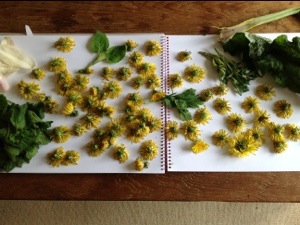
My version of Dandelion and Burdock simply requires honey, 20-30 fresh Dandelion flowers and a small Burdock leaf. That’s all. It has all the medicinal properties that Dandelion and Burdock plants offer, it is quick to make, tastes deliciously bitter-sweet and it keeps well.

20130510-164455.jpg

How to make Urban Dandelion and Burdock Syrup

1. Harvest 20-30 clean, fresh and lively Dandelion heads from a clean area.
Harvest one young, equally vibrant Burdock leaf from a super-healthy looking plant.

2. Place your harvest on a clean white surface for about an hour, to allow any resident bugs time to crawl away.

3. Tear up the Burdock leaf and layer dandelion heads and burdock leaf in a medium sized (250ml) jam jar.

4. As you layer the herb, carefully spoon in runny honey. Poke around a little with a clean chopstick so that air bubbles are released.

5. Continue to layer herb, spoon in honey and prod with the chopstick until the jar is full.

6. Check for obvious air bubbles and prod some more. Top up with honey (right to the lid) and secure with a well fitting lid.

20130510-164708.jpg

7. Leave to stand and infuse for at least three days.

8. Use as it is, as a toast spread or strain (or not) and use as a syrup base for refreshing summer drinks.

Bitter-sweet yum! It taste’s of the English summers of my childhood. We’ll try it on the Pluck Your Lunch! forage this Sunday